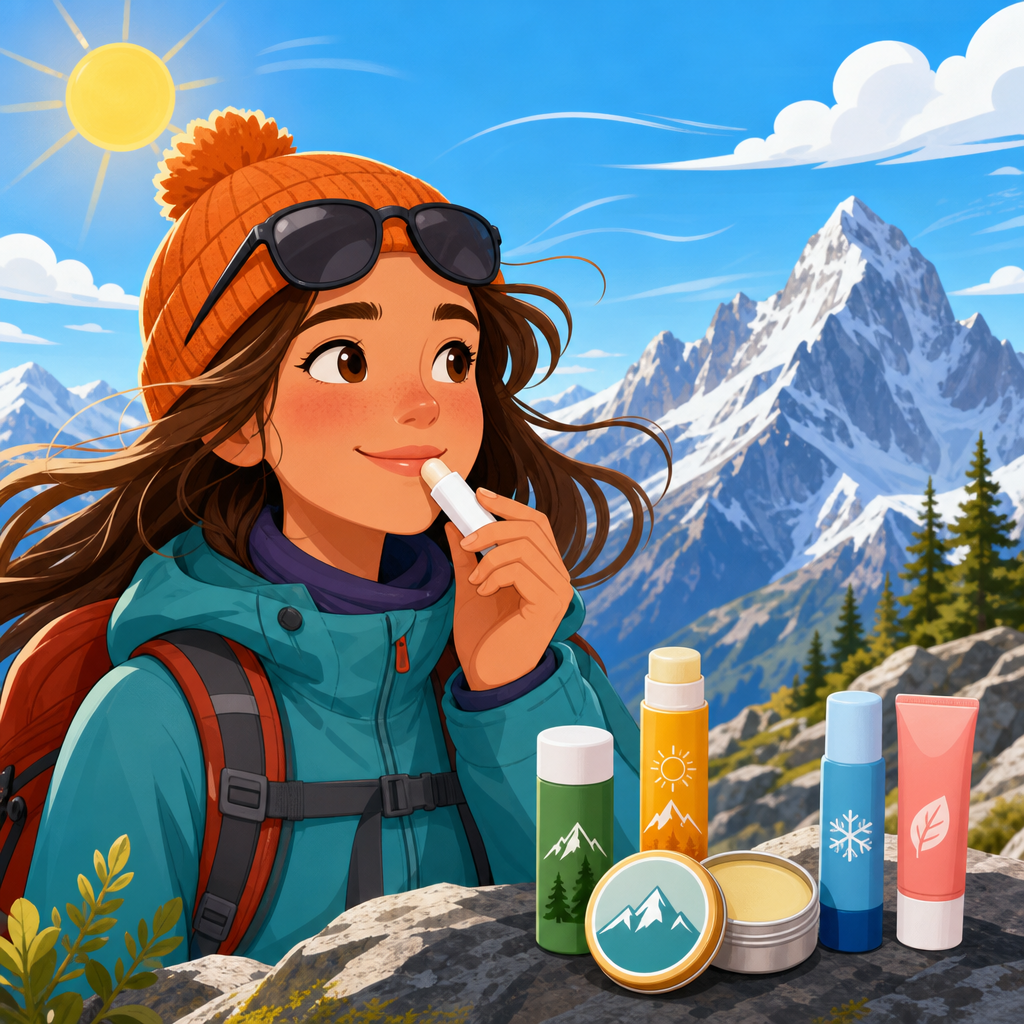
Mountain sun and wind can destroy lips faster than most hikers expect, which is why the best lip balms for mountain sun and wind need to do more than feel smooth for ten minutes. They must protect against ultraviolet radiation, reduce water loss, resist cold and abrasion, and stay on through sweat, altitude, and repeated exposure. In practical terms, that means choosing formulas with broad-spectrum SPF, durable occlusive ingredients, and packaging you can use with gloves. This topic sits squarely within sun, eye, and skin gear because lip protection works best as part of a complete mountain system that includes sunglasses, sunscreen, face coverings, and weather-aware habits.
I learned this the hard way on high, dry routes where standard drugstore balm vanished before the first ridgeline. At elevation, the problem compounds. UV intensity rises roughly 4 to 5 percent for every 1,000 feet of gain, and snow, pale rock, and water can reflect additional radiation back toward the face. Wind strips away the thin moisture barrier on lip tissue, while cold suppresses the sensation of dehydration until chapping is already underway. Unlike most skin, lips contain very little melanin and have a weaker barrier function, so they burn and crack quickly.
For mountain travelers, the right lip balm is not a cosmetic extra. It is preventive safety gear. Cracked lips make it painful to eat, drink, and breathe through the mouth during hard efforts. Severe sunburn on the lips can swell, blister, and increase infection risk. Persistent damage also contributes to long-term actinic change, especially on the lower lip, which receives more direct exposure. A good mountain lip balm therefore needs clear performance criteria: SPF 30 or higher, broad-spectrum coverage, water resistance if possible, stable emollients and occlusives, and a texture that remains usable in cold temperatures.
This hub article explains how to choose those products, which formulas perform best in specific mountain conditions, and how lip protection connects to the larger category of sun, eye, and skin gear. It also points you toward the key questions searchers usually have: mineral or chemical filters, stick or tube, medicated or simple, scented or fragrance-free, and how often to reapply. If you build a mountain skin-protection kit correctly, lip balm becomes one dependable component in a system that keeps your face functional, comfortable, and protected from trailhead to summit.
What makes a lip balm good for alpine conditions
The best mountain lip balms solve three problems at once: solar exposure, moisture loss, and mechanical wear. Broad-spectrum SPF matters because ultraviolet B burns the lips and ultraviolet A contributes to cumulative damage even on cool or cloudy days. In my own kit testing, products without a declared broad-spectrum rating consistently underperform for all-day exposure, even if they feel richer at first application. Dermatologists and outdoor medicine clinicians generally recommend SPF 30 or higher for prolonged exposure, and that threshold is a practical baseline for alpine use.
Ingredient structure matters just as much as SPF. Occlusives such as petrolatum, lanolin, dimethicone, beeswax, and synthetic waxes help form a seal that slows transepidermal water loss. Emollients like shea butter, castor oil, coconut oil, and seed oils improve feel and flexibility, but oils alone often wear off too quickly in wind. Humectants can draw moisture, yet in very dry mountain air they are less useful unless paired with stronger occlusives. This is why simple petroleum-based formulas still perform so well in severe conditions: they are boring, durable, and effective.
Texture should match the environment. In freezing weather, overly hard sticks drag and tempt you to apply too little. In summer heat, soft balms can melt and leak. A tube can deliver a thicker film in winter, while a twist-up stick is cleaner for routine use on dusty trails. Fragrance, flavoring, menthol, camphor, eucalyptus, and salicylic acid often irritate already damaged lips. On long mountain days, I advise fragrance-free or minimally flavored formulas first, especially for people prone to angular cheilitis, eczema, or contact dermatitis.
Best lip balm categories for mountain sun and wind
Different mountain objectives call for different products. Fast summer hiking below snowline favors lightweight, non-greasy SPF sticks you will actually reapply. Ski touring, glacier travel, winter mountaineering, and windy ridge days demand thicker, more adhesive formulas with stronger barrier performance. Ultrarunners may prefer slim tubes that fit a vest pocket, while climbers often like twist-up sticks they can use one-handed at belays. What matters is matching the balm to the exposure pattern instead of expecting one formula to be ideal everywhere.
The most reliable all-around category is SPF 30 to 50 balm based on waxes plus petrolatum or lanolin, with either mineral filters like zinc oxide or common organic filters used in lip products. For highly reflective terrain, I look for products marketed for sport or outdoor use because they tend to emphasize durability and higher SPF. For lips that are already cracked, a plain healing ointment without sunscreen can still help overnight, but daytime mountain use should include UV protection unless you are layering a separate protective strategy, which is uncommon and inconvenient.
| Use case | Best formula style | What to look for | Example product types |
|---|---|---|---|
| Summer hiking | Light stick | SPF 30+, broad-spectrum, easy reapplication | Sport lip balm sticks |
| Snow travel | Dense waxy stick or tube | SPF 30-50, strong adhesion, wind resistance | Ski and alpine balms |
| Winter mountaineering | Ointment-style tube | High occlusion, glove-friendly package | Petrolatum-rich SPF formulas |
| Sensitive lips | Fragrance-free balm | Minimal ingredients, no menthol or flavor | Dermatology-focused sticks |
| Recovery in camp | Non-SPF healing ointment | Petrolatum or lanolin, no irritants | Barrier repair treatments |
Among widely available examples, Sun Bum SPF 30, Aquaphor Lip Protectant + Sunscreen SPF 30, EltaMD UV Lip Balm SPF 36, Vanicream Lip Protectant SPF 30, and Jack Black Intense Therapy Lip Balm SPF 25 are commonly considered. For mountain use specifically, I would rank products with SPF 30 or higher above lower-SPF premium balms, no matter how elegant the texture. Aquaphor and Vanicream are dependable for sensitive or damaged lips. EltaMD is a strong choice if you want a smoother feel with robust protection. Some mineral-heavy formulas leave a white cast, but that cosmetic downside matters far less than reliable coverage above treeline.
How to choose between mineral and chemical SPF lip balm
Mountain users often ask whether mineral or chemical sunscreen lip balm is better. The direct answer is that the best choice is the one you will apply generously and often, but there are meaningful differences. Mineral filters, primarily zinc oxide and titanium dioxide, protect by scattering and absorbing ultraviolet radiation. They are photostable, work immediately, and are often preferred by people with sensitive skin. On lips, however, mineral formulas can feel thicker and may leave a visible cast, especially at higher concentrations needed for strong UVA coverage.
Organic UV filters, often called chemical filters in everyday speech, usually create more transparent and cosmetically elegant lip balms. That better feel can improve compliance, which matters because underapplication is common. The tradeoff is irritation potential in some users, especially if the formula also contains flavor compounds or essential oils. In my testing with clients preparing for high-altitude trekking, people with reactive lips did best when they simplified everything: fragrance-free toothpaste, no lip plumpers, and a plain SPF balm built around zinc oxide or a low-irritant blend.
If you spend time on snowfields or glaciers, favor broad UVA coverage and film durability over trend language. A balm advertised as natural is not automatically better in alpine conditions. Likewise, reef-safe claims are inconsistently defined and often irrelevant for a mountain-specific purchase decision. Read the active ingredients panel, check for broad-spectrum labeling, and test the product before a major trip. A formula that cracks, separates, or tastes unpleasant in wind will get ignored in the field, which defeats the point of carrying it.
Common mistakes that lead to burned or cracked lips
The biggest mistake is relying on one morning application. Lip balm with SPF must be reapplied, typically every two hours and after eating, drinking, wiping your mouth, or heavy sweating. On exposed climbs, I reapply at every navigation pause because habit beats memory. Another mistake is treating lip burn as separate from overall face protection. If your nose, cheeks, and under-eye area are overexposed, your lips almost certainly are too. Good lip care belongs in the same routine as sunscreen, glacier glasses or category 4 eyewear when appropriate, and a brimmed hat or buff.
People also sabotage themselves with irritating products. “Medicated” formulas containing menthol, phenol, or camphor may feel cooling, but on wind-damaged lips they often sting and prolong the cycle of licking and reapplying. Lip licking itself worsens chapping because evaporating saliva increases dryness. Another frequent issue is carrying only one balm deep in a pack. Keep one in a hip belt pocket, jacket chest pocket, or climbing harness pouch so reapplication is frictionless. The best lip balm for mountain sun and wind is the one accessible before the damage starts.
Finally, many mountain travelers overlook hydration and breathing habits. Dehydration does not directly cause chapping in a simple one-to-one way, but dry air, open-mouth breathing during hard uphill efforts, and inadequate fluid intake create the conditions for faster irritation. In winter, face masks and buffs can help by reducing direct wind exposure, though damp fabric should be changed before it freezes against the skin. Small systems prevent bigger failures, and lip balm works best as one part of that system.
Building a complete sun, eye, and skin gear kit
As the hub page for sun, eye, and skin gear, this topic should connect lip care to the broader mountain protection kit. Start with sunscreen for exposed skin, ideally broad-spectrum SPF 30 or higher, and choose water resistance for high-output days. Add sunglasses matched to terrain: category 3 lenses work for many hikes, while snow travel often calls for category 4 glacier glasses with side shields. A brimmed cap or helmet-compatible sun hat reduces direct overhead exposure, and a UPF-rated hooded layer can outperform repeated sunscreen use on long routes.
For wind and cold, a buff or face mask helps protect the lips, nose, and cheeks, especially during descents when exposure is prolonged and sweat begins to chill. Skin-specific extras can include a small healing ointment for overnight repair, a richer hand balm, and a gentle cleanser so you are not stripping already stressed skin in camp or at the hut. If you wear contact lenses, dry air and sun glare become an eye-management issue too, making lubricating drops and wrap coverage more important.
Think of this subtopic as a chain. Lip balm fails if glare causes you to squint all day, if wind strips moisture faster than you replace it, or if sun reflected from snow hits from below because your eyewear and hat leave gaps. The strongest mountain kits are redundant in smart ways: glasses plus hat, sunscreen plus clothing, lip SPF plus a camp repair ointment. Build the kit around your actual environment, then test every item on shorter outings before committing to a multi-day objective.
Recommended buying criteria and practical routines
If you want a simple buying checklist, use this one. Choose SPF 30 or higher, broad-spectrum labeling, a formula with petrolatum, lanolin, waxes, or dimethicone for staying power, and packaging you can open with cold hands. Avoid strong fragrance and irritating actives unless you know your lips tolerate them. For expedition or winter use, carry two products: one SPF balm for the day and one plain repair ointment for evening. Replace old balms that smell rancid, melt repeatedly, or have passed their labeled expiration period.
Your routine should be equally simple. Apply before leaving the trailhead, not after you feel dryness. Reapply every two hours at minimum, and sooner in wind, snow glare, or heavy exertion. Put it on before long exposed descents and before eating, so you remember to reapply afterward. At night, use a thicker non-irritating ointment to restore the barrier. If lips remain cracked for weeks, or you see persistent scaling on the lower lip, get evaluated by a clinician because chronic sun damage and allergic reactions can mimic ordinary chapping.
The best lip balms for mountain sun and wind are the ones designed and used like real protective gear. Prioritize measurable protection, durable ingredients, and repeatable habits over branding or flavor. Build lip care into your larger sun, eye, and skin system, and you will hike, climb, ski, and scramble more comfortably in every season. Start by choosing one proven SPF balm, one repair ointment, and one accessible pocket, then make reapplication part of your standard mountain routine every trip.
Frequently Asked Questions
What makes a lip balm good for mountain sun and wind?
The best lip balms for mountain conditions do much more than add a temporary glossy layer. At higher elevations, ultraviolet exposure increases, and strong wind, cold air, low humidity, and frequent mouth breathing can dry out lips very quickly. A good mountain lip balm should therefore combine broad-spectrum sun protection with long-lasting moisture retention. Look for a formula with SPF 30 or higher and broad-spectrum coverage, so it helps protect against both UVA and UVB rays. This matters because lips contain very little melanin and are especially vulnerable to sunburn and cumulative sun damage.
Beyond SPF, durability is critical. Lightweight, purely cosmetic balms may feel pleasant at first but often wear off within minutes in wind, sweat, or repeated exposure. Better options typically contain more protective, occlusive ingredients such as petrolatum, lanolin, beeswax, dimethicone, or similar barrier-forming agents that reduce transepidermal water loss. In practical terms, that means the balm stays put longer and helps shield already stressed lips from further drying and cracking. Texture also matters: for mountain use, a firmer, more tenacious balm is usually more effective than a thin, slippery one.
Packaging can make a real difference too. In cold weather or while wearing gloves, a simple twist-up stick is often more convenient and hygienic than a jar or squeeze tube. Finally, avoid relying on strong fragrances, menthol, camphor, or flavor-heavy formulas if your lips are already irritated, since these can make sensitivity worse for some people. The ideal mountain lip balm is protective, durable, easy to reapply outdoors, and designed to perform under harsh environmental stress rather than just feeling smooth for a short time.
Why is SPF so important in a lip balm for hiking, skiing, or climbing at altitude?
SPF is essential because the lips are one of the easiest places to overlook and one of the most vulnerable to sun damage. At altitude, UV intensity generally increases, and mountain environments can expose you to more radiation than you expect. Snow, rock, and even water can reflect sunlight back onto the face, adding to the total dose your lips receive. Wind and cold may make lips feel dry and raw, but sunburn is often happening at the same time. That combination is exactly why ordinary moisturizing balm is not enough in alpine conditions.
A lip balm with broad-spectrum SPF helps protect against UVB, which is primarily associated with burning, and UVA, which contributes to long-term damage and premature aging. For lips, repeated UV exposure can lead not only to chapping and inflammation but also to more serious cumulative changes over time. This is especially relevant for people who spend many days outdoors, whether they are hikers, skiers, mountaineers, runners, or guides. Using SPF lip balm regularly is one of the simplest and most effective ways to reduce this risk.
Application habits matter as much as the SPF number on the label. A high-SPF balm will not help much if it is applied once at the trailhead and then forgotten. Eating, drinking, wiping your mouth, wind abrasion, and sweat can all remove product. Reapply frequently, especially after meals and at regular intervals during long days outside. In intense sun, many people find that a balm labeled SPF 30 or higher offers a practical level of protection, but consistency is what really makes the difference. If your lips are burning, stinging, or darkening during exposure, that is a sign your current protection may not be sufficient.
Which ingredients should I look for, and which ones should I avoid?
For mountain use, it helps to think of lip balm ingredients in three groups: UV filters, barrier-forming occlusives, and supportive emollients. First, you want reliable sun-protective ingredients that provide broad-spectrum coverage. Second, you want occlusive ingredients that physically help seal in moisture and reduce water loss. Petrolatum is one of the most effective examples, and ingredients like beeswax, lanolin, dimethicone, and certain plant waxes can also contribute to a durable protective layer. Third, emollients such as shea butter, castor oil, or certain seed oils can improve feel and soften rough lips, although on their own they may not last long enough in severe wind and cold.
It is also smart to pay attention to what can become problematic when lips are already stressed. Strongly scented or flavored lip balms may be enjoyable in mild conditions but can irritate compromised skin. Ingredients such as menthol, camphor, phenol, eucalyptus, or high-fragrance blends sometimes create a cooling or tingling sensation that feels active, but on chapped lips they can worsen discomfort or lead to repeated irritation. Some people also react to specific botanical extracts or essential oils, particularly when their skin barrier is damaged by sun and wind.
If your lips are chronically dry, cracked, or peeling, the best approach is often a simple, protective formula rather than one marketed as flashy or intensely flavored. A shorter ingredient list is not always better, but uncomplicated formulas are sometimes easier to tolerate. The key is performance: broad-spectrum sun protection, a tenacious barrier, and low irritation potential. If you know you are sensitive to lanolin, beeswax, or certain chemical filters, choose accordingly, but in general, the most useful mountain lip balms prioritize staying power and skin barrier support over cosmetic appeal.
How often should I reapply lip balm in mountain conditions?
In mountain sun and wind, reapplication needs to be more frequent than many people assume. A single application in the morning rarely lasts through hours of exposure, especially if you are breathing hard, sweating, drinking from bottles or hydration systems, eating snacks, or wiping your face with a buff or glove. Even a balm that feels thick and protective can gradually wear away. As a practical rule, apply before heading out, reapply regularly during the day, and always reapply after eating or drinking if much of the product has been removed.
The exact timing depends on conditions. On a cold, windy ridge or a bright snow-covered route, you may need to reapply much more often than on a shaded forest trail. If your lips start to feel tight, rough, or stinging, do not wait until they are visibly cracked. That sensation usually means the protective layer is already thinning or the lips are drying out under environmental stress. Preventive use is more effective than trying to repair damage after it happens. For people spending full days at altitude, carrying a stick in an easy-to-reach pocket is often the difference between consistent use and forgetting altogether.
Night care can also help. After a long day outside, using a thicker, non-irritating balm before bed may support recovery, especially if your lips have been exposed to sun, wind, and low humidity for hours. Think of lip balm use in the mountains as part of the same routine as sunscreen on your face: apply early, reapply often, and do not rely on comfort alone as a sign that protection is still in place.
Are expensive lip balms actually better for mountain sun and wind, or can budget options work just as well?
Price alone does not determine whether a lip balm is effective in harsh mountain conditions. Some premium products are excellent, but many affordable drugstore options perform just as well or better if they include the right features: broad-spectrum SPF, a durable barrier, good staying power, and packaging that is practical outdoors. In fact, because mountain lip balm needs frequent reapplication, many people prefer a lower-cost option they can buy in multiples and keep in a jacket, pack, car, and emergency kit.
What you are really paying for in more expensive products is often branding, texture, specialty ingredients, or a more refined cosmetic feel. Those things can be nice, but they are not the core performance criteria for alpine use. A balm that feels luxurious but disappears quickly in wind or offers no meaningful sun protection is not a better mountain choice than a simpler, more functional product. The most useful way to compare options is to read the active ingredients, SPF level, broad-spectrum claim, and the type of occlusive base used, then consider whether the balm stays on during real outdoor activity.
Budget-friendly balms can be especially effective when they are boring in the best possible way: protective, durable, easy to reapply, and not overly fragranced. If you find one that your lips tolerate well and that holds up in your specific conditions, there is no reason to assume a higher-priced alternative will automatically outperform it. The best lip balm is the one that consistently protects your lips from sun, wind, cold, and moisture loss, and that you will actually use often enough for it to work.