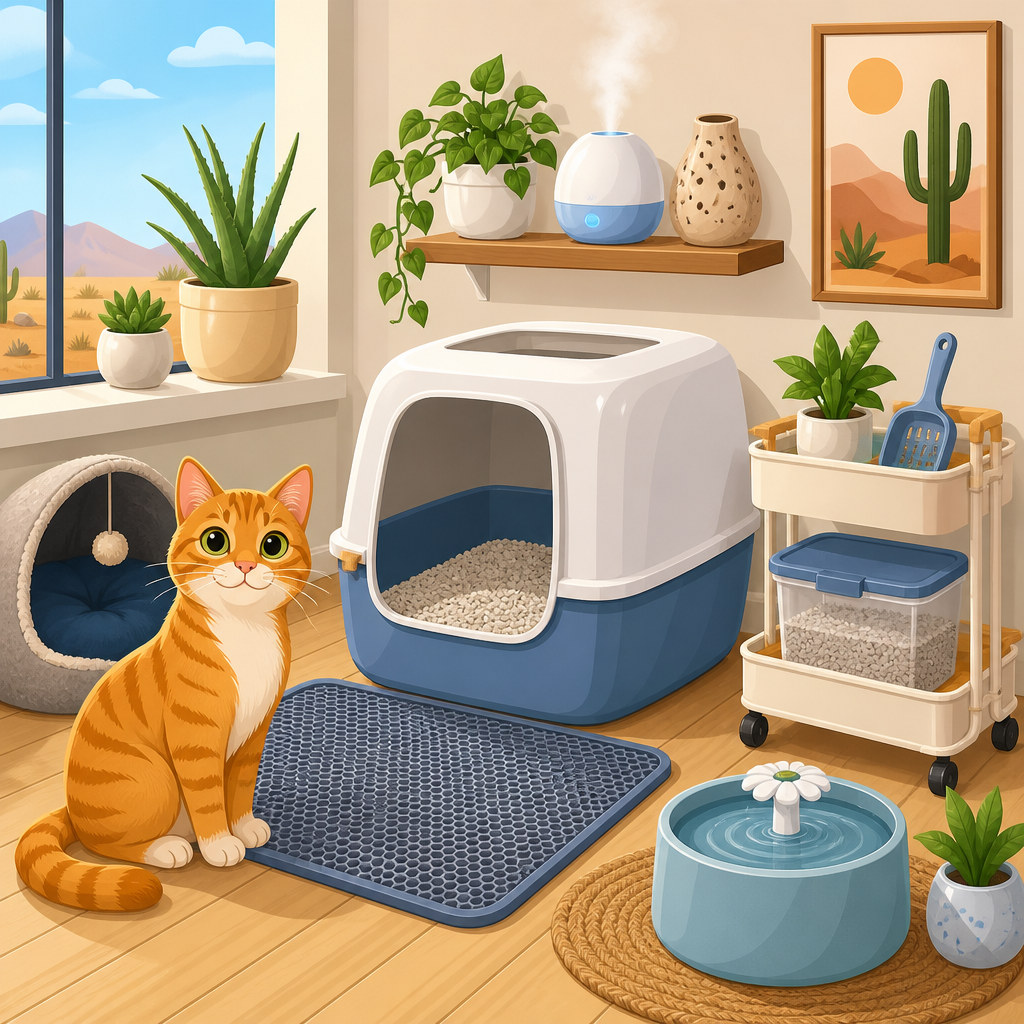
Low-humidity homes change how litter performs, how odors travel, and how cats react to their bathroom area, so the best litter box setup for low-humidity homes must balance moisture control, comfort, dust reduction, and easy maintenance across both cats and small pets. In practical terms, low humidity usually means indoor relative humidity consistently below about 35 percent, a common condition in winter heating seasons, desert climates, high-altitude regions, and tightly sealed homes with aggressive HVAC systems. That dry air pulls moisture from clay granules, wood fibers, paper bedding, and the skin and respiratory passages of animals, which changes the day-to-day behavior of a litter box more than many owners expect.
I have managed litter setups in heated apartments, mountain homes, and air-conditioned houses where humidity routinely sat between 20 and 30 percent, and the same pattern appears every time: some litters become noticeably dustier, urine clumps set harder and faster, lightweight substrates track farther, and odor can feel sharper because dry air carries particulate matter easily even when microbial growth is lower. Cats may hesitate if the substrate irritates their paws or noses, while rabbits, guinea pigs, and other small pets can develop sensitive feet or respiratory stress if bedding is too dry or dirty. A well-designed setup prevents these avoidable issues.
This hub article covers the full Cats & Small Pets picture, starting with litter box design, litter material selection, placement, cleaning routines, and humidity support, then broadening into species-specific bedding needs, odor control, and maintenance systems that connect to every related care topic in this category. The goal is simple: create a bathroom area that stays clean, low-dust, comfortable, and hygienic in a dry home without turning daily care into a complicated project. When the setup is correct, animals use it reliably, odors stay controlled, and owners spend less time troubleshooting messes, tracking, and box avoidance.
How low humidity affects litter boxes and animal behavior
Dry indoor air changes litter performance at the physical level. Clay litter sheds more fine particulate when granules are brittle, silica crystals can feel excessively desiccating around waste zones, and natural litters made from corn, wheat, grass, walnut, or wood often lose the slight ambient moisture that keeps them settled. The result is a box that may look clean but releases more airborne dust during digging and scooping. This matters because cats spend time close to the substrate, and small pets such as rabbits and guinea pigs have delicate respiratory systems that react quickly to dusty bedding.
Behaviorally, many cats prefer a consistent underfoot texture. In low-humidity homes, hard-clumping clay can form rock-like masses that leave sharp edges in the box after scooping. Senior cats, declawed cats, and cats with arthritis can object to that surface. Kittens may continue using the box but kick litter aggressively to find a comfortable patch, increasing tracking. With rabbits, dry bedding can combine with concentrated urine to create a rough surface that raises the risk of sore hocks, especially on wire-adjacent or poorly padded litter areas. The right setup starts with understanding these mechanical and comfort changes rather than assuming any standard box will work.
Choosing the right litter box and enclosure style
The best litter box setup for low-humidity homes usually begins with a large, open, high-sided box for cats and a spacious litter pan with supportive flooring for small pets. Open boxes allow dust to disperse instead of concentrating around a cat’s face, and they let owners spot urine volume, stool quality, and digging patterns quickly. I generally recommend a box at least one and a half times the cat’s body length, measured nose to base of tail. For large breeds such as Maine Coons, that often means oversized storage-tote conversions rather than standard retail pans. High sides reduce scatter without creating the stale interior environment common in covered boxes.
Covered boxes can trap dust and odor in low-humidity homes where particles stay airborne, and some cats plainly dislike entering an enclosed space with lingering ammonia notes. If privacy is necessary, furniture-style enclosures should have multiple ventilation openings and enough headroom for turning comfortably. For rabbits, choose a pan large enough for full-body posture, ideally with one low entry and one high back wall to contain urine spray and hay fragments. Guinea pigs and other small pets need broad, stable trays integrated into fleece or paper-bedding systems rather than miniature corner pans that become saturated quickly. Size is not a luxury; it is the main driver of consistent use.
Selecting litter and bedding materials that stay low dust
Material choice determines whether a dry home feels manageable or constantly messy. For most cats in low-humidity homes, a high-quality unscented clumping clay litter with documented low dust performance remains the most reliable option, provided the product uses dense granules and not overly powdery fines. Brands vary dramatically, so owners should watch actual plume levels while pouring and scooping rather than trusting packaging alone. In homes where clay is still too dusty, tofu litter, select grass litter, or pelletized pine can work well, but each has tradeoffs in clump firmness, tracking, and odor retention.
For small pets, paper-based bedding and kiln-dried aspen are usually safer choices than aromatic softwoods or dusty sawdust. Rabbits often do best with a litter pan lined with paper pellets or compressed wood pellets topped with hay in one end, encouraging natural toileting while protecting feet. Guinea pigs benefit from either absorbent paper bedding changed frequently or washable fleece systems with an absorbent layer underneath; the best choice depends on laundering capacity and sensitivity to dust. Avoid strong fragrances. In dry homes, scented products can become overpowering and may mask poor hygiene rather than improve the environment.
| Material | Best use | Strength in dry homes | Main limitation |
|---|---|---|---|
| Unscented clumping clay | Most adult cats | Strong odor control and easy scooping | Can become dusty if low grade |
| Tofu litter | Cats needing softer texture | Lower dust and good clumping | Some brands track heavily |
| Pine or wood pellets | Cats or rabbits tolerant of pellets | Very low dust and good absorbency | Texture is unacceptable to some cats |
| Paper pellets | Rabbits, guinea pigs, recovery care | Soft, low fragrance, decent absorbency | Less effective odor control than clay |
| Fleece system | Guinea pigs and some rabbits | No loose dust and easy monitoring | Requires strict washing routine |
Placement, airflow, and humidity support inside the home
Placement is as important as litter type. In low-humidity homes, do not place boxes directly beside heating vents, radiators, baseboard heaters, or the strongest HVAC return path. Those locations accelerate drying, increase dust lift, and make the area less comfortable for the animal. A better location is quiet, accessible, and ventilated without direct air blasting across the substrate. For multi-cat homes, place boxes on different levels or in separate zones to reduce guarding. The standard rule of one box per cat plus one remains correct because distribution matters as much as total count.
If indoor humidity regularly falls below 30 percent, a room humidifier can improve comfort for animals and reduce dust migration, but use it intelligently. The target should generally be around 30 to 50 percent relative humidity, which aligns with common indoor air quality guidance and helps avoid excessive dampness that can promote mold. Position humidifiers so mist does not settle directly into litter or bedding. I have found that whole-room humidity support works better than trying to moisten the box area itself. Pair that with a HEPA air purifier nearby, not blowing into the box, to capture fines released during digging and scooping.
Cleaning routines that prevent odor, dust, and box avoidance
Low-humidity homes reward consistency. Scoop cat boxes at least once daily, ideally twice, because dry clumps harden quickly and become more difficult to remove cleanly if left in place. Add fresh litter after scooping to maintain a depth of roughly two to three inches for most clumping products. Shallow litter exposes the plastic base and encourages scraping, while overly deep litter can increase digging and scatter. Empty, wash, and fully dry the box on a schedule that matches the material: often every two to four weeks for clumping litter, more frequently if a cat urinates against walls or edges.
For rabbits and guinea pigs, spot clean wet areas daily and replace saturated bedding before ammonia accumulates. Ammonia irritates mucous membranes even when owners become nose-blind, and in a dry home that irritation can feel harsher. Use mild unscented soap for full cleanouts; avoid strong disinfectant residues unless a veterinarian specifically recommends a disease-control protocol. Enzyme cleaners are useful on surrounding floors and enclosure surfaces because they break down organic residues that invite repeat soiling. If a pet suddenly starts avoiding the litter area, check cleanliness, texture, box size, pain, and stress in that order before assuming a behavior problem.
Species-specific setups for cats, rabbits, and guinea pigs
Cats need a box that respects their natural preferences: room to turn, a soft consistent substrate, privacy without confinement, and reliable cleanliness. Senior cats need lower entry points or cut-down fronts. Long-haired cats often benefit from larger mats outside the box and less clingy litter types to reduce fur contamination. Multi-cat homes require observation because one cat may quietly exclude another by blocking access. A technically perfect box fails if social pressure makes it unsafe to use. Cameras aimed at box entrances can reveal these patterns better than occasional owner observation.
Rabbits typically choose one toilet corner, which owners can use strategically by placing a large litter pan there and feeding hay at one end. Because rabbits eat while toileting, the setup should support that behavior without letting hay become deeply soaked. A grate is rarely ideal for long-term comfort; solid support with absorbent litter under hay is usually better for feet. Guinea pigs are less naturally box-trainable than rabbits, but many will use preferred pee zones if those areas are softly bedded and kept cleaner than the rest of the habitat. In this Cats & Small Pets hub, the key principle is matching species biology to substrate physics, especially in a dry home.
Common mistakes and the simplest way to build a better setup
The most common mistake is chasing odor with fragrances instead of fixing box design, litter quality, cleaning frequency, and room airflow. Other frequent errors include choosing a box that is too small, placing it beside loud appliances, letting litter depth drop too low, and switching materials abruptly. In low-humidity homes, owners also underestimate static cling and dust travel. Lightweight litter can migrate across hard floors, and fabric-covered furniture near the box collects fine particles that make the whole room smell dirtier than it is. These are setup problems, not inevitable parts of pet ownership.
The simplest high-performing system is straightforward: choose the largest practical open box or pan, use an unscented low-dust substrate matched to the species, place the setup away from direct HVAC flow, support whole-room humidity in the 30 to 50 percent range, and clean on a strict schedule. Add a washable mat for cats, use paper or wood-based absorbent layers for small pets, and monitor the animal’s comfort instead of relying only on odor perception. If your current bathroom area feels dusty, messy, or inconsistently used, start by upgrading size and substrate first, then improve airflow and maintenance. Small changes in dry homes produce immediate results.
Frequently Asked Questions
What makes a litter box setup different in a low-humidity home?
In a low-humidity home, the air is dry enough to change how litter behaves from day to day. Clumps can harden faster, lightweight particles can become easier to kick up, and odors may seem sharper because there is less moisture in the air to soften or contain them. Dry indoor conditions can also make the litter box area feel less comfortable for sensitive cats, especially if dusty litter irritates their paws, nose, or eyes. That is why the best litter box setup for low-humidity homes is not just about choosing any highly rated box or litter. It is about building a setup that limits airborne dust, controls odor without overwhelming fragrance, and stays easy to clean before waste dries out and sticks.
A good starting point is a spacious litter box with high enough sides to contain scatter but with an entry that still feels easy for the cat to use. Many households do well with an open-top or well-ventilated box, because airflow helps the area stay cleaner without trapping concentrated odors inside a covered chamber. Pair that box with a low-dust, unscented litter that forms solid clumps without turning powdery in dry air. You also want a litter mat that catches tracked particles, a scoop that can remove waste thoroughly once or twice daily, and a placement strategy that avoids heating vents, radiators, or direct sun, all of which can make the area even drier and more odor-prone. In short, low-humidity homes reward a litter box setup that is simple, stable, low-dust, and cleaned consistently.
What type of litter works best when indoor humidity is consistently low?
The best litter for low-humidity homes is usually one that combines strong clumping with low dust output and minimal fragrance. In dry environments, poor-quality clay litter can break down into fine particles more easily, creating a dusty box and more respiratory irritation for both pets and people. For many households, a premium unscented clumping clay litter, a low-dust grass litter, a tofu-based litter, or another refined plant-based formula can work well, provided it holds shape without becoming brittle. The key is not just the material itself, but how consistently it stays low in dust after pouring, scooping, and repeated use in dry air.
Unscented litter is often the safest choice because low humidity can make artificial fragrances feel stronger and more irritating. Strong perfume may seem like an odor solution at first, but many cats dislike it, and sensitive pets may avoid the box if the scent becomes too intense. Fine-textured litters can be comfortable on paws, but if they are too lightweight, they may scatter more in a dry home. Slightly heavier granules often strike a better balance between comfort and cleanliness. If you are testing a new litter, watch for signs such as more sneezing, squinting, digging hesitation, or increased tracking around the box. Those can indicate that the litter is too dusty or too dry for the environment. The best choice is the one your pet uses reliably while staying clean, low-odor, and easy to maintain in your specific home conditions.
Should I use an open litter box or a covered one in a low-humidity environment?
For most low-humidity homes, an open litter box or a very well-ventilated high-sided design is the better default choice. Dry air can make odors travel quickly, but covering the box does not always solve that problem. In many cases, a hooded box traps odor inside, creating a concentrated smell that is unpleasant for the cat even if it seems better for the room overall. Cats have a much stronger sense of smell than humans, so a setup that feels tidy to you may feel stale or overpowering to them. In a dry climate, trapped dust can also linger inside a covered box, especially if the litter tends to powder with use.
That said, some homes still benefit from partially enclosed designs, especially if there is a strong scatter problem or multiple pets moving through the area. The ideal compromise is often a large litter box with high walls, an open top, and enough interior space for the cat to turn around comfortably. This design reduces litter spray without trapping as much odor or dust. If you do use a covered box, choose one with generous ventilation and clean it very frequently so waste does not dry out and become more pungent. Also observe your cat’s behavior. If your cat hesitates at the entrance, eliminates just outside the box, or seems to rush out immediately after using it, the enclosure may be too confining. In low-humidity homes, comfort and airflow usually matter more than maximum concealment.
How can I control odor and dust without making the litter area uncomfortable for my cat?
The most effective way to control odor and dust in a low-humidity home is to focus on maintenance and setup rather than masking products. Scoop at least once daily, and in many homes twice daily works even better because urine and stool dry quickly in arid air and can become stronger-smelling fast. Keep a consistent litter depth, usually around two to three inches for clumping litter, so moisture is absorbed properly without waste reaching the bottom of the box. Wash the box regularly with mild soap and water, and fully dry it before refilling. Residue left on the sides or base can trap odor and encourage a lingering smell no deodorizer can truly fix.
To reduce dust, pour fresh litter slowly, avoid overfilling, and choose products specifically labeled low-dust rather than simply lightweight or fast-clumping. Put a textured litter mat outside the box to catch fine particles before they spread through the room. Keep the box away from forced-air vents and busy airflow paths, because moving air can lift litter dust and spread odor farther than expected. If the room itself is extremely dry, improving whole-room humidity to a comfortable range can help both pets and litter performance, but the goal is moderation, not a damp environment. Avoid heavily scented deodorizers, perfumed liners, or harsh cleaning sprays near the box. Cats generally prefer a neutral-smelling bathroom area, and comfort is what keeps litter box habits stable over time.
What is the best overall litter box setup for low-humidity homes with cats or small pets?
The best overall setup is one that combines a roomy, easy-access box, a reliable low-dust litter, careful placement, and a simple cleaning routine that prevents odor from building up. For cats, that usually means a large high-sided open box placed in a quiet, low-traffic area away from heating vents, fireplaces, direct window sun, and noisy appliances. Add an unscented low-dust clumping litter that your cat already tolerates well, plus a litter mat to control tracking. Keep the area calm, visible, and easy to reach. If you have more than one cat, the usual recommendation of one box per cat plus one extra is especially helpful in low-humidity homes because fast-drying waste can make a heavily used box feel dirty sooner.
For small pets that use litter trays, such as rabbits or ferrets, the same environmental logic applies even though the exact tray style and substrate may differ. You want a setup that minimizes airborne particles, stays dry without becoming harsh or dusty, and can be spot-cleaned easily. Paper-based or low-dust small-pet litters are often a better fit than products that fragment heavily in dry air. Across species, the most successful low-humidity litter area is not complicated. It is clean, low-dust, unscented, comfortably sized, and located away from sources of extra dryness. If you build around those principles, you create a bathroom space that supports better odor control, healthier air, and more consistent litter habits for the animal using it.