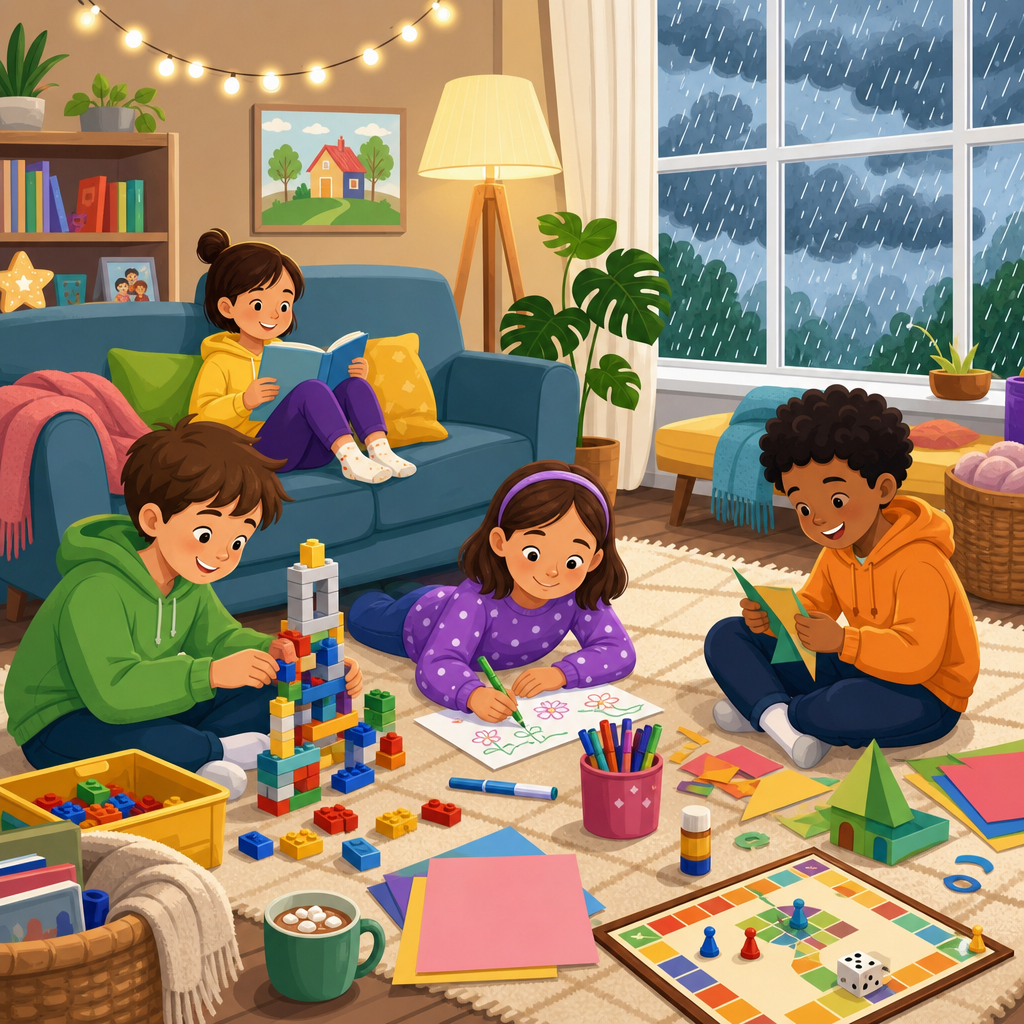
Bad weather can turn a manageable family routine into a long indoor slog, especially when children are full of energy and screens become the default. Managing screen-free downtime when rain, snow, smoke, wind, or extreme heat keeps kids inside is really a family logistics challenge: how to protect attention, mood, movement, and household rhythm without making parents feel like cruise directors. In practice, this means planning indoor time the way you would plan meals, school pickups, or bedtime. Screen-free downtime does not mean banning technology forever. It means creating intentional periods when entertainment comes from conversation, movement, reading, making, building, helping, and resting rather than passive digital input.
I have found that the families who handle indoor weather days best are not the ones with the biggest playrooms or endless craft supplies. They are the ones with repeatable systems. They know where boredom usually hits, which sibling combinations work well, how long an activity really lasts, and what transitions cause meltdowns. They also accept an important truth: kids need different kinds of downtime. A preschooler may need sensory play and simple jobs. A school-age child may need challenge, autonomy, and visible progress. A tween may need privacy, purpose, and a say in the plan. Good family logistics account for all three.
This matters because excessive indoor screen use often has ripple effects far beyond the afternoon. Parents regularly see more conflict at device shutoff, rougher evenings, lower physical activity, reduced imaginative play, and sleep disruption when screens drift later into the day. Pediatric guidance from groups such as the American Academy of Pediatrics emphasizes creating media plans, protecting sleep, and preserving device-free routines. Weather can be unpredictable, but your response to it does not have to be. With a clear indoor plan, a few prepared resources, and realistic expectations, you can turn housebound days into calmer, more connected family time while still getting work, chores, and basic life admin done.
Start with an indoor weather-day plan, not a last-minute scramble
The fastest way to lose control of a stormy day is to improvise every hour. A simple written indoor weather-day plan reduces decision fatigue for adults and uncertainty for children. Keep it visible on the fridge or a family command center. At minimum, include five blocks: movement, quiet play, independent time, helping time, and rest. If you have multiple children, assign each block a default location and a short list of options. For example, movement happens in the hallway or living room; quiet play happens at the kitchen table; independent time happens in bedrooms or reading corners.
Use time anchors instead of exact schedules when possible. “After breakfast we do movement” is easier to maintain than “at 9:10 we start yoga.” During bad weather, normal cues such as playground trips disappear, so indoor anchors replace them. I recommend planning in ninety-minute waves for school-age kids and shorter forty-five to sixty-minute waves for younger children. Each wave should alternate energy levels. High-energy obstacle course, then snack and books. Building project, then laundry helper jobs. Dance break, then drawing. This pacing matters because children usually struggle most when asked to sit still for too long after already being confined indoors.
Families often ask whether they should save screens as an emergency backup. Usually yes, but define the backup before the day begins. For example, one thirty-minute show during the parent conference call is different from open-ended viewing because everyone is tired. Clear guardrails preserve trust. If your household uses a family media plan, weather days should fit inside it rather than replace it. The goal of a hub-style family logistics approach is consistency: routines, spaces, supplies, and expectations all working together so one rainy Tuesday does not unravel the week.
Build a screen-free activity system that matches age, space, and energy
Not all indoor activities are equal. The best ones are open-ended, low setup, easy to reset, and flexible across ages. I group them into four buckets: movement, making, problem-solving, and contribution. Movement covers hallway relays, balloon volleyball, masking-tape balance lines, scavenger hunts, and kid yoga. Making includes LEGO, cardboard construction, play dough, sticker scenes, sewing cards, watercolor, and baking prep. Problem-solving means puzzles, board games, pattern blocks, tangrams, brain teasers, and fort engineering. Contribution includes child-sized chores such as sorting socks, wiping baseboards, matching pantry items, watering plants, and assembling snack bins.
The system matters more than any single activity. Store supplies by category in labeled bins and keep the highest-success options accessible. In homes with limited space, vertical storage and tray-based setups make a major difference. A puzzle tray can slide under a couch. A craft caddy can move from table to floor. A “maker bin” with tape, child scissors, paper rolls, cardboard tubes, stickers, and string routinely lasts longer than a one-time kit. If you want kids to use activities independently, reduce friction: sharpen pencils, replace dried markers, pre-cut tape tabs, and keep cleanup cloths nearby.
Choice is important, but too much choice backfires. I usually advise offering two to four options at a time, not an entire closet of possibilities. Rotating materials every few weeks keeps interest high without requiring constant purchases. Also, design for the child you actually have. Some children crave novelty; others replay the same pretend game for hours. Some need sensory input; others need quiet concentration. If a child routinely melts down after art because cleanup feels overwhelming, then art is not a calming activity in its current form. Switch to washable markers, a placemat, and a timed cleanup song, or choose a different bucket entirely.
| Need | Best screen-free options | Why it works indoors |
|---|---|---|
| High energy | Obstacle course, dance freeze, balloon games | Burns energy safely in small spaces |
| Quiet reset | Audiobooks, coloring, reading nook, puzzles | Lowers stimulation without a device |
| Sibling cooperation | Fort building, board games, baking prep | Creates shared goals and roles |
| Parent needs to work | Sticker books, building bins, independent challenges | Requires minimal supervision once started |
| Meaningful contribution | Laundry sorting, pantry organizing, pet care help | Builds competence and fills real time |
Use routines, zones, and transitions to prevent boredom and conflict
When kids say “there’s nothing to do,” the problem is often not a lack of options but a lack of structure. Indoor family logistics work best when the home has clear zones. Even a small apartment can create a movement zone, a quiet zone, and a project zone. A hallway can become the gross-motor strip. A corner with pillows and books becomes the calm-down nook. The kitchen table becomes the project station, protected with a wipeable mat. These physical cues reduce the constant negotiation that drains parents and provokes siblings.
Transitions deserve as much planning as activities. Most conflict happens at the handoff: stopping one thing, cleaning it up, and starting the next. Use predictable transition tools such as visual timers, a two-minute warning, playlist cues, or a written “first-then” card for younger children. For example, first cleanup, then hot chocolate and a chapter read-aloud. With older kids, involve them in sequencing. Ask, “Do you want your movement block before lunch or after?” That small dose of control often prevents resistance. In my experience, children accept limits more easily when they can shape the order.
Sibling dynamics require logistics too. Pair children for short cooperative tasks before independent play starts. One child gathers towels for an obstacle course while another places tape markers. Shared setup creates buy-in. If siblings compete constantly, choose parallel activities rather than forced togetherness: one child does a puzzle at the table while the other builds on the floor. Also, end activities before attention is fully exhausted. Parents often wait until children are fraying, then ask for cleanup, which guarantees pushback. Stopping slightly early preserves enough regulation to transition well and protects the rest of the day.
Make the day feel full with movement, jobs, and meaningful independence
Children cope better indoors when the day includes visible accomplishment, not just entertainment. That is why “helping time” is one of the most effective screen-free tools. Real tasks regulate many children because they provide purpose, body movement, and a clear finish line. Younger kids can tear lettuce, pair socks, spray and wipe low surfaces, sort recycling, or set napkins on the table. School-age children can fold towels, prep fruit, organize board games, sweep under chairs, and assemble tomorrow’s backpacks. Tweens can plan a simple lunch, rotate seasonal clothes, or inventory craft supplies.
Movement should be scheduled before behavior deteriorates, not after. On true weather lock-in days, aim for several brief indoor movement bursts instead of one long session. Ten minutes of animal walks, jumping patterns, hallway bowling, or couch-cushion stepping stones can reset attention better than asking a child to “go play.” If you have safe outdoor access like a covered porch or garage, use it for micro-breaks. Fresh air, even briefly, changes mood. For families in apartments, stairwell walks or building hall scavenger hunts can help when permitted.
Independence is built through setup. Children are more likely to sustain screen-free downtime when they know what they can start without asking. Create “open and go” choices: a reading basket, a card game tin, a LEGO challenge card ring, a drawing prompt jar, or a magnetic tile tray. For older children, project menus work well: write five options on a whiteboard such as “build a bridge that holds three books,” “create a comic strip,” or “plan a picnic menu for when the weather clears.” This hub approach to family planning turns downtime into a practiced skill rather than a parental performance.
Adapt the plan for toddlers, school-age kids, and mixed-age households
Age fit is essential. Toddlers and preschoolers need short cycles, sensory variety, and close supervision. Water play in a shallow bin, play dough, sticker transfer, pillow jumping, and simple pretend setups usually outperform complicated crafts. Keep expectations realistic: fifteen focused minutes can be a win. School-age children can handle longer projects, clearer rules, and delayed gratification. They often respond well to missions, challenges, scorekeeping, and making something useful. A seven-year-old may stay engaged far longer building a marble run from cardboard than completing a worksheet-style activity.
Tweens usually reject anything that feels babyish or obviously manufactured. Give them ownership. Ask them to choose music for a family bake, design the indoor challenge circuit, teach a younger sibling a card game, or plan the snack board. Privacy also matters. Screen-free time does not always have to be group time. Reading alone, journaling, sketching, or listening to an audiobook can count as successful downtime. In mixed-age homes, stagger direct parent involvement. Start with the youngest child in a high-support activity, then transition older kids to independent projects once the room is settled.
For neurodivergent children, weather-day planning may need more sensory and visual support. Many do best with a simple visual schedule, predictable breaks, and fewer transitions. Noise levels, clothing textures, and sibling proximity can matter as much as the activity itself. Sensory bins, weighted lap pads, chewy snacks, body-sock style movement, or dimmer lighting may help, depending on the child. The key is not forcing a generic “fun indoor day” but aligning the environment with the child’s regulation needs. Family logistics are most effective when they are individualized and repeatable.
Prepare once so future bad-weather days are easier
The best indoor days are usually won before the forecast changes. Build a small weather-day kit with masking tape, balloons, paper, crayons, glue sticks, card decks, painter’s tape, a few puzzles, basic baking ingredients, and one surprise item reserved for difficult afternoons. Keep a running list of successful activities on your phone or inside a cabinet door. When an option works, write down how long it lasted, what setup was needed, and whether cleanup was manageable. That record becomes far more useful than scrolling for new ideas while children unravel nearby.
Also review the broader household systems that support calm indoor time. Are snacks reachable? Are extra socks, blankets, and cleaning cloths easy to find? Does each child have a go-to quiet activity available without adult help? Can you reset the main room in five minutes? Small logistical improvements compound. A low shelf of rotated bins, a family calendar that marks likely indoor days, and a consistent afternoon routine can reduce screen dependence more than any single craft. If this article is your starting point for Family Logistics and Planning, use it as a hub: build routines, simplify supplies, and connect every weather-day decision back to the kind of household rhythm you want all year.
Managing screen-free downtime when bad weather keeps kids inside is less about constant creativity and more about reliable structure. Define what screen-free time means in your home. Plan a few repeatable activity categories. Use zones and transitions to reduce conflict. Include movement, contribution, and genuine rest. Match the plan to your children’s ages, temperaments, and support needs. Most importantly, prepare the environment so kids can start good options without a long setup or a parent performing on demand.
The main benefit is not simply fewer screens for one afternoon. It is a home that runs better under pressure. Children learn how to handle boredom, use materials independently, help with real tasks, and recover from disappointment when outdoor plans are cancelled. Parents gain a practical system instead of a cycle of guilt, bargaining, and overstimulation. That is what strong family logistics look like: predictable rhythms, flexible tools, and choices that support the whole household.
Start small today. Make one weather-day bin, write one simple indoor schedule, and choose three screen-free activities your kids can do this week. Then refine the plan after the next storm. The calmer pattern you create now will pay off every time bad weather keeps everyone inside.
Frequently Asked Questions
How can parents plan screen-free indoor time without feeling like they have to entertain their kids all day?
The most effective approach is to stop thinking of indoor screen-free time as constant entertainment and start treating it like household planning. When bad weather keeps children inside, the day usually goes better if it has a clear rhythm: active time, quiet time, snack time, independent play, help-with-the-house time, and rest. That structure matters because children often struggle more with unpredictability than with boredom itself. Instead of trying to invent activities hour by hour, create a simple plan for the day with a few repeatable blocks. For example, begin with movement, follow with a focused activity, then offer free play, and build in a reset before the next part of the day.
This approach also reduces the pressure on parents to perform. You do not need to become a cruise director or produce a new craft every 30 minutes. A good indoor plan uses routines, not novelty, to carry the day. Keep a short list of dependable options in each category: one or two physical activities, one creative activity, one practical chore children can help with, and one calming activity for later. When kids know what usually happens next, they are less likely to default to asking for screens because the day already has momentum. The goal is not a perfectly packed schedule; it is a manageable household rhythm that protects everyone’s attention, energy, and patience.
What kinds of screen-free activities actually work when kids have lots of energy but cannot go outside?
Indoor screen-free time works best when it includes movement on purpose, not just seated activities. Children who are stuck inside due to rain, snow, smoke, high winds, or extreme heat often need a way to discharge energy before they can settle into reading, building, drawing, or independent play. That means parents should think in terms of safe, repeatable movement stations rather than hoping children will simply “calm down.” Good options include hallway obstacle courses, pillow stepping paths, dance breaks, scavenger hunts, balloon games, yoga for kids, laundry basket tosses, masking-tape balance lines, and timed tidy-up races. These activities are helpful because they give the body something to do, which often improves mood and attention afterward.
It is also useful to rotate between high-energy and lower-energy tasks. After a movement block, children are usually more ready for activities like puzzles, LEGO builds, drawing prompts, coloring, audiobooks, simple science experiments, play dough, or card games. The transition matters. If the day is all quiet activities, kids may become restless and argumentative. If the day is all high stimulation, they may become dysregulated and overtired. A balanced indoor routine gives them chances to move, create, help, and rest. The best screen-free activities are not necessarily the most elaborate ones; they are the ones that match children’s energy levels and can be repeated without exhausting the adults running the household.
How do you handle boredom and constant requests for screens during long stretches of bad weather?
First, it helps to understand that boredom is not automatically a problem to solve immediately. Children often complain of boredom right before they begin to invent, build, or settle into independent play. If screens have become the fastest route to stimulation, then some pushback is normal when that option is limited. The key is to respond calmly and consistently rather than negotiating every request. Set expectations early in the day by explaining when screens are not available and what alternatives are on offer. Children do better when they know the boundaries ahead of time instead of discovering them through repeated “no” answers.
It also helps to make alternatives visible and easy to start. A child who says “there’s nothing to do” often means “I do not want to do the work of choosing and beginning.” You can reduce that friction by keeping a small menu of options ready: build something, make a fort, listen to an audiobook, sort art supplies, do a puzzle, write a comic, help bake, or choose from a jar of activity slips. If boredom continues, do not assume the child needs more entertainment. Sometimes they need a short period of low stimulation to reset. Independent play, quiet time in a bedroom, or simply sitting with books and open-ended toys can be enough. Managing screen requests is less about winning a debate and more about building a predictable environment where screens are not the automatic answer to every lull.
How can families create a daily indoor routine that protects mood, movement, and attention?
A strong indoor routine usually starts with sequencing the day around children’s natural needs rather than around whatever crisis arises in the moment. Most families benefit from a loose pattern that repeats: morning connection, physical movement, snack, focused play or learning, lunch, quiet time, another active block, practical tasks, and an evening wind-down. This kind of routine supports mood because children know what to expect, supports movement because active play is built in, and supports attention because demanding tasks are not competing with nonstop stimulation. It also helps parents because they are no longer deciding from scratch what happens next every hour.
The routine does not need to be rigid to be effective. In fact, flexibility is important when weather disruptions, remote school schedules, naps, or work demands shift the day. What matters is having anchors. Meals happen at roughly predictable times. Movement happens before restlessness peaks. Quiet time happens before everyone becomes irritable. Household help happens in small, realistic doses so children stay connected to family life rather than expecting to be served and entertained all day. Even a visual schedule on paper can make a major difference, especially for younger children or for kids who become anxious or oppositional when plans feel unclear. A good indoor routine creates enough structure to keep the day moving without making the home feel like a classroom or boot camp.
What should parents do if siblings start fighting more when everyone is stuck inside together?
Sibling conflict tends to increase indoors because children have less space, fewer natural transitions, and more competition for attention, toys, and noise tolerance. The first step is not simply telling children to get along; it is adjusting the environment so conflict is less likely. Build in separation on purpose. Siblings do not need to do every activity together, and in many cases they should not. One child can read in a bedroom while another builds at the table. One can help with baking while another listens to an audiobook. Deliberate spacing, even in a small home, lowers friction and gives each child a better chance of regulating their own emotions.
It also helps to front-load expectations and intervene earlier than you would on a normal day. Indoor weather days often require more proactive supervision because children reach their limits faster. Set rules that are simple and concrete: take turns, keep hands to yourself, ask before joining a game, and use a calm-down space when needed. If conflict keeps repeating, look at the schedule. Many sibling blowups are really signs of unmet needs such as hunger, too much sitting, too much togetherness, or an activity that has gone on too long. Parents can reduce conflict by shortening activities before they fall apart, rotating children into different spaces, and using brief reset periods instead of waiting for a full argument to erupt. The goal is not eliminating every disagreement; it is protecting the household rhythm so small conflicts do not take over the entire day.