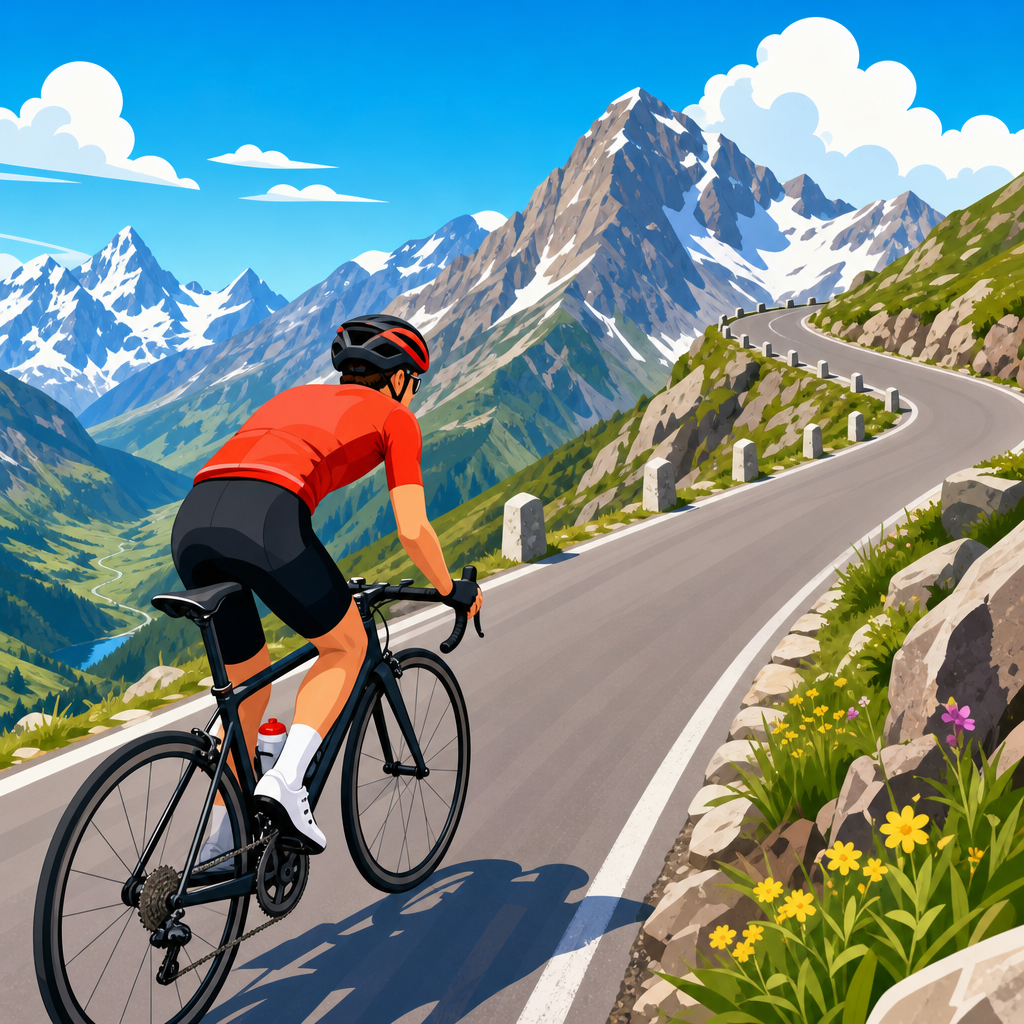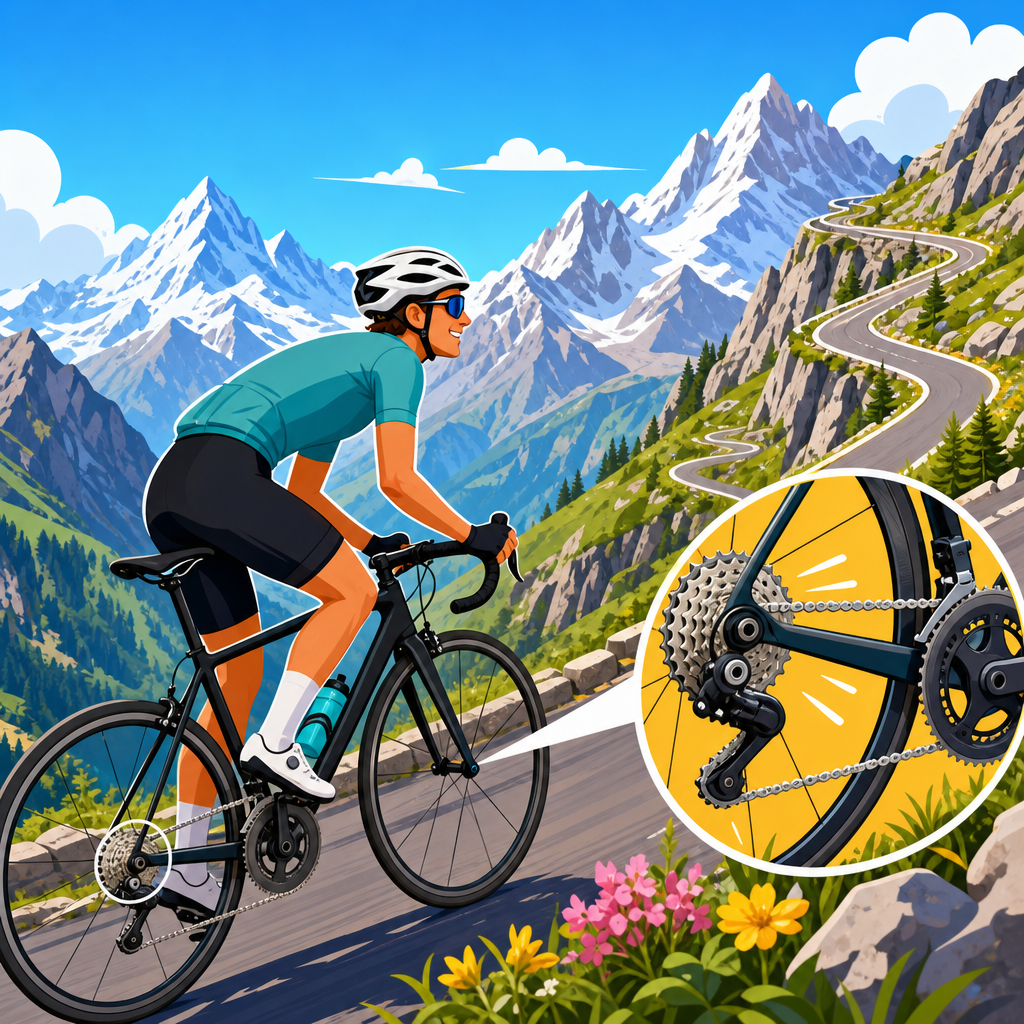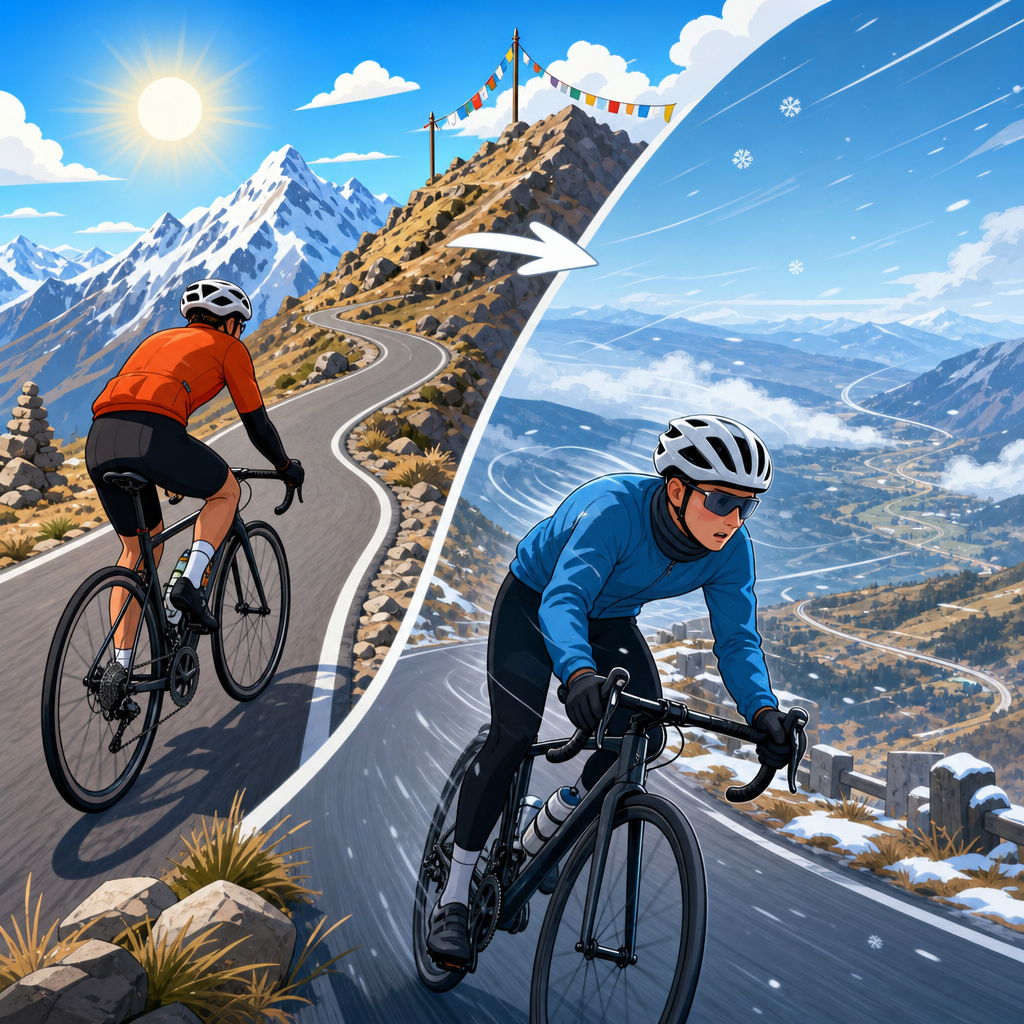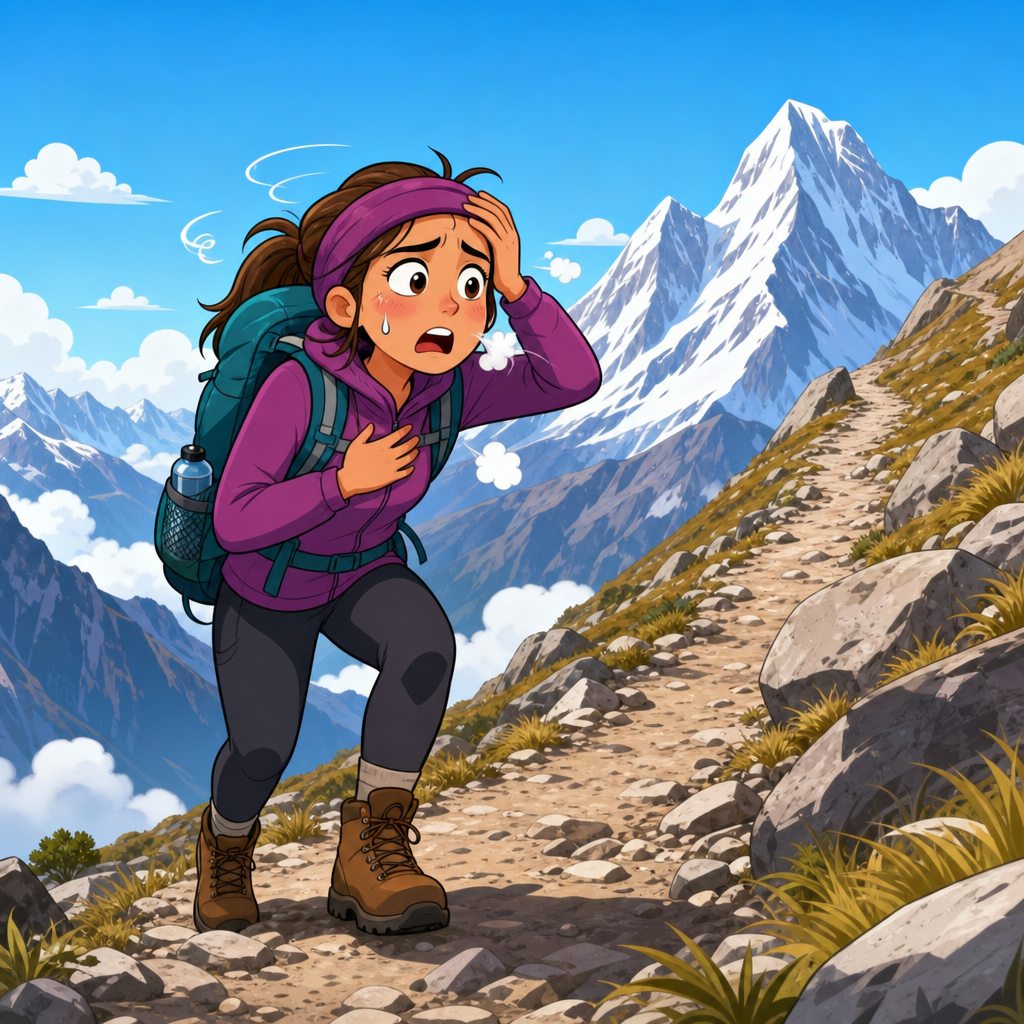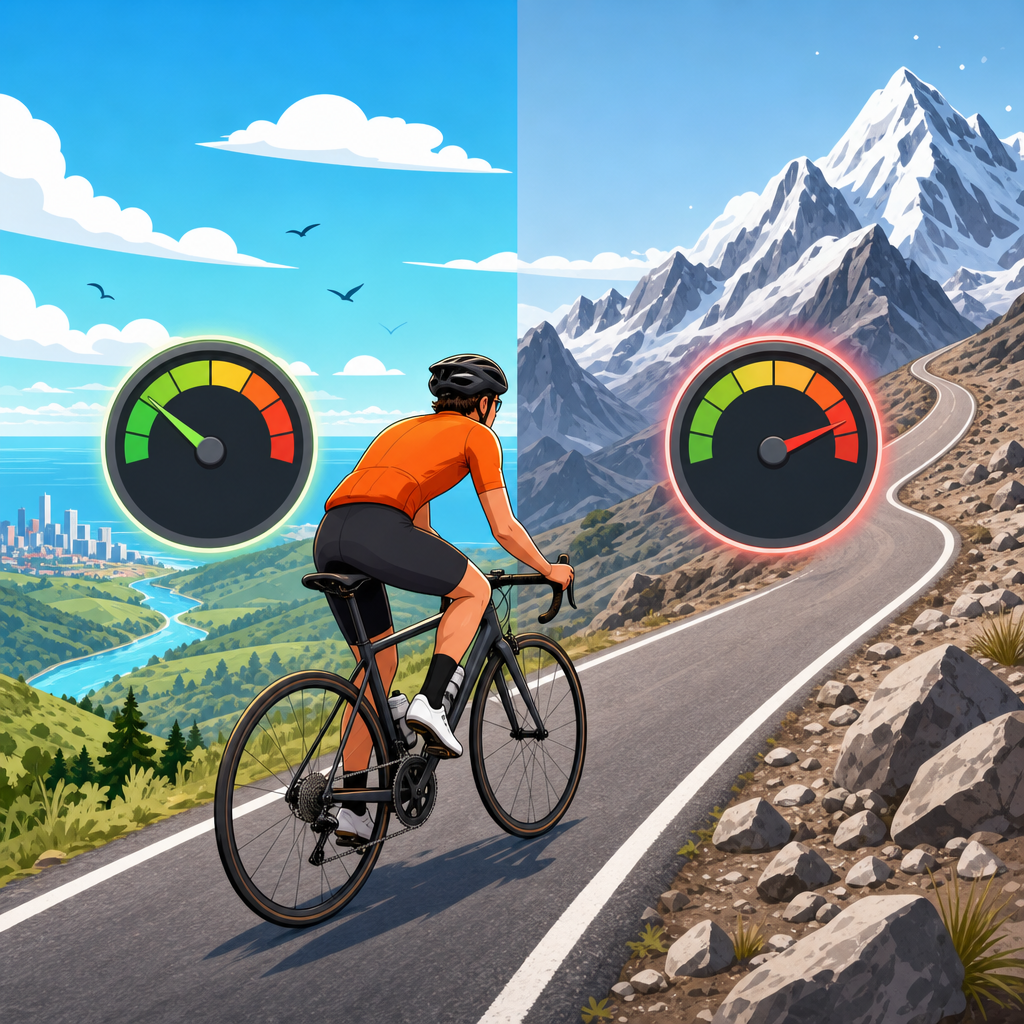
Altitude changes power output on the bike because thinner air alters both the rider’s physiology and the forces acting against the bicycle. For cyclists, altitude usually means a lower sustainable wattage, a higher perceived effort, and a different pacing strategy, even when speed sometimes improves on flatter terrain. In practical terms, the same rider who can hold 280 watts for a steady climb near sea level may struggle to sustain 255 watts at 2,000 meters and see a sharper drop above 3,000 meters. Understanding why that happens matters for racing, training camps, mountain sportives, bikepacking routes, and any rider who uses power data to guide effort.
In cycling, power output is the rate of doing work, measured in watts, and it is one of the clearest ways to quantify performance. Altitude refers to elevation above sea level, but in training discussions it usually means the point where reduced barometric pressure lowers the partial pressure of oxygen enough to affect aerobic metabolism. Air density also falls with elevation, reducing aerodynamic drag. Those two effects pull in opposite directions: physiology pushes power down, while lower drag can make speed rise in some conditions. That is why altitude can feel confusing. Riders often post slower climbing powers but still produce respectable average speeds on valley roads or time trial courses.
I have seen this pattern repeatedly with athletes who arrive in the mountains expecting numbers that match their sea-level files. On day one, they chase familiar thresholds, heart rate drifts oddly, and the ride turns into survival. Once we reset expectations, use altitude-adjusted targets, and respect acclimatization, performance stabilizes. This matters beyond elite racing. Recreational cyclists planning an Alpine gran fondo, a Colorado training week, or a high-pass tour through the Andes need to know how altitude affects threshold power, sprint repeatability, recovery, fueling, hydration, and even how to read head-unit data without making bad decisions.
Why altitude reduces cycling power
The main reason altitude reduces cycling power is lower oxygen availability. As elevation rises, barometric pressure drops, so each breath delivers less oxygen into the lungs and ultimately into the blood. The percentage of oxygen in air remains about 21 percent, but the pressure driving oxygen transfer decreases. That limits maximal oxygen uptake, or VO2 max, which is tightly linked to endurance performance. A widely used rule of thumb is that performance begins to decline noticeably above roughly 1,500 meters, with larger effects as altitude increases. For many trained cyclists, threshold and sustained climbing power drop by around 5 to 8 percent at 2,000 meters, though individual responses vary.
At the muscular level, lower oxygen delivery means the body relies more heavily on anaerobic contribution at any given workload. That accelerates lactate accumulation, raises ventilation, and increases the sense of breathlessness. Riders often describe altitude as making “tempo feel like threshold.” That description is accurate. The same absolute wattage requires a larger fraction of available aerobic capacity. Recovery between hard efforts also slows because phosphocreatine restoration and lactate clearance depend partly on oxygen availability. This is why repeated surges in a road race or mountain bike event can feel disproportionately costly at elevation, even when a steady endurance pace remains manageable.
Heat, dehydration, and sleep disruption amplify the problem. Mountain environments are often dry, and increased breathing rate raises respiratory water loss. Many riders underdrink during the first days at altitude, and even mild dehydration can reduce plasma volume and cardiovascular efficiency. Sleep may worsen because altitude can increase periodic breathing, especially above 2,000 meters. Poor sleep then reduces readiness, mood, and pacing discipline. None of these factors is theoretical. In real training camps, the athletes who treat hydration, recovery nutrition, and sleep hygiene as performance variables adapt far better than those who focus only on heroic rides.
How air density can increase speed even when watts fall
Altitude does not only hurt performance. It also lowers aerodynamic drag because thinner air has less density. On flat or rolling terrain where aerodynamics dominate resistance, that can partly offset lower power output. At race speeds, drag is the largest resistive force for most cyclists, so a reduction in air density matters. This is why time trials and hour-record style efforts can look surprisingly fast at moderate altitude, provided the rider is acclimatized enough to limit the power loss. Mexico City, for example, has long been known for quick endurance track performances because reduced air resistance benefits speed.
The balance depends on terrain and event type. Climbing performance is hit hardest because gravity dominates and lower drag offers only a small benefit at slower uphill speeds. A mountain ascent at 12 kilometers per hour does not gain much from thinner air, but the rider still suffers the physiological cost of reduced oxygen pressure. On a flat time trial at 45 kilometers per hour, lower drag can be a substantial advantage. That is why some cyclists set personal best speeds at altitude while simultaneously seeing lower normalized power than they would expect at sea level.
Equipment choices also interact with this effect. Faster tires, aerodynamic wheels, and optimized riding position still matter at altitude because drag remains a central determinant of speed on the flats. However, pacing matters more than gear. Riders who open too hard because speed looks good on the screen often blow up later when oxygen limitation catches up. The safest interpretation is simple: altitude can improve speed in aerodynamic situations, but it rarely improves sustainable climbing watts, and it never removes the need for disciplined effort management.
What happens to FTP, VO2 max, and heart rate at elevation
Functional threshold power, VO2 max, and heart rate all respond to altitude, but not in perfectly predictable ways. VO2 max declines as elevation increases because less oxygen reaches working muscles. FTP usually falls as a consequence, especially for sustained efforts lasting 20 to 60 minutes. Short neuromuscular power, such as a six-second sprint, may remain relatively intact at moderate altitude because it relies less on oxygen delivery, but repeatability declines. A rider might still hit a peak sprint number, then fail to reproduce it after a few hard minutes.
Heart rate data causes the most confusion. Early at altitude, resting heart rate often rises and submaximal heart rate may be elevated for a given easy power. During harder efforts, however, maximum heart rate can be slightly reduced, especially before acclimatization. This creates a mismatch between effort, watts, and pulse. Riders who pace solely by heart rate often undercook easy sessions or overreach on threshold work. In coaching practice, power remains the most useful anchor, but the targets must be adjusted downward and paired with perceived exertion. Breathing strain is not weakness at altitude; it is an expected signal that oxygen supply is constrained.
Testing should also change. A standard FTP test performed within a day or two of arriving at elevation often produces distorted results because fatigue, travel stress, and acute altitude exposure temporarily depress performance. A better approach is to use recent sea-level benchmarks, apply a conservative reduction, and refine targets over several rides. Many coaches begin with a 3 to 4 percent FTP reduction around 1,500 meters, 5 to 8 percent around 2,000 meters, and larger cuts above that, then adjust based on actual interval completion and recovery quality.
Typical power changes by altitude
The exact drop in cycling power depends on genetics, acclimatization, training status, iron status, hydration, and how the effort is structured. Still, broad patterns are reliable enough to guide planning. The table below summarizes practical expectations for many trained riders doing sustained aerobic work.
| Altitude | Typical effect on sustained power | What riders usually notice |
|---|---|---|
| 0 to 1,500 m | Minimal to small change | Normal training is usually possible with minor pacing tweaks |
| 1,500 to 2,000 m | About 3 to 6 percent lower | Threshold feels harder, breathing rate climbs sooner |
| 2,000 to 2,500 m | About 5 to 8 percent lower | Climbing watts drop clearly, recovery between efforts slows |
| 2,500 to 3,000 m | About 8 to 12 percent lower | Sleep, hydration, and nutrition become major performance limiters |
| Above 3,000 m | Often 12 percent or more lower | High-intensity work is difficult, acclimatization time becomes critical |
These ranges are not fixed laws, but they match what riders commonly observe in Colorado, the Alps, the Sierra Nevada, and similar training destinations. The strongest predictor of success is not denial of the drop; it is accepting the new reality quickly and pacing accordingly.
Acclimatization: how the body adapts over days and weeks
Acclimatization is the process by which the body adjusts to lower oxygen pressure. In the first hours and days, ventilation increases, which helps raise blood oxygen saturation but also contributes to dryness and disturbed sleep. Plasma volume often falls, which can make heart rate responses look unusual. Over one to three weeks, the body makes broader adjustments, including increased erythropoietin signaling that can stimulate red blood cell production, provided iron availability is adequate. This is why altitude camps are often planned for at least two to three weeks when the goal is adaptation rather than just scenic suffering.
The timeline matters. Many cyclists feel worst between the first and third day. Some improve noticeably by day five to seven, especially for steady endurance riding. Hard interval quality often lags longer. Full adaptation to very high elevations may never occur in the sense of restoring sea-level power; rather, riders become less impaired. That distinction is important. Acclimatization improves tolerance and can support later sea-level gains in some training models, but it does not magically erase the oxygen deficit while you remain high.
Practical acclimatization starts before travel. Ferritin and overall iron status should be checked if a rider is planning a serious altitude block, because low iron can blunt adaptation. During the first days on site, reduce training intensity, increase fluid intake, and eat enough carbohydrate. Carbohydrate oxidation yields more energy per liter of oxygen than fat oxidation, making it especially useful when oxygen is scarce. This is one reason riders often perform better at altitude when they stop trying to train low-carb and instead fuel aggressively.
Training and pacing strategies for cyclists at altitude
The best training strategy at altitude is to separate ego from execution. Endurance rides can usually proceed with modest adjustments, but threshold and VO2 sessions should be scaled immediately. If a rider’s sea-level FTP is 300 watts and the camp sits at 2,100 meters, setting intervals at 300 because “fitness is fitness” is a mistake. Start nearer 280 to 285, observe decoupling, breathing, and repeatability, then adjust. For long climbs, use a smoother cadence and avoid early spikes above target. Surges are more expensive at altitude because they pull more heavily from limited anaerobic capacity and are harder to repay.
Group rides require extra caution. Drafting still helps, but social pacing can trick riders into repeated red-zone efforts. I advise athletes to cap the first hour well below what feels possible, especially after travel. For racing, the opposite of bravado usually works: slightly conservative starts, relentless fueling, and confidence that rivals who chase sea-level numbers will fade. On technical mountain bike courses, skill can partly compensate for reduced aerobic power, but repeated punchy climbs remain decisive, so pacing each acceleration matters.
Recovery deserves equal attention. Carbohydrate intake during rides should be deliberate, often 60 to 90 grams per hour for longer hard sessions using mixed glucose-fructose sources. Sodium and fluid targets should reflect sweat rate, dry air, and duration. After the ride, eating promptly and protecting sleep often has more benefit than adding junk volume. If power remains suppressed for several days, that is normal; forcing breakthrough sessions usually deepens fatigue.
Using altitude-adjusted data in the broader cycling journey
As the hub for cycling performance, this topic connects directly to training zones, climbing strategy, bike fit, nutrition, recovery, race tactics, and power meter accuracy. Altitude changes how each of those subjects should be applied. Training zones need context, not blind adherence. Climbing strategy shifts toward steadier pacing. Nutrition becomes more carbohydrate-centered. Recovery planning gets stricter. Even bikepacking and hiking-linked cycling trips benefit from understanding altitude because multi-day fatigue compounds quickly when sleep and oxygen are compromised.
For riders building a complete cycling knowledge base, the key is to compare like with like. Evaluate altitude rides against similar elevation, terrain, and acclimatization status rather than against sea-level benchmarks. Use your power meter, heart rate, and perceived exertion together. Expect lower watts on sustained climbs, possible higher speeds on aerodynamic terrain, and a gradual improvement as your body adapts. Respect those rules and altitude stops being a mystery. It becomes another variable you can manage with intent. If you are planning mountain riding this season, review your targets, fuel properly, and pace the first days conservatively so your best performance appears when it counts.
Frequently Asked Questions
Why does altitude reduce cycling power output?
Altitude reduces cycling power output mainly because there is less oxygen available to support aerobic energy production. As elevation increases, air pressure drops, which lowers the amount of oxygen your body can take in with each breath. Even though the percentage of oxygen in the air stays about the same, the reduced pressure means less oxygen reaches the lungs and, ultimately, the working muscles. For a cyclist, that translates into a lower sustainable wattage, especially during longer efforts near threshold or above it.
In real-world terms, this is why a rider who can comfortably hold 280 watts at sea level may only manage around 255 watts at 2,000 meters, with a more noticeable decline above 3,000 meters. Heart rate, breathing rate, and perceived exertion usually rise faster at altitude, and recovery between hard efforts becomes more difficult. The body is being asked to do similar work with a reduced oxygen supply, so the rider often feels like they are pushing just as hard, or harder, for fewer watts. That disconnect can be frustrating if you are used to pacing by power alone.
It is also important to understand that the drop in power is most obvious during sustained aerobic efforts such as long climbs, tempo riding, and threshold intervals. Short sprints may be less affected initially because they rely more on anaerobic energy systems, although repeated hard efforts still become harder to maintain. The overall pattern is consistent: the higher you go, the more your aerobic power ceiling comes down, and the more careful you need to be with pacing and expectations.
If power drops at altitude, why can cyclists sometimes go faster?
Cyclists can sometimes go faster at altitude because thinner air reduces aerodynamic drag. Drag is one of the biggest forces working against a rider, especially on flat roads and during fast riding. When air density falls at higher elevations, the bike and rider move through the air more easily. That means you may need fewer watts to hold a given speed compared with sea level, particularly in situations where aerodynamics matter more than gravity, such as flat terrain, rolling roads, and time-trial style efforts.
This creates an important distinction between power and speed. Your power output may be lower, but your speed does not always have to be. On flatter terrain, the aerodynamic benefit of thinner air can partially offset the physiological cost of reduced oxygen availability. That is why some riders notice they are breathing harder and producing fewer watts, yet still moving at a speed that feels surprisingly normal or even slightly faster. It can seem counterintuitive, but both things can be true at once.
Climbing is where the situation changes. On steep ascents, gravity becomes the dominant resistance, and the aerodynamic advantage matters much less. In those conditions, the loss of sustainable power is usually the bigger factor, so climbing speeds often fall at altitude. Put simply, altitude can help speed where air resistance is the main enemy, but it tends to hurt where aerobic power against gravity matters most. That is why pacing strategy should always account for terrain, not just elevation alone.
How much power loss should cyclists expect at 2,000 to 3,000 meters?
The exact drop varies from rider to rider, but many cyclists can expect a meaningful reduction in sustainable power by 2,000 meters and a more pronounced decline by 3,000 meters. A commonly observed pattern is that threshold-like efforts begin to feel noticeably harder around 1,500 to 2,000 meters, with steady-state wattage dropping by several percent. By 2,000 meters, a rider may see enough loss that a familiar target power becomes unrealistic for long efforts. Using your example, holding 280 watts near sea level but struggling to sustain 255 watts at 2,000 meters is very much within the range many riders experience.
Above 3,000 meters, the effect becomes harder to ignore. Breathing feels more labored, recovery between surges gets worse, and pacing mistakes are punished more quickly. Riders who go out at sea-level power targets often fade dramatically because the aerobic system simply cannot support the same output. The decline is not always linear either. Some cyclists tolerate moderate altitude reasonably well and then experience a sharper drop once they go higher. Fitness level, acclimatization, iron status, hydration, and the type of effort all influence the result.
The most practical way to think about it is not as a single universal percentage, but as a predictable downward adjustment in what is sustainable. The higher the elevation and the longer the effort, the more cautious you should be. If you are racing or training at altitude, it is usually smarter to reset expectations early, use recent altitude-specific ride data if possible, and avoid forcing sea-level numbers that your body cannot support in that environment.
How should you pace climbs and hard efforts at altitude?
Pacing at altitude should generally be more conservative than at sea level, especially at the start of climbs or long threshold efforts. One of the biggest mistakes cyclists make is assuming they can ride by familiar sea-level power targets. Because oxygen delivery is reduced, going out too hard often leads to a rapid rise in breathing rate, a spike in perceived exertion, and an early accumulation of fatigue that is difficult to reverse. At altitude, a pacing error that might be manageable near sea level can turn into a major blow-up.
A better approach is to start slightly below what you think you can hold, then build only if the effort remains controlled. This is particularly important on long climbs, where the cost of overpacing is high and the opportunity to recover is limited. Riders often do well when they use perceived effort, breathing, and heart rate trends alongside power, rather than treating power as the only guide. If a target wattage feels unusually difficult early in the ride, that is valuable information, not something to ignore. Altitude rewards restraint and punishes stubbornness.
It also helps to be strategic with surges. Repeated accelerations above threshold are often harder to absorb and recover from at altitude, so smoother pacing is usually more efficient. On rolling terrain or climbs with variable gradients, staying controlled over the steeper sections can preserve enough aerobic capacity to finish strong. In simple terms, successful altitude pacing is about respecting the lower ceiling: settle in earlier, avoid ego-driven efforts, and let the day’s conditions determine the number rather than forcing a preplanned sea-level output.
Can cyclists adapt to altitude, and does acclimatization restore lost power?
Yes, cyclists can adapt to altitude to some degree, and acclimatization usually improves comfort, pacing, and performance, but it does not fully erase the effect of elevation. Over several days to weeks, the body begins making adjustments that can include increased breathing efficiency, changes in plasma volume, and, over longer periods, a greater red blood cell response. These adaptations help improve oxygen transport and can reduce how overwhelming altitude initially feels. Many riders notice that sleep, appetite, recovery, and training quality become more manageable after they have spent enough time at elevation.
That said, acclimatization is not the same as turning altitude into sea level. Even once adapted, most cyclists still produce less power at a given high elevation than they would lower down. What often improves most is the ability to function better within the constraints of that environment. You may handle climbs more smoothly, recover better between efforts, and better judge what is sustainable, but your absolute power ceiling is still usually reduced compared with sea-level conditions. The higher the altitude, the harder it is to completely overcome that limitation.
For practical purposes, acclimatization should be viewed as a performance aid, not a magic fix. If you know you will be riding or racing high, arriving with enough time to adapt can make a meaningful difference. So can paying attention to hydration, fueling, sleep, and recovery, all of which become more important at elevation. The key takeaway is that altitude adaptation helps you perform closer to your best possible high-altitude self, but it does not fully cancel out the reason altitude changed your power output in the first place.