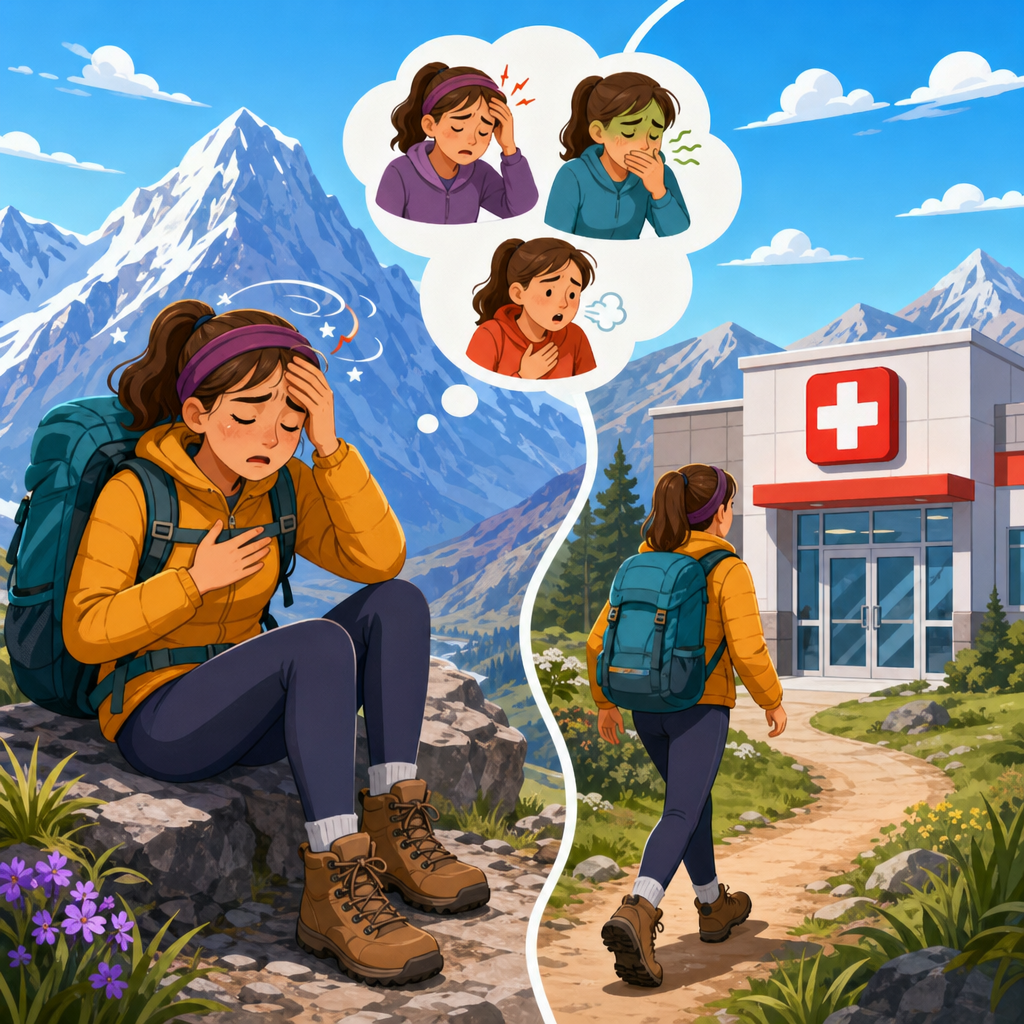
Altitude symptoms can change from inconvenient to dangerous in a matter of hours, which is why knowing when to go to urgent care for altitude symptoms is essential for anyone traveling above about 8,000 feet. Altitude illness is a spectrum caused by reduced barometric pressure and lower oxygen availability at elevation. The main conditions are acute mountain sickness, high-altitude cerebral edema, and high-altitude pulmonary edema. Descent means moving to a lower elevation to reduce stress on the body. Treatment includes rest, oxygen, medicines, fluids, and observation. Emergency response covers evacuation, rescue coordination, and recognizing when urgent care is not enough and an emergency department is the safer destination.
I have seen travelers dismiss early warning signs because they expected a headache and mild fatigue to be normal. Sometimes they are. The problem is that altitude illness does not always stay mild. A manageable headache after a rapid ascent can evolve into vomiting, confusion, shortness of breath at rest, or inability to walk straight. Those changes are clinically important because they suggest impaired brain function or fluid accumulation in the lungs. In mountain towns, urgent care clinics often serve as the first practical medical stop, especially when symptoms begin after a hike, ski day, or arrival from sea level.
This hub page explains when urgent care is appropriate, when immediate descent matters more than any clinic visit, and when to skip urgent care entirely and call emergency services. It also outlines treatment options, what clinicians usually evaluate, how pulse oximetry fits into the picture, and why acclimatization history matters. If you are planning trips in the Rockies, Andes, Alps, Himalaya, or any high desert plateau, understanding the descent, treatment, and emergency response pathway can prevent delayed decisions that lead to severe altitude illness.
Understanding the altitude illness spectrum and the first decision point
The first question is simple: are the symptoms mild, worsening, or severe? Mild acute mountain sickness usually includes headache plus one or more of the following after recent ascent: nausea, loss of appetite, unusual fatigue, dizziness, or poor sleep. In a stable person with mild symptoms, rest, hydration, avoiding further ascent, and close monitoring may be reasonable. However, urgent care becomes appropriate when symptoms are moderate, persistent, or interfering with normal activity. Examples include repeated vomiting, headache not improving with acetaminophen or ibuprofen, dizziness that makes walking difficult, or symptoms lasting more than twenty-four hours despite rest.
The reason this threshold matters is that urgent care can assess hydration status, oxygen saturation trends, breathing effort, neurologic changes, and other causes that mimic altitude illness, such as viral infection, migraine, dehydration, carbon monoxide exposure, asthma flare, pneumonia, or low blood sugar. A clinician may use the Lake Louise symptom framework informally, perform a lung exam, check gait and coordination, and ask about ascent rate, sleeping altitude, prior episodes, and use of acetazolamide. Those details help separate uncomplicated acute mountain sickness from early cerebral or pulmonary complications.
One caution from real-world practice: pulse oximeter readings alone do not decide severity. At altitude, lower oxygen saturation is expected, and a single number without context can mislead. What matters is the whole picture: resting symptoms, rate of breathing, mental status, exertional tolerance, and whether the person is deteriorating. A trekker at 10,000 feet with an oxygen saturation of 88 percent but no distress may be less concerning than a skier at the same elevation with saturation of 91 percent, new cough, breathlessness at rest, and crackles in the lungs.
When urgent care is the right choice for altitude symptoms
Urgent care is usually the right choice when altitude symptoms are significant but the patient is still stable enough to arrive safely without emergency transport. Common examples include moderate acute mountain sickness, dehydration from vomiting, a lingering headache after ascent, mild shortness of breath with exertion, or uncertainty about whether symptoms are altitude related at all. Many urgent care centers in mountain regions can provide oxygen, anti-nausea medication, dexamethasone in selected cases, intravenous fluids when clinically indicated, and guidance on whether immediate descent is necessary.
Go to urgent care promptly if you have headache with nausea after a recent ascent and symptoms are worsening instead of improving; if you cannot keep fluids down; if exertional breathlessness is greater than expected for your fitness level; if you develop a new persistent cough; if fatigue is so marked that routine walking feels unusually hard; or if you are caring for a child or older adult whose symptoms are difficult to assess at home. Pregnant travelers, people with underlying lung or heart disease, and those with prior high-altitude pulmonary edema deserve a lower threshold for evaluation because complications can develop faster.
Urgent care also helps when the safest next step is unclear. I have advised plenty of travelers who wanted a simple answer: should we rest here, descend now, or go to the hospital? That decision often depends on exam findings rather than symptoms alone. For example, a person with mild headache and poor sleep after sleeping at 9,500 feet may only need observation and no further ascent. By contrast, someone with visible labored breathing or unsteady tandem gait needs more than reassurance. In that setting, urgent care can identify red flags quickly and arrange transfer if the illness exceeds outpatient capacity.
When descent matters more than treatment at a clinic
Descent is the definitive treatment for worsening altitude illness. Medicines and oxygen can stabilize symptoms, but lowering elevation addresses the actual environmental trigger. As a practical rule, descend if symptoms progress despite rest, if moderate acute mountain sickness prevents normal activity, or if there are any signs suggesting cerebral or pulmonary edema. A drop of 1,000 to 3,000 feet can make a meaningful difference, and larger descents are often better if severe symptoms are present. Do not wait for morning if the patient is deteriorating overnight.
People often ask whether they should drive to urgent care first or start descending immediately. If severe symptoms are absent and a clinic is close, urgent care may be a sensible stop. But when concerning features appear, descent should begin now while help is arranged. The classic red flags are shortness of breath at rest, confusion, inability to walk heel-to-toe, bluish lips, coughing up frothy sputum, severe weakness, or reduced level of consciousness. These are not “see how you feel in an hour” symptoms. They indicate possible high-altitude pulmonary edema or high-altitude cerebral edema, both medical emergencies.
Portable oxygen and hyperbaric bags can buy time in expedition settings, but they are not substitutes for descent when evacuation is feasible. Nifedipine is sometimes used for pulmonary edema, and dexamethasone is used for cerebral edema, yet both are adjuncts. Continuing to sleep at the same elevation after severe symptoms appear is a common and dangerous mistake. If weather, terrain, or darkness complicates movement, activate local rescue resources early. In mountain medicine, delayed descent is one of the clearest predictors of bad outcomes because these illnesses can accelerate rapidly.
Red flags that mean skip urgent care and seek emergency help
Some altitude symptoms require emergency department care or emergency medical services rather than urgent care. High-altitude cerebral edema often presents with altered mental status, severe lethargy, confusion, irrational behavior, poor coordination, or inability to walk normally. High-altitude pulmonary edema typically causes breathlessness at rest, persistent cough, chest tightness, rapid heartbeat, rapid breathing, reduced exercise tolerance, and sometimes pink or frothy sputum. Either condition can be fatal without prompt oxygen, descent, and advanced monitoring.
| Symptom or sign | Likely concern | Best next step |
|---|---|---|
| Mild headache, fatigue, poor sleep after ascent | Possible mild acute mountain sickness | Rest, no further ascent, monitor closely |
| Repeated vomiting or worsening headache | Moderate illness or dehydration | Go to urgent care promptly |
| Shortness of breath at rest or new wet cough | Possible high-altitude pulmonary edema | Descend and seek emergency care |
| Confusion, stumbling, unusual behavior | Possible high-altitude cerebral edema | Call emergency services and descend |
| Blue lips, severe weakness, fainting | Critical oxygen impairment | Immediate emergency response |
Chest pain, one-sided weakness, seizure, collapse, and serious trauma always deserve emergency evaluation because not every crisis at altitude is altitude illness. Heart attack, stroke, pulmonary embolism, diabetic emergency, and head injury can look similar in the field. If the patient cannot safely walk, cannot answer simple questions, or seems dramatically worse over one to two hours, do not choose urgent care for convenience. Emergency services, ski patrol, park rescue, or direct transport to an emergency department is the safer path.
What urgent care can do: evaluation, treatment, and limits
Mountain-area urgent care clinics vary, but most can assess vital signs, oxygen saturation, hydration, neurologic status, and lung findings. Some have chest X-ray, electrocardiography, lab testing, nebulizers, intravenous fluids, and supplemental oxygen. Oxygen often provides rapid symptomatic relief, but clinicians should still judge whether the patient needs transfer because temporary improvement does not rule out pulmonary or cerebral edema. A structured history matters: maximum sleeping elevation, pace of ascent, prior acclimatization, alcohol use, sedative use, recent infection, and exertion level all change the risk profile.
Treatment depends on the diagnosis. For uncomplicated acute mountain sickness, standard recommendations from wilderness medicine sources emphasize stopping ascent, resting, using analgesics for headache, and considering acetazolamide or dexamethasone in selected cases. Acetazolamide helps acclimatization by promoting bicarbonate diuresis and stimulating ventilation; it is preventive and therapeutic, but not instant. Dexamethasone can reduce cerebral swelling symptoms quickly, which is why clinicians may use it when severe headache or neurologic symptoms raise concern. For suspected high-altitude pulmonary edema, oxygen and descent are priorities, and nifedipine may be considered.
The limits of urgent care are just as important. Most clinics are not designed for prolonged monitoring of unstable patients, advanced airway management, or intensive treatment of severe pulmonary edema or cerebral edema. If oxygen needs remain high, mental status is abnormal, gait is impaired, or respiratory distress persists, transfer should not be delayed. This is especially true at night, during storms, or in remote towns where ambulance and helicopter logistics take time. A good urgent care team recognizes those boundaries and escalates early rather than trying to manage a mountain emergency in an outpatient setting.
How to respond before, during, and after medical evaluation
If you suspect altitude illness, stop ascending immediately. Keep the person warm, reduce exertion, and monitor basic changes: breathing rate, alertness, ability to speak full sentences, urine output, and whether walking becomes harder. Avoid alcohol and sedatives because they can worsen breathing and cloud assessment. If the patient is nauseated, use small sips of fluid rather than forcing large volumes. Overhydration is not a cure and can create additional problems. If home medications include acetazolamide prescribed for altitude travel, follow the established dosing plan unless a clinician advises otherwise.
During transport to urgent care or an emergency facility, seat the patient upright if breathing is difficult and avoid unnecessary exertion from parking lots or stairs. Bring useful information: current elevation, highest sleeping elevation, ascent schedule, medication list, allergies, medical history, and any pulse oximeter readings with times attached. Those details make care faster and more accurate. If symptoms are severe, one person should focus on the patient while another handles navigation, phone calls, and coordination with lodging, guides, or rescue personnel.
After treatment, the biggest mistake is returning to activity too soon. Do not resume hiking, skiing, climbing, or further ascent until symptoms have fully resolved and a clinician has said it is reasonable. Anyone treated for pulmonary or cerebral edema should avoid re-ascent until formally cleared, and many need a revised prevention plan for future trips. That plan may include slower ascent, staged sleeping elevations, prophylactic acetazolamide, rest days, and better recognition of personal warning signs. Review what happened while the details are fresh; that lesson can prevent a repeat emergency on the next trip.
Knowing when to go to urgent care for altitude symptoms comes down to pattern recognition and urgency. Mild symptoms after ascent can often be monitored, but moderate, persistent, or unclear symptoms deserve prompt evaluation. Worsening headache, repeated vomiting, significant fatigue, new cough, and unusual shortness of breath are all strong reasons to seek urgent care, especially in people with higher medical risk. Severe neurologic changes, shortness of breath at rest, blue lips, collapse, or inability to walk normally mean urgent care is not enough; descend and seek emergency help immediately.
The main benefit of understanding descent, treatment, and emergency response is speed. Altitude illness is one of the few travel-related conditions where a simple environmental intervention—going lower—can be lifesaving. Clinics, oxygen, and medications support that decision, but they do not replace it when danger signs appear. Use this page as your hub for recognizing red flags, planning safe descents, and getting the right level of care without delay. Before your next high-elevation trip, review your route, know the nearest urgent care and emergency department, and make a descent plan before you need one.
Frequently Asked Questions
1. When should you go to urgent care for altitude symptoms instead of waiting it out?
You should go to urgent care for altitude symptoms when your symptoms are more than mild, are getting worse instead of better, or are interfering with normal activity. Mild acute mountain sickness can start with headache, nausea, unusual fatigue, dizziness, poor sleep, or loss of appetite after gaining elevation, often above about 8,000 feet. Those symptoms sometimes improve with rest, hydration, avoiding further ascent, and time to acclimate. However, if the headache is significant and does not improve, vomiting begins, walking feels harder than it should, you feel short of breath with minimal activity, or you cannot keep fluids down, it is time to be evaluated promptly.
Urgent care can be appropriate for moderate altitude illness because clinicians can assess oxygen levels, heart rate, breathing, hydration status, and whether your symptoms fit uncomplicated acute mountain sickness or something more serious. They can also help decide whether you need medication, observation, or immediate transfer to an emergency department. A good rule is this: if symptoms are progressing over hours, if you are unable to function normally, or if you are unsure whether it is “just altitude,” it is safer to seek care early. Altitude illness can move from inconvenient to dangerous faster than many travelers expect.
2. What altitude symptoms are signs of an emergency rather than a problem urgent care can manage?
Some altitude symptoms require emergency care immediately, not a wait for a routine visit. Red-flag symptoms include severe shortness of breath at rest, blue or gray lips, chest tightness, a wet or persistent cough, coughing up frothy sputum, confusion, unusual behavior, extreme drowsiness, inability to walk in a straight line, loss of coordination, fainting, or a severe headache with repeated vomiting and worsening neurological symptoms. These warning signs may point to high-altitude pulmonary edema, which is fluid buildup in the lungs, or high-altitude cerebral edema, which is brain swelling. Both are medical emergencies.
If any of these occur, the most important first step is descent to a lower elevation as soon as possible, because going lower reduces the body’s stress from low oxygen. Call emergency services or go to the nearest emergency department if available, especially if the person is struggling to breathe, acting confused, or cannot walk safely. If an urgent care center is the only nearby medical option, go there immediately while arranging emergency transport if needed. The key distinction is that breathing trouble at rest, mental status changes, or coordination problems are never symptoms to monitor casually at altitude.
3. Can urgent care help with acute mountain sickness, high-altitude cerebral edema, and high-altitude pulmonary edema?
Urgent care may be able to help with early or moderate acute mountain sickness, but suspected high-altitude cerebral edema or high-altitude pulmonary edema needs emergency-level attention. Acute mountain sickness is the most common form of altitude illness and often begins with headache, nausea, dizziness, fatigue, and poor sleep after a rapid ascent. Urgent care clinicians can evaluate how severe the illness is, check vital signs and oxygen saturation, provide supportive treatment, and guide you on whether you must stop ascending, rest, or descend. They may also identify whether another problem, such as dehydration, a viral illness, or a migraine, is contributing to the symptoms.
High-altitude cerebral edema and high-altitude pulmonary edema are much more serious. High-altitude cerebral edema can cause confusion, clumsiness, difficulty walking, severe lethargy, or altered behavior. High-altitude pulmonary edema can cause worsening breathlessness, rapid breathing, reduced exercise tolerance, cough, chest congestion, and low oxygen levels. These conditions can deteriorate quickly and often require oxygen, close monitoring, medication, and rapid descent. In practice, urgent care may serve as the first point of contact, but its role is often to recognize the emergency, stabilize you if possible, and arrange transfer for higher-level treatment. If those severe symptoms are present, think beyond urgent care and seek emergency help right away.
4. How quickly can altitude sickness become dangerous, and why does descent matter so much?
Altitude illness can worsen within hours, especially if someone continues to climb higher despite symptoms. What starts as mild headache and fatigue can evolve into more serious illness if the body cannot adapt to reduced barometric pressure and lower oxygen availability. At elevation, every additional gain can increase the stress on the brain, lungs, and cardiovascular system. That is why the advice to “just sleep it off” can be risky when symptoms are clearly escalating. A person who was only uncomfortable in the morning may become unstable by evening if nausea worsens, walking becomes difficult, or breathing becomes more labored.
Descent matters because it directly addresses the trigger: lower oxygen availability at high elevation. Moving to a lower altitude increases available oxygen and can slow or reverse the progression of illness. It is one of the most effective interventions for significant altitude symptoms. Medical care is important, but it does not replace descent when symptoms are serious or progressing. If symptoms are not improving with rest at the same elevation, or if there are warning signs like shortness of breath, confusion, poor coordination, or persistent vomiting, descending is not optional. It is a core part of treatment and often the step that prevents a medical emergency from becoming life-threatening.
5. What should you do before heading to urgent care for altitude symptoms?
Before heading to urgent care, stop ascending immediately and assess how severe the symptoms are. Do not continue hiking, skiing higher, or traveling to a higher lodge or trailhead. Rest, avoid alcohol and strenuous activity, and if the person is able, encourage fluids in small amounts. If oxygen is available, use it according to available guidance while arranging medical evaluation. If symptoms are severe, especially confusion, trouble breathing at rest, or inability to walk normally, begin descent and seek emergency help at the same time rather than waiting for things to improve.
It also helps to note when the person arrived at altitude, how fast they ascended, the highest elevation reached, what symptoms began first, and whether they are improving or worsening. That information can help urgent care clinicians quickly judge the risk of acute mountain sickness versus more severe altitude illness. If the person has a pulse oximeter reading, bring that information, but do not rely on a device alone to decide whether everything is fine. Most importantly, trust the clinical picture. If someone looks sick, is acting differently, is struggling to breathe, or cannot keep up even minimal activity, seek prompt medical attention. At altitude, early evaluation is often the safest choice.