Solar panels in snowy mountain climates teach owners a blunt lesson early: cold weather is not the enemy, but snow load, short winter days, icing, access, and storage planning absolutely are. In off-grid and resilience planning, that distinction matters because a photovoltaic array can produce efficiently in low temperatures while still failing to meet household needs if the site, battery bank, mounting geometry, and backup systems were designed for a milder place. I have worked with mountain cabins, year-round homes, trailhead service buildings, and vehicle-based systems where owners assumed “more panels” would solve winter reliability, only to discover that terrain shading, buried equipment, frozen conduit, and multi-day storms mattered more than module nameplate wattage. This hub article explains what owners learn fast, what causes the biggest performance gaps, and how to build an off-grid power system that remains practical when roads close and the snowpack deepens.
Snowy mountain climates combine several stresses that do not usually appear together at lower elevations. Days are shorter near the winter solstice, storms can block solar resource for days, and steep terrain creates hard morning and afternoon shade. At the same time, roofs see drifting and sliding snow, batteries face low-temperature charging limits, and maintenance becomes a safety issue rather than a routine task. “Off-grid” means the system can operate independently of the utility grid; “resilience” means the home or mobile setup can maintain critical functions through outages, fuel disruptions, and extreme weather. For this subtopic hub, solar is the anchor technology, but owners quickly learn that winter energy success depends on the entire stack: conservation, array design, battery chemistry, inverter settings, heating strategy, backup generation, water pumping, communications, vehicle charging, and realistic operating habits. The strongest systems are designed around the worst two weeks of the year, not the average month.
Why snow country changes the solar equation
Mountain owners are often surprised to hear that solar modules themselves usually like cold air. Crystalline silicon panels generally produce voltage more efficiently at lower cell temperatures, which is why a bright, cold day can deliver strong instantaneous output. The problem is that winter energy is governed by total daily harvest, not just noon performance. In December and January, the sun angle is low, daylight hours are brief, and snowstorms can cover modules completely. A 400-watt panel that performs beautifully in crisp air still produces almost nothing under opaque snow cover.
Terrain makes this tougher. South-facing exposure is valuable, but ridgelines, conifers, and nearby peaks can erase hours of production from both shoulders of the day. I have seen sites with excellent annual solar maps underperform badly in winter because a mountain wall blocked the sun until nearly 10:30 a.m. Owners also learn that albedo, the reflectivity of snow, can help by bouncing more light onto modules, especially bifacial designs, but reflected light never compensates for full panel burial. Winter design therefore starts with a true horizon survey, not just a compass heading.
Snow load is the other fast lesson. A roof that carries local design snow load may still create operational headaches if low-tilt arrays hold snow for days. Steeper mounting angles shed faster, but they can raise wind exposure and installation complexity. Ground mounts can be optimized for winter tilt and easier clearing, yet they need setbacks from drifts, plow paths, and avalanche-prone zones. In remote areas, equipment placement often determines whether the owner can safely service the array after a storm.
Site design, tilt, and mounting choices that matter most
The highest-value design choice in snowy mountain solar is usually not module brand but array placement. When owners ask whether roof mounting or ground mounting is better, the practical answer is that ground mounts often win for off-grid resilience if the site allows them. They can be set at steeper winter-friendly angles, kept away from heat-loss patterns that create roof ice, and accessed without climbing onto a slick surface. They also make module inspection, wiring checks, and snow clearing much safer.
Roof arrays still make sense on many homes, especially where wildlife, theft risk, or limited land constrain ground systems. In that case, owners learn to prioritize sections with the best winter exposure and the least drift accumulation. Flush-mount systems common in suburban installations are rarely ideal in heavy snow country. Elevated rail systems and steeper pitches tend to clear faster. The tradeoff is appearance, wind loading, and sometimes permit complexity. Local structural review is nonnegotiable; mountain roofs see asymmetric drifting that can stress attachment points differently from uniform snow loads.
A simple planning rule I use is to treat winter tilt as an energy-management tool, not an aesthetic preference. Arrays tilted more steeply than latitude often produce more useful winter energy and shed snow sooner, even if annual output is slightly lower than a shallower angle optimized for summer. For resilience, the useful kilowatt-hour in January is usually more valuable than the marginal extra kilowatt-hour in June.
| Design choice | Typical winter benefit | Main tradeoff |
|---|---|---|
| Steep tilt array | Faster snow shedding, better low-sun capture | Higher wind exposure, more visible structure |
| Ground mount | Safer access, easier maintenance, adjustable placement | Requires land, fencing, trenching, snow management |
| Roof mount | Uses existing footprint, less site disturbance | Harder snow removal, roof safety concerns, drift issues |
| Bifacial modules over snow | Can gain reflected-light production | Only helpful when front surface remains clear |
| String inverter layout | Simple architecture, efficient wiring | Shade on one module can affect string output |
| Module-level electronics | Better performance under partial shade | More rooftop components, cold-weather service limits |
Battery storage and winter power budgeting
Off-grid owners in mountain climates stop thinking in panel watts and start thinking in stored usable energy. Battery capacity must bridge storms, shade, and low-production days. In practice, that means estimating critical loads first: well pump, refrigeration, communications, lighting, controls, medical devices, and modest electronics. Resistance heating and electric water heating usually overwhelm an off-grid budget unless the system is exceptionally large and expensive. Space heat is better handled with wood, propane, hydronic systems, or high-efficiency heat pumps where climate and backup support allow.
Lithium iron phosphate batteries are now common because they offer strong cycle life and usable depth of discharge, but owners learn quickly that charging them below freezing requires protection. Most serious systems use battery management systems with low-temperature charge cutoff and place batteries in insulated mechanical rooms. Lead-acid batteries tolerate cold in some respects, but their usable capacity drops as temperatures fall, and maintenance is less attractive in remote winter conditions. Either chemistry must be selected around actual ambient conditions and charging behavior, not brochure assumptions.
Autonomy is the key planning concept. A cabin used only on sunny weekends can accept a leaner design than a full-time home supporting remote work, satellite internet, freezers, pressure pumping, and security systems. I advise owners to separate “must-run” from “nice-to-run” circuits. That one step clarifies battery sizing, inverter selection, and generator runtime. It also reduces stress during storms because everyone in the household knows which loads stay on.
Backup heat, generators, and hybrid resilience
The fastest path to disappointment in snowy off-grid living is expecting solar and batteries to do everything. Robust mountain systems are hybrid by design. A generator is not a failure of solar planning; it is a resilience tool that protects batteries during prolonged cloud cover, supports equalization or high-demand events, and covers unusual seasonal loads such as deep-freeze starts, workshop use, or emergency thawing equipment. The best installations use automatic generator start logic sparingly and with clearly defined battery state-of-charge thresholds.
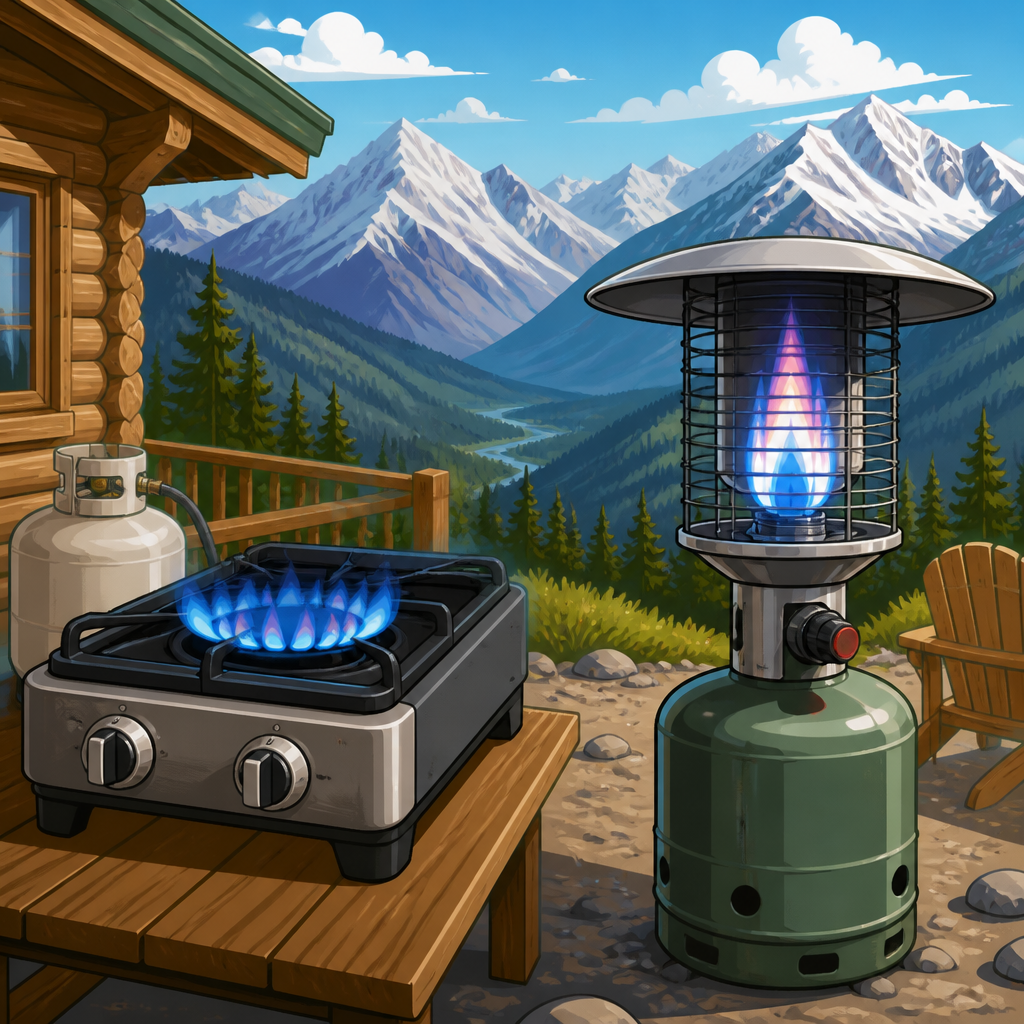
Fuel choice matters. Propane stores well and integrates cleanly with standby generators, cooking, and backup heating, but delivery access can be difficult after storms. Diesel performs well for larger systems yet introduces cold-weather fuel treatment and maintenance considerations. Gasoline is easy to source but less stable for long storage unless managed carefully. Owners should store fuel within code, rotate it on schedule, and test under actual winter conditions.
Heating strategy is equally central to resilience. Most mountain homes that perform well off-grid use solar electricity for lights, controls, pumps, refrigeration, and electronics while relying on non-electric primary heat. A wood stove with outside air supply, a sealed-combustion propane heater, or a hydronic boiler keeps thermal loads off the battery bank. That design choice often cuts system cost dramatically while improving survivability during long storms.
Operations, maintenance, and the human factor
Owners learn fast that winter performance is heavily operational. Snow on panels does not always need clearing; many arrays self-shed after sun returns. But if the site enters a long low-sun period, careful manual clearing can restore production sooner. The keyword is careful. Metal tools can scratch glass, damage frames, or hit wiring. Soft snow rakes designed for solar panels are safer, and roof work in icy conditions should be avoided unless proper fall protection is in place.
Monitoring is indispensable. A quality battery monitor, inverter portal, and charge controller logs show whether the system is underperforming because of shading, snow cover, battery temperature, or unusual loads. I strongly prefer installations with visible state-of-charge indicators in the living space. When residents can see the energy picture, they naturally shift discretionary use to sunny windows and reduce unnecessary nighttime consumption.
Maintenance extends beyond the array. Vents must stay clear, generator exercise schedules must be followed, spare fuses and breakers should be stocked, and critical manuals should be available offline. After repeated mountain deployments, I have found that the most resilient owners keep a laminated restart procedure near the power wall and label every disconnect plainly. In a cold, dark outage, clarity matters more than elegance.
How this hub connects the wider off-grid and resilience system
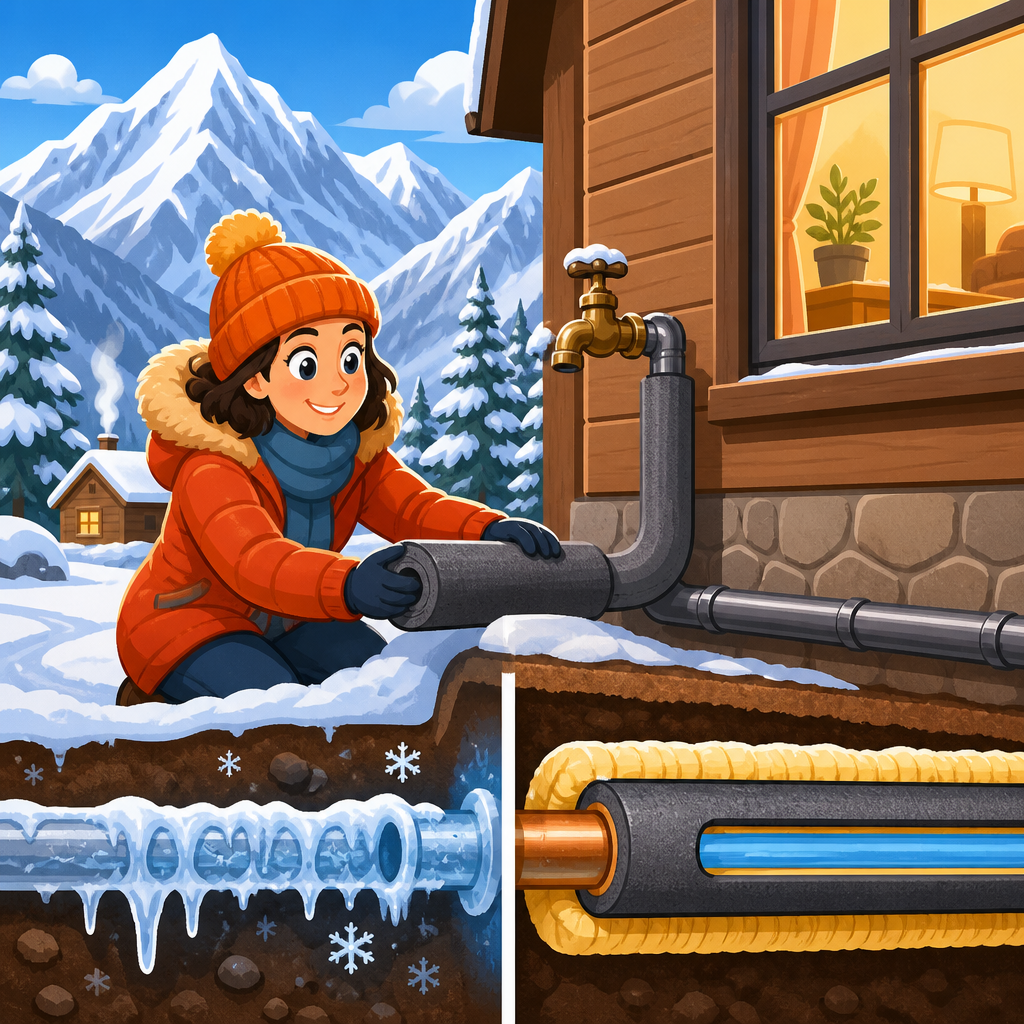
Solar in snowy mountain climates is the doorway into the broader off-grid and resilience category because it forces disciplined thinking across all household systems. Power production links directly to water security when a well pump must run during a freeze. It affects food storage because freezer runtime shapes battery size. It influences transportation because electric vehicle charging, block heaters, and fuel storage all compete for infrastructure and planning attention. Communications resilience depends on powering routers, boosters, radios, and backup internet during outages. Even sanitation and plumbing protection depend on whether controls, recirculation pumps, and heat tape have dependable energy behind them.
As a hub topic, this page should guide owners toward deeper decisions: energy audits, battery chemistry comparisons, generator sizing, winterizing mechanical rooms, snow-shedding mount design, off-grid water pumping, propane logistics, backup cooking, and load-shifting habits. The common lesson is simple. In mountain winter, resilience is systemic. Panels are essential, but they are only one component in a chain that must hold under stress.
Owners who succeed treat solar as part of a practical winter operating plan. They size around critical loads, favor accessible mounting, protect batteries from cold, preserve non-electric heating options, and keep a tested generator for long storms. They also respect local conditions: snow load engineering, terrain shading, avalanche exposure, access constraints, and county permitting. That realism produces better outcomes than chasing idealized annual production numbers.
If you are building or upgrading an off-grid setup in snow country, start with the harshest week you expect to live through, then work backward through loads, storage, array placement, and backup fuel. Done well, solar panels in snowy mountain climates can support a home that is quieter, more independent, and far more outage-resistant. Use this hub as your starting point, then map each supporting system with the same winter-first mindset.
Frequently Asked Questions
Do solar panels work well in snowy mountain climates, or does cold weather make them inefficient?
Yes, solar panels can work very well in snowy mountain climates, and this is one of the first things owners learn. Cold temperatures do not hurt photovoltaic performance the way many people assume. In fact, solar modules generally operate more efficiently in cold conditions than in extreme heat. The real issue is not winter air temperature by itself. The problems come from snow cover, ice formation, shorter winter daylight hours, cloudier weather patterns, and the practical realities of maintaining a system in remote, high-elevation conditions.
That distinction matters a lot, especially for off-grid homes and resilience-focused systems. A mountain array may be technically efficient on a cold, bright day, but if the panels are buried under snow, shaded by ridgelines, or only getting a few useful production hours in midwinter, the household can still run short on power. Owners also discover that winter energy demand often rises at the same time solar production becomes less predictable. Lights stay on longer, fans and pumps may run more, and battery charging windows get tighter. So while the panels themselves may like the cold, the overall system has to be designed for severe winter constraints, not just annual average conditions.
In practice, the best-performing mountain systems are designed around realistic winter production rather than optimistic yearly totals. That means accounting for local snow patterns, panel tilt, storm frequency, access for clearing, battery reserve, and backup generation. Owners who understand this early avoid the common mistake of assuming that efficient panels automatically mean dependable winter power.
What causes the biggest winter problems for solar owners in the mountains?
The biggest winter problems are usually snow load, snow accumulation on the panel surface, icing, shading, and underbuilt energy storage. Most owners expect some production loss in winter, but what surprises them is how quickly small design oversights turn into major reliability issues. A roof or rack that was acceptable in a milder climate may struggle under repeated heavy snow events. Panels mounted too low or too flat can hold snow longer, and arrays placed in hard-to-reach locations become a constant maintenance challenge after storms.
Snow load is a structural issue first. Mountain installations need mounting hardware, attachment methods, and support structures rated for local conditions, including drift potential and wet, heavy snowfall. Then there is the operational side: even a structurally sound array may produce very little if snow remains stuck on the glass for days. Owners also run into icing at the lower edge of panels, frozen disconnect areas, and packed snow around ground mounts that makes inspection or repair difficult.
Another major problem is energy mismatch. Winter solar windows are shorter, but household expectations often stay the same or increase. If the battery bank is too small, the inverter capacity is mismatched, or there is no serious backup plan, one storm cycle can expose the weakness of the whole system. In mountain climates, owners learn fast that a solar array is only one part of winter resilience. Storage, generator integration, snow-season maintenance access, and conservative load planning are what keep the lights on when weather turns rough.
How should solar panels be installed differently in snowy mountain areas?
Solar in snowy mountain areas should be installed with winter-first design priorities. That usually means steeper tilt angles, robust structural engineering, careful siting to reduce snow retention and shading, and easier service access. A steeper tilt can help panels shed snow faster and may improve winter production when the sun sits lower in the sky. It will not eliminate snow buildup in every storm, but it often reduces how long panels stay covered compared with lower-angle arrays designed mainly for annual production targets.
Mounting height and access matter more than many first-time owners realize. Ground-mounted arrays need enough clearance to avoid burial from plowing, drifting, or repeated storm accumulation. Roof-mounted systems need attention to roof edge snow behavior, avalanche-style shedding, and whether owners can safely inspect or clear the array if needed. In many mountain settings, the best layout is not simply the one with the highest theoretical output. It is the one that can still be reached, maintained, and trusted in February after multiple snow events.
Installers should also evaluate winter shading very carefully. A site that looks open in summer can lose valuable low-angle sunlight in winter because of surrounding peaks, tall evergreens, or nearby structures. For off-grid systems, battery capacity should be sized around the worst part of the year, not the easiest. Backup charging, whether from a generator or another source, should be built in from the start rather than treated as an afterthought. The most successful mountain systems are engineered as complete cold-season power systems, not just arrays placed in a scenic location.
Do owners need batteries and backup generators more often in snowy mountain climates?
In many cases, yes. Batteries become far more important in snowy mountain climates because solar production can swing sharply from one day to the next. A bright, cold day may generate solid output, but a run of storms, heavy snow cover, or fog can reduce production enough to stress the system quickly. For off-grid homes, a properly sized battery bank is essential because it bridges those gaps and allows the household to ride through periods when the array is underperforming.
That said, owners often discover that batteries alone are not enough unless they were sized with true winter conditions in mind. Storage planning has to reflect short daylight hours, increased indoor energy use, and the possibility that panels may not fully recharge the bank for several days. In mountain environments, conservative storage design is usually wiser than chasing minimum upfront cost. Depth of discharge limits, battery temperature management, charging behavior in cold weather, and inverter efficiency all matter more when the margin for error is thin.
Backup generators are also common because they provide practical resilience when weather stacks the odds against solar. A generator is not a sign that the solar system failed. In many mountain installations, it is part of a realistic design strategy. The key is proper integration: automatic or easy manual charging support, fuel storage planning, safe winter starting procedures, and a clear understanding of which household loads matter most during prolonged low-sun periods. Owners who learn this early stop thinking in terms of solar versus backup and start thinking in terms of layered reliability.
What do new owners usually underestimate when planning a mountain solar system?
New owners usually underestimate winter energy shortfalls, maintenance access, and the difference between panel efficiency and system reliability. They may hear that solar performs well in cold weather and assume that means winter power will be easy. What they learn quickly is that an efficient panel does not guarantee enough usable energy for a mountain household during snow season. Daily production can be limited by weather, snow cover, terrain shading, and the simple fact that winter days are short.
They also often underestimate the logistics. Can the array be safely reached after a storm? Can snow be cleared without damaging equipment or putting someone at risk? Will drifting snow block a ground mount, generator enclosure, or critical electrical equipment? Is there enough fuel, battery reserve, and spare capacity to handle several poor production days in a row? These are practical questions, but they are often what separates a system that looks good on paper from one that performs dependably in real mountain conditions.
Another common blind spot is designing around annual averages instead of seasonal extremes. A system may appear well sized based on yearly energy numbers while still falling short in the exact months when reliability matters most. Experienced mountain owners and installers tend to size for the hard weeks, not the easy months. They think about snow shedding, winter sun angle, battery autonomy, backup charging, and realistic load management. That blunt lesson arrives early for many owners: in snowy mountain climates, success comes from planning for winter constraints first and treating summer production as the bonus.