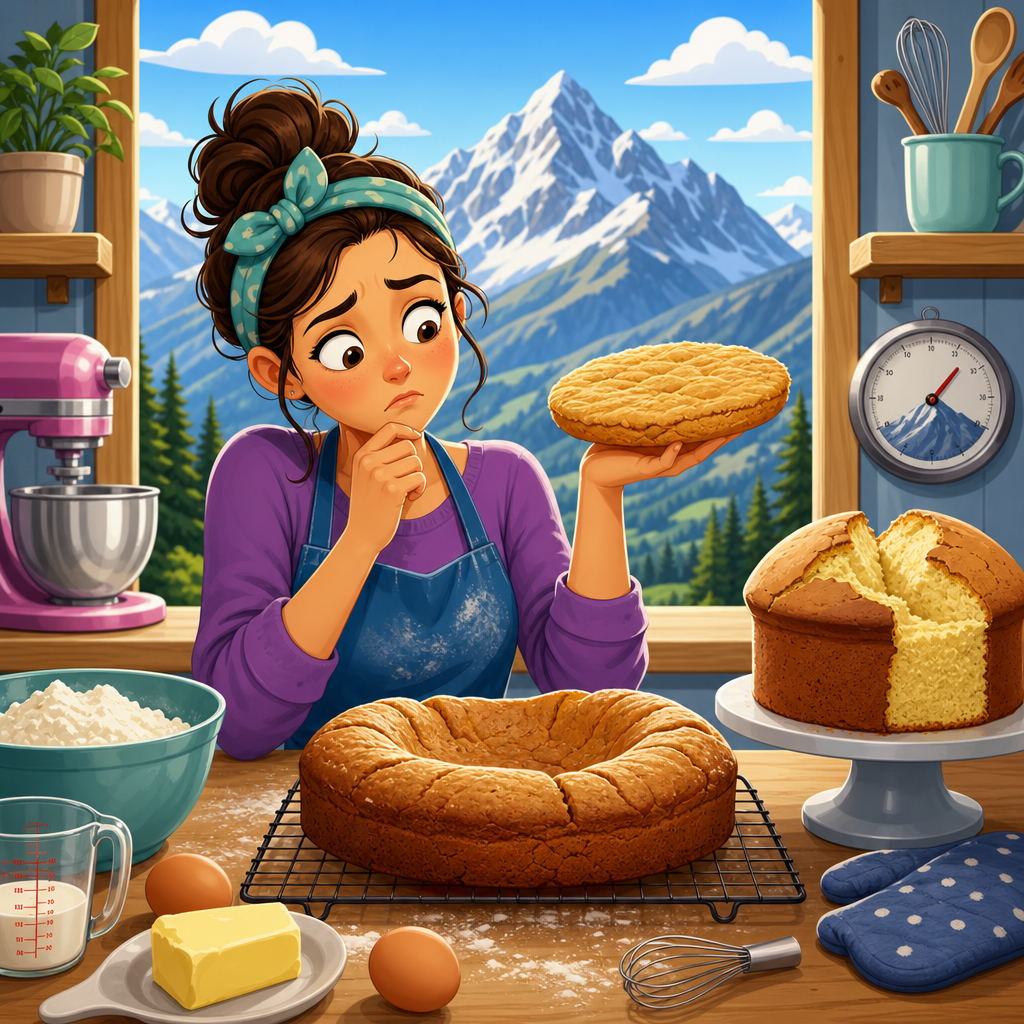
High-altitude baking begins where lower air pressure changes how cakes rise, how cookies spread, and how moisture leaves dough, so understanding what counts as high altitude for baking is the starting point for consistent results. In practical kitchen terms, most bakers begin making adjustments at 3,000 feet above sea level, moderate changes become more important around 5,000 feet, and at 7,000 feet or higher nearly every formula needs careful revision. Altitude matters because atmospheric pressure drops as elevation increases, which lowers the boiling point of water, speeds evaporation, allows leavening gases to expand faster, and can weaken the structure of batters before they set. I have tested the same muffin, sponge cake, and sandwich bread formulas in sea-level kitchens and in mountain towns above 6,000 feet, and the pattern is consistent: recipes that seem foolproof at low elevation can collapse, dry out, or over-rise when baked high up. For a hub page on baking fundamentals, the core idea is simple: high altitude is not just a number on a map; it is a set of physical conditions that affects flour hydration, sugar concentration, egg protein coagulation, starch gelatinization, and oven timing. Once you know the altitude bands and the science behind them, you can troubleshoot with confidence instead of guessing.
What altitude is considered high for baking?
For baking, high altitude generally starts at 3,000 feet, although the strongest and most predictable effects show up above 5,000 feet. Extension guidance from Colorado State University and the University of Wyoming commonly uses 3,000 feet as the point where adjustments may be needed, especially for cakes, quick breads, cookies, and chemically leavened products. Between 3,000 and 5,000 feet, some recipes work unchanged, but tender batters often need small modifications. Between 5,000 and 7,000 feet, changes are routine. Above 7,000 feet, water boils substantially below 212 degrees Fahrenheit, evaporation accelerates, and leavening can become aggressive enough to cause tunneling, peaked tops, coarse crumb, or collapse.
That means there is no single cliff where baking suddenly stops working. Instead, altitude behaves in ranges. A brownie recipe that performs well at 3,500 feet may fail at 7,500 feet because the same amount of baking powder creates too much lift before the egg-and-flour structure sets. A yeast loaf may proof faster and dry on the surface more quickly. Custards and cheesecakes may need gentler handling because moisture balance changes. When readers ask, “What counts as high altitude for baking?” the direct answer is this: start paying attention at 3,000 feet, expect regular adjustment at 5,000 feet, and treat 7,000 feet and above as a fully different baking environment.
Why altitude changes baking results
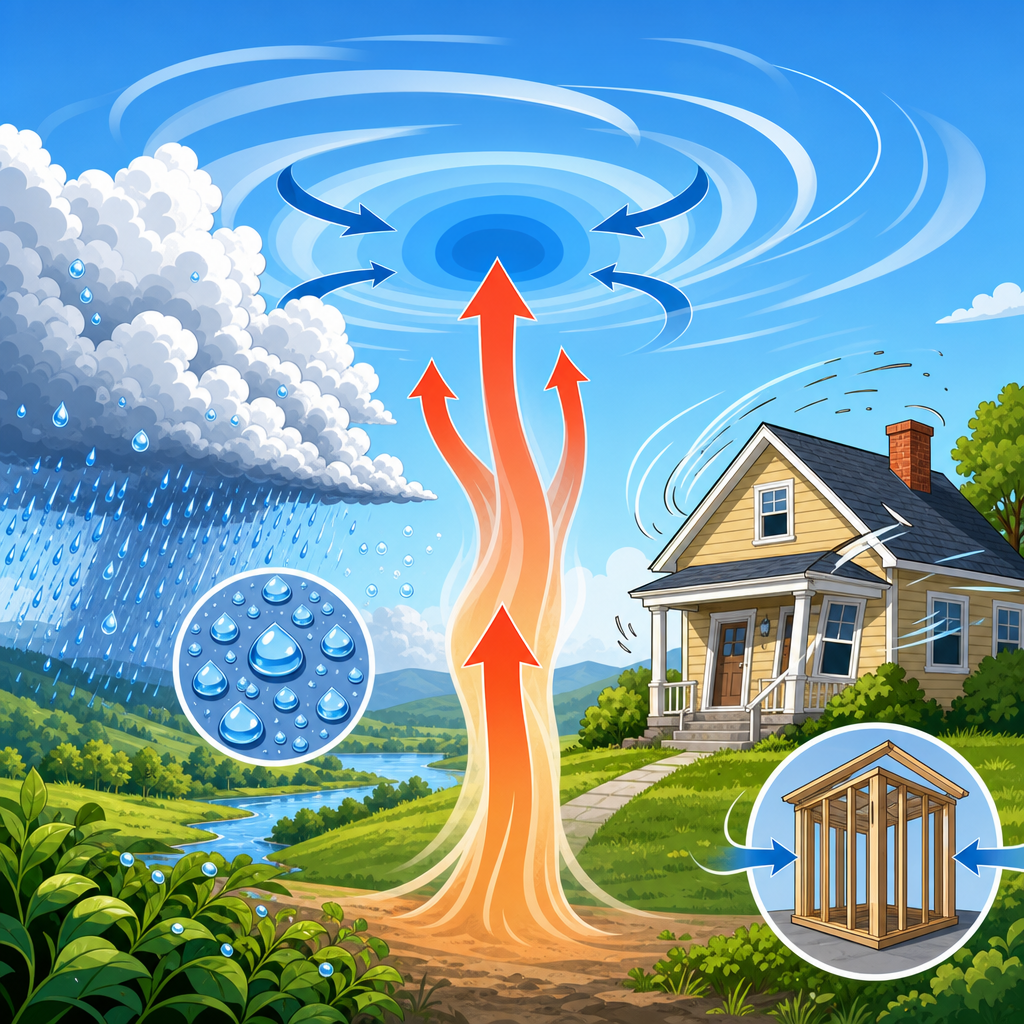
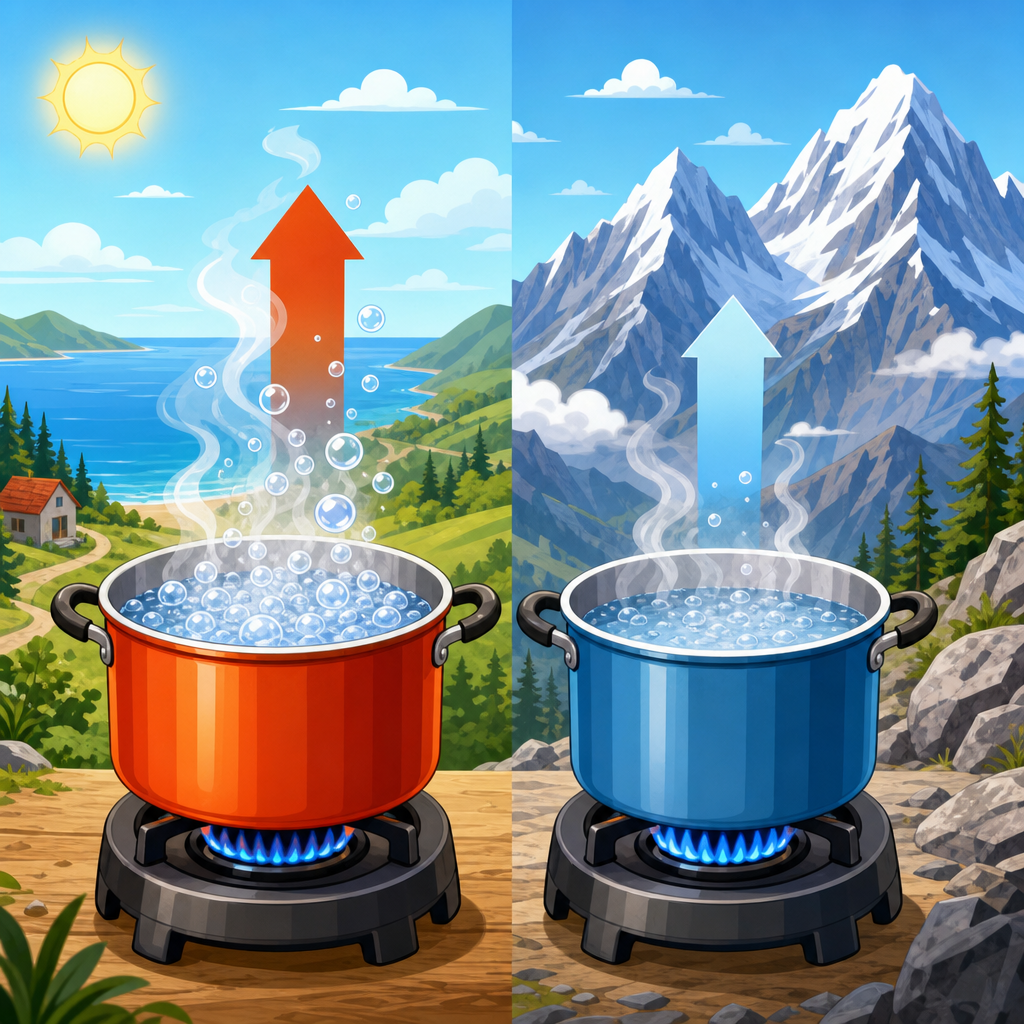
The most important driver is reduced air pressure. At higher elevations, gases expand more easily, so carbon dioxide from baking powder, baking soda, and yeast pushes batters upward faster. If structure has not developed enough by that point, the product overexpands and then falls. At the same time, water boils at a lower temperature. In Denver, around 5,280 feet, water boils near 202 degrees Fahrenheit rather than 212 degrees Fahrenheit at sea level. That lower boiling point means moisture turns to steam sooner, so batters can lose water before starches and proteins fully set. The result is often dry texture, fragile crumb, and shortened baking windows.
Sugar and fat also behave differently. Higher sugar levels can weaken structure, which is why delicate foam cakes often need less sugar at altitude. Fat tenderizes, but too much tenderness in a low-pressure environment can produce collapse. Flour becomes more important because it provides starch and protein framework. Eggs matter more too, since their proteins help stabilize air cells. In recipe testing, the fixes usually involve a combination of slightly lower leavening, slightly higher liquid, occasional flour increases, and hotter oven temperatures to set structure sooner. The reason these changes work is mechanical, not magical: you are balancing expansion, evaporation, and structure formation.
Altitude bands and the adjustments they usually require
The easiest way to think about baking fundamentals at elevation is by range, not by exact city. The farther you go above sea level, the more likely you are to modify ingredient ratios and baking conditions. This table gives a practical framework that I use when assessing recipes for cakes, muffins, cookies, biscuits, and yeast breads.
| Altitude | How bakers classify it | Typical impact | Common starting adjustments |
|---|---|---|---|
| 0 to 2,999 feet | Standard altitude | Most published recipes work as written | No change unless climate or flour differences require it |
| 3,000 to 4,999 feet | Lower high altitude | Batters may rise faster and lose moisture sooner | Slightly reduce leavening, add 1 to 2 tablespoons liquid, watch baking time |
| 5,000 to 6,999 feet | Moderate high altitude | Over-rising, collapse, dryness, and quick proofing become common | Reduce leavening more noticeably, increase liquid, sometimes add flour, raise oven temperature 15 to 25 degrees Fahrenheit |
| 7,000 feet and above | Very high altitude | Most standard formulas need revision | Adjust leavening, liquid, flour, sugar, and temperature together; test in small batches |
These are starting points, not fixed laws, because formula design matters. A lean hearth loaf responds differently than angel food cake. A high-fat pound cake behaves differently than a bran muffin. Still, altitude bands are useful because they help bakers choose the right level of intervention. If you live at 4,200 feet and your quick breads sink, you may solve the issue with a tablespoon or two of extra milk and a slight reduction in baking powder. If you live at 8,000 feet, those tiny changes usually are not enough.
How high altitude affects cakes, cookies, breads, and pastries
Cakes are usually the first category where altitude problems become obvious. Butter cakes can dome sharply, crack, and then sink in the middle. Sponge cakes can overexpand and shrink. Cheesecakes can dry at the edges before the center is set. The standard fixes are reducing chemical leavening, slightly reducing sugar, increasing liquid, and sometimes adding an extra egg white or a little more flour for structure. A higher oven temperature, often 15 to 25 degrees Fahrenheit more, helps set the batter before gas cells stretch too far.
Cookies often spread too much or, in some formulas, too little. At altitude, faster moisture loss can make a dough stiff while lower pressure still encourages spread once the fat melts. I usually adjust cookies by chilling dough more thoroughly, increasing flour slightly if needed, and being cautious with sugar and baking soda. For bar cookies and brownies, underbaking by sea-level timing can leave the center unstable, but overbaking dries the edges fast, so pan size and doneness cues become especially important.
Yeast breads bring a different set of issues. Fermentation can proceed faster because dough temperature and environmental conditions in mountain kitchens often push proofing along, even though altitude itself does not “feed” yeast. The practical outcome is overproofing risk. Dough can rise beautifully, then exhaust itself and bake flat. I shorten proof times, monitor dough volume instead of the clock, and cover dough well to prevent surface drying. Some bakers also slightly reduce yeast, especially in warm kitchens.
Pastries and pie crusts are less dramatically affected than foam cakes, but fillings can behave differently because water evaporates sooner. Fruit pies may need thickener adjustments. Custard pies may require careful temperature control to avoid curdling or weeping. In laminated doughs, the bigger challenge is usually environment: dry air can crack exposed dough and butter consistency becomes harder to manage.
How to identify your altitude and know when to adjust
The simplest method is to look up your elevation by ZIP code, city, or smartphone map data. Weather apps, GPS tools, and municipal websites usually provide an elevation range. Because many mountain communities vary significantly within short distances, use your home elevation if possible rather than the nearest major town. A baker living on one side of a ridge may be 1,000 feet higher than a bakery downtown. That difference can matter.
Once you know the number, pair it with your recipe type. If you are below 3,000 feet, begin with the printed formula and only adjust after observing actual problems. If you are at 3,500 feet and baking muffins, cakes, or biscuits, make modest changes first. If you are above 5,000 feet, assume delicate baked goods will benefit from altitude-aware adjustments from the start. Keep a notebook with elevation, humidity, flour brand, pan size, oven setting, and final outcome. In my own testing, this recordkeeping matters more than any generic rule because two kitchens at the same altitude can still bake differently due to oven calibration, indoor dryness, and ingredient variation.
A reliable oven thermometer is essential. So is a scale. At altitude, small ratio errors become obvious fast. Measuring flour by volume can swing enough to turn a manageable batter into a dry one. Digital scales reduce that variability. An instant-read thermometer also helps with enriched breads, cheesecakes, and custards, where visual cues can be misleading.
Core high-altitude baking fundamentals every home baker should learn
The first principle is to change one variable at a time whenever possible. If a cake falls, do not simultaneously cut sugar, increase flour, raise temperature, and add liquid without notes. Start with the likely cause. Excessive rise followed by collapse usually points to too much leavening or insufficient structure. Dryness points toward moisture loss, overbaking, or too little liquid. Coarse crumb and tunnels often suggest overleavening. Dense texture can indicate overcorrection.
The second principle is to understand ingredient jobs. Flour builds framework. Eggs set proteins and emulsify. Sugar sweetens, attracts water, and delays structure setting. Fat tenderizes and traps air during creaming. Liquids hydrate flour, dissolve sugar, and provide steam. Leaveners release gas. Salt strengthens dough and sharpens flavor. Once you understand these roles, recipe adjustment becomes logical. For example, reducing baking powder without increasing liquid may prevent collapse but can still leave a dry cake if evaporation is the root problem.
The third principle is to trust observable signs more than the clock. At altitude, baking and proofing times can diverge from published recipes. A loaf is ready for the oven when it has expanded appropriately and springs back slowly when touched, not when a timer says so. A cake is done when the crumb is set and the center rebounds lightly, not simply when the shortest listed time has elapsed.
Finally, use authoritative resources for baseline guidance. University extension publications, King Arthur Baking test notes, and trusted cookbook authors who publish altitude-specific formulas are more reliable than random conversion charts. There is no universal equation that perfectly converts every recipe, because formulas differ in sugar percentage, hydration, protein content, and mixing method.
Common mistakes and the fastest fixes
The most common mistake is assuming every failure is caused by altitude alone. Sometimes the issue is an inaccurate oven, old baking powder, weak flour measurement, or overmixed batter. Confirm those basics first. The second mistake is making dramatic changes based on one bad bake. If cookies spread too much, reducing butter, sugar, and leavening all at once may create a completely different cookie. Target the symptom. The third mistake is following sea-level visual cues too rigidly. At altitude, a cake can brown before the center is fully set, so color alone is not enough.
Fast fixes are straightforward. For cakes that rise then collapse, reduce baking powder or soda slightly and consider increasing oven temperature modestly. For dry muffins, add a little more liquid and check doneness earlier. For overproofed bread, shorten the rise and watch the dough instead of the recipe clock. For cookies that spread excessively, chill the dough, verify butter temperature, and consider a small flour increase. None of these changes is complicated, but each works best when documented. The advantage of learning baking fundamentals at altitude is repeatability: once you tune a formula to your kitchen, it often becomes more dependable than the original recipe.
High altitude for baking starts at about 3,000 feet, becomes consistently significant around 5,000 feet, and demands systematic adjustment above 7,000 feet. The reason is clear: lower air pressure changes gas expansion, water’s boiling point, evaporation rate, and the speed at which structure must set. Those physical differences affect every major category of baking, from cakes and cookies to yeast breads and pastry fillings. The practical response is equally clear: know your elevation, identify the recipe type, and make measured adjustments based on symptom and structure rather than guesswork.
As a hub for baking fundamentals, this topic comes down to mastering a few durable habits. Use accurate measurements, keep notes, rely on trusted altitude-aware guidance, and test one change at a time. Remember that there is no universal conversion chart that fixes every recipe, because formulas are built differently and kitchens vary. What works for a chiffon cake at 5,000 feet may not work for a sour cream coffee cake at 8,200 feet. Still, the patterns are reliable enough that you can bake successfully anywhere once you understand them.
If you are new to cooking and baking at altitude, start with your most-used recipes and calibrate them to your kitchen. A few small changes can turn frustrating results into consistent ones, and that confidence carries into every other part of mountain baking.
Frequently Asked Questions
What altitude is considered high altitude for baking?
In baking, “high altitude” generally starts at about 3,000 feet above sea level. That is the point where many bakers begin to notice that standard recipes do not behave quite the same way they do at lower elevations. Cakes may rise too quickly and then sink, cookies may spread more than expected, and batters and doughs can lose moisture faster during mixing and baking. While 3,000 feet is a practical starting point, the effects become more pronounced around 5,000 feet, and by 7,000 feet or higher, most recipes need clear, deliberate adjustments to produce reliable results.
The reason these elevations matter is lower air pressure. As altitude increases, gases expand more easily, liquids evaporate faster, and baked goods set differently in the oven. That means the exact point at which “high altitude” begins is not just a label on a map; it is the point where atmospheric conditions start changing the chemistry and structure of baked goods. For everyday kitchen use, it is safest to treat 3,000 feet as the threshold, 5,000 feet as a level where recipe changes are often necessary, and 7,000 feet and above as a range where baking formulas usually require careful revision.
Why does altitude affect baking so much?
Altitude affects baking because the atmosphere exerts less pressure at higher elevations. That lower pressure changes how ingredients behave from the moment mixing begins to the moment the baked item cools. Leavening gases from baking powder, baking soda, yeast, or whipped egg whites expand more quickly, which can make cakes and muffins rise too fast before their structure is strong enough to hold. The result can be a beautiful rise early in baking followed by collapse, tunneling, coarse texture, or a sunken center.
Moisture is the other major factor. Water evaporates more quickly at high altitude, and because water also boils at a lower temperature, batters, doughs, and custards can lose liquid faster than a standard recipe expects. That can leave cakes dry, breads crumbly, and cookies oddly textured. Sugar concentration, fat behavior, and protein coagulation can also shift enough to affect browning, tenderness, and stability. In short, altitude changes both expansion and evaporation, which is why recipes that seem dependable at sea level can become unpredictable in a mountain kitchen.
Do I need to adjust every recipe if I bake above 3,000 feet?
Not always, but it is wise to be prepared. At around 3,000 feet, some recipes may still work reasonably well without changes, especially sturdier items like simple cookies, quick breads, bars, or rustic loaves. However, more delicate baked goods such as sponge cakes, chiffon cakes, angel food cakes, cream puffs, and certain pastries are often more sensitive even at that lower end of high altitude. The higher you go, the less likely it is that a standard recipe will perform exactly as written.
A good rule of thumb is that small adjustments may be enough between 3,000 and 5,000 feet, moderate adjustments are commonly needed around 5,000 feet, and more extensive revisions are usually required at 7,000 feet and above. Typical changes can include slightly reducing leavening, adding a bit more liquid, increasing oven temperature modestly, or reducing sugar in some formulas. The need for adjustment also depends on the recipe style, pan size, humidity, and even your oven’s performance. So while not every recipe must be rewritten from scratch, most bakers at high altitude benefit from testing and fine-tuning rather than assuming every formula will translate perfectly.
What are the most common signs that a recipe is not working because of high altitude?
There are several classic signs that altitude is interfering with a recipe. Cakes that rise rapidly and then fall in the center are one of the most recognizable examples. You may also see peaked or cracked tops, a coarse or crumbly texture, tunnels inside the crumb, or layers that seem dry even when baked for the correct time. Cookies may spread too much, turning thin and greasy, or they may dry out around the edges before the centers set properly. Yeast doughs can overproof quickly and then lose structure, leading to poor oven spring or collapsed loaves.
These problems usually trace back to the same underlying causes: faster gas expansion and quicker moisture loss. If a batter loses water too fast, it may not have enough time to set with a tender, balanced texture. If leavening acts too aggressively, the structure can stretch beyond its ability to hold. Once you know the warning signs, high-altitude troubleshooting becomes much easier. A fallen cake suggests too much leavening or too little structure, a dry product points toward insufficient liquid or overbaking, and excessive spreading in cookies often signals a need to rebalance flour, fat, sugar, or baking temperature for your elevation.
How should I start adjusting recipes for baking at high altitude?
The best approach is to make small, controlled changes rather than overhauling a recipe all at once. Start by identifying your elevation and using that as your guide. If you are just above 3,000 feet, begin conservatively. You might slightly reduce baking powder or baking soda, add a small amount of extra liquid, or raise the oven temperature by a modest amount to help the structure set sooner. If you are around 5,000 feet or higher, those changes often become more important, and you may also need to reduce sugar slightly or increase flour depending on the product you are making.
Keep detailed notes every time you bake. Record the recipe, your altitude, pan size, oven temperature, and exactly what you changed. High-altitude baking is often a process of refinement rather than a one-time fix. A cake may need less leavening and more liquid, while cookies may benefit from more flour and a colder dough. Yeast breads may need shorter rise times because fermentation can move faster. The key is to treat altitude adjustments as practical responses to lower air pressure, not as random tricks. Once you understand that most changes are meant to control overexpansion and prevent moisture loss, it becomes much easier to improve consistency and get dependable results batch after batch.