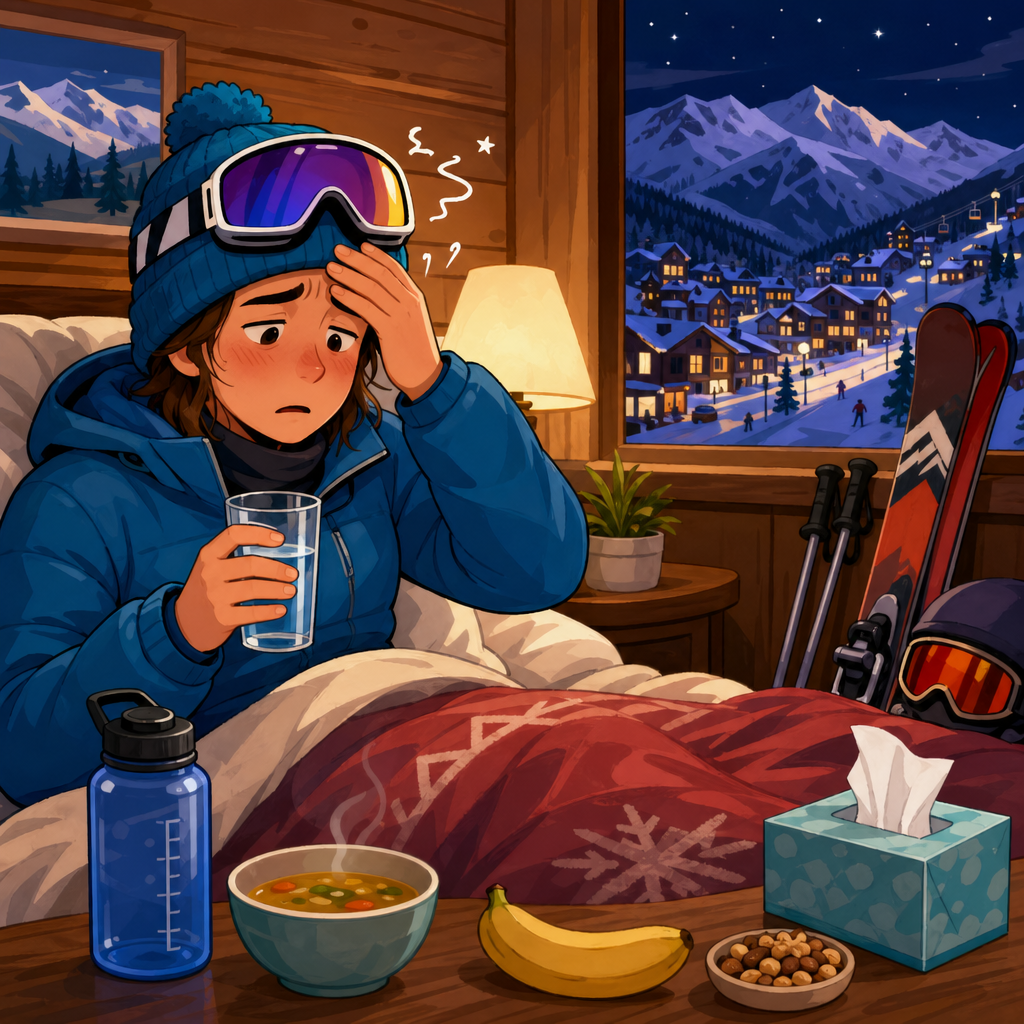
Acute mountain sickness can ruin the first night of a ski trip faster than bad weather, and knowing what to do if AMS hits on night one in a ski town can keep a miserable evening from turning into a medical emergency. AMS is the mildest form of altitude illness, usually caused by ascending too quickly to elevations above about 8,000 feet, where lower barometric pressure reduces the amount of oxygen available with each breath. In mountain resort towns, that often means travelers fly from near sea level, ride a shuttle for a few hours, unload luggage, eat dinner, maybe drink alcohol, and go to bed before their bodies have had any real time to acclimatize. Then, sometime between bedtime and dawn, the classic symptoms start: headache, nausea, dizziness, fatigue, poor sleep, and a washed-out feeling that is very different from normal travel tiredness.
In practice, the first challenge is recognizing AMS for what it is. I have seen visitors blame dehydration, motion sickness, heavy ski boots, a long flight, or a glass of wine when the real issue was altitude. Those factors can overlap, but the useful rule is simple: if someone has recently arrived at elevation and develops headache plus one or more symptoms such as nausea, loss of appetite, lightheadedness, unusual fatigue, or disturbed sleep, assume AMS until proven otherwise. The Lake Louise scoring system is commonly used in research and clinical settings, but families in a condo do not need to calculate a formal score before taking sensible action. They need a calm plan.
This matters because the right response on night one is usually straightforward, but delay is what creates risk. Most cases of mild AMS improve with rest, fluids taken sensibly, stopping further ascent, and symptom treatment. Some cases, however, progress to high-altitude cerebral edema or high-altitude pulmonary edema, both of which are emergencies that require immediate descent and professional care. A ski town can create false reassurance because there are restaurants, rentals, lift tickets, and heated lodging, yet the underlying environment is still high altitude. This hub article explains descent, treatment, and emergency response in plain terms so you can decide when to stay put, when to call a clinic, and when to get downhill now.
Recognize AMS fast and stop the usual mistakes
The first step is to stop adding stress. Do not send the sick person to bed hoping sleep will fix it after they have taken alcohol, a sleeping pill, or opioids left over from an old injury. Those can worsen breathing during sleep and cloud the picture. Do not push a hard dinner, a hot tub session, or a “walk it off” trip through town. And do not continue higher the next morning if symptoms are still present. The standard mountaineering rule is clear: do not ascend with symptoms of AMS.
Typical night-one AMS ranges from mild to moderate. Mild AMS often feels like a hangover without the fun: headache, queasy stomach, poor appetite, fatigue, and restless sleep. Moderate illness adds more persistent vomiting, stronger dizziness, and trouble doing simple tasks. Severe warning signs are different in kind, not just degree. Confusion, behavior changes, inability to walk heel-to-toe in a straight line, shortness of breath at rest, blue lips, or a wet cough suggest dangerous altitude illness rather than ordinary AMS. Those are not “wait until morning” symptoms.
Useful bedside checks are simple. Ask whether the person can drink and keep fluids down. Ask whether they can walk steadily across the room. Listen to their breathing while seated and resting. Check whether the headache improves with basic medication. If you have a pulse oximeter, use it only as supporting information. Saturation numbers vary by altitude and device quality; a low reading can support concern, but a normal reading does not rule out serious illness. I treat symptoms and function as more important than the gadget.
Immediate treatment on night one: rest, oxygen, medication, and observation
If symptoms fit mild AMS, the first-line response is rest at the same elevation and careful symptom control. The person should stop exertion, stay warm, sip fluids, and eat a light carbohydrate-based snack if tolerated. Dehydration can worsen how someone feels, but overhydration is not treatment. Aim for normal hydration, not forced liters of water. A dark-yellow urine color, dry mouth, and little urination suggest they need fluids; clear urine every half hour suggests they have already had enough.
For headache, acetaminophen or ibuprofen is reasonable unless the person has a medical reason to avoid those drugs. For nausea, ondansetron can help if it is available and prescribed appropriately. Supplemental oxygen, when a hotel, clinic, or resort medical service can provide it, often improves symptoms quickly because it addresses the immediate low-oxygen stress. This is treatment, not proof that the problem is solved; if symptoms rebound when oxygen is removed, the person still needs monitoring and often descent.
Acetazolamide is the best-known medication for altitude acclimatization and treatment of mild AMS. It works by stimulating ventilation through a mild metabolic acidosis, helping the body breathe more effectively at altitude. For many adults, treatment dosing is commonly 125 to 250 milligrams twice daily, but travelers should use it according to a clinician’s guidance, especially if they have kidney disease, significant medication allergies, or pregnancy concerns. It is not an instant cure like a painkiller. It helps the body catch up over hours, and tingling fingers, altered taste with carbonated drinks, and more frequent urination are common side effects.
Dexamethasone is different. It can rapidly reduce symptoms of altitude-related brain swelling and is sometimes used for moderate to severe AMS when descent is delayed or as a bridge during evacuation. Because it can mask worsening disease, it should not be treated as a casual nightstand remedy. In ski towns with urgent care clinics, dexamethasone is often reserved for clinician-directed use, especially if severe symptoms or neurologic changes are present. If your plan for night one involves dexamethasone, you are already in territory where medical input is wise.
| Situation | Best next step | Why it matters |
|---|---|---|
| Mild headache, nausea, fatigue, walking normally | Rest, no ascent, fluids, simple pain relief, monitor | Most mild AMS improves without escalation if exertion stops |
| Persistent vomiting or worsening headache | Seek clinic assessment and consider descent | Inability to hydrate raises risk and may signal progression |
| Shortness of breath at rest, wet cough, chest tightness | Immediate oxygen, emergency evaluation, descend | Possible high-altitude pulmonary edema |
| Confusion, poor coordination, unusual behavior | Immediate descent and emergency care | Possible high-altitude cerebral edema |
| Symptoms fully resolve by morning | Take the day easy; avoid aggressive skiing or higher travel | Recovery can reverse if exertion resumes too quickly |
When descent is the treatment, not the backup plan
Descent is the definitive treatment for worsening altitude illness. In a ski town, people resist this because they have paid for lodging, rentals, and lift tickets, but physiology does not negotiate. Even dropping 1,000 to 3,000 feet can make a meaningful difference. If the base village sits at 9,000 feet and a lower town is at 6,500 or 7,000 feet, that lower elevation may be enough to turn a bad night into a stable recovery. Waiting for a full collapse is a mistake.
Practical descent decisions depend on weather, road conditions, driver alertness, and symptom severity. If the patient has severe headache with vomiting but is awake, coherent, and breathing comfortably, a controlled nighttime drive to a lower town may be reasonable if a competent driver is available. If the patient is confused, cannot sit upright, has blue lips, severe breathlessness, or cannot walk safely, call emergency services rather than improvising. Ski regions usually have protocols with EMS, patrol, and local hospitals, and they would rather activate early than late.
Portable hyperbaric bags are used on expeditions and in remote mountain medicine, but they are uncommon in ski-town lodging and not a substitute for real descent where roads and ambulances exist. Likewise, hotel oxygen can buy time but should never become the excuse to remain at altitude in a worsening case. The test is trend. Better over several hours and stable while resting may support staying put under close watch. Worse, not better, means go down.
How to tell AMS from HACE and HAPE in a resort setting
The key emergency distinction is whether the brain, the lungs, or both are becoming involved. High-altitude cerebral edema, or HACE, is essentially severe altitude-related brain swelling. The hallmark signs are ataxia and altered mental status. Ataxia means clumsy coordination the person cannot explain away; they may sway, stumble, or fail a simple straight-line walk. Altered mental status means confusion, irritability, slowed thinking, poor judgment, or unusual drowsiness. In my experience, families often miss early HACE because they interpret odd behavior as exhaustion. If the person seems mentally off, treat it as serious.
High-altitude pulmonary edema, or HAPE, is fluid accumulation in the lungs caused by uneven high pressure in the pulmonary circulation at altitude. It often begins with reduced exercise tolerance and dry cough, then progresses to breathlessness at rest, chest tightness, fast heart rate, rapid breathing, and sometimes pink frothy sputum. A person with HAPE may look far sicker than someone with ordinary AMS: they sit upright to breathe, speak in short sentences, and seem panicked because air hunger is frightening. Crackles in the lungs are a classic exam finding, but you do not need a stethoscope to recognize rest dyspnea as an emergency.
Both conditions require immediate descent, oxygen if available, and urgent medical care. Dexamethasone is used for suspected HACE. Nifedipine may be used for HAPE in selected settings, but that is generally clinician-guided because blood pressure and other factors matter. The broad message for travelers is uncomplicated: headache and nausea can be monitored; confusion or breathlessness at rest cannot.
Emergency response in a ski town: who to call and what to do while waiting
If emergency signs appear, call 911 or the local emergency number immediately. In many North American resort areas, dispatch coordinates with EMS, fire, and the nearest hospital, and ski patrol may assist if the patient is on-mountain. Give the dispatcher the exact lodging address, building name, unit number, altitude if known, the patient’s age, major symptoms, level of consciousness, and whether oxygen is available. If the person takes regular medications or has heart or lung disease, say that early. Time is saved when responders know whether they are walking into straightforward AMS or a possible HACE or HAPE case.
While waiting, keep the person resting upright if they are short of breath, or in a comfortable position if nausea and headache are dominant. Do not leave them alone. Give oxygen if you have it and know how to use it. Avoid sedatives and alcohol. If vomiting is persistent, turn them on their side to reduce aspiration risk. Gather identification, medication lists, allergy information, and insurance cards, but do not let paperwork delay the call for help. If weather or road closures are affecting transport, ask dispatch directly whether self-transport to a lower facility is safer or whether staying put for EMS is the better move.
Children, older adults, pregnant travelers, and people with chronic cardiopulmonary disease deserve a lower threshold for evaluation. So do people who flew in that day from sea level and immediately slept at a very high resort. Night-one problems are common because acclimatization has barely started, and sleep worsens oxygen dips. That is why a careful overnight watch matters even after symptoms initially improve.
What to do the next morning and how this hub guides the rest of your plan
Morning is decision time. If symptoms are gone or clearly improving, stay at the same elevation, keep activity light, hydrate normally, eat, and avoid alcohol for another day. Do not ski hard, snowshoe uphill, or ride to a higher summit just because the reservation is paid for. Relapse is common when people test themselves too aggressively. If symptoms are unchanged, get medical advice and seriously consider moving to a lower town for the day or the rest of the trip. If symptoms worsened overnight, descent should already be underway.
As the hub for descent, treatment, and emergency response within altitude illness and acclimatization, this page gives you the framework for every related decision: identify AMS early, stop ascent, treat symptoms appropriately, use oxygen and medications intelligently, and recognize when descent becomes mandatory. The main benefit of acting fast is simple: most night-one altitude problems are manageable when addressed early, while delayed decisions are what allow dangerous progression. Save the local clinic number before your trip, know the lower-elevation towns on your route, carry basic medications recommended by your clinician, and treat the first night at altitude with respect.
Frequently Asked Questions
How can I tell whether I have acute mountain sickness on the first night in a ski town?
Acute mountain sickness, or AMS, often feels a lot like a bad hangover, the flu, or severe travel fatigue, which is why people sometimes miss it on the first evening after arriving at a high-altitude ski town. The most common early sign is a headache that starts after you arrive at elevation, especially if it comes with nausea, loss of appetite, unusual tiredness, dizziness, lightheadedness, or trouble sleeping. Some people also feel short of breath with mild exertion, but that alone does not confirm AMS because almost everyone notices some change in breathing at altitude. A useful rule of thumb is this: if you have recently gone above roughly 8,000 feet and develop a headache plus one or more of those other symptoms, AMS should be on your radar.
Mild AMS usually means you feel lousy but are still able to think clearly, walk normally, and carry on a conversation. Symptoms often begin within 6 to 12 hours of arrival, which is exactly why night one can be rough in mountain resort towns after a same-day flight from low elevation. What matters most is whether symptoms stay mild or start progressing. If the headache is worsening despite rest and fluids, if vomiting starts, if you become unusually confused, if you cannot walk straight, or if breathing becomes difficult even while resting, that is no longer a simple “tough first night” situation. Those are warning signs that a more serious altitude illness could be developing and you should seek urgent medical care right away.
What should I do immediately if AMS symptoms start on the first night?
The first and most important step is to stop going higher. If you just arrived in town and symptoms begin that evening, do not head to a higher restaurant, hot tub deck, scenic overlook, or slope-side lodging farther up the mountain. Rest where you are, keep your activity level low, and give your body time to adapt. Sip fluids regularly, because dehydration from travel, dry mountain air, and alcohol can make you feel much worse, but do not force excessive amounts of water in an attempt to “flush it out.” Eat something light if you can tolerate food, and avoid alcohol and sleeping pills, both of which can worsen breathing during sleep and complicate symptoms.
For many people with mild AMS, simple measures help: rest, hydration, a mild meal, and an over-the-counter pain reliever for headache if you normally take those safely. If you have been prescribed acetazolamide in advance for altitude adjustment, follow your clinician’s instructions. Supplemental oxygen, if available through a clinic or hotel medical setup, can improve symptoms, but it should not be used as an excuse to ignore worsening illness. The key decision point is this: if symptoms are mild and stable, stay put and monitor closely. If symptoms are getting worse, not better, especially over a few hours, descend to a lower elevation and contact a medical professional. Night one is not the time to “push through it” so you do not miss a ski day.
When is AMS serious enough that I should get medical help or descend right away?
You should seek medical help promptly if symptoms are moderate, worsening, or not responding to rest. A bad headache with repeated vomiting, inability to keep fluids down, severe dizziness, marked weakness, or symptoms that continue to intensify overnight should be treated seriously. In a ski town, that may mean calling urgent care, a local clinic, hotel medical staff if available, or emergency services depending on severity. If you can safely get to a lower elevation, descent is one of the most effective treatments for altitude illness. Even dropping a few thousand feet can make a major difference.
Call emergency services immediately if there are signs of high-altitude cerebral edema or high-altitude pulmonary edema, which are dangerous complications. Red flags include confusion, strange behavior, difficulty walking in a straight line, extreme drowsiness, blue lips, chest tightness, a wet or persistent cough, and shortness of breath at rest that seems out of proportion to mild AMS. Those symptoms are not “normal altitude adjustment.” They are emergencies. If someone is having trouble breathing, cannot stay awake, becomes disoriented, or collapses, they need urgent evaluation, oxygen if available, and descent as soon as it can be done safely.
Should I ski the next morning if I felt sick from altitude on night one?
In most cases, if you had clear AMS symptoms on the first night, the safest answer is to wait until symptoms are gone or clearly improving. Skiing is physical exertion, and many ski resorts place lifts, lodges, and terrain even higher than the town itself. That means you may be asking your body to perform hard exercise at an even greater altitude before it has adjusted. If you wake up with a persistent headache, nausea, dizziness, unusual fatigue, or poor coordination, skiing is not a smart plan. You are more likely to feel worse, and you may also be less safe on the mountain because altitude illness can affect judgment, balance, and reaction time.
A better approach is to use the morning as a checkpoint. If you feel normal after rest, have eaten and hydrated, and symptoms have resolved, you may be able to ease back into activity carefully. Start with a low-intensity day, avoid hiking or boot-packing, and do not rush to the highest lifts right away. But if symptoms remain, the goal is recovery, not salvaging the itinerary. Resting for a half day or full day is frustrating, but it is far better than turning mild AMS into a more serious medical problem. In altitude illness, listening to symptoms early is what protects the rest of the trip.
What can I do to prevent AMS from ruining the rest of my ski trip after a rough first night?
After a difficult first night, prevention for the following days becomes all about reducing additional stress on your body while it acclimatizes. Keep your first 24 to 48 hours conservative. Sleep at the lowest practical elevation available to you, avoid strenuous exercise if symptoms are still present, and stay consistent with hydration and meals. Dry air, travel fatigue, and skipped food can all intensify how altitude feels. Eat regular carbohydrate-containing meals, limit alcohol, and be cautious with sedatives or sleep aids unless advised by a clinician. If you were given altitude medication such as acetazolamide, take it exactly as prescribed rather than improvising.
It also helps to rethink your schedule. Choose easier terrain, shorter ski sessions, and more breaks on day two rather than trying to make up for lost time. If your lodging is high on the mountain and symptoms continue, consider moving lower if possible. Pay attention to how you feel each morning and evening, because altitude illness often shows itself during rest periods. Most mild AMS improves within a day or two if you stop ascending and give your body time to adjust. But if symptoms keep returning, do not assume that is just “part of skiing out west.” Persistent or recurrent symptoms deserve medical advice, especially if they interfere with eating, sleeping, walking, or breathing comfortably.