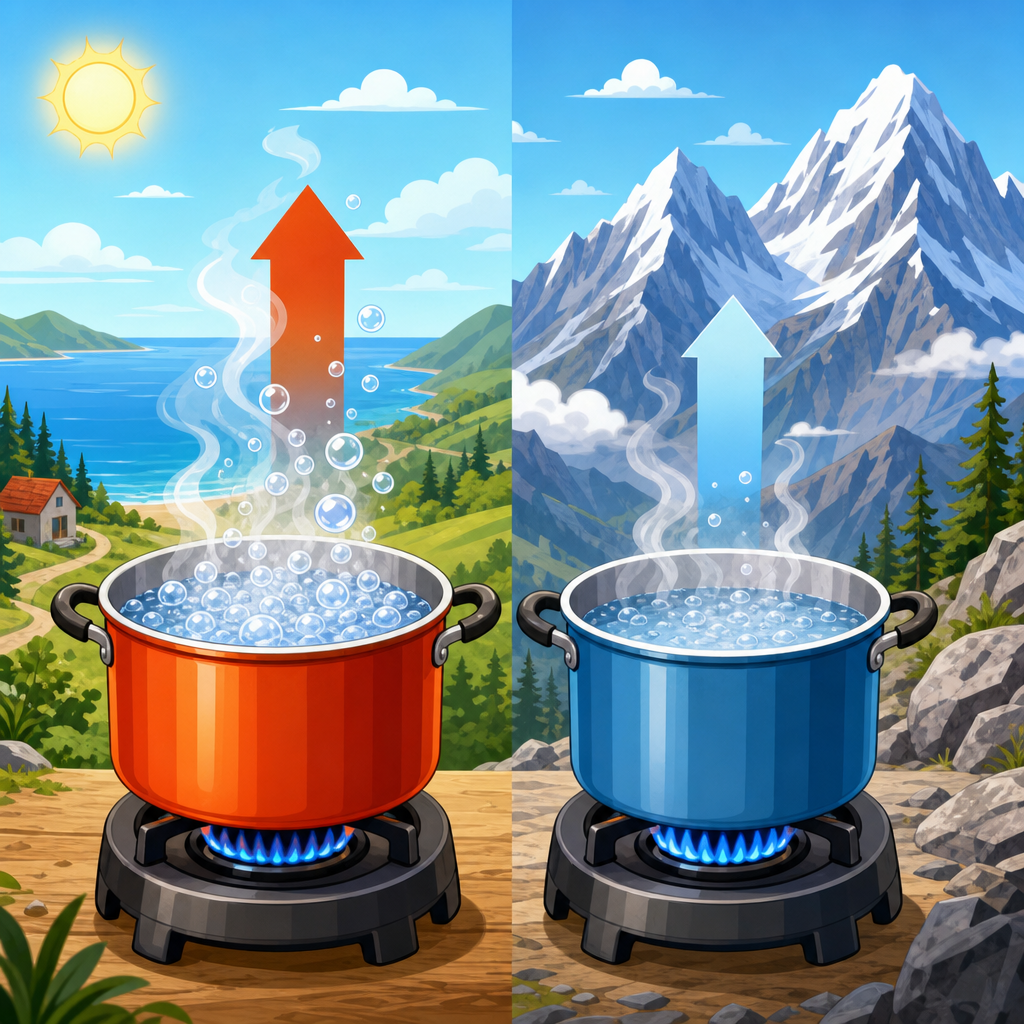
High altitude canning basics for beginners start with one simple fact: as elevation increases, water boils at a lower temperature, and that changes how safely you preserve food. In practical terms, a boiling-water canner that reaches 212°F at sea level may only reach about 202°F at 6,000 feet, which means jars need more processing time or different pressure settings to destroy spoilage organisms. For home preservers, especially anyone making jams, jellies, fruit butters, syrups, pickles, tomatoes, and pressure-canned foods in mountain regions, understanding altitude is not optional. It is the difference between a shelf-stable pantry and a batch that ferments, molds, or, in the worst case, creates conditions where dangerous toxins can develop.
When I teach new canners, I define three terms first. High altitude generally means 1,000 feet above sea level or higher, because that is where most tested recipes begin altitude adjustments. Water-bath canning means processing high-acid foods in boiling water. Pressure canning means processing low-acid foods in a pressure canner at a tested pressure and time. Candy and preserves sit beside canning because altitude also affects sugar concentration, gel formation, and boiling points, so the same kitchen science matters across the whole category. This hub covers the essentials beginners need before moving into more specialized topics within candy, preserves, and canning.
Why does this matter so much? Food safety is the primary reason, but quality matters too. At elevation, underprocessed jars may seal yet still be unsafe. Jams can become runny because the target gel temperature shifts. Caramels may turn too soft, while brittle can scorch before it reaches the proper concentration. Pickles can lose texture if processing times are stretched casually instead of following tested guidance. The good news is that high altitude canning is manageable once you learn the rules. With a reliable thermometer, a tested recipe, and the correct altitude adjustment, beginners can preserve confidently and consistently.
This article serves as a practical hub for the candy, preserves, and canning side of cooking and baking at altitude. It explains how altitude changes heat and pressure, which foods belong in boiling-water versus pressure canning, how to adjust jars safely, what to know about pectin and sugar work, and which tools and sources deserve your trust. If you are just starting, begin here, then use this foundation to explore specific guides on jams, pickles, fruit spreads, syrups, and pressure-canned staples.
How altitude changes canning science
The core principle is straightforward: lower air pressure lowers the boiling point of water. Because boiling water gets less hot at altitude, foods processed in a water-bath canner receive less heat unless you increase the processing time according to a tested chart. For pressure canning, the opposite adjustment is used: you increase pressure so the temperature inside the canner climbs high enough to safely process low-acid foods. These are not interchangeable fixes. Adding time to a pressure canning recipe instead of adjusting pressure is not considered a safe substitute unless a tested source says so.
For beginners, the most important threshold is acidity. High-acid foods, generally those with a pH of 4.6 or lower, can usually be processed in a boiling-water canner when using a tested recipe. This category includes most fruit jams and jellies, many pickles, and some tomato recipes with added acid. Low-acid foods such as vegetables, meats, soups, and plain beans must be pressure canned. The reason is Clostridium botulinum. Its spores survive boiling water, and in a sealed, oxygen-free jar of low-acid food, they can produce botulinum toxin. That is why universities, the USDA Complete Guide to Home Canning, Ball, and the National Center for Home Food Preservation insist on tested methods.
I have found that beginners often assume “sealed means safe.” It does not. A jar can ping, cool, and form a strong seal even when the contents were underprocessed. Safety comes from the combination of recipe, acidity, jar size, headspace, processing method, and altitude adjustment. Seals matter, but they are only one checkpoint.
Water-bath canning at altitude: what to adjust
Water-bath canning is the usual starting point for beginners because it is ideal for high-acid foods and the equipment is simpler. At altitude, the common adjustment is to increase processing time based on your elevation and the tested recipe’s instructions. A typical pattern used in extension guidance is adding 5 minutes for 1,001 to 3,000 feet, 10 minutes for 3,001 to 6,000 feet, and 15 minutes above 6,000 feet for many boiling-water processes, but the exact adjustment depends on the recipe. Always follow the chart attached to the specific recipe because products with different densities heat differently.
Use enough water to cover jars by at least 1 inch, keep the canner at a full rolling boil for the entire timed process, and start timing only after the water returns to a boil once the jars are loaded. If the boil drops, the process is interrupted and the timing must be corrected according to tested guidance. This sounds strict because it is. Small shortcuts are where home canning failures happen.
For high altitude beginners making preserves, this category usually includes berry jams, stone-fruit preserves, marmalades, fruit syrups, applesauce, chutneys, relishes, and acidified pickles. Tomato products require extra care because not all tomato varieties have dependable acidity. Modern tomatoes can be less acidic than older types, so tested tomato canning recipes usually require bottled lemon juice or citric acid. Fresh lemon juice is less standardized and should not be substituted where bottled is specified for safety.
Pressure canning basics for mountain kitchens
Pressure canning is essential for low-acid foods, and altitude makes gauge accuracy and adjustment even more important. There are two main canner types: dial-gauge and weighted-gauge. Dial-gauge canners allow more precise pressure settings, but the gauge should be tested for accuracy regularly, often annually through a local extension office. Weighted-gauge canners are mechanically simpler and do not require gauge calibration in the same way, but they usually operate at set weights such as 5, 10, or 15 pounds. At higher elevations, many recipes require moving to a higher weight or pressure category.
Venting is a step beginners should never skip. Most tested methods call for exhausting steam from the canner for 10 minutes before pressurizing. That pushes out cooler air and ensures the canner reaches the correct internal temperature. Once the proper pressure is reached, maintain it steadily for the full processing time. If pressure drops below target at any point, the timing generally must start over. In my experience, this is where a lot of first attempts go wrong, especially on electric coils that cycle slowly or with canners placed on undersized burners.
| Task | Best beginner practice at altitude | Why it matters |
|---|---|---|
| Find elevation | Use a topographic map, GPS, county data, or extension office | Adjustment charts begin at 1,000 feet |
| Choose method | Water-bath for tested high-acid foods; pressure can for low-acid foods | Method is determined by acidity, not preference |
| Check canner | Inspect gasket, vent, rack, and gauge before each session | Equipment faults cause unsafe processing |
| Use tested recipes | Follow USDA, NCHFP, Ball, or extension formulas exactly | Density, acidity, and jar size are validated |
| Adjust correctly | Add time for water-bath; increase pressure for pressure canning | Altitude lowers boiling temperature |
| Cool jars properly | Let jars rest undisturbed 12 to 24 hours | Seal formation and siphoning control |
Not every appliance marketed as a pressure cooker is approved as a pressure canner. Multifunction electric cookers are useful for meals, but unless the manufacturer explicitly provides tested, approved home canning instructions for your model and recipe type, use a stovetop pressure canner designed for canning. The USDA and extension services remain cautious on this point because consistent heat penetration data are limited for many countertop appliances.
Preserves, jams, jellies, and syrups at altitude
High altitude affects more than safety; it changes finished texture. Traditional jam and jelly making relies on sugar concentration, acidity, and pectin structure. At sea level, many preserve makers use the classic gel point around 220°F, which is roughly 8°F above the boiling point of water. At altitude, because water boils lower, the practical target drops too. A common rule is to subtract about 2°F from the gel-point target for every 1,000 feet above sea level, but I prefer to frame it another way for beginners: determine your local boiling point that day, then add about 8°F. That approach is often more accurate because weather and barometric pressure shift the boil slightly.
For example, if water boils at 206°F in your kitchen, your jam may gel near 214°F rather than 220°F. This is why mountain-made jams often become overcooked when people chase sea-level temperatures. Overcooking darkens fruit, weakens fresh flavor, and can break down pectin. Use multiple doneness checks: temperature, sheeting from a spoon, refrigerator plate tests, and visual changes in bubble structure. For low- or no-sugar pectin products, follow the manufacturer’s instructions exactly because these formulas are more sensitive to ingredient ratios.
Fruit butters and syrups need the same awareness. Apple butter thickens through evaporation, so a wide pan and steady stirring matter more at elevation because the path to concentration differs. Syrups can foam aggressively. Defoaming carefully and using correct headspace help limit siphoning during processing. If you are building skills, start with simple berry jam or applesauce before moving into marmalade, fruit leather, or reduced butters.
Candy making basics above sea level
Candy is not canned food, but it belongs in this high-altitude hub because the same boiling-point physics governs success. Sugar stages such as thread, soft-ball, firm-ball, hard-ball, soft-crack, and hard-crack correspond to concentration ranges, and standard temperatures are based on sea-level boiling behavior. At altitude, target temperatures should generally be reduced by about 2°F for every 1,000 feet above sea level, though exact practice varies slightly by confection and humidity. If you ignore that correction, fudge may end up dry and crumbly, caramels can become too firm, and divinity may fail entirely.
Calibrate your candy thermometer before every major batch by testing it in boiling water and noting the difference from your local expected boiling point. This one habit prevents more candy failures than any other. I also recommend weighing ingredients for brittle, toffee, marshmallows, and fondant because small measuring errors become obvious when altitude is already shifting the chemistry. For caramel sauces, stop cooking earlier than a sea-level recipe might suggest, then cool and assess texture before making future adjustments. Mountain kitchens reward note-taking.
Humidity complicates candy even more than altitude. On stormy days, pulled sugar and hard-crack candies absorb moisture quickly. Store finished candy in airtight containers with parchment layers, and avoid refrigeration unless the recipe specifically calls for it. For beginners, fudge and pralines are often easier than honeycomb or lollipops because they tolerate slight variation better.
Tools, ingredients, and safe workflow
A dependable setup includes a water-bath canner or deep stockpot with rack for approved recipes, a true pressure canner for low-acid foods, standard mason jars in approved sizes, two-piece lids unless your tested recipe specifies another approved closure, a jar lifter, a bubble remover or thin spatula, a magnetic wand or clean method for handling lids if desired, towels, timers, and accurate thermometers for preserves and candy. For pressure canning, add a canner manual and replacement gaskets or plugs recommended by the manufacturer.
Ingredient choices matter. Use commercial pectin when the recipe calls for it; do not guess based on fruit type. Use bottled lemon juice where specified for canning tomatoes and some preserves. Use pickling salt for pickles if you want clear brine, though pure canning salt and kosher salt can work if the recipe provides equivalent measurements and there are no anti-caking additives. Vinegar for pickling should usually be 5 percent acidity unless a tested recipe explicitly states otherwise. Changing vinegar strength, reducing sugar in traditional jam recipes, thickening with starch before canning, or pureeing dense vegetables into untested pressure-canning formulas can all make a recipe unsafe.
Workflow also affects outcomes. Wash jars, inspect rims for chips, prepare ingredients before heating the canner, and leave the correct headspace listed in the recipe. Remove trapped air bubbles, wipe rims clean, apply bands fingertip tight, and avoid overtightening. After processing, let jars rest undisturbed 12 to 24 hours, then check seals, remove bands for storage if you prefer, label clearly, and store in a cool, dark place. For best quality, use most home-canned goods within a year.
Common beginner mistakes and how to avoid them
The most common mistake is using untested internet recipes. A beautiful blog photo does not prove a safe pH, density, or process time. Stick to USDA, NCHFP, Ball, and state extension publications until you know how to evaluate methods critically. The second mistake is estimating altitude. Do not guess. A house on one side of a canyon can sit hundreds of feet above another nearby address, and adjustments begin at 1,000 feet.
Another frequent error is changing jar size. If a tested recipe gives pint and quart times, you cannot assume a half-gallon is acceptable. Heat penetration depends on jar geometry and fill depth. Likewise, doubling jam batches often leads to poor gel and uneven cooking; make two separate batches instead. For pickles, using table vinegar of unknown acidity or reducing salt in fermented recipes can destabilize the process. For pressure canning, rushing cooldown by opening vents, lifting weights, or moving the canner can cause liquid loss, seal failures, and unsafe processing patterns.
Finally, learn the signs of spoilage and the limits of visual inspection. Never taste food from a jar that spurts liquid, smells off, shows mold, leaks, or has a broken seal. Botulinum toxin is odorless and tasteless, so “it looked fine” is not a safety test. When in doubt, throw it out using safe disposal guidance from extension services.
High altitude canning basics for beginners come down to respecting how elevation changes heat, pressure, sugar concentration, and food safety. Once you know that boiling water gets cooler as altitude rises, the logic behind longer water-bath times, higher pressure settings, and lower preserve and candy temperature targets becomes clear. That knowledge gives you a reliable framework for every project in candy, preserves, and canning, from strawberry jam and dill pickles to applesauce, salsa, caramel, and pressure-canned green beans.
The biggest benefit of learning the basics well is confidence. Instead of improvising, you can choose the right method, adjust for your exact elevation, use trusted recipes, and recognize when a shortcut is harmless and when it is risky. In mountain kitchens, precision is not fussy; it is practical. It protects flavor, texture, and safety at the same time.
Use this hub as your starting point for the broader candy, preserves, and canning category, then build outward into recipe-specific guides for jams, jellies, fruit butters, pickles, syrups, and pressure-canned pantry staples. Before your next batch, confirm your elevation, pull a tested recipe, calibrate your thermometer, and preserve with a plan.
Frequently Asked Questions
Why does altitude matter so much when canning food at home?
Altitude matters because air pressure drops as elevation increases, and lower air pressure causes water to boil at a lower temperature. At sea level, water boils at 212°F, but at higher elevations it may boil several degrees lower. That may not sound like a big difference, but in canning, temperature is directly tied to safety. If your boiling-water canner is running at a lower temperature than expected, foods may not be heated long enough or hot enough to destroy yeasts, molds, and harmful microorganisms. That is why recipes tested for sea level often require adjustments when used in mountain regions or other elevated areas.
For beginners, the key idea is simple: higher altitude reduces the heat delivered during processing unless you compensate for it. In a boiling-water canner, the adjustment is usually more processing time. In a pressure canner, the adjustment is usually higher pressure, because pressure canning depends on reaching specific internal temperatures above the boiling point of water. Without the correct altitude adjustment, even a recipe that seems easy and familiar can become unsafe. That is why reputable canning instructions always include altitude guidance and why it is so important to know your elevation before you begin.
How do I adjust canning times or pressure settings at high altitude?
The adjustment depends on the type of food and the canning method you are using. For high-acid foods processed in a boiling-water canner, such as many jams, jellies, fruit preserves, pickles, fruit butters, syrups, and some properly acidified tomato products, the most common adjustment is to increase the processing time as altitude rises. Because the water is boiling at a lower temperature, the longer time helps compensate for the reduced heat. The exact increase varies by recipe and elevation, so it is important to follow a tested recipe from a trusted source rather than guessing.
For low-acid foods, including vegetables, meats, poultry, seafood, and many mixed dishes, pressure canning is required. In those cases, the adjustment is generally made by increasing the pressure, not by simply processing longer. That is because pressure canning must reach a target temperature that is high enough to destroy dangerous bacterial spores, including those associated with botulism. Depending on whether you use a weighted-gauge or dial-gauge canner, the exact pressure recommendations may differ at certain elevations. Beginners should always read the canner manual and compare it with current tested canning guidance. The safest approach is to find your altitude, identify whether your recipe uses boiling-water or pressure canning, and then apply the tested adjustment exactly as written.
Which foods are most affected by high-altitude canning rules?
In practical terms, all home-canned foods are affected by altitude because all canning relies on predictable heat transfer. However, the way altitude changes your process depends on the food category. High-acid foods are commonly processed in a boiling-water canner, so altitude mainly affects them by lowering the boiling temperature and requiring extra time. This includes many beginner-friendly canning projects like jams, jellies, fruit sauces, fruit butters, pickles, relishes, and some tomato products that have been acidified according to tested instructions. These foods may feel simple, but they still require accurate timing adjustments at higher elevations.
Low-acid foods are even more critical because they cannot be safely canned in a boiling-water canner regardless of altitude. Foods such as green beans, corn, carrots, meats, broths, and soups require pressure canning, and high altitude means the pressure setting must be increased to maintain a safe internal temperature. Tomatoes deserve special attention because, although often treated like a beginner canning staple, they sit in a borderline acidity category. That is why tested tomato recipes usually require added bottled lemon juice or citric acid and may also have altitude-specific processing directions. The safest mindset is to assume altitude matters for every batch and to check the recipe carefully every time, even for foods you have canned before.
How do I find out my altitude and know which adjustment chart to use?
The best place to start is by determining the elevation of your home or the exact place where you are canning. You can often find this through a GPS app, a topographic map, a local government website, a weather service listing, or your county extension office. If you live in a region with changing terrain, do not rely on a rough estimate for the whole area. Even a difference of a thousand feet can change the recommended canning adjustment, so it is worth confirming your actual elevation as closely as possible.
Once you know your altitude, use a tested canning chart that matches both your canning method and your recipe. Boiling-water canning charts typically group elevations into ranges and tell you how many extra minutes to add. Pressure canning charts usually specify the pressure needed at different elevations and may separate recommendations for dial-gauge and weighted-gauge canners. It is important not to mix instructions from random blogs, outdated family notes, or recipes that do not clearly explain their testing basis. A beginner-friendly habit is to write your altitude on a card near your canning supplies and keep a current adjustment chart in the same area. That way, every time you can, the information is easy to check before you start heating jars.
What are the most common beginner mistakes in high-altitude canning, and how can I avoid them?
One of the most common mistakes is assuming altitude adjustments are optional or only matter for advanced canners. In reality, they are part of the core safety process. Another frequent mistake is using a sea-level processing time without checking whether extra time or pressure is required. Beginners also sometimes rely on old family recipes that were never scientifically tested, especially for tomatoes, pickles, sauces, or mixed foods. While these recipes may have sentimental value, they may not include proper acidification, modern jar sizes, or updated altitude guidance. A related mistake is changing ingredients, thickness, or jar size in a tested recipe, which can alter how heat moves through the food.
You can avoid these problems by sticking to current tested recipes, measuring ingredients exactly, and checking your altitude before every canning season. Make sure your pressure canner is in good working order, and if you use a dial-gauge canner, have the gauge tested as recommended. Follow headspace directions, vent the canner properly when required, and start timing only when the recipe says to begin. Do not shorten processing times, and do not substitute canning methods unless a trusted source says it is safe. High-altitude canning becomes much less intimidating when you treat it as a step-by-step system instead of improvisation. With the right recipe, the correct adjustment, and careful attention to detail, beginners can safely preserve food with confidence.