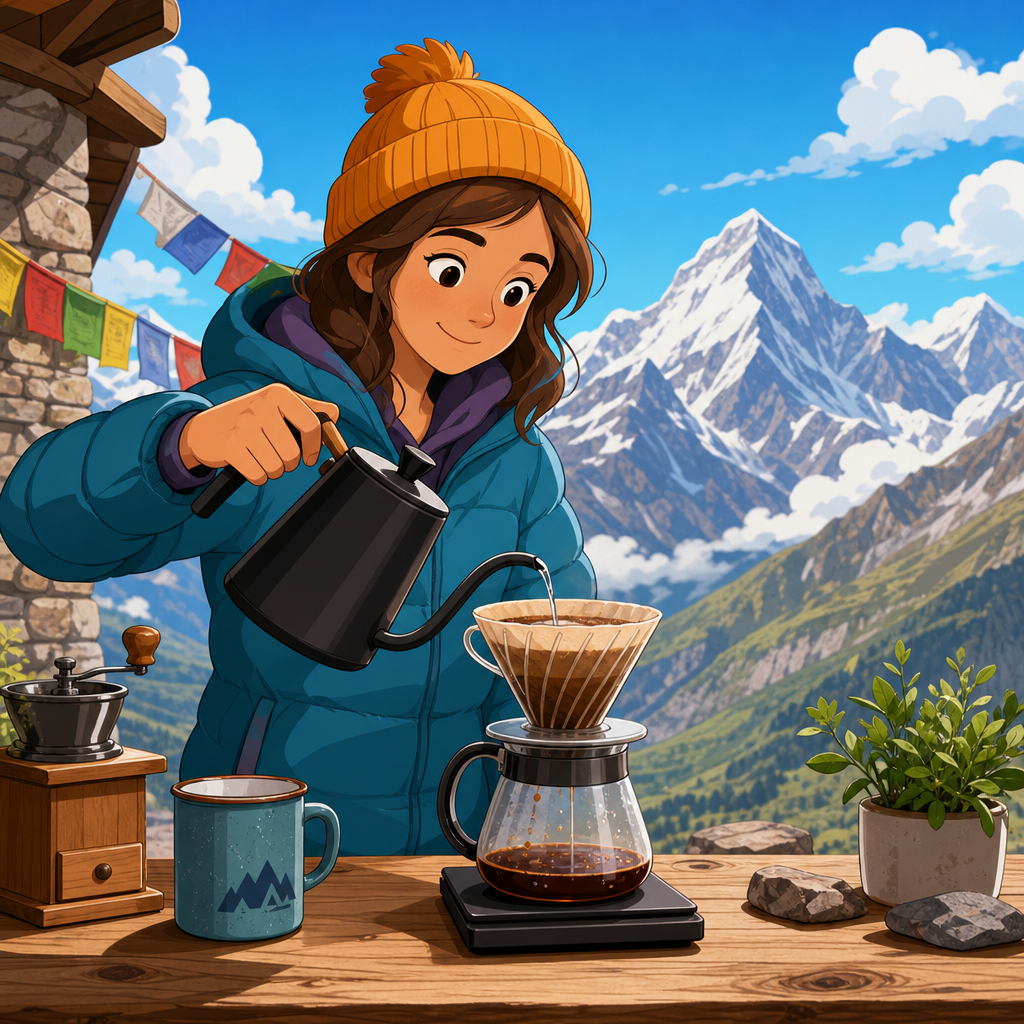
Coffee brewing at altitude changes more than most people expect. Water boils at lower temperatures as elevation rises, air pressure drops, humidity often falls, and those shifts affect extraction, brew time, grind size, and even how beans age after opening. In practical terms, the same recipe that tastes balanced at sea level can turn sour, thin, or strangely hollow in a mountain kitchen. I learned this the hard way while testing pour-over and French press brews above 5,000 feet: cups that were dependable at home suddenly lost sweetness and body unless I changed temperature, contact time, and dose.
For this hub in the broader Cooking & Baking at Altitude topic, coffee brewing at altitude sits squarely inside cooking methods because brewing is heat transfer, mass transfer, and timing. Extraction is the process of dissolving flavor compounds from ground coffee into water. Good extraction pulls acids, sugars, aromatics, and pleasant bitters in balance. Underextraction leaves coffee sharp and salty-sour; overextraction emphasizes dryness, bitterness, and astringency. Altitude matters because lower boiling points reduce the thermal energy available for dissolving soluble compounds, especially in immersion methods that rely on sustained hot water contact.
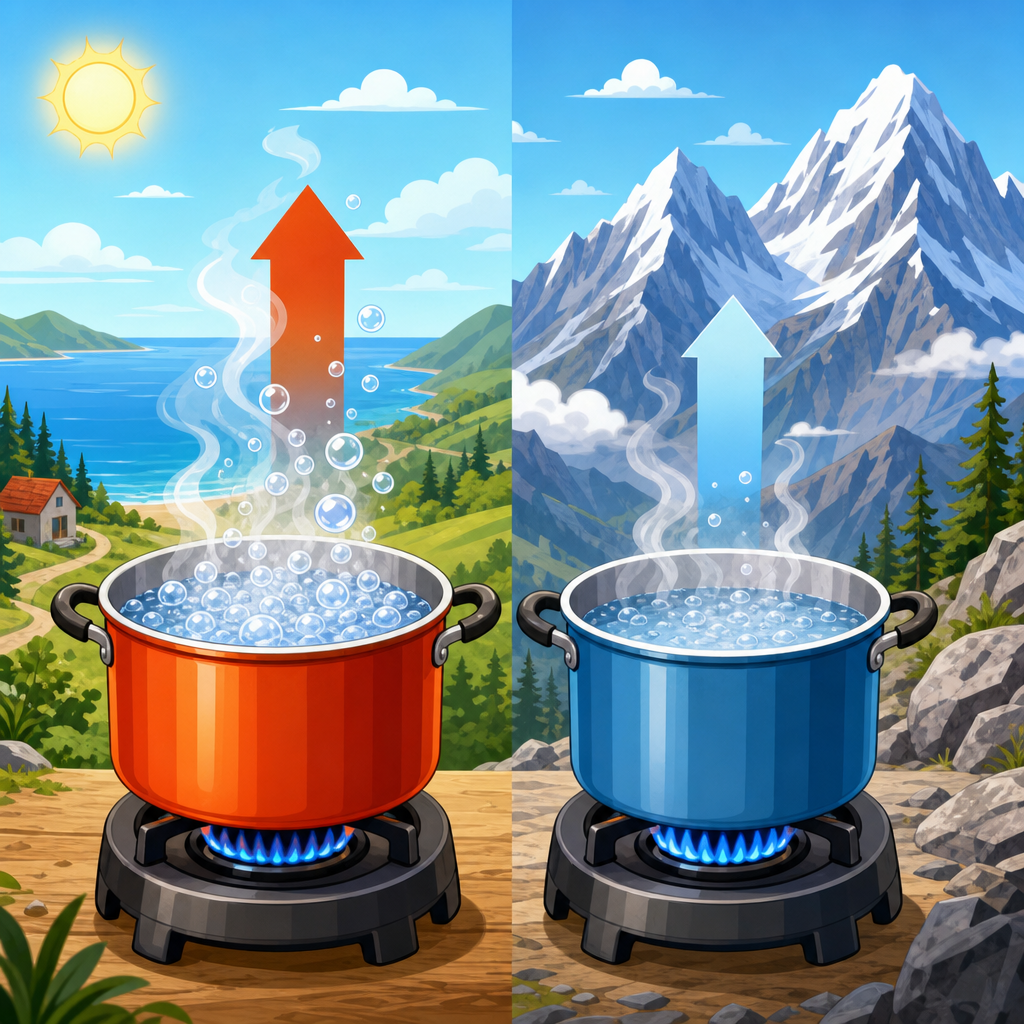
The key benchmark is simple: water boils at 212°F or 100°C at sea level, but the boiling point drops by roughly 1°F for every 500 feet of elevation gain, though weather and exact pressure create minor variation. Around 5,000 feet, boiling occurs near 202°F; around 7,500 feet, near 198°F. That means a brewer who expects near-boiling water for a French press or AeroPress may never reach the same slurry temperature achieved at lower elevations. Since many coffees extract best when brew water starts around 195 to 205°F, high elevation compresses your usable range and makes every other variable more important.
This article explains how to get better extraction at altitude across common brewing methods, why certain fixes work, and when to adjust grind, ratio, agitation, or equipment. It also acts as a hub for the cooking methods side of altitude coffee: pour-over, immersion, pressure brewing, cold brewing, and stovetop preparation. If you want sweeter, fuller cups in mountain conditions, the path is not guesswork. It is understanding what altitude changes, then matching your method to those constraints.
Why altitude changes coffee extraction
The most important effect is lower boiling temperature. Extraction depends on water temperature because hotter water dissolves coffee solids more efficiently and speeds diffusion from the grounds. At altitude, especially above 4,000 feet, brewers that lose heat quickly can spend much of the brew below the target extraction zone. In a plastic dripper or glass French press, slurry temperature can fall fast enough to produce cups that taste bright but empty, with weak sweetness and a short finish.
Ambient conditions add pressure on consistency. Mountain climates are often drier, which accelerates bean staling after opening and increases static during grinding. More static means clumping and retention in grinders, and uneven particle distribution makes extraction less predictable. Water chemistry also matters. Many high-altitude communities use snowmelt or reservoir water with low mineral content. Soft water can flatten structure and reduce extraction efficiency compared with water built around Specialty Coffee Association guidance, roughly 75 to 150 ppm total hardness and about 40 ppm alkalinity as a practical target range for brewing.
There is also a sensory trap. Because cooler brewing can mute bitterness, an underextracted cup may seem deceptively clean at first sip. Then the lack of sweetness and body becomes obvious as it cools. When I troubleshoot altitude brews, I look for three markers before touching the beans: actual kettle temperature, heat loss in the brewer, and whether grind distribution worsened because of static. Those checks solve many “bad coffee” complaints without changing origin or roast level.
Core adjustments that improve coffee brewing at altitude
Start with temperature retention. Preheat everything that touches the brew: kettle, dripper, filter holder, server, mug, French press, AeroPress chamber, even the spoon used for stirring. This matters more at altitude because you begin with a lower maximum water temperature. If your water boils at 200°F and your room is cool, an unheated ceramic dripper can drag slurry temperature several degrees lower immediately.
Next, grind finer in small increments. Since lower thermal energy slows extraction, a finer grind increases surface area and shortens the distance water must travel into each particle. The adjustment should be conservative. Jump too fine and you can create channeling in pour-over or muddy cups in immersion. On most burr grinders, one to three clicks finer than your sea-level setting is a sensible starting point.
Then extend contact time where the method allows it. A French press brewed for four minutes at sea level may need five or six minutes at 6,000 feet. A pour-over may benefit from a slower pulse structure that keeps the bed saturated longer. With AeroPress, increasing steep time before pressing often works better than adding force, because pressure does not fully replace missing heat.
Finally, consider dose and ratio. If extraction remains low even after improving heat retention and grind, a slightly lower coffee-to-water ratio can raise extraction yield and improve balance. For example, moving from 1:15 to 1:16 may help a dense light roast open up. If the cup becomes too thin, return to the original ratio and focus on temperature retention instead. Change one variable at a time and taste with intent.
Best brewing methods at altitude and how to adjust each one
Some methods are naturally forgiving at altitude, while others require tighter control. Immersion brewers often perform better than fast percolation because they maintain contact between water and coffee longer. Pressure devices can help, but only within limits. The table below summarizes how I adjust the major methods when brewing in mountain conditions.
| Method | Main altitude challenge | Best adjustment | Practical example |
|---|---|---|---|
| Pour-over | Rapid heat loss and underextraction | Preheat brewer, grind slightly finer, slow pours | At 5,500 feet, a V60 often improves with one finer grind step and a total brew time closer to 3:15 than 2:45 |
| French press | Lower slurry temperature during steep | Use full boil, preheat vessel, extend steep to 5 to 6 minutes | A medium roast that tastes sour at four minutes usually gains body with a six minute steep and a gentle break |
| AeroPress | Temperature loss in a small chamber | Preheat thoroughly, extend steep, press gently | For light roasts above 6,000 feet, a two minute steep before pressing often beats a fast one minute recipe |
| Moka pot | Lower boiling point alters flow and can scorch coffee | Use hot starting water and moderate heat | Starting with preheated water reduces time on the burner and limits harsh flavors in dark roasts |
| Espresso | Bean behavior changes more than atmospheric brewing physics | Dial grind and yield carefully; machine pressure remains decisive | At altitude, espresso often needs tighter puck prep because drier air increases static and distribution issues |
| Cold brew | Less aroma intensity, slower perception of sweetness | Increase steep consistency, filter well, dilute to taste | Cold brew can be a reliable option when boiling point limits hot extraction for very light roasts |
Pour-over rewards attention to heat management. Use a covered kettle if possible, rinse the paper filter thoroughly with hot water, and brew into a preheated server. If drawdown stalls after grinding finer, improve pouring technique before coarsening drastically. Gentle center pours and controlled pulses usually fix uneven flow. For French press, do not assume a longer steep alone is enough; if the press is cold, preheating can change the cup more than an extra minute.
Moka pots deserve special mention because they are common in mountain homes. At altitude, water in the lower chamber reaches boiling sooner at a lower temperature, and prolonged burner time can overheat the upper chamber and brewed coffee. Filling the base with hot water shortens exposure to the stove and tends to produce sweeter, less burnt results. Espresso is different because the machine generates brewing pressure internally, but altitude still affects workflow through bean freshness, humidity, puck preparation, and milk steaming behavior.
Choosing beans, grind, and water for mountain brewing
Bean selection matters more than people think. Light roasts are generally harder to extract because they are denser and less soluble than medium or dark roasts. At altitude, that challenge increases. If your setup is modest and your water never exceeds 198 to 202°F, very light Nordic-style roasts may taste grassy or lemony unless you use immersion, finer grinding, or longer brewing. Medium roasts are often the easiest place to start for balanced sweetness and body.
Freshness management is critical in dry climates. Coffee degasses rapidly after roasting, then loses aromatic intensity after opening, especially if it sits in warm, low-humidity air. Keep beans in an opaque, airtight container away from sunlight and heat. Buy in smaller quantities than you might at sea level. I have seen excellent coffees taste flat within ten days of opening in alpine kitchens because owners stored them beside sunny windows or hot appliances.
Grinder quality shapes extraction more than almost any gadget. A consistent burr grinder produces a narrower particle distribution, which is especially useful when altitude already reduces extraction efficiency. Baratza, Fellow, 1Zpresso, Comandante, and Mahlkönig are widely recognized because they can deliver repeatable adjustments. Blade grinders make altitude problems worse by creating both fines and boulders, leading to sourness and bitterness in the same cup.
Water deserves equal attention. If local tap water is very soft, coffee can taste thin and acidic. If it is very hard, clarity drops and scale builds in kettles and espresso machines. Many serious home brewers use filtered water with mineral packets from brands such as Third Wave Water, or custom recipes built with distilled water and measured mineral concentrates. The goal is not perfection on paper. It is repeatable water that supports extraction and lets you make meaningful recipe changes.
Troubleshooting common altitude brewing problems
If your coffee tastes sour, watery, or sharply citrusy, the first diagnosis is underextraction. Before increasing dose, try these corrections in order: preheat more thoroughly, grind slightly finer, extend brew time, and agitate a bit more during bloom or immersion. If you change all four at once, you will not know what actually solved the problem. Methodical testing is faster in the long run.
If the cup tastes bitter, woody, and drying, do not blame altitude immediately. Overextraction still happens in mountain brewing, especially with dark roasts, aggressive pouring, or too many fines from a poor grinder. Coarsen slightly, shorten contact time, or reduce agitation. In pour-over, channeling can create a confusing mix of bitterness and sourness. Uneven beds, sidewall pours, and neglected bloom phases are common causes.
When brews vary day to day, check environmental consistency. Beans stored in dry air grind differently over time. A sudden weather shift can change drawdown speed. Kettle thermostats can be inaccurate, and many inexpensive models overshoot or undershoot by several degrees. Use a thermometer once to verify performance. In repeated mountain testing, I have found that “mystery inconsistency” often comes down to either water chemistry drifting after filter replacement or a grinder retaining more grounds because static increased.
This hub should point you toward deeper method pages as you build your altitude coffee routine. The most useful next reads in a cooking methods cluster are pour-over at altitude, French press at altitude, espresso dialing in dry climates, moka pot heat management, and cold brew for mountain homes. Together, those articles cover the method-specific details that a hub page introduces but cannot fully exhaust.
Building a repeatable altitude coffee routine
The best altitude brewing recipe is the one you can repeat. Start by measuring coffee and water by weight, not scoops. Use a simple digital scale, note your elevation, record water temperature, grind setting, total brew time, and tasting result. That notebook becomes your calibration map. Once you identify a good recipe for one coffee, adjust from there rather than starting from zero with every new bag.
Keep your process stable. Brew in the same vessel, with the same filter brand, and the same pouring pattern until the cup is where you want it. Then experiment intentionally. This approach is standard in professional cupping labs and busy cafés because consistency reveals cause and effect. At altitude, where the margin for error is narrower, discipline matters even more.
The payoff is significant. Better extraction at altitude means sweeter coffee, fuller texture, clearer origin character, and less waste from disappointing brews. It also makes every other coffee method easier to understand because you see how temperature, grind, time, and water interact. If your current mountain coffee tastes dull or sour, do not accept it as unavoidable. Tune the method, track the variables, and use this cooking methods hub as your starting point for better brewing.
Frequently Asked Questions
Why does coffee taste different at high altitude even when I use the same beans and recipe?
Coffee behaves differently at altitude because the brewing environment changes in several important ways at once. The biggest factor is that water boils at a lower temperature as elevation increases. At sea level, water reaches a full boil at 212°F, but in mountain areas it can boil several degrees lower. That matters because brewing temperature is one of the main drivers of extraction. If your water is cooler, it pulls fewer soluble compounds from the coffee, especially the sugars and deeper flavor compounds that create sweetness, body, and balance. The result is often a cup that tastes sour, sharp, thin, or unfinished, even though the exact same recipe tasted great at lower elevation.
Air pressure and humidity also play a role. Lower atmospheric pressure can subtly change how gases leave freshly ground coffee and how water moves through a brew bed. In practical brewing terms, this can affect bloom behavior, drawdown speed, and immersion performance. Lower humidity, which is common in many high-altitude climates, can also make coffee beans dry out faster after opening, which changes how they grind and extract over time. A recipe that seemed dialed in on day one may taste flatter or less even a few days later if the coffee is not stored carefully.
That is why altitude brewing usually requires adjustment rather than blind consistency. If your coffee tastes under-extracted at elevation, the problem is not necessarily the beans or your technique. More often, it means the brew needs help compensating for lower water temperature and a drier environment. Small changes to grind size, contact time, agitation, and dose can restore balance and help you get sweetness and clarity back into the cup.
What are the best adjustments to make when brewing coffee above 5,000 feet?
If you are brewing above 5,000 feet, the most reliable approach is to assume you will need a little more extraction than your sea-level recipe provides. In most cases, that means grinding slightly finer, extending brew time, increasing agitation carefully, or using the hottest water available from your kettle. Because the boiling point is lower, you may not be able to reach the same slurry temperature you had at lower elevations, so the brew often needs to compensate elsewhere.
For pour-over coffee, start by tightening the grind one small step finer than normal and pouring with intention so the coffee bed stays evenly saturated. A stronger bloom can also help, especially with fresh coffee that releases a lot of gas. You may find that extending the bloom slightly and using a gentle swirl helps eliminate dry pockets and improves extraction uniformity. If your drawdown becomes too slow after adjusting the grind, reduce agitation a little before making the grind coarser again. The goal is not just longer contact time, but even extraction.
For immersion brewers like French press, AeroPress, or Clever Dripper, altitude often rewards a longer steep time. Since lower water temperature extracts less aggressively, an extra 30 to 60 seconds can make a noticeable difference. With French press in particular, a slightly finer grind than your usual coarse setting can improve body and sweetness, as long as you do not push so fine that the cup turns muddy or bitter. For AeroPress, a bit more pressure at the end is less important than using a well-balanced grind and enough time for the water to do the work.
It also helps to brew a little stronger than you think you need, then evaluate. Some high-altitude brews taste hollow not just because they are under-extracted, but because the concentration is too low for the flavor profile to feel complete. In short, your first moves should be: hotter water, finer grind, slightly longer contact time, and better saturation. Make one change at a time, taste carefully, and the coffee will usually tell you what it needs.
How should I change my grind size and brew time at altitude?
At altitude, grind size and brew time become your two most useful adjustment tools because they directly influence extraction when water temperature is working against you. In general, if your coffee tastes sour, grassy, salty, weak, or hollow, you are probably under-extracting and should try grinding finer first. A finer grind increases surface area, giving the water more access to the soluble material inside each particle. That can help recover sweetness, fuller body, and a more developed finish that lower-temperature brewing may otherwise miss.
Brew time matters because the coffee may need longer contact with water to reach a balanced extraction. For pour-over, this could mean a slightly slower overall drawdown or a longer bloom phase. For immersion methods, it may mean extending steep time by 30 seconds to a minute. The exact amount depends on the coffee, roast level, and brew method, but the principle stays the same: altitude often calls for more time or more access, and usually both in moderation.
The key is to avoid overcorrecting. If you grind too fine, especially in filter brewing, you can create channeling, uneven flow, or clogging, which leads to a confusing cup that tastes both bitter and sour. If you steep far too long, you may add heaviness without actually improving clarity or sweetness. The best path is to move in small increments. Adjust grind one notch finer, brew again, and taste. If the cup improves but still seems bright and thin, keep the finer grind and add a little time. If it becomes dull or harsh, back off slightly.
Think of grind and time as linked variables rather than isolated ones. At high elevation, they are not just fine-tuning tools. They are often the main way to rebuild the extraction profile you would have gotten more easily at sea level. With a few test brews, you can usually find a recipe that tastes stable, sweet, and complete, even in a mountain kitchen.
Does altitude affect different brewing methods like pour-over, French press, and espresso in different ways?
Yes, and this is one reason brewing at altitude can feel frustrating at first. Different brew methods respond differently to lower boiling temperatures, reduced air pressure, and changes in humidity. Pour-over methods tend to show altitude effects very clearly because they rely on a narrow balance of temperature, flow rate, bed depth, and extraction efficiency. At elevation, a pour-over that was once sweet and articulate can become fast, bright, and underdeveloped unless you compensate with grind, agitation, or brew ratio adjustments.
French press and other immersion methods are often a little easier to manage at altitude because they give water more sustained contact with the coffee. Even so, they are not immune. Lower slurry temperature can still leave the cup tasting less sweet and less rounded than expected. The usual fix is a somewhat finer grind, a longer steep, and very consistent stirring or saturation at the start. Immersion can be more forgiving, but it still benefits from deliberate dialing in.
Espresso presents a different kind of challenge. Although the lower boiling point does not affect espresso in exactly the same way it affects kettle brewing, altitude can influence machine behavior, boiler dynamics, puck resistance, and how coffee degasses. In some cases, shots run differently than expected because the beans are aging differently in drier air, or because the grind that worked before no longer matches the coffee’s current moisture and gas content. Baristas at altitude often find they need to adjust grind settings more frequently and pay extra attention to dose, yield, and shot time to maintain consistency.
Cold brew is usually less sensitive to altitude-related boiling point issues simply because it does not rely on hot water in the first place. However, storage and bean freshness still matter, and dry air can alter how quickly opened coffee loses aromatic complexity. Overall, every brew method can work well at altitude, but each one needs a slightly different strategy. Pour-over usually needs more extraction support, immersion methods need enough time and saturation, and espresso demands close day-to-day attention.
How should I store coffee at high altitude so it stays fresh and brews more consistently?
Storage matters even more at altitude than many coffee drinkers realize. High-altitude environments are often dry, and lower humidity can accelerate the way opened coffee loses aromatic compounds and internal moisture balance. Once a bag is opened, the beans may seem to age faster, not necessarily in the sense of becoming stale overnight, but in the sense that they become less stable from one brew to the next. You may notice the grinder setting drifting, the bloom getting weaker, or the cup losing sweetness and complexity sooner than expected.
The best approach is to limit oxygen exposure, reduce temperature swings, and protect the coffee from dry air. Keep beans in an airtight container with a solid seal, ideally opaque and stored away from direct light and heat. If the coffee came in a high-quality resealable bag with a one-way valve, that can work well too, as long as you press out excess air after each use and reseal it tightly. Avoid storing beans in the refrigerator for daily use, since repeated temperature changes can introduce condensation and degrade flavor.
If you buy coffee in larger quantities, divide it into smaller portions and keep only one portion in your daily-use container. Freeze the rest in well-sealed bags or containers, then thaw each portion fully before opening to avoid moisture problems. This is especially useful at altitude, where environmental dryness can make beans seem to fade faster after opening. Smaller portions reduce repeated oxygen exposure and help preserve a more stable