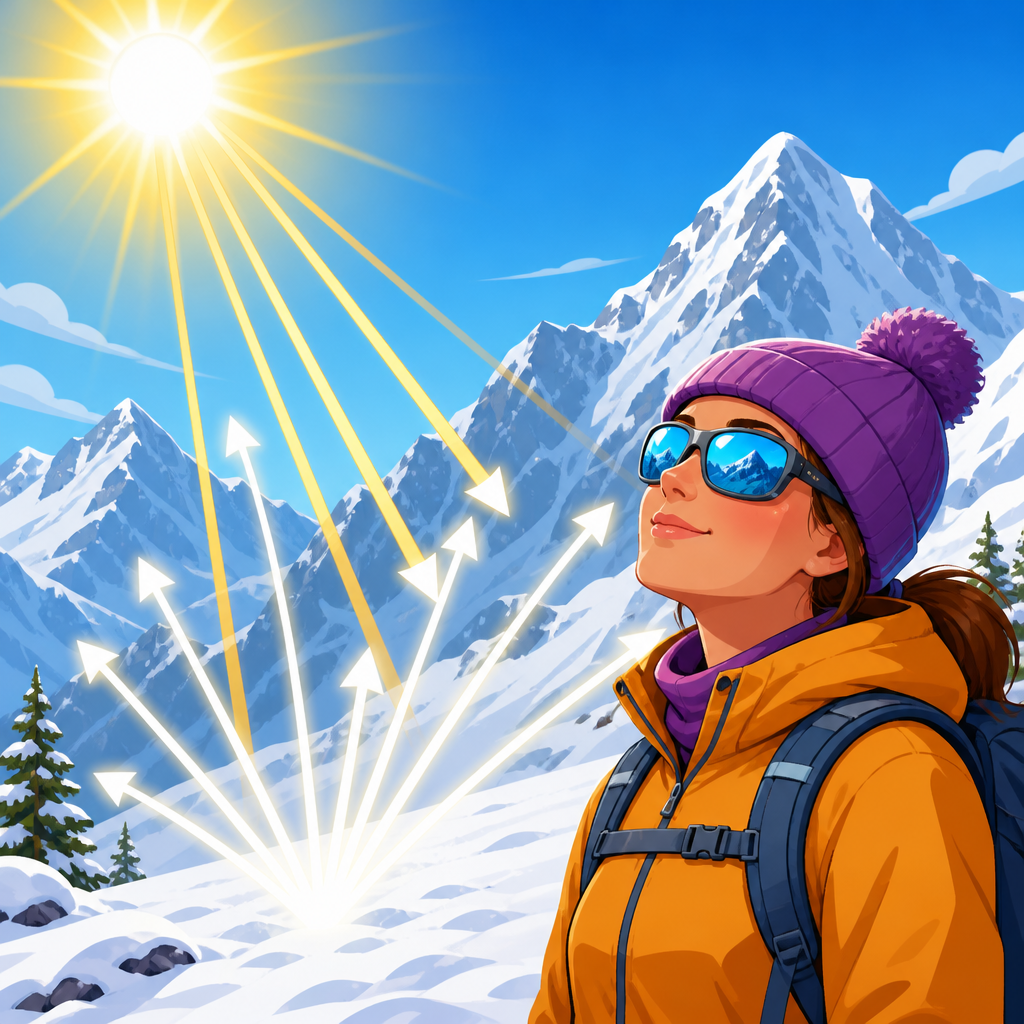
Snow reflection amplifies UV exposure at altitude through a simple but often underestimated combination of thinner atmosphere, intense solar angle, and highly reflective ground, creating conditions that can damage skin and eyes faster than many people expect. In mountain environments, ultraviolet radiation does not come only from above. It also bounces upward from snowfields, glaciers, cornices, and packed trails, increasing total exposure to people who may already be receiving stronger direct sunlight because they are higher in the atmosphere. This matters for climbers, skiers, guides, rescue teams, herders, pilgrims, and residents of high-altitude communities because repeated overexposure raises the risk of snow blindness, sunburn, cataracts, and long-term skin damage.
Ultraviolet radiation is usually discussed in three bands. UVC is largely absorbed by the atmosphere and is not the main concern in normal outdoor life. UVB is the shorter-wavelength band strongly linked to sunburn and many forms of DNA damage in skin. UVA penetrates more deeply into skin and contributes to aging, pigmentation, and cumulative injury. At altitude, both UVA and UVB become more significant because there is less atmosphere available to scatter and absorb incoming radiation. Add fresh snow, which can reflect a large share of incoming UV, and exposure can rise sharply even on cold days that do not feel sunny.
In fieldwork and mountain travel planning, I have seen the same mistake repeated across regions: people judge risk by temperature, cloud cover, or comfort rather than by radiation physics. A cold summit morning can produce worse ultraviolet conditions than a hot afternoon at sea level. High-albedo snow surfaces, especially when clean and fresh, can reflect much more radiation than vegetation, rock, or soil. The result is two-direction exposure. The face, underside of the chin, nostrils, ears, and eyes receive radiation from angles that baseball caps and casual sunglasses do not block well.
This hub article connects the science with the culture of high-altitude living. In mountain societies from the Andes and Himalaya to the Alps and the Rockies, people have long adapted clothing, work timing, architecture, and travel routines to harsh sun conditions. Modern outdoor recreation has expanded faster than public understanding of those adaptations. To understand why snow reflection amplifies UV exposure at altitude, it helps to look at the atmospheric science, the surface physics of snow, the health effects, and the practical habits developed by communities that live under these conditions year after year.
The altitude effect: why UV intensity rises as you climb
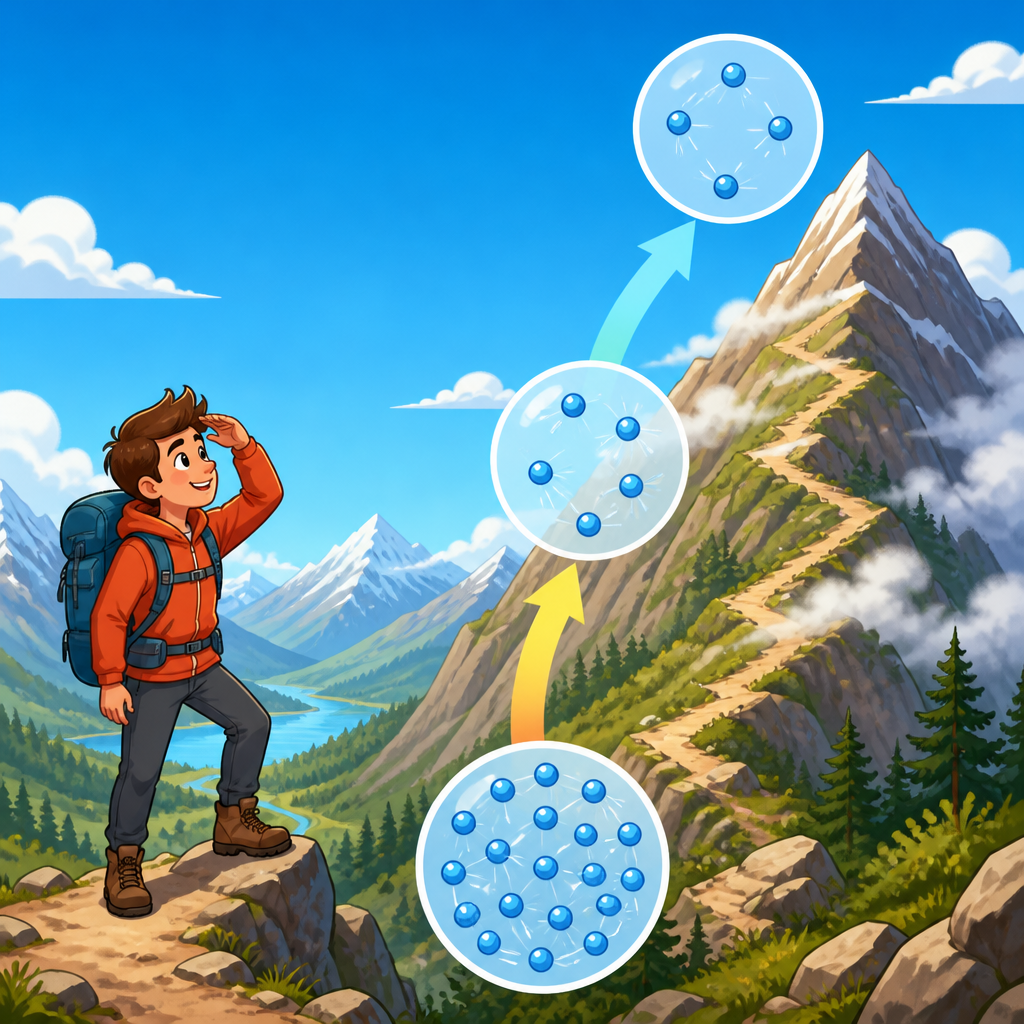
Ultraviolet exposure increases with elevation because the atmospheric path between the sun and the ground becomes shorter. The atmosphere normally absorbs and scatters part of incoming UV, especially UVB. As elevation increases, there is less air mass overhead, so more radiation reaches the surface. A commonly cited rule of thumb is that UV levels rise by roughly 10 to 12 percent for every 1,000 meters of elevation gain, though the exact increase depends on latitude, cloud conditions, aerosols, ozone, season, and solar angle. The important point is not the exact percentage but the direction and scale: mountain sunlight is measurably stronger.
That stronger sunlight is particularly relevant above the tree line, where there is little shade and few atmospheric pollutants to reduce visibility or radiation transmission. In arid highlands, the effect can be even more pronounced because dry air contains less water vapor, another factor that can influence radiation reaching the ground. Midday exposure on a glacier at 3,500 meters is therefore very different from exposure on a beach or city sidewalk, even if the air temperature is near freezing.
Latitude and season modify the altitude effect, but they do not cancel it. Tropical high mountains can produce severe UV year-round because the sun angle remains high for much of the year. In winter at mid-latitudes, lower solar angle reduces direct intensity somewhat, yet fresh snow can offset part of that reduction by reflecting UV into the face and eyes. This is why winter mountaineers and ski patrollers often experience acute sun and eye injury despite cool temperatures and short days.
Why snow reflection matters: albedo, surface structure, and double exposure
Snow reflection amplifies UV exposure because snow has a high albedo, meaning it reflects a substantial fraction of incoming radiation rather than absorbing it. Fresh snow can reflect 80 to 90 percent of ultraviolet radiation under favorable conditions, far above the reflectivity of grass, forest, or dark rock. Even older or dirtier snow may reflect enough UV to materially increase exposure. Glacial ice, wind-packed snow, and mixed surfaces can vary, but they still create a strong reflective field compared with most everyday landscapes.
In practical terms, this means the body is exposed to direct UV from the sun and reflected UV from the ground. That second source changes where damage occurs. Many people remember to protect the forehead and nose but forget the underside of the jaw, lower eyelids, inside the nostrils, and the eyes themselves. On bright snow, those areas receive meaningful reflected energy. This is why severe sunburn often appears in unexpected places after ski touring, glacier travel, or high-altitude trekking across snow patches.
The structure of snow also matters. Clean, fresh, fine-grained snow is often most reflective. As snow ages, melts, refreezes, or accumulates dust and soot, reflectivity can decline, but the effect does not disappear. Terrain shape can further concentrate exposure. A broad snow basin, a steep couloir, or a glacier surrounded by reflective slopes can act like a natural light chamber, increasing the amount of scattered and reflected radiation reaching a person from multiple directions.
| Surface | Typical UV reflectivity | Why it matters outdoors |
|---|---|---|
| Fresh snow | About 80–90% | Strong upward reflection increases face and eye exposure dramatically |
| Old or compacted snow | Often 50–70% | Still far more reflective than soil or vegetation |
| Sand | Roughly 15–25% | Can increase exposure, but usually less than snow |
| Water | Variable, often under 10% at high sun angles | Reflection changes with angle and wave state |
| Grass or forest | Usually under 10% | Lower reflected UV than snowy terrain |
| Dark rock or asphalt | Often 5–12% | Absorbs more radiation and reflects much less upward UV |
How snow and altitude affect the eyes, skin, and performance
The most immediate eye hazard in snowy high-altitude settings is photokeratitis, commonly called snow blindness. It is essentially a sunburn of the cornea caused by intense UV exposure. Symptoms often appear several hours after exposure and can include severe pain, tearing, redness, gritty sensation, light sensitivity, blurred vision, and temporary visual loss. Because the cornea is highly innervated, even a short period of unprotected exposure on a glacier can become debilitating by evening, which is a serious safety issue during expeditions or remote travel.
Chronic exposure also matters. Repeated ultraviolet stress is associated with cataracts, pterygium, and other ocular changes. High-altitude populations, especially those engaged in farming, herding, construction, guiding, and transport, may accumulate decades of exposure. Programs led by public health agencies and mountain clinics have repeatedly emphasized wraparound eyewear because ordinary fashion sunglasses often leave enough side and bottom gap for reflected radiation to reach the eye.
Skin injury follows a similar pattern. UVB drives acute sunburn, while UVA contributes to deeper and cumulative damage. At altitude, people can burn quickly, especially on the nose, lips, ears, and under the chin. Lips deserve special mention because they are vulnerable to actinic damage and often neglected. Wind and cold may mask early warning signs by reducing the sensation of heat, so people realize too late that they have been overexposed. Once burned, hydration, barrier repair, and inflammation control become concerns that can affect sleep, morale, and next-day performance.
Performance is the overlooked consequence. A climber with photokeratitis cannot navigate well. A ski guide with swollen, burned lips may struggle to eat and hydrate. A rescue worker with severe facial sunburn may have impaired concentration from pain and sleep loss. UV protection in snowy alpine settings is therefore not cosmetic. It is a functional part of risk management, as important as traction, layering, and route timing.
Weather, clouds, and the myths that lead to underprotection
The most common myth is that cold weather means weak sun. Temperature and ultraviolet intensity are not linked in any reliable way. UV is driven by solar geometry, atmosphere, elevation, and reflectivity, not by how warm your skin feels. A second myth is that cloud cover solves the problem. Some thick storm clouds reduce UV substantially, but thin cloud, broken cloud, and high cloud can still allow enough radiation through to cause injury. In some cases, scattered cloud can even increase local exposure through edge effects and reflected light.
Another mistake is assuming that sunscreen alone is enough. On snow, reflected UV reaches the eyes and skin from below and from the sides, so physical barriers matter. Broad-spectrum sunscreen with SPF 30 or higher is necessary, but it works best alongside category 3 or 4 UV-blocking eyewear, a brimmed hat or helmet-compatible visor, a face covering, and lip balm with SPF. Reapplication is critical because sweat, wiping, eating, and wind remove product faster than many users realize.
UV index forecasts are useful but should be interpreted conservatively in alpine terrain. Standard forecasts may not fully communicate microenvironment effects such as fresh snowfall, broad glacier surfaces, or prolonged exposure above cloud inversions. Good mountain decision-making combines forecast data with local observation: visible glare, recent snow conditions, expected time on reflective terrain, and whether the route offers shade. The safest approach is to assume stronger exposure than comfort suggests.
Science and culture in high-altitude communities
Long before modern UV meters and public health campaigns, high-altitude communities built protective habits into daily life. In the Himalaya, Andes, Alps, and Central Asian ranges, people often time labor to avoid the harshest midday sun, use head coverings that protect the face and neck, and rely on layered textiles that shield skin while allowing thermal control. Traditional wool, felt, and tightly woven fabrics were not designed with laboratory UV labels, yet they often provided meaningful protection simply because covering skin was integral to mountain living.
Architecture also reflects solar adaptation. Deep eaves, shaded courtyards, small window openings in older buildings, and orientation choices can reduce glare and heat gain while creating refuge from intense high-altitude light. In pastoral and agricultural settings, knowledge is often transmitted through routine rather than formal instruction: when to cross snowfields, how to protect children’s eyes, why certain slopes feel harsher, and when reflected glare becomes dangerous after fresh snowfall.
Modern tourism has changed the cultural picture. Seasonal workers, trekkers, and ski visitors may arrive with strong technical clothing but poor UV habits. I have seen people carry avalanche transceivers, satellite messengers, and insulated shells while wearing inadequate eyewear on glaciated routes. Communities that host mountain travel increasingly blend traditional knowledge with modern protective tools, from UV-rated sunglasses sold in trekking towns to school campaigns about eye safety. The lesson is consistent across regions: local experience treats sunlight as a real mountain hazard, not a cosmetic inconvenience.
Best practices for prevention in snow-covered alpine terrain
The most effective prevention strategy is layered. Start with eyewear labeled for 100 percent UVA and UVB protection. On snowfields and glaciers, wraparound frames or glacier glasses with side shields are superior because they block reflected light entering from the sides and below. For very bright conditions, darker visible light transmission categories help comfort, but UV blocking is the nonnegotiable feature. Contact lens wearers should be especially careful, since irritation and dryness can worsen in wind and glare.
For skin, use broad-spectrum SPF 30 or higher, and choose water-resistant formulas when sweating is expected. Apply generously to the face, ears, neck, and under the jaw, then reapply every two hours or sooner after wiping or heavy perspiration. Do not forget the lips, where SPF balm should be reapplied often. Buffs, neck gaiters, brimmed caps, and face masks reduce reliance on sunscreen alone. In expedition planning, carry extra protection where it remains accessible, not buried in a pack.
Behavior completes the system. Start early, seek shade when available, and schedule long stops away from the brightest reflective surfaces. Teach groups to recognize early symptoms of overexposure, especially gritty painful eyes and rapidly reddening skin. If snow blindness is suspected, stop exposure, protect the eyes from light, avoid further rubbing, and seek medical care. High-altitude snow reflection will always amplify UV exposure, but informed habits turn a predictable hazard into a manageable one. Review your mountain kit, upgrade weak points, and treat sun protection as essential alpine equipment.
Frequently Asked Questions
Why does snow reflection make UV exposure so much stronger at altitude?
Snow reflection intensifies ultraviolet exposure at altitude because multiple factors stack together in the same environment. First, higher elevations have a thinner atmosphere, which means there is less air overhead to absorb and scatter incoming ultraviolet radiation before it reaches your skin and eyes. Second, mountain sunlight is often very direct, especially on open slopes, ridgelines, glaciers, and above-treeline terrain where there is little shade. Third, snow is a highly reflective surface, so UV does not only arrive from above in a straight line from the sun. It also reflects upward from the ground and can strike the underside of the chin, nose, eyelids, and other areas people often miss with sunscreen or protective gear.
That combination creates a two-angle exposure pattern: direct UV from the sky and reflected UV from the snowpack below. In practical terms, this means your total UV dose can be much higher than it would be at lower elevations or on non-reflective ground. Even when the air feels cold, the skin and eyes can still absorb significant ultraviolet radiation. That is why people frequently underestimate risk in alpine winter and spring conditions. Temperature is not a reliable indicator of UV intensity, and bright snow can turn an already strong mountain sun into an all-around exposure source.
How reflective is snow compared with other surfaces, and does snow condition matter?
Snow is one of the most UV-reflective natural surfaces people encounter outdoors. Fresh, clean snow can reflect a very large percentage of ultraviolet radiation, often far more than grass, soil, rock, or water under typical conditions. That is why snow-covered terrain can feel visually intense and why the risk of both sunburn and eye damage rises so quickly in alpine settings. A person standing on a broad snowfield or glacier may receive UV not only from direct sunlight but also from broad, diffuse reflection across the entire surface around them.
Snow condition does matter, but even packed or older snow can still reflect enough UV to meaningfully increase exposure. Fresh powder generally reflects the most light, while dirty, wet, or patchy snow may reflect somewhat less. However, reduced reflectivity does not mean reduced danger to safe levels, especially at altitude. Large open snow surfaces still bounce substantial radiation upward. Terrain features such as bowls, glacier basins, and steep sunlit slopes can further intensify the effect by surrounding a person with reflective surfaces. In other words, the specific snow type changes the degree of reflection, but the overall hazard remains significant whenever snow coverage is widespread.
Can you still get sunburned or develop snow blindness on cold, cloudy, or windy mountain days?
Yes. Cold air, wind, and even cloud cover can create a false sense of safety, but none of them reliably eliminates ultraviolet risk. UV radiation is separate from air temperature, so your skin can burn in freezing conditions just as it can on a hot beach. Wind may cool the skin and make it harder to notice early signs of sun exposure, which can delay protective action. In the same way, clouds can reduce visible brightness while still allowing a meaningful amount of ultraviolet radiation to pass through, especially at higher elevations where the baseline UV level is already stronger.
Snow blindness, which is essentially a painful UV injury to the surface of the eye, is also possible in these conditions because reflected radiation from snow can remain intense even when the weather is not clear blue and sunny. People often associate eye damage with obviously bright days, but mountaineers, skiers, snowboarders, snowshoers, and winter hikers can develop symptoms after long exposure on overcast snowfields as well. If you are in a high-altitude snowy environment, the safer assumption is that UV protection is still necessary unless conditions are truly obscured and exposure time is very limited. Cold weather comfort should never be mistaken for UV safety.
What parts of the body are most vulnerable when UV is reflecting off snow from below?
When snow is reflecting UV upward, the vulnerable areas are not always the ones people think of first. Most people remember the forehead, cheeks, and nose because those are obvious sun-exposed zones, but reflected UV often reaches the underside of the chin, the lower nose, the nostrils, the lips, the jawline, and the area under the brim of a hat. The neck and ears are also common trouble spots. Because the light is coming from both above and below, relying on a hat alone is often not enough in snowy alpine terrain.
The eyes are especially vulnerable. Reflected ultraviolet radiation can enter around the sides, bottom, and top of inadequate eyewear, increasing the risk of photokeratitis, commonly called snow blindness. Lips are another high-risk area because they are frequently overlooked and can burn badly in dry, windy mountain conditions. This is why broad-spectrum sunscreen, SPF lip protection, and wraparound sunglasses or glacier glasses with proper UV protection are strongly recommended. In very bright conditions, side shields or close-fitting goggles may be more effective than standard casual sunglasses because they reduce the amount of reflected light reaching the eyes from below and from the sides.
What is the best way to protect yourself from amplified UV exposure on snowy mountains?
The most effective protection strategy is layered, because no single measure fully addresses the combination of direct and reflected UV at altitude. Start with a broad-spectrum sunscreen that protects against both UVA and UVB, and apply it generously to all exposed skin, including easy-to-miss areas such as under the chin, around the nostrils, ears, neck, and the backs of the hands. Reapply as directed, especially after sweating, wiping your face, or prolonged time outside. Use an SPF lip balm as well, because lips burn quickly in alpine conditions.
Eye protection is just as important as skin protection. Choose sunglasses or glacier glasses that block 100% of UVA and UVB and provide strong coverage from the front and sides. On highly reflective terrain, close-fitting frames, side shields, or goggles can make a major difference. A brimmed hat or helmet visor helps reduce direct overhead exposure, while face coverings, buffs, and high-collar layers can shield lower facial areas from reflected radiation. Beyond gear, timing and behavior matter. If possible, limit long exposure during peak sun hours, seek shade during breaks, and remember that UV can remain strong even when temperatures are low. In snow-covered mountain environments, the safest mindset is to prepare for UV as seriously as you prepare for cold, wind, and altitude.