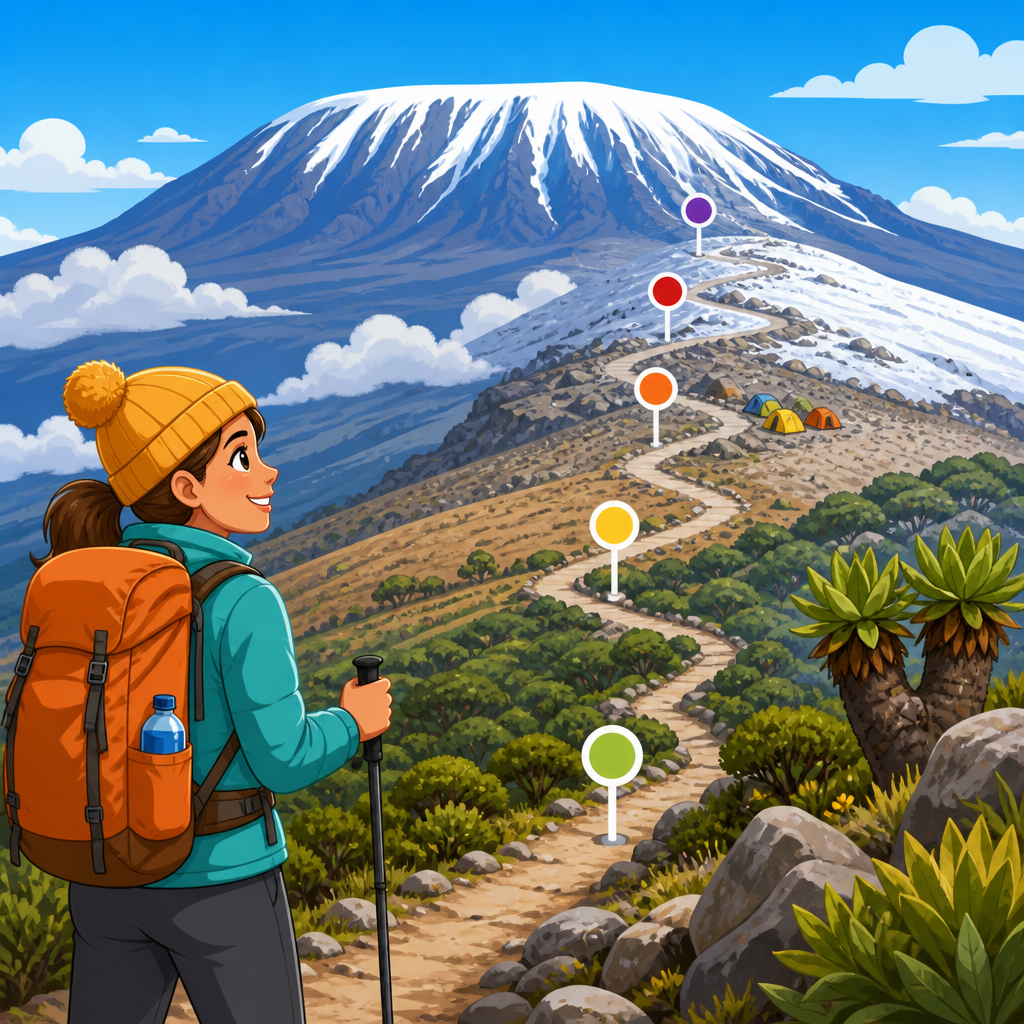
Mount Kilimanjaro is the highest peak in Africa at 5,895 meters, and for first-time visitors, altitude is the single factor most likely to shape the trek experience, pace, safety, and success rate. In practical terms, altitude means the reduced air pressure found at higher elevations, which lowers the amount of oxygen available with every breath. Even strong hikers notice this change. I have planned high-altitude itineraries and reviewed dozens of Kilimanjaro route schedules, and one pattern is consistent: people who understand altitude early make better decisions about training, gear, route choice, and acclimatization. This guide explains how Kilimanjaro altitude affects the body, what elevations you will encounter, how to prepare for summit day, and how to use this page as your starting point for trek preparation. If you are asking how hard Kilimanjaro is, how to prevent altitude sickness, or which route gives beginners the best chance of reaching Uhuru Peak, the answer begins with understanding elevation gain and acclimatization.
Kilimanjaro is not a technical climb, but it is a serious high-altitude trek. Most first-time visitors arrive assuming the main challenge will be distance or steep trails. In reality, the mountain’s altitude profile matters more than raw fitness. The trek usually starts around 1,800 to 2,400 meters depending on route, passes through rainforest, moorland, alpine desert, and arctic summit zones, and gains more than 3,500 vertical meters over several days. That gradual transition is beautiful, but it also exposes climbers to acute mountain sickness risk. Good trek preparation therefore means matching your route, daily pace, hydration, sleep, and medical planning to Kilimanjaro’s elevations rather than training as if this were a normal hiking trip. For travelers building a complete preparation plan, this article serves as the hub overview for route research, physical training, packing strategy, altitude safety, and pre-trip logistics.
What Kilimanjaro altitude really means for first-time trekkers
At sea level, the air contains about 21 percent oxygen, and that percentage stays essentially the same on Kilimanjaro. What changes is barometric pressure. As you go higher, pressure drops, so each breath delivers fewer oxygen molecules into the lungs and bloodstream. This is why altitude affects everyone, including marathon runners and experienced hikers. On Kilimanjaro, many climbers first notice the change above 3,000 meters with mild breathlessness, disturbed sleep, or a headache. Above 4,000 meters, appetite often drops, recovery slows, and easy walking can feel unexpectedly hard. By summit night, when you are pushing from roughly 4,700 to 5,895 meters, even a very slow pace can feel exhausting.
For first-time visitors, the key point is simple: fitness helps, but acclimatization determines performance. A fit person can move efficiently on steep terrain, carry effort well, and recover between days, yet still develop altitude symptoms if ascending too quickly. A moderately fit person on a longer route with disciplined pacing often does better. Guides on Kilimanjaro commonly use the phrase “pole pole,” meaning slowly slowly, because controlled ascent improves oxygen adaptation. Your body responds by increasing breathing rate, adjusting blood chemistry, and over time producing physiological changes that improve oxygen delivery. Those changes need time. That is why route length is not just a comfort issue; it is the foundation of altitude management.
Kilimanjaro elevations by trekking stage
Most routes begin at a gate below 2,500 meters and then climb in stages to high camp before a midnight summit attempt. Understanding these bands helps first-time visitors anticipate how the trek will feel. Below 2,500 meters, most people feel normal and can mistakenly start too fast. Between 2,500 and 3,500 meters, breathing becomes more noticeable during climbs, but symptoms are usually mild if hydration and pace are good. Between 3,500 and 4,500 meters, many trekkers experience headaches, poor sleep, or reduced appetite. Above 4,500 meters, effort perception rises sharply, and the margin for bad decisions narrows. Summit day is demanding because it combines darkness, cold, steep scree, fatigue, and extreme altitude.
| Trek stage | Typical elevation | What first-time visitors commonly notice |
|---|---|---|
| Trailhead and first camp | 1,800 to 3,000 meters | Comfortable walking, temptation to go too fast, little obvious altitude stress |
| Early acclimatization zone | 3,000 to 3,800 meters | Shortness of breath on climbs, lighter sleep, mild headache for some trekkers |
| High camp approach | 3,800 to 4,700 meters | Lower appetite, slower recovery, stronger fatigue, higher need for pacing discipline |
| Summit push | 4,700 to 5,895 meters | Very slow walking, frequent rest steps, cold stress, nausea or dizziness in some climbers |
This elevation progression explains why Kilimanjaro success rates vary by route. Short itineraries compress the climb into fewer days and reduce acclimatization time. Longer routes such as Lemosho and Northern Circuit generally produce better summit outcomes than faster itineraries because they allow the body to adapt before summit night. Machame can also work well because it supports the “climb high, sleep low” pattern on several schedules. Marangu is often chosen by beginners because of hut accommodation, but shorter versions can be less forgiving from an altitude perspective. When comparing itineraries, ask not only how many days the trek lasts, but how many nights are spent above 3,000 meters and how the operator spaces elevation gain.
How altitude sickness happens on Kilimanjaro
Altitude sickness is the common term for acute mountain sickness, or AMS. It usually begins with headache and may include nausea, fatigue, poor sleep, dizziness, and loss of appetite. On Kilimanjaro, mild AMS is common; dangerous escalation is not common, but it is possible and must be taken seriously. The standard field reference used by mountain professionals is the Lake Louise Acute Mountain Sickness Score, which evaluates headache plus associated symptoms after ascent. Trekkers do not need to self-diagnose formally every hour, but they should know that headache combined with nausea, unusual weakness, or balance issues is a warning sign, not something to push through casually.
More severe altitude illness includes high-altitude cerebral edema and high-altitude pulmonary edema. These are medical emergencies. Cerebral edema can present with confusion, staggering gait, severe lethargy, or altered mental status. Pulmonary edema often causes breathlessness at rest, chest tightness, wet cough, and reduced exercise tolerance out of proportion to the slope. The correct response is immediate descent, supplemental oxygen if available, and evacuation support from trained staff. Reputable Kilimanjaro operators screen trekkers during the climb, often using pulse oximeters alongside symptom checks, but numbers alone do not diagnose altitude illness. A low oxygen saturation at altitude can be expected; symptoms and functional decline matter more than a single reading.
Best acclimatization strategies for beginners
The most effective acclimatization strategy is choosing a route with enough days. For most first-time visitors, seven days should be considered the minimum, and eight or more days is better if budget and schedule allow. I strongly advise beginners to resist the temptation to save money by selecting the shortest itinerary. The added day is not a luxury. It raises your margin of safety and improves your chance of enjoying the mountain instead of simply enduring it. Routes that build in an acclimatization hike after lunch, then return to a lower sleeping altitude, are especially helpful because they expose the body to higher elevations without forcing overnight stress too early.
Pacing is the second major tool. On Kilimanjaro, people often fail because they hike at their home-day-hike speed during the first two days, feel great, and accumulate fatigue they do not notice until high camp. Sustainable trekking means conversational pace, short steps, steady breathing, and restrained effort on all uphill sections. Hydration matters too, though it is often overstated without nuance. Drinking excessive amounts does not prevent altitude sickness, but consistent fluid intake supports circulation, temperature regulation, and appetite. Most operators recommend roughly three to four liters per day, adjusted for body size, temperature, and exertion. Electrolytes can help if you are sweating heavily, but they do not replace smart pacing and sufficient rest.
Trek preparation: training, gear, and route planning
Good trek preparation for Kilimanjaro starts at least eight to twelve weeks before departure. Aerobic training should include long walks, stair climbs, and back-to-back hiking days to build durable endurance rather than explosive speed. Strength work should focus on legs, calves, glutes, and core stability, especially for descending after summit day when many trekkers are tired and unsteady. If you have access to hills, train on sustained climbs. If not, treadmill incline sessions and stair machines are useful substitutes. Altitude masks do not simulate acclimatization effectively, and for most trekkers they are marketing noise rather than meaningful preparation.
Gear choices also affect how altitude feels. Cold stress, dehydration, and poor sleep can magnify altitude symptoms. Insulated layers, a reliable sleeping bag rated appropriately for subzero summit conditions, broken-in boots, quality gloves, and a headlamp with spare batteries are essential. On summit night, many first-time climbers underestimate how much slower they will move in cold, thin air. That means more time exposed to wind chill. Trekking poles are not optional luxury items for most beginners; they reduce energy waste on descents and improve balance when fatigue peaks. Before booking, review the operator’s emergency protocols, guide-to-client ratio, oxygen availability, medical training, and daily health-check routine. Those practical details matter more than glossy photos.
Medication planning deserves a clear, balanced approach. Acetazolamide, commonly known by the brand name Diamox, is widely used to support acclimatization by stimulating ventilation and helping the body adjust more quickly. It is not a substitute for proper ascent profile, but for many trekkers it is a useful preventive tool when discussed with a clinician beforehand. Side effects can include tingling, altered taste for carbonated drinks, and more frequent urination. People with specific medical conditions or sulfa-related concerns need individualized advice. Ibuprofen or paracetamol may help with simple headaches, but pain relief should never mask worsening symptoms that actually require rest or descent. Pre-trip medical review is especially important if you have asthma, cardiovascular disease, sleep apnea, or prior altitude illness.
Common mistakes first-time visitors make at altitude
The most common mistake is choosing a route based on price alone. Budget matters, but the cheapest trek can become the most expensive if poor acclimatization forces an early exit or creates medical risk. Another frequent error is arriving sleep-deprived after long-haul travel and beginning the climb immediately. A rest day in Moshi or Arusha gives you time to rehydrate, organize gear, and start the trek in a stable condition. Under-eating is another problem. High altitude can suppress appetite, yet your body still needs calories for warmth and movement. Eat small amounts consistently, even when you do not feel hungry.
First-time trekkers also misread normal discomfort and serious symptoms. Mild breathlessness on steep sections is expected; confusion, inability to walk straight, or severe shortness of breath at rest is not. Some hikers hide symptoms because they fear being turned around before the summit. That is a dangerous mindset. On Kilimanjaro, early reporting gives guides more options, including rest, monitoring, medication discussion, or timely descent before a situation becomes urgent. Finally, do not frame the climb as a test of toughness. The mountain rewards patience, humility, and methodical preparation. If you want the best Kilimanjaro trek preparation strategy, build your plan around altitude first, then fit training, gear, route choice, and travel logistics around that reality.
Kilimanjaro altitude is the central fact every first-time visitor must respect. The mountain’s trails are non-technical, but the ascent to 5,895 meters makes preparation non-negotiable. If you remember only three points, make them these: choose a longer route, move slowly from day one, and treat symptoms honestly. Those decisions influence summit success more than bravado or gym fitness alone. Strong preparation also improves enjoyment. When acclimatization is working, you notice the rainforest, giant groundsels, lava landscapes, and sunrise above the clouds instead of focusing only on discomfort.
Use this guide as your hub for trek preparation and as the basis for deeper planning on route selection, training schedules, packing lists, and altitude safety. Review your itinerary carefully, ask operators detailed medical and logistics questions, and speak with a qualified clinician before departure about preventive medication and personal risk factors. Kilimanjaro is absolutely achievable for beginners, but success comes from respecting altitude rather than underestimating it. Start planning early, choose wisely, and give yourself the time the mountain demands.
Frequently Asked Questions
What altitude on Kilimanjaro do most first-time visitors start to feel the effects?
Most first-time trekkers begin to notice altitude somewhere between about 2,500 and 3,500 meters, although there is no single number that applies to everyone. Some people feel almost normal at those elevations, while others notice shortness of breath on hills, a mild headache, lighter sleep, reduced appetite, or a general sense that every uphill step takes more effort than expected. On Kilimanjaro, this matters because nearly every route gains height quickly enough that the body has to keep adjusting day after day. Even if you are fit, motivated, and experienced with long hikes at sea level, altitude can still be the main factor shaping how strong you feel on the mountain.
The key point for first-time visitors is that altitude response is highly individual and only loosely connected to fitness. Strong hikers often assume they will handle Kilimanjaro easily, then discover that reduced oxygen changes their pace, recovery, and sleep. That is completely normal. A useful mindset is to expect the mountain to feel progressively slower, colder, and more demanding as you climb. If you understand that early, you are less likely to push too hard in the first few days. Most successful first-time climbers treat the first signs of altitude not as failure, but as a signal to slow down, hydrate, eat consistently, and let acclimatization do its work.
Why is altitude considered the biggest challenge on Kilimanjaro compared with distance or fitness?
Altitude is the biggest challenge on Kilimanjaro because it affects the body in a way that training alone cannot fully solve. At higher elevations, air pressure drops, which means each breath delivers less oxygen than it does at lower altitude. As a result, your heart and lungs work harder, your walking pace naturally slows, and your body must gradually adapt through acclimatization. The mountain itself is not technically difficult on the standard trekking routes, and many first-time visitors are capable of covering the daily distances. What changes the experience is that the same distance feels much harder when you are climbing above 4,000 meters and sleeping high for several nights in a row.
This is also why people are often surprised that a very athletic traveler can struggle while a steadier, less obviously “fit” trekker succeeds. Endurance and strength help, but they do not guarantee acclimatization. The most successful Kilimanjaro climbers usually combine decent fitness with patience, discipline, and respect for the route schedule. They walk slowly, avoid racing other trekkers, eat even when appetite drops, drink regularly, and choose itineraries that allow the body more time to adapt. For first-time visitors, it is helpful to think of Kilimanjaro less as a simple hike and more as an altitude progression where pacing and recovery are as important as physical conditioning.
How can first-time visitors improve their chances of acclimatizing well on Kilimanjaro?
The most effective way to improve acclimatization is to choose a longer itinerary with a gradual ascent profile. In practical terms, that usually means avoiding the shortest route schedules and giving yourself enough days on the mountain for your body to adjust to lower oxygen levels. Routes with better acclimatization profiles often include the principle of “climb high, sleep low,” where you gain altitude during the day and sleep at a lower elevation than your highest point. That pattern gives the body a stronger acclimatization stimulus without forcing you to sleep too high too soon. For first-time visitors, extra days are often one of the smartest investments you can make because they directly improve comfort, safety, and summit success odds.
Beyond route choice, your daily habits matter a great deal. Walk slower than you think necessary, especially in the first few days. Guides on Kilimanjaro often emphasize a very controlled pace for a reason: conserving energy and keeping breathing steady helps reduce strain at altitude. Stay on top of hydration, but do not force extreme amounts of water; the goal is consistent, sensible fluid intake along with regular food and electrolytes. Eat even if your appetite dips, because altitude and cold can make people under-fuel without realizing it. Sleep, warmth, and honest communication with your guides are also critical. If you develop symptoms, reporting them early gives the team a better chance to respond before the issue becomes serious. Some trekkers also discuss preventive medication such as acetazolamide with their doctor before the trip, especially if they have limited high-altitude experience.
What are the warning signs of altitude sickness on Kilimanjaro, and when should someone be concerned?
Mild altitude symptoms can include headache, nausea, unusual fatigue, dizziness, poor sleep, and loss of appetite. These are common enough on Kilimanjaro that many trekkers experience at least one of them to some degree, especially as they move higher. Mild symptoms do not automatically mean the climb is over, but they should never be ignored. What matters most is whether symptoms stay mild, improve with rest and hydration, or start to intensify. A headache that does not ease, increasing nausea, vomiting, unusual weakness, confusion, loss of coordination, or breathlessness that seems excessive for the pace are all signs that need immediate attention from your guides.
Serious altitude illness can become dangerous quickly, which is why good operators monitor trekkers closely. The major rule for first-time visitors is simple: worsening symptoms at altitude are not something to “push through.” If someone is becoming less stable, less alert, or significantly more ill as they continue upward, descent may be necessary. On Kilimanjaro, responsible guiding teams usually perform regular health checks and know how to assess whether a trekker is adapting normally or moving into higher-risk territory. The safest attitude is to be honest about how you feel. Trying to hide symptoms to protect your summit chances can do the opposite. Early action is one of the best safety tools on the mountain.
What is the best altitude strategy for summit night on Kilimanjaro?
Summit night is where Kilimanjaro’s altitude challenge becomes most obvious for many first-time visitors. You usually begin the final push late at night from high camp after several days of sleeping at elevation, often with limited rest, colder temperatures, and reduced appetite. By that point, even simple tasks can feel slow and effortful. The best altitude strategy is to keep everything controlled: pace, breathing, layering, hydration, and expectations. Start slowly and stay slow. A steady rhythm with deliberate steps is far more effective than bursts of speed followed by long recovery stops. Most successful summit attempts are built on patience rather than power.
It also helps to prepare mentally for how the altitude may feel. Breathing harder, stopping more often, and moving at a pace that seems unusually slow are all normal on summit night. Keep drinking small amounts regularly if conditions allow, eat easy calories when you can, and protect yourself from getting cold because chilling can drain energy quickly. Listen closely to your guides, who are reading both the terrain and your physical condition. If you have acclimatized reasonably well on previous days, stayed disciplined with pace, and chosen a route that gives you enough time on the mountain, summit night becomes much more manageable. For first-time visitors, the winning formula is usually simple: longer itinerary, conservative pacing, and respect for altitude from day one.