Grilling at altitude changes more than comfort on the patio: wind, lower air pressure, lower humidity, and cooler ambient temperatures alter ignition, heat retention, fuel use, cooking speed, and food moisture. In practical terms, “altitude” usually starts to matter around 3,000 feet, becomes obvious by 5,000 feet, and can significantly reshape grilling technique above 7,000 feet. “Thinner air” does not mean grills suddenly cannot get hot; it means combustion behaves differently, water evaporates faster, and the environment pulls heat from food and equipment more aggressively. Wind compounds those effects by stripping heat from grill grates, disrupting flame patterns, and accelerating moisture loss at the food surface.
I have grilled regularly from near sea level to mountain towns above 8,000 feet, and the same recipe can produce sharply different results unless the method changes. Chicken that stays juicy at low elevation can dry before the center is safe. Burgers can brown unevenly because one side of the grill runs hotter in a crosswind. A charcoal fire that feels stable for twenty minutes can collapse early because oxygen delivery and fuel burn are less predictable. This matters because grilling is a high-contrast cooking method: small shifts in airflow, lid position, grate temperature, and carryover heat create large changes in the final result. For anyone building confidence with cooking methods at altitude, grilling is one of the clearest places to learn how environment controls outcomes.
This hub explains how altitude affects gas, charcoal, pellet, and electric grilling; how wind changes heat transfer; why preheating and zone control matter more in mountain conditions; and which foods need the biggest adjustments. It also connects the core ideas that underpin all altitude cooking methods: lower boiling temperature, faster evaporation, longer cook times for dense foods, and the need to measure heat rather than guess it. If you understand those principles on a grill, you can apply them to roasting, smoking, broiling, pan cooking, and outdoor ovens with far fewer surprises.
Why altitude changes grilling physics
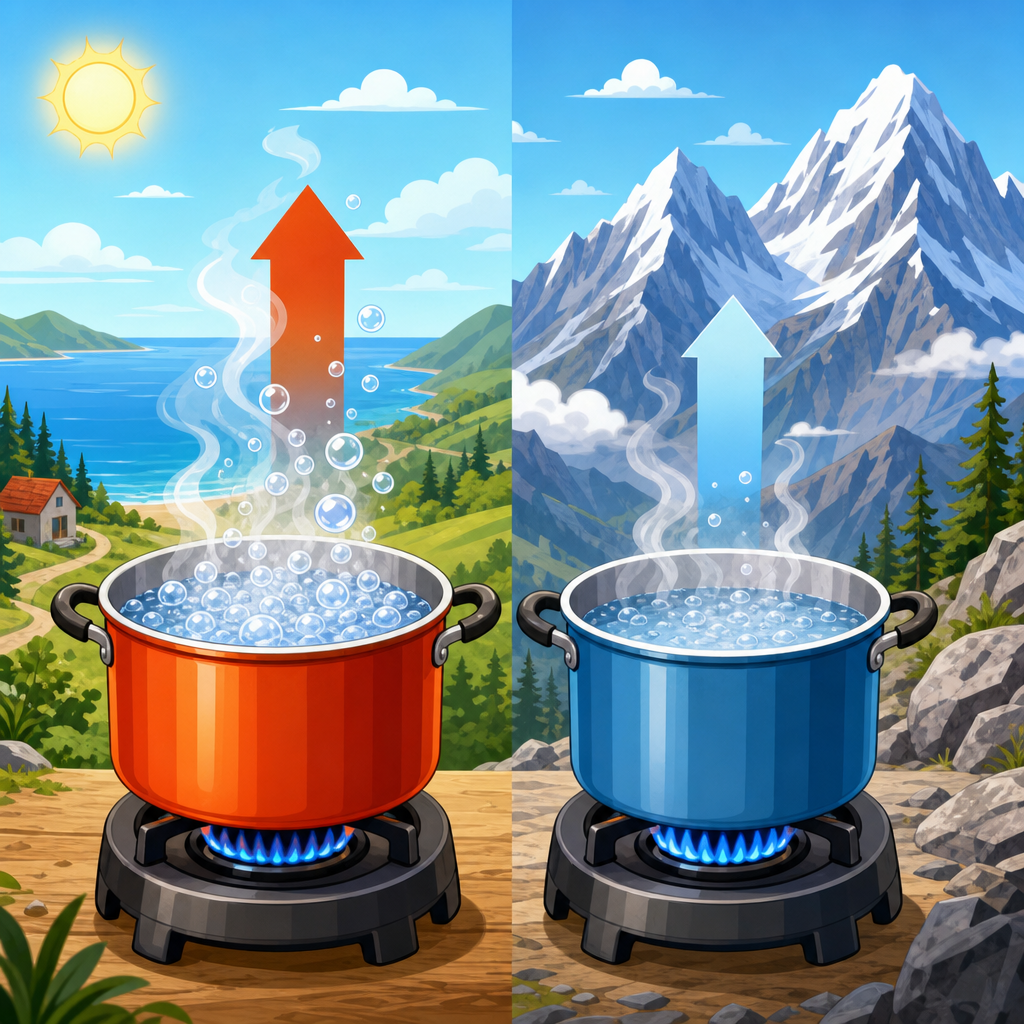
At higher elevations, atmospheric pressure drops. That lowers the boiling point of water, so moisture in and on food evaporates more readily at a given grill temperature. The result is straightforward: food dries faster before connective tissue softens or the center reaches target doneness. This is why thick chicken breasts, pork chops, and lean fish often seem less forgiving in mountain grilling. The food surface loses water quickly, which helps browning once the surface dries, but the interior may lag behind because the surrounding air is cooler and less dense.
Combustion also changes. Fire depends on fuel, heat, and oxygen, but the amount of oxygen available in each volume of air decreases with altitude. Gas burners and charcoal beds can still produce strong heat, yet they may require longer preheats, cleaner airflow paths, and more deliberate fuel management to achieve the same grate temperatures you expect at sea level. Manufacturers account for some variation, but not all. In real use, I see more sensitivity to clogged burner ports, ash buildup, and poor vent settings at altitude because there is less margin for error.
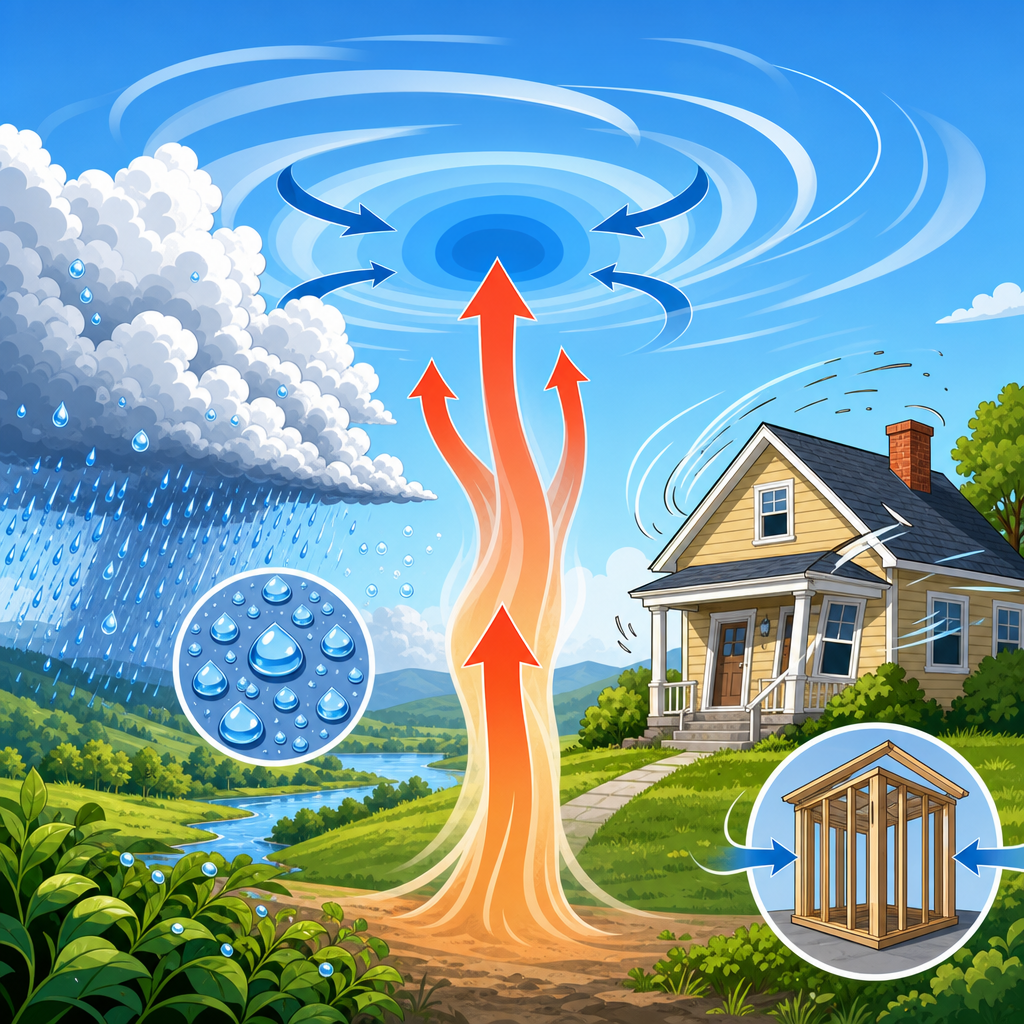
Wind magnifies everything. Convective heat loss rises as moving air sweeps heat off the grill body and food surface. Flames lean, hot spots shift, and lid thermometers become less representative of grate-level conditions. This is why mountain grilling rewards measurement. Use an instant-read thermometer for internal temperature and, ideally, a surface thermometer or probe at grate level. Time alone becomes a weak guide.
How wind alters fire, heat zones, and moisture loss
Wind is often the hidden reason a familiar grilling method fails. A steady breeze can increase oxygen flow to one part of a charcoal bed while cooling another, creating a hotter front edge and a weaker rear zone. On gas grills, crosswinds can push flames away from burner ports, reduce effective heat under one grate section, or cause one side to recover slowly after the lid opens. On pellet grills, wind steals heat from thin metal bodies and drives up pellet consumption because the controller works harder to maintain set temperature.
Moisture loss is equally important. Moving air accelerates evaporation from marinades, meat surfaces, and even from cut vegetables. At altitude, where air is already dry, wind can make food tacky and dehydrated long before it is done. That does not mean you should keep everything wet. Surface moisture inhibits browning until it evaporates. The better approach is controlled moisture: dry the surface when you want searing, then use indirect heat, a lid, and careful pulling temperatures to preserve internal juiciness.
The simplest operational change is shelter. Position the grill where airflow is reduced but ventilation remains safe and unobstructed. Never grill in an enclosed garage or under unsafe overhangs. Use the grill body itself as a barrier by orienting the lid hinge or solid side toward prevailing wind when possible. On charcoal cookers, I routinely make smaller, denser fuel piles and adjust vents in smaller increments than I would at low elevation because wind-driven swings happen fast.
Best practices for gas, charcoal, pellet, and electric grills at altitude
Gas grills are usually the easiest to stabilize, but they often need longer preheats at altitude, especially in cool wind. Give them enough time for the grates to absorb heat, not just for the lid thermometer to climb. Burner maintenance matters more than many cooks realize. Clean ports, unobstructed venturi tubes, and intact crossover systems improve ignition and flame consistency when oxygen availability is reduced. If flames look weak, yellow, or uneven, solve the airflow problem before assuming the grill lacks power.
Charcoal grills can produce excellent high-altitude flavor, but they demand more active management. Lump charcoal lights fast and burns hot, yet its irregular pieces can create inconsistent airflow. Briquettes burn more predictably and are often easier to control when wind is a factor. I recommend chimneys filled slightly fuller than usual at altitude, followed by a deliberate two-zone setup so food can move away from flare-ups or overbrowning. Ash accumulation restricts airflow, so long cooks require shaking or clearing ash more often than many lowland guides suggest.
Pellet grills offer convenience and steady smoke production, but thin mountain air and wind expose their weaknesses. They recover slowly after lid openings, and budget units with lightweight construction can struggle to hold target temperature in exposed conditions. Thermal blankets, gasket kits, and sheltered placement make a measurable difference. Electric grills and electric smokers avoid combustion variability, which is helpful where oxygen is limited, but they still lose heat to wind and cold air. They are often best for controlled indirect cooking rather than aggressive searing.
| Grill type | Main altitude challenge | Most effective adjustment | Good use case |
|---|---|---|---|
| Gas | Longer preheat, uneven flames in wind | Clean burners, extend preheat, create two zones | Weeknight meats, vegetables, mixed menus |
| Charcoal | Airflow sensitivity, ash restriction | Use denser fuel layout, manage vents carefully | Steaks, burgers, high-heat flavor |
| Pellet | Heat loss and slow recovery | Shelter from wind, use insulation accessories | Chicken pieces, pork, low-and-slow hybrids |
| Electric | Limited searing power outdoors | Preheat thoroughly, cook with lid closed | Apartments, controlled indirect cooking |
Preheating, grate temperature, and two-zone control
At altitude, preheating is not a ritual; it is how you store energy in the cooking system. The metal grates, diffuser plates, firebox walls, and lid all need heat so the grill can recover after food goes on. A lid thermometer measures air high in the chamber, not the temperature where browning actually happens. I rely on grate-level readings whenever possible because a grill showing 450°F at the lid may still have a grate too cool to sear well if wind is stripping heat.
Two-zone cooking becomes the central control strategy. One zone provides direct radiant and conductive heat for browning; the other provides gentler convective heat to finish thicker foods without scorching. This matters more at altitude because the gap between surface browning and safe internal temperature widens on many foods. If you try to cook everything over direct heat, you often get dark exteriors and underdone centers, especially with bone-in chicken, sausages, and thick vegetables like potatoes or halved onions.
For steaks, I often reverse the expected order in mountain conditions: bring the interior close to target over indirect heat with the lid closed, then finish with a short sear once the grill is fully stabilized. For burgers, a medium-hot direct zone plus a nearby cooler zone prevents flare-up damage in gusty weather. For vegetables, oil lightly, salt later when appropriate, and move them early if edges color before the interior softens.
How different foods behave on a mountain grill
Beef steaks generally adapt well because they benefit from dry surfaces and tolerate fast finishing. The main risk is uneven doneness caused by shifting hot spots. Burgers lose moisture faster than many cooks expect, especially lean blends. At altitude, 80/20 ground beef remains far more forgiving than extra-lean mixes. Chicken is the food I adjust most. Skin-on pieces do best with indirect heat first, then a crisping finish, because skin can burn before collagen and intramuscular moisture have balanced out.
Pork chops and tenderloin benefit from brining or salting in advance, then cooking slightly below the temperatures many older recipes recommend. Modern food safety guidance allows whole cuts of pork to remain slightly pink at 145°F with a rest, which preserves juiciness. Fish requires a cleaner grate and lower stress. Wind can chill one side of delicate fillets and encourage sticking if the grate is not thoroughly preheated and oiled. Thick salmon portions are more reliable than thin white fish fillets in exposed conditions.
Vegetables can be excellent at altitude because lower ambient humidity helps concentrate flavor, but they need size awareness. Thin asparagus can desiccate quickly. Zucchini, peppers, corn, mushrooms, and cabbage wedges hold up better. Fruit behaves similarly. Peaches and pineapple caramelize beautifully, yet sugar burns fast in a wind-driven hot spot. Across all foods, thickness matters more than weight. A thick cut needs time in a protected zone; a thin cut needs speed and close attention.
Timing, thermometers, and doneness standards
The most common question is whether grilling takes longer at altitude. The accurate answer is: often yes for thicker foods, sometimes no for thin foods, and always less predictably if wind is involved. Surface browning may happen quickly because evaporation is fast, but internal cooking can lag because the grill loses heat more readily to the environment. That is why target temperatures beat fixed times. Use an instant-read thermometer and pull food with carryover in mind: steak around 5°F below target, chicken breasts a few degrees below final target if they will rest covered, and larger roasts based on the center reading, not the exterior color.
For reference, 125 to 130°F yields rare beef after rest, 135°F medium-rare, and 140 to 145°F medium depending on carryover. Chicken should reach 165°F in the thickest part unless you are using validated time-and-temperature pasteurization methods. Whole cuts of pork are best around 145°F with rest. Fish is typically ideal between 125 and 135°F depending on species and texture preference. These numbers matter more at altitude because visual cues become less reliable when browning and dehydration outpace internal doneness.
Probe placement is another mountain skill. Insert the probe into the thermal center, avoiding bone and large fat seams. On grills with pronounced hot spots, verify more than one piece from different zones. If the wind is strong, expect one side of the grate to cook faster even on premium equipment. Calibration matters too. An ice bath or boiling water check reveals whether your thermometer is trustworthy, though remember that boiling temperature decreases with altitude.
Fuel efficiency, safety, and troubleshooting common problems
High-altitude grilling often uses more fuel than cooks expect. Longer preheats, colder evenings, and wind exposure force gas burners to run higher, charcoal to be replenished sooner, and pellet hoppers to empty faster. That is normal, but inefficient operation is not. If recovery is poor, inspect gaskets, burner alignment, ash buildup, grease interference, and the position of heat diffusers. Small maintenance lapses become large performance losses in thin air.
Safety is nonnegotiable. Do not block ventilation to fight wind. Keep propane cylinders upright and connections checked with a leak solution, not an open flame. On charcoal grills, be alert to ember travel in gusty weather and to carbon monoxide risk in any partially enclosed area. Food safety also deserves attention because slower center heating can tempt repeated lid openings and prolonged time in the danger zone. Prep food indoors, move it to the grill cold, and refrigerate leftovers promptly.
Common fixes are simple. If food burns outside and stays raw inside, lower the direct zone and finish indirectly. If the grill will not sear, preheat longer and clean the grates and burners. If chicken skin is rubbery, dry it well, cook it mostly indirectly, then crisp it over direct heat at the end. If pellet temperatures swing wildly, shield the cooker from wind and clean the fire pot. Build a repeatable setup, take notes, and treat grilling at altitude as a measured cooking method rather than a purely intuitive one.
Grilling at altitude rewards cooks who understand the environment instead of fighting it. Lower air pressure changes evaporation and combustion. Wind removes heat, shifts flame patterns, and dries food faster. Those facts explain why the same grill, same fuel, and same recipe can behave differently in Denver, Santa Fe, or a mountain town above 8,000 feet. The solution is not mystery equipment or complicated tricks. It is better control: longer preheats, grate-level measurement, two-zone cooking, smarter food choices, and shelter from wind where safe.
As the hub for cooking methods in altitude cooking, grilling teaches the core lesson that applies across roasting, smoking, broiling, and outdoor ovens: environmental conditions are part of the recipe. Once you begin tracking temperature, airflow, and moisture loss, your results become repeatable. Steaks sear more evenly, chicken stays juicier, vegetables char without collapsing, and fuel use becomes easier to predict. You also gain a framework for troubleshooting every other high-altitude cooking method because the same physics show up again and again.
Start with one practical change on your next cook: create a true two-zone fire and verify doneness with a reliable thermometer. Then refine preheat time, wind protection, and food thickness one variable at a time. That disciplined approach will improve every meal you grill at altitude and make the rest of your altitude cooking far more consistent.
Frequently Asked Questions
At what elevation does altitude really start to affect grilling, and what changes should I expect?
For most backyard cooks, altitude starts to become noticeable around 3,000 feet, becomes much more obvious by 5,000 feet, and can significantly change grilling behavior above 7,000 feet. That does not mean your grill suddenly stops working well at a certain number. It means the conditions around the grill begin to influence combustion, heat retention, and food moisture in ways that are harder to ignore. Lower air pressure and reduced oxygen density affect how fuel burns, while lower humidity, cooler evening temperatures, and stronger wind exposure can all make the grill feel less predictable than it does closer to sea level.
In practical terms, you may notice slower preheating, weaker recovery after opening the lid, more fuel consumption, and food drying out faster on the surface. You may also find that flare-ups behave differently, charcoal takes longer to establish an even bed of coals, and gas burners can seem less forceful even when they are functioning properly. At the same time, thinner air does not automatically mean low grill temperatures. A properly maintained grill can still get very hot at altitude, but the path to stable, repeatable heat often requires more attention to shielding from wind, preheating longer, and cooking with tighter lid discipline.
Why does wind matter so much when grilling at altitude?
Wind is one of the biggest hidden variables in high-altitude grilling because it affects both combustion and heat retention. At elevation, many grilling areas are more exposed, and the air itself is often cooler and drier. When wind moves across or into the grill, it can strip heat away from the cooking chamber, cool the grill body, disturb the burner or coal fire pattern, and make temperature readings less consistent. Even a grill that reaches a strong peak temperature can struggle to hold that heat once the lid is opened if wind is constantly pulling energy away.
Wind can also alter the way oxygen reaches the fire. In some situations, a breeze feeds the flame and creates hot spots. In others, it disrupts the burner flame, cools the grate, or causes charcoal to burn unevenly. That is why two cooks using the same grill at the same elevation can have very different results depending on patio layout, tree cover, and whether the grill sits in a sheltered corner or an open deck. The best response is not to block ventilation dangerously, but to create a safer, smarter wind buffer. Position the grill in a protected outdoor location, keep it clear of structures and combustibles, and use the lid consistently to reduce heat loss. High-altitude grilling usually improves more from better wind management than from dramatic changes in recipes.
Does thinner air make grilling slower, and why can food dry out faster at high altitude?
Yes, grilling can feel slower at altitude, but not always for the reason people assume. Thinner air changes combustion efficiency, especially for gas and charcoal, so the grill may take longer to preheat and may not recover as quickly after the lid is opened. Lower ambient temperatures and wind exposure add to that effect by pulling heat away from the grill and the food. As a result, thicker cuts can spend more time on the grate before reaching target internal temperature, even when the grill surface initially seemed hot enough.
At the same time, food often dries out faster at altitude because moisture evaporates more readily in lower-pressure, lower-humidity conditions. That combination creates a common high-altitude grilling problem: the outside of the food can lose moisture and toughen while the center still needs more time. Lean meats, boneless chicken breasts, burgers, seafood, and vegetables are especially vulnerable. The solution is to cook with moisture retention in mind. Use marinades or brines where appropriate, avoid excessive lid opening, and rely on internal temperature rather than appearance alone. Two-zone cooking is especially useful because it lets you sear over direct heat and then finish more gently. At altitude, protecting moisture is often just as important as generating heat.
How should I adjust my grilling technique for gas, charcoal, or pellet grills at higher elevations?
The core adjustment across all grill types is to focus on control rather than brute force. For gas grills, plan on a longer preheat, check that burners are clean and producing steady flames, and use the lid more strategically to build and hold heat. If your grill seems weaker than expected, altitude may be part of the reason, but maintenance still matters. Clogged ports, dirty heat deflectors, or a nearly empty propane tank can amplify altitude-related issues. Some grills are also more sensitive to elevation than others because of how their burners and air-fuel mix are designed.
For charcoal grills, expect ignition and fire management to take more attention. Build a fully established coal bed before cooking, and do not rush the transition from lighting to usable heat. Wind protection is especially important because moving air can create uneven burn zones and shorten the life of your fuel. You may need more charcoal than you use at lower elevation, and vent adjustments may feel slightly different because airflow and combustion do not behave exactly the same. Pellet grills can also be affected, particularly in cold or windy mountain conditions, because they depend on a steady burn cycle and stable chamber temperatures. An insulated blanket designed for your model, when used according to manufacturer guidance, can help improve temperature consistency. No matter the grill type, a reliable grate thermometer or built-in temperature verification, plus an instant-read probe for the food, becomes much more important once altitude and weather start working against predictability.
What are the best practical tips for getting better results when grilling above 5,000 or 7,000 feet?
Start by accepting that consistency matters more than speed. Give the grill extra preheat time, keep the lid closed as much as possible, and set up for two-zone cooking whenever the food allows it. That single approach solves many altitude problems because it gives you a direct-heat area for browning and an indirect-heat zone for finishing without scorching or drying the outside. Use a thermometer instead of guessing, especially for larger cuts, because visual cues are less reliable when environmental conditions are pulling moisture and heat in different directions.
Next, manage the environment. Grill in a sheltered but safe outdoor location, minimize unnecessary opening of the lid, and keep fuel levels generous rather than marginal. Choose slightly thicker cuts when possible, because very thin foods can over-dry before you get the color and doneness you want. Brining, marinating, and lightly oiling food can help reduce moisture loss. For vegetables and delicate proteins, skewers, grill baskets, or foil packets can create a little protection from both wind and direct dehydration. Above 7,000 feet, these small steps become even more valuable because the combined effects of lower air pressure, cooler air, lower humidity, and wind can compound quickly. High-altitude grilling is absolutely manageable, but it rewards cooks who treat setup, heat management, and moisture control as part of the recipe rather than afterthoughts.