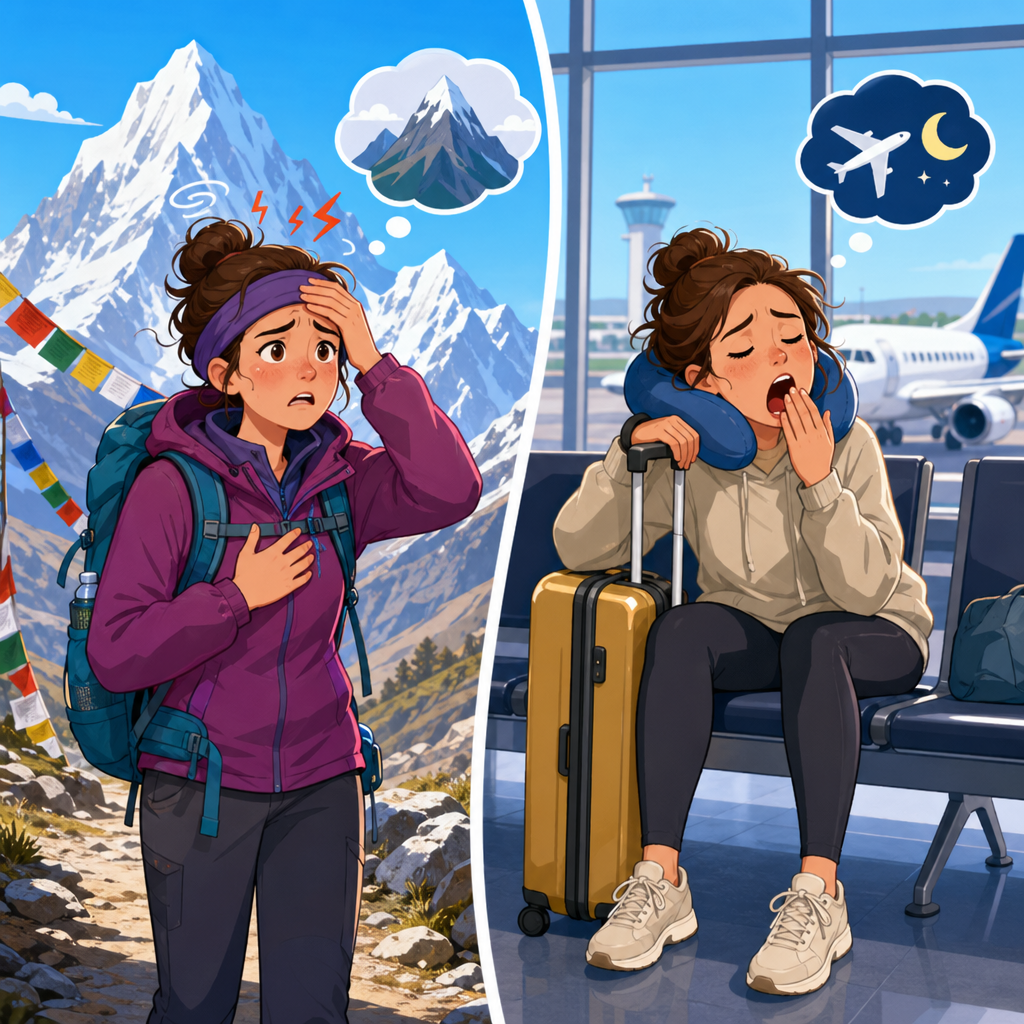
Altitude fatigue and normal travel fatigue can feel deceptively similar, yet telling the difference matters because one is usually solved by sleep and hydration while the other can be the earliest warning sign of acute mountain sickness. In high places, especially above about 2,500 meters or 8,200 feet, tiredness is not always “just the trip.” It may reflect your body struggling with lower oxygen pressure, a faster breathing rate, disrupted sleep, fluid shifts, and the first stage of altitude illness. I have seen travelers dismiss early symptoms after a flight, long drive, or poor night in a hotel, only to worsen on the second day because they treated altitude fatigue like ordinary jet lag. This guide explains how to recognize the difference, how acute mountain sickness is diagnosed, and what signs mean you should stop ascending. In practical terms, altitude fatigue is fatigue that appears after gaining elevation and is tied to reduced acclimatization, while normal travel fatigue comes from exertion, sleep debt, dehydration, stress, and schedule disruption without the broader pattern of altitude illness. The distinction matters because early recognition prevents progression to severe forms such as high-altitude cerebral edema or high-altitude pulmonary edema. If you are searching for AMS symptoms and diagnosis, this article functions as the central overview: what symptoms count, when they begin, how clinicians and guides assess them, what other conditions can mimic them, and what actions are safest in the field.
What altitude fatigue actually is
Altitude fatigue is the unusual, persistent sense of exhaustion that develops after ascent to higher elevation because the body has not fully adjusted to lower available oxygen. The key mechanism is hypobaric hypoxia: the percentage of oxygen in air stays roughly the same, but barometric pressure falls, so each breath delivers less oxygen into the bloodstream. In response, your body breathes faster, heart rate rises, sleep becomes lighter, and physical effort feels harder. That adaptive process is acclimatization. When acclimatization lags behind ascent, fatigue often appears alongside headache, nausea, reduced appetite, dizziness, and poor sleep. That cluster is more important than fatigue alone.
In my experience reviewing trek itineraries and post-arrival symptom patterns, altitude fatigue usually has a distinct texture. Travelers describe feeling heavy, slow, and mentally dulled even after a full night in bed. Walking stairs feels disproportionately hard. Simple tasks such as unpacking, showering, or holding a conversation can seem more draining than expected. The fatigue often worsens with exertion and improves only modestly with rest until the person acclimatizes, descends, or receives treatment. Unlike ordinary fatigue, it tends to arrive in the context of a recent elevation gain, especially sleeping at a new higher altitude.
How normal travel fatigue differs
Normal travel fatigue has many causes: jet lag, reduced sleep, airport stress, dehydration from flights, alcohol, long hours sitting, heavy meals, heat exposure, and overexertion on arrival. It can be intense, but it usually follows a recognizable travel stressor and improves with straightforward recovery. If someone lands in Denver, sleeps poorly, walks all day, eats little, and feels wiped out that evening, normal travel fatigue is plausible. If that same person also has a throbbing headache, nausea, unusual shortness of breath with mild effort, and symptoms that intensify overnight after sleeping at higher altitude, altitude illness moves higher on the list.
A useful practical rule is this: ordinary travel fatigue is typically isolated and proportional to the trip; altitude fatigue is often paired with other symptoms and feels out of proportion to the activity performed. Another clue is timing. Travel fatigue often begins during or immediately after transit and starts easing once sleep, food, and fluid intake improve. Altitude fatigue commonly becomes most apparent within six to twenty-four hours after ascent and may peak during the first one to two nights at a new altitude.
Core AMS symptoms and diagnosis
Acute mountain sickness, commonly shortened to AMS, is the mildest form of altitude illness, but it should be taken seriously because it can progress. The classic symptoms are headache plus one or more of the following after a recent ascent: gastrointestinal upset such as nausea, vomiting, or loss of appetite; fatigue or weakness; dizziness or lightheadedness; and poor sleep. Headache remains central in most modern diagnostic approaches. If there is no headache, many clinicians become cautious about labeling the problem AMS, although field judgment still matters when symptoms are evolving.
The most widely used symptom tool is the Lake Louise Scoring System, updated by international experts in mountain medicine. It evaluates headache, gastrointestinal symptoms, fatigue or weakness, dizziness or lightheadedness, and sleep difficulty after recent ascent. A total score of three or more with headache, in the setting of altitude exposure and no better explanation, supports AMS. In real use, the score is not a substitute for judgment. A trekker with mild headache and fatigue may score low yet still need observation, while someone with severe fatigue, vomiting, and worsening symptoms during continued ascent should be treated aggressively even before a formal score is calculated.
Diagnosis is mainly clinical. There is no single blood test or pulse oximeter reading that confirms AMS. Oxygen saturation can be lower at altitude even in well people, and consumer pulse oximeters vary with cold fingers, movement, and device quality. What matters most is the pattern: recent ascent, typical symptom cluster, and improvement with rest, acclimatization, or descent.
Signs that point more toward altitude fatigue than ordinary tiredness
Several features should make you suspect altitude rather than routine travel weariness. First is recent sleeping altitude gain, especially if you increased sleeping altitude quickly or went above 2,500 meters without acclimatization days. Second is symptom grouping. Fatigue plus headache is far more concerning than fatigue alone. Add nausea, appetite loss, dizziness, or restless sleep, and the probability increases. Third is disproportionate exertional limitation. If an easy walk suddenly feels like hard exercise, altitude may be the reason. Fourth is persistence despite common recovery steps. A nap, meal, and water may help normal fatigue significantly; altitude fatigue often lingers.
Another important distinction is trajectory. Ordinary travel fatigue generally trends better over several hours. AMS commonly worsens overnight, after exercise, or with further ascent. I advise travelers to ask one direct question: “Am I clearly better, the same, or worse since arriving here?” If the answer is worse, especially with new headache or nausea, assume altitude until proven otherwise and do not ascend.
Field checklist for comparing the two
| Feature | More consistent with normal travel fatigue | More consistent with altitude fatigue or AMS |
|---|---|---|
| Trigger | Long flight, poor sleep, time-zone shift, heavy activity | Recent ascent, especially new sleeping altitude above 2,500 m |
| Timing | Starts during transit or immediately after arrival | Often develops 6–24 hours after ascent |
| Headache | Absent or mild and explained by dehydration or sleep loss | Common, often central to diagnosis |
| Nausea/appetite loss | Usually minimal | Common with AMS |
| Response to rest | Improves clearly with sleep, food, and fluids | Improves slowly or incompletely until acclimatization or descent |
| Exercise tolerance | Tired but proportionate to effort | Unusually poor for simple activity |
| Trend with further ascent | No predictable worsening | Often worsens |
Conditions that can mimic AMS symptoms
Good diagnosis also means considering alternatives. Dehydration causes headache, dizziness, and fatigue, especially after flights or alcohol. Viral infections can cause weakness, nausea, and poor appetite before obvious fever or congestion appears. Carbon monoxide exposure from faulty heaters at lodges can create headache and malaise that mimic altitude illness and can affect multiple people indoors at once. Migraine, hangover, anxiety, overexertion, low blood sugar, and medication side effects are also common impostors. A cough, chest congestion, or fever points away from simple AMS and toward infection, though illness and altitude can occur together.
The practical test is context and response. If the problem is mainly dehydration, careful rehydration and a meal usually help within hours. If it is AMS, headache and fatigue may persist until ascent stops and the body catches up. If symptoms are severe, diagnosis in the field should remain conservative. It is safer to treat uncertain symptoms as possible altitude illness than to press higher because you hope it is only jet lag.
When fatigue signals something more serious
Fatigue alone is not the dangerous end of altitude illness, but it can sit on the same pathway. Red flags suggest progression beyond uncomplicated AMS. High-altitude cerebral edema, or HACE, is a brain-swelling emergency. Warning signs include severe or escalating headache, confusion, unusual behavior, trouble walking in a straight line, slurred speech, and drowsiness that is more than ordinary sleepiness. A simple heel-to-toe walking test can reveal ataxia, which is especially concerning. High-altitude pulmonary edema, or HAPE, affects the lungs. Watch for breathlessness at rest, a marked drop in exercise tolerance, persistent cough, chest tightness, crackling sounds in the lungs, or bluish lips.
If any red flag appears, descent is urgent. Supplemental oxygen, a portable hyperbaric bag, nifedipine for HAPE in appropriate settings, or dexamethasone for significant cerebral symptoms may be used by trained clinicians or expedition teams, but none should delay descent when descent is possible. Severe fatigue accompanied by confusion, clumsiness, or breathlessness at rest is never routine travel fatigue.
How to respond if you are unsure
The safest field rule is simple: do not ascend with symptoms of possible AMS. Rest at the same altitude, limit exertion, hydrate normally, eat carbohydrates if tolerated, and monitor symptoms for several hours. Mild analgesics can help headache, and anti-nausea medication may be useful. Acetazolamide can speed acclimatization and is commonly used for prevention or treatment of mild AMS, typically under clinician guidance because dose, sulfa allergy history, kidney issues, and side effects matter. If symptoms improve, you may remain at the same altitude until stable. If symptoms worsen or fail to improve, descend.
Prevention remains the strongest strategy. Gradual ascent works. Many mountain medicine guidelines advise limiting sleeping altitude increases once above roughly 3,000 meters and adding rest days after substantial gains. “Climb high, sleep low” is helpful when practical. Avoid heavy alcohol intake early in the trip, pace activity on day one, and sleep well before departure. None of these eliminate risk, but each lowers it.
Who is at higher risk and what that means for diagnosis
Previous altitude illness, rapid ascent, vigorous exertion in the first twenty-four hours, and sleeping high on the first night increase risk substantially. Susceptibility varies widely, and fitness does not protect reliably. I have seen strong endurance athletes develop clear AMS because they arrived fast and pushed hard. Younger travelers sometimes underestimate symptoms, while older travelers may pace better and do fine. Living at sea level, respiratory illness, and limited acclimatization time can all complicate the picture.
For diagnosis, risk factors do not prove AMS, but they change how suspicious you should be. A traveler with no altitude history who flies from sea level to Cusco and feels headache, fatigue, and nausea that evening should be managed differently from someone at a moderate elevation after a long but low-altitude road trip. The symptoms may look similar on paper; the exposure history is what makes the diagnosis coherent.
Altitude fatigue is different from normal travel fatigue because it follows elevation gain, reflects incomplete acclimatization, and usually appears with other AMS symptoms rather than by itself. The most reliable clues are recent ascent, headache, nausea or appetite loss, dizziness, poor sleep, unusual weakness on mild exertion, and symptoms that worsen overnight or with further climbing. Diagnosis of AMS is clinical, supported by tools such as the Lake Louise Score, but no score replaces common sense in the mountains. If symptoms fit possible AMS, stop ascending. If they are severe, worsening, or accompanied by confusion, loss of coordination, or breathlessness at rest, descend and seek medical help immediately.
For travelers, trekkers, and trip planners, the main benefit of understanding this distinction is simple: better decisions early prevent dangerous deterioration later. Treat ordinary travel fatigue with recovery, but treat possible altitude fatigue with caution, observation, and respect for elevation. Use this hub as your starting point for the broader AMS symptoms and diagnosis topic, and apply the rule that has protected more mountain travelers than any gadget: when in doubt, do not go higher.
Frequently Asked Questions
How can I tell whether my fatigue is normal travel tiredness or altitude-related fatigue?
The biggest clue is the setting and the pattern. Normal travel fatigue usually follows a long day of flying, driving, disrupted meals, dehydration, time-zone changes, poor sleep, or general overstimulation. It tends to improve noticeably after rest, food, fluids, and a good night of sleep. Altitude-related fatigue, by contrast, often appears after you have gone to a higher elevation—especially above about 2,500 meters or 8,200 feet—and may feel heavier, more persistent, and oddly out of proportion to what you actually did.
Altitude fatigue also commonly travels with other symptoms. A headache is one of the most important warning signs, especially if it develops after ascent and is paired with unusual tiredness, lightheadedness, nausea, loss of appetite, trouble sleeping, or feeling weak during very mild activity. If you expected to bounce back after resting but instead still feel drained, short of breath with simple exertion, or “off” in a way that seems unusual, altitude deserves more consideration. In short, ordinary travel fatigue usually fits the story of a demanding trip and improves with recovery, while altitude fatigue often starts after gaining elevation and may be the body’s early signal that it is not acclimatizing well.
What symptoms make altitude fatigue more concerning than ordinary exhaustion from travel?
Fatigue becomes more concerning when it does not appear alone. If you are at elevation and your tiredness comes with headache, nausea, dizziness, reduced appetite, poor sleep, unusual weakness, or a sense that even easy walking feels disproportionately hard, that points more toward early altitude illness than simple trip fatigue. One of the defining features of acute mountain sickness is that symptoms develop after ascent and are not fully explained by overexertion, dehydration, or a late night.
There are also red flags that mean the issue may be more serious than mild altitude fatigue. Worsening headache, repeated vomiting, confusion, clumsiness, difficulty walking straight, extreme shortness of breath at rest, chest tightness, a persistent cough, or a dramatic drop in energy are not normal signs of being “just tired.” Those symptoms can indicate progression beyond mild acclimatization problems and require immediate attention. A useful rule of thumb is this: if the fatigue seems to be escalating instead of improving, or if it is paired with neurological or breathing symptoms, do not dismiss it as routine travel weariness.
Can altitude fatigue start even if I am otherwise healthy and in good shape?
Yes. Fitness does not guarantee protection from altitude fatigue or acute mountain sickness. Healthy, athletic travelers are often surprised by this, but altitude response depends more on how quickly you ascend, how high you go, your individual susceptibility, and how much time your body gets to acclimatize. Being fit may help you perform better physically, but it does not change the basic challenge of lower oxygen pressure at altitude.
In fact, very active people can sometimes overlook early warning signs because they assume fatigue is just from exercise or a hard travel day. Someone may arrive at a mountain destination, go for a hike, sleep poorly, and wake up unusually drained. It is easy to blame the trip, but when that tiredness appears at elevation and is accompanied by headache, appetite loss, or breathlessness beyond what seems reasonable, altitude should stay on the list of possibilities. The key point is that altitude affects physiology, not just conditioning. No matter how healthy you are, persistent fatigue after ascent deserves attention if it does not improve or if other symptoms appear.
What should I do first if I think my fatigue might be caused by altitude?
The first step is to stop ascending and give your body time to adjust. Rest, drink fluids normally, eat light but adequate meals, and avoid alcohol or heavy exertion while you assess how you feel. Mild altitude-related fatigue may improve with a slower pace, hydration, warmth, and a period of acclimatization, but the key is observation. Ask yourself whether symptoms are stable, improving, or getting worse over several hours. If the fatigue is truly from ordinary travel strain, rest should usually help quite a bit. If it is altitude-related, the improvement may be incomplete or temporary, especially if you continue going higher.
If tiredness is accompanied by headache, nausea, dizziness, or poor coordination, take that seriously. Do not “push through” in hopes that the body will simply catch up while you keep climbing. If symptoms worsen, descending to a lower elevation is the safest next move, and seeking medical evaluation is wise. Many altitude problems begin subtly, with fatigue as one of the earliest signs. Treating that tiredness as useful information rather than an inconvenience can prevent a mild problem from becoming a dangerous one.
How long should fatigue last before I stop calling it normal travel fatigue and suspect altitude illness?
There is no exact hour-by-hour cutoff, but timing matters. Normal travel fatigue often starts during or right after the journey and usually begins easing once you sleep, rehydrate, eat, and settle in. If you wake up after a full night still feeling unusually depleted—or if the fatigue becomes more obvious only after arriving at altitude—that raises more suspicion for an altitude-related cause. Symptoms of acute mountain sickness commonly begin within several hours to about a day after ascent, which can make them easy to confuse with jet lag or general travel weariness.
A practical approach is to watch for persistence and progression. If your fatigue clearly improves with basic recovery measures, that supports ordinary travel tiredness. If it lingers beyond expected recovery, feels disproportionate to your activity, or is joined by headache, nausea, poor sleep, shortness of breath, or reduced exercise tolerance, altitude illness becomes more likely. The threshold for concern should be lower the higher you are and the faster you ascended. At elevation, persistent fatigue is not something to casually explain away, especially when it is the beginning of a broader symptom pattern.