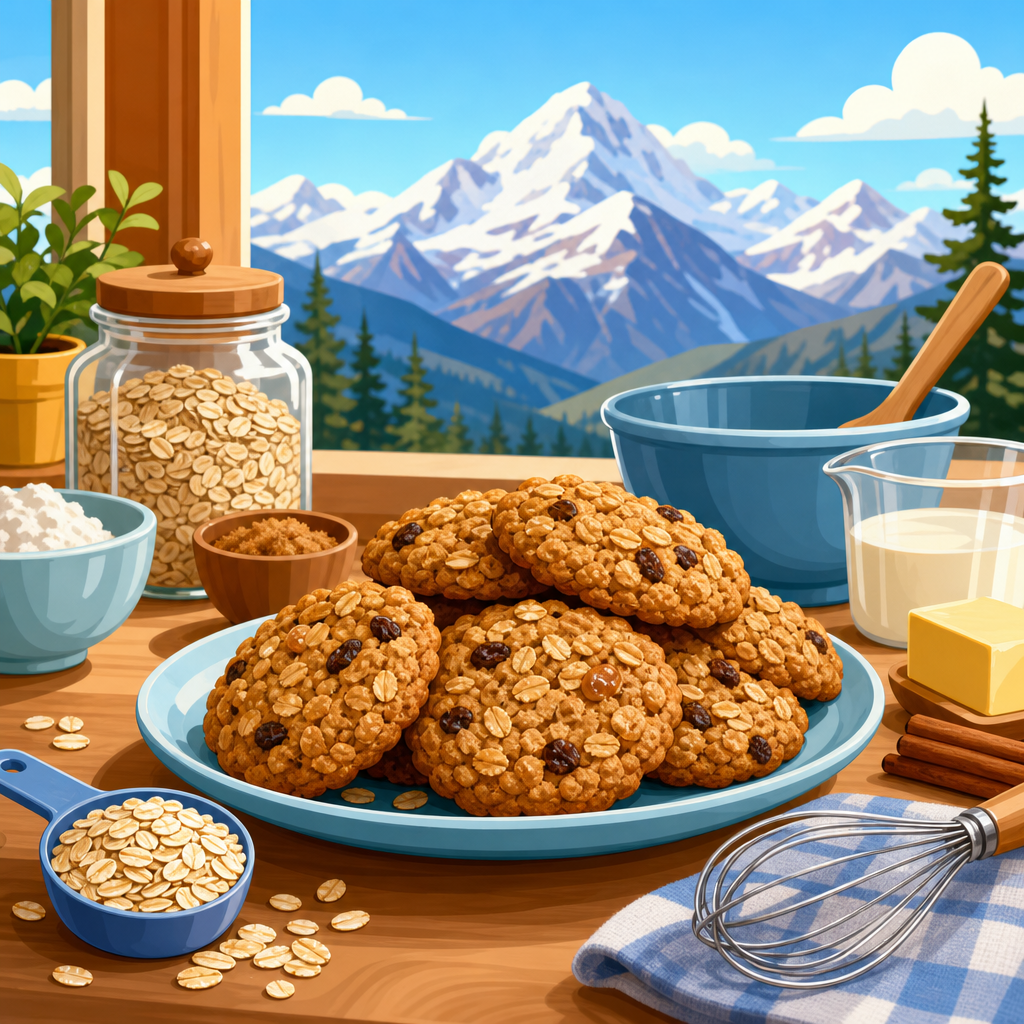
Best high altitude oatmeal cookie adjustments start with one truth: altitude changes baking physics, and cookies react fast. In mountain kitchens, lower air pressure speeds moisture loss, encourages dough spread at the wrong moment, and can leave oatmeal cookies dry, thin, cakey, or oddly puffy. When I began testing cookie formulas above 5,000 feet, I learned that small shifts in flour, sugar, leavening, liquid, and oven temperature mattered more than brand loyalty or mixing style. For bakers working through the broader challenge of cooking and baking at altitude, oatmeal cookies are one of the best places to build confidence because they clearly show what each adjustment does.
High altitude usually means elevations above 3,000 feet, with more noticeable effects around 5,000 feet and higher. Oatmeal cookies combine butter, sugar, eggs, flour, oats, and often mix-ins such as raisins or chocolate chips, so they sit at the intersection of structure, moisture, and spread control. This matters because the same principles apply across cookies and bars: drop cookies, oatmeal raisin cookies, oatmeal chocolate chip cookies, blondies, oatmeal bars, and pan cookies all need balanced evaporation and controlled lift. A reliable high altitude cookie strategy prevents waste, improves consistency, and gives you a repeatable method for adapting almost any oatmeal-based recipe.
Why oatmeal cookies behave differently at high altitude
At higher elevations, water boils at a lower temperature, so moisture escapes dough and batter faster. That sounds minor, but in cookies it changes the timing of everything. Butter melts, sugar dissolves, eggs set, and flour starches hydrate on a tighter schedule. If the dough loses water too early, oatmeal cookies can spread before the structure is ready, then finish dry. If leavening is too strong for the reduced air pressure, the cookies may puff quickly and collapse, producing craggy tops and a coarse crumb rather than a chewy center.
Oats complicate this further because they continue absorbing water after mixing. Old-fashioned rolled oats and quick oats do not behave identically. Quick oats hydrate faster and can make a dough seem firm in the bowl but still bake into a dry cookie if there is not enough liquid. Old-fashioned oats preserve more chew but need time to soften and evenly distribute moisture. In practice, I find that a high altitude oatmeal cookie dough often improves after a brief rest of 10 to 20 minutes, especially when brown sugar and eggs need time to hydrate the oats. This single step can reduce excessive spread and improve texture.
Pan shape, sheet color, and oven accuracy also matter more than many bakers expect. Dark sheets brown bottoms too quickly in dry mountain air. Insulated sheets can slow set and encourage over-spread. An oven running 15 degrees hot can turn a balanced dough into a brittle cookie because evaporation accelerates before the center sets. An oven thermometer is not optional for consistent high altitude baking. It is the same tool I rely on when moving between oatmeal cookies, bar cookies, and shortbread-style recipes because calibration errors mask the real formula problem.
The core formula adjustments that fix most high altitude oatmeal cookie problems
The best high altitude oatmeal cookie adjustments are usually incremental, not dramatic. Start by reducing sugar slightly, especially white sugar, because sucrose promotes spread and crispness. A practical range is to cut total sugar by 1 to 3 tablespoons per batch built on about 1 cup butter and 2 eggs. If a recipe uses both granulated and brown sugar, reduce granulated sugar first. Brown sugar contributes moisture through molasses and usually supports chew better than white sugar at altitude.
Next, increase flour modestly to strengthen the dough. For many oatmeal cookie recipes, 1 to 4 extra tablespoons of all-purpose flour per batch is enough. Add too much and the cookies become cakey or pasty, so this is a controlled adjustment, not a rescue dump. If the recipe already includes a high oat ratio, remember that oats are absorbing moisture too; extra flour and extra oats together can overcorrect. I generally change one variable at a time, then note the effect on spread diameter, edge color, and center softness.
Leavening should often be reduced. At altitude, baking soda and baking powder expand gases more aggressively. For oatmeal cookies, cutting baking soda by about one-eighth to one-quarter teaspoon can prevent rapid puff-and-fall behavior. Recipes with acidic ingredients such as brown sugar, raisins, or molasses may still need some soda for browning and flavor, so elimination is rarely the right first move. The goal is controlled lift, not no lift. In side-by-side tests, slightly lower soda often yields flatter but chewier cookies with more even cracks and less collapse.
Liquid usually needs a small increase. That can mean 1 to 2 tablespoons of milk, water, or even an extra teaspoon of vanilla if the dough is close. One extra egg yolk is another effective adjustment because it adds emulsifiers and fat as well as moisture, improving chew without making the cookie obviously eggy. If a dough looks perfect in a sea-level cookbook photo but feels dry, crumbly, or difficult to scoop in a high mountain kitchen, trust the dough in front of you. Texture is the better guide.
Finally, raise oven temperature slightly, often by 10 to 20 degrees Fahrenheit, while watching bake time closely. A slightly hotter oven helps set the cookie before it spreads too far. For a recipe written for 350 degrees Fahrenheit, 360 or 365 degrees is often the sweet spot in high altitude conditions. Pull the cookies when the edges are set and the centers still look faintly underdone; carryover heat finishes them. This is especially important for oatmeal raisin and oatmeal chocolate chip cookies, which harden quickly if left on the sheet too long.
How ingredients change texture, spread, and chew
Butter choice strongly influences high altitude cookie outcomes. Melted butter encourages spread, while cool but pliable butter supports thicker cookies. For oatmeal cookies at elevation, creaming softened butter with sugar is usually more forgiving than starting with melted butter unless the formula was specifically designed for that method. European-style butter, which contains more butterfat, can produce richer flavor but may also increase spread. If using it, I often compensate with a touch more flour or a short chill.
Sugar balance is another major lever. Granulated sugar creates crispness and spread; brown sugar increases moisture retention and chew because of molasses. Dark brown sugar can deepen flavor in oatmeal cookies, but the added acidity may affect how baking soda performs. When adapting a recipe, shifting a small portion of white sugar to brown sugar often works better than simply cutting sweetness across the board. Honey, maple syrup, and molasses require even more caution because they add water and invert sugars, changing browning and softness in ways that can become exaggerated at altitude.
Flour protein level matters too. Standard all-purpose flour around 10 to 11.7 percent protein is a dependable baseline. Lower-protein pastry flour can produce delicate cookies but may not provide enough structure above 5,000 feet unless balanced carefully. Bread flour increases chew and reduces spread, yet too much can make oatmeal cookies tough. I sometimes replace a quarter of the all-purpose flour with bread flour when a recipe consistently bakes too flat, especially with mix-ins like chocolate chunks that weigh the dough down.
Oat type deserves explicit attention because many recipes say simply “oats.” Old-fashioned rolled oats create classic chew and visible flakes. Quick oats absorb faster and produce a finer, softer texture. Instant packets are not a substitute because they often include sugar, salt, and stabilizers. Toasting oats can intensify flavor, but toasted oats are drier, so the dough may need a touch more liquid. In bars, where pan support limits spread, quick oats can be useful; in drop cookies, old-fashioned oats usually offer better structural balance.
Best adjustments by cookie and bar style
Not every recipe in the cookies and bars category needs the same high altitude treatment. Oatmeal raisin cookies benefit from extra hydration because raisins pull moisture from the dough during storage and baking. Plumping raisins in warm water or rum, then drying their surfaces before mixing, protects chew. Oatmeal chocolate chip cookies usually spread more because chocolate lacks the absorptive effect of dried fruit, so they often need a slightly higher flour increase or a brief chill before baking. Oatmeal peanut butter cookies can become heavy if both peanut butter and oats compete for moisture, so reducing leavening and adding a tablespoon of milk often stabilizes them.
For oatmeal bars and blondie-style bars, pan geometry changes the equation. Because the batter is contained, spread is less of a problem than edge overbaking and center underbaking. At altitude, I prefer metal pans over glass because they deliver more predictable heat transfer. Lining the pan with parchment creates cleaner release and reduces over-browned edges. Many bar formulas need only a slight oven increase and a shorter bake than the original recipe suggests. If the center is fully dry when tested, the bars are usually overbaked and will firm excessively as they cool.
Pan cookies, cookie cakes, and baked oatmeal cookie slabs should be treated as hybrids. Increase flour conservatively, reduce leavening modestly, and monitor internal doneness rather than surface color alone. Crumb toppings and streusels can dry out quickly at altitude, so adding a little extra melted butter to the topping often preserves texture. For oatmeal jam bars, keep the fruit layer relatively thin. Thick jam layers boil and steam differently at elevation, which can soften the crust below while hardening the edges.
| Recipe type | Most common altitude issue | Best first adjustment |
|---|---|---|
| Oatmeal raisin cookies | Dry centers | Add 1 to 2 tablespoons liquid |
| Oatmeal chocolate chip cookies | Excess spread | Add 1 to 3 tablespoons flour |
| Peanut butter oatmeal cookies | Dense texture | Reduce leavening slightly |
| Oatmeal bars | Hard edges, soft center | Raise oven 10 degrees and shorten bake |
| Jam or crumble bars | Soggy base | Use a thinner filling layer |
Mixing, resting, chilling, and baking methods that improve results
Technique can solve problems that ingredient changes alone cannot. Cream butter and sugar only until light and combined, not until excessively aerated. Overcreaming whips in more air, and that air expands aggressively at altitude, sometimes causing a puffed cookie that drops into a thin disk. Once eggs are added, scrape the bowl thoroughly. Pockets of unmixed fat or sugar create uneven spread, which is especially visible in oatmeal dough because oats interrupt smooth dispersion.
A dough rest is one of the most practical high altitude methods. Ten to twenty minutes at room temperature allows flour and oats to hydrate, reducing random spread and encouraging more even baking. A longer chill of 30 to 60 minutes is useful for butter-rich oatmeal chocolate chip doughs or any recipe with visible spread issues. Chill is not a cure-all, though. If the formula is imbalanced, a cold dough may still over-spread once the butter melts. That is why I prefer to fix sugar, flour, or liquid first, then use chilling as a finishing tool.
Portioning consistency matters. Use a scoop so every cookie bakes on the same timeline. Uneven mounds produce mixed results, and at altitude those differences widen. Bake one test tray in the center of the oven before committing the full batch. I do this with nearly every new cookie or bar recipe because it lets me judge spread, color, and set in real time. If the cookies spread too far, chill the remaining dough and add a tablespoon or two of flour. If they bake up dry, mix a teaspoon or two of milk into the remaining dough while it is still cool.
Sheet preparation also affects spread. Parchment paper generally outperforms silicone mats for oatmeal cookies when you want moderate spread and even browning. Silicone can encourage extra spread and paler bottoms, especially on insulated sheets. Bake on the middle rack, one sheet at a time if possible, and rotate if your oven has hot spots. Cooling on the sheet for two to three minutes helps fragile oatmeal cookies set before transfer to a rack.
Troubleshooting and building a repeatable cookies and bars system
The fastest way to master cookies and bars at altitude is to diagnose by symptom instead of guessing. If oatmeal cookies spread too much, the most likely causes are too much sugar, too little flour, warm dough, low oven temperature, or excess leavening. If they are dry and crumbly, suspect too much flour, too many oats, overbaking, or not enough liquid. If they are thick but cakey rather than chewy, the dough may be overmixed, overleavened, or carrying too much flour. Keep a notebook with elevation, humidity, pan type, oven setting, and exact ingredient weights. Weight matters because packed flour or loosely measured oats can change the outcome before altitude enters the picture.
This hub page should guide how you approach the rest of the category. Bar cookies need pan and bake-time awareness. Drop cookies need spread control. Refrigerator cookies need careful dough hydration because cold slices can bake unevenly in dry air. Even no-bake bars are affected indirectly because oats and dried fruit absorb moisture differently in mountain climates. The unifying principle is controlled water loss. Once you understand that, recipe adaptation becomes systematic rather than frustrating.
The best high altitude oatmeal cookie adjustments are small, deliberate, and testable: trim sugar, add a little flour, reduce leavening slightly, increase liquid modestly, and bake a touch hotter. Choose the right oat type, rest the dough, and watch the first tray closely. These same methods support the full cookies and bars subtopic, from chewy oatmeal raisin cookies to pan bars and crumble-topped squares. If you want better texture, less waste, and recipes you can trust in a mountain kitchen, start with one batch, take notes, and build your own reliable altitude baking playbook today.
Frequently Asked Questions
What are the most important high altitude oatmeal cookie adjustments to make first?
The best place to start is with the core variables that altitude changes most dramatically: moisture, spread, and leavening strength. At higher elevations, lower air pressure allows water to evaporate faster, which means oatmeal cookie dough can dry out before the structure has time to set properly. That is why many bakers see cookies that turn out too thin, too cakey, too puffy, or strangely brittle. The most reliable first adjustments are usually a small increase in flour, a slight reduction in sugar, a reduction in baking soda or baking powder, a modest increase in liquid or egg, and a slightly higher oven temperature. In practical terms, that often means adding 1 to 3 extra tablespoons of flour per batch, cutting sugar by 1 to 2 tablespoons, reducing leavening by about 1/8 to 1/4 teaspoon depending on the original recipe, and increasing the oven temperature by 15 to 25 degrees Fahrenheit so the cookies set sooner.
For oatmeal cookies specifically, these changes matter even more because oats continue to absorb moisture after mixing and during baking. If the dough starts out even a little under-hydrated at altitude, the finished cookie can lose chewiness very quickly. I generally recommend making one change category at a time if you are adapting a favorite low-altitude recipe. Start by improving structure and moisture balance first, then refine sweetness and spread. That testing order makes it easier to identify what is really helping. In mountain baking, success usually comes from measured, incremental adjustments rather than one dramatic rewrite of the recipe.
Why do oatmeal cookies spread too much or turn out too flat at high altitude?
Excessive spreading at high altitude usually happens because the dough softens and loses moisture before the cookie has a chance to set. Lower air pressure changes how quickly fat melts and how rapidly liquids evaporate, so the dough can collapse outward early in the baking process. If the recipe also contains a generous amount of butter and sugar, the problem becomes more obvious. Sugar liquefies and encourages spread, while butter melts before the flour, oats, and eggs have fully built enough structure to hold the cookie in place. The result is often a thin cookie with overspread edges and a center that may bake up dry rather than chewy.
To correct that, focus on improving the dough’s ability to hold shape. Add a little more flour, chill the dough before baking, and consider reducing sugar slightly if the original recipe is especially sweet. A small reduction in baking soda can also help, since too much leavening at altitude can cause cookies to rise quickly and then collapse. Another useful fix is increasing the oven temperature a bit so the cookie sets faster. If your cookies are spreading into one another on the sheet, line the pan with parchment, avoid overly greased pans, and bake with dough that is cool rather than room temperature. For oatmeal cookies, letting the dough rest briefly before baking can also help the oats absorb liquid more evenly, which improves consistency and reduces runaway spread.
How do I keep high altitude oatmeal cookies soft and chewy instead of dry or cakey?
Keeping oatmeal cookies soft and chewy at altitude is mostly about protecting moisture and avoiding too much structure. Dry cookies usually come from excess flour, too little liquid, overbaking, or too much evaporation in the oven. Cakey cookies, on the other hand, often come from too much flour, too much egg, or too much leavening. Because altitude amplifies all of those tendencies, even a slight measuring imbalance can noticeably change texture. The goal is to create a dough that is moist enough to support chewiness but structured enough to avoid overspreading.
For a chewier result, use careful flour measurement, preferably spooned and leveled or weighed, and avoid adding large amounts of extra flour all at once. Brown sugar is especially helpful because it contributes moisture and softness, so if a recipe includes both white and brown sugar, keeping the brown sugar proportion robust usually improves chew. You can also add a small amount of extra liquid, such as 1 to 2 teaspoons of milk, or use an additional egg yolk if the dough seems dry. Bake just until the edges are set and the centers still look slightly underdone, since carryover heat will finish the bake after the tray leaves the oven. Oatmeal cookies firm up quickly as they cool, so what looks underbaked at minute ten may be perfect by minute twenty. If your cookies consistently turn cakey, reduce the leavening slightly and make sure you are not overmixing once the flour is added.
Should I change the sugar, flour, and leavening amounts differently depending on my exact elevation?
Yes. Elevation is not a single baking condition, and adjustments often need to become more assertive as you move higher. A recipe that works beautifully at 3,500 feet may still need refinement at 5,500 feet, and a formula adapted for 7,500 feet may feel overcorrected at a lower mountain elevation. In general, the higher you go, the more likely you are to need added flour for structure, reduced sugar to control spread, reduced leavening to prevent overexpansion and collapse, and slight liquid increases to counter faster evaporation. The key is that these changes should scale gradually, not aggressively. Oatmeal cookies are forgiving enough to test in small steps, which makes them a good candidate for methodical adaptation.
A practical approach is to use the original recipe as your baseline and keep notes on one batch at a time. If you are around 3,000 to 5,000 feet, you may need only minor changes, such as 1 tablespoon extra flour and a small reduction in leavening. Around 5,000 to 7,000 feet, many bakers benefit from more noticeable adjustments, often including a warmer oven and a bit more liquid support. Above that, dough behavior can shift quickly, and careful weighing becomes even more important. The reason note-taking matters is that oatmeal cookie recipes vary widely. Some contain raisins, nuts, coconut, or whole wheat flour, and each of those ingredients changes absorption and spread. Your exact altitude matters, but so does your recipe’s fat level, oat type, and sugar balance. The best results come from pairing standard high-altitude guidelines with batch-by-batch observation.
What is the best testing method for perfecting an oatmeal cookie recipe at high altitude?
The best testing method is controlled and deliberate. Change only one or two variables at a time and evaluate the results based on spread, texture, moisture, and flavor. If you try to adjust flour, sugar, leavening, liquid, pan type, chill time, and oven temperature all in one batch, you will not know which change solved the problem or caused a new one. Start with a half batch if possible so testing is faster and less wasteful. Bake two or three cookies first as a mini test round before committing the full tray. That small trial gives you a chance to see whether the dough is spreading too much, staying too puffy, or baking up dry.
I recommend recording the exact flour amount, oat type, sugar ratio, leavening quantity, dough temperature, oven temperature, and bake time. Then note what happened: Did the cookies spread too wide? Did the centers dry out? Were they chewy on day one but hard on day two? Those details help you make intelligent follow-up adjustments instead of guessing. For example, if the cookies are thick but dry, you may not need less flour; you may need slightly more liquid or a shorter bake. If they are flat and greasy, the answer may be a cooler dough, a touch more flour, or slightly less sugar. High altitude baking rewards precision, and oatmeal cookies respond especially well to small, strategic corrections. Once you find the right balance for your kitchen and elevation, save that version as your master formula and treat it as your new standard rather than trying to force sea-level recipes to behave unchanged.