Why cakes sink in the middle at high altitude is a question every mountain baker asks sooner or later, usually after pulling a beautifully browned cake from the oven only to watch the center collapse as it cools. At higher elevations, baking changes because lower air pressure alters how gases expand, how moisture evaporates, how sugar concentrates, and how quickly batters set. In practical terms, a cake that works perfectly at sea level can rise too fast, lose structure, and sink before the crumb has fully stabilized. That is why high-altitude baking is not a matter of luck; it is a controlled adjustment of formula, mixing, pan preparation, and oven management.
High altitude generally starts affecting cakes around 3,000 feet, becomes obvious near 5,000 feet, and can be dramatic above 7,000 feet. The same principles apply across layer cakes, sheet cakes, Bundt cakes, loaf cakes, cupcakes, and even cake-like muffins. In my own test batches, the most common pattern is consistent: the batter rises aggressively during the first half of baking, forms a fragile dome, then the center drops because the starches, proteins, and emulsified fat network have not set strongly enough to hold that expansion. Understanding this mechanism helps bakers diagnose the real cause instead of guessing.
This cakes and cupcakes hub explains why cakes sink in the middle at high altitude, what symptoms point to specific formula problems, and which corrections work best for different styles of batter. It also serves as a practical guide to related issues such as tunneling, coarse crumb, overflow, dry edges, and sunken cupcakes. If you bake anywhere above sea level, mastering these adjustments will save ingredients, reduce failed batches, and give you reliable cakes with even rise, tender crumb, and stable structure.
Why altitude changes cake behavior
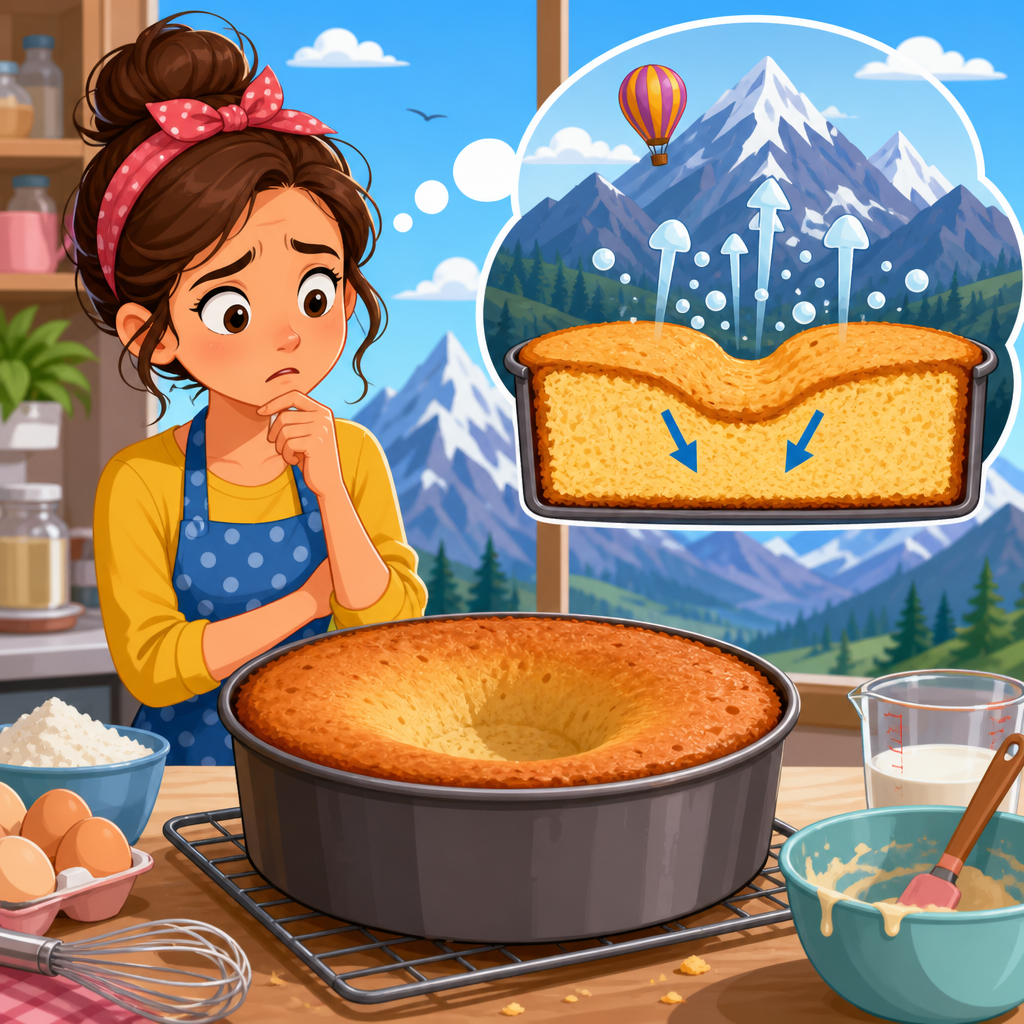
The core reason cakes sink in the middle at high altitude is reduced atmospheric pressure. Leavening gases from baking powder, baking soda, creamed butter and sugar, whipped eggs, or steam expand more easily when the surrounding pressure is lower. That sounds helpful, but it creates an imbalance. The batter can overexpand before heat has done enough work to gelatinize starch, coagulate egg proteins, and evaporate just enough moisture to lock the crumb in place. The center is the last area to set, so it is the first place to collapse.
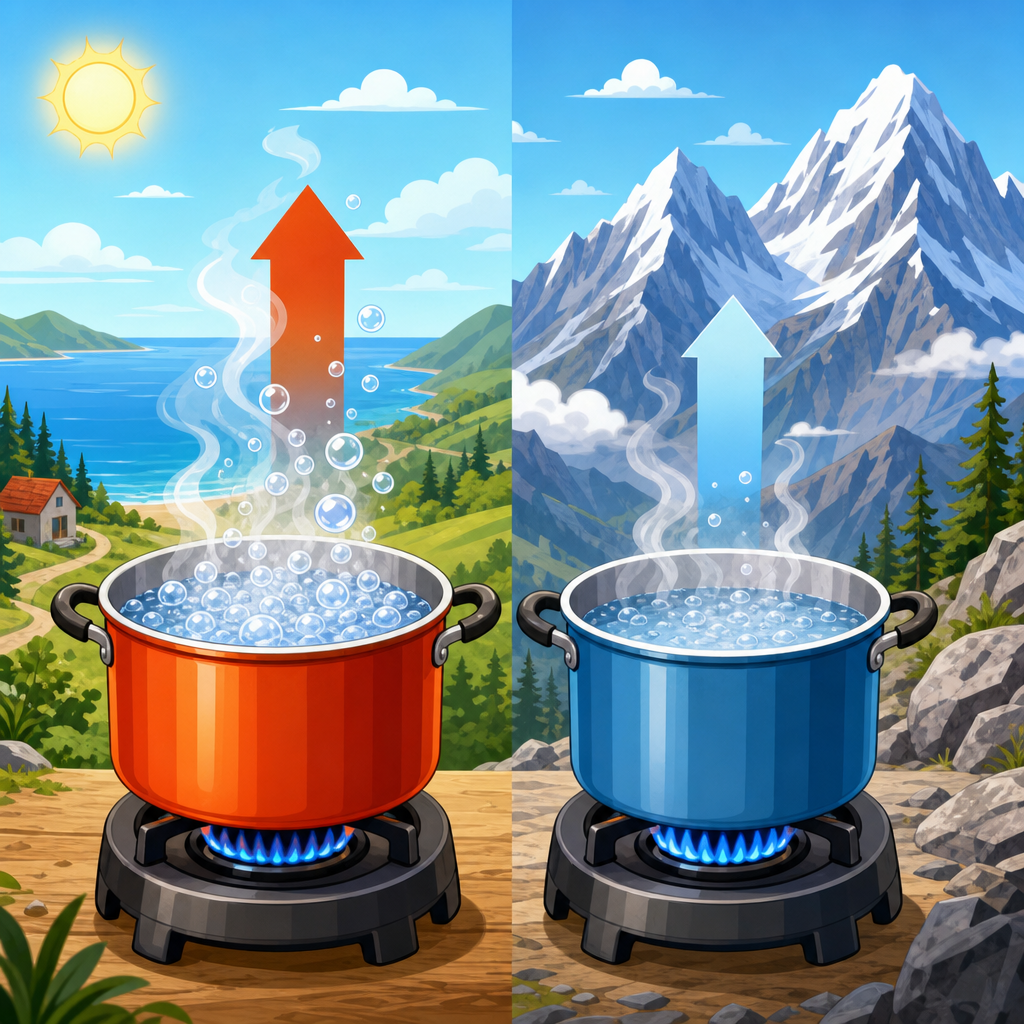
Altitude also speeds moisture loss. Water boils at a lower temperature as elevation increases, so liquid in the batter turns to steam sooner and escapes more quickly. This can create a double problem: early lift from rapid steam expansion, followed by weakness if the batter dries unevenly before the structure fully develops. Sugar further complicates this, because it delays starch gelatinization and protein setting. A formula with generous sugar, already delicate at sea level, often becomes unstable in a mountain kitchen.
Heat transfer matters too. Many bakers assume a lower oven temperature prevents collapse, but in most high-altitude cake formulas the opposite is true. A modest increase in oven temperature helps the batter set sooner, which supports the expanded gases before they escape. The key word is modest. Too low, and the cake rises and falls. Too high, and the edges set before the center can rise evenly, producing a peaked crust and sunken middle.
The main reasons cakes sink in the middle at high altitude
Most collapsed cakes come from one or more of five controllable causes: too much leavening, too much sugar, too much liquid or too little structural ingredient, underbaking, and weakened emulsion from mixing errors. At altitude, small sea-level tolerances become large performance swings. An extra quarter teaspoon of baking powder in a two-layer cake can be enough to cause overexpansion. A few tablespoons too much sugar can delay setting. A batter that looked slightly loose at sea level may become dramatically unstable at 6,500 feet.
I see overleavening more than any other problem. Baking powder and baking soda release gas rapidly, and lower pressure lets that gas stretch the batter beyond what the flour-egg network can support. The cake rises fast, then the cell walls rupture and the center falls. This is especially common in yellow cakes, devil’s food cakes, red velvet, and cupcakes, where bakers want a high crown. Reducing chemical leavening is often the first and most effective adjustment.
Underbaking is the second major cause. A browned surface does not mean the center has set. Because cakes rise faster at altitude, they can look done early while the middle remains fluid. If the cake is removed before the internal structure reaches stability, cooling causes contraction and collapse. For many butter cakes and cupcakes, a digital thermometer reading around 200 to 205 degrees Fahrenheit in the center is a more dependable doneness check than color alone.
Mixing style also matters. Overcreaming butter and sugar traps too much air, which combines with chemical leavening to create excessive lift. Overbeating after flour is added can weaken texture by producing large, irregular air cells rather than a fine crumb. On the other hand, undermixing can leave leavening unevenly distributed, causing weak spots in the center. High altitude rewards controlled aeration rather than maximum volume.
How to adjust cake formulas successfully
The most reliable way to prevent a sunken center is to change several variables slightly instead of making one dramatic change. For cakes and cupcakes, I usually start with less leavening, a slightly hotter oven, a small reduction in sugar, and either a little more flour or one less tablespoon or two of liquid, depending on the batter style. The exact combination depends on whether the cake is foam-based, butter-based, oil-based, or cocoa-heavy.
| Altitude | Leavening | Sugar | Liquid/Flour | Oven Temperature |
|---|---|---|---|---|
| 3,000 to 5,000 feet | Reduce slightly | Reduce 1 to 2 tablespoons per cup | Add 1 to 2 tablespoons flour or reduce liquid slightly | Increase 15 to 25°F |
| 5,000 to 7,000 feet | Reduce moderately | Reduce 2 to 3 tablespoons per cup | Add 2 to 4 tablespoons flour or increase egg for structure | Increase 15 to 25°F |
| Above 7,000 feet | Reduce more aggressively | Reduce carefully after test bakes | Strengthen structure with flour, egg white, or reduced liquid | Increase 20 to 25°F |
Those are starting points, not rigid laws. Cake flour behaves differently from all-purpose flour because its lower protein yields a softer crumb but less structure. Oil-based cakes often need extra support because liquid oil does not hold air the way creamed butter does. Chocolate cakes can be unusually fragile because cocoa absorbs moisture and many formulas include high sugar and significant leavening. In those batters, one extra egg white or a small flour increase can make the difference between a flat crater and a level top.
If you bake from scratch often, document each test. Record elevation, pan size, ingredient brand, batter weight, oven calibration, and final result. High-altitude baking becomes repeatable when you treat it like process control rather than intuition.
Cakes and cupcakes: problem-by-problem diagnosis
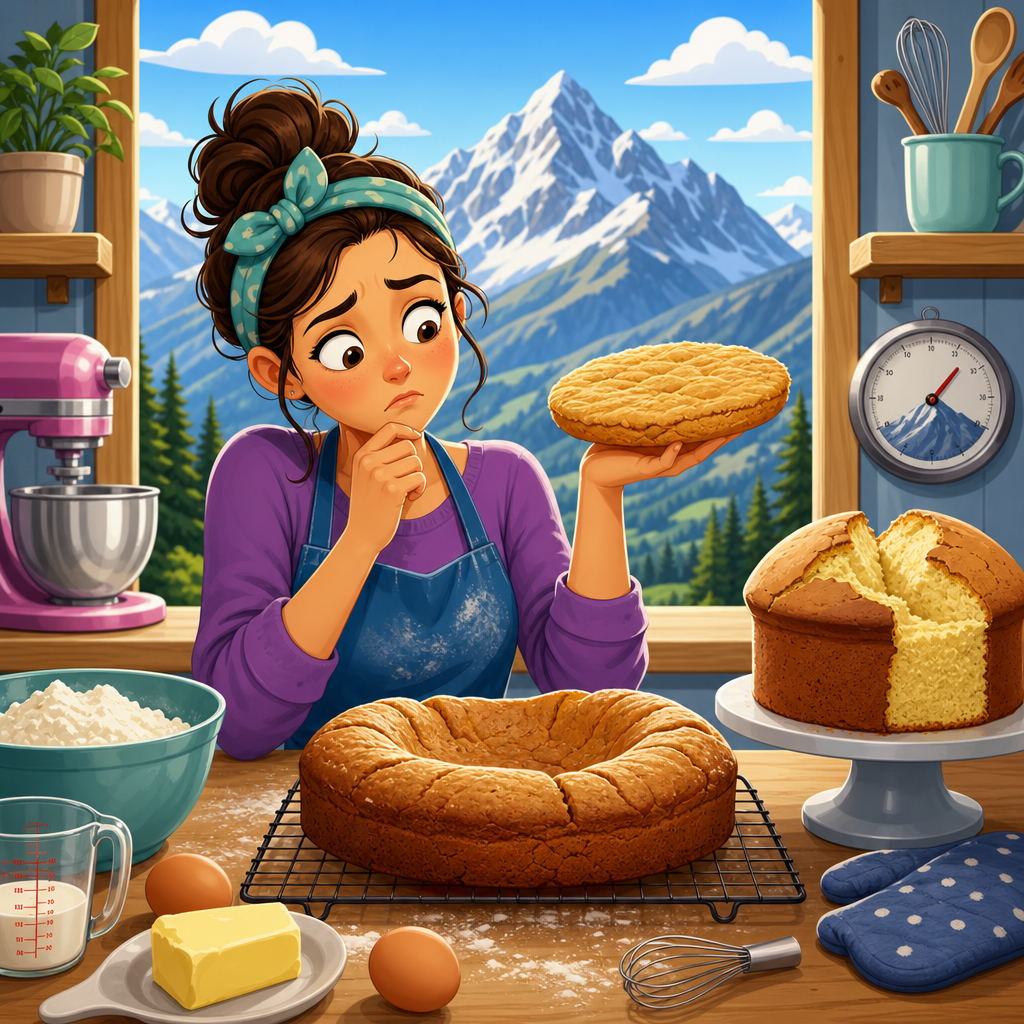
Different defects reveal different causes. A cake that rises high, cracks slightly, then settles into a shallow dip usually points to mild overleavening or a slightly low baking temperature. A cake with a dramatic crater and wet line in the center often indicates underbaking, excess sugar, or too much liquid. Tunnels and large holes usually come from too much leavening or overmixing. A heavy, gummy band near the bottom suggests poor emulsion, excess liquid, or insufficient baking time.
Cupcakes deserve special attention because they are more sensitive to filling level and oven airflow. If cupcakes mushroom, then sink while cooling, the cups were often overfilled or the batter was overleavened. At altitude, filling liners about one-half to two-thirds full is safer than pushing for oversized domes. Rotating pans too early can also destabilize cupcakes before the center sets. Wait until the structure is mostly established before opening the oven.
Bundt and loaf cakes can fool bakers because the crust looks firm while the deepest interior still needs time. Their shape slows heat penetration, so the center may collapse around the tube or along the top ridge if removed early. Cheesecake-like settling is normal in some dense cakes, but a true sinkhole is not. Use both time and temperature, and let these cakes cool gradually on a rack before unmolding.
Frosting can hide a sunken layer, but it cannot fix weak structure. If the cake compresses under icing or sheds sticky crumbs, the underlying formula still needs adjustment. For celebration cakes, especially stacked layers, stability matters as much as tenderness.
Ingredient choices, equipment, and method details that matter
Ingredient selection changes outcomes more than many home bakers realize. Flour protein affects strength. Egg size affects both liquid and structure. Natural cocoa and Dutch-process cocoa differ in acidity, which changes baking soda performance. Even butterfat percentage can influence aeration. When I troubleshoot a collapsing cake, I first verify that the baker used the intended flour, measured by weight, and did not substitute extra-large eggs, low-protein imported flour, or self-rising flour without recalculating the leavening.
Scale accuracy is essential. Volume measurements are simply less forgiving at altitude. A packed cup of flour or heaping spoon of baking powder may be survivable at sea level and disastrous in Denver or Santa Fe. Use a digital scale, preferably one that reads in grams, and check oven temperature with an oven thermometer. Many home ovens run 15 to 30 degrees off setpoint, enough to explain chronic sunken centers.
Pan size and color matter too. If the batter depth is too great for the pan, the center remains underdeveloped while the edges overbake. Dark pans brown faster and can force the outside to set too quickly. For cupcakes, sturdy pans and quality liners help maintain shape and heat distribution. For layer cakes, even strips can moderate edge heating, but they do not replace correct formula adjustments.
Method matters from the first minute. Bring ingredients to proper temperature. Cream butter and sugar to a controlled, fluffy stage rather than an ultra-pale, oversized foam. Add eggs gradually to maintain emulsion. Alternate dry and wet ingredients to avoid curdling. Once flour is in, mix just until combined. These are standard cake rules everywhere, but at altitude the penalty for ignoring them is bigger and faster.
Building a reliable high-altitude cake system
The best bakers at altitude do not rely on isolated tricks; they build a system. Start with a proven base recipe for your elevation and style of cake. Standardize ingredient brands. Weigh everything. Calibrate your oven quarterly. Bake one variable at a time when making adjustments. This is how commercial bakeries maintain consistency, and it works just as well in a home kitchen.
For a practical cakes and cupcakes workflow, begin by classifying the formula. Is it a butter cake, chiffon, sponge, oil cake, pound cake, or high-ratio cake? Butter cakes usually need less leavening and slightly more structure. Foam cakes depend heavily on whipped eggs, so overwhipping and underbaking are frequent failure points. Pound cakes often need fewer changes because they rely more on eggs and less on chemical lift. High-ratio cakes, common in bakery-style birthday layers and boxed mixes, are especially sensitive because sugar often exceeds flour by weight.
Boxed cake mixes can work well at altitude, but they are not magic. Manufacturers often print adjustment guidance, typically involving extra flour, less water, or altered baking time. Those instructions are useful starting points, yet local conditions still matter. Relative humidity, actual oven performance, and pan material all affect the result. The same mix may need a different tweak in Albuquerque than in Aspen.
Finally, connect this hub to the wider “Cooking & Baking at Altitude” topic through your own practice. If your cupcakes sink, your issue may also appear in quick breads, muffins, or even soufflé-style desserts, because the same pressure and moisture principles apply. Once you learn to control expansion, setting, and evaporation, high-altitude cake baking stops feeling unpredictable and starts feeling precise.
Cakes sink in the middle at high altitude because lower air pressure allows batter to rise too quickly before its structure has set strongly enough to hold that expansion. The most common fixes are straightforward: reduce leavening, slightly reduce sugar, strengthen the batter with a bit more flour or egg, raise oven temperature modestly, avoid overaerating, and bake until the center is fully set. Those principles apply across layer cakes, cupcakes, Bundt cakes, loaf cakes, and many cake-like batters.
For a cakes and cupcakes hub, the central lesson is that collapse is rarely random. The pattern on the finished cake tells you what went wrong. A crater suggests overexpansion or underbaking. Tunnels point to excess leavening or mixing problems. Dry edges with a soft center suggest pan or temperature imbalance. When you diagnose the symptom correctly, the adjustment becomes much simpler and far more effective.
The biggest benefit of learning high-altitude cake technique is consistency. Instead of hoping a favorite sea-level recipe survives in a mountain kitchen, you can adapt it deliberately and reproduce the same result batch after batch. Start with one cake you bake often, make measured adjustments, keep notes, and use this hub as your foundation for every other cakes and cupcakes recipe you tackle at altitude.
Frequently Asked Questions
Why do cakes sink in the middle more often at high altitude?
Cakes sink in the middle at high altitude because the entire balance of the batter changes when air pressure is lower. At higher elevations, gases expand more easily, so the bubbles created by baking powder, baking soda, creamed butter and sugar, and trapped air in the batter grow faster and larger than they do at sea level. That sounds helpful at first, but it often causes the cake to rise too quickly before the structure has had enough time to fully set. If the batter cannot support that rapid expansion, the center becomes weak, and as the cake cools, it collapses inward.
High altitude also speeds up moisture evaporation, which can dry out parts of the batter while the cake is still trying to rise. Sugar becomes more concentrated, liquids can disappear faster, and the edges often set before the middle catches up. The result is a cake with a firm outer ring and an under-structured center. Even if the cake looks beautifully domed in the oven, it may not have enough internal strength to hold that shape once it comes out. In short, sinking is usually caused by overexpansion, delayed structure setting, and moisture loss happening all at once.
Does too much leavening cause a cake to collapse at high altitude?
Yes, too much leavening is one of the most common reasons cakes collapse at high altitude. Baking powder and baking soda create gas that lifts the batter, but because gas expands more dramatically at elevation, even a recipe that is perfectly measured for sea level can become overly aggressive in the mountains. The cake rises fast, the air cells stretch too far, and the batter may not be strong enough to hold that lift. Once the cake is removed from the oven or begins to cool, those overstretched air pockets deflate and the center falls.
This is why high-altitude baking adjustments often begin by slightly reducing the amount of baking powder or baking soda. The goal is not to make the cake dense, but to slow the rise enough that the starches, proteins, and egg structure can set before the batter overextends itself. If a cake repeatedly forms a high rise and then drops in the middle, excess leavening is a strong suspect. Reducing it modestly, while also checking oven temperature and liquid levels, usually leads to a more stable crumb and a flatter, better-supported top.
How do oven temperature and baking time affect cakes at high altitude?
Oven temperature matters even more at high altitude because cakes need to set their structure efficiently before the expanded gases push the batter beyond its limits. In many cases, bakers increase the oven temperature slightly at elevation so the cake’s proteins and starches firm up sooner. That faster setting helps support the rise and reduces the chance that the center will balloon and then collapse. If the oven is too cool, the batter may continue expanding without enough structural support, which is a classic path to a sunken middle.
Baking time is closely tied to this. A cake that looks done on the outside can still be underbaked in the center, especially at altitude where the top may brown quickly while the interior remains fragile. Pulling the cake too soon is a major cause of sinking because the center has not finished setting. On the other hand, baking too long can dry the cake and create texture problems, so the answer is not simply extra time. The best approach is to pair a slightly higher oven temperature with careful doneness testing, such as checking for a clean or nearly clean toothpick, a lightly springing center, and edges that are set without pulling too hard away from the pan.
What recipe adjustments help prevent cakes from sinking in the middle at high altitude?
The most effective high-altitude cake adjustments usually involve several small changes rather than one dramatic fix. Bakers often reduce leavening slightly to control overexpansion, add a bit more flour to strengthen the batter, and increase liquid to compensate for faster evaporation. Some recipes also benefit from slightly less sugar, since sugar can weaken structure and become more concentrated as moisture leaves the batter more quickly. In certain cakes, using an extra egg white or a whole additional egg can improve protein structure and help the cake hold its rise.
It is also wise to pay attention to mixing method and pan size. Overbeating can incorporate too much air, creating a batter that rises fast and then sinks. A pan that is too small can force the cake upward too aggressively, while a pan that is too large may affect depth and baking time. The most reliable strategy is to make controlled adjustments based on your elevation and your specific recipe type. Butter cakes, sponge cakes, chocolate cakes, and oil-based cakes do not all react the same way. When a cake sinks at altitude, it usually means the formula needs better balance between lift, moisture, and structure, not that the recipe is hopeless.
Can opening the oven door or underbaking make high-altitude cake collapse worse?
Absolutely. High-altitude cakes are already more delicate because they tend to rise faster and set under more challenging conditions, so any disruption can make collapse more likely. Opening the oven door too early can cause a drop in temperature that interrupts the cake at its most vulnerable stage. If the structure has not fully formed, that sudden change can cause the center to sink before it has a chance to stabilize. At sea level, a minor disturbance might not matter much, but at high altitude, cakes often have less margin for error.
Underbaking is even more damaging. A cake can appear finished because the top is browned and the edges look done, yet the middle may still be soft and unset. Once the cake comes out of the oven, steam escapes, the internal gases contract, and the unsupported center falls. That is why high-altitude bakers should rely on multiple signs of doneness instead of color alone. If your cakes regularly sink despite recipe adjustments, review your baking habits too: avoid opening the oven during early rise, verify your oven temperature with an oven thermometer, and make sure the center is truly baked before removing the cake. Often, technique and timing are just as important as ingredient changes.