Home canning mistakes are riskier at altitude because boiling points drop as elevation rises, and that single physical change affects heat penetration, processing times, jar seals, texture, and food safety all at once. In kitchens above sea level, preserving food is not simply the same method with a longer timer. It is a different operating environment. When I help home cooks troubleshoot failed jam sets, siphoning jars, or underprocessed green beans, altitude is usually the missing variable. This matters most in the “Candy, Preserves & Canning” category because sugar work, fruit preservation, pickling, pressure canning, and water bath canning all depend on temperature targets that were developed around known atmospheric conditions. If you live at 1,000 feet or 8,000 feet, your recipes and procedures must match that reality. Understanding why altitude changes outcomes is the foundation for safe, reliable preserving.
The key terms are straightforward. Altitude means height above sea level. Water bath canning is the process used for high-acid foods such as many jams, jellies, fruits, and pickles, where jars are submerged in boiling water for a specified time. Pressure canning is required for low-acid foods such as vegetables, meats, soups, and plain legumes because those foods can support the growth of Clostridium botulinum, the bacterium linked to botulism. Preserves include jams, jellies, marmalades, butters, chutneys, syrups, and pie fillings. Candy work overlaps with preserving because sugar concentration and temperature determine whether a product sets, crystallizes, or remains shelf stable. At altitude, lower air pressure means water boils at a lower temperature, so both food safety margins and quality targets shift.
That shift explains why canning guidance from the USDA Complete Guide to Home Canning, the National Center for Home Food Preservation, Ball, and university extension offices always includes altitude adjustments. These are not optional fine-print notes. They are part of the tested process. A recipe tested for sea level cannot automatically be assumed safe in Denver, Albuquerque, Boise, or mountain towns in Utah, Colorado, Wyoming, Montana, and New Mexico. Even at moderate elevations, small differences matter. For water bath canning, higher altitude usually means longer processing. For pressure canning, it means raising pressure to achieve the same internal temperature in the jar. For candy and preserves, it can mean a lower gel point, different endpoint temperatures, faster evaporation, and more frequent scorching if you chase a sea-level thermometer reading without adjustment.
Why altitude changes canning safety
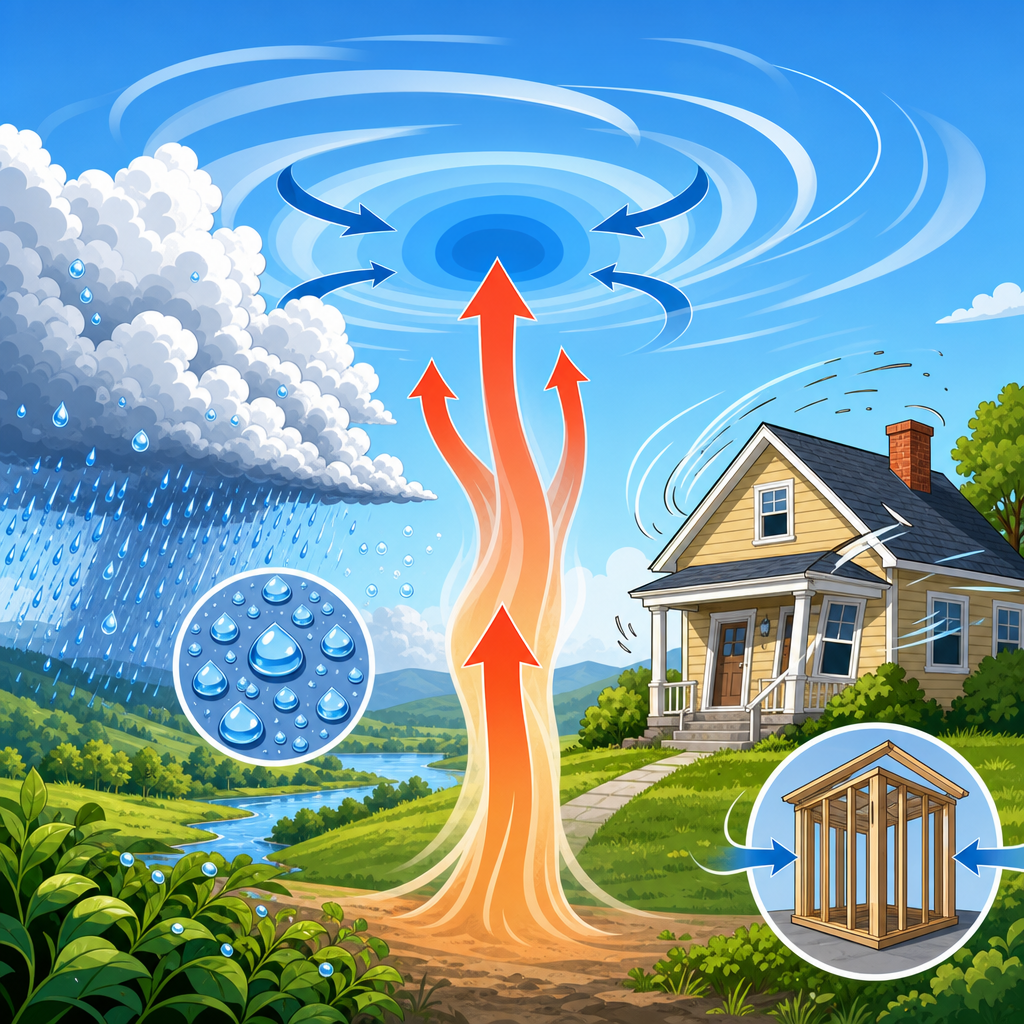
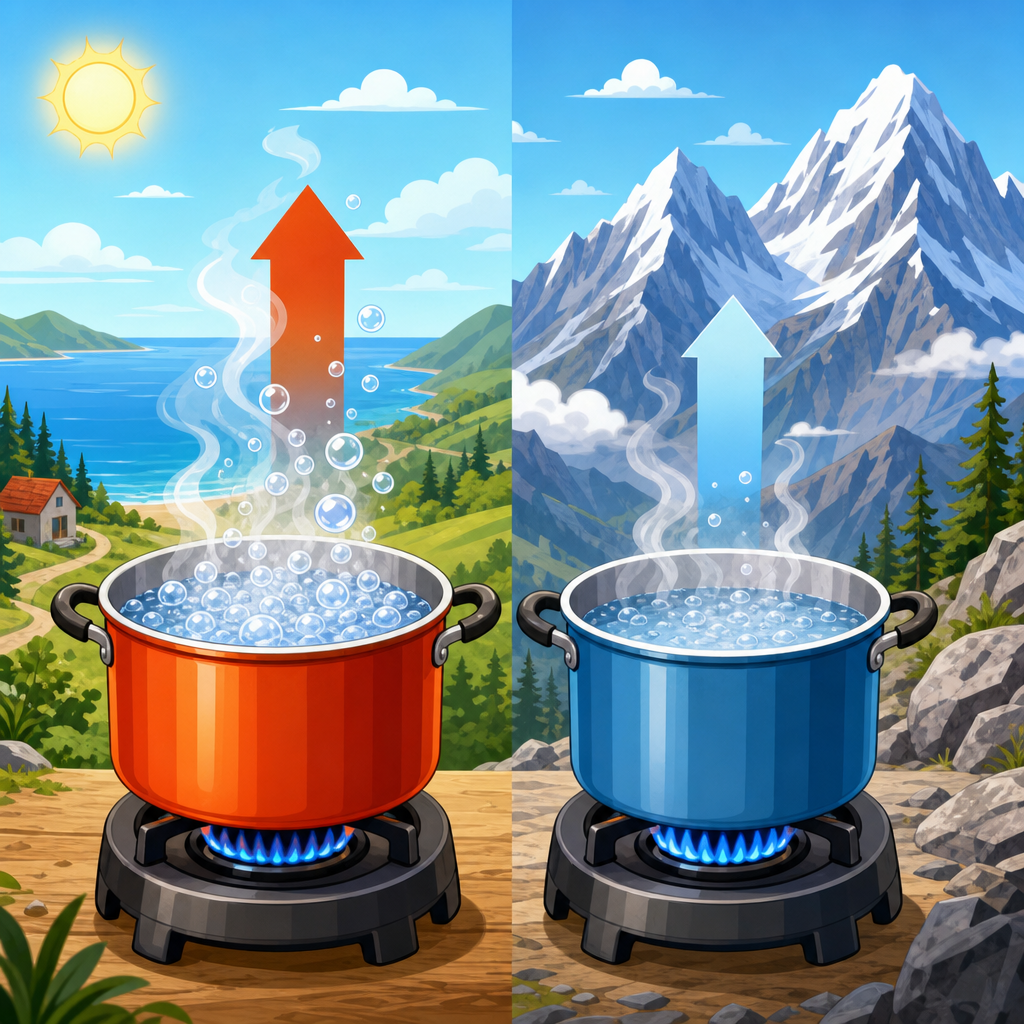
The central reason altitude matters is simple physics. At sea level, water boils at 212°F, or 100°C. As elevation increases, atmospheric pressure decreases, and the boiling point of water drops. Because boiling water is cooler, a boiling-water canner at altitude delivers less heat than it does at sea level. If you process jars for the same time without adjusting, the center of the food may not receive enough heat to destroy spoilage organisms, molds, yeasts, or enzymes at the level assumed by the tested recipe. For low-acid foods, the problem is more serious: if pressure is not increased appropriately, the food may never reach the temperature needed to control botulism risk.
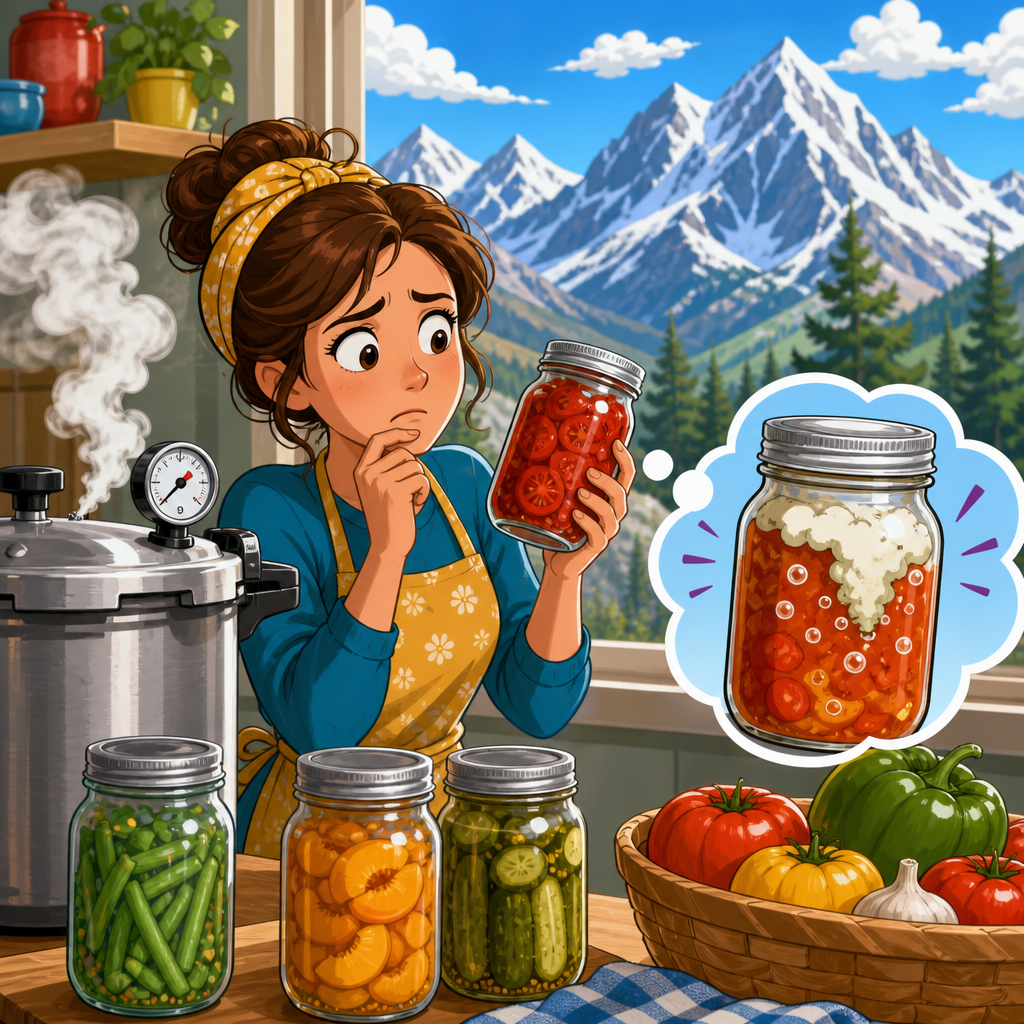
In practice, I see four recurring altitude-related failures. First, jars seal but are underprocessed. A seal only means a vacuum formed; it does not prove the contents were safely canned. Second, foods darken, separate, or lose liquid because cooks overcompensate with untested timing or excessive pressure. Third, jams and jellies fail because cooks rely on sea-level temperature endpoints. Fourth, candy stages are missed because a syrup that should reach soft-ball or hard-crack is judged by the wrong thermometer target. The unifying lesson is that altitude changes the relationship between heat, evaporation, and time. You cannot judge safety or doneness by appearance alone.
Water bath canning at altitude: what changes first
Water bath canning is often where home preservers begin, and it is where altitude mistakes feel deceptively harmless. Fruits, jams, pickles, and acidified tomatoes seem forgiving because the foods look normal and jars often seal nicely. Yet tested directions specifically increase processing time as elevation rises. Many standard recommendations add time in steps beginning at 1,000 feet, though the exact adjustment depends on the product and recipe source. The reason is direct: the canner is boiling at a lower temperature, so extra time is required to deliver equivalent heat to the food.
High-acid does not mean no risk. Underprocessed jam may mold. Fruit may ferment. Pickles may soften or discolor. Acidified foods are safer than low-acid foods, but only when the acid level, jar size, headspace, and processing schedule all match a tested formula. Substituting low-acid ingredients, reducing vinegar, thickening before processing, or skipping altitude time adjustments removes the safety margin. This is especially important in mixed products such as chutneys, salsa-style relishes, and tomato preserves, where the final acidity depends on exact ratios.
Pressure canning at altitude: pressure, not guesswork
Pressure canning is where altitude errors become most dangerous. Low-acid foods must be processed at temperatures above boiling water, achieved only under pressure. As elevation increases, pressure must increase too, because the baseline atmospheric pressure is lower. Tested guidance usually adjusts dial-gauge canners in smaller pressure increments and weighted-gauge canners in larger step changes. Home canners should always follow the chart published by their canner manufacturer and a trusted testing authority. Guessing that “a few extra minutes” will compensate is not safe for low-acid foods.
Real-world confusion often comes from mixing up canner types. Dial-gauge canners require annual gauge testing through many cooperative extension offices and careful monitoring throughout the run. Weighted-gauge canners are mechanically simpler and less vulnerable to gauge drift, but they still require the correct weight setting for your altitude. I have watched canners vent steam beautifully, lock, and appear to run normally while actually holding too little pressure for the elevation. The jars came out sealed, but the process was still wrong. With pressure canning, the tested pressure and full process time are a matched pair.
| Preserving task | Altitude effect | Typical adjustment | Main risk if ignored |
|---|---|---|---|
| Water bath canning | Boiling water is cooler | Increase processing time by tested schedule | Underprocessing, spoilage, mold, fermentation |
| Pressure canning | Lower ambient pressure reduces effective temperature unless pressure rises | Increase pressure according to canner type and altitude chart | Unsafe low-acid food, including botulism risk |
| Jam and jelly making | Gel stage occurs at a lower temperature | Use adjusted temperature target or sheet test | Runny set, overcooked flavor, darkening |
| Candy and syrups | Sugar stages shift lower | Subtract about 2°F for each 1,000 feet as a starting rule | Wrong texture, crystallization, scorching |
Jam, jelly, preserves, and fruit butters: quality problems that start with altitude
Altitude affects more than microbial control. It changes how preserves cook. In jam and jelly making, sugar concentration, acid balance, pectin structure, and temperature work together to create a stable gel. At higher elevations, water evaporates differently and the finishing temperature that corresponds to the proper soluble solids concentration is lower than the familiar 220°F benchmark often quoted for sea level. A common rule is to subtract about 2°F for every 1,000 feet, but the better approach is to use the method specified in a tested recipe and confirm with sheeting, freezer, or spoon tests when appropriate.
Fruit butters and thick preserves create another altitude trap because cooks often reduce them too aggressively before canning. Apple butter, peach butter, and pumpkin-style spreads can scorch quickly in dry mountain air and may become too dense for safe heat penetration if a recipe was not designed for canning in that thickness. Some products once commonly canned at home are now discouraged unless you use a currently tested formulation. The lesson is to respect the exact product style. A spreadable preserve is not just “fruit cooked down.” Its density, acidity, and jar processing schedule must align.
Pickles, tomatoes, and acidified foods: exact formulas matter
Pickles and acidified foods deserve special attention in a “Candy, Preserves & Canning” hub because they sit between obvious categories. Cucumbers, green beans, beets, peppers, and mixed relishes can be safely canned when enough vinegar of the right strength is used and the process has been tested. At altitude, processing time still changes, but the larger mistake is formula drift. Home cooks swap vinegar strengths, use oversized produce, pack jars too tightly, or add fresh garlic and onions beyond tested amounts. Those changes can alter acidity and heat flow before altitude is even considered.
Tomatoes are a classic example. Modern varieties can vary in acidity, so many tested methods require bottled lemon juice or citric acid even before processing. At altitude, the boil is cooler, meaning the specified processing time adjustments matter for both safety and quality. Salsa deserves even more caution because onions, peppers, tomato paste, corn, or beans can quickly move the mixture outside a safe tested ratio. Reliable sources publish specific altitude directions because “boil it longer” is not a substitute for a validated formula.
Candy, syrups, and high-sugar preserves: lower temperatures, different endpoints
Candy making is often treated as separate from canning, but altitude links them. Fondant, fudge, caramels, brittles, marshmallow syrups, honey preserves, and fruit confections all depend on reaching precise sugar stages. Since water boils at lower temperatures at altitude, syrup stages also occur at lower thermometer readings. A practical starting point is to subtract about 2°F from sea-level targets for every 1,000 feet of elevation, then verify with cold-water tests and your own calibrated thermometer. Without adjustment, fudge turns dry, caramels become hard, and syrups either remain thin or crystallize unexpectedly.
I have found thermometer calibration to be one of the most underrated skills in mountain kitchens. Before preserve season, boil water and check what your thermometer reads in your kitchen, then compare that to your known local elevation. This does not replace a tested recipe, but it tells you whether your instrument is drifting. The same discipline helps with jelly setting points and syrup concentration for canned fruit. Altitude does not make preserving impossible. It simply demands tighter control of measurements, temperatures, and endpoint tests.
Safe workflow for altitude canning and preserving
A reliable altitude workflow starts before ingredients are washed. First, confirm your elevation by address, GPS, county extension office, or topographic map. Second, choose a current tested recipe from the USDA, the National Center for Home Food Preservation, Ball, or an extension publication. Third, identify whether the food is high-acid, acidified, or low-acid. Fourth, match the method to the food: water bath only for approved high-acid products, pressure canning for low-acid foods. Fifth, apply the exact altitude adjustment for time or pressure from the recipe source and your canner manual.
Then execute the small details that prevent failure: inspect jars for nicks, use new lids if the manufacturer requires them, leave specified headspace, remove trapped air, wipe rims, and maintain a full rolling boil or steady target pressure for the entire scheduled process. Let pressure canners depressurize naturally. After processing, cool jars undisturbed, verify seals after the recommended rest period, label with product and date, and store in a cool, dark place. If a jar loses liquid, fails to seal, or the process was interrupted, follow the source guidance for reprocessing, refrigerating, or discarding. When in doubt, throw it out.
Common myths and the best resources to use
The most persistent myth is that old family methods are automatically safe because “we always did it this way.” Many legacy recipes predate current understanding of acidity, density, lid systems, and botulism control. Another myth is that sealing equals safety. It does not. A third is that an electric multi-cooker can replace a pressure canner for shelf-stable low-acid foods; current testing authorities do not approve that substitution for most home canning. Finally, many people assume all internet recipes are equal. They are not. Preserving demands tested formulas, not stylistic inspiration.
Use sources that publish process schedules, jar sizes, acidity assumptions, and altitude adjustments clearly. Cooperative Extension publications are especially useful because they translate national standards into local conditions. For this subtopic hub, that means building your deeper reading around pressure canning basics, water bath timing by altitude, jam and jelly set troubleshooting, safe pickle ratios, tomato acidification, syrup and candy temperature adjustment, and thermometer calibration. Master those topics and you will make better choices every time you preserve.
Altitude does not make home canning too risky to attempt, but it does remove the margin for casual shortcuts. Every important variable in “Candy, Preserves & Canning” is touched by elevation: boiling point, pressure, evaporation, gel formation, sugar stages, and heat penetration. That is why mistakes are riskier at altitude than they are near sea level. The same shortcut that causes a soft set in one kitchen can create an unsafe jar in another. The good news is that altitude problems are predictable. Once you know your elevation, use tested recipes, and apply the proper adjustments, preserving becomes consistent again.
The strongest takeaway is practical. Treat altitude as a core ingredient in the recipe, not an afterthought. If you water bath can, adjust processing time exactly as directed. If you pressure can, use the correct pressure for your canner and elevation. If you make jam, jelly, syrups, or candy, calibrate your thermometer and use altitude-aware endpoint tests. If a formula is untested, do not improvise a shelf-stable version at home. Precision is what protects both quality and safety.
As you build out your “Cooking & Baking at Altitude” skills, use this page as your hub for the preserving branch of the topic. Then go deeper into the individual guides on jam setting, pickle texture, tomato safety, pressure canner setup, and candy temperatures at elevation. The more methodical your process becomes, the more rewarding home preserving will be. Start with one trusted recipe, apply your altitude adjustment, and can with confidence.
Frequently Asked Questions
Why does altitude make home canning more dangerous if I am following the same recipe?
Altitude changes one critical part of canning: the temperature at which water boils. As elevation increases, water boils at a lower temperature, which means jars processed in boiling water or steam are exposed to less heat than they would be at sea level. That matters because safe canning depends on delivering enough heat, for enough time, to destroy harmful microorganisms and create a stable seal. If you use a sea-level process at a higher elevation without adjusting it, the food may be underprocessed even if the jars appear sealed afterward.
This is why altitude mistakes are especially risky. A sealed jar can still be unsafe. Many home canners assume the lid popping down means the food is preserved correctly, but the seal only shows that a vacuum formed. It does not confirm that the coldest part of the jar reached the time-and-temperature target needed for safety. At altitude, lower boiling temperatures can reduce heat penetration, increase the chance of spoilage, and raise the risk of dangerous outcomes in low-acid foods if pressure adjustments are not made properly.
In practical terms, altitude affects more than food safety alone. It can influence liquid loss, siphoning, softer textures, weaker gel formation in jams, and inconsistent headspace behavior. That is why canning at elevation is not just “normal canning with a few extra minutes.” It is a different processing environment, and tested altitude adjustments are essential.
How do I know whether to add processing time or increase pressure when canning at altitude?
The adjustment depends on the canning method and the type of food. For boiling water canning, the standard correction at higher elevations is usually to increase the processing time. That is because the maximum temperature in a boiling water canner drops as altitude rises, so extending the time helps compensate for the lower heat level. This applies to high-acid foods such as many jams, jellies, pickles, fruits, and some properly acidified tomatoes when a tested recipe calls for water-bath processing.
For pressure canning, the adjustment is usually made by increasing the pressure, not simply by extending the time. Low-acid foods such as vegetables, meats, soups, and beans require pressure canning because they need temperatures above boiling water to be processed safely. At altitude, because the surrounding air pressure is lower, the canner must operate at a higher pressure setting to achieve the same internal processing temperature as it would at sea level. This is one of the most important safety distinctions in home food preservation.
The exact adjustment depends on your elevation, your canner type, and the tested recipe source. Dial-gauge and weighted-gauge pressure canners do not always use the same recommendations. That is why guessing is a bad idea. Use current, tested guidance from a reliable source such as the USDA or a state extension service, and verify your local elevation if you are unsure. Even a moderate change in altitude can require a process adjustment.
Why do my jars lose liquid, unseal, or siphon more often when I can at higher elevations?
Siphoning, liquid loss, and seal failures are common complaints in higher-elevation kitchens because altitude changes how aggressively contents boil inside the jar and how pressure differences behave during processing and cooling. Since liquids boil at lower temperatures at altitude, the contents of the jar can become more active sooner, and pressure changes inside and outside the jar can be less forgiving if heat is too high, headspace is off, air bubbles were not removed, or jars were rushed out of the canner too quickly.
When jars siphon, liquid is forced out from under the lid during processing or during the cooling phase. That can interfere with sealing, leave food exposed above the liquid line, and deposit residue on the rim or lid compound. At altitude, this can happen more easily if a pressure canner is vented improperly, depressurized too fast, or if jars are not allowed to rest briefly before removal. In water-bath canning, vigorous boiling and rapid temperature shifts can also contribute to product loss.
The solution is not to tighten bands harder or to overfill jars. Instead, focus on tested practices: use the correct headspace, debubble thoroughly, wipe rims clean, maintain the proper canner conditions, and allow jars to cool gradually as directed. In pressure canning, let pressure return to zero naturally and follow the recommended waiting time before opening the lid or removing jars. These details matter even more at altitude because the margin for process errors is smaller.
Does altitude affect jam setting, pickled texture, or the quality of canned food, or is it only a safety issue?
Altitude affects both safety and quality. In jam and jelly making, higher elevation can change how quickly water evaporates and how the mixture behaves at the boil. Because temperature milestones shift with altitude, relying on sea-level visual cues or standard finishing temperatures can lead to undercooked preserves that stay runny or overcooked batches with dark color and a tough texture. A jam that failed to set is not always a pectin problem; sometimes the cooking endpoint was judged without accounting for elevation.
Texture can also suffer in canned fruits, pickles, and vegetables. Longer processing times used for altitude adjustments in water-bath canning may soften delicate produce. Meanwhile, lower boiling temperatures can change the way trapped air escapes from tissues, which can affect packing density and floating. Pickles may lose crispness, fruit may become mushier, and vegetables may show uneven liquid levels or color changes if methods are not carefully matched to a tested recipe.
That said, quality issues should never tempt a canner to cut time or reduce pressure below tested recommendations. Safety comes first. If a product becomes too soft or does not gel the way you want, the fix is usually to choose a recipe designed for canning, use produce at the right maturity, follow altitude-specific instructions, and improve technique. It is better to troubleshoot quality within a safe process than to create a more attractive jar that is underprocessed.
What are the most common altitude-related canning mistakes, and how can I avoid them?
The most common mistake is not adjusting the process at all. Many home canners do not realize that even elevations well below mountain level may require changes. They use a trusted family recipe, see jars seal, and assume everything is fine. Another frequent mistake is using the wrong kind of adjustment, such as adding time to a pressure-canning recipe when the tested guidance requires higher pressure instead. That kind of substitution can leave low-acid food unsafe.
Other common problems include using untested online recipes, misreading gauge instructions, failing to vent a pressure canner properly, packing jars too tightly, guessing at headspace, and cooling jars too quickly after processing. At altitude, these small errors stack up. A lower boiling point already reduces your thermal cushion, so poor technique can have a bigger effect than it would at sea level. Even quality complaints like floating fruit, broken seals, or excess liquid loss often trace back to a combination of altitude and process shortcuts.
The best prevention strategy is simple but non-negotiable: start with a current tested recipe, confirm your elevation, and apply the exact altitude adjustment for your canning method and food type. Keep your equipment in good condition, have dial gauges checked as recommended, and avoid improvising substitutions that change density, acidity, or jar size. If something goes wrong, do not assume the issue is random. In many cases, altitude is the missing variable, and once you account for it, both safety and consistency improve dramatically.