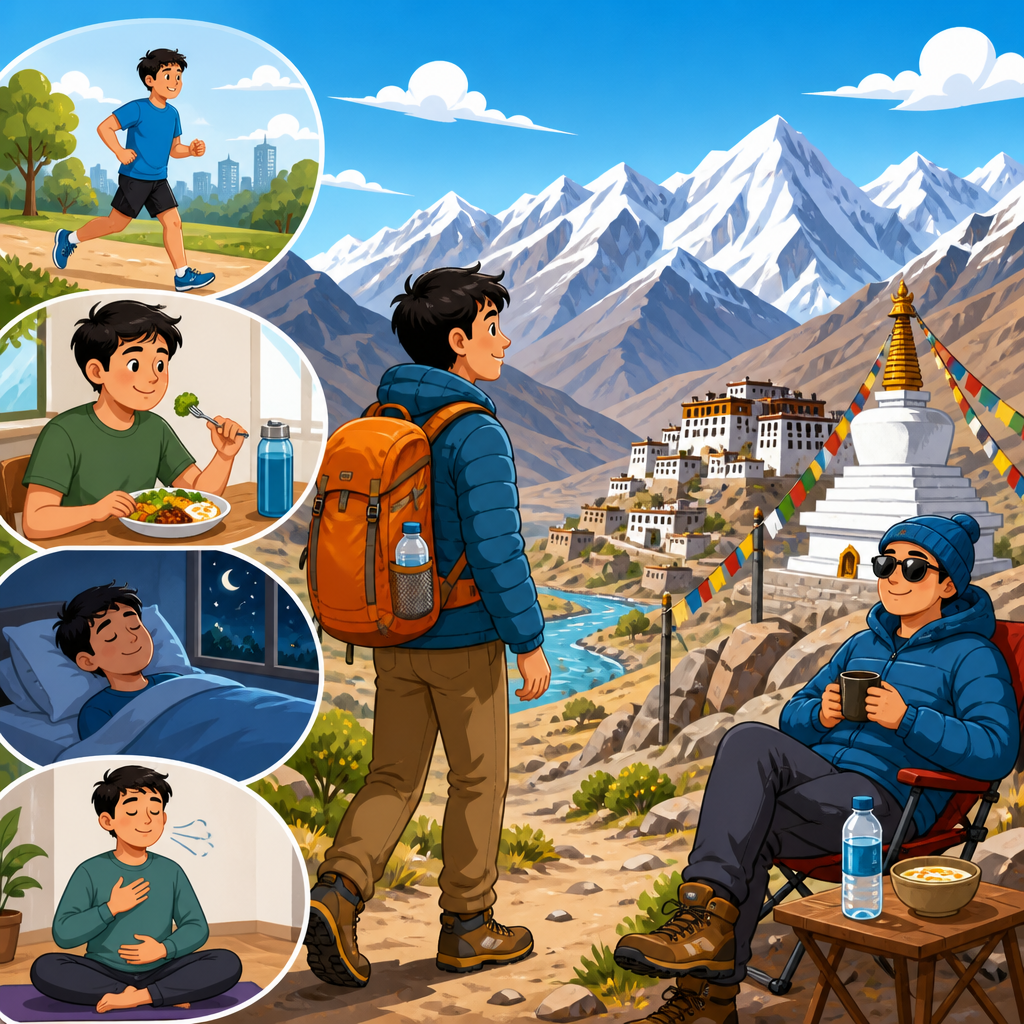
How to acclimatize before visiting Leh-Ladakh starts with understanding that your body needs time to adapt to altitude, cold, dryness, and lower oxygen pressure long before you think about sightseeing. Leh sits at roughly 3,500 meters above sea level, and many popular routes in Ladakh climb much higher, including Khardung La, Chang La, Pangong Tso, Nubra Valley, and Tso Moriri. Acclimatization is the process by which the body adjusts to thinner air by changing breathing rate, heart rate, and red blood cell production. If that adjustment is rushed, travelers can develop acute mountain sickness, commonly called AMS, with symptoms such as headache, nausea, dizziness, fatigue, poor sleep, and loss of appetite. In severe cases, altitude illness can escalate into high-altitude pulmonary edema or high-altitude cerebral edema, both of which are medical emergencies.
I have planned high-altitude itineraries for travelers arriving in Leh by both air and road, and the same rule holds every time: the first forty-eight hours often determine whether the rest of the trip feels comfortable or miserable. Many visitors underestimate Leh-Ladakh because flights from Delhi make it seem logistically easy. Physiologically, however, flying from near sea level to Leh in about ninety minutes is a dramatic ascent. That is why a smart acclimatization plan matters more than packing the perfect jacket. It protects health, improves sleep, preserves energy for monasteries and mountain passes, and reduces the chance that your trip gets derailed by a preventable illness. For anyone browsing international destination guides, Leh-Ladakh stands out because it combines extraordinary rewards with non-negotiable altitude discipline.
Good acclimatization before visiting Leh-Ladakh means arriving with a plan, not just reacting after symptoms begin. You need to know how altitude affects the body, who is at greater risk, what to do on day one, when medication may help, and which warning signs require immediate descent or clinical attention. Travelers also need practical decisions: should you fly or drive, how much water is enough, does fitness prevent AMS, and when is it safe to visit higher lakes and passes. This guide answers those questions directly and serves as a central planning resource within Travel and Destinations. Use it as your hub before reading route-specific pieces on Kashmir, Manali highway travel, monastery circuits, trekking, or lake itineraries.
Why Leh-Ladakh causes altitude problems so quickly
The key reason is barometric pressure. At Leh’s elevation, the percentage of oxygen in the air remains about 21 percent, but the partial pressure of oxygen drops enough that less oxygen moves from the lungs into the bloodstream with each breath. Your body responds by breathing faster and increasing heart rate. Over the next one to three days, kidneys adjust acid-base balance to support sustained hyperventilation, and longer exposure stimulates erythropoietin, which helps produce more red blood cells. That adaptation takes time. A rapid ascent, especially by air, can outpace your body’s ability to compensate.
Age, gender, and fitness do not reliably predict who gets AMS. I have seen marathon runners feel terrible in Leh while older, moderately active travelers did fine because they respected the rest schedule. Previous altitude history matters more. If you have had AMS before, your risk is higher. Dehydration, alcohol, poor sleep, respiratory infections, and overexertion on arrival also raise risk. International visitors sometimes compound the problem by adding long-haul travel fatigue and jet lag, which can mask early altitude symptoms. This makes a conservative arrival plan especially important for overseas travelers using broader international destination guides to compare mountain regions.
The safest arrival strategy: fly in, then do very little
If you fly to Leh, treat the first day as a recovery day, not a sightseeing day. Check into your hotel, guesthouse, or homestay, eat lightly, hydrate steadily, and rest. Rest does not mean sleeping all day in a dehydrated room with no fluids; it means minimizing exertion, avoiding stairs where possible, and keeping activity gentle. On day one, stay within Leh town. Skip Shanti Stupa if it requires a strenuous climb, and definitely avoid same-day drives to Khardung La, Pangong, or Nubra. Many hotels in Leh now understand this and encourage guests to remain quiet after check-in because they see the consequences of rushed itineraries every season.
If you arrive by road from Srinagar or Manali, you may already have gained altitude more gradually, which can help, but it does not eliminate risk. The Srinagar-Leh route generally allows more staged acclimatization than flying because travelers sleep at progressively higher points, while the Manali-Leh road crosses several very high passes and can still be physically stressful. In practice, I still recommend at least one easy day in Leh after either road approach. The goal is simple: do not sleep much higher each night until your body proves it is adjusting well. Stable symptoms and a decent appetite are useful signs, but absence of severe headache remains the clearest practical marker.
What to do during the first 48 hours in Leh
The first forty-eight hours should revolve around low effort, hydration, routine meals, and observation. Drink enough water to keep urine pale straw colored, but do not force excessive liters in a short time. Overhydration can be counterproductive and uncomfortable. Warm fluids, soups, oral rehydration salts, and regular meals usually work better than heroic water intake alone. Eat carbohydrate-rich foods because they are often easier to tolerate at altitude and support energy when appetite dips. Avoid alcohol for at least the first forty-eight hours and be cautious with sleeping pills or sedatives, which can depress breathing.
Keep movement gentle. A short flat walk through Leh market is fine if you feel well, but heavy shopping bags, uphill climbs, or photography treks to elevated viewpoints are not worth it. Sleep may feel lighter or interrupted; that is common at altitude. Do not panic if your pulse is somewhat higher than usual. What matters is trend and symptom burden. Worsening headache, repeated vomiting, breathlessness at rest, severe fatigue, or poor coordination are not normal acclimatization signs. They are warnings. If pulse oximeter numbers worry you, remember they vary widely and should never override symptoms. In Leh, a person with tolerable oxygen saturation and severe symptoms needs more caution than someone with lower readings who feels well and stable.
| Timeframe | Recommended action | Avoid |
|---|---|---|
| Arrival day | Rest, hydrate, light meals, minimal walking | Alcohol, running, high passes, same-day excursions |
| Day 2 | Gentle local activity in Leh, monitor symptoms | Strenuous climbs, long drives to much higher altitude |
| Day 3 | Consider Nubra or Sham Valley if symptom-free | Pushing to Pangong after a poor night or headache |
Medication, oxygen, and the truth about preventive shortcuts
The most widely used preventive medicine for altitude illness is acetazolamide, commonly known by the brand name Diamox. It helps the body acclimatize faster by inducing a mild metabolic acidosis that stimulates breathing. Standard travel medicine guidance often suggests starting it before ascent or on the day of ascent for people with prior AMS, tight itineraries, or limited ability to acclimatize gradually. It is not a license to ignore basic rules. Side effects can include tingling in fingers and toes, altered taste for carbonated drinks, and increased urination. People with specific medical conditions or medication interactions should ask a physician before using it.
Portable oxygen cans sold in tourist markets are often misunderstood. They may provide brief relief but do not meaningfully replace proper acclimatization, medical oxygen, or descent. In hotels and camps, oxygen cylinders can be useful as supportive equipment, but they should not delay evacuation when serious symptoms appear. Dexamethasone and nifedipine have roles in certain altitude emergencies, yet these are not casual self-medication tools for most travelers. The correct hierarchy is gradual ascent first, symptom monitoring second, evidence-based medication when appropriate, and descent whenever severe symptoms develop. That sequence is supported by high-altitude medicine practice and by long experience across Himalayan travel operations.
How to build an itinerary that respects altitude
The best Leh-Ladakh itinerary does not chase everything in the first two days. A strong plan starts with two nights in Leh, then moves to destinations that are logistically interesting without demanding reckless altitude gain. Nubra Valley is often manageable after initial acclimatization because many overnight stops there are lower than Leh, even though crossing Khardung La is high. Pangong Tso and Tso Moriri require more caution because travelers often sleep high and face cold, wind, and limited facilities. If someone in your group reports a persistent headache on day two, postpone the lake circuit. The mountain will not reward stubbornness.
Families, older travelers, and international visitors on fixed schedules should choose fewer places and longer stays. This is the single most effective itinerary improvement I make for clients. For example, a six-night trip can work well as two nights in Leh, two in Nubra, one near Pangong, and one back in Leh, provided symptoms stay mild or absent. A four-night trip is much riskier if it tries to include both Nubra and Pangong immediately after arrival. In destination planning terms, Leh-Ladakh differs from many famous mountain regions because the cost of overpacking the itinerary is not just fatigue; it can become a clinical problem with evacuation consequences.
Who needs extra caution before visiting Leh-Ladakh
Travelers with asthma, COPD, sleep apnea, anemia, heart disease, pregnancy concerns, recent respiratory infection, or a history of severe altitude illness should seek pre-trip medical advice. Many can still travel safely, but assumptions are dangerous. Someone with well-controlled asthma may do well if they carry inhalers and avoid exertion early, while someone recovering from a chest infection may struggle badly even at moderate activity levels. Children can acclimatize, but they may not describe symptoms clearly, so caregivers must watch appetite, playfulness, coordination, and sleep. Elderly travelers can absolutely enjoy Leh-Ladakh, but they benefit from simpler plans and easier first days.
Smoking, dehydration from long flights, and the common habit of skipping meals during travel all increase difficulty on arrival. So does the misconception that strong fitness makes altitude irrelevant. Fitness helps with trekking performance after acclimatization; it does not protect against the initial oxygen-pressure problem. Before departure, review insurance carefully and confirm that high-altitude travel, remote-region transport, and emergency evacuation are covered. International destination guides often discuss scenery and culture first, but in Ladakh, medical preparedness deserves equal priority. A destination this beautiful is best approached with respect, not improvisation.
Simple habits that make acclimatization easier
Start hydrating during your journey, not after symptoms appear. Dress in layers because cold stress can worsen fatigue and sleep disruption. Use sunscreen and lip balm; Leh’s dry air and strong ultraviolet exposure are more intense than many first-time visitors expect. Eat breakfast even if appetite is reduced. Keep caffeine moderate rather than eliminating it completely, unless it worsens dehydration or sleep. If you are trekking later, spend the first two days doing nothing heroic. I advise clients to imagine that every unnecessary staircase on day one is stealing enjoyment from day three.
Finally, listen to local drivers, hosts, and experienced guides when they tell you to slow down. The best acclimatization plan before visiting Leh-Ladakh is not complicated: ascend gradually where possible, rest seriously on arrival, hydrate sensibly, avoid alcohol, delay high-altitude excursions until symptoms are absent, and treat worsening headache or breathlessness as a reason to stop and reassess. Those basics are what turn a risky trip into a memorable one. Use this hub as your starting point for planning Ladakh within the wider Travel and Destinations section, then build an itinerary that gives your body time to earn the landscape. Slow down, plan wisely, and you will see Leh-Ladakh at its best.
Frequently Asked Questions
Why is acclimatization so important before visiting Leh-Ladakh?
Acclimatization is essential because Leh-Ladakh is not just cold and dry—it is also at a high altitude where oxygen pressure is much lower than what most people are used to at sea level or in the plains. Leh itself sits at about 3,500 meters, and many travelers continue to even higher places such as Khardung La, Chang La, Pangong Tso, Nubra Valley, and Tso Moriri. At these elevations, your body must work harder to get enough oxygen. In response, it gradually changes your breathing rate, heart rate, and red blood cell production to help you function more normally in thinner air.
If you do not give your body enough time to adapt, you increase the risk of altitude-related illness, especially Acute Mountain Sickness, commonly called AMS. Symptoms can begin with headache, nausea, fatigue, dizziness, poor sleep, and loss of appetite. Many people mistakenly assume these signs are just tiredness from travel, but at altitude they should be taken seriously. Proper acclimatization lowers the risk of illness, helps you enjoy the trip more comfortably, and improves your energy for sightseeing, road journeys, and outdoor activities. In simple terms, acclimatization is not an optional extra in Leh-Ladakh—it is a core part of safe travel.
How many days should I rest in Leh before going to higher places like Pangong or Nubra?
The safest and most widely recommended approach is to spend at least 24 to 48 hours in Leh doing very little before heading to higher-altitude destinations. This means your first day should be treated as a recovery and adjustment day, not a sightseeing marathon. If you fly into Leh, this becomes even more important because you gain altitude very quickly, without the gradual ascent that sometimes helps on road journeys. During the first day, rest in your hotel, stay warm, drink fluids, eat light meals, and avoid climbing stairs unnecessarily or walking long distances.
On the second day, if you are feeling well and have no symptoms such as headache, nausea, or unusual breathlessness, you can usually do light local sightseeing around Leh. Only after your body has had time to adjust should you consider moving on to places that are higher or more remote. Travelers who rush to Pangong Tso, Nubra Valley, or high passes immediately after arrival are far more likely to feel unwell. A slower start may seem inconvenient, but it often makes the rest of the trip much smoother, safer, and more enjoyable.
What are the best ways to acclimatize properly once I arrive in Leh?
The most effective acclimatization strategy is simple: ascend gradually, rest adequately, and avoid overexertion. Once you arrive in Leh, take it easy for the first one to two days. Do not plan trekking, biking over passes, or intense sightseeing immediately. Walk slowly, avoid running or carrying heavy luggage, and listen carefully to how your body feels. Good hydration is also important because Ladakh’s dry climate can dehydrate you faster than you realize, but this does not mean forcing excessive amounts of water. Drink regularly, keep your lips and skin protected from dryness, and eat balanced meals that are easy to digest.
You should also avoid alcohol, smoking, and sleeping pills during the initial acclimatization period because they can interfere with breathing, hydration, and sleep quality at altitude. Keep yourself warm, especially at night, because cold stress can make your body feel even more strained. Many experienced travelers also prefer to schedule their itinerary in a way that allows for gradual exposure—Leh first, then moderately higher places, and only afterward the highest passes or lakes. If your doctor recommends preventive medication such as acetazolamide, take it exactly as advised and not casually. Above all, the best acclimatization tool is patience. In Leh-Ladakh, going slower is often the smartest decision you can make.
What symptoms of altitude sickness should I watch for, and when should I seek help?
The early symptoms of altitude sickness often include headache, nausea, vomiting, dizziness, unusual tiredness, poor appetite, disturbed sleep, and shortness of breath that feels worse than expected for mild activity. A mild headache alone can happen for several reasons, including dehydration or fatigue, but when it appears soon after arriving at altitude—especially along with nausea or weakness—it should not be ignored. These symptoms may indicate Acute Mountain Sickness. The key rule is that symptoms at altitude should always be taken seriously until proven otherwise.
You should seek medical help immediately if symptoms become more severe, do not improve with rest, or are accompanied by confusion, difficulty walking properly, severe breathlessness even at rest, bluish lips, chest tightness, or persistent vomiting. These can be warning signs of more dangerous altitude-related conditions such as high-altitude pulmonary edema or high-altitude cerebral edema, both of which require urgent attention. The first response to worsening symptoms is usually to stop ascending and rest. If symptoms are significant or progressing, descent to a lower altitude is often the most important step. In Leh and other main tourist areas, medical assistance may be available, but remote regions have limited facilities, so recognizing symptoms early can make a major difference.
Can I still enjoy sightseeing in Leh-Ladakh while acclimatizing, or should I avoid all activity?
Yes, you can still enjoy Leh-Ladakh while acclimatizing, but the keyword is moderation. Acclimatization does not mean complete inactivity for your entire trip; it means being smart about timing and intensity. During your first 24 hours in Leh, full rest or very light movement is best. After that, if you feel normal and symptom-free, gentle local sightseeing is usually fine. You might visit nearby monasteries, local markets, or cultural spots in and around Leh, provided you move slowly and do not turn the day into an exhausting schedule.
What you should avoid in the beginning is rapid ascent, physically demanding hikes, back-to-back long drives over high passes, or the temptation to “cover everything” immediately. Many travelers feel fine at rest but become symptomatic after overexertion. A good approach is to plan your trip so that the first two days are flexible and not tightly packed. This gives your body a chance to adapt while still allowing you to experience the atmosphere of Leh. Once you are acclimatized, sightseeing becomes far more enjoyable because you will have better stamina, clearer focus, and much less risk of having your trip disrupted by altitude sickness.