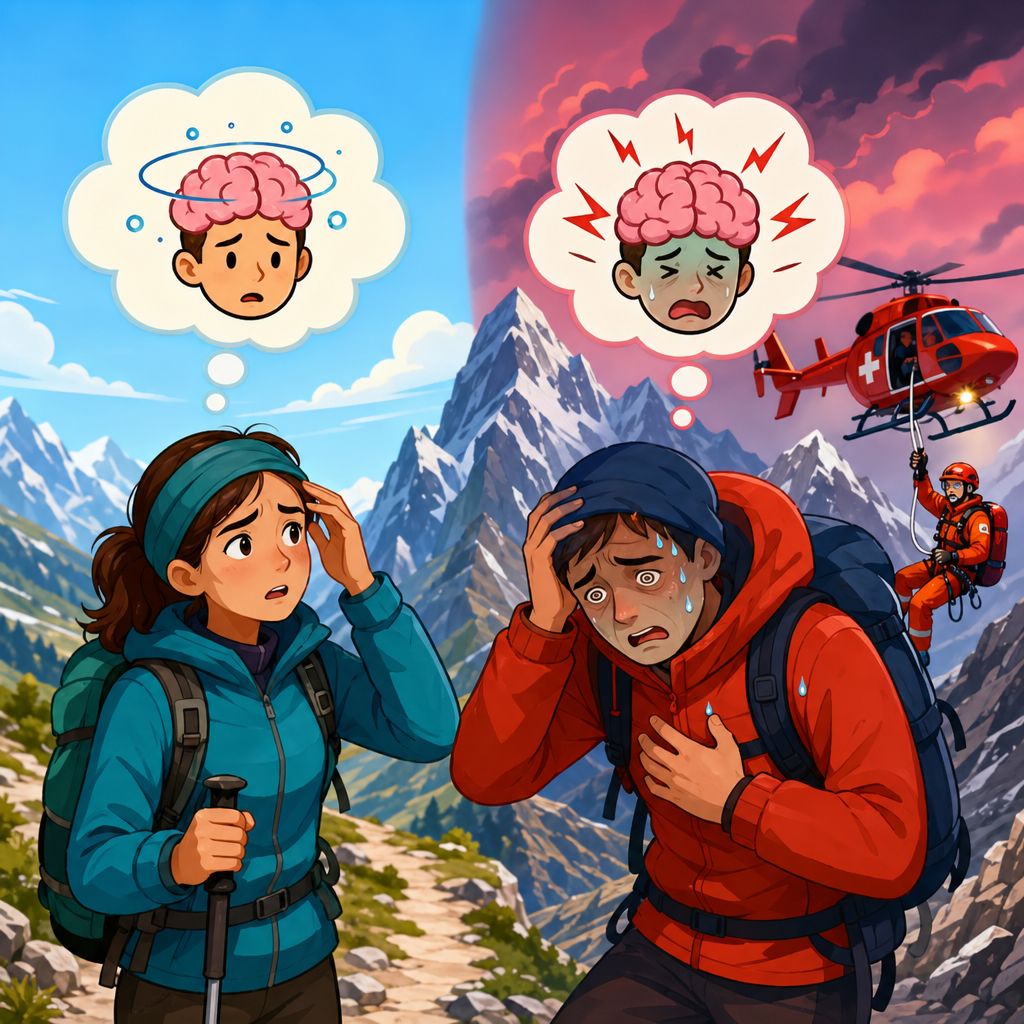
High-altitude cerebral edema, or HACE, is the point where routine altitude illness stops being uncomfortable and becomes immediately life threatening. Many trekkers, climbers, guides, and even fit endurance athletes first encounter altitude through acute mountain sickness, usually called AMS, and they assume the progression is linear: headache gets worse, nausea increases, sleep gets rough, and then rest fixes it. In practice, the line between severe AMS and HACE is not just “worse symptoms.” It is a neurological shift marked by brain dysfunction, declining coordination, and altered thinking that demands descent, oxygen, or pressurization without delay.
That distinction matters because delayed recognition is one of the most common reasons a manageable altitude illness turns into a rescue. I have seen teams hesitate because a sick climber could still answer questions, still walk with help, or still insist they were “just exhausted.” Those details are exactly why this topic deserves a clear hub page. HACE can evolve from AMS, but once ataxia, confusion, unusual behavior, or decreasing consciousness appear, the working diagnosis should move toward emergency treatment rather than watchful waiting.
HACE is a severe high-altitude illness involving swelling in the brain triggered by hypoxia, the reduced oxygen availability that comes with ascent. Severe AMS, by contrast, describes an intense form of altitude sickness with significant headache, nausea, vomiting, weakness, and poor function, but without definitive neurological impairment. Both conditions often occur at elevations above 2,500 to 3,000 meters, and both are more likely after a rapid gain in sleeping altitude. The practical question for trekkers and expedition leaders is simple: when do symptoms stop being severe discomfort and start signaling brain injury?
This article answers that question directly and serves as the central guide for the HACE topic within altitude illness and acclimatization. It explains how HACE differs from severe AMS, what early warning signs matter most, why ataxia is such a critical clue, which field tools help with assessment, and what treatment steps should happen first. It also covers risk factors, diagnosis limits, and prevention, because the safest HACE is the one prevented by conservative ascent, symptom honesty, and early action.
What HACE is and why it is different from severe AMS
HACE is a severe neurological form of altitude illness caused by inadequate acclimatization to hypobaric hypoxia. The core problem is brain dysfunction. The person may stagger, fail a heel-to-toe walk, become unusually irritable, speak slowly, forget simple details, or drift toward lethargy. Severe AMS may look dramatic because the headache can be intense and vomiting can be repetitive, but the person with severe AMS does not have clear central nervous system impairment. That is the decisive difference.
The Wilderness Medical Society and standard expedition medicine teaching emphasize that HACE is essentially a diagnosis of neurological deterioration at altitude, usually in someone with AMS and sometimes alongside high-altitude pulmonary edema, or HAPE. In plain terms, a bad headache at 4,200 meters is concerning; a bad headache plus stumbling, confusion, or reduced level of consciousness is an emergency. You do not need advanced imaging to make that call in the field. In fact, waiting for certainty is dangerous, because descent works best when started early.
Physiologically, both severe AMS and HACE arise from low oxygen pressure and imperfect acclimatization. The difference is degree and location of injury. In HACE, blood-brain barrier dysfunction, altered cerebral blood flow, and fluid leakage contribute to cerebral edema. MRI studies from affected patients have shown signal changes, including involvement of the corpus callosum in some cases, supporting the concept that HACE is not simply “a stronger headache” but a structural and functional brain problem. That is why behavior changes can appear before a patient seems critically ill to companions.
Symptoms that signal the shift into emergency territory
The most important field question is: what symptoms mean this is no longer just severe AMS? The clearest red flags are ataxia, altered mental status, and decreased consciousness. Ataxia means impaired coordination, especially gait instability that is out of proportion to fatigue. If a person cannot walk a straight line, repeatedly loses balance while standing, or needs support on flat ground, assume HACE until proven otherwise. Altered mental status includes confusion, slowed responses, disorientation, irrational decisions, personality change, or hallucinations.
By comparison, severe AMS usually presents with a severe headache plus one or more of the following: marked nausea, persistent vomiting, profound fatigue, dizziness, poor appetite, and inability to continue normal activity. The patient feels miserable, but their thinking remains essentially intact. They know where they are, can describe their symptoms coherently, and coordinate movements normally. That distinction can blur late at night, in cold weather, or after poor sleep, which is why structured checks are better than vague impressions.
In the field, I rely on simple repeated observations. Can the person state their name, location, and plan? Can they zip a jacket, clip a carabiner, or follow a two-step instruction? Can they walk heel-to-toe for several steps without weaving? Have they become unusually apathetic, aggressive, or strangely cheerful despite obvious illness? Those practical clues often reveal HACE earlier than a dramatic collapse. A patient who says they are fine while speaking slowly and stumbling is more dangerous than one who is loudly complaining of headache but remains coordinated.
| Feature | Severe AMS | HACE |
|---|---|---|
| Headache | Usually present and often severe | Often present, but may be overshadowed by neurological signs |
| Nausea or vomiting | Common | Common |
| Walking coordination | Generally preserved | Impaired; ataxia is a key warning sign |
| Mental status | Normal or only mildly slowed by fatigue | Confusion, irrational behavior, drowsiness, reduced consciousness |
| Urgency | Stop ascent and monitor closely | Immediate descent and emergency treatment |
How HACE is diagnosed in the mountains
HACE is a clinical diagnosis. That means it is identified from symptoms, signs, altitude exposure, and progression, not from a single test. The Lake Louise Acute Mountain Sickness Score helps standardize AMS symptoms, but it does not replace judgment when neurological signs appear. Pulse oximetry can support the overall picture, yet oxygen saturation alone cannot rule HACE in or out. At altitude, some healthy people have low readings, while some very sick patients do not look disastrous on the oximeter. The brain exam matters more.
A good field assessment starts with recent ascent history. How fast did the person gain sleeping altitude? Did they improve, plateau, or worsen with rest? Did symptoms begin after exertion, poor hydration, sedatives, or alcohol? Then assess mental status, gait, and trend. HACE usually worsens without effective intervention. A patient with severe AMS may stabilize or improve after stopping ascent, hydrating normally, treating headache, and resting. A patient with HACE often becomes less reliable, less coordinated, and less able to care for themselves over hours.
Differential diagnosis matters because not every confused person at altitude has HACE. Stroke, low blood sugar, hypothermia, intoxication, head injury, carbon monoxide exposure in enclosed shelters, meningitis, and severe dehydration can overlap. HAPE can also coexist, adding breathlessness, cough, crackles, and low exercise tolerance. The practical rule is that overlap does not make HACE less urgent. If an altitude-exposed patient has new ataxia or altered mental status, treat for HACE while considering other causes. Descent, oxygen, and dexamethasone are appropriate while you continue assessment.
Emergency treatment: what to do first and what not to delay
The treatment priorities for suspected HACE are immediate descent, supplemental oxygen if available, dexamethasone, and portable hyperbaric therapy when descent is delayed or temporarily impossible. Descent is the definitive intervention. Even a drop of 500 to 1,000 meters can help, though more may be needed. Do not leave a symptomatic person alone to “sleep it off.” Nighttime, storms, and summit pressure are classic reasons teams postpone descent, and those delays are exactly when patients deteriorate.
Oxygen should be given as soon as possible to raise oxygen saturation and reduce hypoxic stress. Exact flow depends on equipment, but the aim is meaningful clinical improvement, not a token low flow while the patient remains confused. Dexamethasone is the key medication because it reduces brain swelling and often produces noticeable improvement within hours. Standard adult field dosing commonly begins with 8 milligrams, followed by 4 milligrams every six hours, though local protocols and medical oversight should guide use. Improvement after dexamethasone does not eliminate the need to descend.
Portable hyperbaric bags, such as a Gamow bag or Certec bag, can be lifesaving on remote expeditions. They simulate descent by increasing pressure around the patient, buying time when weather, avalanche hazard, darkness, or terrain prevents evacuation. But they are a bridge, not a cure. Once the patient comes out, they are still at the same altitude. I have seen teams feel reassured by temporary improvement and delay descent again; that is a mistake. Rebound worsening is well recognized.
What should not be delayed? First, evacuation planning. Second, physical assistance, because patients with HACE may deny symptoms and wander, fall, or remove equipment. Third, treatment of concurrent HAPE if present, including oxygen and descent; nifedipine may be used in selected cases under established protocols. What should not be done? Do not continue ascent, do not give sedatives that cloud the exam unless medically necessary for another reason, and do not rely on pain medicine alone to tell yourself the problem has been handled.
Risk factors, prevention, and the role of acclimatization
The strongest risk factor for HACE is rapid ascent without adequate acclimatization. Sleeping altitude is the key variable. Once above roughly 3,000 meters, a common prevention rule is to limit sleeping altitude gain to about 300 to 500 meters per night and insert a rest day every three to four days, especially after major gains. Many itineraries break this rule because vacations are short, permits are fixed, and people feel strong early. Unfortunately, fitness does not protect against HACE. I have seen fast runners get into trouble precisely because they can push hard before acclimatization catches up.
A prior history of significant altitude illness increases risk, though it does not guarantee recurrence. Exertion, cold stress, dehydration, intercurrent viral illness, sleep disruption, and alcohol or sedative use can worsen judgment and symptom interpretation. Acetazolamide helps prevent AMS by improving ventilatory acclimatization and is appropriate for many at-risk travelers, but it is not a force field. People still need a conservative ascent profile. Dexamethasone can prevent AMS and HACE in select high-risk situations, yet it is usually reserved for special circumstances because it masks symptoms while not promoting acclimatization in the same way.
Prevention also depends on team culture. The safest expeditions normalize early reporting and reward turning around. Leaders should define objective turnaround criteria before the trip: no ascent with headache plus nausea, no ascent with declining function, and mandatory descent for ataxia or mental-status change. Partners should know each other’s baseline behavior. The first person to spot HACE is often not the patient but the tentmate who notices clumsy stove use, odd jokes, or a vacant stare at breakfast.
When to seek rescue and what recovery looks like
Rescue is warranted when a patient cannot descend safely with the team, has worsening ataxia, increasing confusion, reduced consciousness, or signs of concurrent HAPE such as severe breathlessness at rest. Any deterioration despite dexamethasone, oxygen, or portable hyperbaric treatment should raise urgency further. In organized trekking areas, activate local rescue systems early rather than after exhaustion sets in. In remote mountaineering, that may mean satellite communication, helicopter coordination where feasible, or a ground evacuation supported by multiple team members.
Recovery from HACE can be dramatic once descent and treatment begin, but full resolution still requires caution. Patients should not re-ascend until symptoms have completely cleared and a qualified clinician familiar with altitude illness has reassessed them. Some cases need hospital evaluation for imaging, oxygen support, or exclusion of stroke and infection. Most people recover well if treated promptly, yet delayed treatment can lead to coma or death. That is the central lesson: when severe altitude illness crosses into impaired coordination or altered thinking, the correct response is not debate but action.
If you plan to trek, climb, guide, or build an altitude itinerary, use this page as your starting point for the HACE subtopic and review your prevention and evacuation plan before departure. Learn the red flags, teach them to your partners, and commit to descending early. That single decision saves lives more reliably than any summit ever will.
Frequently Asked Questions
What is the difference between severe AMS and HACE?
Acute mountain sickness, or AMS, usually starts with symptoms many people recognize: headache, nausea, fatigue, poor appetite, dizziness, and disrupted sleep after gaining altitude. Severe AMS means those symptoms have become intense enough to interfere with normal function, but the person is still thinking clearly and moving normally. High-altitude cerebral edema, or HACE, is different in a more dangerous way. It is not simply “bad AMS.” It involves brain dysfunction caused by altitude, which means the person may become confused, unusually irritable, slow to respond, unable to walk in a coordinated way, or progressively less alert. That change in mental status or balance is what shifts the situation into emergency territory.
A helpful way to think about it is this: severe AMS feels miserable, but HACE changes how the brain is working. Someone with severe AMS may complain bitterly, vomit, and want to lie down, yet still answer questions appropriately and walk a straight line. Someone developing HACE may minimize symptoms, seem “off,” fumble simple tasks, wander, make poor decisions, or stagger as if intoxicated. Those neurologic signs matter more than the intensity of the headache alone. In the mountains, if a person at altitude has headache plus confusion, altered behavior, or ataxia, you should treat it as HACE until proven otherwise.
Which symptoms mean altitude illness has crossed into an emergency?
The biggest red flags are neurologic symptoms, especially confusion and loss of coordination. If someone cannot walk heel-to-toe, stumbles for no clear reason, struggles to follow a conversation, forgets where they are, behaves strangely, or becomes difficult to wake, that is not routine AMS. Those are warning signs of HACE and require immediate action. Severe, persistent headache and repeated vomiting are concerning, but by themselves they do not define HACE. The emergency threshold is crossed when the brain is no longer functioning normally.
Other danger signs include progressively worsening symptoms despite rest, oxygen, or stopping ascent; marked lethargy; slurred speech; hallucinations; loss of consciousness; and any combination of cerebral symptoms with shortness of breath at rest, wet cough, or blue lips, which may suggest concurrent high-altitude pulmonary edema. Because people at altitude are often dehydrated, exhausted, and cold, observers sometimes explain away mental changes as fatigue. That is a mistake. If a teammate seems unusually clumsy, withdrawn, irrational, or slow, assume altitude illness may have become life threatening. When in doubt, descend and reassess lower, not higher.
Can severe AMS turn into HACE, and how quickly can that happen?
Yes. HACE often develops in the setting of worsening AMS, but it does not always follow a neat, gradual pattern. Some people experience a typical build-up of headache, nausea, fatigue, and poor sleep, then over hours begin to lose coordination or become confused. Others deteriorate more abruptly, especially after continued ascent, overexertion, inadequate acclimatization, or sleeping higher than their body can tolerate. The important point is that the transition is defined by neurologic decline, not by how many AMS symptoms are present or how high someone has climbed.
The timeline can be shorter than many travelers expect. A person who looked merely miserable in the evening may be dangerously impaired overnight or by morning. That is one reason guides and partners should check not only how someone feels, but how they walk, talk, and function. Simple field assessments can help: ask the person to state their location, follow a few instructions, and walk a straight line. If those tasks suddenly become difficult, treat the situation as an evolving altitude emergency. Waiting for “more obvious” symptoms can waste the safest window for descent.
What should you do immediately if you suspect HACE rather than severe AMS?
The first and most important treatment is descent, and it should happen as soon as it is feasible and safe. Do not let the person continue upward, and do not assume that a few hours in camp will solve the problem. HACE is a medical emergency because the condition can progress to coma and death if altitude exposure continues. If supplemental oxygen is available, give it. If dexamethasone is available and you are trained or following expedition medical guidance, it is commonly used as an emergency treatment because it can reduce brain swelling and improve symptoms. A portable hyperbaric bag can also be lifesaving when descent is temporarily delayed. But none of these measures replaces getting to lower elevation.
The patient should not be left alone, and they should not be expected to self-monitor or make good decisions. Their judgment may already be impaired. Keep them warm, minimize exertion, and monitor for breathing problems that could suggest coexisting pulmonary edema. Even if they improve after oxygen or dexamethasone, they still need descent and medical evaluation. Temporary improvement can create false reassurance, but the underlying altitude problem remains. In practical terms, suspected HACE should trigger the same mindset as any other mountain emergency: stop ascent, organize descent, use available rescue tools, and treat every delay as potentially dangerous.
How can climbers and trekkers reduce the risk of severe AMS progressing to HACE?
Prevention starts with acclimatization discipline. Ascend gradually, avoid large sleeping-elevation jumps, and build in rest days when going high. Many cases happen not because people ignore all symptoms, but because they rationalize them: “It’s just a headache,” “I’m only tired,” or “Everyone feels bad up here.” The safer approach is to respect early AMS as a warning. If symptoms are worsening, do not keep ascending. Rest at the same altitude, consider treatment, and be willing to descend if the pattern is not improving. Continuing higher with active AMS is one of the clearest setup conditions for HACE.
It also helps to travel with people who know what abnormal behavior looks like and are willing to speak up. Self-assessment becomes less reliable as altitude illness worsens. Basic prevention includes staying hydrated enough to function normally, eating when possible, avoiding unnecessary overexertion on arrival at a new altitude, and using preventive medications such as acetazolamide when appropriate under medical guidance. Most importantly, teams should agree in advance that confusion, loss of coordination, or significant mental-status change means immediate descent without debate. Clear rules remove hesitation when the situation is evolving fast. In altitude medicine, recognizing the neurologic red flags early is often what prevents a bad night from becoming a fatal one.