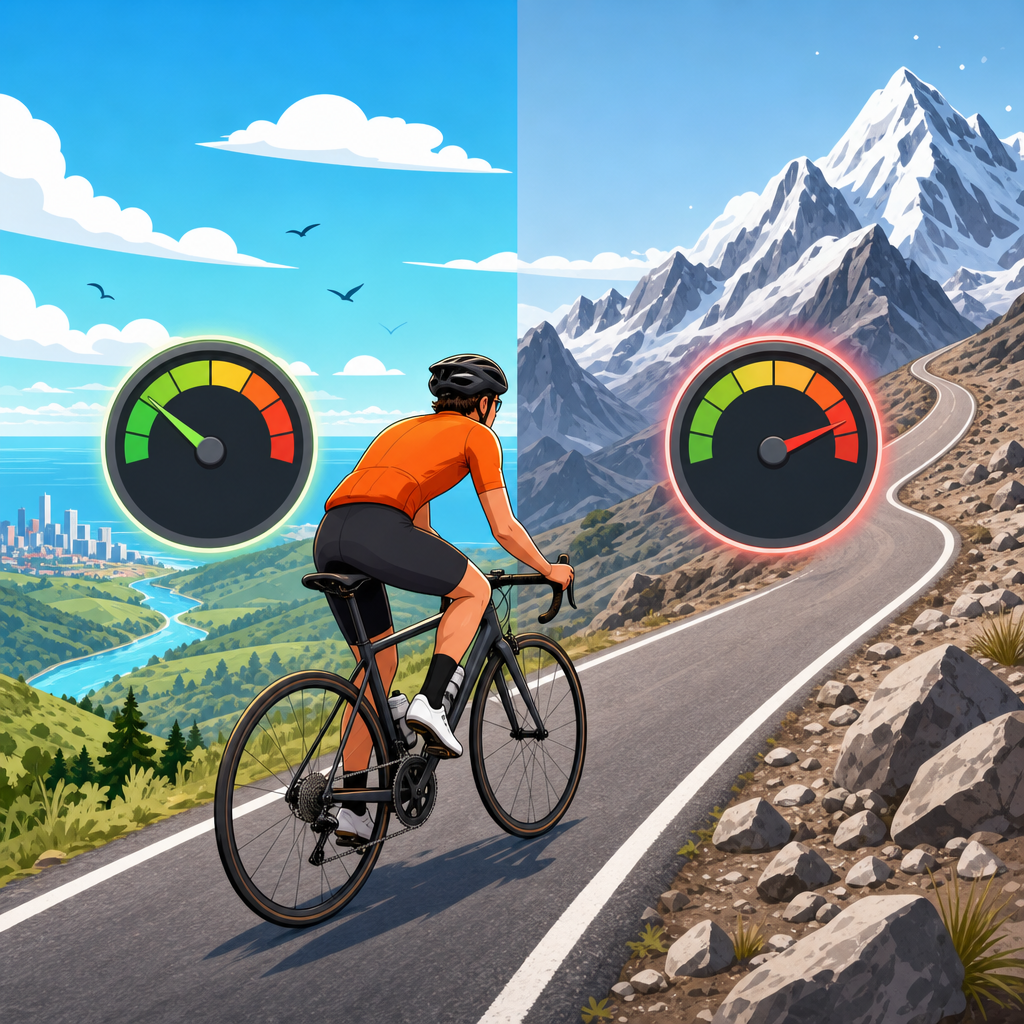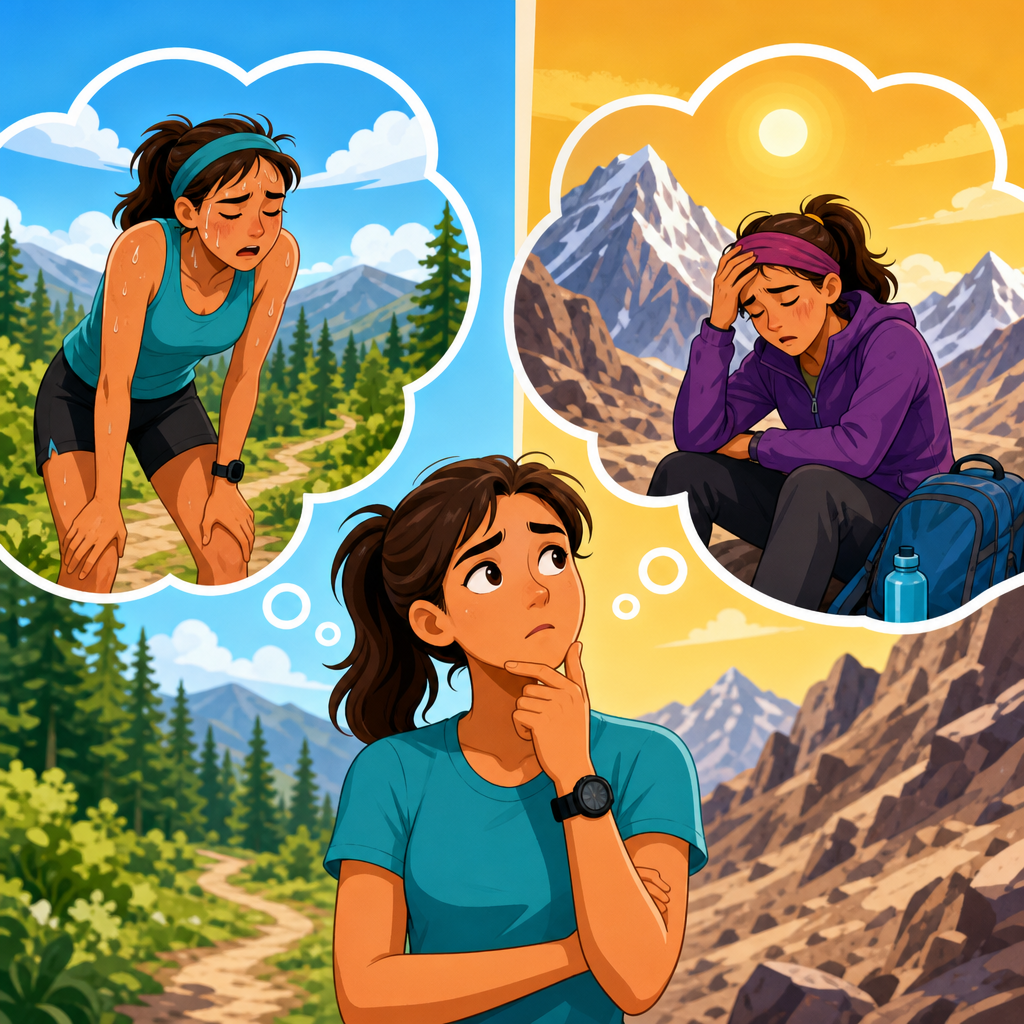
Fatigue is one of the hardest signals to interpret in hiking and performance training because the same heavy legs, low motivation, poor sleep, and slower pace can come from productive training stress or from the strain of acclimatization. In mountain athletes, backpackers, and endurance hikers, the distinction matters. If fatigue is primarily from training, the right response may be a rest day, lower volume, more carbohydrate, or a deload week. If fatigue is primarily from acclimatization, the better response may be time at altitude, slower ascent, extra fluids, more sleep, and close monitoring for altitude illness. Misreading the source can prolong recovery, flatten performance, and in the mountains, create real safety problems.
Training fatigue is the predictable tiredness that follows exercise stress. It reflects muscle damage, glycogen depletion, nervous system strain, and the body’s ongoing repair process. Acclimatization fatigue is different. It is the systemic load created when you move to higher elevation and your body must adapt to lower oxygen pressure. Ventilation increases, sleep often worsens, resting heart rate may rise, and effort feels harder at the same workload. Both forms of fatigue can overlap, which is why hikers often ask the wrong question: not “Am I tired?” but “What pattern does this tiredness follow?”
After years of monitoring athletes and long-distance hikers, I have found that patterns tell the truth faster than single symptoms. One rough workout, one poor night of sleep, or one low-energy afternoon does not diagnose anything. What helps is looking at context: recent training load, rate of ascent, sleeping altitude, appetite, hydration, morning heart rate, pulse oximeter trends, mood, and whether symptoms improve with easier movement or worsen despite backing off. This article serves as a hub for recovery and monitoring within fitness, hiking, and performance, giving you a framework to separate training fatigue from acclimatization fatigue and to decide what to do next.
The reason this topic deserves a full hub page is simple. Recovery is not one skill; it is a system. It includes sleep, nutrition, hydration, training load management, subjective check-ins, heart rate monitoring, altitude planning, and red-flag recognition. A strong monitoring system does not make you obsessive. It makes you accurate. When you know what normal soreness feels like, what normal altitude adjustment feels like, and what warning signs require caution, you recover faster and make safer decisions on the trail and in training.
What training fatigue usually looks like
Training fatigue typically follows a clear workload pattern. You increase mileage, add vertical gain, do a hard interval session, carry a heavier pack, or stack several long days, and then you feel the cost within twelve to forty-eight hours. The most common signs are localized muscle soreness, reduced power on climbs, slower turnover, lower motivation to start a session, and a sense that your legs are empty even when your breathing is normal. In gym-based strength work, it may show up as reduced bar speed or failure to hit usual repetitions. In hiking, it often appears as sluggish climbing at low altitude after a high-volume block.
Physiologically, training fatigue is driven by muscle fiber disruption, inflammation, glycogen depletion, connective tissue stress, and central nervous system demand. That sounds technical, but the practical point is straightforward: the source is largely workload. If you unload the body with easier sessions, better fueling, and sleep, symptoms should begin to improve in a predictable way. The timeline varies. Delayed onset muscle soreness often peaks around one to two days after novel or eccentric work, such as steep descents. Glycogen-related heaviness can improve much faster, often within a day if carbohydrate intake and total calories are adequate.
Another clue is symptom location. Training fatigue is frequently mechanical and peripheral. Quads burn after descending. Calves tighten after long climbs. Hip stabilizers ache after technical trails. Your breathing may feel normal at conversational pace, and once warmed up, you may move better than you expected. That “I felt rough for twenty minutes, then settled in” pattern is common with accumulated training stress. It is less typical when altitude stress is the main problem, because low oxygen usually keeps effort perception elevated across the entire session.
Training fatigue also responds well to standard recovery tools. A rest day, reduced intensity, compression, active recovery, adequate protein spread across meals, and carbohydrate replacement all tend to help. If you track heart rate variability, resting heart rate, or readiness scores from tools such as Garmin, Polar, WHOOP, Oura, or TrainingPeaks, you may see short-term suppression after hard blocks, but the trend generally rebounds with reduced load. The key is that cause and effect match. Hard training creates fatigue; lighter training relieves it.
What acclimatization fatigue usually looks like
Acclimatization fatigue follows altitude exposure more than training load. You arrive at 2,500 meters, sleep poorly, wake with a dry mouth, notice your heart rate is elevated for easy walking, and feel unusually winded on inclines you would normally handle well. At 3,000 meters and above, the effect is often stronger. Even fit athletes can feel flat, irritable, and mentally slower for the first one to three days. The reason is reduced oxygen availability. Your body compensates by breathing faster, increasing sympathetic drive, shifting fluid balance, and gradually stimulating adaptations that improve oxygen delivery.
The symptom pattern is broader and more systemic than training fatigue. Instead of soreness limited to one muscle group, you may notice headache, reduced appetite, light nausea, fragmented sleep, unusual breathlessness, and an elevated rating of perceived exertion at paces that normally feel easy. Heart rate at rest and during submaximal work often runs higher than expected, while oxygen saturation measured by pulse oximeter may sit lower than your sea-level baseline. One caution matters here: pulse oximeters are useful for trends, not for diagnosing performance readiness in isolation, because readings vary with temperature, device quality, and user technique.
Acclimatization fatigue is also heavily shaped by ascent rate and sleeping altitude. A hiker who drives from sea level to sleep at 2,800 meters may feel much worse than a runner who trained hard at 1,500 meters all week. The body tolerates gradual exposure better than abrupt jumps. This is why established mountain medicine guidance emphasizes conservative ascent schedules, especially above 2,500 meters. If fatigue appears soon after ascent and is paired with poor sleep, headache, and persistent breathlessness, altitude is the leading suspect even if training has been heavy.
Time course is another giveaway. Acclimatization symptoms often improve after one to several nights at the same altitude if the elevation is moderate and the person is otherwise healthy. That said, performance can remain reduced even as symptoms ease. Research and field experience both show that maximal aerobic capacity falls as altitude rises, so feeling “not fully sharp” is normal. The important distinction is whether you are adapting or deteriorating. Mild fatigue that gradually improves suggests acclimatization. Worsening headache, nausea, ataxia, confusion, or breathlessness at rest is not normal adaptation and requires immediate action.
How to tell the difference in real time
The fastest way to separate training fatigue from acclimatization fatigue is to compare symptoms against five anchors: timing, breathing, sleep, muscle soreness, and response to reduced load. Timing asks what changed first. If fatigue started after a hard block at the same altitude you always train at, training is the likely driver. If it started after a rapid ascent, altitude moves to the top of the list. Breathing asks whether easy effort now feels unusually air-starved. Marked breathlessness at routine pace points toward altitude more than normal post-training tiredness.
Sleep is one of the best discriminators. Training fatigue can make you sleepy, but acclimatization often makes sleep lighter and more fragmented. Many hikers at altitude notice periodic breathing, frequent waking, and the odd combination of being exhausted while sleeping badly. Muscle soreness is another clue. If your quads, calves, glutes, or shoulders from pack carry are clearly beaten up, training load is speaking. If your legs feel weak without much soreness and your whole system feels off, altitude deserves more weight in your assessment.
Finally, look at response to reduced load. Training fatigue usually improves noticeably with one or two easier days and good fueling. Acclimatization fatigue may improve only modestly unless you give it time at the same altitude or descend. I often tell athletes to ask one practical question: “If I removed today’s workout, would I still feel this way walking upstairs?” If the answer is yes, and especially if you recently went higher, acclimatization is likely part of the picture. The table below summarizes the most reliable field distinctions.
| Signal | More consistent with training fatigue | More consistent with acclimatization fatigue |
|---|---|---|
| Onset | After hard workouts, increased volume, heavy descents, or strength sessions | After rapid ascent or first nights at a higher sleeping altitude |
| Breathing | Usually normal at easy pace | Noticeably harder breathing at easy pace or on mild climbs |
| Sleep | Often normal or increased need for sleep | Fragmented sleep, frequent waking, periodic breathing |
| Muscles | Localized soreness, stiffness, heavy legs | General weakness with less specific soreness |
| Appetite and headache | Appetite often normal if calories are adequate; headache less common | Reduced appetite, dry mouth, headache, mild nausea are more common |
| Response to easier day | Usually improves clearly within one to two days | May persist until more time at altitude or descent |
What to monitor for recovery and performance
A useful monitoring system combines subjective and objective data. Subjective measures are often underrated, yet they are among the best predictors of overload. Each morning, record sleep quality, motivation, muscle soreness, stress, and overall fatigue on a simple one-to-five scale. Add a short note about headache, appetite, and dizziness when you are at altitude. This takes less than two minutes and quickly shows whether symptoms are random or trending. In coaching practice, these simple wellness scores often flag problems earlier than gadgets do.
Objective measures add context. Resting heart rate is practical and informative. A morning value that stays meaningfully above your baseline for several days can reflect either training strain or altitude stress, so it is not diagnostic by itself, but it tells you the body is under load. Heart rate variability can help if you measure it consistently under similar conditions. A downward trend alongside poor sleep and low mood supports the case for reducing stress. Pace and power data matter too. If easy pace suddenly slows while heart rate climbs, something is compromising recovery or oxygen delivery.
For hikers, a pulse oximeter can be helpful when used correctly. Measure at rest, with warm hands, and look for trends rather than chasing one number. At altitude, lower saturation is expected, and there is wide normal variation. The value lies in pairing saturation with symptoms. A person with a modest drop in saturation but no headache, no nausea, and improving sleep may simply be adapting. A person with falling saturation, worsening headache, poor coordination, and fatigue is a different story. Monitoring is never about one metric. It is about pattern recognition across several metrics that point in the same direction.
Nutrition and hydration should also be tracked because underfueling mimics both training and altitude fatigue. Carbohydrate availability strongly affects endurance performance, and altitude often suppresses appetite. That combination is common in trekkers who ascend quickly and then wonder why they feel weak. Body mass changes, urine color, meal timing, sodium intake on long sweaty days, and total daily calories all matter. In practical terms, if a hiker is tired, at altitude, not hungry, and eating half their usual carbohydrates, recovery will stall no matter how carefully they study heart rate data.
When fatigue is a warning sign, not normal recovery
Not all fatigue is benign. In training, fatigue becomes concerning when performance keeps dropping despite rest, mood darkens, sleep remains poor, and minor illnesses or injuries start to appear. This may indicate nonfunctional overreaching or, over longer periods, overtraining syndrome. In mountain settings, the stakes are higher because fatigue can mask acute mountain sickness and more serious altitude illness. Headache plus nausea, dizziness, unusual exhaustion, or sleep disturbance after ascent should be treated cautiously, especially if symptoms worsen with continued climbing.
There are clear red flags. Breathlessness at rest, a cough that worsens, chest tightness, blue lips, confusion, loss of coordination, or inability to walk straight are not signs of “pushing through.” They suggest a medical problem and may indicate high-altitude pulmonary edema or high-altitude cerebral edema, both emergencies. The correct response is to stop ascending and descend, ideally with supplemental oxygen and medical evaluation when available. No fitness level protects someone completely from altitude illness. I have seen strong runners dismiss early symptoms because they were used to feeling trashed after training, and that is exactly how bad decisions happen.
The practical rule is simple: normal recovery trends up; dangerous fatigue trends down. If symptoms ease with rest, food, fluids, and time at the same altitude, you are usually dealing with manageable stress. If symptoms intensify or new neurologic or respiratory signs appear, do not debate it. Change the plan. Recovery and monitoring are valuable because they support decision-making, but they never replace judgment. When in doubt in the mountains, the conservative choice is usually the right one.
How to adjust your plan based on the cause
If training fatigue is the main driver, reduce load first. Cut intensity before cutting all movement, because easy walking, spinning, or mobility often improves circulation and stiffness without adding much stress. Replace a hard hill session with flat aerobic work. Trim long-run or long-hike duration by thirty to fifty percent for a few days. Emphasize carbohydrate intake around training, distribute protein across the day, and protect sleep aggressively. Most athletes respond well when they stop trying to prove fitness during a recovery window.
If acclimatization fatigue is the main driver, keep ascent conservative and respect sleeping altitude. A common field strategy is to climb gradually, keep the first days easy, and avoid stacking maximal efforts immediately after arrival. Hydrate, but do not force excessive water; balance fluids with electrolytes and thirst. Eat even when appetite is low, prioritizing carbohydrate-rich foods that are easy to digest. If symptoms are mild and stable, remain at the same altitude until they improve. If symptoms worsen, descend. That decision solves more problems than any recovery gadget ever will.
The best long-term approach is to build a repeatable monitoring habit. Learn your normal baseline at home, during hard training, and during the first days at altitude. Once you know those patterns, fatigue becomes less mysterious. You can spot whether your body is asking for a deload, another acclimatization day, or a rapid change of plan. Use this hub as your starting point for the broader recovery and monitoring system across fitness, hiking, and performance. Review your signals, act on patterns instead of guesses, and let better monitoring turn fatigue from a source of confusion into a useful guide.
Frequently Asked Questions
How can I tell whether my fatigue is coming from training stress or from acclimatization to altitude?
The most useful way to separate training fatigue from acclimatization fatigue is to look at the full pattern of symptoms, not just one bad workout or one tired morning. Training fatigue usually shows up after a clear block of hard effort: more vertical gain, heavier pack carries, faster intervals, longer mileage, or too many consecutive hard days. Your legs may feel flat, sore, or heavy, but the context makes sense because the workload recently increased. In that case, recovery markers often improve fairly quickly when you reduce intensity, eat more carbohydrate, and get better sleep.
Acclimatization fatigue often appears when elevation changes faster than your body can adapt. You may notice slower hiking pace, unusually high breathing rate, restless sleep, reduced appetite, headaches, dehydration, or a sense that easy movement feels harder than it should. Those signs are especially meaningful if your training load has not increased much, but your sleeping altitude or daily exposure to altitude has. A common clue is that even when you back off physically, you still feel “off” because the environment itself is the stressor. Another clue is that your effort level is high relative to your actual output: heart rate may run higher than expected, recovery between efforts can be slower, and you may feel fatigued very early in the day.
In practice, the distinction is often made by asking three questions. First, did training volume or intensity rise recently? Second, did elevation rise recently? Third, what happens when you rest, fuel well, and hydrate for 24 to 48 hours? If symptoms improve quickly, training fatigue is more likely. If they persist while you are still sleeping high or spending long hours at altitude, acclimatization is a stronger suspect. It is also possible to have both at once, which is very common in mountain athletes and backpackers. That is why the best decisions usually come from combining symptom tracking, training history, altitude exposure, sleep quality, and hydration status rather than trying to find one single sign.
What symptoms point more strongly to acclimatization fatigue rather than normal training fatigue?
Acclimatization fatigue tends to come with a cluster of altitude-related signs that go beyond sore muscles and general tiredness. The most common include poor sleep despite being exhausted, waking often during the night, vivid or restless breathing patterns, reduced appetite, mild nausea, headache, unusual shortness of breath, elevated resting heart rate, and a feeling that even easy uphill movement is disproportionately taxing. Many people also notice that they are drinking a lot but still feel dry, or that their pace falls off more than expected even though their legs are not especially sore.
By contrast, training fatigue is often more localized and workload-specific. Your legs may be sore from descents, your hips may feel beat up from pack weight, or your motivation may dip after several hard days, but you do not necessarily get the appetite suppression, sleep disruption, or altitude-style headache that often accompanies acclimatization strain. Training fatigue also tends to track more closely with what you did. If you completed a hard interval session, a long climb, or several high-volume days in a row, feeling tired afterward is logical. With acclimatization fatigue, the effort-to-output mismatch is usually more striking. A route or pace that should feel manageable can feel unreasonably hard simply because oxygen availability is lower and your body is still adapting.
One important caution: symptoms exist on a spectrum. Mild acclimatization fatigue can look subtle at first, and severe altitude illness can begin with symptoms people dismiss as simple fatigue. If headache, nausea, dizziness, poor coordination, confusion, chest symptoms, or marked shortness of breath are getting worse rather than better, that should not be written off as ordinary training stress. In those cases, reducing exertion may not be enough, and descent or medical evaluation may be appropriate. For routine decision-making, though, the more your tiredness is paired with sleep disruption, headache, appetite loss, and unexpectedly hard breathing at elevation, the more likely acclimatization is a major contributor.
If I am not sure which type of fatigue I have, what should I do first?
When the cause is unclear, the safest and most effective first move is to reduce stress from both sides without fully shutting everything down unless symptoms demand it. Start with a low-risk reset for 24 to 48 hours: cut intensity, shorten duration, avoid big climbs or speed work, eat generously, emphasize carbohydrate intake, hydrate consistently, and prioritize sleep. This gives you a clearer read on whether the problem is mostly training load, altitude stress, or simple under-recovery. If you bounce back quickly, the fatigue was likely driven largely by training stress, insufficient fueling, accumulated sleep debt, or a combination of those factors.
If you do not improve much after backing off, then look harder at altitude exposure. Staying at the same sleeping elevation, adding more physical stress, or continuing to push through poor sleep can prolong acclimatization fatigue. In that case, the next best intervention may be more conservative pacing, a lighter pack, a rest or near-rest day, or if possible, sleeping lower for a night or two. Many athletes make the mistake of trying to “train through” altitude fatigue because they assume it is the same as productive overload. That often backfires. Acclimatization is a biological adjustment process, not just a fitness challenge, and forcing intensity too early can dig the hole deeper.
It also helps to review objective markers if you track them. Resting heart rate, heart rate response on easy efforts, appetite, sleep quality, mood, and morning readiness can all add useful context. A sudden increase in resting heart rate along with poor sleep and poor appetite at higher elevation points more toward acclimatization strain. Sore muscles, low motivation after a hard block, and rapid improvement with rest and food point more toward training fatigue. If symptoms are escalating, if you feel unusually unwell, or if basic function is deteriorating rather than stabilizing, the right first step is not another test workout. It is reducing exposure and reassessing before the situation worsens.
Can training fatigue and acclimatization fatigue happen at the same time?
Yes, and in real mountain settings this is probably the rule rather than the exception. Backpackers, alpinists, endurance hikers, and mountain athletes are often carrying substantial training stress into an environment that adds its own separate physiological load. You may have muscle damage from downhill hiking, glycogen depletion from long days, and cumulative sleep debt from camp conditions, while also dealing with reduced oxygen, higher respiratory demand, dehydration risk, and disrupted recovery from altitude. When both forms of fatigue stack together, interpretation gets harder because the symptoms overlap so much.
This overlap is exactly why context matters. If you recently increased both training load and altitude exposure, there may not be a clean single explanation. Heavy legs may be from training, while poor sleep and appetite are more altitude-related. Slower pace could reflect both depleted legs and lower oxygen availability. In those cases, the best strategy is not trying to perfectly label every symptom but adjusting the variables you can control. Lower the training stress, improve fueling, simplify the day’s objective, and respect the acclimatization timeline. A modest course correction early is far more productive than waiting until performance or safety deteriorates.
Think of combined fatigue as additive stress on the same recovery system. Even if neither stressor would be overwhelming by itself, together they can exceed your ability to adapt. This is why athletes sometimes feel surprisingly bad on paper-easy days at altitude after a heavy training cycle at home. Their body is not weak or underprepared; it is simply handling more simultaneous strain than expected. The right response is usually to create space for adaptation: easier movement, better nutrition, more sleep, careful hydration, and realistic pacing. If you recover, training can resume progressively. If you continue to feel worse at altitude despite reducing training load, acclimatization needs to become the top priority.
What is the best recovery strategy if my fatigue is mostly from training versus mostly from acclimatization?
If fatigue is mostly from training, recovery should focus on restoring energy availability and reducing mechanical and metabolic stress. That usually means a rest day or low-intensity active recovery, fewer consecutive hard sessions, a temporary reduction in volume, and deliberate carbohydrate intake to replenish glycogen. Many endurance athletes under-eat during heavy blocks, especially on long hikes or big vertical days, and then interpret the resulting flatness as a more complex problem than it is. Adding calories, especially carbohydrates, along with protein, fluids, and extra sleep often restores normal performance quickly. If fatigue has been building for more than a few days, a short deload week may be more effective than repeatedly taking single easy days without changing the broader pattern.
If fatigue is mostly from acclimatization, the recovery strategy shifts. You cannot force faster adaptation by pushing harder. The priority becomes reducing altitude strain enough for your body to catch up. That may mean slowing your pace, trimming daily gain, carrying less weight, avoiding maximal efforts, and if available, sleeping at a lower elevation. Hydration matters, but so does not overinterpreting dehydration as the only problem. Good fluid intake helps, yet it does not replace time and reduced exposure. Nutrition is also important because altitude can blunt appetite, and under-fueling will magnify every symptom. Gentle movement