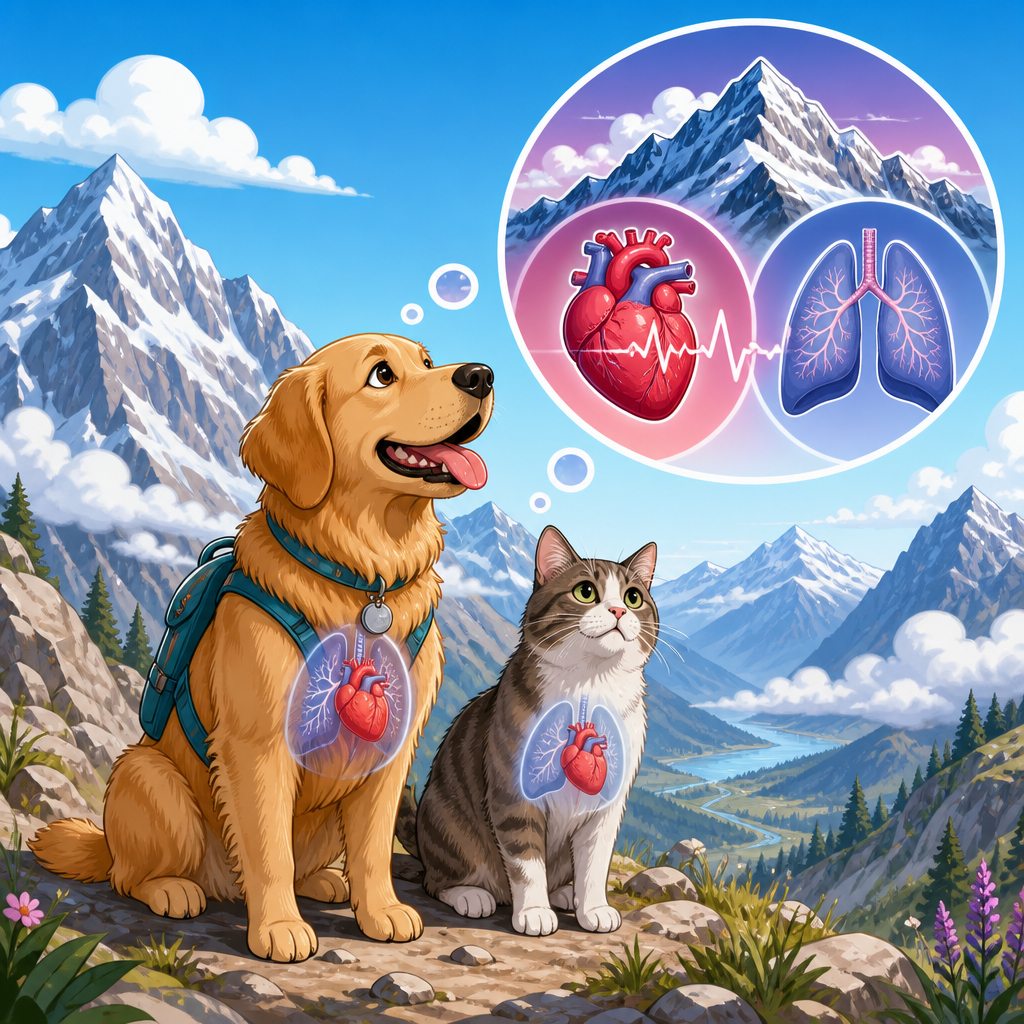
Altitude can worsen underlying heart or lung disease in pets because thinner air reduces oxygen availability, increases strain on breathing and circulation, and can turn a stable chronic condition into an urgent medical problem. In practice, I have seen dogs with previously manageable collapsing trachea, chronic bronchitis, pulmonary hypertension, or mitral valve disease become exercise intolerant within hours of arriving in mountain towns. Cats may hide signs longer, but they are no less vulnerable. For pet owners planning vacations, relocations, hikes, air travel, or seasonal stays, understanding how altitude affects pet health is essential.
In simple terms, altitude means elevation above sea level. As elevation rises, barometric pressure falls, and each breath delivers less oxygen into the lungs. Healthy animals usually compensate by breathing faster, increasing heart rate, and gradually acclimating over several days. Pets with heart disease, airway disease, pulmonary fibrosis, laryngeal paralysis, brachycephalic obstructive airway syndrome, or anemia have less reserve. They may not adapt well enough to meet tissue oxygen demands. That mismatch can trigger cyanosis, fainting, fluid accumulation, panic, weakness, or sudden respiratory distress.
This topic matters well beyond mountain vacations. Pet health and planning includes routine veterinary screening before travel, understanding breed-specific risk, preparing medications and records, evaluating exercise tolerance, and knowing when a destination is unsafe. It also includes longer-term lifestyle decisions such as whether a senior dog with chronic cough can move from sea level to Denver, or whether a cat with hypertrophic cardiomyopathy should fly in cargo. Good planning protects the pet and prevents avoidable emergencies, expensive hospitalization, and heartbreaking outcomes.
As a hub topic, pet health and planning connects multiple related decisions: preventive exams, chronic disease management, travel safety, environmental stress, emergency readiness, and quality-of-life assessment. Owners often ask one narrow question, such as whether altitude is dangerous, when the better question is whether the whole plan fits the pet’s medical limits. A strong plan looks at oxygen demand, temperature, humidity, activity level, access to emergency care, and the stress of transport itself. Those pieces together determine risk.
How altitude affects pets with heart or lung disease
Altitude reduces inspired oxygen pressure, which lowers the amount of oxygen crossing from the lungs into the bloodstream. The body responds through hyperventilation, increased sympathetic tone, and cardiovascular compensation. In healthy pets, that response may cause mild panting, temporary fatigue, or reduced stamina. In pets with underlying disease, compensation can fail. A dog with chronic valvular heart disease may develop faster heart rates that worsen cardiac workload. A pet with chronic lower airway disease may struggle to move enough air, even before oxygen availability falls.
The highest-risk conditions are diseases that already impair oxygen exchange or circulation. These include congestive heart failure, pulmonary hypertension, dilated cardiomyopathy, hypertrophic cardiomyopathy in cats, chronic bronchitis, tracheal collapse, pneumonia recovery, pulmonary fibrosis, laryngeal paralysis, severe obesity, and brachycephalic airway disease in breeds such as Bulldogs, Pugs, and Boston Terriers. Anemia also matters because even normal lungs cannot deliver enough oxygen if red blood cell mass is low. Sedatives, heat, and excitement further increase risk.
Owners often ask whether there is a specific elevation where problems start. There is no universal threshold because risk depends on the pet’s diagnosis, severity, fitness, age, body condition, and pace of ascent. Some compromised pets struggle at 4,000 to 5,000 feet. Others tolerate 7,000 feet with strict rest and medication control. Above roughly 8,000 feet, even healthy animals can show reduced exercise capacity, so diseased pets deserve extra caution. Rapid ascent is harder than gradual ascent because acclimatization takes time.
One practical point is that altitude rarely acts alone. A pet reaches a ski town after a long car ride, skipped meals, exposure to wood smoke, dry air, unfamiliar stairs, and excited family activity. Each factor increases respiratory or cardiac demand. That is why a stable pet at home may seem suddenly fragile on vacation. The disease did not necessarily worsen permanently; the environment exposed its limited reserve.
Which symptoms mean altitude is becoming dangerous
The most important warning signs are increased resting respiratory rate, labored breathing, persistent coughing, collapse, weakness, blue or gray gums, open-mouth breathing in cats, disorientation, or refusal to walk. Owners should know their pet’s normal baseline before travel. Count sleeping breaths for one full minute when the pet is relaxed. In dogs and cats, a resting rate under 30 breaths per minute is commonly acceptable, though individual advice from the treating veterinarian matters more than any generic cutoff. A meaningful increase from baseline deserves attention.
Other signs are subtler. A dog may stop lying on its side and instead sit with elbows abducted to breathe more easily. A cat may hide, crouch, or stop grooming. Appetite can drop because breathing takes priority. Pets with heart disease may cough at night or after mild exertion, while pets with airway disease may wheeze or retch. Exercise intolerance is often the first clue owners miss. If your pet that normally walks twenty minutes now wants to turn back after five, do not push through it.
The line between discomfort and emergency can be short. If breathing is noisy, abdominal effort is visible, gums are pale or blue, or the pet cannot settle, that is an emergency requiring immediate veterinary care and usually oxygen support. Do not assume your pet only needs rest. Cats are especially good at masking illness until they decompensate. Open-mouth breathing in a cat is never normal outside brief intense stress and should be treated urgently.
Pre-travel evaluation and planning for safer trips
The safest approach is a pre-travel veterinary visit one to three weeks before departure. That timeline allows medication adjustments, updated records, and discussion with a specialist if needed. For pets with known disease, I recommend bringing a current medication list, recent imaging or echocardiogram reports, and notes on prior flare-ups. The goal is not just to ask, “Can my pet travel?” The better question is, “What exact conditions make this trip safe or unsafe?”
Useful pre-travel assessment may include thoracic radiographs, pulse oximetry, blood pressure, complete blood count, NT-proBNP in selected cardiac cases, airway exam history, and echocardiography for pets with murmurs or known structural disease. No single test predicts tolerance perfectly, but updated information improves decisions. For example, a dog with stable degenerative mitral valve disease and no pulmonary edema may travel with restrictions, while a similar dog with recent coughing and left atrial enlargement may be better left at home with a trusted sitter.
Planning also means reviewing destination details. What is the elevation? How far is the nearest emergency hospital with oxygen capability? Is there central air conditioning, or will the pet face heat stress? Will there be stairs, hikes, smoke, or snow? Are you driving slowly over a day or flying and arriving abruptly? If your pet already sleeps with an elevated head, needs inhalers, or tires easily, those facts should strongly shape the plan.
| Planning factor | Why it matters | Safer choice for higher-risk pets |
|---|---|---|
| Elevation gain | Rapid oxygen drop increases cardiopulmonary strain | Choose lower elevation or ascend gradually |
| Activity level | Exercise sharply raises oxygen demand | Short leash walks, no hiking first 48 to 72 hours |
| Temperature | Heat worsens panting and airway obstruction | Cool indoor lodging with climate control |
| Access to care | Respiratory crises need oxygen fast | Stay near a 24-hour veterinary hospital |
| Medical records | Emergency teams need diagnosis and drug history | Carry digital and printed copies |
| Medication timing | Missed doses destabilize chronic disease | Pack extras and give on normal schedule |
Management strategies at altitude and when not to go
If travel is still appropriate, the first rule is to reduce demand. Keep the first two to three days quiet. Use leash walks for toileting, not endurance exercise. Avoid midday heat and steep inclines. Encourage hydration because dry air increases insensible water loss and thickens airway secretions. Feed familiar food and maintain medication timing exactly. For dogs using inhaled fluticasone or albuterol through devices such as AeroDawg or AeroKat systems, confirm technique before travel so treatment remains effective under stress.
Some pets benefit from medication review before ascent, but changes should be individualized. Diuretics, bronchodilators, sildenafil for pulmonary hypertension, pimobendan for selected cardiac patients, or anxiety management may already be part of the plan. However, owners should never start or increase drugs without veterinary guidance, because dehydration, hypotension, or arrhythmias can create new problems. Oxygen supplementation at home may help specific advanced cases, but it requires equipment planning and veterinary instruction. It is not a substitute for emergency care.
There are also clear situations where the safest decision is not to travel or not to move to high altitude. These include recent congestive heart failure, uncontrolled coughing, syncope, oxygen dependence, severe brachycephalic obstruction, untreated anemia, active pneumonia, advanced pulmonary hypertension, and any pet whose resting breathing is already borderline at home. Frail senior pets with multiple conditions often tolerate change poorly even if each diagnosis alone seems moderate. In those cases, home care with a knowledgeable pet sitter is often the kinder choice.
Longer term, families considering relocation should ask for a realistic quality-of-life discussion rather than seeking permission alone. Some pets can adapt to moderate elevation with careful routines. Others lose comfort, mobility, and safety. Pet health and planning is ultimately about matching the environment to the animal, not forcing the animal to match the environment. If you are unsure, schedule a pre-travel exam, discuss destination risk in detail, and build a plan that puts your pet’s breathing first.
Related pet health and planning decisions owners should consider
Altitude is one part of a broader pet health and planning framework. The same pet that struggles with mountain air may also be vulnerable to airline stress, wildfire smoke, boarding exposure, heat, or strenuous holiday routines. Owners make better decisions when they group these risks instead of evaluating them in isolation. For example, a Cavalier King Charles Spaniel with mitral valve disease may tolerate a short low-altitude road trip but fare poorly on a same-day flight to a ski resort followed by stair climbing in a dry condo.
Preventive planning starts with baseline data gathered at home. Know your pet’s resting respiratory rate, usual appetite, exercise tolerance, medications, refill dates, and nearest emergency clinic. Microchip information should be current, especially before travel. Carriers, harnesses, and restraint systems should be tested before departure, not on the day of the trip. If your pet uses chronic therapies such as inhalers, diuretics, cardiac medications, weight management diets, or mobility support, create a written schedule that any family member can follow accurately.
Environmental planning matters too. Smoke from campfires or wildfires can inflame already sensitive airways. Low humidity can worsen coughing. Cold air may trigger bronchospasm in some dogs, while heat can be catastrophic for brachycephalic breeds because panting is their main cooling mechanism. Lodging should allow quiet rest, climate control, and easy bathroom access without stairs. For cats, provide a secluded room on arrival with litter, water, and familiar bedding to minimize stress-induced cardiopulmonary demand.
Financial and logistical planning are often overlooked until a crisis begins. Specialty emergency care, oxygen therapy, chest radiographs, bloodwork, and hospitalization can become expensive quickly, especially in resort areas. Pet insurance, if already in place, may reduce financial pressure, but owners still need to know local clinic locations and after-hours procedures. Keep medication copies, feeding instructions, and consent contacts accessible on your phone and in print. In an emergency, good organization saves minutes, and minutes matter when breathing is compromised.
Questions owners ask most often about altitude and pets
Can a healthy pet go to the mountains? Usually yes, if exercise is moderated at first and heat stress is avoided. Can a pet with mild heart or lung disease travel safely? Sometimes, but only after veterinary review of the specific diagnosis and current stability. Does age alone make altitude unsafe? Not necessarily, though senior pets often have less physiologic reserve and more hidden disease. Is flying riskier than driving? Often yes, because transport stress and abrupt elevation change can compound respiratory strain, even when the cabin is pressurized.
How long does acclimation take? Mild adaptation begins within a day, but meaningful acclimatization may take several days, and some compromised pets never adjust adequately. Should owners buy a pulse oximeter? Consumer devices can be difficult to use accurately in animals because of movement, fur, pigmentation, and probe fit, so they are not reliable as sole decision tools. The better home metric is resting respiratory rate plus close observation. When should a trip be canceled? Cancel when signs are worsening, medications changed recently, or your veterinarian expresses concern based on current exam findings.
The key takeaway is straightforward. Yes, altitude can worsen underlying heart or lung disease in pets, sometimes quickly. The mechanism is predictable: less oxygen, more strain, less reserve. The practical solution is also straightforward: assess risk before travel, match the plan to the pet’s condition, reduce exertion, and know where emergency help is available. Good pet health and planning turns a vague concern into clear decisions that protect comfort and safety.
If your pet has a cough, murmur, noisy breathing, exercise intolerance, or any history of respiratory or cardiac disease, talk with your veterinarian before heading to higher elevation. Bring details, ask hard questions, and plan conservatively. Your pet will benefit from the trip only if the trip respects its limits.
Frequently Asked Questions
Can high altitude make a pet’s existing heart or lung disease worse?
Yes. Higher altitude means lower oxygen availability, and that can put immediate extra stress on pets that already have heart or respiratory disease. In a healthy animal, the body can often compensate for thinner air by breathing a little faster and working the heart harder. But in a pet with chronic bronchitis, collapsing trachea, pulmonary hypertension, mitral valve disease, heart failure, or other underlying cardiopulmonary problems, that extra demand may overwhelm their normal reserve. A condition that seemed stable at home can become much harder to manage after arriving in a mountain environment.
The reason is straightforward: when oxygen levels drop, the lungs and cardiovascular system must work harder to deliver enough oxygen to tissues. Pets with narrowed airways, weak heart valves, fluid-prone lungs, or elevated blood pressure in the lungs may not be able to adapt efficiently. As a result, they may become exercise intolerant, breathe faster even at rest, cough more, tire easily, or show signs of distress much sooner than expected. In more serious cases, altitude can contribute to low oxygen levels, worsening pulmonary hypertension, fainting episodes, or respiratory crisis.
This is why altitude should never be treated as a minor travel variable for pets with known heart or lung disease. Even if a dog or cat appears “fine” at sea level, the change in oxygen availability can expose how limited their reserve truly is. If your pet has any chronic breathing or cardiac condition, it is wise to speak with your veterinarian before traveling and to have a plan in place in case symptoms escalate quickly.
Which pets are at the highest risk for altitude-related complications?
Pets with pre-existing heart or lung disease are the highest-risk group. That includes dogs and cats with chronic bronchitis, collapsing trachea, laryngeal paralysis, asthma, pulmonary hypertension, congestive heart failure, mitral valve disease, cardiomyopathy, prior episodes of pneumonia, or any condition that affects normal oxygen exchange or circulation. These pets may look stable at home because their body has adapted to a familiar environment, medication routine, and activity level. At altitude, however, those same conditions can become less forgiving.
Senior pets are also more vulnerable because they often have less cardiopulmonary reserve overall, even when they have not been formally diagnosed with severe disease. Brachycephalic breeds such as Bulldogs, Pugs, Boston Terriers, and Persian cats can be particularly sensitive because they may already struggle with airflow due to shortened airways. Overweight pets are another important concern, since excess body weight can increase the work of breathing and reduce exercise tolerance. Very anxious pets may fare worse as well, because excitement and stress increase oxygen demand.
It is also important not to underestimate cats. They often hide respiratory distress longer than dogs, which means they may not show obvious warning signs until a problem is more advanced. A cat with underlying heart disease or asthma may simply become quieter, hide more, stop moving around, or breathe faster when resting. Those changes can be subtle but medically significant. If a pet has any history of coughing, labored breathing, heart murmurs, fainting, exercise intolerance, or previous lung disease, altitude should be approached cautiously.
What warning signs should I watch for if my pet is struggling at altitude?
The most important signs are changes in breathing, stamina, and comfort. Watch for rapid breathing at rest, increased effort to inhale or exhale, exaggerated movement of the chest or abdomen, open-mouth breathing in cats, persistent coughing, wheezing, gagging, blue-tinged or pale gums, weakness, reluctance to walk, collapse, or unusual fatigue after minimal exertion. A dog that normally tolerates a walk but suddenly wants to stop after a few minutes at altitude is giving you useful information. That drop in exercise tolerance can be an early sign that oxygen delivery is becoming more difficult.
You may also notice restlessness, inability to settle, stretching the neck forward to breathe, flared nostrils, or sleeping in a more upright position. In pets with heart disease, appetite may decrease and coughing may worsen, especially at night or after activity. In pets with airway disease, excitement can quickly trigger respiratory distress. Cats may be much more subtle, showing only hiding behavior, decreased interaction, faster resting breaths, or refusal to climb, play, or move around. Any of these changes warrant close attention.
A practical tool at home is to monitor resting respiratory rate when your pet is asleep or deeply relaxed. A consistent increase from their normal baseline can be an early clue that something is wrong, especially in pets with known heart or lung disease. If your pet has obvious breathing difficulty, collapses, seems distressed, or has blue or gray gums, that is an emergency and they need immediate veterinary attention. With respiratory compromise, waiting to “see if they improve” can be risky.
How quickly can altitude affect a pet with heart or lung disease?
Sometimes the effects appear within hours of arrival, especially if there is a substantial change in elevation or if the pet is active soon after getting there. In many cases, pets with limited cardiopulmonary reserve do not have enough flexibility to adapt gradually, so signs such as faster breathing, coughing, weakness, or exercise intolerance show up early. A dog that was stable during the drive may seem noticeably more tired, cough more often, or struggle on a short walk the same day. Others may seem acceptable at first but worsen overnight or over the next day or two as exertion, excitement, dehydration, or poor sleep add to the physiological stress.
The severity of the response depends on several factors: the degree of altitude change, the pet’s underlying diagnosis, how advanced the disease is, whether they are overweight, how anxious they are, current weather conditions, and whether they are running, hiking, or otherwise exerting themselves. Cold air, dry air, and excitement can compound the problem. Even a pet with “mild” disease may decompensate if multiple stressors come together at once.
Because the timeline can be short, prevention matters. If your pet has a known heart or lung problem, do not assume you will have days to judge how they do. Plan for a quiet arrival, limited activity, access to medications, and knowledge of the nearest emergency veterinary hospital. Altitude-related deterioration can happen faster than many owners expect, particularly in pets whose disease looked well controlled at home.
What should I do before and during travel to higher elevations with a pet that has heart or lung disease?
Start with a veterinary conversation before the trip. Your veterinarian can help assess how risky the travel may be based on your pet’s diagnosis, exam findings, medication needs, and recent stability. In some cases, additional testing such as chest radiographs, blood pressure measurement, or cardiac evaluation may be appropriate before travel. This is especially important if your pet has a history of pulmonary hypertension, congestive heart failure, fainting, chronic coughing, or labored breathing. If your veterinarian advises against mountain travel, take that recommendation seriously.
Ask whether medication adjustments, rescue medications, or oxygen planning are needed. Make sure you bring all prescriptions in their original containers and pack more than you think you will need. During travel, prioritize rest, hydration, and calm conditions. Avoid strenuous hikes, rough play, and overexcitement, particularly during the first 24 to 48 hours. Short leash walks for bathroom breaks may be far safer than long outings. Keep your pet cool, never leave them in a parked car, and monitor their breathing when they are resting. If they seem worse than usual, reduce activity immediately.
It is also smart to identify a local veterinary clinic and 24-hour emergency hospital before you arrive. If your pet develops increased breathing effort, marked exercise intolerance, collapse, open-mouth breathing, or pale or blue gums, seek veterinary care right away. In some situations, the safest intervention is to descend to a lower elevation as soon as possible while arranging medical support. The key point is that altitude can turn a manageable chronic condition into an urgent problem, so good preparation and early response make a real difference.