Asthma symptoms often change when people travel, but the pattern is not random: altitude and humidity affect airways through different mechanisms, and understanding those differences helps people plan safer trips. In practical terms, altitude means environments well above sea level, typically starting around 1,500 meters, where air pressure and oxygen availability fall. Humidity refers to the amount of water vapor in the air, with high humidity common in tropical, coastal, and rainy climates. For travelers with asthma, these conditions can alter bronchial reactivity, mucus behavior, exercise tolerance, sleep quality, and exposure to common triggers such as allergens, pollution, and respiratory infections.
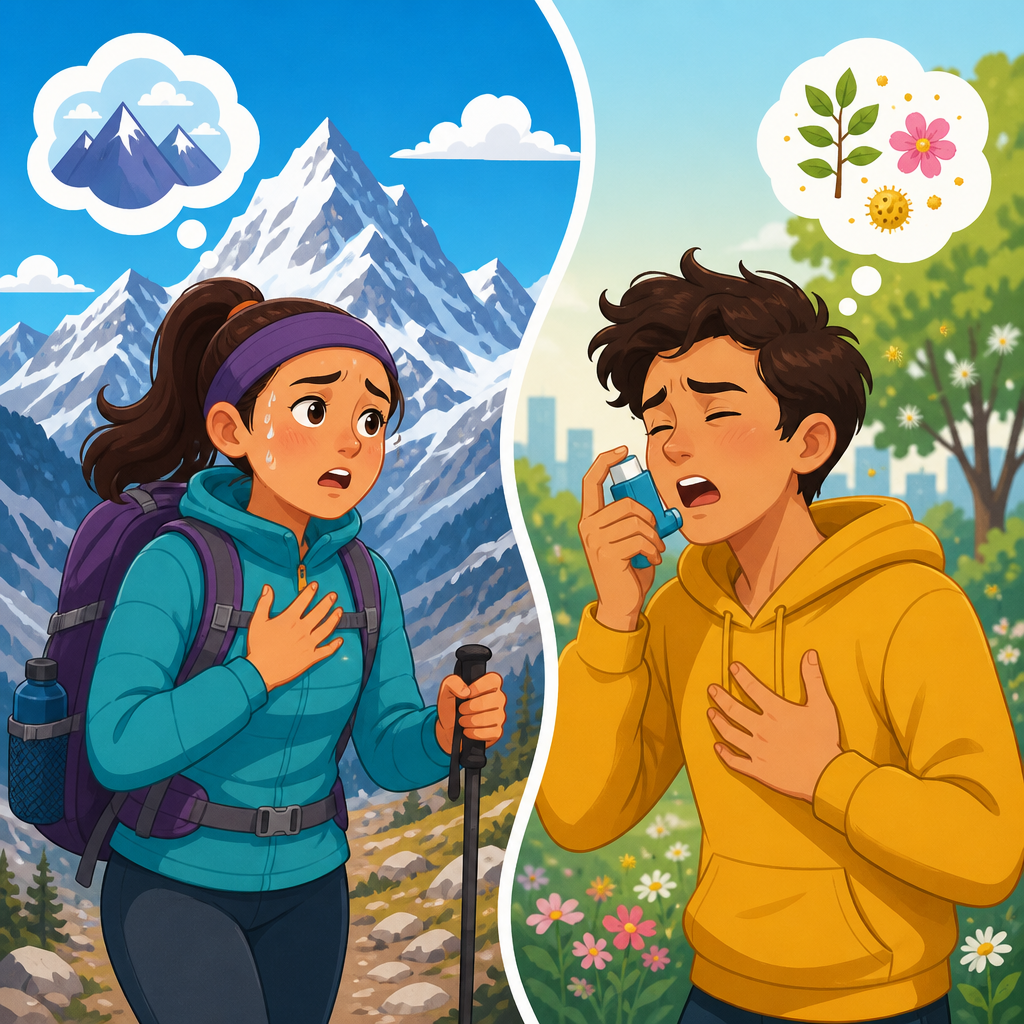
I have worked with travelers managing chronic respiratory disease, and the same question comes up before almost every mountain or beach trip: will my asthma improve, worsen, or simply behave differently? The honest answer is that both environments can be easier for some people and harder for others, depending on asthma phenotype, trigger profile, baseline control, and preparation. Someone with allergic asthma triggered by dust mites may breathe better in a dry alpine setting. Another person with exercise-induced bronchoconstriction may struggle in cold, thin mountain air. A traveler whose asthma flares in moldy, stormy weather may find humidity difficult, while someone irritated by dry air may cough less near the ocean.
This topic matters because travel introduces compressed decisions. Medication access may be limited, local emergency care may be unfamiliar, and a manageable flare at home can become serious when combined with hiking, jet lag, viral exposure, or poor sleep. It also matters because people often confuse comfort with safety. Feeling less congested in a dry climate does not mean oxygen demand at altitude is irrelevant. Likewise, warm moist air may feel soothing while hidden triggers, including mold spores and ozone, quietly increase risk. A useful travel with medical conditions plan therefore looks beyond weather alone and includes inhaler technique, trigger mapping, fitness limits, and contingency planning.
As a hub article for travel with medical conditions, this guide explains what tends to change in asthma at altitude versus asthma in humidity, who may benefit or struggle in each setting, how to prepare before departure, and when to seek medical advice. It is written to answer the practical questions travelers ask directly: Does altitude make asthma worse? Can humidity trigger attacks? Is mountain air cleaner? Does sea air help? What should go in a travel asthma kit? Clear answers matter because asthma control depends less on guesswork and more on matching the environment to the person.
How altitude changes asthma symptoms and risk
Altitude affects asthma through lower barometric pressure, lower inspired oxygen pressure, colder air, and often drier air. Importantly, altitude itself does not automatically worsen asthma inflammation. In fact, many people report fewer symptoms in alpine regions because there may be fewer dust mites, lower pollen counts at certain elevations and seasons, and sometimes less urban pollution. Dust mites struggle in cold, dry, high environments, which is one reason some allergic patients feel better in mountain climates.
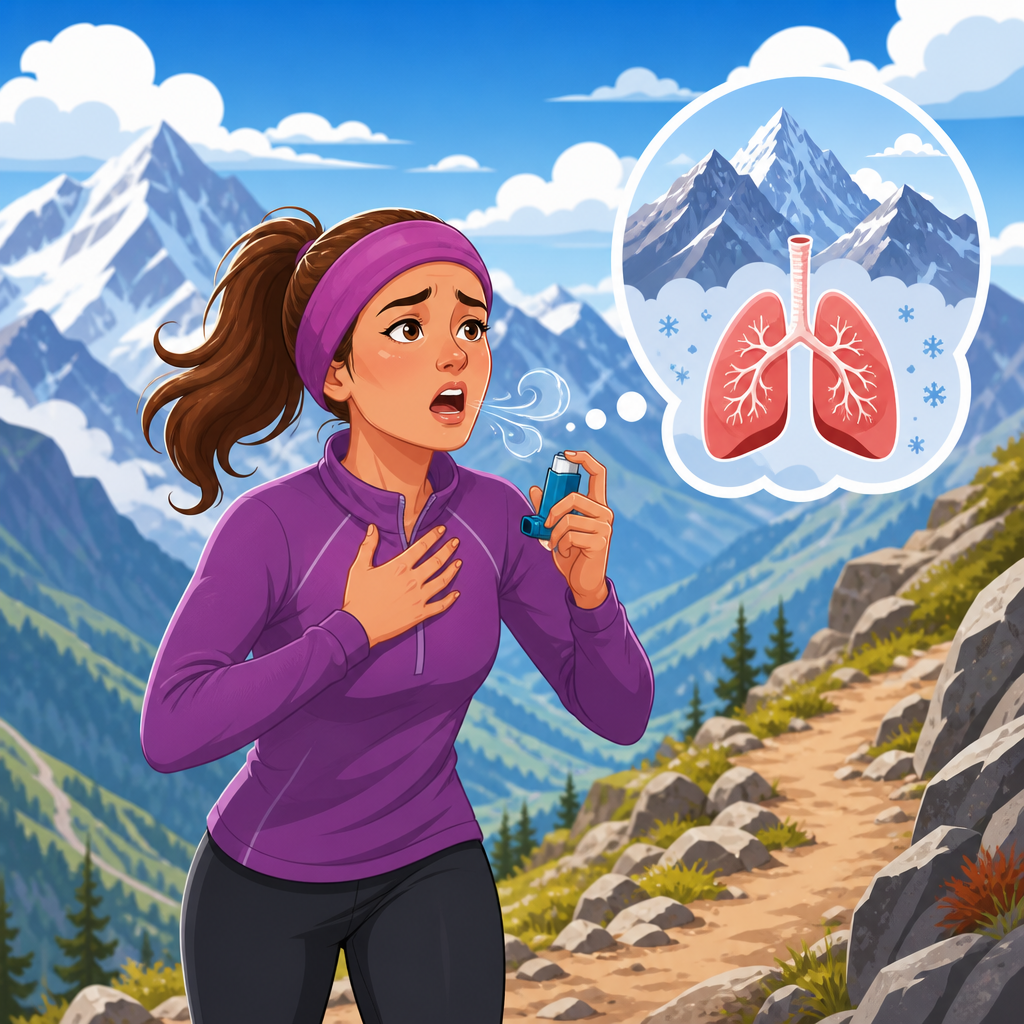
That said, the most common problems at altitude are not always classic wheezing. I often see travelers describe chest tightness, shortness of breath on exertion, nighttime cough, and faster fatigue. Some of this comes from asthma, and some comes from normal physiologic response to lower oxygen. The distinction matters. At 2,500 to 3,000 meters, even healthy people breathe faster and may feel winded during exercise. A person with asthma can misread this as poor control or, just as risky, dismiss genuine bronchospasm as “just the altitude.”
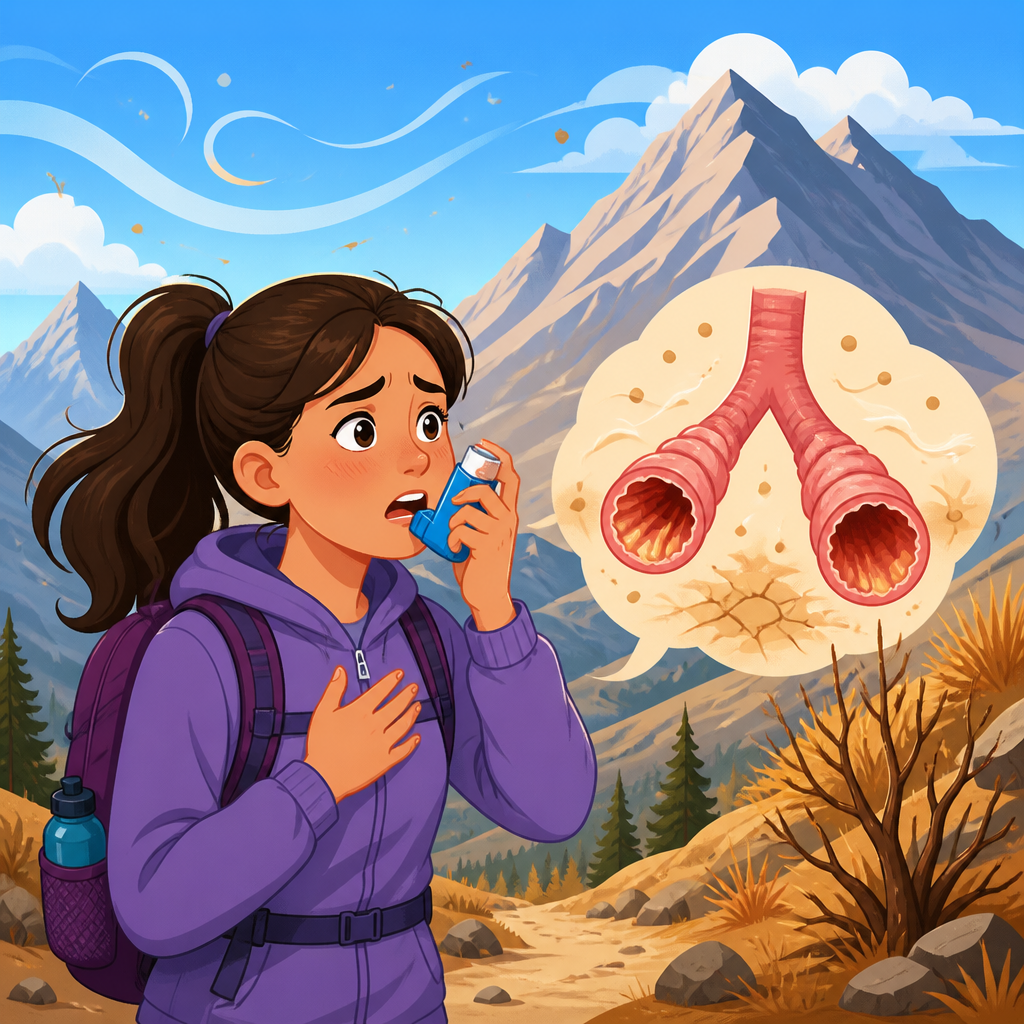
Cold dry air is a major issue because it increases airway water loss and can trigger bronchoconstriction, especially during exercise. Ski resorts are a classic example. People who are fine walking around a mountain town may still flare while skiing, snowshoeing, or climbing because they are ventilating large volumes of cold air quickly. If you have exercise-induced bronchoconstriction, pre-exercise reliever use as prescribed and a proper warm-up are often more important than the elevation number alone.
Altitude also changes logistics. Rescue inhalers can empty faster with repeated use during active travel, and carrying medication in a jacket rather than an exposed backpack helps in freezing conditions. Nebulizer-dependent travelers need power planning. Those with severe asthma, recent oral steroid use, or a flare in the prior month should discuss destination altitude with their clinician before booking physically demanding itineraries.
How humidity changes asthma symptoms and risk
Humidity affects asthma differently. High humidity does not reduce oxygen the way altitude does, but it can make air feel heavier and breathing feel more laborious, especially during exercise or sleep. Warm humid air may seem easier on the throat than cold dry air, yet very humid environments can worsen asthma by supporting mold growth, increasing dust mite survival, and trapping pollutants close to the ground. Thunderstorms can also rupture pollen grains into smaller particles that reach deeper into the airways, a well-described cause of sudden community-wide asthma surges.
In day-to-day travel, humidity often creates a “trigger stacking” problem. The moisture itself is not always the direct cause; instead, it amplifies exposure to allergens and irritants. Beach condos with poor ventilation, tropical hotels with visible mildew around vents, cruise cabins with stale air, and rainy destinations with damp bedding are frequent examples. Travelers may blame the climate broadly when the real problem is indoor environmental control.
Humidity also affects sweat rate, heat tolerance, and perceived breathlessness. When sweat evaporates poorly, the body struggles to cool itself, the heart works harder, and people can feel tight-chested with minimal exertion. For asthmatics, this can combine with deconditioning or obesity and create symptoms that resemble asthma flare-ups. Careful self-monitoring helps separate airway symptoms from heat stress, though the two can occur together.
One nuance many travelers miss is that sea air is not inherently therapeutic. Some people feel better near the coast because of fewer urban particulates or because vacation reduces stress. Others react to moldy lodging, salt aerosols, strong sunscreen fragrances, or outdoor smoke from grills and generators. Humidity can be comfortable for one person and destabilizing for another, depending on what truly drives their asthma.
Altitude versus humidity: what tends to change most
The simplest comparison is this: altitude tends to challenge oxygen delivery and cold-air tolerance, while humidity tends to amplify allergen, mold, and heat-related burdens. Asthma control can shift in either setting, but the pattern usually differs.
| Factor | Altitude | Humidity |
|---|---|---|
| Airway trigger pattern | Cold, dry air and exertion commonly provoke bronchoconstriction | Mold, dust mites, pollution, and storm-related pollen often increase symptoms |
| Breathlessness cause | Asthma plus lower oxygen pressure during activity | Asthma plus heat stress and reduced comfort during exertion |
| Allergen exposure | Often lower for dust mites at higher elevations | Often higher indoors when dampness is present |
| Exercise effect | Shorter tolerance, especially in cold weather sports | Reduced stamina in hot, sticky climates |
| Typical traveler mistake | Ignoring acclimatization and overexerting early | Overlooking indoor mold and poor ventilation |
Real-world examples make this clearer. A patient with dust mite allergy may sleep better in a dry mountain lodge than in a tropical rental with carpeting and closed windows. Another traveler with exercise-induced symptoms may do poorly on a high-elevation hiking trip but fine at a humid seaside town if their lodging is clean and air-conditioned. The destination label matters less than the trigger mix.
Medication response usually does not change dramatically between climates, but medication need often does. At altitude, reliever use may rise during the first days because of exertion and cold exposure. In humidity, preventer adherence becomes especially important if mold or allergens are involved. Either way, sudden increases in rescue inhaler use are a warning sign, not a normal part of vacation.
Who may do better in each environment
Travelers with allergic asthma driven mainly by dust mites may do better at altitude, particularly in cool dry regions above the typical mite survival range. Some studies and clinical observations support lower mite burden in high alpine environments. People whose symptoms worsen in urban smog may also benefit if the mountain destination truly has cleaner air. However, alpine wildfire smoke can reverse that advantage quickly, so air quality forecasts matter.
Travelers who struggle most with cold air, vigorous exercise, or unstable asthma may find altitude harder. The risk rises further if the itinerary includes skiing, mountaineering, rapid ascent, or sleeping at high elevation immediately after arrival. Children can also have trouble describing whether they feel breathless from play, altitude, or bronchospasm, so parents need a conservative plan.
Humidity may suit people whose airways are irritated by dryness, especially if the environment is stable, well ventilated, and free of mold. But travelers with mold sensitivity, chronic sinus issues, dust mite allergy, or prior flares in damp buildings often do worse in humid regions. If asthma and allergic rhinitis travel together, moisture-related indoor exposures are a common reason.
People with overlapping conditions need extra caution. Asthma combined with chronic obstructive pulmonary disease, sleep apnea, obesity, anxiety, heart disease, or anemia can complicate symptoms in both settings. At altitude, lower oxygen can expose limitations quickly. In humidity, heat can magnify cardiovascular strain. This is why travel with medical conditions planning should consider the whole person, not just the inhaler prescription.
How to prepare for travel with asthma and other chronic conditions
The best travel preparation starts two to six weeks before departure. Confirm that asthma is controlled, review inhaler technique, refill all medications, and carry more than you expect to need. I advise patients to pack controller and rescue inhalers in separate bags, keep spacers accessible, and bring a written asthma action plan. If you use biologics, oral steroids, or home peak flow monitoring, your travel plan should be individualized.
Check the destination’s altitude, typical temperature range, humidity, pollen season, wildfire risk, and local air quality patterns. Do not stop at the city average if your trip includes mountains, diving boats, rural lodges, or day hikes. A beach vacation can involve humid nights without air-conditioning. A “mountain town” may sit low while the excursion reaches 3,500 meters.
For altitude trips, build in acclimatization time, limit hard exertion for the first twenty-four to forty-eight hours, hydrate normally, and cover your mouth and nose in cold air with a buff or scarf to warm inspired air. For humid trips, prioritize lodging with clean filtration or reliable air-conditioning, ask about visible mold and dehumidification, and avoid rooms with musty odor. If thunderstorms coincide with high pollen periods, move strenuous outdoor activity indoors when possible.
Travelers with severe asthma should identify nearby urgent care and hospital options before arrival. International travelers should verify insurance coverage for exacerbations, oxygen, and evacuation. For those managing multiple chronic conditions, organize medications in original containers, keep a condition list on your phone, and note interactions that matter during illness, such as beta-blockers masking symptoms or sedatives worsening nighttime breathing.
When to get medical advice and when symptoms are urgent
Seek pre-travel medical advice if asthma has been unstable within the last month, you have needed oral steroids recently, you have been hospitalized in the past year, or you are planning rapid ascent above 2,500 meters. Medical review is also wise if your symptoms overlap with heart disease, prior altitude illness, or unexplained exercise limitation. Peak flow zones and an action plan provide objective guidance when unfamiliar conditions make symptom interpretation harder.
Urgent symptoms during travel include worsening wheeze, persistent chest tightness, difficulty speaking full sentences, blue lips, unusually fast breathing, drowsiness, poor response to a rescue inhaler, or falling peak flow if you monitor it. At altitude, severe headache, vomiting, confusion, or ataxia suggest altitude illness rather than asthma alone and require prompt evaluation. In humidity, fever, productive cough, and chest pain raise concern for infection or another cause.
The core takeaway is straightforward. Asthma at altitude usually changes because of cold, dry air, exertion, and lower oxygen pressure, while asthma in humidity usually changes because moisture amplifies allergens, mold, heat stress, and pollution effects. Neither environment is universally good or bad. The better choice depends on your specific triggers, baseline control, and trip design. If you are planning travel with medical conditions, use this hub as your starting point, review your action plan, and speak with your clinician before high-risk travel so you can enjoy the destination without gambling on your breathing.
Frequently Asked Questions
How can high altitude change asthma symptoms compared with humid climates?
Altitude and humidity influence asthma in different ways, so people often notice different symptom patterns in each setting. At higher altitude, usually above about 1,500 meters, the air becomes thinner, barometric pressure drops, and less oxygen is available with each breath. Many people also encounter cooler, drier air at elevation. That dry air can irritate sensitive airways and may trigger coughing, chest tightness, or shortness of breath, especially during exercise. For some travelers, the reduced oxygen at altitude can make normal breathlessness feel more intense, which can be confusing because it may resemble an asthma flare even when airway narrowing is not the only issue.
Humid environments tend to affect asthma through a different set of triggers. Warm, damp air can feel heavy and uncomfortable to breathe, but the bigger issue is often what comes with humidity rather than the moisture alone. High humidity can encourage mold growth, increase dust mite exposure, and worsen air quality by trapping pollutants or contributing to ozone formation in some regions. These factors can inflame the airways and make wheezing, coughing, mucus production, and nighttime symptoms more likely. In short, altitude often changes asthma through dry air, exertion, and lower oxygen availability, while humidity more often changes asthma through allergen exposure, heat stress, and air pollution effects.
Is asthma usually better or worse at high altitude?
There is no single answer, because asthma at altitude can improve for some people and worsen for others depending on the triggers involved. Some individuals actually feel better in certain high-altitude settings because there may be fewer common allergens such as dust mites, and in some locations there is less urban pollution. If allergies are a major asthma driver, that change alone can make symptoms calmer. This is one reason some people report easier breathing after spending time in dry mountain climates.
At the same time, altitude can create new challenges. Cold, dry air can provoke airway irritation, and physical activity like hiking, climbing stairs, or skiing may feel much harder because the body is working with less available oxygen. People who already have exercise-induced symptoms may notice more coughing or tightness with exertion. Also, it can be difficult to tell the difference between asthma symptoms and normal altitude-related shortness of breath, especially in the first day or two after arrival. For that reason, altitude should not automatically be considered good or bad for asthma. A person whose asthma is allergy-driven may improve, while someone sensitive to cold air, dry air, or exercise may need extra precautions. The safest approach is to assume symptoms could change, monitor closely, and travel with an asthma action plan.
Why does high humidity sometimes make asthma feel worse?
Humidity can worsen asthma because it changes both how the air feels and what is suspended in it. Very humid air can feel harder to move in and out, especially during hot weather, and that sensation may increase awareness of breathing discomfort. More importantly, moisture supports common asthma triggers. Mold thrives in damp indoor and outdoor environments, and dust mites do well in humid homes, hotels, and coastal regions. If a person is allergic to either of these, airway inflammation can build over hours or days and lead to coughing, wheezing, congestion, and chest tightness.
Humid weather can also interact with pollution and seasonal irritants. In some areas, humid conditions can coincide with high pollen counts, poor ventilation indoors, or air pollution that lingers close to the ground. Thunderstorms in humid seasons may also scatter fine allergen particles that are easier to inhale deep into the lungs, which can trigger severe symptoms in sensitive people. So while humidity itself is not always the sole cause, it often creates the conditions that make asthma more active. People who know they react badly to damp environments should pay close attention to indoor air quality, use air conditioning or dehumidification when possible, and watch for early signs of worsening control.
How can travelers prepare for asthma when going to the mountains or to a hot, humid destination?
Preparation matters because asthma triggers differ by environment, and a plan that works at home may need adjustments during travel. Before a trip to high altitude, it helps to review your asthma control with a clinician, make sure rescue and controller medicines are up to date, and confirm proper inhaler technique. Travelers should carry medications in their hand luggage, bring a spacer if they use one, and keep a written asthma action plan easily accessible. If altitude is the concern, gradual ascent is often better than rushing upward, because it gives the body more time to adapt. Limiting intense exercise during the first day or two can reduce confusion between altitude breathlessness and asthma symptoms.
For hot, humid destinations, the focus shifts toward trigger reduction. Choose lodging with good ventilation or air conditioning if possible, since cooler and drier indoor air may reduce mold and dust mite exposure. Keep inhalers protected from heat, avoid heavy outdoor activity during the hottest and most polluted parts of the day, and rinse off or change clothes after high-pollen or outdoor exposure. In both settings, monitor symptoms early rather than waiting for a severe flare. If you need your reliever more often than usual, wake at night with symptoms, or notice decreasing tolerance for walking or climbing stairs, those are signs to slow down and reassess. Good planning does not eliminate all risk, but it makes asthma changes during travel much easier to manage.
How can someone tell whether breathing trouble is from asthma, altitude effects, or humid-weather stress?
This can be tricky because the symptoms overlap, but the pattern often gives useful clues. Asthma more commonly causes wheezing, coughing, chest tightness, and a clear response to a rescue inhaler. If symptoms are brought on by known triggers, such as exercise, cold air, mold, or allergens, asthma becomes more likely. A peak flow meter, if available, can also help some people compare symptoms with their usual readings. A drop from baseline may support that asthma is playing a role.
Altitude-related shortness of breath often shows up with exertion soon after arriving at elevation and may occur even without wheezing. People may simply feel winded faster than expected, especially when climbing or carrying luggage. In some cases, there may also be headache, poor sleep, lightheadedness, or fatigue, which point more toward altitude adjustment rather than asthma alone. In humid weather, breathing discomfort often comes with overheating, sweating, a sense of heavy air, or worsening symptoms in moldy or poorly ventilated places. Still, it is important not to guess when symptoms are significant. If breathing trouble is severe, rapidly worsening, associated with bluish lips, trouble speaking, unusual drowsiness, or poor response to a rescue inhaler, that needs urgent medical attention. When in doubt, treating possible asthma promptly and seeking evaluation is safer than assuming it is only the environment.