How much extra water do you really need at altitude? More than you need at sea level, but not in the simplistic “just drink tons of water” way many travelers hear. Altitude changes how your body regulates fluid, breathing, thirst, and electrolytes, so smart hydration at elevation means understanding physiology, climate, effort, and symptoms instead of chasing arbitrary bottle targets. In mountain clinics and on trekking routes, I have seen two problems far more often than most people expect: people arrive mildly dehydrated because dry air and increased breathing quietly raise fluid loss, and others overcorrect with plain water and feel worse because sodium intake lags behind. A practical altitude hydration plan balances total fluid, electrolytes, pace, and observation.
At altitude, “extra water” usually means additional fluid needed above your normal baseline because higher elevation increases respiratory water loss, suppresses appetite, changes kidney handling of fluid during acclimatization, and often pairs with cold, wind, sun, and exercise. Electrolytes are minerals that help regulate nerve function, muscle contraction, and fluid balance, with sodium playing the leading role for most hikers, skiers, climbers, and travelers. The reason this matters is straightforward: hydration affects performance, sleep quality, headache frequency, recovery, and your ability to interpret altitude illness symptoms. Dehydration can mimic or worsen acute mountain sickness, while overhydration can dilute blood sodium and create dangerous confusion.
This hub article covers the core questions people ask about hydration and electrolytes at altitude: why fluid needs rise, how much extra water is realistic, when electrolytes matter, what signs to watch, and how to adjust for hiking, skiing, travel days, and sleeping at elevation. It also frames the subtopic clearly so readers can move deeper into related questions such as sports drink choice, sodium needs, caffeine, alcohol, winter hydration, and hydration strategies for multiday climbs. The central point is simple and reliable: most healthy adults do best by increasing fluids moderately, salting food appropriately, and using symptoms, urine color, body weight trends, and exertion level to fine-tune intake rather than forcing extreme amounts.
Why altitude increases fluid needs
The biggest hidden driver of altitude hydration is ventilation. As elevation rises, oxygen pressure drops, so you breathe faster and deeper to maintain oxygen delivery. Every exhalation carries water vapor, and in cold, dry mountain air those losses add up quickly. This is why people can dehydrate on a snowy ridge even when they barely sweat. In the first days at altitude, many people also experience altitude diuresis, a normal acclimatization response in which the kidneys excrete more fluid and bicarbonate as the body adjusts to lower oxygen. Add sun exposure, heavy clothing, backpacking effort, and reduced thirst perception, and the gap between how much fluid you lose and how much you feel like drinking grows wider.
Weather and terrain amplify the problem. High altitude environments tend to have lower humidity, stronger ultraviolet exposure, and more wind than lowland settings. Dry air increases evaporative loss from the skin and lungs. Wind accelerates that effect. Sun at elevation can feel deceptively cool while still pushing sweat rates higher during climbs or ski tours. I routinely tell clients that mountain dehydration often develops without the classic hot-weather cues. You may not feel drenched, but your breathing rate, layers, and long uphill efforts can still produce meaningful loss. That is why a person on a six-hour hike at 3,000 meters can finish markedly underhydrated despite cool temperatures and minimal obvious sweat.
Altitude also changes behavior in ways that reduce intake. Travel days are common triggers: long flights, airport coffee, limited bathroom breaks, and dry cabin air leave people starting their trip behind. Once they arrive, fatigue, nausea, and suppressed appetite can make eating and drinking less appealing. Some avoid fluid because they do not want to wake at night to urinate, especially in cold huts or tents. Others mistake thirst suppression for adequate hydration. These practical barriers matter as much as physiology. Good hydration at altitude is less about heroic drinking during a summit push and more about building steady intake from the day before ascent through every meal, rest break, and evening recovery window.
How much extra water do you actually need?
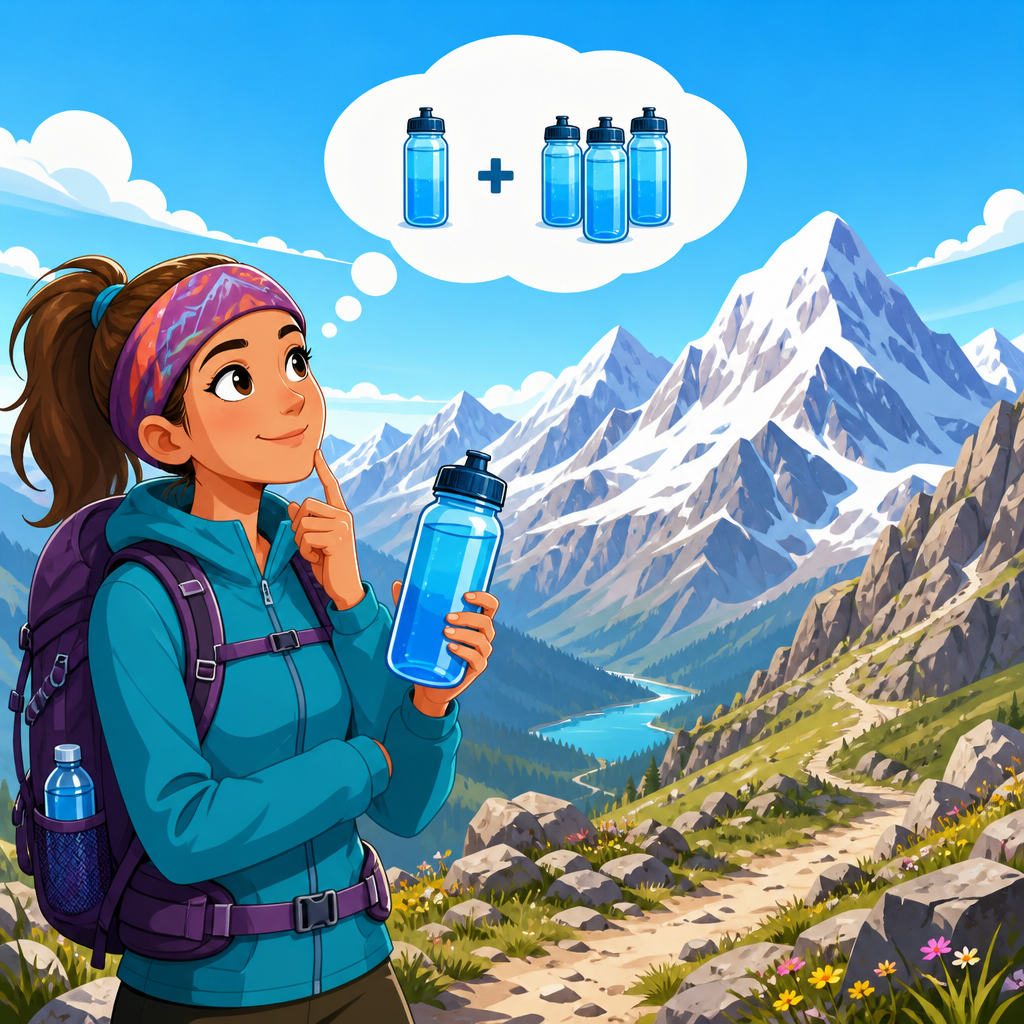
For most adults, a useful starting point at altitude is an extra 0.5 to 1.5 liters of fluid per day above normal sea-level intake, with the lower end fitting light activity around 1,500 to 2,500 meters and the higher end fitting long exertion, dry air, or elevations above roughly 3,000 meters. That is a starting estimate, not a rule. Someone who normally drinks 2.2 liters daily at sea level may feel and perform well at 2.7 to 3.2 liters during a moderately active day in a mountain town, while a trekker climbing for hours may need 4 to 5 liters total across the day. The right answer depends on workload, acclimatization status, body size, clothing, heat, and access to fluids.
A common mistake is searching for a single altitude formula. There is no universal conversion such as “one liter more for every 1,000 meters.” Real needs swing too widely. Instead, anchor to baseline, then adjust by context. At rest with minimal exercise, many people need only modest increases. During hard hiking, mountaineering, trail running, or backcountry skiing, sweat losses can rise dramatically even in cold weather. The American College of Sports Medicine and wilderness medicine guidance both support individualized replacement guided by body mass change, thirst, urine pattern, and environmental conditions. In practice, avoiding a body weight drop greater than about 2 percent during a strenuous day is a reasonable field marker, while recognizing some fluctuation from food and glycogen is normal.
| Situation | Typical total daily fluid target | Electrolyte emphasis | Practical note |
|---|---|---|---|
| Arrival day at 1,500–2,500 m | Baseline plus 0.5–1.0 L | Normal meals usually enough | Start early; flights often leave you behind |
| Light activity at 2,500–3,500 m | 3.0–3.5 L for many adults | Add sodium if eating lightly | Dry air and diuresis matter |
| Long hike or ski tour above 3,000 m | 3.5–5.0 L or more | Use electrolytes during and after effort | Cold does not eliminate sweat loss |
| Very hard effort, sun, heavy pack | Based on measured sweat loss | Sodium replacement becomes important | Weigh before and after training when possible |
If you want the clearest field answer to “how much extra water do you really need at altitude,” it is this: enough to keep urine pale yellow most of the day, preserve energy, limit excessive thirst, and avoid meaningful body weight loss during exertion, but not so much that urine stays fully clear all day or you feel bloated and sloshy. In my experience, that usually lands in the moderate range, not the extreme range. People who force six or seven liters of plain water on a casual acclimatization day often feel worse, dilute sodium intake, and spend the day urinating instead of recovering. Better hydration is measured and responsive, not maximal.
Why electrolytes matter, especially sodium
Electrolytes become more important as fluid volume rises, exercise duration lengthens, or food intake drops. Sodium is the key mineral because it helps maintain extracellular fluid balance and supports nerve and muscle function. At altitude, people often drink more while eating less, especially if nausea or travel disruption reduces appetite. That mismatch creates conditions where plain water replaces losses poorly. You do not need a sports drink with every bottle, but you do need enough sodium across the day to match sweat and maintain normal intake. For many healthy adults, regular meals, soups, bread, cheese, and salted snacks cover light days. During long efforts, using an electrolyte drink or sodium-containing mix is often the cleaner solution.
How much sodium is enough depends on sweat rate and individual sodium losses. Heavy sweaters and people who leave white salt marks on hats or shirts generally need more. During prolonged exercise, a drink providing roughly 300 to 700 milligrams of sodium per liter works well for many athletes, though some need more in very high sweat conditions. Products such as Skratch Labs, Precision Fuel & Hydration, Nuun, LMNT, Tailwind, and standard oral rehydration solutions all approach the problem differently. The best choice depends on whether you need mostly sodium, sodium plus carbohydrate, or a medical-style rehydration blend after illness. More is not automatically better; very salty mixes can reduce palatability and total intake.
Potassium, magnesium, and calcium matter too, but for altitude hydration they are secondary to sodium and total fluid. Muscle cramps are often blamed on magnesium deficiency when the bigger issues are pacing, conditioning, sodium losses, or inadequate overall intake. A balanced diet usually covers these minerals unless you are on a restrictive eating pattern or dealing with gastrointestinal losses. If diarrhea or vomiting enters the picture, oral rehydration solution is more appropriate than plain water because the glucose-sodium transport mechanism improves absorption. That is one reason established formulas from the World Health Organization and commercial equivalents remain so useful in travel medicine and expedition settings.
Hydration mistakes that cause problems at altitude
The first major mistake is treating headache as automatic dehydration. At altitude, headache can reflect normal acclimatization, acute mountain sickness, poor sleep, alcohol, underfueling, or dehydration. If you assume every headache means “drink more water,” you can miss the real issue. Acute mountain sickness usually includes headache plus symptoms such as nausea, fatigue, dizziness, or poor sleep after ascent. The correct response may be rest, slower ascent, carbohydrate intake, analgesics, or descent if symptoms progress, not endless water. Hydration helps, but it is not a cure for altitude illness. This distinction matters because delayed recognition of worsening altitude symptoms can become dangerous.
The second major mistake is overhydration. Exercise-associated hyponatremia, a low blood sodium state often caused by excessive intake of hypotonic fluids, is less common than routine dehydration but potentially far more serious. Symptoms can overlap with altitude problems: headache, nausea, vomiting, confusion, swelling, and in severe cases seizures. The risk rises when people drink beyond thirst for many hours, use only plain water, move slowly, and consume little sodium. I have seen this pattern in charity trekkers, first-time marathoners at elevation, and hikers following outdated “stay ahead of thirst” advice too aggressively. Sensible drinking, electrolyte support during long efforts, and avoidance of rigid overconsumption are the best safeguards.
A third mistake is ignoring fuel. Carbohydrates help maintain performance and support fluid absorption during exercise. Someone climbing for six hours on water alone often fades not because fluid was insufficient, but because sodium and carbohydrate intake were inadequate. A fourth mistake is postponing hydration until effort begins. If you start a climb after poor sleep, two coffees, and little breakfast, you are already behind. Finally, many people forget that winter altitude still demands hydration. Cold-induced diuresis, dry air, and reduced thirst can produce meaningful deficits during ski days and alpine starts, especially when frozen bottles limit access.
How to build a practical altitude hydration plan
Start the day before ascent by normalizing intake, not “loading” indiscriminately. Drink regularly, include sodium in meals, and limit alcohol, which can worsen sleep and encourage dehydration. On arrival, aim for steady sipping rather than chugging. At meals, favor foods that bring both fluid and sodium: soup, oats, yogurt, rice, fruit, salted potatoes, noodles, or broth-based dishes. During activity, carry enough fluid to avoid rationing. For many people, that means 400 to 800 milliliters per hour depending on pace and conditions, with higher rates during hard effort or heat. Add electrolytes when the outing lasts several hours, sweat is substantial, or appetite is poor. If your stomach resists sweet drinks, alternate plain water and a sodium mix.
Use simple monitoring tools. Urine that is consistently dark yellow, low volume, or infrequent usually signals you need more fluid, while constantly clear urine can indicate overdoing it. Morning body weight trends are helpful on multiday trips; sudden large drops often reflect fluid deficit, though glycogen depletion also contributes. Pay attention to how you feel on climbs: unusual fatigue, dry mouth, rising heart rate for a familiar pace, and lightheadedness often show up before dramatic thirst. For teams, designate hydration checks at breaks because people under stress routinely forget. If water treatment is required, factor the time into your plan; many hikers dehydrate because they assume they will refill later and then skip the stop.
Special situations deserve adjustment. Caffeine in moderate doses is usually acceptable; habitual users do not need to avoid coffee entirely, but replacing meals with coffee is a bad trade. Alcohol is best minimized for the first nights at altitude because it can impair ventilation during sleep and compound fluid loss. Children, older adults, and people using diuretics need closer attention because thirst cues and kidney responses may differ. Anyone with heart failure, kidney disease, liver disease, or a history of low sodium should follow individualized medical advice rather than general trekking rules. The most effective habit is boring and consistent: drink to a plan, eat enough salt and calories, reassess every few hours, and adjust before symptoms escalate.
Hydration and electrolytes at altitude work best when treated as a system, not a single number. Most people need a moderate increase in fluid, usually around 0.5 to 1.5 extra liters per day at altitude before exercise losses are counted, and substantially more on big effort days. The exact amount depends on elevation, breathing rate, weather, sweat, clothing, food intake, and acclimatization. Sodium matters because higher fluid intake, reduced appetite, and long exercise can leave plain water incomplete. That is why the best strategy is neither minimal drinking nor aggressive water loading, but a balanced plan built around baseline needs, activity, and regular reassessment.
The key signs of success are practical: stable energy, pale yellow urine, manageable thirst, preserved performance, and no progressive altitude symptoms. The key warnings are equally clear: dark concentrated urine, unusual fatigue, dizziness, worsening headache with nausea, bloating from overdrinking, or confusion. If symptoms suggest altitude illness, do not assume water alone will fix it; rest, stop ascending, and descend if needed. Use this hub as your foundation for every hydration and electrolyte question in mountain travel, then apply the basics on your next trip: start hydrated, drink steadily, replace sodium when effort rises, and let observation guide the details.
Frequently Asked Questions
How much extra water do you actually need at altitude?
There is no single “add this many liters” rule that works for everyone, because altitude changes fluid needs through several overlapping mechanisms. You lose more water through breathing because the air is typically colder, drier, and thinner, and your breathing rate often increases as your body adjusts to lower oxygen levels. At the same time, travel days at altitude can involve sun exposure, wind, layers of clothing, and long periods of walking uphill, all of which can increase sweat and respiratory water loss. That said, the answer is not to force huge amounts of water. In practice, many people need a modest increase over their usual intake, not endless bottle refills.
A practical approach is to start by drinking regularly, increasing intake according to conditions and effort, and using feedback from your body. If you are at elevation but mostly resting, your needs may only be somewhat higher than at sea level. If you are hiking hard in dry air, carrying a pack, or spending hours in the sun, your needs can rise substantially. The key is to match intake to output. Aim for steady hydration across the day rather than large chugs all at once, and pay attention to thirst, urine color, frequency of urination, mouth dryness, headache patterns, and how you feel during exertion. Pale yellow urine and normal energy are better guides than an arbitrary “drink as much as possible” rule.
Why is “just drink tons of water” bad advice in the mountains?
Because both underhydration and overhydration are common at altitude, and too much water can be just as problematic as too little. Many travelers hear that altitude causes dehydration, then interpret that to mean they should drink constantly whether they are thirsty or not. The problem is that flooding the body with plain water can dilute sodium levels, especially during long hikes or endurance-style days when electrolytes are also being lost. This can contribute to hyponatremia, a potentially serious condition that may cause nausea, headache, swelling, confusion, weakness, and in severe cases dangerous neurological symptoms.
Overdrinking also creates false reassurance. People may think they are “protected” from altitude illness because they are consuming large volumes of water, when hydration alone does not prevent acute mountain sickness. Good hydration supports acclimatization and physical performance, but it does not replace gradual ascent, adequate rest, appropriate pacing, sufficient calories, and attention to warning signs. The more accurate message is to hydrate intelligently: drink enough to stay comfortably hydrated, replace some electrolytes during prolonged exertion, avoid compulsive water loading, and respond to symptoms in context rather than assuming every headache means “drink more.”
How can you tell whether you are dehydrated, overhydrated, or dealing with altitude symptoms?
This is one of the most important distinctions to make, because the symptoms can overlap. Dehydration at altitude often shows up as thirst, dry mouth, darker urine, reduced urine output, fatigue, lightheadedness, and sometimes a headache that improves after fluids, food, and rest. Overhydration may cause frequent clear urination, bloating, nausea, puffiness in the hands or face, and a washed-out or unusually tired feeling despite having drunk a lot. Meanwhile, altitude illness can include headache, nausea, poor appetite, dizziness, unusual fatigue, poor sleep, and reduced exercise tolerance. Those symptoms may occur even if hydration is adequate.
The best way to sort this out is to look at the full picture. If you have been urinating normally, drinking regularly, eating adequately, and still develop a persistent headache with nausea and worsening fatigue after gaining altitude, altitude illness belongs high on the list. If your urine is dark and infrequent, your lips are dry, and you feel better after steady rehydration and a snack, dehydration may be the larger issue. If you have been forcing water, your urine is consistently clear, and you feel nauseated, weak, or puffy, overhydration should be considered. Importantly, worsening headache, vomiting, confusion, difficulty walking straight, shortness of breath at rest, or chest symptoms are not “drink more water and wait” situations. Those can signal significant altitude-related illness and require prompt action.
Do you need electrolytes at altitude, or is plain water enough?
Plain water is useful, but it is not always the whole answer. At altitude, your body’s fluid regulation shifts, and on active days you may lose not only water but also sodium and other electrolytes through sweat. In addition, long trekking days often come with reduced appetite, which means some people replace fluid without adequately replacing salt and calories. That combination can increase the risk of feeling weak, headachy, crampy, or generally depleted. Electrolytes become more important the longer and harder the effort is, especially if you are hiking for hours, sweating noticeably, or drinking large volumes of water.
You do not necessarily need a sports drink all day long. For many people, a mixed strategy works best: drink water routinely, and include electrolytes through food, salty snacks, broths, oral rehydration products, or an electrolyte mix during longer exertion. This is particularly helpful in dry, sunny, windy conditions or when altitude suppresses appetite. What matters most is balance. Too little sodium during heavy water intake can be a problem, but so can relying only on sweet drinks without enough actual food. If you are spending multiple days at elevation, maintaining normal meals, enough carbohydrates, and some salt often supports hydration better than obsessing over liters alone.
What is the smartest hydration strategy for hiking or traveling at altitude?
Think in terms of rhythm, not quotas. Start the day reasonably hydrated rather than trying to “preload” enormous amounts of water. Drink regularly in small to moderate amounts as you move, especially if the air is dry or you are breathing hard. Adjust upward for sun, wind, heavy exertion, high altitude, and long duration. Include food and some sodium, particularly on strenuous days. Monitor practical markers: thirst, urine color, energy level, headache pattern, appetite, and whether you are still able to urinate normally. This approach is more reliable than chasing a fixed target that ignores weather, pace, body size, and acclimatization status.
It also helps to remember what hydration can and cannot do. Good hydration supports circulation, comfort, and performance, but it does not cancel out the effects of ascending too fast. The smartest overall strategy combines sensible fluid intake with gradual ascent, rest days when needed, slower pacing, protection from sun and wind, adequate calories, and quick attention to symptoms that are worsening rather than improving. In other words, the best mountain hydration plan is not “drink tons of water.” It is “drink enough, replace what you are losing, and let your body’s signals guide you within the bigger picture of acclimatization and safety.”