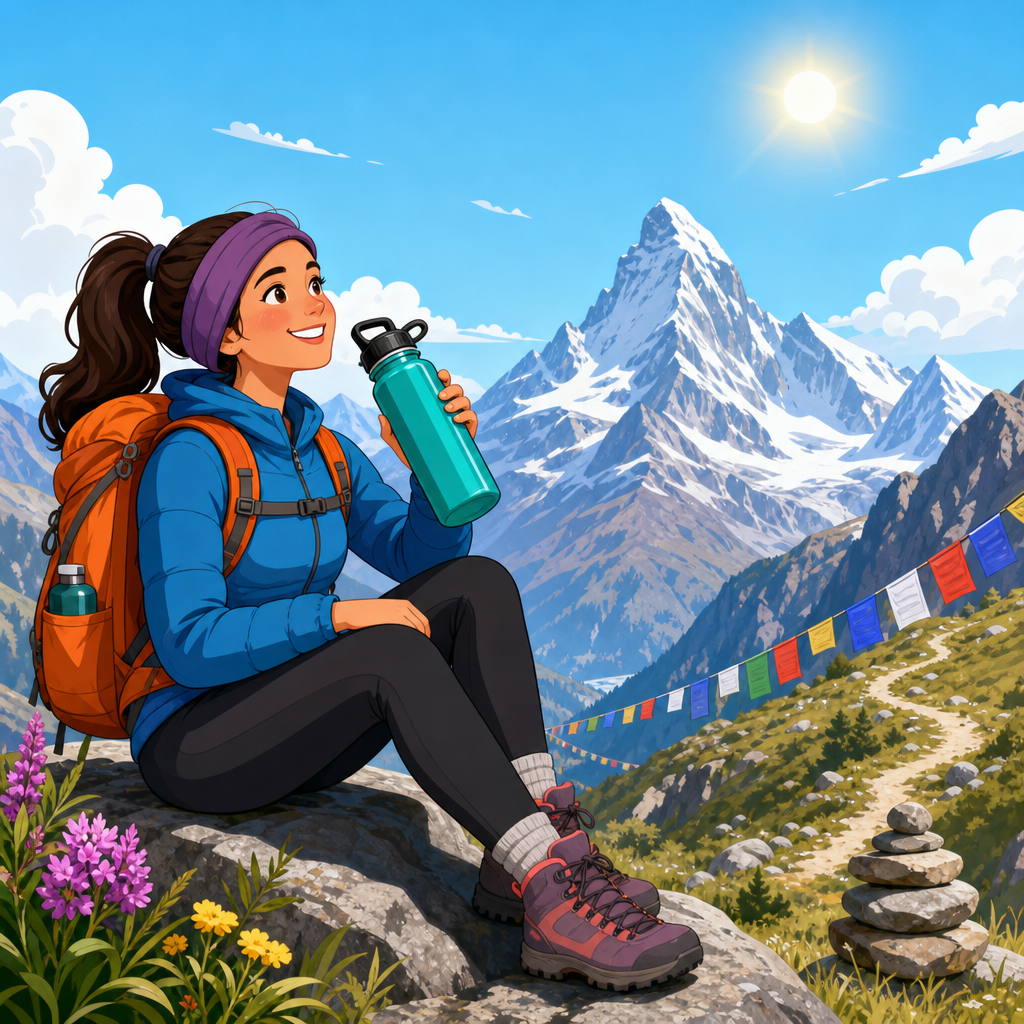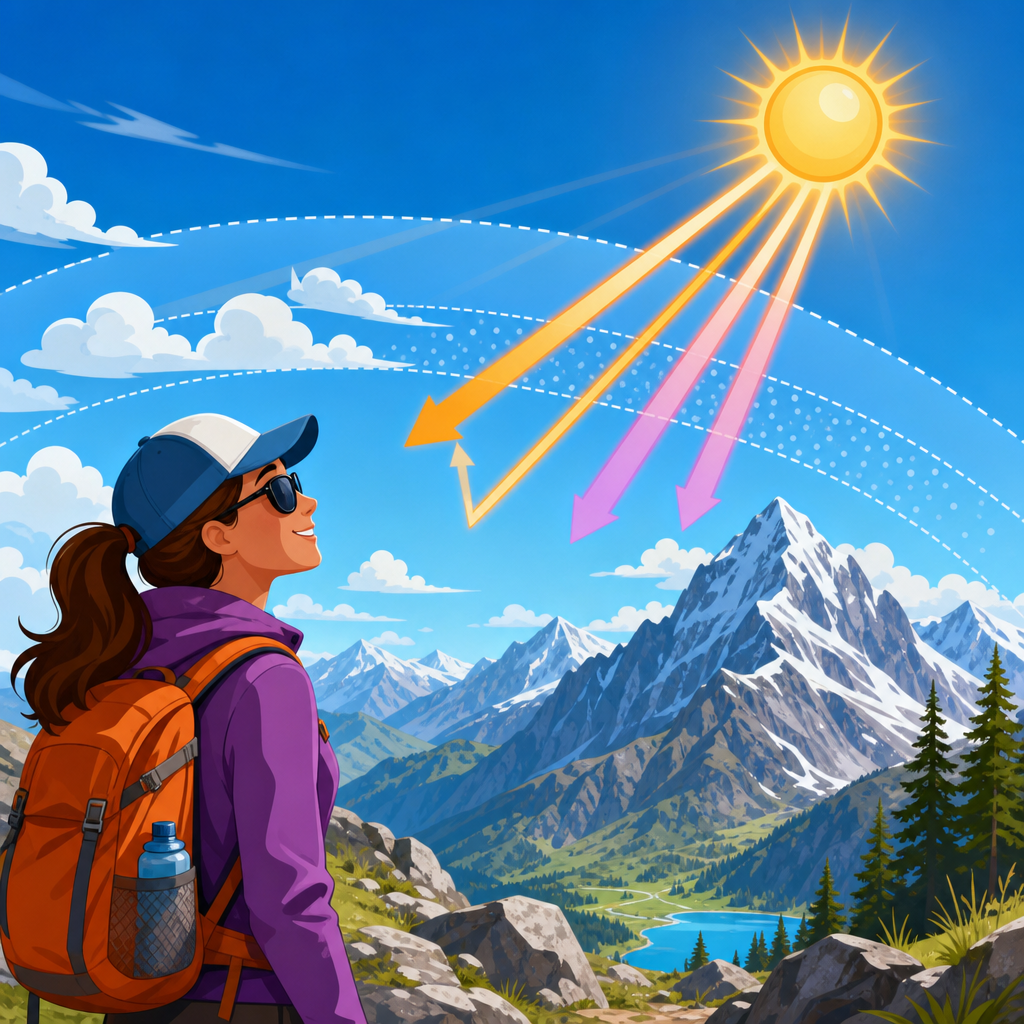
Ultraviolet exposure is stronger at altitude because the atmosphere gets thinner as elevation increases, leaving less air, ozone, water vapor, and pollution to absorb or scatter incoming solar radiation before it reaches your skin and eyes. For anyone building a practical understanding of sun protection and UV, this fact is foundational: altitude changes risk, but it does not act alone. Latitude, season, time of day, cloud cover, surface reflection, medications, skin type, and time spent outdoors all shape the dose you actually receive. I have worked on sun safety content for outdoor workers, skiers, and high-country travelers, and altitude is one of the most commonly misunderstood drivers of sunburn, photokeratitis, premature skin aging, and cumulative skin cancer risk. Many people assume cool air means weak sun. In reality, temperature and ultraviolet intensity are only loosely related. You can burn quickly on a cold mountain, especially when snow reflects radiation upward into areas people often miss with sunscreen, including under the chin, the ears, and inside the nostrils.
UV radiation is usually discussed in three bands. UVC is the shortest and most energetic, but under normal conditions it is absorbed by the upper atmosphere and does not reach the ground. UVB is the band most strongly linked to sunburn and direct DNA damage in the epidermis. UVA penetrates deeper into the skin, contributes heavily to tanning and photoaging, passes through many window types more readily than UVB, and remains relatively stable across seasons compared with UVB. Public health guidance often translates this complexity into the UV Index, a standardized scale designed to show the risk of overexposure from the sun at a given place and time. If you understand why altitude raises exposure, you can make better decisions about sunscreen, clothing, sunglasses, shade, and timing. That matters for hikers, climbers, drivers, children at high-elevation schools, construction crews, gardeners, and anyone who spends time in bright mountain environments.
What altitude does to ultraviolet radiation
Altitude increases UV exposure primarily by shortening the path sunlight travels through the atmosphere before it reaches you. At sea level, solar radiation passes through a denser column of air containing oxygen, ozone, aerosols, cloud droplets, and particulates that absorb and scatter portions of the ultraviolet spectrum. As you gain elevation, that protective filter becomes thinner. The result is a measurable increase in surface UV, especially UVB. A widely cited practical rule is that UV levels rise by roughly 10 to 12 percent for every 1,000 meters of elevation gain, though the exact increase varies with sun angle, local atmospheric conditions, snow cover, and ground reflectivity. In very clear mountain air, with low pollution and low humidity, the increase can feel even more severe than the average rule suggests.
The effect is not simply “being closer to the sun.” The distance difference between sea level and a mountain summit is trivial compared with the distance between Earth and the sun. What changes meaningfully is the amount of atmosphere available to attenuate ultraviolet radiation. Ozone absorbs strongly in the UVB and UVC ranges, while molecules and aerosols scatter shorter wavelengths efficiently. At altitude, reduced scattering can also make the visible environment look crisp and bright, which gives people a false sense that conditions are comfortable rather than hazardous. I have seen this repeatedly in ski areas and alpine trailheads: people prepare for cold and wind meticulously, then step into extreme UV without lip balm, wraparound eyewear, or broad-spectrum sunscreen.
Another important distinction is between direct and diffuse UV. Direct UV comes in a straight path from the sun. Diffuse UV has been scattered by the atmosphere and can reach you from multiple angles, including when you are under partial shade. Higher elevations can reduce some scattering while still delivering intense total exposure because the direct beam is stronger. This is why a hat alone is not enough in open snowfields or on pale rock. It lowers direct overhead exposure, but reflected and diffuse radiation still reach the face and eyes.
Why mountain environments amplify the risk
Altitude rarely acts alone. Mountain settings often combine several UV-intensifying factors at once. Snow is the most obvious amplifier. Fresh snow can reflect a very high proportion of ultraviolet radiation, which effectively exposes people from above and below. That reflected dose is why skiers and snowboarders often burn beneath the jawline, on the underside of the nose, and around the lower eyelids. Sand, light concrete, white roofing, and pale rock also reflect UV, though usually less than snow. Water can add glare and reflection near alpine lakes, while thin cloud can be deceptive, reducing visible brightness more than UV intensity.
Low humidity and reduced haze matter too. In many high-altitude regions, cleaner air means less absorption and scattering by aerosols. After storms, when the sky turns deep blue and the air feels exceptionally clear, ultraviolet conditions can be unexpectedly severe. Wind and cool temperatures then mask the warning sensation people often rely on. Because skin feels cool, they assume they are safe and stay out longer. That is exactly how avoidable burns happen on summit days, spring ski weekends, and outdoor job sites in mountain towns.
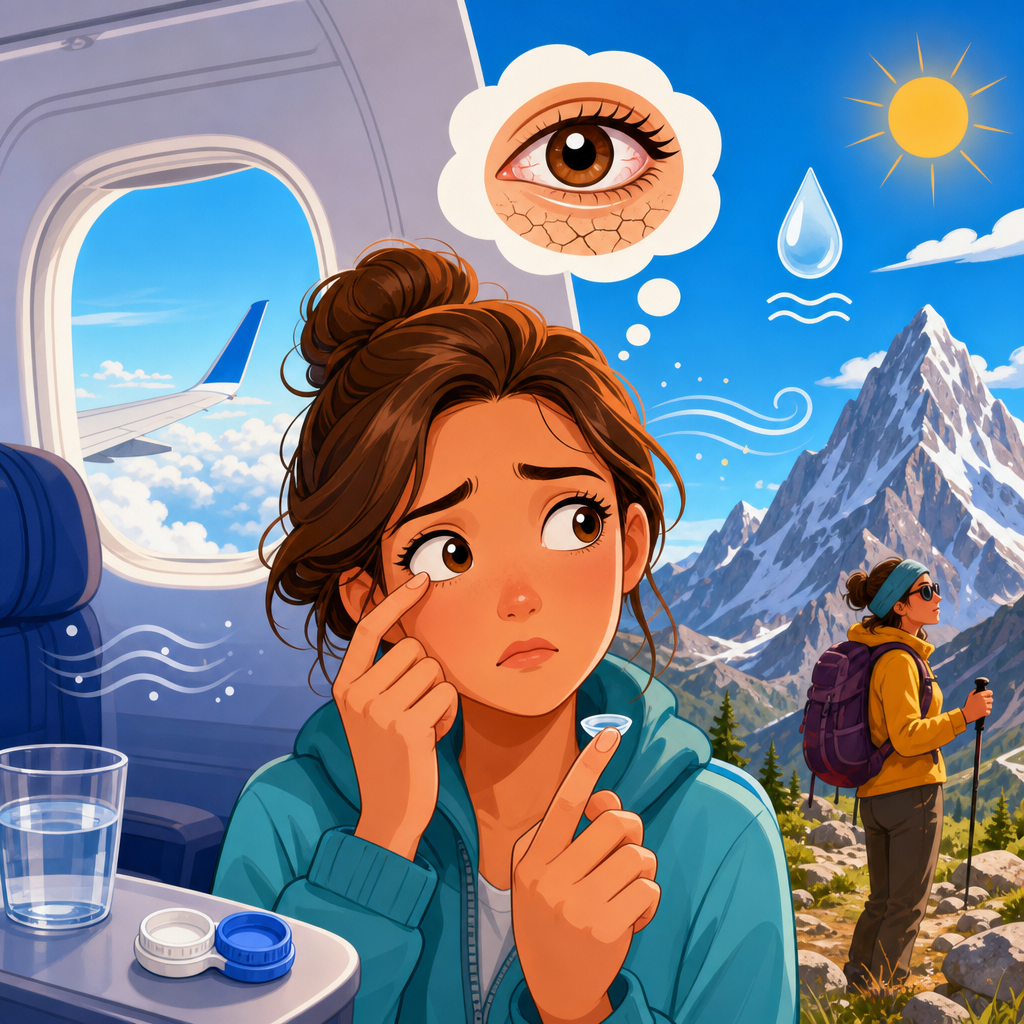
The eye hazard is equally important. Strong UV exposure can injure the cornea and conjunctiva, leading to photokeratitis, commonly called snow blindness. Symptoms typically include pain, tearing, gritty sensation, light sensitivity, blurred vision, and the feeling that sand is trapped in the eyes. It is effectively a sunburn of the eye’s surface and can develop after intense reflected exposure, especially without proper eyewear. Long-term ocular risks from cumulative ultraviolet exposure include cataracts, pterygium, and other degenerative changes. Good mountain sunglasses are not fashion accessories; they are protective equipment.
| Factor | How it changes UV exposure | Practical example |
|---|---|---|
| Higher elevation | Less atmosphere filters UV, especially UVB | A hiker at 3,000 meters can receive substantially more UV than at sea level on the same clear day |
| Snow cover | High reflectance adds exposure from below | Skiers burn under the chin and around the nostrils despite wearing helmets |
| Clear, dry air | Fewer aerosols and less water vapor reduce scattering and absorption | A cold bluebird day in the Rockies can produce intense UV without feeling hot |
| Midday sun | Shorter solar path through the atmosphere raises intensity | Exposure peaks around late morning to midafternoon |
| Cloud misconceptions | Some clouds reduce visible light more than UV | People skip sunscreen on bright overcast days and still burn |
How altitude interacts with time, season, latitude, and weather
The strongest ultraviolet exposure usually occurs when the sun is highest in the sky, typically around late morning through midafternoon, not just exactly at noon by the clock. Solar noon varies by location and daylight saving time, so checking the local UV Index gives a more reliable picture than guessing. At altitude, the midday peak becomes more consequential because the direct beam is less filtered. If you are planning outdoor work, sports, or family activities in the mountains, shifting long sessions earlier or later in the day is one of the simplest ways to reduce dose without sacrificing time outside.
Season changes matter because Earth’s tilt alters sun angle. Summer generally brings higher UVB in temperate regions, but altitude keeps exposure relevant year-round. Winter mountain UV can still be intense, especially with snow reflection. This surprises people who reserve sunscreen for beach weather. In ski country, spring can be particularly punishing: longer days, strong sun angles, and persistent snow cover produce a combination that routinely causes severe facial burns. Latitude matters as well. High-elevation locations closer to the equator often experience very high annual UV because the sun is more direct across more months of the year.
Clouds complicate the picture. Thick storm clouds usually reduce ultraviolet radiation, but broken cloud and thin cloud do not guarantee safety. Under certain conditions, scattered clouds can even enhance ground-level UV briefly by reflecting sunlight toward the surface from the sides of cloud edges. This is one reason people sometimes burn on partly cloudy hikes. Pollution can reduce some surface UV, but it is not a protective strategy and brings obvious health costs of its own. Depending on haze to save your skin is neither reliable nor wise.
What stronger altitude UV means for skin health
For skin, the most immediate consequence of stronger UV exposure at altitude is faster erythema, better known as sunburn. UVB is especially efficient at producing visible burning and direct DNA lesions, including cyclobutane pyrimidine dimers, which are central to photocarcinogenesis. Repeated sunburns, particularly in childhood and adolescence, are associated with increased melanoma risk later in life. Chronic cumulative exposure contributes to basal cell carcinoma, squamous cell carcinoma, actinic keratoses, dyspigmentation, rough texture, broken capillaries, and collagen degradation. In plain terms, mountain sun can damage both appearance and health, even when your skin never feels hot.
Risk is not identical for everyone. People with lighter skin phototypes generally burn more easily, but darker skin is not immune to UV injury, pigment disorders, photoaging, or skin cancer. Certain medications also raise photosensitivity, including doxycycline, thiazide diuretics, isotretinoin, some antifungals, and several anti-inflammatory drugs. Medical conditions such as lupus can increase UV sensitivity substantially. Post-procedure skin after peels, lasers, retinoid adjustment, or acne treatment is also more vulnerable. When I advise people traveling to altitude after cosmetic procedures, I tell them to treat UV avoidance as part of aftercare, not a lifestyle suggestion.
Another underappreciated point is cumulative exposure through routine living. Residents of high-altitude cities may not think of themselves as “outdoor people,” yet regular commuting, dog walking, school pickup, yard work, and winter driving can add up to a meaningful annual dose. UVA penetrates vehicle side windows more effectively than UVB, so mountain driving does not eliminate risk. Daily protection habits are often more valuable than occasional heroic efforts after a burn has already happened.
How to protect skin and eyes in high-altitude conditions
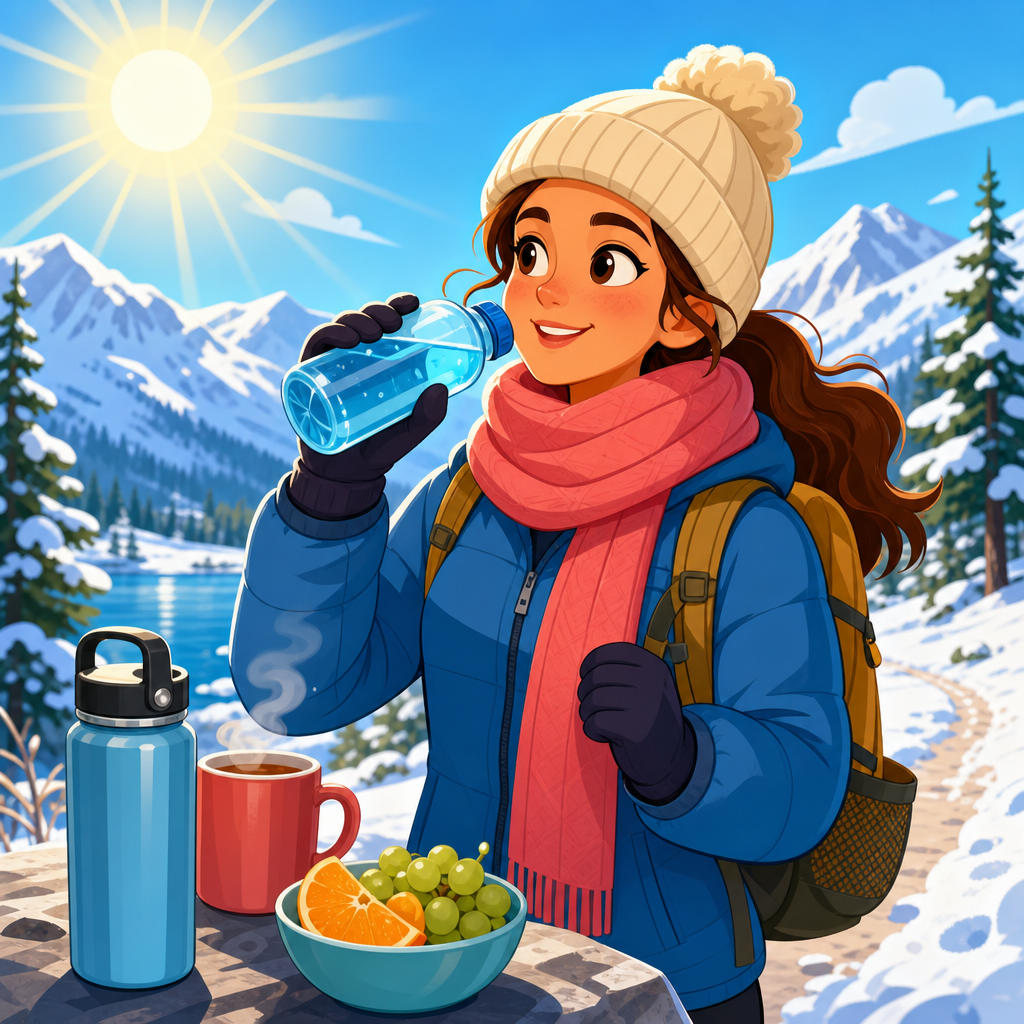
The best protection strategy at altitude uses layers, because no single measure is sufficient on its own. Start with broad-spectrum sunscreen rated SPF 30 or higher, and use SPF 50 when exposure is prolonged, reflective surfaces are present, or your skin is very fair or photosensitive. Broad-spectrum matters because you need strong UVA and UVB coverage, not just a high number on the label. Apply generously 15 minutes before going outdoors. Most adults need about one ounce, roughly a shot-glass amount, to cover the body properly. For the face alone, many dermatologists use the two-finger guideline as a practical minimum. Reapply every two hours, and sooner after heavy sweating, wiping, or toweling. Lip balm with SPF is essential in cold, dry, windy air.
Clothing often outperforms sunscreen in real-world mountain use because it does not sweat off and people do not forget to reapply it. Long sleeves, tightly woven fabrics, neck gaiters, broad-brimmed hats, and garments with an ultraviolet protection factor rating are highly effective. Darker colors and denser weaves usually protect better than thin, light knits. For the eyes, choose sunglasses that block 99 to 100 percent of UVA and UVB. Wraparound styles or goggles provide side protection and reduce reflected exposure. Lens darkness alone is not enough; UV filtration is the key specification. Children need the same standards as adults, because ocular and skin damage accumulate over time.
Behavior completes the system. Check the UV Index before heading out. Seek shade when practical, especially during peak hours. On snow, remember that tents, umbrellas, and hats reduce but do not eliminate reflected ultraviolet radiation. Pay special attention to commonly missed areas: ears, scalp part lines, eyelids if your product is safe for that area, the back of the neck, tops of feet, and backs of hands. If you use prescription retinoids, hydroxy acids, or photosensitizing medications, assume your margin for error is smaller. Prevention is far easier than treating a severe burn or an eye injury after the fact.
Common myths about altitude and sun exposure
The most persistent myth is that cool weather protects you from ultraviolet radiation. It does not. Air temperature is driven by local weather patterns, altitude, wind, and season, while UV depends mainly on solar angle, atmospheric filtering, and reflection. Another myth is that clouds block all harmful rays. They do not. Many people also believe a base tan prevents damage. In truth, tanning is evidence of injury and provides only limited protection, nowhere near what proper sunscreen or clothing can deliver. Finally, some assume darker lenses or expensive frames guarantee safe eyewear. Unless the lenses are labeled for full UV protection, they may simply make pupils dilate while still allowing harmful radiation through.
If you live, work, or travel at elevation, treat altitude as a multiplier of everyday UV risk. Build a routine around sunscreen, protective clothing, quality eyewear, shade, and smart timing, then apply it consistently in every season. That simple system protects skin appearance, preserves eye health, reduces the chance of painful burns, and lowers long-term cancer risk. Use this hub as your starting point for sun protection and UV decisions, and make your next outdoor day safer before you step outside.
Frequently Asked Questions
Why is UV exposure stronger at higher altitude?
UV exposure is stronger at higher altitude because there is less atmosphere between you and the sun. As elevation increases, the air becomes thinner, which means there are fewer molecules, less water vapor, less airborne pollution, and less ozone available to absorb, filter, or scatter ultraviolet radiation before it reaches your skin and eyes. At lower elevations, more of that incoming solar energy is weakened on its way down. In the mountains or on high plateaus, more of it gets through.
This is why people often burn faster while hiking, skiing, climbing, or spending long periods outdoors in elevated areas, even when temperatures feel cool or the sunlight seems less intense. The danger is easy to underestimate because UV exposure is not the same thing as heat. A breezy alpine day may feel comfortable, but the reduced atmospheric shielding can still allow stronger UV to reach you. That makes altitude an important risk factor, especially when combined with midday sun, clear skies, long outdoor exposure, and reflective surfaces like snow or light-colored rock.
How much does UV increase with altitude?
A widely used rule of thumb is that UV levels rise by about 4% to 10% for every 1,000 meters, or roughly 3,300 feet, of elevation gain. The exact increase varies because altitude is only one part of the UV equation. Local ozone levels, cloud cover, season, latitude, time of day, and surface reflection all influence how much UV actually reaches you on a given day. In some mountain environments, especially under clear skies and with reflective snow, the effective UV exposure can feel dramatically stronger than the baseline estimate suggests.
That is why two places at the same elevation can still produce different UV risk. For example, a high-altitude location closer to the equator or visited during summer around solar noon will usually have stronger UV than a similarly elevated place farther from the equator in winter. The practical takeaway is simple: use altitude as a warning sign, not as the only measure. If you are going higher, assume you need more protection and shorter unprotected exposure times, even if the temperature is mild or cool.
Does altitude matter more than time of day, season, or latitude?
Altitude matters a great deal, but it does not replace the other major UV drivers. Time of day is still critical because UV is strongest when the sun is highest in the sky, typically from late morning through midafternoon. Season also matters, with stronger UV during spring and summer in many regions. Latitude matters because areas closer to the equator receive more direct sunlight year-round. Altitude adds to these factors by reducing the atmosphere’s filtering effect, which can make already strong UV conditions even more intense.
It is best to think of UV risk as cumulative and layered. A person at high altitude near midday in summer, especially at a lower latitude, faces much more intense exposure than someone at the same altitude early in the morning or during winter. Conversely, someone at sea level can still receive damaging UV if they are out for long periods in peak sun. Altitude increases risk, but the strongest real-world exposures usually happen when altitude combines with favorable sun angle, long outdoor duration, clear skies, and reflective surroundings.
Can you still get significant UV exposure at altitude on cloudy or cold days?
Yes. Cold air does not reduce UV intensity in any reliable way, and cloud cover does not always protect you as much as people assume. Temperature affects how warm you feel, not how much ultraviolet radiation reaches your skin. That is why sunburn is common during skiing, snowshoeing, mountaineering, and high-altitude hiking. The cool environment may keep you from noticing the exposure until after damage has already occurred.
Clouds can sometimes lower UV, but their effect is inconsistent. Thin or broken clouds may still allow a substantial amount of UV through, and in some situations scattered clouds can even enhance exposure by reflecting and redistributing sunlight. At altitude, that uncertainty matters more because the atmosphere is already providing less protection. Add reflective surfaces such as snow, ice, pale stone, or even water, and your skin and eyes may be exposed both from above and from reflected light below. That is why eye protection and broad-spectrum sunscreen remain important even when conditions do not look obviously sunny.
What sun protection steps are most important at higher altitude?
The most important steps are to reduce direct exposure, use reliable protective gear, and reapply protection consistently. Start with a broad-spectrum sunscreen rated SPF 30 or higher, and apply it generously to all exposed skin, including the ears, neck, scalp part, backs of the hands, and under the chin if there is strong reflected light. Reapply every two hours, and sooner if you are sweating heavily or wiping your face. Lip balm with SPF is also worth using because lips burn easily in dry, high-elevation conditions.
Clothing and eyewear are just as important. Wear UV-blocking sunglasses that protect against both UVA and UVB, since the eyes are vulnerable to intense exposure at altitude and in snowy environments. A wide-brimmed hat or a helmet-compatible brim, long sleeves, and tightly woven or UPF-rated clothing help reduce the amount of skin that needs sunscreen. If possible, plan the most exposed parts of your activity outside peak UV hours, seek shade when available, and check the UV Index before heading out. People with fair skin, a history of skin cancer, photosensitive conditions, or medications that increase sun sensitivity should be especially cautious, because altitude can amplify an already elevated personal risk.