Choosing gloves for cold but sunny alpine days starts with understanding a paradox every mountain traveler learns quickly: bright sun does not mean warm hands. At altitude, solar radiation can feel intense on your face while air temperature stays well below freezing, wind strips heat from exposed skin, and gripping poles, ice tools, or cold rock rapidly conducts warmth away. In that environment, the right glove is not a generic winter accessory. It is a technical system that protects dexterity, preserves circulation, manages sweat, and fits within a broader strategy for clothing, sleep, and shelter.
In practical terms, cold but sunny alpine days usually mean subfreezing mornings, large temperature swings between shade and sun, low humidity, reflective snow surfaces, and frequent transitions between movement and stillness. Gloves must handle all of it. If they are too light, fingers numb during belays, transitions, or ridge stops. If they are too warm or nonbreathable, sweat builds during the climb and later chills your hands when you slow down. Over many seasons guiding and testing kits above treeline, I have found that most glove mistakes come from buying for the thermometer alone instead of buying for the full use case: output level, wind exposure, snow contact, fit, and the tasks you need to perform without removing protection.
This hub article explains how to choose alpine gloves with that full use case in mind while connecting the wider subtopic of clothing, sleep, and shelter. Glove selection is a useful gateway because it forces the same decisions that matter across mountain systems: insulation versus breathability, weather protection versus mobility, weight versus reliability, and comfort versus safety margin. Get those tradeoffs right in your handwear and you are usually thinking clearly about your shell, belay jacket, base layers, sleeping bag, sleeping pad, bivy, and tent as well. The goal here is simple: help you choose gloves that work on cold, sunny alpine days and build a more dependable overall mountain setup.
Start with the alpine conditions, not the product label
The fastest way to choose better gloves is to define the actual conditions you expect. Product labels such as “winter glove,” “ski glove,” or “mountaineering glove” are broad retail categories, not precise performance standards. For alpine travel, I assess six variables first: air temperature, wind speed, solar gain, contact with snow or ice, movement intensity, and how much fine motor control the day demands. A sunny, calm skin track at minus 5 degrees Celsius calls for a very different glove than a windy ridge traverse at the same temperature, even though the forecast number is identical. Likewise, a photographer or rope team leader who manipulates zippers, carabiners, and devices constantly needs more dexterity than someone moving steadily with poles.
Cold injury risk rises when wind and moisture are added to low temperatures. Wind increases convective heat loss, and wet insulation loses efficiency. Sunny alpine weather can also create freeze-thaw cycles in glove fabrics. Snow melts slightly on dark materials in direct sun, then refreezes in shade or wind, producing stiffness and cold spots. That is why shell fabric, durable water repellent treatment, and palm materials matter even on days without active snowfall. If your route includes glissading, self-arrest practice, snow anchors, or scrambling over rime-covered rock, abrasion resistance becomes as important as warmth.
Think in scenarios. A classic spring alpine start may begin in the dark with insulated gloves, shift to a lighter softshell pair during the climb as the sun hits, then require a warm backup for the summit stop and descent. This is one reason experienced climbers rarely rely on one do-everything pair. The most dependable approach is a glove quiver built around tasks, just as you would use a layering system for your torso. The same systems mindset applies across clothing, sleep, and shelter: choose equipment according to how conditions evolve over the day and night, not according to a single advertised temperature claim.
Prioritize fit, dexterity, and circulation before insulation weight
People often assume warmer gloves simply contain more insulation. In field use, fit is usually the bigger factor. Gloves that are too tight compress loft and restrict blood flow, making hands colder despite thicker materials. Gloves that are too loose create dead space, reduce tool control, and can let cold air pump in around the fingers. A proper alpine glove should allow full finger flexion, a secure grip around poles or an ice axe, and enough room to maintain circulation when your hands swell slightly during exertion. You should be able to close your hand without fighting the fabric. Seams should not press into the fingertips when gripping.
Finger length matters more than many buyers realize. If the glove fingers are too short, your fingertips push against the end and lose warmth quickly. If they are too long, you lose precision clipping carabiners or opening a pack. Pre-curved construction helps because it matches the natural resting position of the hand and reduces hand fatigue. High-quality alpine models from brands such as Hestra, Black Diamond, Outdoor Research, Arc’teryx, and Rab often use articulated patterning and reinforcement panels that preserve dexterity better than bulky resort ski gloves.
Closure design also affects warmth and function. A low-profile under-cuff glove works well when you want sleeves to seal over the glove, reducing snagging and improving pole use. A gauntlet cuff adds weather security and is better for deep snow, severe wind, or repeated hand plunges. I generally recommend under-cuff softshell or lightly insulated gloves for active movement on sunny alpine days, plus a warmer overmitt or gauntlet backup in the pack. That pairing mirrors how clothing systems work everywhere else: keep the active layer breathable, then add protective warmth when you stop.
| Glove type | Best use on cold sunny alpine days | Main advantage | Main limitation |
|---|---|---|---|
| Softshell glove | Approach, skinning, steady climbing, ridge walking | High dexterity and breathability | Limited warmth during long stops |
| Light insulated glove | Mixed movement, cool mornings, moderate wind | Balanced warmth and control | Can become sweaty during hard effort |
| Leather work-style alpine glove | Scrambling, rope handling, dry snow travel | Durable grip and excellent feel | Needs treatment to resist moisture |
| Insulated overmitt | Summits, belays, emergencies, long descents | Maximum heat retention | Low dexterity |
Choose materials for sun, wind, and repeated contact with snow
Material choice determines whether a glove remains useful after several hours of sweat, sun, and abrasion. For the shell, woven softshell fabrics are ideal for many sunny alpine days because they block moderate wind, breathe well, and dry quickly. Full waterproof membranes have a place, especially in stormy or wet snow conditions, but they can trap moisture during high output. A Gore-Tex insert may sound reassuring in the shop, yet on a dry, cold ascent many climbers end up with damp liners from perspiration. Breathability is therefore not a luxury feature; it is a core warmth feature because dry insulation performs better.
Leather palms are still the benchmark for grip and durability. Goatskin in particular balances dexterity, abrasion resistance, and suppleness. Treated leather handles rope friction, pole straps, and rough rock far better than many synthetic palms. It does, however, need maintenance. A conditioner such as Sno-Seal, Nikwax Waterproofing Wax for Leather, or Hestra Leather Balm improves resistance to melting snow and helps prevent stiffening. Synthetic palms dry faster and require less care, but many lose tactile performance sooner under hard mountain use.
Insulation should match output. Fleece or low-bulk synthetic insulation works well for active gloves because it retains warmth better than down when damp and does not create as much bulk. PrimaLoft Gold and similar synthetics are common in reliable alpine models. For emergency warmth, a loftier synthetic mitt often outperforms a heavily insulated glove because mitt construction lets fingers share heat. Liners can help, but only if they do not over-tighten the main glove. Thin wool or synthetic liners add versatility for starts, transitions, and unexpected delays, yet they are not a substitute for a properly sized shell glove.
Build a glove system the same way you build clothing, sleep, and shelter
The best hub strategy for clothing, sleep, and shelter is to think in systems, not standalone products. Gloves illustrate the principle clearly. On most alpine days I recommend a three-part hand system: a breathable active glove, a warmer backup glove or mitt, and a dry spare liner or emergency pair sealed in the pack. This is directly analogous to your torso layering system of base layer, active insulation, and belay shell. It is also analogous to sleep and shelter planning, where comfort and survival depend on stacked components rather than one magic item: sleeping bag plus pad, or tent plus site selection plus venting strategy.
For clothing, the hand lesson is moisture discipline. If your gloves are soaked in sweat by noon, your base layer and midlayer are probably also too warm for your pace. Good alpine clothing works by allowing controlled heat release during movement while preserving a reserve of insulation for static periods. The same logic should guide your choice of socks, hats, and insulated jackets. For sleep systems, cold hands during camp chores often signal an overall insulation mismatch. If you arrive depleted, dehydrated, and chilled, glove performance alone will not save comfort overnight. Warmth at camp comes from caloric intake, dry layers, adequate pad R-value, and a sleeping bag or quilt rated realistically for the expected low.
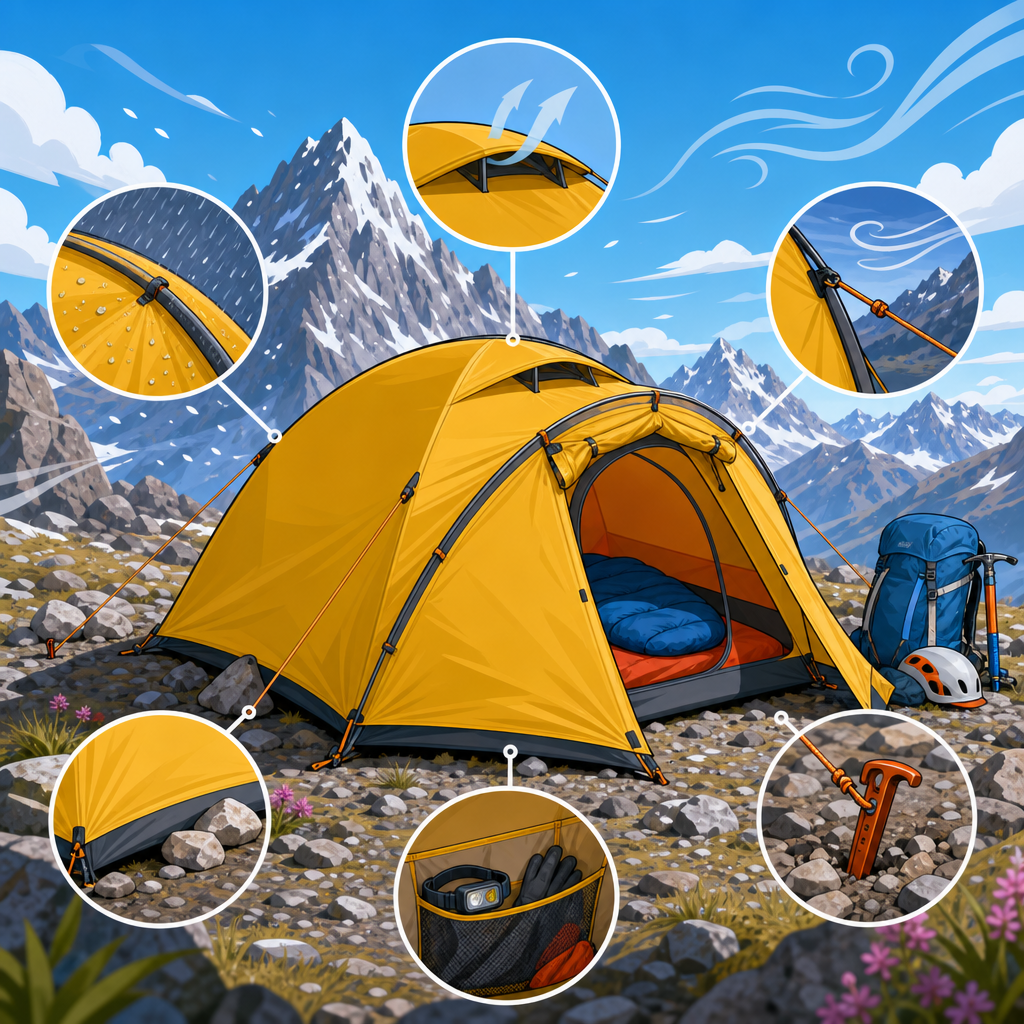
Shelter planning matters because wind exposure and overnight condensation affect the next day’s gear. Single-wall shelters can accumulate frost that dampens gloves and shell layers during pack-up. Poorly ventilated tents increase internal moisture, while a bivy without enough vapor management can leave liners clammy by morning. The practical takeaway is that glove choice should never be isolated from the rest of your mountain setup. Reliable alpine travel comes from integrated decisions: breathable movement clothing, credible stop insulation, dry sleep layers, sufficient ground insulation, and shelter habits that preserve the performance of every textile you carry.
Match glove features to the tasks you actually perform
Feature lists only matter when they improve field function. For sunny alpine travel, the most valuable features are articulation, secure wrist retention, nose-wipe panels, leashes on warmer gloves or mitts, and pull loops that allow fast changes without exposing hands for long. Touchscreen compatibility is convenient but often overrated; many conductive fingertips lose precision when cold, and serious mountain users usually remove a glove briefly rather than trust poor screen control on a ridge. More important is whether you can operate zippers, buckles, avalanche beacon controls, and carabiners with the glove on.
If you climb with poles, evaluate the grip interface. Bulky seams across the palm cause hotspots over a long approach. If you use an ice axe, look for reinforced thumb saddles and palms that maintain friction when slightly damp. For scrambling, a close-fitting leather palm is often the sweet spot because it gives confidence on cold rock without the numbness that comes from bare hands. For ski mountaineering, many athletes use a light softshell glove for the ascent and carry insulated mitts for transitions and summit exposure. That setup works because uphill output generates heat, but stationary tasks in wind do not.
Color and surface finish even matter in strong sun. Dark gloves can absorb noticeable solar heat, which is pleasant in calm conditions but can accelerate snow melt on the outer fabric. Light colors stay cooler yet may show saturation later. Neither is universally better; the point is to notice how materials behave in your environment. Over time, your ideal choice becomes less about marketing categories and more about repeated observations: how quickly the glove dries on your pack, whether it stiffens after glissades, how it handles sunscreen contamination, and whether you can still tie knots when your forearms are pumped.
Avoid the common mistakes that lead to cold hands
The most common mistake is taking one heavy insulated glove and expecting it to work from trailhead to summit. That glove is usually too warm during movement, becomes damp inside, and then feels freezing when the pace slows. The second mistake is buying too small for dexterity. A tight “precision fit” in the store often translates to compressed insulation and cold fingertips outside. The third mistake is ignoring spares. In alpine terrain, a lost glove, soaked glove, or glove blown downhill can quickly become a safety problem. A lightweight backup pair is cheap insurance.
Another error is misunderstanding waterproofing. Many users assume a waterproof membrane guarantees warm hands. In reality, if the glove wets out externally or accumulates sweat internally, comfort still declines. Waterproofing is only one part of thermal management. Maintenance is another neglected area. Dirty fabrics lose breathability, untreated leather absorbs water, and crushed insulation stops trapping heat efficiently. Wash synthetic gloves according to the manufacturer’s instructions, retreat DWR when needed, and recondition leather regularly.
Finally, do not separate glove choice from physiology. Hydration, calorie intake, altitude, fatigue, and medical factors such as Raynaud’s phenomenon all influence hand temperature. Some people genuinely need warmer systems than standard guidance suggests. If your hands run cold, plan around that truth rather than forcing minimalist choices. In mountain gear, honesty beats aspiration. The right glove is the one that keeps your hands functional for the route you are doing, with enough margin for delay, wind shift, or an unplanned stop.
Choosing gloves for cold but sunny alpine days is really an exercise in mountain systems thinking. The winning setup is rarely the warmest glove on the shelf. It is the glove or glove combination that matches altitude, sun, wind, moisture, pace, and task demands while preserving circulation and dexterity. For most people, that means a breathable active glove, a warmer backup mitt or glove, careful attention to fit, and materials that balance durability with drying speed. Leather palms, articulated construction, and low-bulk synthetic insulation consistently perform well because they support real work rather than just retail descriptions.
As the hub for clothing, sleep, and shelter, this topic matters beyond handwear. The same principles guide every dependable alpine kit: layer for changing output, protect your dry reserve, expect moisture from inside as much as outside, and build redundancy where failure has consequences. Gloves teach those lessons quickly because your hands are constantly exposed to the results of bad decisions. If your glove strategy improves, your jacket layering, camp insulation, sleep setup, and shelter habits usually improve with it.
Use this article as your starting framework, then refine it with route conditions and personal experience. Review your current gloves, identify the gaps in fit or warmth range, and build a small system instead of chasing one perfect pair. That simple change will make cold, sunny alpine days safer, more comfortable, and far more enjoyable.
Frequently Asked Questions
Why can my hands still get painfully cold on bright, sunny alpine days?
Because sun and air temperature are not the same thing, especially in the mountains. On cold but sunny alpine days, it is common to feel intense solar radiation on your face while the actual air temperature remains well below freezing. Your hands are particularly vulnerable because they are usually farther from your core, have a high surface-area-to-volume ratio, and are often exposed while adjusting layers, handling gear, or taking gloves off briefly. Add wind, and the problem gets worse fast: moving air strips away the thin layer of warmth your body is trying to maintain around your skin.
There is also the issue of conductive heat loss. The moment you grab metal trekking poles, ice tools, a frozen rope, a ski edge, or cold rock, warmth leaves your hands quickly. Even if the sunshine feels pleasant, the objects you touch may be far colder than the air, and your gloves need to slow that transfer. This is why choosing gloves for alpine conditions is less about “winter fashion” and more about matching insulation, wind protection, dexterity, and grip to the specific environment. Good alpine gloves must manage the full system of cold air, wind chill, moisture, and contact with cold surfaces, not just the visual impression of a sunny day.
What type of glove works best for cold but sunny alpine conditions?
The best choice is usually a technical glove system rather than one single “do everything” glove. For many people, the sweet spot is a dexterous insulated glove or softshell glove for movement, paired with a warmer backup layer such as an overmitt or insulated shell mitt. This gives you flexibility. While climbing, hiking, skinning, or scrambling, you often need enough dexterity to manage zippers, buckles, navigation, and tools. A bulky expedition mitt may be very warm, but it can be frustrating for active use. On the other hand, a thin liner alone will not be enough if wind picks up or you stop moving.
Look for gloves with wind-resistant outer fabrics, moderate insulation, pre-curved fingers, durable palms, and secure cuffs that seal out cold air. In bright alpine conditions, breathable materials matter too, because your hands can sweat even when the temperature is far below freezing. If moisture builds up inside the glove, your hands may feel clammy during effort and then dangerously cold during a stop. A layered approach solves this better than relying on one glove that is either too warm while moving or not warm enough when inactive.
As a practical starting point, many experienced mountain travelers carry three levels: a thin liner for high-output movement and fine tasks, a primary insulated glove for most of the day, and a warmer insulated mitt or shell-over-glove for rest stops, ridgelines, emergencies, or sudden weather changes. That setup gives you a much wider margin of safety and comfort than a single pair alone.
How much insulation do I actually need if the day is sunny?
Usually more than the sun suggests, but not so much that your hands sweat heavily. The correct amount of insulation depends on several factors working together: actual air temperature, wind speed, altitude, how fast you move, whether you run warm or cold naturally, and what you are doing with your hands. Someone hiking briskly uphill with poles may need far less insulation than someone belaying, navigating slowly on a ridge, or handling metal gear repeatedly. Sunshine can improve perceived comfort, but it does not cancel the effects of wind chill, prolonged exposure, or contact with frozen surfaces.
In most alpine scenarios, the goal is balanced insulation. Too little insulation means numb fingers, reduced dexterity, and possible cold injury risk. Too much insulation can be just as problematic if it causes sweating, because damp glove insulation loses efficiency and moisture cools your hands when your pace drops. This is why many alpine travelers prefer gloves with moderate synthetic insulation for active use. Synthetic fills tend to perform better than down when moisture from sweat, snow contact, or changing conditions becomes a factor.
A useful rule is to choose gloves for the coldest and windiest parts of the day, not the warmest moments in direct sun. Early starts, shaded faces, exposed summits, and rest breaks are where poor glove choices become obvious. If you are deciding between slightly lighter and slightly warmer options, the safer strategy is often to carry the lighter working glove plus a compact warm backup layer. That gives you range without sacrificing dexterity for the entire day.
Which glove features matter most for dexterity, grip, and all-day alpine performance?
Dexterity and protection come from design details more than from thickness alone. Start with fit: a glove should be snug enough to preserve control and sensitivity, but not so tight that it compresses insulation or restricts circulation. Tight gloves often feel cold because they reduce the warm air space that insulation needs to function and may limit blood flow. A well-fitted glove should allow natural finger movement, confident grip on poles or tools, and easy operation of zippers, bindings, and small buckles.
Pay close attention to palm material and construction. Reinforced leather or durable synthetic palms improve grip, resist abrasion, and hold up better when handling rock, rope, ski edges, or equipment. Pre-curved fingers reduce hand fatigue because they better match the shape of a hand gripping poles or tools. A secure wrist closure is also important; if cold air enters at the cuff, overall warmth drops quickly. Gauntlet-style cuffs work well in snow and wind, especially over jacket sleeves, while shorter cuffs may be better for fast-moving activities where simplicity and mobility matter.
Breathability is another major performance feature. Alpine gloves that trap too much moisture can become uncomfortable early and cold later. Materials that block wind while still venting excess heat tend to perform best on active sunny days. Some users also benefit from removable liners, nose-wipe thumb panels, touchscreen compatibility, or carabiner loops for drying and carrying, but those are secondary to the core priorities: proper fit, wind resistance, durable grip, usable dexterity, and moisture management. If a glove is warm but too clumsy to use safely, it is not the right alpine glove.
Should I bring more than one pair of gloves for a cold but sunny alpine day?
Yes, in most cases bringing more than one pair is the smart and often safest approach. Alpine conditions change quickly, and your glove needs can vary dramatically over a single outing. During a steep approach, you may generate enough heat to wear thin liners or light softshell gloves comfortably. On an exposed traverse, at a windy summit, or during a long break, those same gloves may suddenly feel inadequate. If one pair gets wet from sweat, snow, or a slip into slush, your margin for warmth drops fast. A second pair is not redundancy for its own sake; it is part of a reliable hand-protection system.
A highly effective setup is to carry a light liner glove, a primary working glove, and an emergency or rest-stop overmitt. The liner handles fine motor tasks without exposing bare skin. The main glove covers the majority of your movement time. The overmitt or warmer insulated backup comes out when conditions deteriorate, output drops, or you start losing finger warmth. This layered system also lets you adapt without stopping your day every time conditions shift.
If you are trying to save weight, gloves are still not the place to cut too aggressively. Numb hands reduce your ability to use navigation tools, operate safety equipment, eat, unzip layers, and react efficiently. In serious alpine terrain, loss of dexterity can become a safety issue long before it becomes a frostbite issue. Carrying an extra pair or a compact shell mitt is one of the simplest, highest-value decisions you can make for cold, sunny mountain travel.