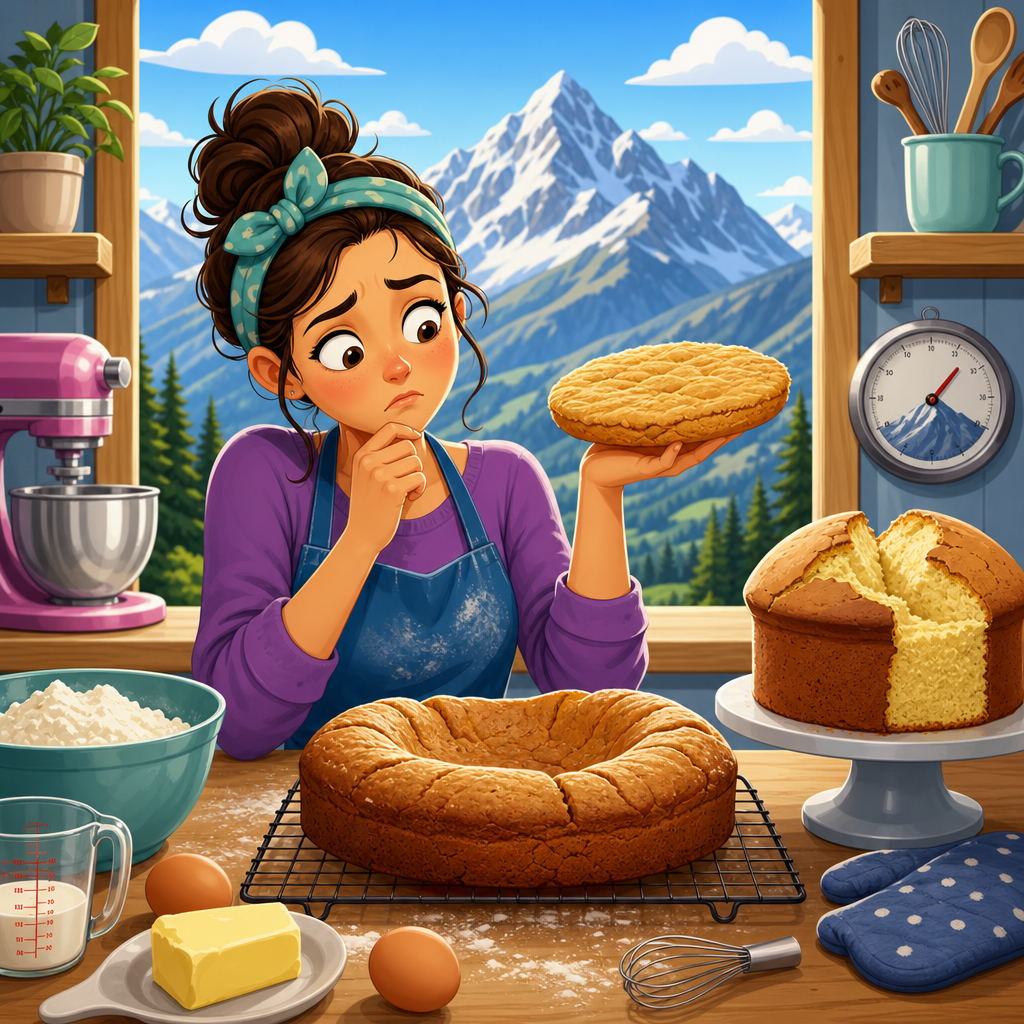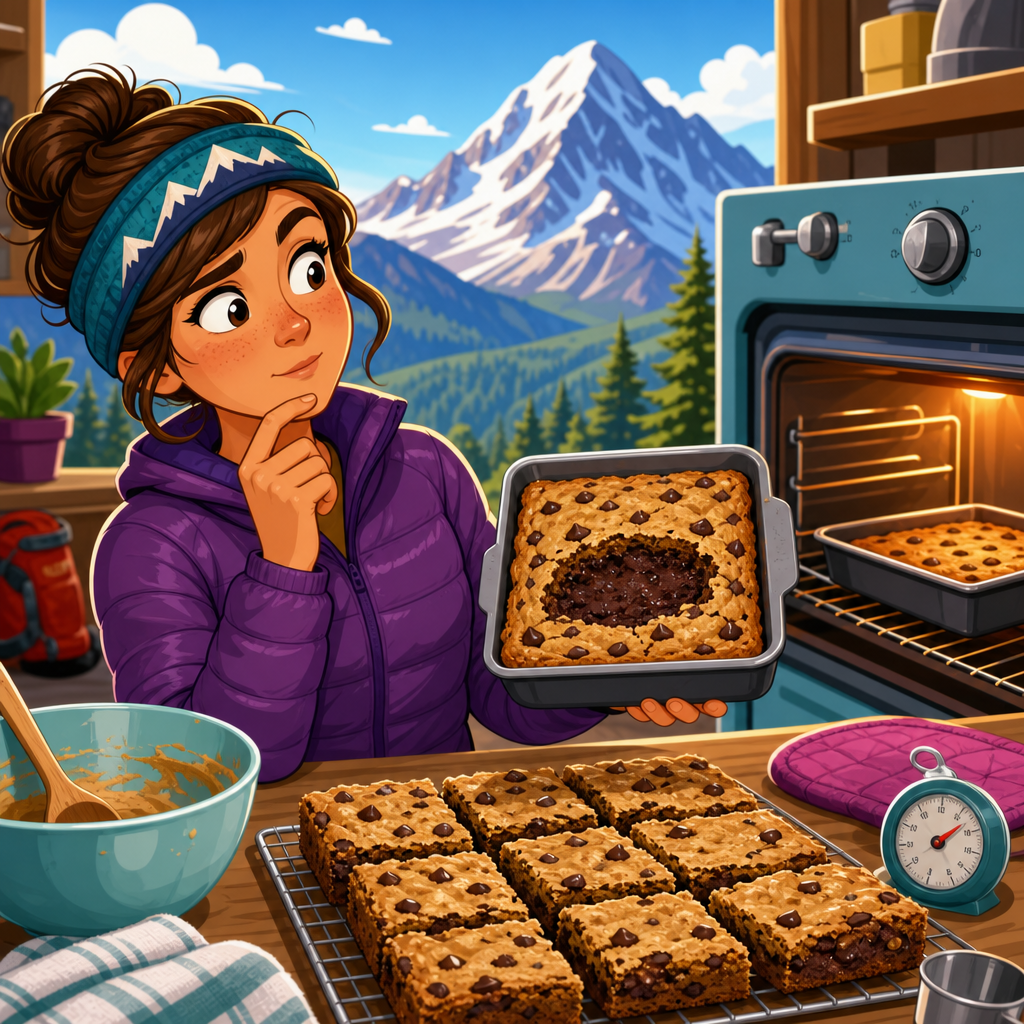
Bar cookies at altitude often look done before they are actually baked through, which is why underbaked centers are one of the most common problems I troubleshoot in mountain kitchens. In baking, altitude usually means locations above 3,000 feet, where lower air pressure changes how moisture evaporates, how gases expand, and how quickly structure sets. Bar cookies include brownies, blondies, lemon bars, cookie bars, shortbread bars, and layered dessert bars baked in a pan rather than portioned individually. Because these recipes rely on a balance of eggs, sugar, fat, flour, and oven heat across a broad surface, even a small altitude mismatch can leave edges overdone while the center stays glossy, dense, or wet.
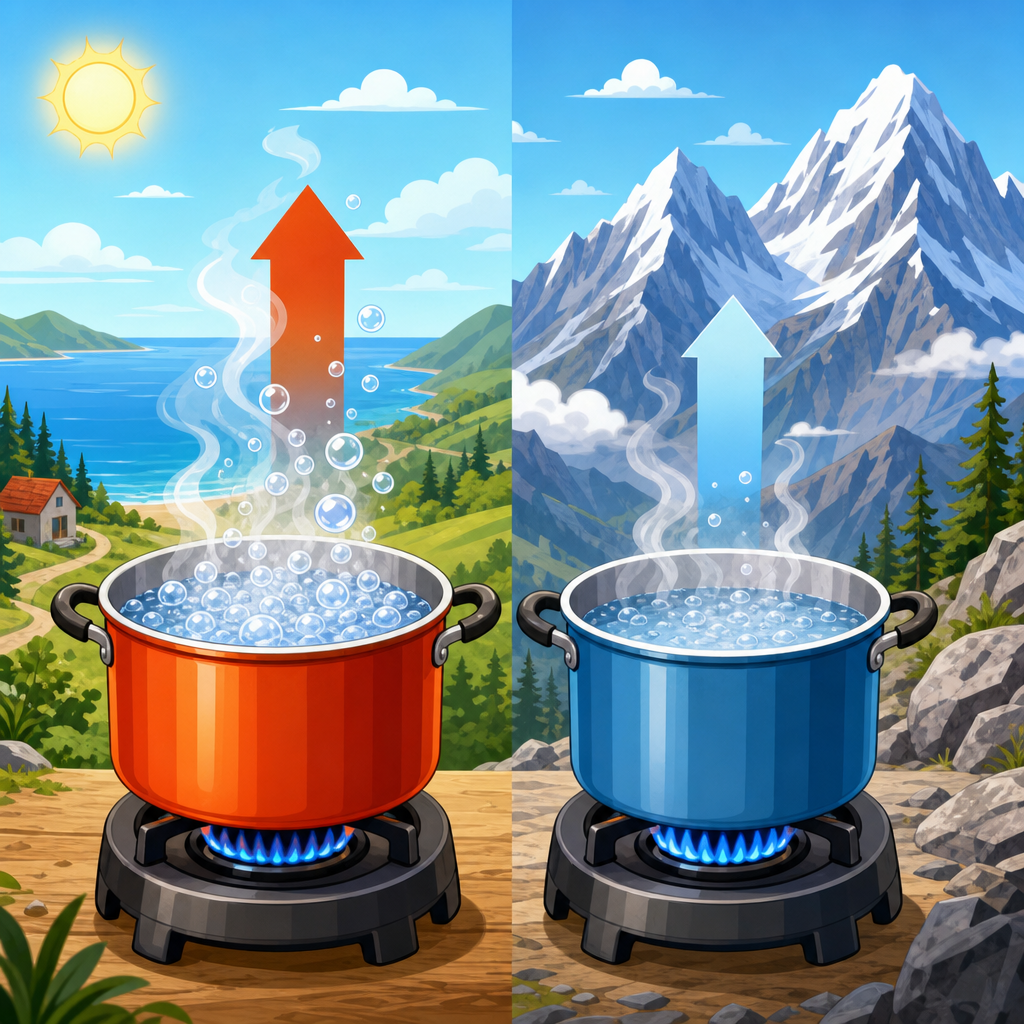
This matters for both quality and consistency. At higher elevations, water boils at lower temperatures, leavening expands faster, and batter can rise rapidly before the starches and proteins have enough time to stabilize. The result is familiar: bars puff in the oven, crack attractively on top, then sink as they cool and reveal a gummy middle. I have seen this in home ovens from Denver to Santa Fe, especially with brownie recipes written for sea level and baked in dark metal pans. The good news is that fixing underbaked centers is usually not about one dramatic change. It is about controlling heat transfer, adjusting moisture, and matching recipe style to your elevation.
This hub covers the full cookies and bars category for altitude bakers, with a practical focus on prevention. You will learn why bar cookies behave differently from drop cookies, how pan size and material affect doneness, which ingredient adjustments matter most, and how to test for a finished center without overbaking the edges. If you want reliable brownies, chewy blondies, crisp-edged cookie bars, and custardy lemon bars that slice cleanly, the methods below will save batches and improve every pan you bake.
Why bar cookies underbake at altitude
Underbaked centers happen when the middle of the pan absorbs heat too slowly relative to the edges, or when the batter contains more effective moisture than the structure can hold by the time expansion peaks. At altitude, both issues intensify. Lower air pressure increases evaporation, which sounds as if it should dry baked goods faster. In practice, bar cookies can still seem wet in the center because sugar delays starch gelatinization, fat slows firming, and eggs need enough heat to coagulate fully. If the edges race ahead while the center remains below its ideal finishing temperature, the pan comes out looking set but cools into a dense core.
Brownies are a classic example. Recipes with a high ratio of sugar to flour create a shiny top and fudgy interior, but at altitude they can rise too quickly and collapse before the center sets. Blondies often have the same problem because brown sugar attracts and retains moisture. Lemon bars present a different version: the shortbread base may be done while the citrus custard still trembles excessively in the middle. In all three cases, the symptom is similar, but the cause differs slightly. That is why altitude baking works best when you classify the bar first: cake-like, fudgy, chewy, custard-based, or layered.
Compared with drop cookies, bar cookies are less forgiving because they have less exposed surface area per portion. A chocolate chip cookie can spread, vent steam, and finish quickly in twelve minutes. A 9-by-13-inch pan of cookie bars traps heat and moisture in the center and may need thirty minutes or more of controlled baking. That longer bake window magnifies every variable: rack position, pan color, oven calibration, and ingredient temperature. If you bake at altitude regularly, assume the printed time is only a starting point and evaluate doneness by structure, not just minutes on the clock.
The core adjustments that prevent gummy centers
The most reliable altitude strategy for bar cookies is to strengthen structure slightly while improving center heat penetration. In practical terms, that usually means increasing oven temperature by 15 to 25 degrees Fahrenheit, reducing sugar modestly, adding a little more flour, and sometimes decreasing leavening. The exact change depends on the formula. In my testing, dense brownies often improve with 1 to 2 tablespoons less sugar per batch, 1 to 2 tablespoons more flour, and an oven increase of 15 degrees. Cake-style bars may need less chemical leavener so they do not overexpand before setting.
Liquid adjustments require nuance. Many altitude baking guides suggest adding extra liquid, and that advice is useful for cakes and some cookies, but it is not universal for bars. For fudgy brownies or rich cookie bars, adding too much liquid can worsen the wet-center problem. Instead, evaluate the source of moisture. If the batter is already heavy with melted butter, eggs, and brown sugar, structure is usually the better target than extra liquid. For drier dough-based bars, a teaspoon or two of milk can help prevent edge overbrowning after you raise the oven temperature. The right correction is recipe-specific, not automatic.
Eggs deserve special attention. Eggs provide water, emulsification, and protein structure. At altitude, an extra yolk can improve texture in some chewy bars, but an extra whole egg may leave the center too soft unless flour rises too. If your bars sink after cooling, the batter may be aerating too much during mixing or relying on too much leavening. Many sea-level recipes tell bakers to beat butter and sugar until very fluffy. For altitude bars, especially brownies and blondies, I often mix just until combined or use melted butter to limit excess air. Less trapped air means less dramatic rise and less collapse.
| Bar type | Common altitude problem | Most effective first adjustment | Secondary adjustment |
|---|---|---|---|
| Fudgy brownies | Glossy top, raw middle, sinking center | Increase oven 15 to 20 degrees | Add 1 to 2 tablespoons flour |
| Blondies | Dense, greasy center | Reduce sugar slightly | Shorten mixing to limit aeration |
| Cookie bars | Edges done before middle | Use lighter metal pan | Bake smaller depth or split into two pans |
| Lemon bars | Base overbakes before filling sets | Parbake crust less aggressively | Lower rack one position for filling stage |
| Shortbread bars | Crumbly edges, pale center | Check oven calibration | Extend bake at moderate heat |
Pan choice, oven setup, and heat transfer
If your bar cookies are chronically underbaked in the center, inspect the pan before changing the formula. Dark nonstick pans absorb and transfer heat faster at the edges, which can create a misleadingly done appearance while the center lags behind. Light-colored aluminum is more consistent for brownies, blondies, and cookie bars because it promotes even baking and predictable browning. Glass pans are popular, but they hold heat differently and often require temperature or timing adjustments. For altitude baking, I prefer straight-sided aluminum pans from brands such as Nordic Ware, USA Pan, or Fat Daddio’s because they deliver steadier results across batches.
Pan size matters as much as material. A recipe developed for an 8-inch square pan will not behave the same in a 9-inch pan, and a doubled batch in a deep pan is far more likely to stay underdone in the middle. Batter depth controls heat travel. When bakers tell me, “The top looked perfect but the center was raw,” they are often using a pan that is too small, overfilling decorative ceramic bakeware, or substituting a thick glass dish. Measure the internal pan dimensions and compare them with the recipe. If the depth is greater than intended, split the batter into two pans rather than extending bake time until the edges dry out.
Oven placement also influences center doneness. For most bars, the middle rack is best, but if the top browns too fast before the center sets, moving the pan one rack lower can help direct more heat through the pan bottom. Always preheat fully; many home ovens signal readiness before the cavity has stabilized. An inexpensive oven thermometer often reveals swings of 25 degrees or more, and those swings matter in sugar-rich bar cookies. Convection can help even out baking, but reduce the temperature slightly and watch carefully. Fast-moving hot air can overbrown the surface before the middle reaches the right point.
Technique differences across brownies, blondies, and dessert bars
Not all bar cookies should be baked to the same visual cue. Brownies are done when the edges are set, the top looks dry, and a tester inserted near the center comes out with moist crumbs, not liquid batter. If you wait for a clean toothpick, many brownie formulas will be overbaked. At altitude, however, the line between moist crumbs and raw batter gets narrower, so I also look for internal temperature. Fudgy brownies usually finish around 190 to 200 degrees Fahrenheit, while cakier versions can go slightly higher. An instant-read thermometer removes guesswork and is one of the most useful tools in altitude baking.
Blondies should not jiggle in the center when the pan is nudged. Because they rely on brown sugar and often melted butter, they can seem underdone even after carryover heat finishes them. I pull blondies when the center is just set and the surface has lost its wet sheen. For chocolate chip cookie bars, the cue is different again: the dough should appear puffed and lightly golden, with the center no longer glossy. Pressing lightly with a fingertip near the middle should leave slight resistance. If your bars sink into a greasy layer after cooling, the sugar-to-fat ratio is probably too high for your elevation.
Lemon bars, cheesecake bars, and other custard-style bars require a two-stage mindset. The crust must be partially baked, but not so browned that it hardens before the filling finishes. The filling is done when the outer ring is set and the center has a slight wobble similar to a baked cheesecake. At altitude, the filling may bubble at the edges sooner, so lower the temperature slightly if needed rather than extending an already hot bake. Cooling is part of doneness for these bars. Slice too early and even a properly baked center will seem loose. Refrigeration firms the structure and gives a more accurate result.
How this hub fits the full Cookies and Bars category
This page is the hub for altitude baking across cookies and bars because the same physical principles show up in multiple recipes, even when the symptoms look different. Drop cookies spread too fast, snickerdoodles crack unevenly, oatmeal cookies dry out, and peanut butter cookies become crumbly. Bar cookies sit at the center of that category because they combine the dough chemistry of cookies with the pan-baked heat dynamics of cakes. Once you understand how altitude changes spread, evaporation, and structure, you can adapt nearly every cookie-style formula with more confidence.
A complete cookies and bars framework starts with recipe type. Crisp cookies usually need stronger moisture retention and careful sugar balance. Chewy cookies benefit from controlled aeration and sometimes a touch more flour. Shortbread and slice-and-bake cookies depend on fat distribution and dough temperature more than leavening. Brownies and blondies require pan and center-doneness discipline. Layer bars introduce water activity from jams, condensed milk, fruit purees, or meringue. In other words, “cookies and bars” is not a single technique family. It is a connected set of formulas that react differently to altitude, and this hub should guide readers toward those distinctions.
As you build your altitude baking system, keep notes on elevation, humidity, oven type, pan material, and final texture. I recommend changing one variable at a time and writing the result directly on the printed recipe or in a baking spreadsheet. Over several batches, patterns become obvious. You may find that all your chocolate-based bars need 20 extra degrees and a tablespoon more flour, while your lemon bars simply need less aggressive crust parbaking. That kind of recordkeeping is more valuable than generic advice because it turns your kitchen into a repeatable testing environment.
Bar cookies at altitude stop being frustrating when you treat underbaked centers as a solvable heat-and-structure problem, not a mystery. The essentials are consistent: choose the right pan, verify oven temperature, avoid excess aeration, and make small formula adjustments that help the center set before the edges overbake. Brownies, blondies, cookie bars, and custard-based bars each need slightly different cues, but all improve when you match doneness testing to the style of recipe rather than relying only on bake time.
The biggest benefit of this approach is consistency. Instead of guessing why one batch sank or why another stayed gummy, you can identify the likely cause and correct it with purpose. Start with the pan and oven, then adjust sugar, flour, leavening, or mixing based on the type of bar you are making. If you bake regularly above 3,000 feet, those measured changes add up to cleaner slices, better texture, and fewer wasted ingredients.
Use this hub as your starting point for the full Cookies and Bars section, then apply the same altitude logic to brownies, drop cookies, shortbread, and layered bars in your own kitchen. Pick one recipe this week, document your elevation and pan choice, and make one smart adjustment. That single test batch is usually where reliable altitude baking begins.
Frequently Asked Questions
Why do bar cookies get underbaked in the center more often at high altitude?
At high altitude, bar cookies can appear finished on top and around the edges long before the middle has fully set. The main reason is lower air pressure. In locations above about 3,000 feet, moisture evaporates faster, gases from leavening expand more quickly, and batters can rise and set unevenly. That means the edges of brownies, blondies, lemon bars, and cookie bars may firm up early while the center is still too fluid.
Pan baking also contributes to the problem. Bar cookies are baked as one large mass, so heat has to travel from the outside toward the middle. At altitude, recipes often need more careful balancing because the structure can rise too quickly before it has enough time to stabilize. The top may look dry, the edges may pull slightly from the pan, and the surface may even develop a crackly finish, yet the center can still be underdone. This is especially common with rich, dense formulas that contain a lot of butter, sugar, chocolate, or fruit filling.
In practical terms, underbaked centers happen because visual cues become less reliable in mountain kitchens. A bar cookie that looks done may still need additional oven time, a lower baking temperature with a longer bake, or slight ingredient adjustments to improve structure. That is why altitude baking for bars is less about following the clock exactly and more about learning what a properly baked center feels and tests like.
What are the best baking adjustments to help bar cookies bake through evenly at altitude?
The most effective adjustments usually involve a combination of temperature, time, pan choice, and formula control. In many high-altitude kitchens, increasing the oven temperature slightly can help the structure set sooner, but that does not always solve underbaked centers in bar cookies. For dense pan bakes, it is often better to focus on even heat transfer and a fully baked middle rather than simply forcing a faster rise. Sometimes a modest increase in temperature paired with close monitoring works well, while other recipes benefit from a slightly longer bake at a controlled temperature so the center cooks through without the edges drying out.
Ingredient balance matters just as much. Too much sugar can weaken structure and keep the center soft for longer. Excess butter or liquid can also delay setting. At altitude, many bakers find success by slightly reducing sugar, slightly increasing flour, or adding a bit more egg to support structure, depending on the recipe style. Brownies and blondies often benefit from careful restraint with sugar and fat, while lemon bars and layered bars may need particular attention to the thickness and moisture level of the filling.
Pan size and material are also important. If the batter is too deep in the pan, the center naturally takes much longer to bake. Using the correct pan dimensions is critical, and in some cases a metal pan bakes more evenly than glass because it conducts heat more efficiently. Lining the pan with parchment can help with removal, but the real key is not overloading the pan with too much batter. If a recipe was developed closer to sea level, dividing it between two smaller pans or using a slightly larger pan can sometimes improve results at altitude.
Finally, do not underestimate oven accuracy. Many underbaked-center complaints are actually made worse by ovens that run cool. An inexpensive oven thermometer can reveal whether the stated temperature matches reality. At altitude, where timing and structure are already more sensitive, even a small temperature discrepancy can make the difference between bars that are fudgy in the right way and bars that collapse into a raw middle.
How can I tell when brownies, blondies, and other bar cookies are actually done in the center?
The best way to judge doneness is to combine visual cues, texture cues, and a center test rather than relying on one sign alone. For most bar cookies, the edges should look set and lightly browned, and the center should no longer appear glossy or wet. If you gently shake the pan, the middle should not ripple like liquid batter. A slight softness is fine, especially for fudgy brownies, but it should look stable rather than fluid.
A toothpick test can help, but it must be interpreted correctly. For cakier bar cookies, a toothpick inserted near the center should come out with a few moist crumbs. For fudgy brownies, a completely clean toothpick can actually mean overbaking. What you do not want is wet batter coating the tester. For lemon bars or other custard-style layers, the center should be set with only a faint jiggle, not a sloshy movement. Pressing lightly on the center can also help; it should spring back gently or feel set rather than sinking under your finger.
Internal temperature can be especially useful if you want a more precise method. A quick-read thermometer inserted into the center gives a more dependable reading than surface appearance alone. Different styles of bars have different ideal finished temperatures, but in general, a center that is still well below a fully baked range is not done, no matter how finished the top looks. This is a great troubleshooting tool for mountain bakers because altitude makes traditional visual cues less dependable.
One more important point: carryover cooking is real, but it has limits. Bars continue to set slightly after leaving the oven, especially in a hot pan, but residual heat cannot rescue a truly raw center. If the middle is still wet when you remove the pan, cooling will not magically turn it into a properly baked texture. It is better to bake until the center is genuinely set and then let the bars cool completely before slicing.
What mistakes most often lead to underbaked centers in high-altitude bar cookies?
The most common mistake is pulling the pan too early because the top looks done. At altitude, tops brown and dry out faster, which can fool bakers into thinking the entire batch is baked through. This is especially misleading with brownies and blondies, where a shiny top or crisp edge can hide a center that still needs several more minutes in the oven.
Another frequent problem is using the wrong pan. If the recipe calls for an 8-inch square pan and the batter goes into a smaller pan, the bars will be thicker and much harder to bake through evenly. Glass pans can also slow down or alter how the center bakes compared with metal. Dark pans may brown edges too fast, while very thick ceramic or glass dishes can change timing significantly. At altitude, these differences become even more noticeable because structure and moisture are already behaving differently.
Overmixing or incorrect ingredient measurement can also contribute. Too much sugar, butter, or liquid creates a softer, looser center that resists setting. Too little flour or too few eggs weakens the structure further. If you scoop flour inconsistently or make substitutions without adjusting for altitude, the bars may never develop the balance needed to bake evenly. Recipes with fruit, jam, pumpkin, or citrus curd are especially sensitive because fillings and mix-ins add extra moisture.
Finally, many bakers skip calibration and troubleshooting. They trust recipe times exactly, do not check oven temperature, and do not adapt sea-level recipes for mountain conditions. High-altitude baking rewards observation. If your bars consistently sink in the middle, remain gummy after cooling, or seem done around the edges but raw in the center, the issue is usually not just “bad luck.” It is a sign that the recipe, bake time, temperature, or pan depth needs adjustment.
If my bar cookies come out with an underbaked center, can I fix them?
Sometimes, yes. The best fix depends on how underbaked they are and how long they have been out of the oven. If the bars are still warm and you discover that the center is clearly raw, you can often return the pan to the oven and continue baking. Covering the top loosely with foil can help prevent overbrowning while the center catches up. This works best when the bars are only slightly underdone and have not cooled completely.
If the bars have already cooled, a rebake can still work in some cases, but results are less predictable. Dense brownies and blondies may finish setting with additional gentle baking, while custard-like layers or delicate toppings can separate, curdle, or become overcooked around the edges. If you choose to rebake cooled bars, use a moderate oven and watch closely. The goal is to warm and finish the center without drying out the rest of the pan.
When the middle is too soft to salvage as neat bars, you may still be able to repurpose the batch. Slightly underbaked brownies can sometimes be chilled and served as extra-fudgy squares if the structure is safe and mostly set. Crumbly or messy cookie bars can be turned into dessert parfaits, ice cream toppings, or layered trifles. However, if the center is truly raw batter, especially in recipes containing eggs, it is better to rebake thoroughly or discard rather than serve them as-is.
The better long-term solution is to use the failed batch as a diagnostic tool. Note the pan used, the actual oven temperature, the bake time, the batter depth, and what the center looked like when you removed it. In high-altitude baking, small details matter. Once you identify whether the issue came from temperature, timing, pan size, or formula balance, you can make a specific correction and avoid