Altitude changes eczema triggers because elevation alters humidity, temperature, air pressure, ultraviolet exposure, and daily routines that shape the skin barrier. For people with eczema, also called atopic dermatitis, those shifts can turn a stable skin care plan into a week of itching, stinging, redness, or cracking. I have seen this repeatedly in travel and relocation planning: the same person who feels controlled at sea level may flare on a ski trip, improve briefly in a dry mountain climate, then worsen again from indoor heating and long hot showers. Understanding why that happens is the key to prevention.
Eczema is a chronic inflammatory skin condition marked by barrier dysfunction, immune overreactivity, and increased transepidermal water loss. In plain terms, the outer layer of skin does not hold moisture well or block irritants as effectively as it should. That weakness makes the skin more vulnerable to environmental changes. Altitude matters because the environment becomes less forgiving as elevation rises. Relative humidity often drops, wind exposure increases, temperatures swing more dramatically, and indoor air becomes drier from forced heating. Even small changes in these factors can amplify itch and inflammation.
This topic belongs at the center of any skin care and dryness guide because altitude-related flares are often mistaken for product allergies, food reactions, or random bad luck. They are usually more predictable than that. A humid coastal climate, a high-desert city, a mountain cabin, and an airplane cabin each stress skin differently. When you know which trigger is changing, you can adjust cleansers, moisturizers, bathing habits, clothing, and medication timing before symptoms escalate. This article explains exactly how altitude changes eczema triggers, which symptoms to watch, why some people improve at elevation while others worsen, and how to build a practical routine that travels well.
Why higher altitude stresses eczema-prone skin
The most direct effect of altitude on eczema is increased water loss from the skin. At higher elevations, air is typically cooler and drier, especially in alpine and high-desert regions. Dry air draws moisture from the stratum corneum, the outermost skin layer. When that layer loses water, microscopic cracks form more easily, nerve endings become more exposed, and itch intensifies. In clinical practice, patients often describe this as skin feeling tight first, then rough, then suddenly inflamed after a few days. That timeline makes sense: barrier strain usually appears before a visible rash.
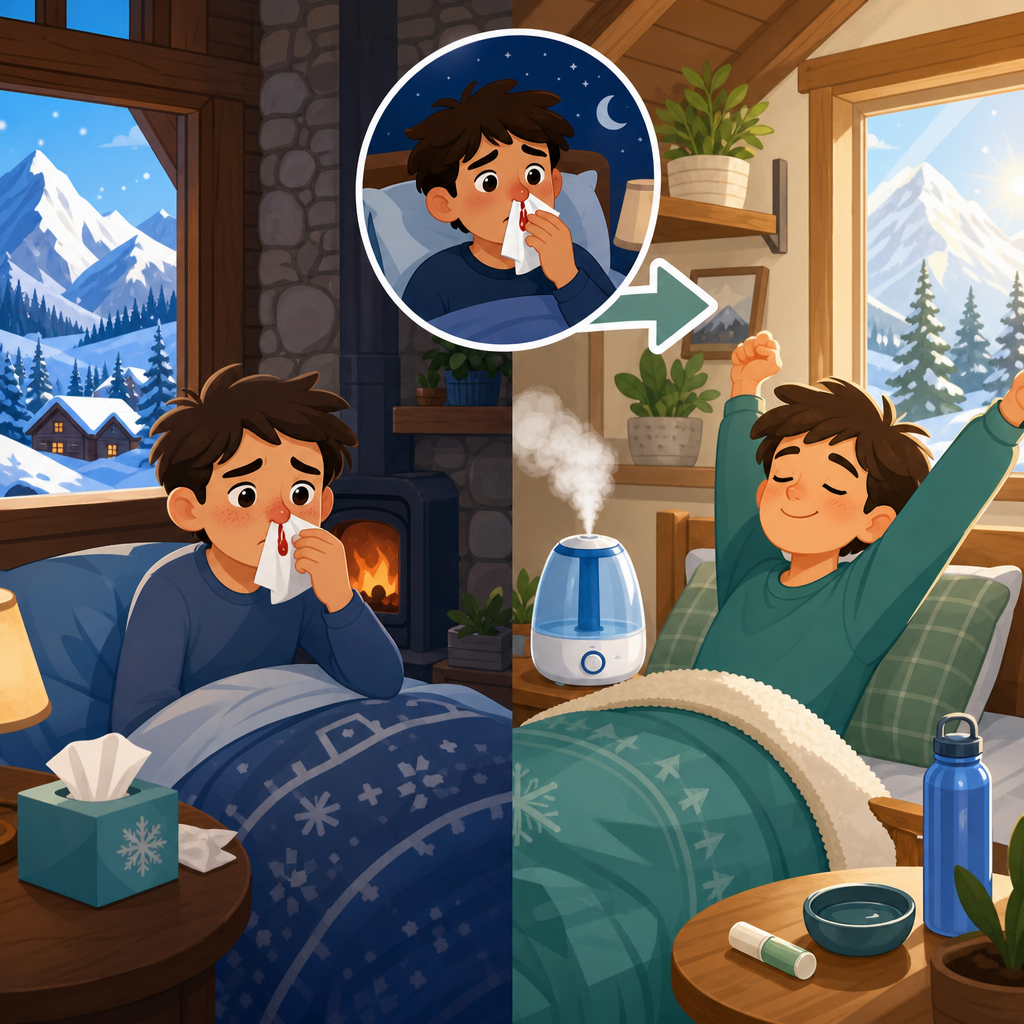
Indoor conditions often do more damage than outdoor altitude itself. In mountain towns, heating systems can lower indoor humidity to levels below 30 percent, a range associated with increased skin dryness and eye irritation. A person may bundle up outside, spend most of the day indoors, shower in very hot water to warm up, and unknowingly stack three major eczema triggers at once: low humidity, heat, and surfactant exposure from frequent washing. I have found that many “altitude flares” are really indoor winter flares happening in a new place.
Lower air pressure and greater evaporation also change how skin feels after bathing and exercise. Sweat can evaporate quickly in dry climates, leaving salt on the skin, which stings compromised areas like eyelids, neck folds, elbows, and hands. That is one reason hiking, skiing, and even walking through airports can trigger itching despite cool weather. People assume heat causes sweat flares, but salt residue and rapid drying are just as important.
Sunlight is another altitude-linked factor. Ultraviolet radiation increases with elevation, and snow can reflect UV back onto exposed skin. Some people with eczema notice temporary improvement with measured sunlight because UV can suppress aspects of skin inflammation. Others worsen because sunburn, windburn, and sunscreen irritation damage the barrier. The benefit or harm depends on dose, timing, and protection. More sun is not a treatment plan. Controlled phototherapy is standardized; a high-altitude weekend is not.
Common altitude-related eczema triggers and how they show up
Altitude changes eczema triggers in clusters rather than one at a time. The table below shows the most common patterns I see and the symptom clues that help identify them quickly.
| Trigger change at altitude | What it does to skin | Typical eczema pattern | Helpful response |
|---|---|---|---|
| Lower humidity | Raises transepidermal water loss and weakens barrier lipids | Tightness, flaking, fine cracks, worsening itch within 24 to 72 hours | Apply thick cream or ointment within three minutes after washing; use a humidifier indoors |
| Cold air and wind | Causes mechanical irritation and faster moisture loss | Cheeks, lips, hands, and neck become red, raw, or chapped | Use occlusive balm on exposed areas and cover skin with soft layers |
| Indoor heating | Drops indoor humidity and overheats skin | Night itching, facial dryness, hand dermatitis | Keep bedroom cool, shorten showers, moisturize before bed |
| More UV exposure | May reduce inflammation in small doses or trigger burns and irritation | Temporary calming or delayed flare after sun and wind exposure | Use mineral sunscreen, hats, and limited midday exposure |
| Travel routines | Interrupts medication use and changes water, detergents, fabrics, and sleep | Patchy unpredictable flare, especially around eyes and hands | Pack familiar products, avoid hotel soap, keep treatment schedule consistent |
Hands are especially vulnerable during altitude changes. Frequent washing in airports, dry airplane cabins, hand sanitizer use, and cold outdoor air can rapidly lead to fissures around knuckles and fingertips. Facial eczema also tends to worsen because the face remains exposed to wind, UV, and temperature swings. If someone says, “My body is mostly okay, but my eyelids and lips are a mess in the mountains,” that pattern strongly suggests environmental exposure rather than a whole-body allergy.
Children can react differently from adults. They may not describe tightness or burning early, so caregivers only notice the problem once scratching escalates at night. School sports, wool layers, and fragranced sunscreen can then compound the issue. For infants and toddlers, drool, pacifier use, and frequent face wiping in cold weather create a perfect storm around the cheeks and chin.
Why some people improve at altitude instead of worsening
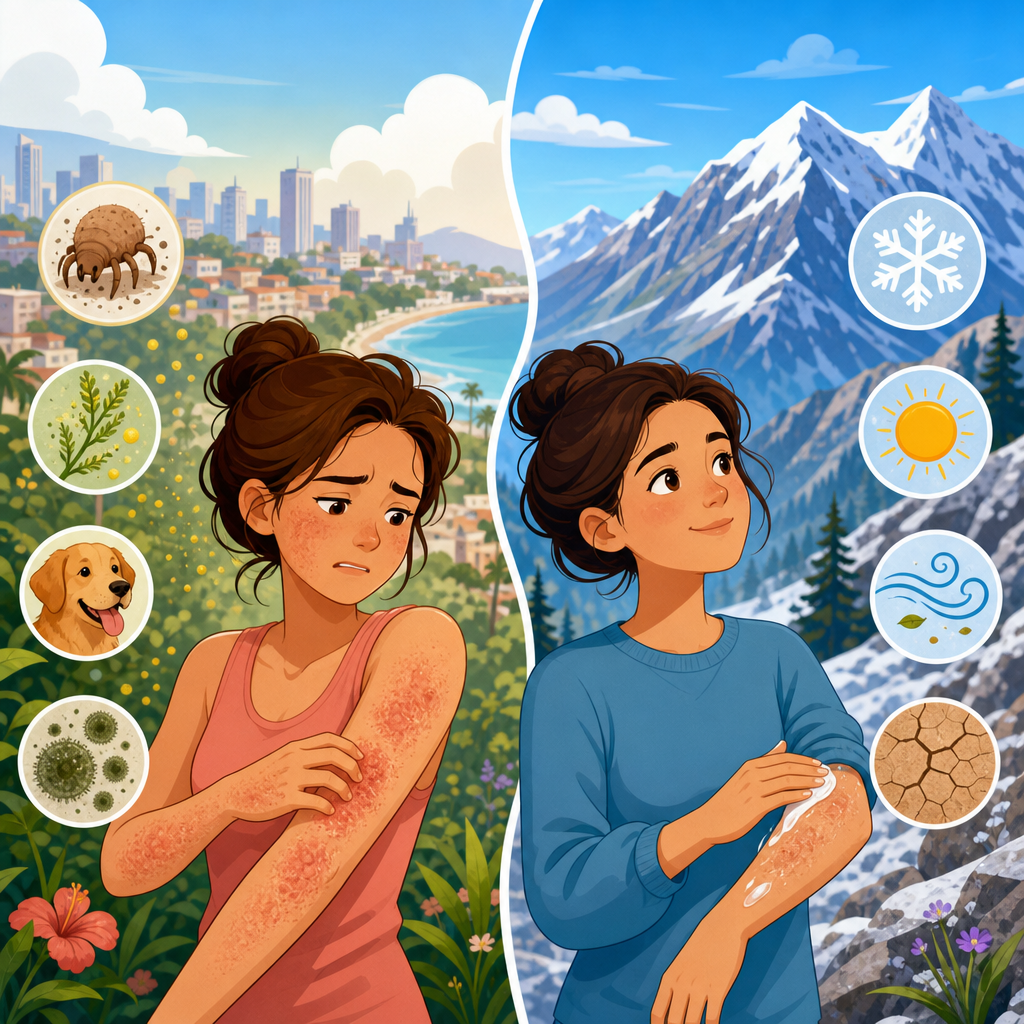
Not every move to higher elevation causes a flare. Some people improve, and that can seem confusing until you break the environment into components. Certain humid low-altitude locations have heavy sweating, mold exposure, dust mites, and high heat, all of which can aggravate eczema. Moving to a cooler, drier mountain climate may reduce sweat-related itching and lower dust mite burden, since dust mites thrive less in very dry conditions. If a person’s main trigger is heat and perspiration, altitude may feel better at first.
There is also a behavioral effect. People on mountain trips often use richer creams, wear protective clothing, and spend less time in polluted urban air. These changes can help. But improvement is not universal or permanent. After the first few days, cumulative dryness often catches up, especially on hands, shins, and lips. This is why short-term relief does not guarantee long-term control.
The practical lesson is to avoid broad claims like “dry climates are good for eczema” or “mountains always make eczema worse.” The truth is more specific. Your dominant trigger profile matters. If sweat, mold, and humidity are your biggest problems, some altitude exposure may help. If barrier weakness, hand eczema, and winter dryness are your main issues, higher elevation usually demands a more aggressive moisturizing routine.
Daily skin care adjustments that prevent altitude flares
The best altitude eczema plan starts before symptoms appear. Moisturizer choice matters more than marketing language. In dry, high-elevation settings, lotions are often too light because they contain more water and evaporate quickly. Creams with ceramides, glycerin, petrolatum, or dimethicone usually perform better. Ointments are strongest for severely dry patches, cracked hands, lips, and areas exposed to wind. I typically advise people to step up one texture level when going to altitude: lotion to cream, cream to ointment on vulnerable zones.
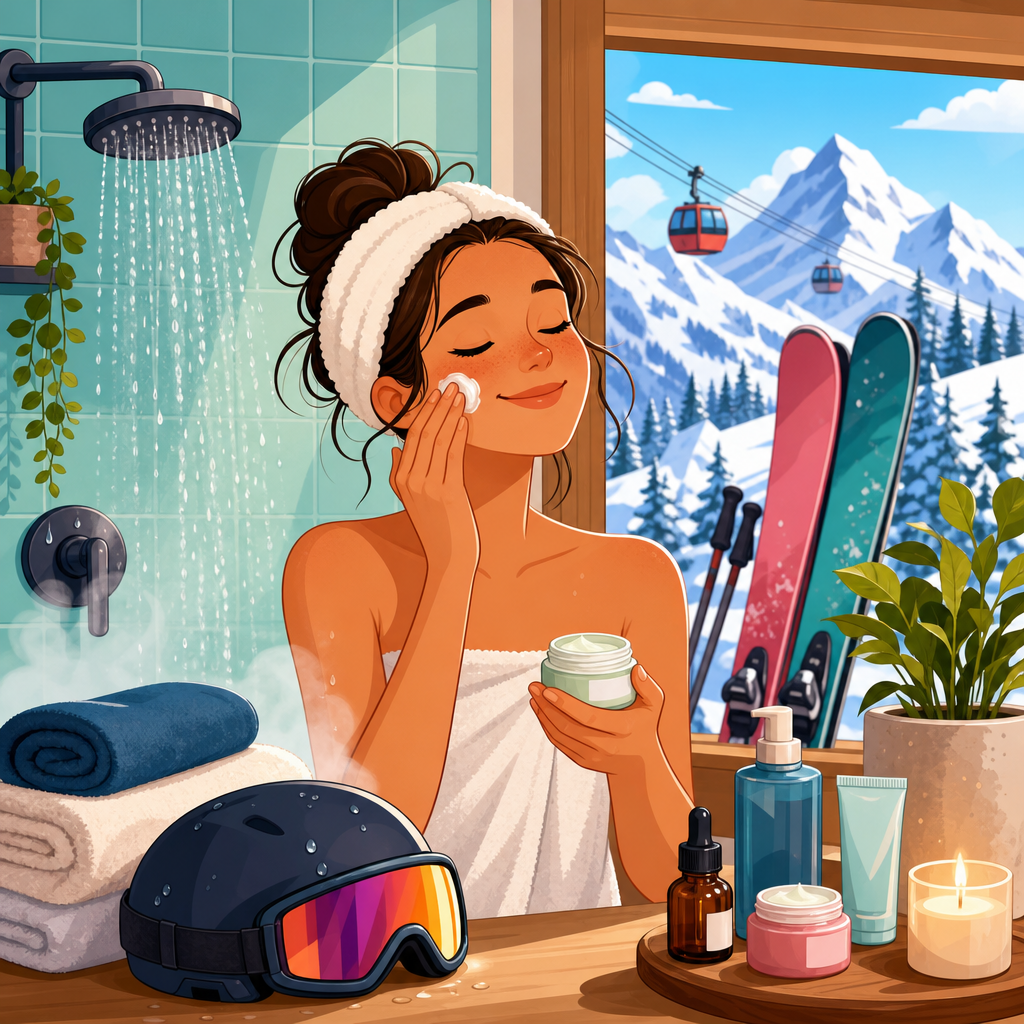
Bathing should become gentler, not more frequent. Use lukewarm rather than hot water, keep showers short, and cleanse only where needed with a fragrance-free, low-surfactant wash. The National Eczema Association and American Academy of Dermatology both emphasize prompt moisturization after bathing because damp skin holds onto emollients better. The simple rule is to pat dry, do not rub, and seal moisture in immediately.
Clothing affects friction and temperature control. Soft cotton or performance base layers that move sweat away from skin are better than rough wool worn directly on the body. Wool can work as an outer insulating layer if a soft barrier sits underneath. On ski trips, neck gaiters, balaclavas, and gloves prevent wind exposure but should be washed in fragrance-free detergent before use because finishing chemicals and retained scents can irritate skin.
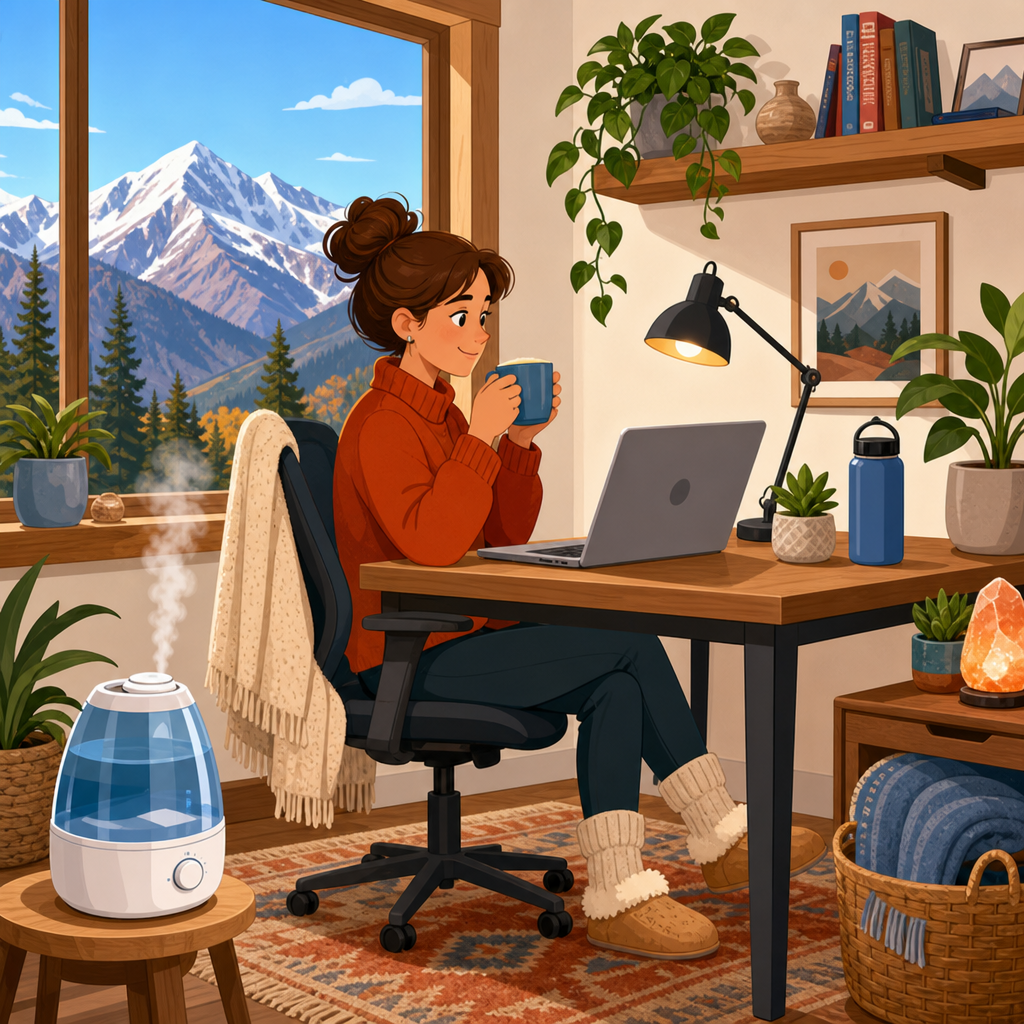
Humidifiers can be useful, especially in bedrooms, but they must be maintained correctly. A dirty unit can aerosolize microbes, and excessively high humidity can encourage mold. A reasonable target range is often around 40 to 50 percent indoor humidity, enough to reduce dryness without creating condensation problems in most homes. A small hygrometer is inexpensive and removes guesswork.
Medication routines should not pause just because the setting changes. If you use topical corticosteroids, topical calcineurin inhibitors such as tacrolimus or pimecrolimus, or newer nonsteroidal treatments, keep the schedule consistent unless a clinician has advised step-down use. Travel flares often happen because people pack moisturizers but leave prescription treatments at home, hoping they will not need them.
Travel, relocation, and high-altitude activities
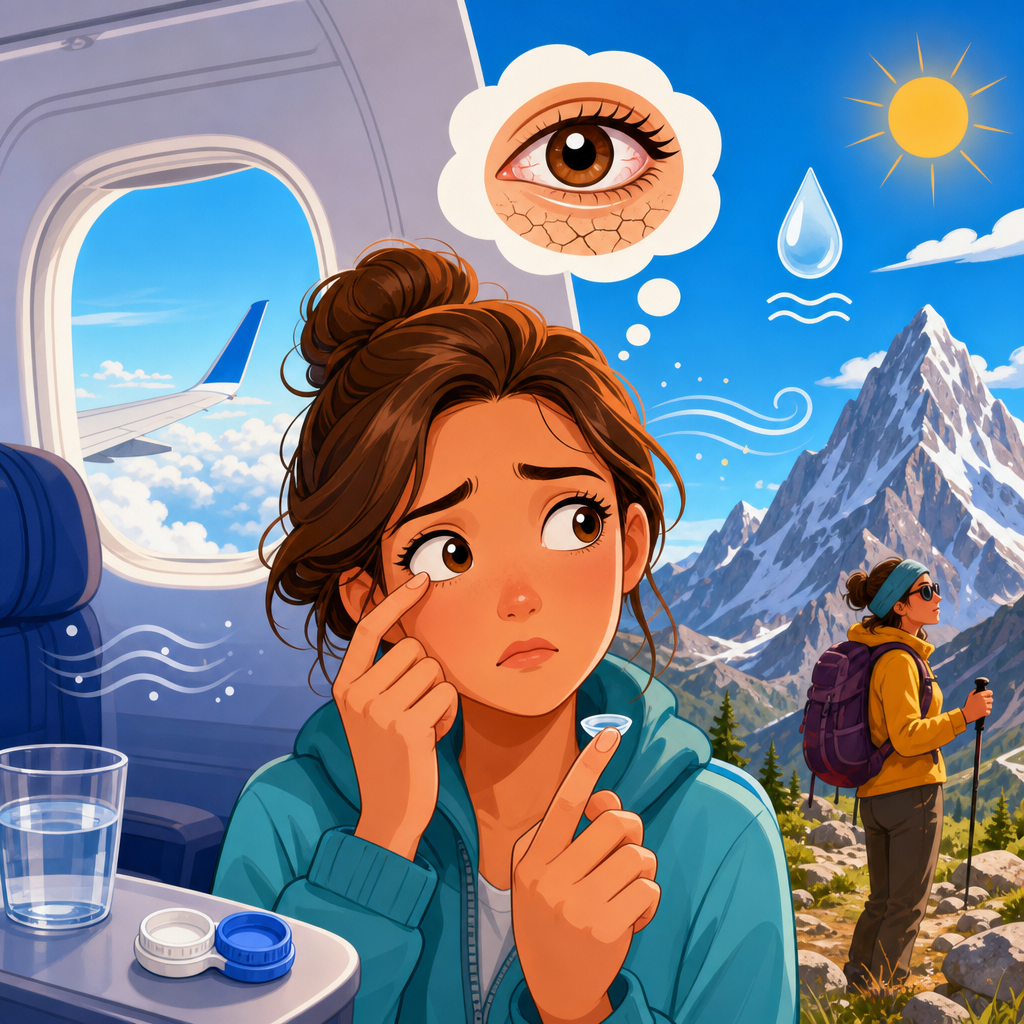
Air travel combines several eczema stressors before you even reach altitude. Cabin air is extremely dry, handwashing is frequent, sleep is disrupted, and stress hormones can increase itch perception. I recommend treating flight day like a skin event: apply a heavier moisturizer before boarding, carry a small fragrance-free cream, avoid harsh sanitizers when soap and water are available, and reapply to hands after every wash. Lip balm and saline nasal spray help too because lip and nasal dryness often signal broader moisture loss.
For relocation, the first month is when patterns become clear. Keep a simple trigger log noting humidity, shower length, outdoor exposure, clothing, and flare sites. This usually reveals whether the main problem is indoor dryness, sun and wind, exercise sweat, or hard water and cleansers. Hard water has mixed evidence in eczema research, but some people clearly sting more with certain local water supplies, especially if they already have hand dermatitis.
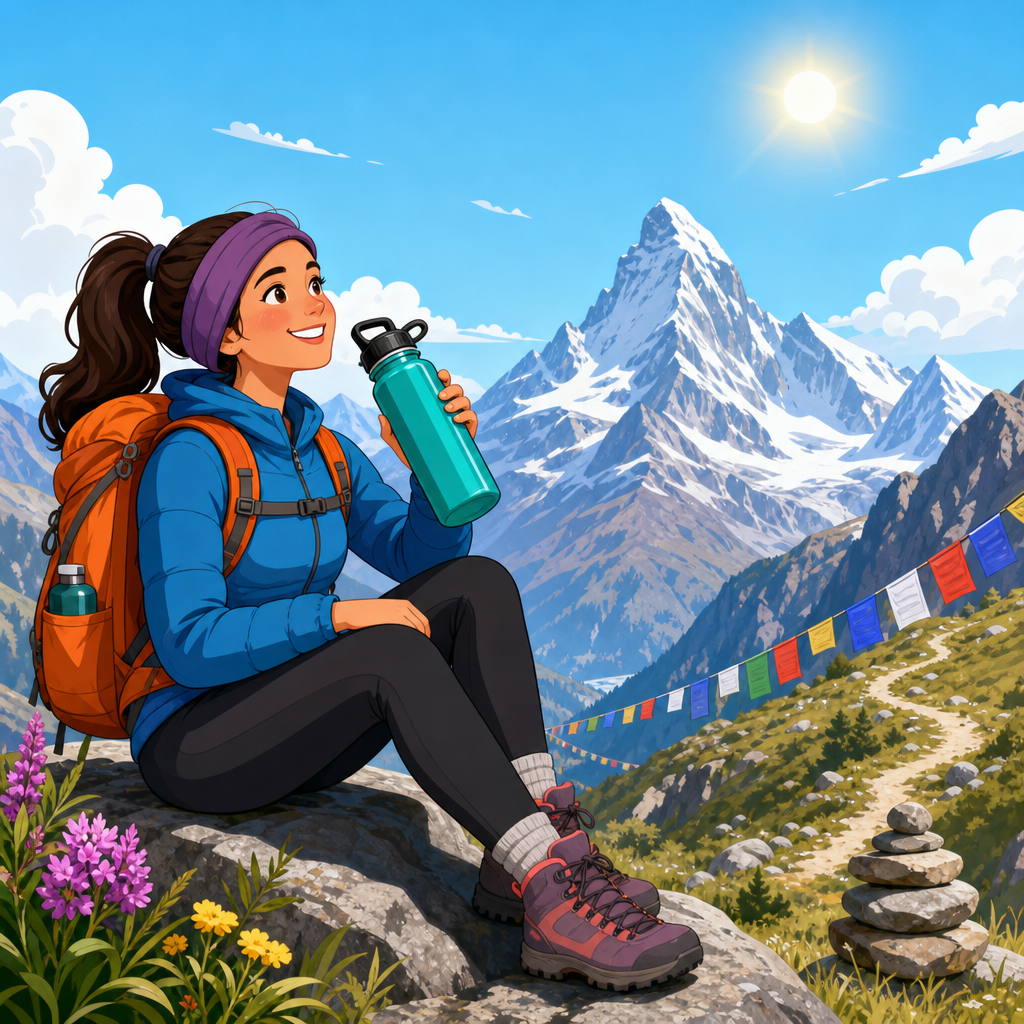
Athletes and outdoor workers at altitude need extra planning. Sweat, friction, sunscreen, and delayed access to washing all matter. Choose broad-spectrum mineral sunscreen if chemical filters sting, rinse off sweat soon after activity, and change out of damp base layers promptly. For skiers and hikers, exposed skin should be protected before going outside, not after it feels burned. Prevention is easier than calming inflamed skin late in the day.
Parents should pack a dedicated eczema kit for children: regular moisturizer, backup ointment, prescribed medication, gentle cleanser, soft washcloths, hydrocolloid bandages for picked spots if appropriate, and familiar laundry packets for longer stays. Keeping the routine recognizable reduces both flares and the stress scratching that follows disrupted sleep.
When to get medical help and what not to assume
Not every rash at altitude is just eczema dryness. Seek medical care if the skin becomes oozing, crusted, rapidly painful, or widespread, or if there is fever, swelling, or signs of infection. Eczema skin is more vulnerable to bacterial infection, especially with Staphylococcus aureus colonization, and cracked skin can deteriorate quickly. Persistent facial rashes may also reflect irritant or allergic contact dermatitis from sunscreen, lip products, detergents, or mask materials rather than altitude alone.
It is also important not to overuse topical steroids out of panic. Stronger is not always better, especially on thin skin like eyelids, face, groin, or skin folds. Match the treatment to the body area and severity, and get guidance if you are escalating often. If altitude repeatedly destabilizes your skin despite good basics, that may justify a formal eczema action plan with a dermatologist or allergist.
Altitude does not create eczema by itself, but it changes the trigger landscape in ways that can be anticipated and managed. Dry air, wind, indoor heating, travel disruption, and stronger UV are the major drivers. Some people improve because heat, sweat, mold, or dust mites decrease; others worsen because barrier stress dominates. The deciding factor is usually not the elevation number alone but the mix of humidity, temperature, routine, and skin care habits around it.
The main benefit of understanding altitude-related eczema triggers is control. When you know what is changing, you can respond early with thicker moisturizers, shorter showers, better clothing choices, humidifier use, and consistent medication. That turns a reactive cycle into a preventive routine. If your skin tends to flare during flights, winter trips, mountain weekends, or moves to drier climates, build your altitude plan now, test it on a small trip, and refine it before your next change in elevation.
Frequently Asked Questions
Why can a change in altitude make eczema suddenly flare?
Altitude changes several environmental factors at once, and eczema-prone skin often reacts to that combination rather than to one single trigger. As elevation increases, the air usually becomes drier, temperatures may drop, wind exposure can increase, and daily ultraviolet exposure often becomes stronger. Lower humidity pulls water from the skin more quickly, which weakens the skin barrier and makes itching, tightness, and cracking more likely. Cold air and wind can add further irritation, especially on the face, hands, and lips. Even changes in air pressure, sweat patterns, shower habits, clothing layers, and sleep routines can influence symptoms.
For someone with atopic dermatitis, the skin barrier is already more vulnerable than average. That means even a short trip from sea level to a mountain climate can shift skin from stable to reactive within a day or two. Many people notice increased itching at night, stinging after washing, or redness in areas that were previously calm. Others improve briefly if they leave a hot, humid environment that was promoting sweat irritation, then flare later once dryness and friction catch up. In practical terms, altitude acts like a package of trigger changes, which is why eczema can behave unpredictably during travel, skiing trips, hiking vacations, or relocation.
Is high altitude always worse for eczema, or can some people actually improve?
High altitude is not automatically worse for everyone. Some people do flare because the air is drier, colder, and windier, all of which can damage the skin barrier. Others feel better for a period of time, especially if they are leaving behind heavy sweating, oppressive humidity, pollution, or exposure to environmental allergens that were aggravating their skin at lower elevations. Increased ultraviolet exposure at altitude may also temporarily calm inflammation in some people, since controlled light exposure can reduce eczema activity. That said, the same sun and UV intensity can also lead to sunburn, irritation, and dehydration if skin is not protected carefully.
The most accurate answer is that altitude changes the balance of triggers. If your eczema is strongly worsened by heat, sweat, and sticky humidity, a mountain environment may feel better at first. If your skin is highly sensitive to dryness, cold, harsh winds, and frequent bathing after outdoor activity, altitude may be a clear problem. Many people experience both effects in sequence: initial improvement followed by dryness-related flaring a few days later. Watching how your skin responds over several days, rather than judging by the first afternoon, is often the best way to understand whether altitude is helping or hurting your eczema.
Which altitude-related factors trigger eczema the most: humidity, temperature, UV exposure, or daily routine changes?
All of them can matter, but low humidity and disrupted skin care routines are often the biggest practical triggers. Dry air increases transepidermal water loss, meaning moisture escapes from the skin faster. Once that happens, the barrier becomes more fragile, itch signals rise, and minor irritation from clothing, soaps, sweat, or weather becomes more noticeable. Temperature also plays a major role. Cold air can be drying and irritating, while overheating under heavy layers can trigger itching and sweating. Wind exposure is especially important because it intensifies dryness and can inflame already sensitive areas.
Ultraviolet exposure is more complicated. At higher elevations, UV intensity increases, and that can sometimes reduce eczema inflammation in moderation. But too much exposure causes sunburn and barrier injury, which may trigger a flare instead of relief. Routine changes are often underestimated. Travel commonly means different soaps, more frequent showering, hotel laundry detergents, chlorinated pools or hot tubs, less sleep, dehydration, and missed moisturizer applications. Even friction from wool base layers or sports gear can become the tipping point. In real-world situations, eczema rarely responds to altitude alone; it responds to how altitude changes the full environment around the skin.
How can I prevent eczema flare-ups when traveling to a higher altitude or moving to a mountain climate?
Start by assuming your skin will need more support than usual. The most effective prevention step is to intensify moisturizing before symptoms start, not after the flare is obvious. Use a thick, fragrance-free cream or ointment at least twice daily, and apply it immediately after washing while the skin is still slightly damp. Pay extra attention to hands, face, lips, and any areas that usually crack first. Pack your own gentle cleanser, moisturizer, sunscreen, lip balm, and any prescription creams so you are not forced to use unfamiliar products. If you already have a clinician-approved eczema action plan, follow it early rather than waiting several days for the irritation to worsen.
It also helps to modify your environment and habits. Keep showers short and warm rather than hot, drink enough water, and use a room humidifier if indoor air is extremely dry. Choose soft, breathable layers and avoid rough wool directly against the skin unless you have a barrier layer underneath. Protect exposed skin from wind and sun, since both can worsen barrier damage at altitude. If skiing, hiking, or exercising, change out of sweaty clothing promptly and reapply moisturizer afterward. People with frequent flares may benefit from discussing preventive use of their prescribed anti-inflammatory treatment with a medical professional before the trip. Planning ahead usually makes a much bigger difference than trying to rescue a severe flare once it begins.
When should altitude-related eczema symptoms be treated at home, and when should I seek medical care?
Mild increases in dryness, itching, and patchy redness can often be managed at home with more aggressive moisturizing, trigger reduction, and use of prescribed eczema treatments exactly as directed. If symptoms improve within a few days and there is no sign of infection, home care is usually reasonable. The goal is to restore the skin barrier quickly by reducing hot showers, avoiding fragranced products, minimizing scratching, and stepping up protection against wind, cold, and sun. Many altitude-related flares settle once the skin is consistently moisturized and routine irritants are removed.
You should seek medical care sooner if the eczema becomes widespread, very painful, severely cracked, oozing, crusted, or interferes with sleep and daily function. Medical attention is also important if you suspect infection, which may show up as yellow crusting, pus, increasing warmth, swelling, fever, or rapidly worsening tenderness. If prescribed treatments are not working, if the rash looks different than your usual eczema, or if symptoms become hard to control after relocation, it is worth getting evaluated. Altitude can expose weaknesses in a skin care plan that seemed adequate at sea level, and a clinician may need to adjust moisturizer strategy, anti-inflammatory treatment, or infection prevention steps to fit the new environment.