Skip to content

  • Home
  • Altitude Illness & Acclimatization
    • Acclimatization Plans
    • Altitude Medications & Oxygen
    • AMS Basics & Risk Factors
    • AMS Management & Recovery
    • AMS Symptoms & Diagnosis
    • Descent, Treatment & Emergency Response
    • HACE
    • HAPE
    • Monitoring & Decision Tools
    • Pre-Acclimation & Training
  • Cooking & Baking at Altitude
    • Baking Fundamentals
    • Baking Troubleshooting & Workflow
    • Cakes & Cupcakes
    • Candy, Preserves & Canning
    • Cookies & Bars
    • Cooking Methods
  • Daily Life, Skin, Eyes & Home Comfort
    • Comfort Troubleshooting
    • ENT & Sensory Issues
    • Everyday Health & Comfort
    • Eye Care & Vision
    • Indoor Air & Humidity
    • Lifestyle Adjustments
  • Fitness, Hiking & Performance
    • Cycling
    • Hiking Strategy
  • Family, Pregnancy & Kids
    • Family Logistics & Planning
    • Infants & Postpartum
    • Kids & Family Travel
  • Gear, Monitoring & Safety
    • Clothing, Sleep & Shelter
    • Monitoring & Oxygen
  • Travel & Destinations
    • National Park Gateways
    • National Park Guides
    • Ski Town Guides
    • Trek Preparation
    • Trip Planning & Logistics
    • US City Guides
    • US Lake & Mountain Guides
  • Sleep, Hydration & Nutrition
    • Nutrition & Fueling
    • Practical Meal Planning
    • Recovery & Return to Sea Level
    • Sleep & Recovery
    • Substances & Supplements
  • Respiratory, Cardio & Chronic Conditions
    • Other Chronic Conditions
    • Pre-Trip Medical Planning
    • Pregnancy
    • Sleep Apnea & Breathing Disorders
    • Travel with Medical Conditions
  • Toggle search form

Why Fudge Turns Grainy in a Dry Mountain Kitchen

Posted on By

Why fudge turns grainy in a dry mountain kitchen comes down to a mix of sugar chemistry, moisture loss, and timing. At altitude, water boils at a lower temperature, air is drier, and candy stages arrive faster than many recipes expect. Those three changes affect not only fudge, but also caramels, toffee, fruit preserves, jams, jellies, marmalade, syrups, and home canning. If you cook sweets in Denver, Santa Fe, Flagstaff, Bozeman, or any other high place, you are working in a different environment than the recipe writer unless the formula was built for altitude. I have tested candy and preserves in mountain kitchens for years, and the same pattern shows up repeatedly: a recipe that behaves perfectly at sea level can seize, crystallize, overcook, or set too hard when elevation and dry air pull moisture away faster than expected.

In practical terms, grainy fudge means sugar crystals grew too large. Smooth fudge depends on controlling supersaturation, preventing stray crystals from multiplying, and beating the mixture only after it cools to the proper range. In a dry mountain kitchen, evaporation accelerates, pan sides dry out quickly, and even a small error in final temperature can push the batch past creamy into crumbly. Understanding that principle is useful far beyond one dessert. It explains why mountain caramels often run firm, why peach jam can overset, why jelly may wrinkle early in the test, and why canning guidance must be followed exactly even when boiling temperatures change with altitude.

This hub covers the full Candy, Preserves & Canning category within high-altitude cooking. It explains the causes of grainy fudge, how to adjust candy formulas, how sugar concentration interacts with pectin and acid in preserves, and what altitude means for safe water-bath and pressure canning. If you want consistent sweets and shelf-stable jars from a mountain kitchen, the key is to think in systems: temperature, moisture, concentration, cooling, and processing time all shift together.

Why mountain conditions change candy and preserve outcomes

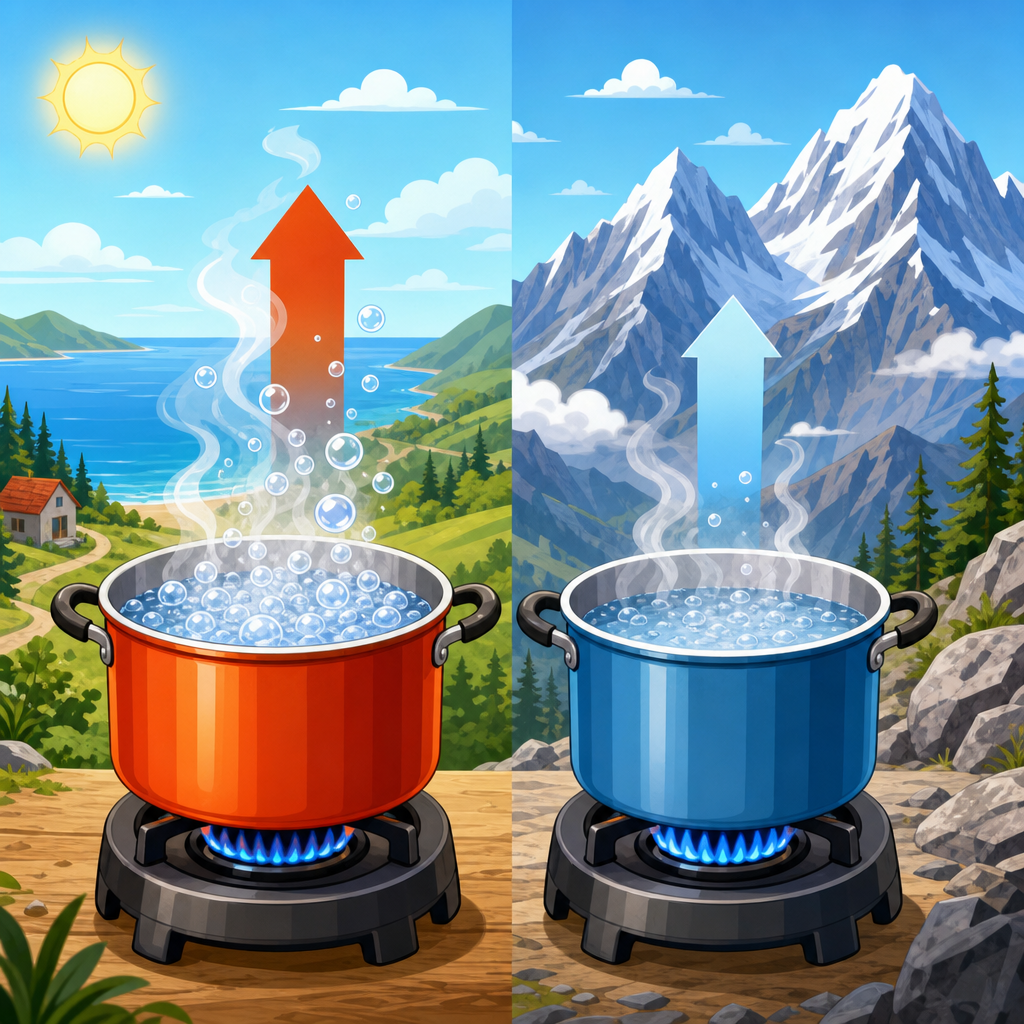
The single most important fact is that water boils at a lower temperature as elevation increases. At 5,000 feet, boiling is around 202 degrees Fahrenheit instead of 212. That affects every recipe that uses boiling point as a reference, including fudge, fondant, caramels, marshmallows, jams, and jellies. Classical candy stages are based on the relationship between sugar concentration and temperature, but most standard targets assume sea level. In the mountains, if you cook to an unadjusted printed temperature, you often remove too much water. The result is fudge that sets hard and grainy, caramel that becomes chewy instead of soft, and preserves that gel more stiffly than intended.

Dry air compounds the problem. Lower humidity encourages surface evaporation while syrup cooks and while it cools. That means the exposed film on a saucepan wall can turn into seed crystals quickly, especially if undissolved sugar was left on the side early in cooking. Once those crystals fall back into the syrup, they can trigger chain crystallization. I see this most often when cooks stir a boiling batch aggressively, scrape the pot sides after the syrup is hot, or beat fudge before it cools enough. In preserves, dry air is less likely to cause crystallization directly, but it can speed reduction and change final solids, which affects spreadability and set.

Temperature measurement also becomes less forgiving at altitude. A candy thermometer that is off by 2 degrees can ruin a mountain batch because your margin for moisture loss is already narrower. An instant-read digital thermometer verified in boiling water is more reliable than an old glass scale with faded markings. In canning, however, thermometer shortcuts are not enough; tested process times and pressure adjustments from the USDA Complete Guide to Home Canning and the National Center for Home Food Preservation remain the standard.

Why fudge turns grainy: the chemistry behind the texture

Fudge is a controlled crystal candy. That phrase matters because smooth fudge is not crystal-free; it contains millions of tiny sugar crystals suspended in a concentrated syrup with fat and often dairy solids. The goal is microcrystals, not large crystals. Large crystals create a sandy mouthfeel. Tiny crystals create the dense, creamy texture people expect from chocolate fudge, peanut butter fudge, maple fudge, or penuche.

Three things usually cause graininess. First, the syrup may be overconcentrated. If too much water boils away, the sugar becomes eager to crystallize and does so quickly in large clusters. Second, seed crystals may form prematurely on the pan wall, spatula, or spoon. Third, the batch may be disturbed at the wrong time. When hot syrup is still above the ideal cooling range, stirring encourages large crystal formation. This is why many classic formulas instruct you to cook without stirring once the sugar has dissolved, wash down the pan sides with water or cover briefly to let steam dissolve crystals, then cool undisturbed before beating.

Altitude intensifies all three risks. A common rule is to reduce the final candy temperature by about 2 degrees Fahrenheit for every 1,000 feet above sea level, though exact performance depends on the recipe, pan shape, and your true local boiling point. If your town sits near 7,000 feet and you cook fudge to a sea-level target of 234, the batch may effectively behave as though you drove off too much water. In the kitchen, that looks like fudge losing gloss quickly, becoming thick before beating is complete, and setting with a dry, crumbly edge.

How to make smooth fudge at altitude every time

Reliable mountain fudge starts before the burner turns on. Measure by weight when possible. Use a heavy saucepan with enough depth to reduce scorching and uneven evaporation. Calibrate your thermometer in boiling water and note your local boiling point that day, because weather systems can shift it slightly. If your recipe gives a sea-level target, lower it according to elevation, then verify with a cold-water test if the formula is unfamiliar. Soft-ball stage should still behave like a soft, flexible ball in cold water, but you must reach it at a lower thermometer reading than the book may state.

Ingredient choice helps. Corn syrup, glucose, or invert sugar interferes with sucrose crystal growth and improves smoothness. Cream of tartar can invert a small portion of sugar, helping in the same way. Butter and dairy fat contribute richness, but they do not compensate for overcooking. Marshmallow creme shortcuts work because they introduce stabilizers and a different sugar system, though they create a distinct texture from traditional cooked fudge.

Task Sea-level habit Better mountain approach
Set final cook temperature Follow printed target exactly Reduce target roughly 2°F per 1,000 feet
Manage pan sides Ignore sugar splashes Wash sides or cover briefly so steam dissolves crystals
Cooling phase Stir to speed cooling Cool undisturbed to the beating range
Beating Beat immediately off heat Beat only after cooling until gloss fades and thickness starts
Measurement Use cups and old thermometer Use scale and calibrated digital thermometer

Technique is where most fixes happen. Stir only until the sugar dissolves and the mixture is uniform. Once boiling, avoid scraping crystals into the syrup. After cooking, remove the pan from heat and let it cool undisturbed, often to around 110 degrees Fahrenheit for traditional dairy fudge, although formulas vary. Then beat until the sheen dulls and the mass thickens. Pour immediately into a prepared pan. If you stop too early, fudge may not set. If you beat too long, it can turn grainy in the pot. On dry winter days, I butter the upper sides of the pan lightly or keep a lid nearby for the first few minutes of boiling because those small controls reduce crystal seeding noticeably.

Candy beyond fudge: caramels, toffee, brittles, and fondant in thin air

The same altitude logic governs other sweets, but the failure modes differ. Caramels are usually noncrystalline candies, so graininess is less common unless the formula contains a high sucrose load without enough glucose or fat. The bigger mountain problem is firmness. Because water leaves faster, a caramel intended to cut softly can become a wrapped chewy candy. Lowering the target temperature and using a wider margin for carryover heat usually solves it. Toffee and brittles depend on high concentration and, in brittles, often a baking soda expansion step. In dry mountain air, they may look ready before flavor has fully developed, so color and aroma must support the thermometer reading.

Fondant and divinity are especially climate sensitive. Fondant shares fudge’s need for very fine crystals, while divinity reacts strongly to humidity and egg-white foam stability. Ironically, some mountain kitchens have the right dryness for divinity to set well, but the lower boiling point still requires adjustment. Pralines, maple candy, and tablet also demand precision because each relies on a narrow cooling and stirring window. If a recipe consistently fails, the fastest path is not random tweaking. Identify whether the candy is crystalline or noncrystalline, check the intended final solids, then adjust the endpoint based on your actual boiling point.

Preserves at altitude: jams, jellies, marmalade, and fruit butters

Preserves rely on a different structure than candy, but concentration still rules. Jam set depends on the balance of pectin, sugar, acid, and water. At altitude, lower boiling temperatures can fool cooks into thinking a batch is underdone, so they continue boiling and accidentally overreduce it. Then the jam sets stiff, darkens in flavor, or shrinks in the jar. With low-pectin fruits such as strawberries, cherries, peaches, and apricots, overcooking can also weaken fresh fruit character even if the texture eventually looks acceptable.

Jelly making adds another layer because clarity matters. Cloudy jelly can come from pressing the bag, but in mountain kitchens I also see cloudiness when batches are boiled too hard too long. Marmalade is particularly sensitive because peel tenderness, soluble solids, and endpoint all need alignment. The wrinkle test, sheet test, freezer plate test, and temperature test should agree. Relying on one signal alone is risky when altitude changes evaporation patterns.

For consistent results, use tested pectin formulas from trusted sources such as Pomona’s Pectin, Ball, Bernardin, or university extension publications. Commercial pectin reduces uncertainty because it separates fruit variability from process control. Fruit butters and conserves are more forgiving in texture, but they still require careful reduction to avoid scorching and excessive sweetness. In all preserves, wider pans increase evaporation; at altitude, that can be useful or dangerous depending on batch size. Small batches usually perform better because they let you stop at the correct endpoint quickly.

Canning safety in mountain kitchens

Candy texture problems are disappointing. Canning errors can be hazardous. Altitude affects canning because lower atmospheric pressure changes heat penetration and processing effectiveness. For boiling-water canning, jars need longer processing times at higher elevations. For pressure canning, pressure must be increased to achieve the temperature needed to control pathogens such as Clostridium botulinum in low-acid foods. This is not an area for improvisation.

Use current guidance from the USDA, the National Center for Home Food Preservation, and your state extension service. Follow tested recipes exactly, including jar size, headspace, acidification, venting, and rest times. Tomato products may require added bottled lemon juice or citric acid even when the fruit tastes tart. Dial-gauge canners should be tested regularly for accuracy. Weighted-gauge models simplify operation for some mountain households because they are less dependent on calibration, but both styles are safe when used correctly. If a family recipe for salsa, peach butter, or pickled beans lacks a validated process, refrigerate or freeze it instead of shelf canning.

Building a dependable high-altitude sweets workflow

The best mountain results come from process discipline. Keep an altitude notebook with your elevation, local boiling point, preferred target temperatures, pan sizes, and outcomes by season. Record humidity if you can; a cheap hygrometer is surprisingly useful in candy work. Link your methods across the broader Cooking & Baking at Altitude topic: thermometer calibration, ingredient scaling, evaporation control, and tested preservation guidance all reinforce one another. A fudge batch that crystallizes, a peach jam that oversets, and a caramel that cuts too hard are usually telling you the same story about concentration and endpoint.

Start simple. Master one classic chocolate fudge, one pectin-backed berry jam, and one approved water-bath canning recipe before branching into divinity, marmalade, or pressure-canned stocks. With a calibrated thermometer, adjusted temperature targets, clean pan sides, and tested preservation methods, mountain kitchens produce excellent candy and beautiful jars consistently. Use this hub as your starting point, then apply the same altitude logic to every sweet project you make.

Frequently Asked Questions

Why does fudge turn grainy more easily in a dry mountain kitchen?

Fudge turns grainy at altitude because the sugar syrup behaves differently when both air pressure and humidity are lower. In mountain locations, water boils at a lower temperature, which means recipes written for sea level can reach the wrong concentration of sugar if you follow them exactly. At the same time, the dry air encourages faster moisture loss from the pot and from the finished candy. That combination pushes the mixture toward crystallization sooner than expected. Once too many sugar crystals start forming, the texture changes from smooth and creamy to sandy, crumbly, or dry.

Timing also matters more in a high-elevation kitchen. Candy stages can arrive quickly, and a fudge batch can move from undercooked to overconcentrated in a short window. If the syrup is stirred at the wrong moment, scraped from the sides of the pan, or beaten before it cools enough, seed crystals can spread through the batch and create that classic grainy texture. In practical terms, mountain fudge is more sensitive to small errors in temperature, cooling, and mixing than fudge made in a more humid, lower-altitude environment.

How does altitude change the temperature and cooking process for fudge?

Altitude affects fudge because boiling points drop as elevation rises. Since water boils at a lower temperature in places like Denver, Santa Fe, Flagstaff, or Bozeman, candy recipes need adjustment. A target temperature that works perfectly at sea level can overcook the syrup at altitude because less heat is needed to evaporate water. The result is often a sugar concentration that is too high for creamy fudge, which leads to stiffness, dryness, or graininess.

Most candy makers compensate by lowering the final cooking temperature slightly based on elevation. The exact adjustment depends on how high you are, but the important principle is that your thermometer target should reflect your local boiling point, not a sea-level chart alone. It also helps to test your thermometer in boiling water so you know whether it reads accurately in your kitchen. Once the fudge reaches the proper stage, removing it from heat promptly is critical, because residual heat in the pan can continue driving off moisture. In mountain cooking, even a minute or two too long on the stove can noticeably change the finished texture.

What mistakes during cooling and beating can make mountain fudge grainy?

Cooling and beating are where many fudge batches are won or lost, especially at altitude. After cooking, fudge should usually cool undisturbed to the temperature called for in the recipe before you begin beating. If you stir too early, sugar crystals can start forming before the syrup is ready, and that gives the whole batch a coarse texture. Likewise, if crystals on the sides of the pan fall back into the mixture, they can act as seeds that trigger widespread crystallization.

Beating also needs the right balance. Underbeating can leave fudge too soft to set well, while overbeating can make it thicken too quickly and lose its creamy structure. In a dry mountain kitchen, this transition often happens faster than expected because the syrup has already lost moisture more aggressively. A good approach is to let the mixture cool undisturbed, avoid scraping down dried sugar from the pan walls, and then beat only until the gloss starts to fade and the texture thickens slightly. At that point, pour it immediately. Waiting too long can leave you with fudge that sets up in the bowl and finishes grainy in the pan.

Can ingredients or technique help prevent grainy fudge at high altitude?

Yes, both ingredient choices and handling techniques can make high-altitude fudge much more reliable. Ingredients that interfere with sugar crystallization, such as corn syrup, marshmallow creme, butter, or a bit of glucose, can help promote a smoother texture. These ingredients work by getting in the way of sugar molecules lining up into large crystals. Even when using a traditional recipe, careful measurement matters more than ever in mountain kitchens because small changes in sugar-to-liquid ratio become more pronounced in dry air.

Technique is just as important. Use a heavy saucepan for even heating, stir gently only when the recipe calls for it, and wash down the sides of the pan with a damp pastry brush if sugar crystals collect there during cooking. Monitor the temperature closely and begin checking a little earlier than you would at sea level. Once cooked, cool the mixture without disturbance, then beat it at the proper temperature and pour it right away. Some candy makers also find that slightly increasing liquid or reducing the final cook temperature improves consistency at elevation. The exact adjustment may take a batch or two to dial in, but once you match the process to your local conditions, smooth fudge becomes much easier to repeat.

Do the same high-altitude issues affect other sweets like caramel, toffee, jams, and syrups?

Absolutely. The same mountain conditions that make fudge tricky also affect caramels, toffee, fruit preserves, jams, jellies, marmalade, syrups, and even home canning. Lower boiling temperatures change how quickly water evaporates and how concentrated sugar mixtures become. Dry air speeds moisture loss, and reduced pressure can shift cooking times and texture outcomes. That means candy and preserves often reach key stages faster than standard recipes predict, even though the final result may not be what the sea-level instructions intended.

For caramel and toffee, the biggest issues are overconcentration and temperature overshoot, which can make them too hard, too brittle, or more likely to separate. For jams and jellies, altitude can affect gel formation because the relationship between sugar concentration, water content, and temperature changes. Syrups may thicken too much, and preserves can end up denser than expected. In home canning, altitude adjustments are essential for safety as well as quality, since processing times and pressures must match elevation. The larger lesson is that a mountain kitchen is not just a slightly different version of a sea-level kitchen. It is a different cooking environment, and sugar work of all kinds becomes more dependable when recipes and temperatures are adjusted to fit that reality.


Candy, Preserves & Canning, Cooking & Baking at Altitude

Post navigation

Previous Post: Pressure Canning at High Altitude: How to Find the Correct Tested Process

Related Posts

What counts as high altitude for baking? Baking Fundamentals
High altitude baking basics: why recipes fail above 3,000 feet Baking Fundamentals
Why low air pressure changes rise, moisture, and structure Baking Fundamentals
How to adjust a sea-level recipe for high altitude Baking Fundamentals
High altitude baking conversion chart for beginners Baking Fundamentals
Why water boils at a lower temperature at altitude and why it matters Baking Fundamentals

Pages

  • Privacy Policy
  • Welcome to HighAltitudeLife.com — Your Complete Guide to Living, Traveling, and Thriving at Elevation

Posts by category

  • Category: Altitude Illness & Acclimatization
    • HAPE Risk on a Return Trip: What to Discuss With an Altitude Specialist
    • What Can You Realistically Accomplish in the Final Week Before a High-Altitude Trip?
    • How to Use a Training Log to Separate Fitness Progress From Acclimatization
    • Intermittent Hypoxic Exposure Before Travel: Questions the Research Has Not Settled
    • How Far in Advance Should You Schedule a Pre-Altitude Mountain Weekend?
    • Does Sleeping High on Consecutive Weekends Help Prepare for a Trek?
    • A Pre-Hike Altitude Readiness Checklist for Mixed-Experience Groups
    • Pulse Oximeter Trends at Elevation: Why One Reading Is Not the Whole Story
    • What to Record Each Morning Before Increasing Your Sleeping Altitude
    • Can a Wearable Oxygen Alert Replace an Altitude Sickness Symptom Check?
    • How to Keep a Simple Altitude Symptom Diary During a Multi-Day Trek
    • Persistent Cough After Rapid Ascent: Which Symptoms Demand Urgent Help?
    • What Travel Companions Should Do When Someone Develops Suspected HAPE
    • Can High-Altitude Pulmonary Edema Develop Without Obvious Mountain Sickness First?
    • Breathlessness at Rest on a Mountain Trip: When to Suspect HAPE
    • After Emergency Care for HACE: Questions to Ask Before Future Mountain Travel
    • What Expedition Leaders Should Know About Suspected High-Altitude Brain Swelling
    • HACE Versus Exhaustion: Warning Signs a Trekking Group Must Not Ignore
    • How to Check for Coordination Problems During a Suspected High-Altitude Emergency
    • What to Do When Weather Prevents Immediate Descent From High Altitude
    • New Confusion at High Altitude: Why It Requires an Emergency Response
    • When Your Hiking Partner Refuses to Descend: A Practical Emergency Plan
    • How to Communicate Suspected Altitude Illness to Mountain Rescue Teams
    • Altitude Illness Without Cell Service: How to Prepare a Rescue Decision Tree
    • How to Identify the Safest Descent Route Before a High-Altitude Excursion
    • What to Put on Your Altitude Medication List Before an International Trip
    • Prescription Oxygen Versus Tourist Oxygen Cans: What Travelers Should Understand
    • Altitude Headache After Dinner: A Decision Guide for the Next Morning
    • Can You Take Altitude Prevention Medication if You Already Use a Diuretic?
    • When Might a Clinician Recommend Dexamethasone for Altitude Illness?
    • Acetazolamide Before a Mountain Vacation: Questions to Ask Your Prescriber
    • Why Symptoms That Start Several Days After Arrival Need a Closer Look
    • Dizziness at Elevation: Altitude Illness, Low Blood Sugar, or Something Else?
    • Altitude Sickness or Food Poisoning? How to Evaluate Nausea on a Mountain Trip
    • Can Altitude Illness Cause Loss of Appetite Without Severe Headache?
    • Headache After a High Mountain Drive: Which Details Matter Most?
    • Altitude Sickness on a Two-Night Trip: When Is It Better to Cut the Visit Short?
    • How to Adjust a Group Itinerary When One Person Develops Mountain Sickness
    • What Should You Do If Altitude Symptoms Start Just Before a Planned Hike?
    • Can You Resume Sightseeing After Mild Altitude Symptoms Improve?
    • Why Your First Night’s Sleeping Elevation Matters More Than the Highest Viewpoint
    • Does Previous Mountain Experience Predict Altitude Sickness on Your Next Trip?
    • Can a Recent Cold Make Altitude Sickness Harder to Recognize?
    • Is Altitude Sickness Risk Different on a Mountain Pass Versus an Overnight Stay?
    • Does a Red-Eye Flight Followed by a Mountain Drive Increase Altitude Illness Risk?
    • Can you lose acclimatization after a few days back at sea level?
    • Does sleeping in a lower town really make a difference?
    • Can heat training replace altitude acclimatization?
    • Can sauna training help you prepare for altitude?
    • Do hypoxic tents work for high-altitude travel?
    • Can a weekend trip help you pre-acclimate for a bigger mountain trip?
    • Do altitude masks help with acclimatization?
    • Should you use HRV to monitor altitude adaptation?
    • How to track acclimatization with resting heart rate
    • Low SpO2 at altitude without symptoms: should you worry?
    • What is a normal oxygen saturation at 8,000 feet?
    • How to use a pulse oximeter at altitude without overreacting
    • How fast high-altitude pulmonary edema can progress after a rapid ascent
    • Why HAPE can happen even without classic altitude sickness first
    • What pink frothy sputum at altitude means and why it is an emergency
    • When chest tightness at altitude means you need to descend now
    • HAPE vs bronchitis: how to spot a dangerous cough at altitude
    • Early signs of HAPE every traveler should know
    • How quickly HACE can become life-threatening if you keep ascending
    • What to do if someone becomes disoriented at high altitude
    • HACE vs severe AMS: when symptoms cross into emergency territory
    • Why stumbling and confusion at altitude should never be ignored
    • Early signs of HACE that people mistake for simple exhaustion
    • Why descent is still the most important treatment for severe altitude illness
    • What to do if someone collapses at altitude
    • What to do if AMS hits on night one in a ski town
    • When to descend immediately because altitude symptoms are getting worse
    • When to go to urgent care for altitude symptoms
    • Why altitude symptoms often peak on the first night
    • Why you feel hungover at altitude even when you did not drink
    • Shortness of breath at altitude: what is normal and what is not
    • Why your hands and face can feel puffy after gaining elevation
    • Why your resting heart rate jumps after a rapid ascent
    • Altitude fatigue vs normal travel fatigue: how to tell the difference
    • Why dizziness at altitude feels worse when you stand up quickly
    • Loss of appetite at high altitude: when to push calories and when to rest
    • What causes nausea at altitude and what actually helps?
    • Acute mountain sickness symptoms timeline: what can start within 6 to 12 hours
    • Can poor sleep be your first sign that altitude is not going well?
    • Do anti-nausea meds help with altitude sickness?
    • How long should you wait before trying to go higher again after AMS?
    • Why appetite loss at altitude can quietly make symptoms worse
    • Can dehydration alone cause an altitude-like headache?
    • What not to do when you get altitude sick in a resort town
    • How to use rest days correctly while acclimatizing
    • Why mild altitude symptoms should change your next day’s plan
    • Can you get altitude sickness after moving higher within the same mountain region?
    • Why altitude illness symptoms can look like a hangover
    • Why some people get altitude sickness below the usual risk threshold
    • Do older adults acclimate more slowly at high altitude?
    • Do children get altitude sickness differently than adults?
    • What travelers usually miss about the altitude where they sleep
    • How altitude sickness feels different when you fly in vs drive up
    • Can you still get altitude sickness if you were fine last time?
    • What happens if you ignore mild altitude sickness symptoms?
    • How to know whether a mountain headache is just a headache or AMS
    • Why physical fitness does not protect you from altitude sickness
    • First-night altitude sickness: what to do before symptoms spiral
    • Why altitude sickness often feels worse after dinner
    • What does mild altitude sickness feel like at night?
    • How quickly can altitude sickness start after you arrive?
    • Can you get altitude sickness at 6,000 feet?
    • Altitude sickness vs dehydration: how to tell the difference on day one
    • When oxygen helps at altitude and when it is not enough
    • Can ibuprofen help with altitude headache?
    • What medications can make altitude sleep worse?
    • How long does acetazolamide take to start working?
    • Acetazolamide vs dexamethasone for altitude illness prevention
    • Acetazolamide side effects: what is normal and what is not
    • When should you take acetazolamide for high altitude travel?
    • Category: Acclimatization Plans
      • How to Build Rest and Descent Options Into a Point-to-Point Trek
      • Two Mountain Resorts at Different Elevations: Which Should You Visit First?
      • Acclimatization for Weekend Warriors Who Can Only Leave on Friday Night
      • How to Plan Sleeping Elevations on a Seven-Day Mountain Road Trip
      • A Three-Night Acclimatization Itinerary for Travelers Heading Above 11,000 Feet
      • How to build a week-long acclimatization plan for a 14er trip
      • Driving to altitude vs flying to altitude: which is easier on your body?
      • How to acclimatize after flying straight from sea level to the mountains
      • How to acclimatize for a mountain wedding or family reunion
      • Why symptoms often improve during the day and worsen overnight
      • How many buffer nights do you need before going higher?
      • What climb high, sleep low actually means for normal travelers
      • Why sleeping altitude matters more than daytime altitude
      • How staged ascent lowers your risk of getting sick
      • Should you rest or exercise on your first day at altitude?
      • What a good first 48 hours at altitude actually looks like
      • How long does acclimatization take for a ski vacation?
      • How long does it take to acclimatize after moving to 6,500 feet?
      • How to acclimatize when you only have one extra day
      • Acclimatization plan for 8,000 to 10,000 feet
    • Category: Altitude Medications & Oxygen
    • Category: AMS Basics & Risk Factors
    • Category: AMS Management & Recovery
    • Category: AMS Symptoms & Diagnosis
    • Category: Descent, Treatment & Emergency Response
    • Category: HACE
    • Category: HAPE
    • Category: Monitoring & Decision Tools
    • Category: Pre-Acclimation & Training
  • Category: Cooking & Baking at Altitude
    • Can you cold ferment bread dough at altitude?
    • Biscuits at altitude: how to keep them flaky and tall
    • Best high altitude strategy for enriched doughs
    • How altitude changes sourdough discard recipes
    • Why your crust hardens too fast at altitude
    • Should you use bread flour or all-purpose flour at altitude?
    • How to proof dough in a cold mountain kitchen
    • Challah at altitude: how to keep braids tall and even
    • Focaccia at altitude without giant air tunnels
    • High altitude bagels: better chew without overproofing
    • Bread machine baking at altitude: how to stop overflow and collapse
    • High altitude cinnamon rolls that stay soft
    • How to fix dry dinner rolls at altitude
    • Pizza dough at altitude: timing bulk fermentation correctly
    • Whole wheat bread at altitude without a dense crumb
    • Why bread loaves collapse after rising beautifully at altitude
    • High altitude sourdough hydration: how to adjust for dry flour
    • How to make soft sandwich bread at altitude
    • Sourdough at altitude: how to manage a hyperactive starter
    • High altitude bread baking: how to slow overproofing
    • Why yeast dough rises too fast at altitude
    • Best oven rack position for muffins and quick breads at altitude
    • What high altitude does to buttermilk baking
    • Pumpkin bread at altitude without collapse
    • Cinnamon streusel muffins at altitude that actually hold together
    • Zucchini bread at altitude without a wet middle
    • Crepes at altitude: do you need to change anything?
    • Scones at altitude: why they spread and how to fix them
    • Waffles at altitude: crisp outside, fully cooked inside
    • Pancakes at altitude: why they turn gummy in the middle
    • Cornbread at altitude: moist texture without crumbling
    • Blueberry muffins at altitude without gummy centers
    • Quick breads at altitude: why they over-rise and collapse
    • Banana bread at altitude: how to stop the center from sinking
    • Muffins at altitude: how to avoid mushroom tops and tunnels
    • High altitude pastry cream without a grainy texture
    • Why whipped cream behaves differently in very dry climates
    • Best thickener choices for fruit pies at altitude
    • Souffles at altitude: why timing matters even more
    • How to blind bake pie crust successfully at altitude
    • Custards at altitude: how to avoid curdling and underbaking
    • Tart shells at altitude without slumping
    • How to fix hollow macarons in dry mountain air
    • Puff pastry at altitude: what matters and what does not
    • Cream puffs and choux pastry at altitude
    • Meringue at altitude: how to stop weeping and shrinking
    • Macarons at altitude: can they actually work?
    • Pumpkin pie at altitude without cracks or weeping
    • Pie crust at altitude: how to keep it flaky
    • Fruit pies at altitude: how to avoid runny fillings
    • Coffee brewing at altitude: how to get better extraction
    • Grilling at altitude: how wind and thinner air change cooking
    • Instant Pot altitude adjustments that actually work
    • Pressure cooking at altitude for soups and stews
    • Roasting meat at altitude: why thermometers beat timing
    • Slow cooker meals at altitude: do you need to adjust time?
    • Beans at altitude: stovetop vs pressure cooker
    • Cooking rice at altitude without mush or crunch
    • Pasta at altitude: why it takes longer than you expect
    • How long to boil eggs at altitude
    • Category: Baking Fundamentals
      • How High Altitude Affects Baking With Alternative Sweeteners
      • How Humidity and Elevation Combine to Change Baking Results
      • When Should You Adjust Oven Temperature Instead of Baking Time at Altitude?
      • Why Weighing Flour Matters Even More in a Dry Mountain Kitchen
      • Baking at 7,500 Versus 10,000 Feet: Which Adjustments Change Most?
      • How to Adapt a Sea-Level Recipe When Baking at 4,500 Feet
      • How altitude affects gluten-free baking
      • Best tools for reliable high altitude baking at home
      • How to test a new recipe at altitude without wasting ingredients
      • Why eggs matter more in high altitude baking
      • How much extra liquid to add when baking at altitude
      • When to reduce baking powder and baking soda at altitude
      • When to reduce sugar in high altitude baking
      • When you should increase oven temperature at altitude
      • Why your flour behaves differently in dry mountain air
      • Why water boils at a lower temperature at altitude and why it matters
      • High altitude baking conversion chart for beginners
      • How to adjust a sea-level recipe for high altitude
      • Why low air pressure changes rise, moisture, and structure
      • High altitude baking basics: why recipes fail above 3,000 feet
      • What counts as high altitude for baking?
    • Category: Baking Troubleshooting & Workflow
      • Why Your First Batch Works but the Second Fails in a Dry Kitchen
      • How to Test Oven Temperature Accuracy in a Mountain Home
      • How to Diagnose Uneven Browning in a High-Altitude Oven
      • Dry Edges and Raw Centers: Fixing Thick Baked Goods at Elevation
      • How to Create a High-Altitude Recipe Testing Log That Actually Helps
      • Why Gluten-Free Cakes Sink at High Altitude and How to Troubleshoot Them
      • Best freezer strategies for make-ahead baking at altitude
      • How to troubleshoot overproofed bread in a dry mountain kitchen
      • Best notebook system for testing and improving high-altitude recipes
      • Why pie fillings bubble differently at altitude
      • How to adapt family recipes without losing the original feel
      • How to adjust cheesecake water baths at altitude
      • Can you use convection mode for high-altitude baking?
      • What altitude does to brownie edges vs brownie centers
      • Why high-altitude cakes brown before the center is done
      • How to rescue a batch of flat cookies at altitude
    • Category: Cakes & Cupcakes
      • High-Altitude Sheet Cake for a Crowd: Pan Depth and Timing Guide
      • Why Bundt Cakes Stick or Collapse More Easily at Elevation
      • How to Adapt a Dairy-Free Birthday Cake for 8,000 Feet
      • High-Altitude Carrot Cake: Adjusting Moisture Without a Sunken Center
      • High-Altitude Angel Food Cake: Foam, Pan, and Cooling Adjustments
      • How to Make Stable Cream Cheese Frosting in a Very Dry Climate
      • High altitude wedding cake planning for home bakers
      • How to keep sheet cakes soft at altitude
      • Bundt cakes at altitude: why they stick and how to fix it
      • Sponge cake at altitude: how to stabilize the foam
      • Cheesecake at altitude: how to avoid cracks and underbaked centers
      • Angel food cake at altitude: how to keep it from collapsing
      • High altitude red velvet cake without a dense crumb
      • How to keep layer cakes from drying out at altitude
      • Best frosting choices for dry mountain climates
      • How to adapt box cake mix for 5,000 to 8,000 feet
      • Why cupcakes dome and crack at altitude
      • High altitude vanilla cake: how to prevent tunneling and collapse
      • How to fix a gummy cake at altitude
      • Why cakes sink in the middle at high altitude
      • High altitude chocolate cake that stays moist and tall
    • Category: Candy, Preserves & Canning
      • Why Fudge Turns Grainy in a Dry Mountain Kitchen
      • Pressure Canning at High Altitude: How to Find the Correct Tested Process
      • Making Marshmallows at Elevation: Syrup Temperature and Texture
      • High-Altitude Caramel Sauce: How to Adjust Temperature Targets
      • Best thermometer use for sugar work at high altitude
      • Altitude-safe fruit preserving for mountain home cooks
      • Why home canning mistakes are riskier at altitude
      • Pressure canning at altitude: how to adjust pressure safely
      • Boiling-water canning at altitude: how to adjust processing time
      • High altitude canning basics for beginners
      • Jam and jelly at high elevation: safer set points and timing
      • Fudge at altitude without graininess
      • Caramel at altitude: why your thermometer matters more
      • Candy making at altitude: how soft-ball and hard-crack stages change
    • Category: Cookies & Bars
      • Should you chill cookie dough longer at altitude?
      • Best pan choice for cookies at high altitude
      • Peanut butter cookies at altitude: how to stop cracking
      • High altitude lemon bars without a soggy crust
      • Why blondies turn cakey at altitude
      • Snickerdoodles at altitude: why they flatten and how to fix them
      • Shortbread at altitude: how to keep it tender
      • Bar cookies at altitude: how to avoid underbaked centers
      • Brownies at altitude: chewy edges without a dry center
      • Fudgy brownies at 7,000 feet: the easiest adjustments
      • Best high altitude oatmeal cookie adjustments
      • High altitude sugar cookies that hold their shape
      • High altitude chocolate chip cookies that do not go flat
      • Why cookies spread too much at altitude
      • How to fix dry cookies at altitude
    • Category: Cooking Methods
    • Category: Pies, Pastries & Meringues
    • Category: Quick Breads & Breakfast Bakes
    • Category: Yeast Breads & Sourdough
  • Category: Daily Life, Skin, Eyes & Home Comfort
    • Best lip SPF for high elevation conditions
    • How to protect your scalp from altitude sun
    • Sunburn on cloudy mountain days: why it still happens
    • How to read the UV Index before a mountain hike
    • Best UPF clothing for high altitude summer days
    • Best sunscreen for high altitude hiking and snow reflection
    • How often should you reapply sunscreen while skiing?
    • How altitude changes eczema triggers
    • Does acne get better or worse at altitude?
    • Why UV exposure is stronger at altitude
    • How to treat a nose that feels raw in dry mountain weather
    • Best overnight routine for repairing skin after sun and wind exposure
    • Windburn vs sunburn: how to tell the difference after a mountain day
    • How to stop chapped lips from coming back in mountain air
    • Why your hands crack faster at altitude and what helps
    • Best moisturizers for mountain dryness without feeling greasy
    • How to build a high altitude skincare routine that actually works
    • How to reduce fatigue during your first month at altitude
    • Does allergy season get better or worse at higher elevation?
    • Why your skin gets drier at 7,000 feet
    • How to dress for 40-degree temperature swings in one day
    • Why coffee tastes different in the mountains
    • What shoulder season living is really like in mountain towns
    • How to dry laundry faster in cold, dry air
    • Best pet hydration routine for mountain homes
    • How to keep houseplants alive at altitude
    • Best place to put a humidifier in a mountain bedroom
    • Best houseplants for adding humidity in dry climates
    • How to reduce nosebleeds caused by dry indoor air
    • Static electricity at altitude: why it gets so bad
    • How to use a bedroom humidifier without creating mold
    • Why your sinuses hurt more in dry mountain houses
    • How to keep produce fresh longer in mountain air
    • Indoor humidity at altitude: what range feels best?
    • Humidifier vs whole-house humidifier for mountain homes
    • How to protect your eyes on windy ridge days
    • Do blue eyes burn faster in bright snow conditions?
    • Can altitude make contact lenses less comfortable?
    • What photokeratitis feels like and when to get help
    • How to prevent snow blindness on bright alpine days
    • When should you wear glacier glasses instead of regular sunglasses?
    • Best eyedrops for mountain dryness and screen time
    • Dry eyes at high altitude: what actually helps
    • What altitude does to your taste and smell
    • Why groceries dry out faster in a mountain pantry
    • Best food storage tweaks for dry, high-elevation kitchens
    • How to manage barometric pressure headaches in mountain towns
    • Why weather swings trigger headaches at altitude
    • Daily hydration habits that work when you live at altitude
    • How to create an altitude-friendly self-care routine for guests
    • Do storms feel more intense when you live high in the mountains?
    • Why you feel thirstier in cold mountain weather
    • Why your voice feels rough after a day in dry mountain weather
    • How to prevent cracked cuticles and hangnails at altitude
    • Can altitude make tinnitus feel worse?
    • How to soothe a dry sore throat caused by mountain air
    • High altitude cough: dry air vs illness vs something serious
    • Why your nose bleeds more often in winter at altitude
    • Sinus pressure after a big elevation gain: what helps safely
    • How to relieve ear pressure on mountain drives
    • Category: Comfort Troubleshooting
      • Why mountain air can make you feel tired even when your weather app says perfect
      • How to build a guest room that feels better for visitors new to altitude
      • Best ways to protect kids’ skin from mountain sun year-round
      • Do humidifiers help with snoring in dry mountain bedrooms?
      • How to keep your home office comfortable in dry mountain air
      • Best reusable water bottle habit for daily life at altitude
      • How to handle cold, sunny days that dehydrate you faster than you expect
      • Best shower and skincare routine after skiing at altitude
      • Can altitude make contact lenses dry out faster on flights and mountain days?
      • How to stop waking up with nosebleeds in winter mountain homes
    • Category: ENT & Sensory Issues
    • Category: Everyday Health & Comfort
    • Category: Eye Care & Vision
    • Category: Indoor Air & Humidity
    • Category: Lifestyle Adjustments
    • Category: Skin Care & Dryness
    • Category: Sun Protection & UV
  • Category: Family, Pregnancy & Kids
    • How to plan a lower-risk babymoon in a mountain town
    • When to call your OB before a mountain trip
    • Best hydration strategy for pregnancy in dry mountain air
    • Why remote mountain travel changes pregnancy risk planning
    • Pregnancy and brief high-altitude travel: practical planning questions
    • Can you ski early in pregnancy at altitude?
    • How to plan rest days on a high-altitude family trip
    • Can kids sleep worse than adults at altitude?
    • What to do if your child vomits after arriving at altitude
    • Traveling to altitude with a baby: what pediatricians usually discuss
    • Best snacks for children who lose appetite at altitude
    • How to keep kids hydrated on mountain vacations
    • How to pace a family ski trip so kids acclimate better
    • Best first-day plan for families arriving at altitude
    • Best packing list for infants in high-altitude climates
    • What altitude symptoms in toddlers are easy to miss
    • How to spot altitude sickness in children
    • How to recognize when a baby is not adjusting well to altitude
    • Safe sleep questions parents ask after moving to altitude
    • Newborns at altitude: what families should ask their pediatrician
    • Postpartum recovery at altitude: what can feel harder than expected
    • Breastfeeding at altitude: how dry air and hydration affect comfort
    • Category: Family Logistics & Planning
      • How to build a kid-friendly first-aid kit for mountain trips
      • Should children take acetazolamide for altitude travel?
      • How to talk to kids about altitude sickness without scaring them
      • Family road trip to altitude: where to break up the ascent
      • How to plan a multigenerational vacation at altitude without overdoing it
      • Best family-friendly mountain towns for a first altitude trip
      • How to manage screen-free downtime when bad weather keeps kids inside
      • How to plan a family reunion in the mountains for mixed ages
      • High school athletes competing at altitude: how to prepare safely
      • Traveling with grandparents and kids to altitude: how to pace the trip
    • Category: Infants & Postpartum
    • Category: Kids & Family Travel
    • Category: Pregnancy Travel
  • Category: Fitness, Hiking & Performance
    • Best recovery routine after multiple ski days at altitude
    • Can altitude make you more reckless on the mountain?
    • How to reduce quad burnout on long ski days at altitude
    • Snowshoeing at altitude: how to avoid overheating and dehydration
    • Backcountry ski touring at altitude: pacing and fueling tips
    • How to stay hydrated while skiing in cold weather
    • Best acclimatization plan for a ski weekend
    • Skiing at altitude: how to survive day one without a headache
    • How to use perceived effort instead of pace at altitude
    • Do you lose fitness or just feel slower at elevation?
    • Why interval workouts feel brutal at altitude
    • Can you train hard on day one at altitude?
    • How to pace your first run in a mountain town
    • Why workouts feel harder at 6,000 feet
    • Heart rate zones at altitude: how to adjust them
    • How much does VO2 max drop at altitude?
    • Does creatine help or hurt during altitude adaptation?
    • Can you build muscle normally while living at altitude?
    • Can altitude make you sorer for longer after leg day?
    • How to recover from strength sessions in dry mountain climates
    • Should bodybuilders adjust protein and water needs at altitude?
    • Do heavy lifts feel harder at altitude or is it just cardio strain?
    • Best gym week after moving to altitude
    • Strength training at altitude: should you cut volume or intensity first?
    • How long altitude training benefits last after you come home
    • Can altitude training help a half marathon at sea level?
    • How to avoid altitude headaches after a run
    • Best recovery plan after a hard run at altitude
    • Best acclimatization strategy for trail runners
    • How to train for your first 14er from sea level
    • How to fuel long runs in dry mountain air
    • How to know whether fatigue is from training or acclimatization
    • Running at altitude: what sea-level runners should expect
    • High altitude muscle cramps: hydration vs sodium vs pacing
    • Post-workout headaches at altitude: most common causes
    • Should you add extra recovery days during your first week at altitude?
    • Signs you are pushing too hard at altitude
    • Best active recovery ideas when you live above 7,000 feet
    • How altitude affects hiking with a pack vs running without one
    • Using a pulse oximeter to guide training at altitude
    • Can you train through mild altitude sickness?
    • How to return to sea-level pace after a high-altitude block
    • Do women respond differently to altitude training than men?
    • Can swimmers benefit from altitude exposure away from the pool?
    • Heat training vs altitude training: which is more useful?
    • Best cross-training options during your first altitude week
    • Live high, train low: what it really means for non-elite athletes
    • How to plan a training camp at altitude without burning out
    • How to build rest breaks into a family hike at altitude
    • Why appetite changes can wreck athletic performance at altitude
    • Altitude and weight loss: why the scale may drop fast at first
    • Best snacks for summit day above tree line
    • How to plan a safer turnaround time at altitude
    • Breathing techniques that actually help on steep ascents
    • How often should you stop on a high-altitude hike?
    • What to do when your hiking partner is slowing down from altitude
    • How to pace steep climbs so you do not blow up early
    • Hiking at altitude when you are not acclimated
    • Category: Cycling
      • What to eat on a high-altitude ride over three hours
      • Mountain biking at altitude: how to manage surges and recovery
      • Do descents feel colder and drier at altitude on the bike?
      • Best gearing strategy for steep high-altitude climbs
      • How altitude changes power output on the bike
      • Cycling mountain passes: how to pace long climbs at altitude
    • Category: Hiking Strategy
    • Category: Performance Strategy
    • Category: Recovery & Monitoring
    • Category: Running & Endurance
    • Category: Strength & Gym Training
    • Category: Training Physiology
    • Category: Winter Sports
  • Category: Gear, Monitoring & Safety
    • Best recovery tools for multi-day mountain trips
    • Car emergency gear for winter mountain passes
    • GPS watch features that actually matter on mountain trips
    • Best gear for kids on their first high-altitude trip
    • How to build a simple altitude emergency kit for your trunk
    • Best cabin backup lighting for storms and outages
    • Do portable air purifiers help in smoky mountain rentals?
    • How to choose a pack that carries water well in dry conditions
    • What to keep in a high-altitude travel med kit
    • Best backpacks for day hikes at altitude
    • Water filters that perform well in cold alpine conditions
    • Best cooking tools for reliable high-altitude recipe testing
    • Best face coverings for wind, cold, and sun at altitude
    • How to pack a carry-on for a fast ascent to a mountain town
    • Best travel gear for sleeping better at altitude
    • Best lip balms for mountain sun and wind
    • UPF hoodies vs sunscreen: what works best above tree line
    • Best sunscreen format for high-altitude hiking
    • Glacier glasses vs regular sunglasses for snow and alpine travel
    • Best traction devices for icy shoulder-season trails
    • Best sunglasses for high-altitude UV exposure
    • Best headlamps for cold mountain nights
    • Power banks that hold up better in winter conditions
    • Satellite messenger vs cell phone for remote altitude travel
    • Best first-aid kit additions for high-altitude hiking
    • Do trekking poles really help at altitude?
    • Hydration packs that resist frozen hoses in winter
    • Best water bottles for cold, high-altitude hikes
    • Best thermometers for high-altitude cooking and candy making
    • Do you need a humidifier for mountain hotel rooms?
    • Oxygen canisters for hikers: helpful tool or marketing gimmick?
    • How to read a pulse oximeter without panicking
    • Portable oxygen concentrators for high altitude travel: what they can and cannot do
    • Best pulse oximeters for altitude travel
    • Category: Clothing, Sleep & Shelter
      • Tent features that matter most in exposed alpine camps
      • Best sleeping pads for cold ground and thin air
      • How to pick a sleeping bag for high-altitude camping
      • Best base layers for dry, cold mountain climates
      • Best layering system for big temperature swings in the mountains
      • How to choose gloves for cold but sunny alpine days
    • Category: Monitoring & Oxygen
    • Category: Safety & Navigation
    • Category: Sun, Eye & Skin Gear
    • Category: Travel & Emergency Preparedness
  • Category: Home Systems, Vehicles & Off-Grid Living
    • Best laundry and drying setup for cold, dry climates
    • How to prep a vacation rental for guests who are new to altitude
    • How to reduce dry-air damage to guitars, books, and artwork
    • Mountain town remote work setup: what changes in winter
    • Moving checklist for relocating from sea level to a mountain town
    • How to make guests more comfortable in a mountain home
    • Best first-month home purchases after moving to altitude
    • How to manage road closures and supply runs in remote mountain living
    • Best emergency food storage plan for a high-altitude cabin
    • Apartment living at altitude: easiest ways to improve air comfort
    • Septic systems in mountain terrain: planning basics
    • Starlink and internet reliability in remote high-altitude homes
    • How to size a backup generator for a mountain property
    • Off-grid living at altitude: first questions to answer before you buy
    • Water storage and freeze protection for off-grid cabins
    • Solar panels in snowy mountain climates: what owners learn fast
    • Best tire strategy for mountain towns with shoulder-season storms
    • How to drive steep passes safely after a rapid elevation gain
    • Can altitude affect diesel engines differently than gas engines?
    • Best emergency kit for mountain pass driving
    • How to winterize your vehicle for high-altitude roads
    • Do EVs lose range faster in cold mountain conditions?
    • Fuel economy at altitude: what actually changes
    • Snow melt systems: are they worth it in mountain towns?
    • Why car engines lose power at altitude
    • Air purifier sizing for high-altitude homes during smoke season
    • How to plan backup heat for a mountain power outage
    • Wildfire smoke prep for mountain homeowners
    • Best windows for mountain sun, cold nights, and big temperature swings
    • How altitude changes paint and stain drying times
    • How to reduce static electricity in a dry mountain house
    • Roofing materials that hold up better to high UV and snow load
    • Why wood furniture cracks more in dry mountain houses
    • Best flooring choices for dry, snowy mountain climates
    • Hot water heater performance at altitude: what homeowners should check
    • Propane appliances at altitude: why the flame looks different
    • Do gas ranges cook differently at high elevation?
    • How to prevent frozen pipes in mountain winters
    • How to set indoor humidity in a mountain home without causing mold
    • Whole-house humidifier vs portable humidifiers for altitude homes
    • Category: Indoor Systems & Humidity
    • Category: Mountain Home Maintenance
    • Category: Moving & Everyday Living
    • Category: Off-Grid & Resilience
    • Category: Vehicles & Mountain Driving
  • Category: Pets & Animals
    • Category: Cats & Small Pets
      • How to move pets from sea level to a mountain town with less stress
      • How to help an indoor cat adjust to dry mountain air
      • Do rabbits and small pets need extra humidity at altitude?
      • Best litter box setup for low-humidity homes
      • Can cats struggle after moving to altitude?
    • Category: Dogs & Altitude Sickness
      • High altitude hikes with flat-faced dogs: what to know first
      • How fast should you ascend with a dog?
      • Can older dogs handle high-altitude travel?
      • What to do if your dog starts panting excessively at altitude
      • How to acclimate your dog for a mountain vacation
      • Best hydration plan for dogs on high-altitude hikes
      • Signs your dog is struggling at altitude
      • Can dogs get altitude sickness?
    • Category: Mountain Dogs & Hiking
      • How to protect your dog’s paws on alpine trails
      • Best recovery routine after a big mountain day with your dog
      • How to plan rest breaks for dogs on steep trails
      • What to pack in a dog first-aid kit for mountain trips
      • How to recognize cold stress vs altitude stress in dogs
      • Can dogs sleep worse at altitude?
      • Best food and water routine for dogs in dry mountain air
    • Category: Pet Health & Planning
      • How to build an emergency descent plan for a pet in distress at altitude
      • Can altitude worsen underlying heart or lung disease in pets?
      • Mountain cabin pet checklist for weekend trips
      • Should you ask your vet before taking a pet above 8,000 feet?
      • Can altitude affect pet appetite and water intake?
      • How to protect pets from stronger UV and snow glare at altitude
      • What altitude does to working dogs and search-and-rescue dogs
      • Best wildlife safety habits for dog owners in mountain towns
      • How horses acclimate to mountain environments
      • Livestock at altitude: how ranch routines change with thinner air
  • Category: Respiratory, Cardio & Chronic Conditions
    • Why underlying lung disease makes sleeping altitude the key decision
    • Asthma at altitude vs asthma in humidity: what tends to change
    • What people with mild heart disease should discuss before a ski trip
    • Can a recent COVID infection change your altitude tolerance?
    • What causes periodic breathing at altitude?
    • Is loud snoring worse at altitude or just more obvious?
    • Portable power options for CPAP in mountain towns and cabins
    • Do you need oxygen with CPAP at high altitude?
    • Sleep apnea at altitude: what changes during a mountain trip?
    • Why CPAP users often sleep worse at altitude
    • Category: Asthma
      • Do rescue inhalers work differently at altitude?
      • How wildfire smoke plus altitude affects people with asthma
      • Best warm-up routine for asthma before hiking at altitude
      • What to ask your doctor before taking an asthma trip to 10,000 feet
      • Can high altitude make exercise-induced asthma worse?
      • Does dry mountain air trigger asthma symptoms?
      • How to tell altitude breathlessness from an asthma flare
      • Asthma and altitude: who does better and who gets worse?
      • What to pack for asthma at high altitude
      • Does high altitude affect asthma?
    • Category: Blood Disorders & Special Conditions
      • What people with pulmonary hypertension should know before altitude travel
      • Iron deficiency and altitude: why low ferritin can make the trip harder
      • Can altitude worsen anemia symptoms?
      • Sickle cell disease and altitude: why rapid ascent can be dangerous
      • Sickle cell trait and high altitude: what the real risks are
    • Category: COPD & Chronic Lung Disease
      • How to plan a lower-sleeping-altitude itinerary with COPD
      • Altitude travel checklist for people with chronic lung disease
      • Why COPD symptoms can feel worse during the first night at altitude
      • Can people with COPD visit mountain towns safely?
      • When home oxygen users should think twice about altitude travel
      • COPD and high altitude travel: what to ask before you go
    • Category: Diabetes
      • Travel checklist for diabetes in mountain environments
      • How to manage insulin on a high-altitude hiking trip
      • Can altitude illness mimic low blood sugar?
      • Do glucometers read differently at high altitude?
      • Diabetes at altitude: how elevation can change blood sugar patterns
    • Category: Heart & Blood Pressure
      • Angina at altitude: when lower oxygen becomes a problem
      • Heart failure and mountain travel: questions to ask your cardiologist
      • Why your heart works harder during the first days at altitude
      • High altitude and heart palpitations: common causes and red flags
      • Can you travel to altitude with coronary artery disease?
      • Does high altitude raise blood pressure?
    • Category: Other Chronic Conditions
      • Can altitude make long COVID symptoms worse?
      • GERD at altitude: why reflux may feel worse on mountain trips
      • Multiple sclerosis and altitude travel: what patients should plan for
      • Chronic kidney disease and altitude travel: hydration and risk questions
      • Thyroid medication and altitude: do you need to change anything?
      • Can high altitude worsen migraines?
    • Category: Pre-Trip Medical Planning
      • Post-viral fatigue and altitude: when to postpone the trip
      • How to decide whether altitude travel is worth the risk for your condition
      • Should you avoid altitude if you recently recovered from a respiratory infection?
      • Best questions to ask your specialist before a mountain trip
      • How to build a medication backup plan for remote altitude travel
      • When a stable chronic condition becomes a higher-altitude problem
      • What doctors wish travelers knew about preexisting conditions at altitude
    • Category: Pregnancy
      • Why remote mountain travel during pregnancy needs a different risk calculation
      • How to plan a safer high-altitude babymoon
      • Pregnancy at altitude vs visiting altitude: what is different?
      • Pregnancy and high altitude: what elevations are usually considered higher risk?
      • Can you take a brief mountain trip while pregnant?
    • Category: Sleep Apnea & Breathing Disorders
    • Category: Travel with Medical Conditions
  • Category: Science, Culture & High-Altitude Communities
    • Category: Science & Culture
      • Common altitude myths that refuse to die
      • Why mountain towns feel drier than the humidity number suggests
      • How mountain communities design daily life around altitude and weather
      • What La Rinconada, El Alto, Lhasa, and Leadville teach us about high-altitude living
      • The history of high-altitude medicine in exploration and travel
      • How snow reflection amplifies UV exposure at altitude
      • What altitude does to combustion, engines, and gas appliances
      • Why food can taste blander above 7,000 feet
      • Why weather changes feel faster and harsher in mountain environments
      • Why high-altitude populations do not all adapt in the same way
      • Do people burn more calories at altitude?
      • How red blood cells change after moving to altitude
      • How Andean adaptation to altitude differs from Tibetan adaptation
      • Why Ethiopian high-altitude adaptation gets less attention than it should
      • What scientists know about Tibetan high-altitude adaptation
      • How the body acclimatizes to thinner air over days and weeks
      • Why sleep oxygen drops more than daytime oxygen at altitude
      • Why water boils at a lower temperature at altitude
      • Oxygen percentage vs oxygen pressure: the altitude concept most travelers misunderstand
      • What happens to air pressure as elevation rises?
  • Category: Sleep, Hydration & Nutrition
    • Creatine at altitude: useful tool or unnecessary risk?
    • Nicotine and altitude: why breathing and recovery get harder
    • Should you avoid sleeping pills at altitude?
    • Caffeine at altitude: does it help headaches or make them worse?
    • Can pre-workout supplements make altitude symptoms feel worse?
    • Alcohol at altitude: why two drinks can feel like four
    • Category: Hydration & Electrolytes
      • How to stay hydrated when you do not feel thirsty in the mountains
      • Best hydration routine for cold, dry mountain weather
      • What color should your urine be at altitude if you are hydrated?
      • Can overhydrating make altitude symptoms feel worse?
      • How much extra water do you really need at altitude?
      • Electrolytes at altitude: when water alone is not enough
      • Why you pee more at altitude
      • High altitude dehydration: subtle signs beyond thirst
    • Category: Nutrition & Fueling
      • Best foods for recovering after altitude sickness
      • Should you eat more iron-rich foods before an altitude trip?
      • How to meal prep for your first week living at altitude
      • Does altitude change the way food tastes?
      • Loss of appetite at high altitude: how to still hit your calories
      • Why carbs matter more during your first days at altitude
      • Best snacks for altitude travel when you feel nauseated
      • What to eat before hiking at altitude
    • Category: Practical Meal Planning
      • Best electrolyte strategy for high-altitude road trips
      • Best recovery meal after a hard day at altitude
      • How to pack altitude-friendly snacks for kids
      • What to eat on travel day before you go from sea level to the mountains
      • How to fuel a long hike when altitude kills your appetite
      • Best breakfast before skiing at altitude
    • Category: Recovery & Return to Sea Level
      • How to know whether fatigue after altitude is normal or worth checking
      • Should you train hard the day after arriving at altitude?
      • How to recover after a trip where altitude wrecked your sleep
      • How long it takes to feel normal again after returning to sea level
      • Post-altitude headache recovery: when it should be gone
      • Why you feel wiped out for days after an altitude trip
    • Category: Sleep & Recovery
      • How to sleep better in a dry hotel room at altitude
      • Why alcohol is one of the worst sleep aids at altitude
      • When altitude sleep problems mean more than simple adjustment
      • Sleep hacks that actually help on your first night in a ski town
      • Melatonin at altitude: does it help or hurt?
      • How to stop waking up with a dry mouth in mountain air
      • Best bedroom humidity for sleeping at altitude
      • Why altitude sleep feels lighter and less restorative
      • High altitude insomnia: how to sleep better your first week
      • Why you wake up at 3 a.m. at high altitude
    • Category: Substances & Supplements
  • Category: Travel & Destinations
    • How to recover fast enough to enjoy the rest of a mountain vacation
    • Road trip vs flight for families heading to high altitude
    • Best mountain destination for a first international high-altitude trip
    • Traveling for a race at altitude: how early should you arrive?
    • Best airport-to-resort strategy for reducing altitude stress
    • High-altitude packing list for first-timers
    • How to talk to your travel group about slowing the itinerary for acclimatization
    • What to do if altitude sickness hits in a hotel room
    • Travel insurance questions for trekking above 10,000 feet
    • Should you cancel a high-altitude trip if you are coming off a cold?
    • How to choose a destination if you are worried about altitude sickness
    • Best mountain destinations for travelers who want moderate altitude, not extreme altitude
    • How to plan a mountain vacation for someone with a chronic condition
    • Conference at altitude: how to avoid feeling terrible through the first keynote
    • Wedding at altitude: how guests can prepare before they arrive
    • How to plan a mountain bachelor or bachelorette trip without wrecking everyone on day one
    • Best first-day itinerary after flying into a ski town
    • Should you land in Denver and sleep lower before going higher?
    • How to choose between lower-town lodging and slope-side lodging at altitude
    • Best order of stops on a mountain road trip to acclimate gradually
    • What to expect physically when you arrive in Aconcagua Base Areas
    • Aconcagua Base Areas altitude guide for first-time visitors
    • How to acclimatize before visiting Aconcagua Base Areas
    • What to expect physically when you arrive in Kilimanjaro
    • How to acclimatize before visiting Kilimanjaro
    • How to acclimatize before visiting Everest Base Camp
    • What to expect physically when you arrive in Everest Base Camp
    • Kilimanjaro altitude guide for first-time visitors
    • Everest Base Camp altitude guide for first-time visitors
    • What to expect physically when you arrive in Jackson Hole
    • How to acclimatize before visiting Jackson Hole
    • Jackson Hole altitude guide for first-time visitors
    • Mammoth Lakes altitude guide for first-time visitors
    • How to acclimatize before visiting Mammoth Lakes
    • What to expect physically when you arrive in Mammoth Lakes
    • What to expect physically when you arrive in Lake Tahoe
    • How to acclimatize before visiting Lake Tahoe
    • Lake Tahoe altitude guide for first-time visitors
    • What to expect physically when you arrive in Flagstaff
    • How to acclimatize before visiting Flagstaff
    • Flagstaff altitude guide for first-time visitors
    • Santa Fe altitude guide for first-time visitors
    • What to expect physically when you arrive in Santa Fe
    • How to acclimatize before visiting Santa Fe
    • What to expect physically when you arrive in Taos
    • How to acclimatize before visiting Taos
    • What to expect physically when you arrive in Leadville
    • Taos altitude guide for first-time visitors
    • How to acclimatize before visiting Leadville
    • Leadville altitude guide for first-time visitors
    • Denver altitude guide for first-time visitors
    • What to expect physically when you arrive in Denver
    • How to acclimatize before visiting Denver
    • Category: Extreme Altitude Day Trips
      • How to acclimatize before visiting Pikes Peak
      • What to expect physically when you arrive in Pikes Peak
      • Pikes Peak altitude guide for first-time visitors
    • Category: High-Altitude Communities
      • What to expect physically when you arrive in La Rinconada
      • How to acclimatize before visiting La Rinconada
      • La Rinconada altitude guide for first-time visitors
    • Category: International City Guides
      • How to acclimatize before visiting Quito
      • What to expect physically when you arrive in Lhasa
      • What to expect physically when you arrive in Quito
      • Lhasa altitude guide for first-time visitors
      • How to acclimatize before visiting Lhasa
      • What to expect physically when you arrive in La Paz
      • Quito altitude guide for first-time visitors
      • How to acclimatize before visiting La Paz
      • La Paz altitude guide for first-time visitors
      • What to expect physically when you arrive in Cusco
      • How to acclimatize before visiting Cusco
      • Cusco altitude guide for first-time visitors
    • Category: International Destination Guides
      • Leh-Ladakh altitude guide for first-time visitors
      • What to expect physically when you arrive in Leh-Ladakh
      • How to acclimatize before visiting Leh-Ladakh
      • What to expect physically when you arrive in Machu Picchu
      • Machu Picchu altitude guide for first-time visitors
      • How to acclimatize before visiting Machu Picchu
    • Category: National Park Gateways
      • What to expect physically when you arrive in Estes Park
      • Estes Park altitude guide for first-time visitors
      • How to acclimatize before visiting Estes Park
    • Category: National Park Guides
      • What to expect physically when you arrive in Grand Canyon North Rim
      • How to acclimatize before visiting Grand Canyon North Rim
      • Grand Canyon North Rim altitude guide for first-time visitors
      • Yellowstone altitude guide for first-time visitors
      • What to expect physically when you arrive in Yellowstone
      • How to acclimatize before visiting Yellowstone
      • What to expect physically when you arrive in Bryce Canyon
      • How to acclimatize before visiting Bryce Canyon
      • Bryce Canyon altitude guide for first-time visitors
      • What to expect physically when you arrive in Rocky Mountain National Park
      • Rocky Mountain National Park altitude guide for first-time visitors
      • How to acclimatize before visiting Rocky Mountain National Park
    • Category: Ski Town Guides
      • What to expect physically when you arrive in Park City
      • Park City altitude guide for first-time visitors
      • How to acclimatize before visiting Park City
      • Steamboat Springs altitude guide for first-time visitors
      • What to expect physically when you arrive in Steamboat Springs
      • How to acclimatize before visiting Steamboat Springs
      • How to acclimatize before visiting Telluride
      • What to expect physically when you arrive in Telluride
      • How to acclimatize before visiting Aspen
      • What to expect physically when you arrive in Aspen
      • Telluride altitude guide for first-time visitors
      • Aspen altitude guide for first-time visitors
      • What to expect physically when you arrive in Vail
      • Vail altitude guide for first-time visitors
      • What to expect physically when you arrive in Breckenridge
      • How to acclimatize before visiting Vail
      • Breckenridge altitude guide for first-time visitors
      • How to acclimatize before visiting Breckenridge
    • Category: Trek Preparation
    • Category: Trip Planning & Logistics
    • Category: US City Guides
    • Category: US Lake & Mountain Guides

My Templates

  • Default Kit
  • Default Kit

  • Acclimatization Plans
  • Altitude Illness & Acclimatization
  • Altitude Medications & Oxygen
  • AMS Basics & Risk Factors
  • AMS Management & Recovery
  • AMS Symptoms & Diagnosis
  • Asthma
  • Baking Fundamentals
  • Baking Troubleshooting & Workflow
  • Blood Disorders & Special Conditions
  • Cakes & Cupcakes
  • Candy, Preserves & Canning
  • Cats & Small Pets
  • Clothing, Sleep & Shelter
  • Comfort Troubleshooting
  • Cookies & Bars
  • Cooking & Baking at Altitude
  • Cooking Methods
  • COPD & Chronic Lung Disease
  • Cycling
  • Daily Life, Skin, Eyes & Home Comfort
  • Descent, Treatment & Emergency Response
  • Diabetes
  • Dogs & Altitude Sickness
  • ENT & Sensory Issues
  • Everyday Health & Comfort
  • Extreme Altitude Day Trips
  • Eye Care & Vision
  • Family Logistics & Planning
  • Family, Pregnancy & Kids
  • Fitness, Hiking & Performance
  • Gear, Monitoring & Safety
  • HACE
  • HAPE
  • Heart & Blood Pressure
  • High-Altitude Communities
  • Hiking Strategy
  • Home Systems, Vehicles & Off-Grid Living
  • Hydration & Electrolytes
  • Indoor Air & Humidity
  • Indoor Systems & Humidity
  • Infants & Postpartum
  • International City Guides
  • International Destination Guides
  • Kids & Family Travel
  • Lifestyle Adjustments
  • Monitoring & Decision Tools
  • Monitoring & Oxygen
  • Mountain Dogs & Hiking
  • Mountain Home Maintenance
  • Moving & Everyday Living
  • National Park Gateways
  • National Park Guides
  • Nutrition & Fueling
  • Off-Grid & Resilience
  • Other Chronic Conditions
  • Performance Strategy
  • Pet Health & Planning
  • Pets & Animals
  • Pies, Pastries & Meringues
  • Practical Meal Planning
  • Pre-Acclimation & Training
  • Pre-Trip Medical Planning
  • Pregnancy
  • Pregnancy Travel
  • Quick Breads & Breakfast Bakes
  • Recovery & Monitoring
  • Recovery & Return to Sea Level
  • Respiratory, Cardio & Chronic Conditions
  • Running & Endurance
  • Safety & Navigation
  • Science & Culture
  • Science, Culture & High-Altitude Communities
  • Ski Town Guides
  • Skin Care & Dryness
  • Sleep & Recovery
  • Sleep Apnea & Breathing Disorders
  • Sleep, Hydration & Nutrition
  • Strength & Gym Training
  • Substances & Supplements
  • Sun Protection & UV
  • Sun, Eye & Skin Gear
  • Training Physiology
  • Travel & Destinations
  • Travel & Emergency Preparedness
  • Travel with Medical Conditions
  • Trek Preparation
  • Trip Planning & Logistics
  • US City Guides
  • US Lake & Mountain Guides
  • Vehicles & Mountain Driving
  • Winter Sports
  • Yeast Breads & Sourdough
  • Privacy Policy
  • Welcome to HighAltitudeLife.com — Your Complete Guide to Living, Traveling, and Thriving at Elevation

Copyright © 2026 .

Powered by PressBook Grid Blogs theme