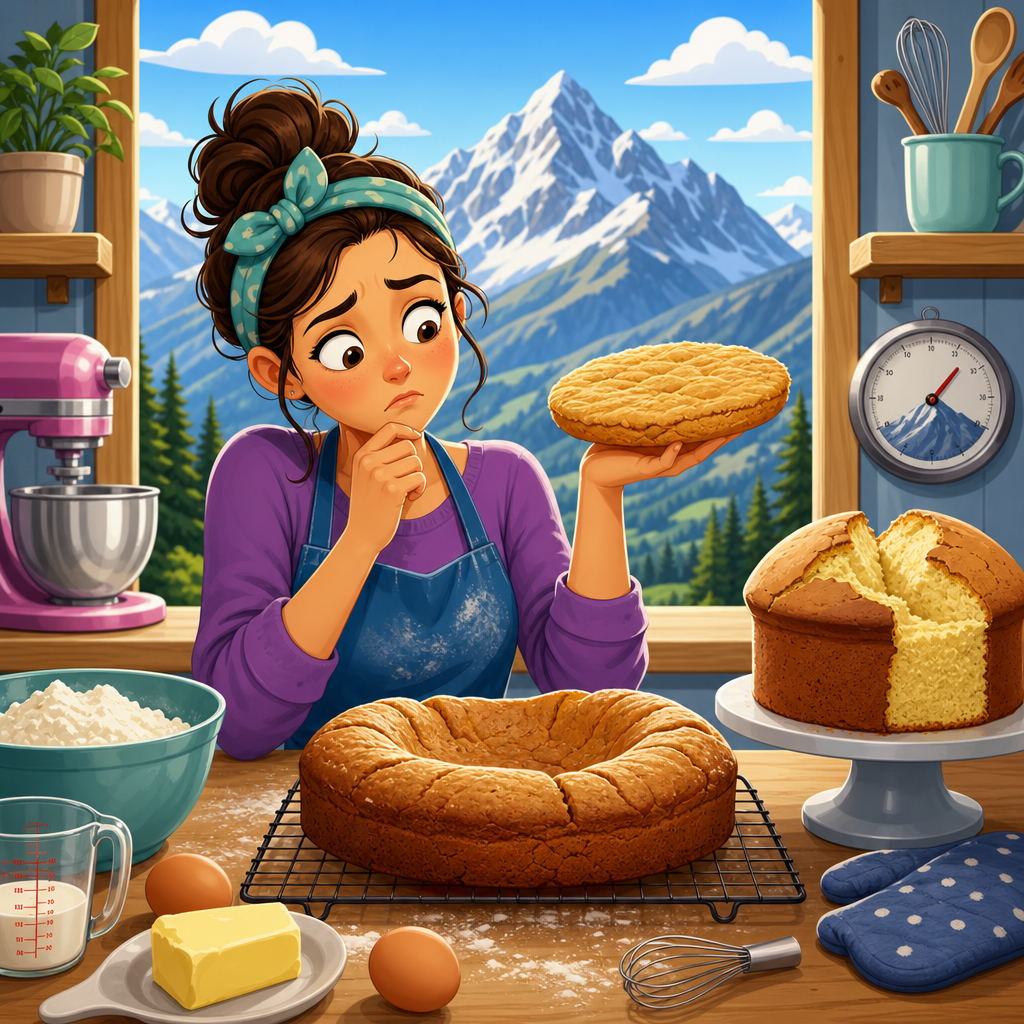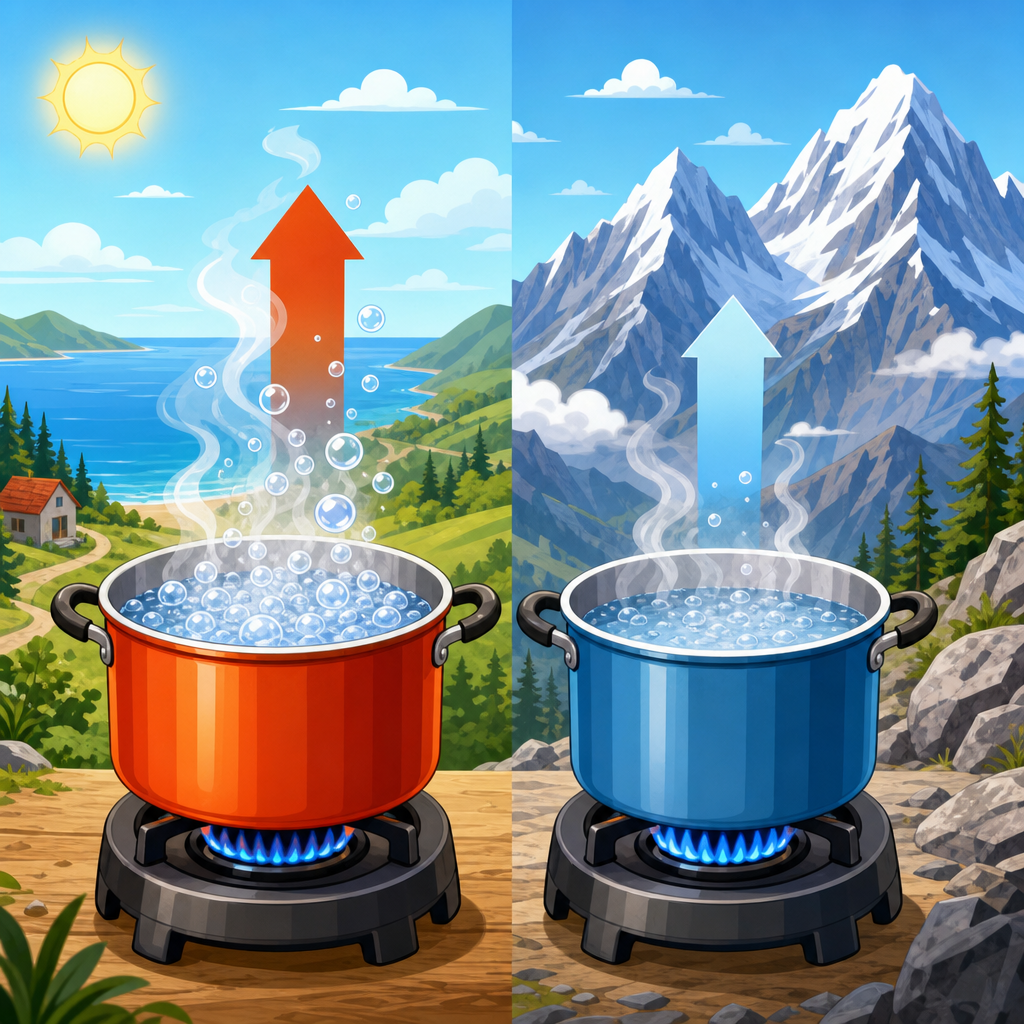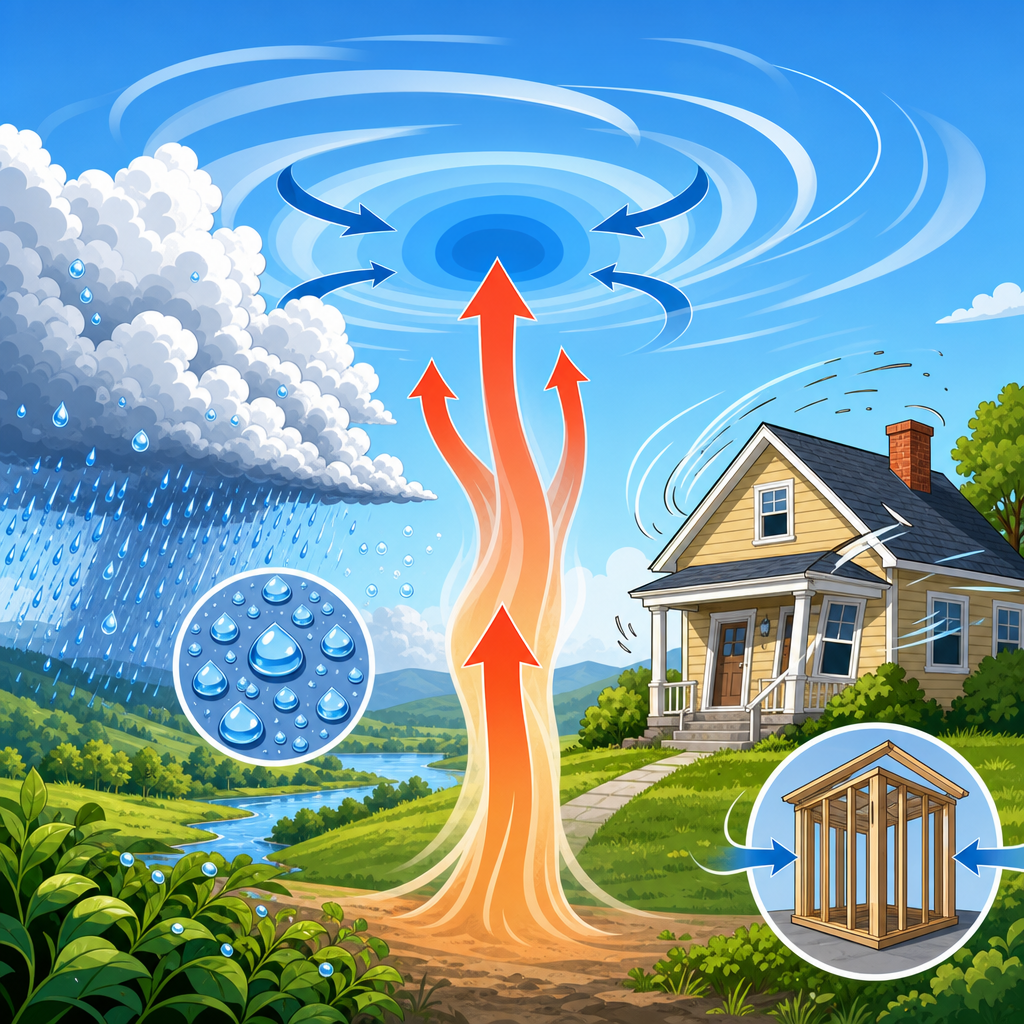
Low air pressure is the hidden force that changes how batter rises, how moisture escapes, and how structure sets when you bake at altitude. In baking, air pressure refers to the weight of the atmosphere pressing on ingredients, gases, and liquids during mixing and heating. As elevation increases, that pressure drops, water boils at a lower temperature, gases expand more readily, and evaporation accelerates. Those shifts sound subtle, but in a cake, muffin, cookie, or loaf of bread, they create obvious effects: overexpansion, collapse, dryness, tunneling, coarse crumb, weak set, and uneven texture.
I learned this the hard way while testing standard sea-level formulas in mountain kitchens. Recipes that were dependable at low elevation suddenly domed too fast, spilled over pans, or baked up dry around the edges before the center stabilized. The problem was not bad technique. It was physics. Baking fundamentals at altitude start with one core truth: lower air pressure speeds some processes and weakens others at the same time. A baker has to manage those competing changes deliberately.
This matters because altitude baking is not a niche inconvenience. Millions of home bakers live above 3,000 feet, and many travel to mountain regions where familiar recipes fail without warning. Once you understand why low air pressure changes rise, moisture, and structure, recipe adjustments become logical rather than random. You can reduce leavening with confidence, increase liquid for a clear reason, strengthen the batter or dough before collapse happens, and use temperature strategically to set proteins and starches earlier. That knowledge turns a frustrating trial-and-error process into a repeatable method.
This hub page covers the full foundation of baking fundamentals at altitude. It explains the science behind rapid rise, moisture loss, and structural weakness; outlines the ingredient categories most affected; and shows how to think about cakes, quick breads, cookies, yeast breads, and pastries through the same governing principles. If you are building an altitude baking system, this is the starting point because every later adjustment traces back to pressure, evaporation, gas expansion, and setting rate.
How low air pressure changes rise
At higher elevations, the atmosphere exerts less force on the gases trapped in batter and dough. That lower external pressure allows carbon dioxide from chemical leaveners, steam from water, and air incorporated during mixing to expand more easily. In practical terms, baked goods rise faster and often earlier in the bake. A cake can look impressive in the first half of oven time, yet that same dramatic lift may stretch the batter beyond what its proteins and starches can support.
This is why altitude bakers often reduce baking powder, baking soda, or yeast activity. The issue is not that leavening stops working. It works too aggressively relative to the product’s ability to set. In cakes, excess lift produces large, weak cells that burst or merge, leading to tunnels, peaked tops, and collapse. In muffins and quick breads, it can create coarse crumb and sunken centers. In yeast doughs, proofing may move quickly, but the dough can overexpand and lose strength before oven spring finishes.
Temperature also interacts with rise. Because water vapor contributes to lift, lower boiling points at altitude mean steam forms sooner. Early steam expansion can be helpful, but it also increases pressure inside a batter before starch gelatinization and egg protein coagulation are complete. I usually think of altitude rise as a timing problem: expansion happens too soon, while structure develops too late. The solution is usually to moderate gas production and help the product set earlier with formulation and oven changes.
Why moisture disappears faster at altitude
Moisture loss is the second major pressure-related change. Water boils at lower temperatures as elevation increases, so liquids evaporate faster in the oven and often during mixing, resting, and proofing as well. A batter that seems properly fluid at sea level may become effectively drier in a mountain oven because more water leaves before the crumb sets. That is why altitude bakers commonly add liquid, reduce sugar slightly, or shorten bake time while increasing oven temperature.
Sugar matters because it is hygroscopic: it binds water and delays setting. At sea level, that can be a benefit, supporting tenderness and moisture retention. At altitude, too much sugar can hold a batter in a fluid state while the product rises too quickly. The result is a structure that lifts, spreads, then falls before it firms. Reducing sugar modestly often improves stability and limits excessive tenderness. Flour choice matters too. Higher-protein flour can support more water and give the baked good a stronger framework, though too much protein can create toughness in delicate formulas.
Moisture management is not only about adding extra liquid. It includes pan size, oven temperature, bake duration, ingredient temperature, and even storage. Shallow pans expose more surface area, which can accelerate drying. Long bakes in low ovens are especially punishing at altitude because the product loses moisture for a longer period before full set. A slightly hotter oven often helps by setting the exterior and internal matrix faster, reducing total moisture loss. The goal is not a wet batter. It is enough retained water for proper starch gelatinization, protein coagulation, tenderness, and shelf life.
How structure weakens and how bakers rebuild it
Structure in baked goods comes primarily from flour proteins, egg proteins, starch gelatinization, and, in some formulas, emulsified fat and sugar interactions. At altitude, fast gas expansion and rapid evaporation place more strain on that framework before it has fully formed. This is why a cake may rise beautifully, then sink as it cools: the internal network expanded beyond its load-bearing capacity. The crumb looked set from the outside, but the cell walls were too thin and weak to stay upright.
Rebuilding structure usually involves several coordinated adjustments. More flour can increase batter strength. One extra egg white can add protein without excessive fat, helping a cake set more firmly. Slightly less sugar reduces tenderization and delays less of the setting process. A higher oven temperature helps starches gelatinize and proteins coagulate sooner. In yeast bread, stronger gluten development through proper mixing and folds can compensate for faster gas expansion. In laminated or highly enriched doughs, cold handling becomes even more important because butter softens quickly while moisture leaves faster.
There are limits to strengthening, however. Too much flour creates a gummy or dry crumb. Too many eggs can make cakes rubbery or custardy. Too much heat can set the outer crumb before full expansion, leading to cracking or thick crusts. Good altitude baking is a balancing act, not a single fix. Every structural adjustment has to be calibrated against rise and moisture. That is why experienced bakers test one variable at a time and keep notes by elevation, pan type, and formula category.
The main ingredient adjustments altitude bakers make
Most reliable altitude baking changes fall into five ingredient groups: leaveners, liquid, flour, sugar, and eggs. The exact numbers vary by product and elevation, but the pattern is consistent across recipes. Reduce the force that creates early rise, replace water that escapes faster, strengthen the framework enough to hold expansion, and encourage earlier setting. Once bakers understand this pattern, they can troubleshoot almost any formula, including family recipes that were never written for mountain kitchens.
| Ingredient or factor | Typical altitude direction | Why the change helps | Common result if ignored |
|---|---|---|---|
| Baking powder or soda | Reduce slightly | Limits overexpansion and collapse | Peaked tops, tunnels, sinking |
| Liquid | Increase slightly | Offsets faster evaporation | Dry crumb, poor starch gelatinization |
| Flour | Increase slightly in some recipes | Strengthens the batter or dough | Weak structure, spread, collapse |
| Sugar | Reduce slightly | Decreases excess tenderness and delayed set | Fallen cakes, fragile crumb |
| Eggs | Sometimes increase whites | Adds protein for stronger set | Insufficient support for expansion |
| Oven temperature | Increase modestly | Sets structure earlier | Too much rise before the crumb stabilizes |
These are not arbitrary rules. They match established baking science used by university extension programs, professional pastry instructors, and test kitchens such as King Arthur Baking. For example, reducing chemical leavening by a small measured amount per teaspoon can prevent domed quick breads from bursting, while adding one to four tablespoons of liquid can materially improve crumb moisture in cakes. Precision matters: a quarter teaspoon can be the difference between ideal lift and collapse in a small-batch recipe.
How different baked goods respond to low pressure
Not every product reacts the same way because each one relies on a different balance of gas, moisture, and structure. Cakes are usually the most sensitive because they contain high sugar, tender fats, and relatively fragile foam or creaming structures. At altitude, they can rise too rapidly and collapse if not strengthened. Foam cakes such as angel food and chiffon are especially vulnerable because their lift depends on expanded egg foams and steam. They often need careful sugar management, stable peaks, and exact bake timing.
Quick breads and muffins are somewhat more forgiving, but they still suffer from overleavening and dryness. The signs are coarse tunnels, exaggerated crowns, and crumbly interiors. Cookies often spread unpredictably because butter melts, sugar liquefies, and water evaporates on a different schedule. Some altitude cookie formulas need less leavening, a bit more flour, or colder dough to preserve thickness. Brownies can dry at the edges before the center reaches the ideal fudgy set.
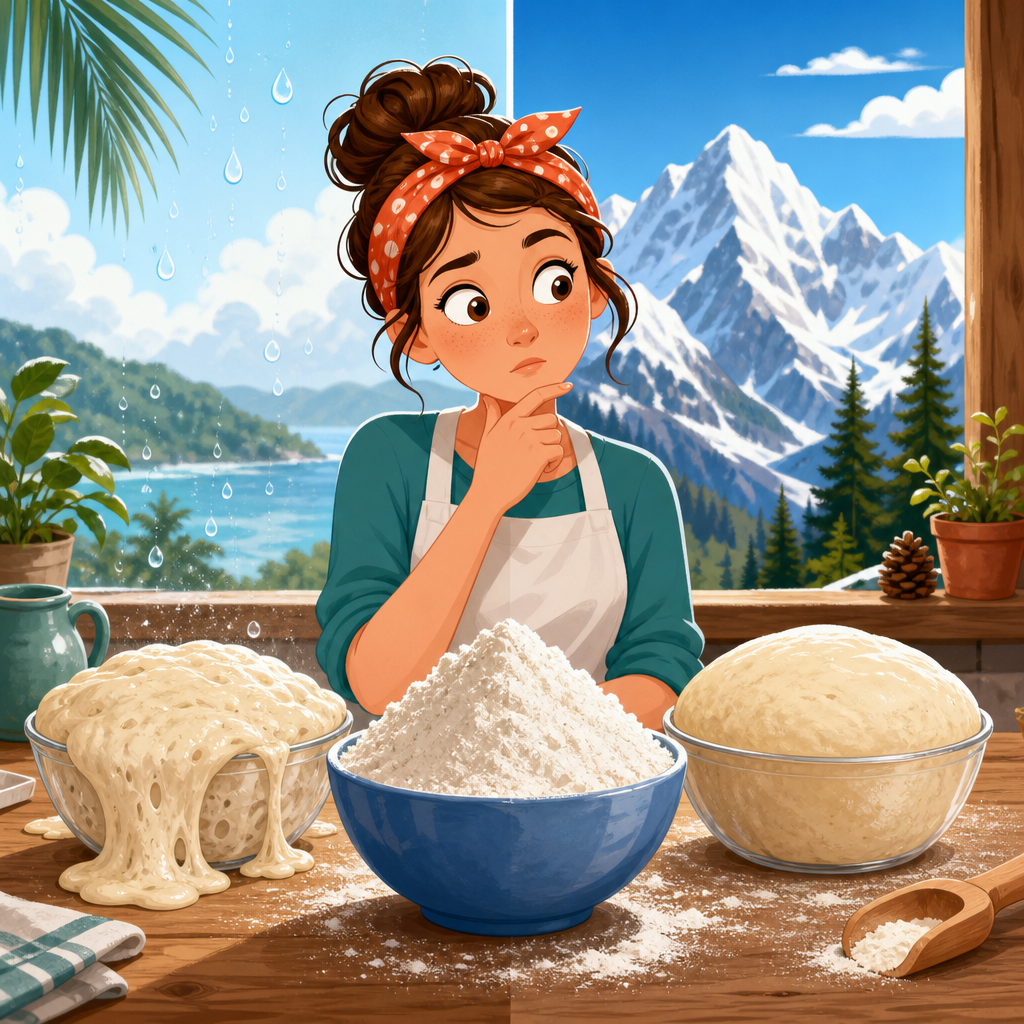
Yeast breads present a different pattern. Lower air pressure does not make yeast inherently stronger, but doughs can expand faster because gas cells enlarge more easily. Proofing therefore requires closer observation. If a loaf doubles too far, its gluten matrix may overstretch and bake into a flatter shape with coarse holes. Retarding dough, reducing yeast slightly, or proofing to a slightly smaller target volume often improves oven spring and crumb. Pie crusts, biscuits, and pastries are influenced more by moisture and fat behavior than by collapse, yet they still benefit from tighter temperature control and careful hydration.
Practical testing methods for reliable altitude baking
The most effective way to master baking fundamentals at altitude is controlled testing. Start with one recipe category, such as butter cakes, and change only one variable per bake: leavener, liquid, sugar, flour, or temperature. Weigh ingredients in grams rather than relying on volume, because measurement error can mask the effect you are trying to observe. Record elevation, room humidity, pan material, mixing method, batter temperature, bake time, and final texture. Those details explain more failures than most bakers realize.
Use sensory checkpoints, not just the timer. A properly adjusted altitude cake should show steady rise rather than explosive lift, a level or gently domed surface, minimal tunneling, and crumb that springs back without collapsing. For yeast doughs, watch dough strength and elasticity, not just volume. The finger dent test remains useful, but altitude bakers should also note whether the dough feels overinflated and fragile. For cookies, evaluate spread diameter, thickness, edge browning, and center moisture after cooling, since carryover setting can be significant in dry mountain air.
Named tools can improve consistency. An oven thermometer verifies actual temperature, which is critical when small increases are intentional. An instant-read thermometer helps identify doneness in breads and enriched cakes. A digital scale, stand mixer, and straight-sided proofing container make results more repeatable. If you maintain a baking journal, group recipes by structure type: creamed cakes, foam cakes, quick breads, drop cookies, rolled cookies, lean yeast doughs, and enriched doughs. Once patterns emerge, you can transfer adjustments intelligently from one formula to another across the full baking fundamentals category.
Common mistakes and the best next step
The most common altitude mistake is treating every failure as a moisture problem and simply adding more liquid. Extra liquid can help, but if collapse is caused by too much leavening or delayed structure, more water alone may worsen it. Another frequent mistake is overcorrecting. Bakers slash leavening, add large amounts of flour, and raise oven temperature too sharply, producing dense, dry results. Small adjustments are more effective because altitude problems are usually cumulative effects of several modest imbalances, not one catastrophic flaw.
Another trap is assuming a recipe that worked once is fully solved. Seasonal humidity, flour brand, egg size, and pan color all influence performance, and those variables are amplified at altitude. I have seen the same muffin formula behave differently in winter and summer because evaporation, ingredient temperature, and batter viscosity changed enough to alter rise timing. That is why the best next step for any baker building confidence is to create a personal baseline recipe in each category, then refine from there rather than chasing perfection across dozens of unfamiliar formulas at once.
Understanding why low air pressure changes rise, moisture, and structure gives you a framework that applies to every bake. Lower pressure lets gases expand sooner, lowers the boiling point of water, increases evaporation, and puts fragile batters and doughs under stress before they have set. Once you know that, the classic altitude adjustments make sense: reduce leavening, add or retain moisture, strengthen structure, and set the product earlier with measured heat. Build your altitude baking fundamentals on that system, keep detailed notes, and test with intent. From there, every cake, cookie, loaf, and pastry becomes easier to predict and improve.
Frequently Asked Questions
1. Why does low air pressure make baked goods rise differently at altitude?
Low air pressure reduces the force pushing against expanding gases inside batter and dough. That matters because baking depends heavily on gas expansion. Air beaten into a mixture, steam created from liquid, and carbon dioxide released by yeast or chemical leaveners all enlarge more easily when the surrounding atmospheric pressure is lower. At altitude, that means a cake may puff up too fast, muffins can dome aggressively and then collapse, and breads may overexpand before their structure is strong enough to hold the shape.
In practical terms, the rise often becomes less controlled. At sea level, pressure helps moderate expansion so the starches, proteins, and sugars in the batter have more time to set in balance with the lift. At higher elevations, gases can stretch the batter before that structure is ready. The result may be tunnels, coarse crumb, cracked tops, sunken centers, or a dry texture caused by overexpansion followed by collapse. That is why high-altitude baking often calls for small but important adjustments such as reducing leavening, increasing oven temperature slightly, or changing liquid levels. The goal is not to stop rising, but to make the rise happen at a pace the structure can support.
2. How does lower air pressure affect moisture loss during baking?
Lower air pressure causes water to boil and evaporate at lower temperatures, which speeds up moisture loss in the oven. In baking, that changes both texture and timing. Batters and doughs can dry out faster before the interior is fully set, especially in items with large exposed surfaces such as cakes, quick breads, muffins, and cookies. Even when a recipe contains the same amount of liquid used at sea level, the finished product may seem drier, crumblier, or more fragile simply because more water escaped earlier and more rapidly.
This moisture shift affects more than softness. Water plays a major structural role in baking: it hydrates flour, dissolves sugar, activates starch gelatinization, supports gluten development, and creates steam for lift. When evaporation happens too quickly, all of those processes can move out of sync. A cake may set unevenly, a loaf may bake with a dry outer layer before the center fully develops, and cookies may spread differently because the balance between melting fat, dissolving sugar, and evaporating moisture changes. Bakers at altitude often compensate by increasing liquid slightly, using ingredients that retain moisture well, or shortening bake time while raising oven temperature modestly. Those changes help preserve enough water for both tenderness and proper structure.
3. What does low air pressure do to the structure of cakes, muffins, cookies, and bread?
Structure is the framework that lets a baked good rise, hold shape, and keep a desirable crumb after cooling. In most recipes, structure develops from a combination of coagulating proteins, gelatinizing starches, dissolved sugars, fats, and sometimes gluten. Low air pressure puts that framework under more stress because the gases inside the product expand more easily and earlier in the bake. If the structure has not set by the time expansion peaks, the product can overinflate and then sink, wrinkle, or become crumbly once it cools.
Different baked goods show this problem in different ways. Cakes and muffins are especially vulnerable because their batters are relatively delicate and rely on a careful balance between lift and setting. Too much early expansion can create peaked tops, large holes, and collapsed centers. Cookies may spread too much or become thin because moisture leaves faster and sugar concentration shifts more quickly during baking. Yeast breads can overproof or rise too rapidly, leading to weakened gluten structure, coarse texture, or collapse in the oven. In all cases, the core issue is timing: low pressure changes when expansion happens relative to when the internal framework becomes stable. That is why successful altitude baking often requires strengthening the batter or dough while slightly restraining expansion.
4. Why do high-altitude recipes often reduce leavening and increase oven temperature?
These two adjustments address the biggest effects of low air pressure: faster gas expansion and delayed structural stability. Reducing baking powder, baking soda, or even yeast helps prevent the batter or dough from rising beyond what it can support. Since gases expand more readily at altitude, the amount of leavening that works perfectly at sea level can become excessive higher up. A recipe that once rose beautifully may suddenly overflow the pan, form large tunnels, or collapse after baking. Cutting leavening slightly helps produce a more controlled, even rise.
Increasing the oven temperature slightly works from the opposite side of the equation: it helps the structure set sooner. A hotter oven can speed protein coagulation and starch gelatinization so the crumb stabilizes before overexpansion causes damage. This is particularly useful for cakes, muffins, and quick breads, where delicate batters need early support. The adjustment must be moderate, though, because too much heat can set the exterior too quickly, leading to thick crusts, underbaked centers, or uneven texture. Used together, less leavening and a somewhat higher baking temperature help restore the balance between expansion, moisture loss, and structure that lower air pressure disrupts.
5. What are the most important baking adjustments to make when low air pressure is affecting results?
The most important adjustments are the ones that rebalance rise, moisture, and structure. Start by evaluating leavening, because overexpansion is one of the most common altitude problems. If cakes rise fast and then sink, if muffins form exaggerated peaks, or if quick breads develop large holes, the recipe may need slightly less baking powder or baking soda. Next, look at liquid. Because evaporation accelerates when air pressure drops, many recipes benefit from a small increase in water, milk, buttermilk, egg, or another moisture source. That added liquid can improve tenderness, support starch and protein development, and prevent dryness.
Then consider oven temperature and sugar. A small increase in oven temperature often helps structure set before collapse occurs. Sugar may also need attention because it weakens structure, delays setting, and attracts moisture. In some recipes, reducing sugar slightly can improve stability and prevent excessive spreading or sinking. Flour can matter too: a modest increase may strengthen the batter or dough enough to hold expanding gases more effectively. For yeast doughs, shorter proofing times are often necessary because fermentation and gas expansion can outpace gluten strength. The key is to think in terms of cause and effect. If low air pressure is making gases expand too much, you rein in leavening. If moisture is escaping too fast, you add liquid or adjust baking conditions. If the crumb is too weak, you help the structure set earlier or strengthen the formula. Those targeted changes produce better results than guessing, and they explain why altitude baking is really about restoring balance rather than rewriting the entire recipe.