Ski days at altitude are hard on skin, eyes, airways, and the body’s temperature regulation, so the best shower and skincare routine after skiing at altitude is really a comfort troubleshooting system that starts the minute you step indoors. Altitude means lower humidity, stronger ultraviolet exposure, colder wind, and often longer contact with friction from helmets, goggles, neck gaiters, base layers, and boot liners. Add hot lodge air, dehydrating travel, and sweat trapped under technical fabrics, and you get a familiar mix of tight skin, flushed cheeks, itchy legs, dry eyes, chapped lips, scalp irritation, and that drained feeling that makes an overly hot shower seem irresistible. I have worked with skiers, winter travelers, and dry-skin clients for years, and the same pattern repeats: people think they need more cleansing, more heat, or harsher exfoliation, when what they usually need is barrier repair, gradual rewarming, and a simple sequence that reduces water loss. This hub article covers comfort troubleshooting comprehensively by connecting shower temperature, timing, cleanser choice, moisturizing strategy, scalp care, eye comfort, nasal comfort, and home humidity into one practical routine. If you want skin that feels normal by morning instead of stinging, peeling, or overheating, the key is to treat post-ski care as recovery, not just hygiene.
Start with rewarming, hydration, and a controlled shower
The first step after skiing at altitude is not jumping straight into a steaming shower. Rapid heating can worsen facial flushing, itch, and the prickly sensation many people get when cold skin is suddenly exposed to very hot water. Come inside, remove damp layers promptly, drink water or a warm nonalcoholic beverage, and give your body ten to fifteen minutes to rewarm gradually. This matters because cold-exposed skin has altered blood flow, and a sudden heat spike can amplify redness and transepidermal water loss. In plain terms, your skin leaks more moisture when you overheat it.
Use a lukewarm shower, ideally around 37 to 38 degrees Celsius, and keep it short, about five to ten minutes. The American Academy of Dermatology has long advised limiting hot water and shower length for dry or eczema-prone skin, and that guidance is especially relevant after a day on a mountain. Focus cleansing where it is needed: face if covered in sunscreen, neck, underarms, groin, feet, and anywhere sweat collected under base layers. If your legs, arms, or trunk are simply dry and not visibly dirty, rinsing without aggressive body wash is often the better choice. Over-cleansing is one of the fastest ways to turn post-ski tightness into next-day flaking.
For cleanser, choose a low-foam, fragrance-free syndet or cream wash with mild surfactants. Look for ingredients such as glycerin, ceramides, petrolatum, squalane, or colloidal oatmeal. Avoid scrubs, high-acid exfoliants, and strongly fragranced gels immediately after skiing, especially if windburn or chapping is present. If you are acne-prone, you can still use an active cleanser, but reserve benzoyl peroxide or salicylic acid for limited areas rather than washing your whole body with them in winter. The comfort-first rule is simple: clean what needs cleaning, then get out before your skin feels squeaky.
Use the three-minute moisture window to repair the skin barrier
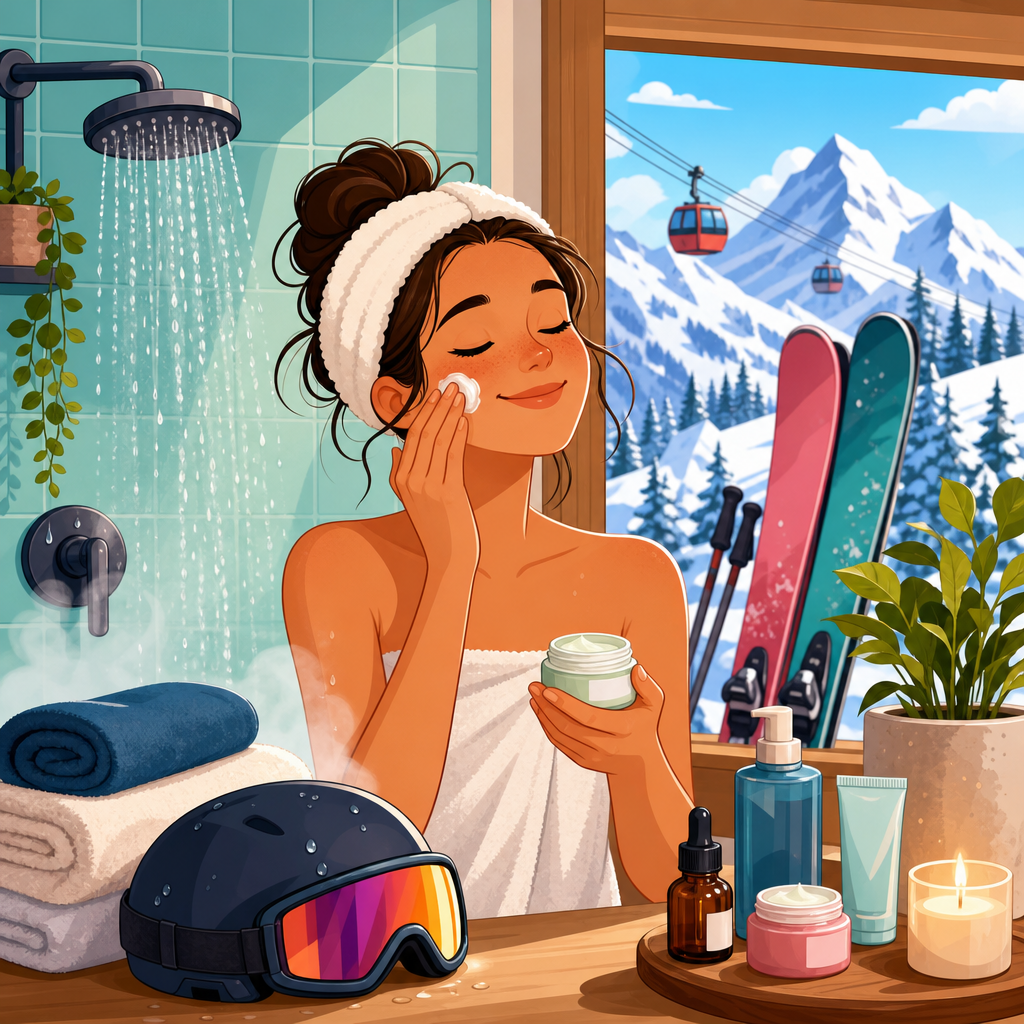
The most effective skincare routine after skiing at altitude happens right after you towel off. Pat the skin until it is no longer dripping but still slightly damp, then apply moisturizer within about three minutes. This timing is not a marketing trick. Damp skin gives humectants water to hold, and an occlusive layer slows evaporation. In clinic-style routines and real home use, this single habit does more for winter comfort than buying multiple treatment products.
For the face, use a bland moisturizer that combines humectants, emollients, and occlusives. Glycerin and hyaluronic acid attract water; ceramides, cholesterol, and fatty acids help rebuild barrier lipids; petrolatum, dimethicone, or shea butter reduce water loss. If your cheeks burn after wind exposure, skip retinoids, exfoliating acids, and strong vitamin C that night. A recovery routine can be as simple as a gentle cleanser, moisturizer, and a thin protective balm on high-friction areas around the nose, lips, and cheekbones. If you have rosacea-prone flushing, niacinamide can help some people, but introduce it cautiously because even useful ingredients can sting on compromised skin.
For the body, a cream or ointment usually outperforms a lotion at altitude. I often recommend using a richer product on shins, hands, knees, elbows, and any area that rubbed against ski socks or seams. Petrolatum remains one of the most effective occlusives available and is supported by decades of dermatology use. If you dislike the feel of ointments, a ceramide cream applied generously is a practical middle ground. Hands deserve special attention because repeated glove removal, handwashing, and cold exposure disrupt the barrier quickly; apply hand cream after showering and again before bed.
| Comfort issue after skiing | Most likely cause | Best shower and skincare fix |
|---|---|---|
| Tight, itchy skin | Hot water, low humidity, over-cleansing | Short lukewarm shower, limited cleanser, thick cream within three minutes |
| Red, stinging cheeks | Wind exposure, UV, rapid reheating | Gradual warming, gentle wash, bland moisturizer, balm on irritated areas |
| Chapped lips | Cold air, mouth breathing, sun, dehydration | Use petrolatum-based lip balm repeatedly, avoid licking lips |
| Dry scalp or helmet itch | Sweat, friction, harsh shampoo, dry indoor air | Mild shampoo only when needed, conditioner on lengths, humidify bedroom |
| Dry eyes and nose | Wind, UV, altitude dryness, heated rooms | Preservative-free artificial tears, saline spray, moderate indoor humidity |
Troubleshoot face, lips, eyes, and scalp with targeted care
Facial comfort problems after skiing tend to cluster in predictable ways. If your face feels hot and looks red but not blistered, think wind irritation or heat rebound rather than “needing to scrub off” the day. Wash gently, then moisturize immediately. If the skin is visibly sunburned, use cool compresses, a bland moisturizer, and avoid actives until tenderness settles. High altitude increases ultraviolet intensity because there is less atmosphere to filter radiation, and snow reflects a significant amount of UV, so even winter sun exposure can be substantial. That is why the evening routine should be restorative, while the next morning should return to broad-spectrum sunscreen and lip SPF.
Lips are often the first area to crack because the lip barrier is thin and people breathe through the mouth during exertion. Post-ski lip care should be boring and frequent: apply a petrolatum-based or lanolin-based balm, reapply after eating, and do not pick flakes. Menthol, camphor, cinnamon, and strong flavors can make chapping worse for sensitive users. If cracks form at the corners of the mouth, protect them with ointment and consider whether saliva exposure or irritation from flavored products is part of the problem.
Eyes and scalp are part of comfort troubleshooting even though many skincare articles ignore them. Wind, glare, and dry lodge air can destabilize the tear film, so preservative-free lubricating eye drops are often useful after skiing, especially for contact lens wearers. If your eyes sting in a hot shower, keep your face out of direct spray and lower the water temperature. For the scalp, wash only if there is sweat, helmet buildup, or styling product residue. Daily shampooing with a strong cleanser can worsen itching and flakes in dry mountain climates. A mild shampoo, conditioner on the hair lengths, and occasional anti-dandruff treatment only if clinically needed is usually enough. If the scalp is irritated along the helmet line, look at fit, trapped sweat, and detergent residue in liners before blaming a product alone.
Improve bedroom and home comfort so the routine keeps working overnight
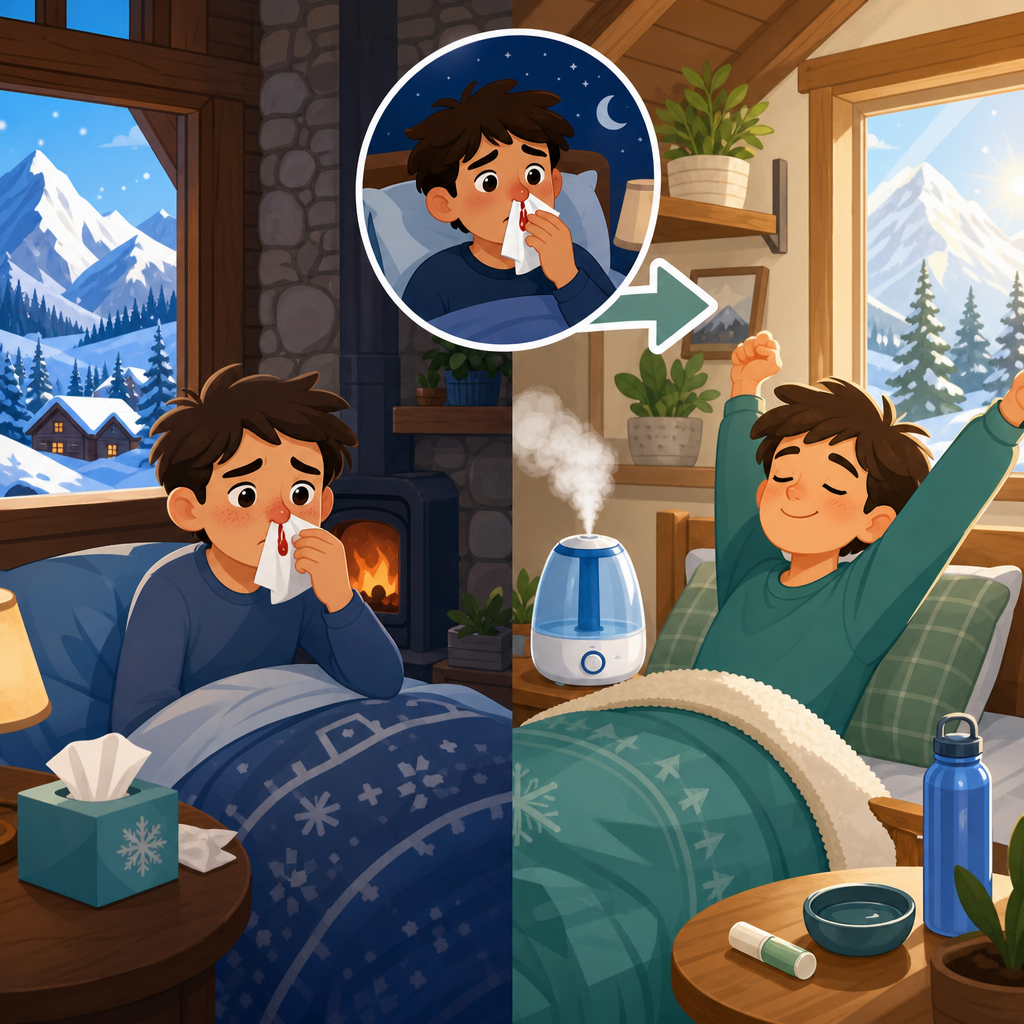
The best shower and skincare routine after skiing at altitude will underperform if your room is extremely dry. Indoor heating can drive relative humidity low enough that skin, eyes, and nasal passages dry out again overnight. A practical target for many homes and hotel rooms is roughly 30 to 50 percent relative humidity, high enough to improve comfort but not so high that condensation and mold become likely. A small hygrometer gives you real data, and a clean humidifier can make a noticeable difference in morning skin tightness, dry throat, and nosebleed tendency. Distilled water and regular tank cleaning help reduce mineral dust and microbial growth.
Bedding and clothing choices matter too. After skiing, change into soft, dry layers rather than sitting in damp base garments that keep salt and friction on the skin. If you are prone to itchy legs, choose loose sleepwear and apply extra cream to the shins before bed. Detergent can also be a hidden culprit. Fragrance-heavy laundry products and fabric softeners may irritate skin that is already stressed by cold and wind. Unscented detergent and a full rinse cycle are sensible adjustments when comfort is the goal.
Nasal dryness is common at altitude and often contributes to poor sleep, mouth breathing, and morning thirst. Saline spray or gel can be very helpful, especially if you spent the day breathing cold air through a buff that became damp and chilly. This is also where hydration matters in a realistic way. Drinking enough fluids supports overall comfort, but it will not fully compensate for a stripped skin barrier or a desert-dry room. Think of water intake, humidity, and moisturizer as complementary tools, not interchangeable fixes. When all three are addressed, the overnight recovery curve is much better.
Adjust the routine for eczema, acne, sensitive skin, and kids
Not everyone should use the same post-ski routine. If you have eczema, the margin for error is smaller, and hot showers are especially likely to trigger itching. Keep showers brief, use fragrance-free cleansers sparingly, and favor ointments or heavy creams over lotions. If you use prescription topical steroids or calcineurin inhibitors, follow your usual treatment plan on active patches after bathing, then seal with moisturizer as directed by your clinician. For many eczema-prone skiers, the biggest wins are reducing shower heat, moisturizing immediately, and protecting hands and lips early rather than trying to rescue severe dryness later.
If you have acne-prone or oily skin, winter can be confusing because you may feel dry and still break out. The answer is balance, not stripping. Remove sunscreen and sweat with a gentle cleanser, use noncomedogenic moisturizer, and keep acne treatments targeted. Adapalene, benzoyl peroxide, and exfoliating acids remain useful, but applying them over wind-irritated skin can cause excessive sting and scaling. On heavy exposure days, a recovery night with moisturizer only is often smarter than forcing a full active routine. Barrier damage can prolong redness and make breakouts harder to control.
Children need even simpler care. Their skin can dry quickly, and they may not explain discomfort until they are already scratching. After a ski day, use a quick lukewarm bath or shower, a mild cleanser only where necessary, then a thick moisturizer over the whole body. Pay special attention to cheeks, hands, and lips. For older adults, add one more caution: aging skin produces fewer lipids and recovers more slowly, so rich moisturizers, gentle toweling, and room humidity matter even more. Across all groups, comfort troubleshooting works best when the routine is short enough to repeat consistently. Tonight, lower the shower temperature, moisturize within three minutes, and set up your room so your skin can recover while you sleep.
Frequently Asked Questions
What should I do immediately after coming indoors from a ski day at altitude?
The first few minutes indoors matter more than most people realize. At altitude, your skin barrier has usually spent hours dealing with cold wind, very low humidity, stronger UV exposure, sweat under technical layers, and constant friction from goggles, helmets, collars, neck tubes, and boot liners. Instead of jumping straight into a very hot shower, start by letting your body transition gradually. Peel off damp or sweaty layers, put on dry clothing, and begin rehydrating with water or an electrolyte drink. This helps your body catch up after altitude-related fluid loss and can also reduce that tight, flushed, overheated feeling many people get once they step into lodge or hotel heat.
Before showering, take a quick inventory of your skin. If your face feels hot, stings, or looks windburned, give it a few minutes to settle before washing. If your lips are cracked or your nasal passages feel painfully dry, apply a simple occlusive lip balm and consider saline nasal spray. If your eyes feel gritty from sun, wind, and dry air, preservative-free lubricating eye drops can help. Think of your post-ski routine as full-body recovery, not just cleansing. You are trying to restore moisture, reduce inflammation, and avoid overcorrecting with heat or harsh products.
Once you are warm but not overheated, move into a short lukewarm shower rather than a steaming one. This protects the skin barrier while still washing away sweat, salt, sunscreen, and environmental grime. Afterward, moisturize immediately while your skin is still slightly damp, paying special attention to the face, hands, neck, shins, and anywhere equipment rubbed. That sequence—remove wet layers, rehydrate, cool down slightly, shower lukewarm, then moisturize promptly—is usually the most effective and comfortable way to recover after skiing at altitude.
Is a hot shower bad for your skin after skiing at altitude?
A very hot shower can feel amazing after a cold day on the mountain, but for your skin it is usually the wrong move. Altitude already pushes the skin barrier into a stressed state because the air is dry, the wind is harsh, UV exposure is more intense, and you may have had repeated friction on the face and body all day. Hot water strips surface oils faster, increases transepidermal water loss, and can intensify redness, stinging, and post-windburn irritation. If your cheeks feel raw from goggles or your neck is chafed from a gaiter, hot water often makes that discomfort noticeably worse.
The better option is a lukewarm shower kept relatively short. You still want to cleanse away sweat, bacteria, sunscreen residue, and trapped oils from under base layers, but you do not want to strip the skin in the process. Aim for comfort, not steam. This is especially important if you are prone to eczema, rosacea, dry patches, or winter itch. Those conditions tend to flare in mountain environments, and hot showers are a common trigger.
If you absolutely love heat for muscle recovery, there is a balanced way to handle it. Keep the water moderate on your face and areas of friction, and avoid prolonged soaking. Then focus your recovery on a rich moisturizer or body cream afterward rather than trying to “fix” dryness later. Skin that is exposed to hot water and then left unmoisturized in heated indoor air often feels even tighter within an hour. In other words, the shower itself should be gentle, and the real repair work should happen after you turn the water off.
What is the best post-ski shower and skincare routine for face and body?
The best routine is simple, barrier-supportive, and consistent. Start with a short lukewarm shower using a gentle, non-stripping cleanser. For the face, avoid foaming cleansers that leave the skin squeaky or tight, especially if you have been wearing sunscreen, goggles, and a face covering all day. A cream, lotion, or mild gel cleanser is usually a better fit because it removes residue without over-drying. For the body, use cleanser strategically rather than scrubbing everything aggressively. Focus on sweat-prone areas such as the underarms, feet, groin, chest, and back, and keep the rest of the wash gentle.
After showering, pat the skin dry instead of rubbing. Then moisturize immediately while the skin is still slightly damp. On the face, look for a fragrance-free moisturizer with barrier-friendly ingredients such as ceramides, glycerin, hyaluronic acid, squalane, petrolatum, dimethicone, or colloidal oatmeal. If your skin is irritated from wind and cold, skip exfoliating acids, retinoids, strong vitamin C serums, or heavily fragranced products that night. This is not the time for a “deep treatment” routine. It is the time to calm and seal.
For the body, use a richer cream or balm, especially on shins, knees, hands, elbows, and any area rubbed by gear. If you have chafing from sports bras, waistbands, socks, or boot liners, a bland barrier ointment can be more soothing than a standard lotion. Do not forget lips and hands, which usually take a beating in mountain conditions. A thick lip ointment and hand cream reapplied through the evening can make a big difference. If you are heading back out the next day, think of this evening routine as preparation for tomorrow as much as recovery from today.
How do I treat windburn, redness, goggle irritation, and dry patches after skiing?
First, it helps to know that “windburn” is often a mix of irritation, barrier damage, cold exposure, friction, and sometimes sun exposure. The skin may look red, feel hot, sting when you apply products, or develop flaky patches around the nose, cheeks, and mouth. Goggle lines and pressure points can add another layer of irritation, especially if sweat, sunscreen, and trapped heat were involved. The right response is to calm the skin, not attack it with exfoliants or a complicated routine.
Cleanse gently, then use bland, fragrance-free products designed to reduce water loss and support repair. Creams containing ceramides, petrolatum, glycerin, or colloidal oatmeal are often excellent choices. If the skin is actively stinging, apply moisturizer in a very simple routine and avoid strong actives for a day or two. A cool compress can help with heat and discomfort, but avoid ice directly on the skin. For areas where goggles or face coverings rubbed, a thin layer of ointment can reduce further friction while the skin heals. Lips often need an occlusive balm rather than a glossy cosmetic product, and the corners of the mouth may need extra protection if they are cracked.
If redness is severe, swelling is significant, blistering appears, or the pattern looks more like sunburn than irritation, treat that more seriously and adjust your next-day sun protection. Remember that altitude increases UV intensity, and reflected light from snow can amplify exposure. Also pay attention to non-skin symptoms. Dry, burning eyes, scratchy throat, and dry nasal passages commonly travel with facial irritation after skiing at altitude. Artificial tears, saline spray, and good hydration support overall comfort. If symptoms are persistent, painful, or worsening despite gentle care, it is reasonable to speak with a medical professional, especially if you suspect true sunburn, cold injury, or a product reaction.
Which skincare ingredients and products should I use—or avoid—after skiing at altitude?
After skiing at altitude, the safest and most effective products are usually the boring ones: gentle cleanser, rich moisturizer, barrier balm, lip protection, and possibly a hydrating serum if your skin tolerates it well. Ingredients that tend to help include ceramides for barrier support, glycerin and hyaluronic acid for water binding, squalane for lightweight emollience, petrolatum or dimethicone for sealing, niacinamide in a gentle formula for barrier function, and colloidal oatmeal for soothing dryness and irritation. For the body, thicker creams generally outperform thin lotions in mountain conditions because they slow water loss more effectively in dry heated indoor air.
What should you avoid right after a ski day? Usually anything likely to sting, strip, or over-stimulate already stressed skin. That often includes strong exfoliating acids, scrubs, retinoids, high-strength acne treatments, heavily fragranced products, alcohol-heavy toners, and peel pads. Even ingredients you normally love can feel harsher after a day of wind, cold, sun, and friction. If your skin feels resilient and you are very accustomed to certain actives, you may still be able to use them, but many people do better by taking a barrier-first approach in the evening and resuming stronger products later.
One more important point: nighttime repair and next-day protection go together. A great post-ski routine does not end with moisturizer. If you are skiing again tomorrow, keep using lip balm overnight, consider a bedside humidifier if the room is very dry, and be ready to apply sunscreen generously in the morning. The best shower and skincare routine after skiing at altitude is not about chasing perfection with a dozen products. It is about reducing irritation, restoring moisture, and helping your skin recover enough to handle another cold, bright, high-altitude day.</