A high-altitude cabin needs a different emergency food storage plan than a suburban pantry because cold swings, lower air pressure, winter access problems, and off-grid power limits change what food lasts, how it cooks, and how reliably you can reach it when roads close. In mountain properties I have helped stock, the biggest mistake is assuming any “72-hour kit” scales into a true resilience system. It does not. A dependable emergency food storage plan for a high-altitude cabin is a layered strategy that combines daily-use pantry staples, long-life reserves, water planning, fuel-aware cooking, pest protection, and rotation habits matched to your climate, occupancy pattern, and evacuation risk. High altitude generally means harsher ultraviolet exposure, bigger temperature variation, lower humidity in many regions, and more frequent snow, wind, or wildfire disruptions. Those conditions affect packaging, calorie needs, and logistics.
This matters because a cabin emergency is rarely just about food. It is usually a compound problem: power outage, frozen pipes, blocked road, low fuel, and delayed emergency response. Food storage therefore supports the entire off-grid and resilience picture. If your stored meals need abundant water, long simmer times, or freezer space, they can fail when you need them most. If your inventory is heavy on comfort snacks and light on protein, fiber, and electrolytes, morale drops and physical work becomes harder. The best plan answers practical questions directly: How many days should you store? Which foods work at 8,000 feet? How do you keep supplies safe from mice and bears? What should stay in the cabin full time versus travel back and forth with you? This hub article covers those decisions in plain terms so you can build a system, not just buy random buckets.
For most cabins, the target should be at least two weeks of ready-to-cook food for every regular occupant, plus a deeper reserve of thirty to ninety days in shelf-stable staples. The shorter layer handles storms and temporary isolation. The deeper layer protects against long outages, wildfire displacement, job disruption, or supply-chain gaps that make mountain deliveries unreliable. A useful definition helps here. “Emergency food storage” means food that remains safe, nutritionally adequate, and realistically cookable during disrupted utilities and access. “High-altitude cabin” means a mountain property where transport, weather, and utility reliability differ materially from a primary residence. “Off-grid resilience” means maintaining essential living functions with minimal outside support. With those terms clear, the right approach becomes easier to design and maintain.
Start with a layered storage model, not a single stash
The most reliable emergency food storage plan uses three layers. Layer one is your working pantry: foods you already eat, rotated constantly, usually covering seven to fourteen days. Think canned chili, rice, pasta, oats, nut butter, canned tuna, shelf-stable milk, tortillas, soup, freeze-dried fruit, coffee, salt, sugar, and cooking oil. Layer two is your disruption reserve: thirty days of shelf-stable foods selected for simple preparation and strong calorie density. Layer three is your deep reserve: bulk staples and long-life packaged foods intended for low-turnover storage, such as mylar-packed beans, wheat, rice, dehydrated vegetables, textured vegetable protein, and commercially packed freeze-dried meals.
At cabins, this layered model solves a recurring problem: people overbuy long-term survival food and understock everyday foods they can cook under stress. I have seen expensive #10 cans sit untouched for years while the cabin runs out of salt, oatmeal, and propane after one snowed-in weekend with extra guests. A better balance is roughly 60 percent familiar pantry foods, 25 percent low-effort emergency meals, and 15 percent deep-storage staples. That ratio keeps morale up, reduces waste through rotation, and still gives you substantial backup if roads stay closed longer than expected.
Another reason the layered model works is that occupancy changes. Some mountain cabins are full-time homes; others are weekend properties that may sit vacant for weeks. A vacant cabin needs food that tolerates temperature swings and does not attract pests. A full-time cabin can support more active rotation and fresh-over-storage turnover. Your plan should match the use pattern. For a frequently used cabin, maintain a broader pantry and refresh monthly. For a seasonal cabin, narrow the menu to the most durable, sealed foods and inspect every visit. The hub principle for off-grid resilience is simple: each system should have redundancy, and food is no exception.
Calculate calories, water, and cooking fuel together
Most emergency food plans fail on math. Adults generally need about 1,800 to 2,400 calories per day at rest, but mountain living often raises demand. Shoveling snow, hauling firewood, hiking steep grades, and staying warm can push needs to 2,500 to 3,500 calories per day depending on body size and workload. Children, older adults, and people with medical conditions need more customized planning, but every plan should begin with realistic calorie targets instead of arbitrary meal counts. Protein matters too: a practical emergency benchmark is at least 50 to 80 grams daily per adult, with enough fat to maintain satiety and body heat.
Water is inseparable from food storage. Freeze-dried meals can be efficient, but they require potable water. Dry beans and rice are economical, but they require more water and longer cook times than canned alternatives. At altitude, water boils at a lower temperature, so cooking can take longer unless you use a pressure cooker. That means more fuel. The right question is not “How much food should I buy?” but “How much edible food can I prepare with the water and fuel I can reliably store?” In practice, I recommend making at least one third of cabin food immediately edible or requiring only reheating. The rest can be quick-cook staples and deeper reserves.
| Storage layer | Best food types | Water demand | Fuel demand | Ideal use case |
|---|---|---|---|---|
| Working pantry | Canned soups, oats, pasta, nut butter, tuna, shelf-stable milk | Low to moderate | Low to moderate | Routine meals and short outages |
| Disruption reserve | Instant rice, ramen, canned beans, dehydrated potatoes, freeze-dried meals | Moderate | Low | Storm isolation and fuel conservation |
| Deep reserve | Mylar-packed grains, dry beans, wheat berries, powdered eggs, TVP | High | Moderate to high | Extended disruption and value storage |
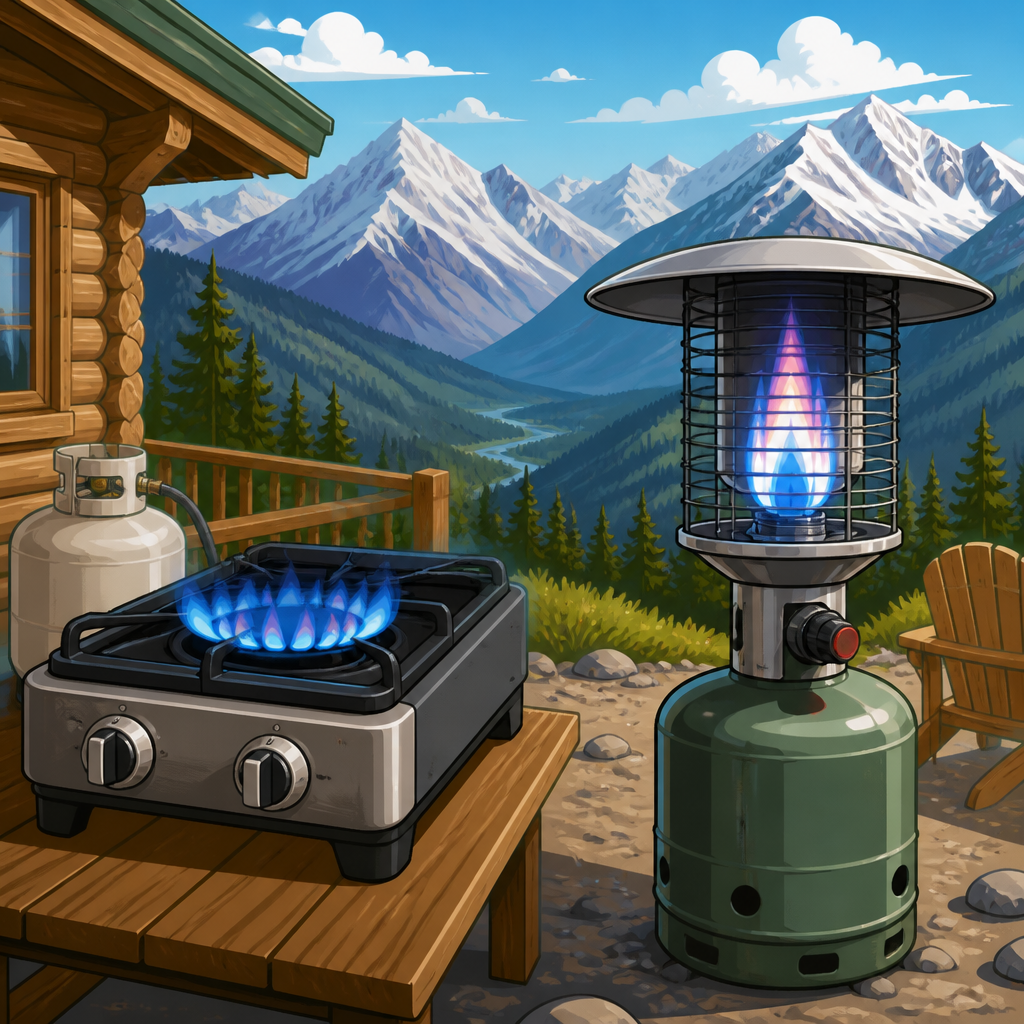
Include backup water treatment as part of the food plan. Gravity filters from Berkey-style systems, hollow-fiber filters from Sawyer, and purification drops each solve different problems. If your cabin uses hauled water, a cistern, or a well that depends on electricity, food selection must reflect possible water rationing. Likewise, fuel planning should cover at least two cooking methods, such as propane plus woodstove, or propane plus a butane camp stove. The food system is only as resilient as the energy system that supports it.
Choose foods that handle altitude, cold, and long vacancy
The best emergency foods for a high-altitude cabin are shelf-stable, calorie-dense, easy to cook, and protected against freeze-thaw cycles. Canned goods remain useful, but repeated freezing can damage seams, textures, and labels, especially in unheated spaces. Glass is vulnerable and should be minimized. Flexible retort pouches, metal cans, and sealed dry goods in mylar bags with oxygen absorbers generally handle cabin conditions better. Good core categories include instant oats, rolled oats, rice, pasta, couscous, instant mashed potatoes, canned meats, canned beans, lentils, peanut butter, almond butter, powdered milk, powdered cheese, bouillon, dehydrated vegetables, dried fruit, jerky, trail mix, baking basics, and electrolyte mixes.
Long-vacancy cabins benefit from foods with broad temperature tolerance and low odor leakage. Rodents can smell through cardboard and thin plastic. Repackage vulnerable goods into gasketed containers or metal bins. Gamma-lid buckets work well for dry goods in occupied buildings, but in rodent-heavy cabins I prefer mylar liners inside hard-sided containers, then secondary containment on shelving at least six inches off the floor. For bear country, no indoor food storage system substitutes for secure building construction, but reducing scent and keeping a clean kitchen lowers risk. Never rely on flimsy totes for long-term storage in a remote mountain structure.
Nutrition quality matters as much as shelf life. Many survival kits are heavy on starch and sodium, light on fiber and complete protein, and nearly empty on micronutrients. Better planning includes canned salmon or sardines for omega-3 fats, beans and rice for complementary amino acids, freeze-dried berries for vitamin C support, and shelf-stable greens powders only as a supplement, not a substitute for real food. If anyone in the cabin has celiac disease, diabetes, severe allergies, or kidney disease, separate labeled bins are essential. During stress, menu confusion leads to mistakes, and replacement options may be hours away.
Protect storage from pests, moisture, and packaging failure
Mountain cabins invite mice, pack rats, insects, and moisture damage. The best emergency food storage plan therefore includes physical controls, not just shopping lists. Store food on sturdy shelves, not directly against exterior walls where condensation can form. Use desiccants where appropriate, but remember that oxygen absorbers belong only in dry, low-moisture foods. They are excellent for white rice, pasta, oats, and dry beans; they are not suitable for high-moisture items. Label each package with contents and packing date using a paint marker that survives cold. Keep an inventory sheet in a waterproof sleeve and a duplicate digital list.
Moisture and temperature cycling degrade packaging faster than many owners realize. Cardboard weakens, adhesive labels fail, and thin retail bags become brittle. Repackaging pays off. Mylar bags from 5 to 7 mil thickness, paired with correctly sized oxygen absorbers and food-grade buckets, are a standard long-term method because they block light, slow oxygen exposure, and add puncture resistance. For pantry rotation, clear square containers improve visibility and stacking, but only if the room stays reasonably stable. In primitive cabins, durability matters more than aesthetics.
Conduct a seasonal inspection every spring and fall. Look for droppings, gnaw marks, rust, bulging cans, lid seal failure, and signs of water intrusion around windows, roofs, and foundation vents. In my experience, most food losses come from deferred maintenance, not catastrophic events. A ten-dollar gasket and a Saturday of inspection prevent more waste than another expensive case of emergency meals. Resilience at the cabin level is built through routine discipline.
Build menus around simple, repeatable meals
A hub page for off-grid resilience should make one point very clear: meal planning is infrastructure. If you know exactly what breakfast, lunch, dinner, and snacks look like during a four-day storm, you reduce fuel use, stress, and waste. Good emergency menus rely on repeatable combinations. Breakfast might be oats with powdered milk, dried fruit, and nuts. Lunch might be soup with crackers and canned chicken. Dinner might be instant rice, canned beans, salsa, and freeze-dried vegetables, or pasta with canned meat and shelf-stable sauce. Snacks should include high-calorie, low-prep foods such as nut butter, granola bars, jerky, and chocolate.
At altitude, comfort food has operational value. Warm drinks, easy carbohydrates, and familiar flavors improve morale when temperatures drop and tasks multiply. Keep coffee, tea, cocoa, broth, and simple baking ingredients if your fuel supply supports them. A Dutch oven on a woodstove can extend your menu significantly, but only if you practice before an emergency. The same applies to pressure cookers, solar generators powering induction units, or camp stoves used in a ventilated mudroom. Equipment without practice is not resilience; it is optimism.
Finally, store what you can actually digest and enjoy. In real emergencies, people often eat less variety and more convenience foods. Test your menu on ordinary weekends. If nobody touches the lentil stew or powdered eggs in normal conditions, they are unlikely to become favorites during a blizzard. Rotation should reveal what works. The best emergency food plan is the one your household already knows how to use, portion, and replenish.
Connect food storage to the wider off-grid resilience system
Food is the hub that ties together water, power, heating, transport, sanitation, and communications. A smart cabin plan links all of them. If your well pump requires generator power, your food reserve should include lower-water meals for generator-down scenarios. If winter access depends on a snowblower or plowed road, keep a vehicle cache with snacks, water, and a one-day meal extension in case you cannot reach the cabin or cannot leave it. If wildfire smoke is a seasonal risk, store foods that generate less indoor cooking heat and require minimal stove time. If propane deliveries can be delayed, shift part of the pantry toward foods needing only boiling water.
This hub should also guide internal planning across related topics. Food storage connects naturally to backup power sizing, wood heat safety, water filtration, septic limitations, fuel rotation, vehicle readiness, and tool maintenance. For example, a chest freezer full of meat is not resilience unless your generator runtime, fuel supply, and transfer setup can support it. A large grain reserve is not resilience unless you own a grinder, know how to bake or pressure cook, and have the water to do it. Systems thinking prevents false security.
The best emergency food storage plan for a high-altitude cabin is therefore practical, layered, and integrated. Stock two weeks of familiar foods, build a thirty- to ninety-day reserve, protect it with serious packaging, and match every food choice to available water and fuel. Use altitude-smart staples, inspect seasonally, and rehearse real meals under real cabin conditions. Start with one shelf, one menu, and one inventory sheet this week, then expand until your cabin can carry your household through disruption with calm and confidence.
Frequently Asked Questions
What makes an emergency food storage plan for a high-altitude cabin different from a standard home pantry?
A high-altitude cabin faces storage and access challenges that a suburban pantry usually does not. Temperature swings are often more extreme, which can shorten the life of some foods, damage packaging, and create condensation issues when storage spaces warm up and cool down repeatedly. Lower air pressure also changes cooking times, fuel use, and food preparation needs, which matters during an emergency when propane, wood, solar power, or battery capacity may be limited. On top of that, winter storms, drifting snow, fallen trees, and seasonal road closures can make resupply impossible for days or even weeks. That means your food plan cannot rely on frequent grocery runs or the assumption that a short-term “72-hour kit” will cover a real disruption.
The most reliable approach is a layered system. Keep everyday pantry foods you already rotate, add longer-lasting shelf-stable staples for medium disruptions, and maintain a deeper reserve of foods that can carry you through extended isolation. For a cabin, that usually means focusing on items with strong shelf life, high calorie density, simple preparation, and flexibility across different cooking methods. You also want foods that remain usable if refrigeration fails or if your water supply is tight. A good plan accounts not just for what you eat, but for where it is stored, how it is protected from freezing and moisture, how it will be cooked, and how long it can sustain everyone at the property if travel becomes impossible.
How much emergency food should a high-altitude cabin actually store?
A practical baseline is to store at least two weeks of food for every regular occupant, then build toward one to three months if the cabin is truly remote or commonly cut off in winter. The right amount depends on road reliability, distance from town, weather severity, whether the cabin is full-time or seasonal, and how many people may shelter there unexpectedly. In mountain settings, it is smart to plan for extra guests as well, since family members, neighbors, or stranded travelers sometimes end up at the cabin during a storm event. If access is frequently uncertain, a deeper reserve is far more realistic than a minimal short-term kit.
Instead of counting only by meal numbers, think in calories, variety, and ease of use. Adults doing cold-weather tasks such as hauling wood, shoveling snow, carrying water, or maintaining generators often need more energy than they would in town. Your storage should include calorie-dense staples like rice, oats, pasta, beans, lentils, canned meats, nut butters, soups, stews, freeze-dried meals, baking supplies, and ready-to-eat snacks. Build around foods you actually know how to cook at altitude and with your off-grid setup. It is also wise to separate food into layers: quick-grab food for the first 24 to 72 hours, a core pantry for daily meals, and a deep reserve for true isolation. That structure prevents you from burning through the easy food first and being left only with ingredients that require more water, time, and fuel than you can spare.
Which foods work best for long-term storage in a high-altitude cabin?
The best foods are the ones that balance shelf life, durability, calorie value, and simple preparation. Canned goods are extremely useful because they are ready to eat or require minimal heating. Canned chicken, tuna, salmon, chili, stew, beans, vegetables, fruit, soups, and tomato products give you protein, variety, and convenience. Dry staples such as rice, pasta, oats, flour, pancake mix, sugar, salt, dehydrated potatoes, lentils, and dry beans can also form the backbone of a strong storage plan, especially when repackaged properly in airtight containers or mylar bags with oxygen absorbers and then kept in rodent-resistant bins. Freeze-dried foods are especially valuable in cabins because they are lightweight, long-lasting, and often require only hot water, though they do depend on having enough water stored or available.
It is smart to prioritize foods that can be used in more than one way. For example, oats can become breakfast, baking filler, or emergency calories. Powdered milk can support baking and basic nutrition. Bouillon, spices, oil, honey, nut butters, shelf-stable cheese products, tortillas, crackers, jerky, and drink mixes can improve morale and make repetitive emergency meals easier to sustain. Include foods that require little or no cooking for times when fuel is limited. At the same time, avoid overloading your system with novelty survival foods that nobody enjoys or knows how to prepare. In real emergencies, familiar food matters. It supports appetite, morale, and routine, which are all important when a mountain property becomes temporarily isolated.
How should food be stored in a cabin with freezing temperatures, moisture risks, and limited power?
Storage conditions matter just as much as food choice. Aim for a cool, dark, dry, and stable environment, but in a high-altitude cabin, “stable” is often the hardest part. Repeated freeze-thaw cycles can damage certain foods and weaken packaging, especially glass jars, thin plastics, and some canned goods if they are exposed to severe conditions for long periods. Dry goods are vulnerable to moisture intrusion and condensation, particularly in crawl spaces, sheds, mudrooms, or exterior closets that warm during the day and freeze at night. That is why your best storage areas are usually insulated interior spaces with the most consistent temperatures available.
Use sealed, moisture-resistant, rodent-resistant containers and elevate food off the floor. Label everything with purchase dates and rotate routinely, even at a seasonal cabin. Group food by function: ready-to-eat items, cooking staples, baking supplies, and deep reserve storage. Keep an inventory on paper in case devices are dead. If your cabin depends on solar or generator power, do not build your food plan around refrigeration or freezer storage unless you have a proven backup system and enough fuel. In most mountain emergency plans, shelf-stable foods should be the foundation, with refrigerated and frozen foods treated as secondary. Also store cooking water near your food reserve and keep manual kitchen tools on hand, such as a can opener, grain mill if relevant, thermos, fuel-efficient stove, and heavy cookware that works with propane, wood, or other off-grid heat sources.
How often should a high-altitude cabin emergency food supply be rotated and updated?
A good rule is to review the entire system at least twice a year, usually before winter and again after winter, with smaller checks every time you visit the cabin. Seasonal review is especially important because cabin conditions change fast. You may discover that packaging has been exposed to moisture, rodents found a weak point, canned goods were left too close to an exterior wall, or family members consumed items and never replaced them. A food plan is only dependable if it reflects the real condition of your cabin and your current access risks. If winter storms routinely block the road, your fall inspection should be thorough and conservative.
During rotation, replace anything near expiration, inspect seals, update your written inventory, and confirm that your cooking fuel, water supply, and preparation tools still match the foods you have stored. This is also the time to adjust for changing needs: children getting older, dietary restrictions, more frequent cabin use, or new equipment such as a better stove or larger water tank. The strongest emergency food plans are living systems, not one-time purchases. If you steadily eat what you store and store what you eat, the supply stays fresher, waste stays lower, and you are much more likely to have food that is practical, familiar, and fully usable when a high-altitude emergency actually happens.