Baking at altitude changes recipes because lower air pressure alters how water boils, how gases expand, and how structure sets in the oven. If you want to know how much extra liquid to add when baking at altitude, the short answer is this: above about 3,000 feet, many bakers start with 1 to 2 extra tablespoons of liquid per cup used in the original recipe, then adjust by product type, flour, sugar level, and local climate. That guideline matters because liquid is only one part of altitude baking, yet it is often the fastest correction for dry cakes, crumbly muffins, tough cookies, and breads that rise too fast and collapse. In my own test baking in mountain kitchens, I have found that moisture loss is usually the first symptom people notice, but the root cause is broader. At higher elevations, water evaporates more quickly, batters can thicken earlier, and leavening can overperform before starches and proteins set. “Extra liquid” means any water-based moisture added to restore balance, including water, milk, buttermilk, coffee, juice, egg whites, or liquid sweeteners already in the formula. “Altitude” generally means elevations above sea level where atmospheric pressure drops enough to affect cooking; many standard adjustments begin around 2,500 to 3,000 feet and become more important at 5,000 feet and above. This hub explains the baking fundamentals behind those changes so you can make reliable decisions instead of guessing.
The reason this topic deserves a dedicated guide is that altitude baking advice is often presented as a list of disconnected tweaks. Add flour, reduce sugar, lower leavening, raise oven temperature, add liquid. Those tips are useful, but they work best when you understand when each one is solving the real problem. A lean yeast dough at 7,000 feet behaves very differently from a chiffon cake at 5,000 feet or a brownie at 3,500 feet. Humidity also matters. A dry Rocky Mountain winter kitchen usually needs more compensation than a humid high-altitude summer kitchen. Pan size, dark versus light metal, convection airflow, and ingredients such as whole wheat flour or cocoa can all increase liquid demand. Think of this article as the central map for baking fundamentals at altitude: moisture management, structure, leavening, heat, and product-specific testing. Once you understand those five pillars, the question of how much extra liquid to add becomes practical rather than mysterious.
Why altitude changes moisture, structure, and rise
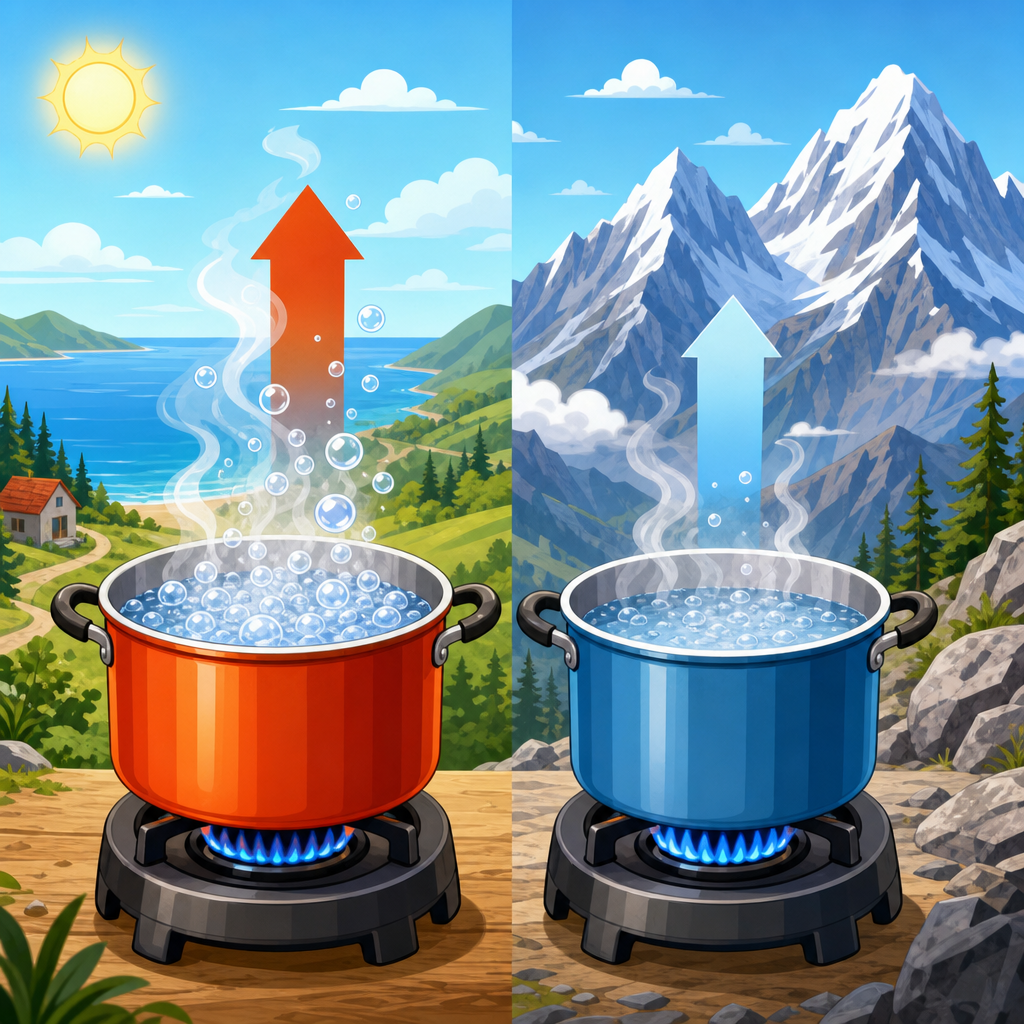
At altitude, lower atmospheric pressure means water boils at a lower temperature and turns to vapor faster. That speeds evaporation both in the mixing bowl and in the oven. As a result, cake batters can lose moisture before they fully set, cookie dough can dry around the edges before the center spreads properly, and yeast doughs can skin over during proofing. Lower pressure also lets gases expand more easily. Steam bubbles, baking powder carbon dioxide, and air whipped into eggs all enlarge faster than they do at sea level. This can make a batter rise beautifully at first, then sink because the gluten network, coagulated egg proteins, and gelatinized starches have not set strongly enough to hold that expanded structure.
That is why adding liquid is rarely a stand-alone fix. In practice, I pair liquid adjustments with one or more of the following: a slight reduction in chemical leavening, a small increase in oven temperature to set structure sooner, a modest reduction in sugar when the formula is already tender, or a bit more flour in very fragile cakes. Sugar attracts water and weakens structure, so high-sugar formulas often need the most careful balancing. Flour type matters too. Bread flour absorbs more water than all-purpose flour; whole wheat and rye absorb more because bran and fiber bind moisture. Cocoa powder, oats, and nut flours can all change how thirsty a batter feels. Understanding these interactions is the foundation of baking fundamentals at altitude.
How much extra liquid to add at different elevations
A practical starting point is to scale extra liquid by elevation band. From 3,000 to 5,000 feet, add about 1 to 2 tablespoons of liquid per cup in the original recipe. From 5,000 to 7,000 feet, add 2 to 4 tablespoons per cup. Above 7,000 feet, start around 3 to 4 tablespoons per cup, then verify texture because formulas diverge more dramatically. “Per cup” is most useful when the recipe already contains a meaningful liquid component, such as milk in cake batter or water in bread dough. If the formula is low-moisture, such as shortbread or some cookie doughs, it is safer to increase total liquid by 1 to 2 teaspoons at a time rather than applying the full rule automatically.
| Elevation | Starting extra liquid | Best use cases | Notes |
|---|---|---|---|
| 3,000–5,000 ft | 1–2 tbsp per cup of original liquid | Cakes, muffins, quick breads | Often enough when paired with slightly less leavening |
| 5,000–7,000 ft | 2–4 tbsp per cup | Most batters and enriched doughs | Check batter consistency before adding the full amount |
| Above 7,000 ft | 3–4 tbsp per cup | Dry-climate mountain baking | Usually requires oven and leavening adjustments too |
These ranges align with common extension-style guidance used by experienced altitude bakers, but the recipe still decides the final number. A banana bread made with ripe fruit may need less added liquid than a cocoa-heavy layer cake. Buttermilk batter may appear loose at mixing time yet bake dry because acidity and branched proteins affect how quickly it sets. Bread dough should be judged by feel, not just by measurement. At altitude, a dough that would seem slightly tacky at sea level is often the correct target because it will firm up during fermentation. If you rely on weights, which I recommend, document the original hydration so your future adjustments are repeatable.
How to adjust cakes, muffins, cookies, and brownies
Cakes and muffins usually benefit most clearly from extra liquid because their success depends on a narrow balance between tenderness and support. For butter cakes at 5,000 feet, I commonly add 2 tablespoons of milk per cup of original liquid, reduce baking powder by about 1/8 teaspoon per teaspoon, and raise the oven temperature by 15 to 25 degrees Fahrenheit. That combination helps the cake set before overexpanded bubbles burst. For foam cakes, such as sponge or angel food, added liquid is usually smaller because too much can weaken the carefully whipped structure. Here I focus first on pan preparation, gentle folding, and accurate doneness.
Cookies are different. Many cookie problems at altitude come from sugar concentration, fat melt, and spread control, not simple dryness. If cookies bake up hard and dry, add a teaspoon or two of milk or water, but also evaluate flour measurement and bake time. If they spread too much, extra liquid can make the problem worse. In that case, chilling dough, increasing flour slightly, or using a hotter oven may be more effective. Brownies often need only a minimal liquid increase because they are meant to be dense. What they do need is close timing. At altitude, overbaking by even three or four minutes can push brownies from fudgy to dry because moisture escapes faster.
How to adjust yeast breads, pizza dough, and enriched doughs
Yeast baking at altitude is where bakers often underestimate liquid needs. Lower pressure encourages faster expansion during proofing, while dry air pulls moisture from the dough surface. The result can be dough that seems to rise aggressively but later bakes with a coarse crumb, pale crust, or weak oven spring. In practical terms, I usually increase hydration modestly first, then shorten proofing rather than chasing rise with more yeast. For a standard sandwich loaf around 65 percent hydration at sea level, an extra 1 to 3 percent water by flour weight is a reasonable first test at 5,000 feet. For 500 grams of flour, that means adding 5 to 15 grams of water.
Rich doughs, such as cinnamon rolls or brioche, deserve special care because sugar and fat already slow gluten development. At altitude, too little liquid makes them dense, but too much makes them slump. I mix until the dough is smooth, then judge elasticity after a ten-minute rest because flour hydrates quickly in a dry environment. Pizza dough often benefits from both more water and colder fermentation. If your dough overproofs on the counter, refrigerate earlier and bake on a well-preheated stone or steel to maximize bottom heat. The principle is consistent across bread styles: aim for a supple dough that can expand without tearing, then control fermentation so structure develops before gases outrun it.
How to choose the right liquid and read the batter correctly
Not all added liquid behaves the same way. Water increases hydration without adding fat, sugar, or protein, so it is useful when you want a cleaner adjustment. Milk contributes lactose and proteins that improve browning and tenderness. Buttermilk adds acidity, which can affect baking soda reactions and crumb softness. Coffee can intensify chocolate flavor, while juice adds sugar and acid that may change spread or browning. Egg whites add water and protein, but they also influence foaming. In other words, the best extra liquid is usually the one already present in the formula, because it preserves the recipe’s intended chemistry.
Reading consistency is a core altitude skill. Cake batter should flow in a thick ribbon, not sit like paste. Muffin batter should hold shape briefly before relaxing. Cookie dough should look slightly softer than the same formula at sea level if your kitchen is very dry. Bread dough should feel tacky but organized, not crumbly. If a batter tightens noticeably while you are portioning it, that is a sign it may be underhydrated for your conditions. Use weights, note room humidity if possible, and keep records. Even a simple log with elevation, weather, flour brand, oven setting, and final texture will improve results faster than memorizing generic rules.
Common mistakes, testing method, and signs you added too much
The biggest altitude mistake is changing everything at once and learning nothing from the bake. Make one primary moisture adjustment, then pair it only with the most necessary structural correction. Another common error is confusing underbaked centers with excess liquid. If the oven is too cool, a cake may collapse and seem wet even though the real problem is delayed setting. Similarly, adding too much flour to “fix” sticky dough often creates dryness later. Calibrated oven temperature, accurate scaling, and sensible pan size matter as much as recipe math.
Too much added liquid has clear symptoms. Cakes can form tunnels, domed tops, or gummy streaks. Muffins may peak sharply and then cling to wrappers. Cookies can lose edge definition. Yeast dough can spread sideways and feel weak during shaping. When that happens, step back by one-third of the added amount, or strengthen structure with a small flour increase instead of simply removing all extra moisture. For a disciplined test, bake a half batch in two versions, changing only liquid. That side-by-side method is the fastest route to a reliable altitude formula. As your baking fundamentals improve, you will stop asking only how much extra liquid to add and start asking the better question: what balance of moisture, rise, and structure does this specific recipe need here?
The key takeaway is that altitude baking rewards measured adjustment, not guesswork. Extra liquid is often necessary because evaporation accelerates and batters dry out sooner, but the right amount depends on elevation, recipe type, flour choice, sugar level, and local humidity. Start with 1 to 2 extra tablespoons per cup of original liquid above 3,000 feet, move toward 2 to 4 tablespoons at higher elevations, and treat those numbers as test points rather than laws. For breads, think in hydration percentages and dough feel. For cakes and muffins, combine extra liquid with slightly less leavening and a modestly hotter oven when needed. For cookies and brownies, be conservative and let texture guide you.
As the hub for baking fundamentals within cooking and baking at altitude, this guide gives you the framework to troubleshoot nearly any recipe. Moisture, structure, leavening, heat, and observation are the five controls that matter most. Once you understand them, you can adapt family recipes, boxed mixes, and professional formulas with far more confidence. Use this page as your baseline, keep notes on every bake, and test in small increments. That disciplined approach is how consistently good altitude bakers work, and it is the fastest way to turn dry, sunken, or erratic results into dependable cakes, cookies, muffins, and breads.
Frequently Asked Questions
How much extra liquid should I add when baking at altitude?
A practical starting point is to add about 1 to 2 extra tablespoons of liquid per cup of liquid already in the recipe once you are above roughly 3,000 feet. That is the most common baseline because higher elevation speeds up moisture loss and changes how quickly batters and doughs set. In many kitchens, that small increase is enough to improve texture, prevent dryness, and help baked goods hold together more evenly. If you live much higher, such as 5,000 to 7,000 feet or more, you may need to move toward the upper end of that range and then fine-tune from there based on results.
It is important to think of this as a starting adjustment, not a universal rule. Cakes, muffins, quick breads, cookies, and yeast doughs all behave differently at altitude. A delicate cake batter may need a smaller liquid increase plus changes to sugar and leavening, while a whole grain muffin may benefit from more moisture because those flours absorb more liquid. Climate matters too. A dry mountain environment can make flour and finished baked goods lose moisture faster than a more humid location. The best method is to add a modest amount, bake a test batch, and evaluate crumb, rise, and moisture before making another small adjustment.
Why do recipes need more liquid at higher elevations?
At higher elevations, air pressure is lower, and that changes the way baking works from the moment the batter goes into the oven. Water boils at a lower temperature, which means liquids evaporate faster than they do at sea level. At the same time, gases in batter and dough expand more quickly, often causing baked goods to rise faster before their structure is fully set. That combination can lead to dry texture, coarse crumb, tunneling, collapse, or a product that rises too fast and then falls. Adding extra liquid helps offset that faster evaporation and gives the batter or dough a better chance to stay balanced as it bakes.
Extra liquid also supports starch gelatinization and protein setting, both of which are essential for stable structure. In practical terms, moisture helps flour hydrate properly, sugar dissolve more evenly, and the final product remain tender rather than dry or crumbly. That is why altitude baking is never just about one fix. More liquid is often necessary, but it works best alongside other changes such as slightly reducing leavening, adjusting oven temperature, or lowering sugar in very sweet formulas. The liquid increase is important because it addresses one of the main physical changes caused by altitude: moisture leaves the product sooner and faster.
Does the type of baked good change how much extra liquid I should use?
Yes, the product type makes a big difference. Cakes and cupcakes are especially sensitive because they rely on a careful balance of moisture, sugar, eggs, flour, and leavening. For these, a small increase in liquid may help, but too much can weaken the batter and interfere with structure. Quick breads and muffins often tolerate a bit more added liquid, especially if they contain bran, whole wheat flour, cocoa powder, oats, or other thirsty ingredients. Cookies may need less extra liquid than cakes because their ideal texture often depends more on fat, sugar concentration, and spread than on a large moisture increase. Yeast breads are different again, since dough consistency, fermentation speed, and flour absorption all matter heavily.
Ingredient profile matters just as much as category. Recipes high in sugar often need careful handling at altitude because sugar weakens structure and holds onto moisture in a different way than flour does. Recipes with cocoa, nut flours, or whole grains often need a little more hydration. Fruit fillings, pumpkin, yogurt, sour cream, or honey may already contribute significant moisture, so the liquid increase can sometimes be smaller. In other words, use the 1 to 2 tablespoons per cup guideline as a baseline, then consider whether the recipe is delicate, dense, dry-leaning, high in sugar, or already very moist before deciding whether to add more, less, or none beyond that first test adjustment.
What counts as extra liquid in an altitude baking adjustment?
Extra liquid can come from several sources, depending on the recipe and the result you want. Water and milk are the most straightforward choices because they increase hydration without dramatically changing fat or sugar levels. Buttermilk, yogurt thinned with milk, coffee, juice, or even egg whites can also add moisture in certain formulas. The best choice depends on flavor, acidity, tenderness, and structure. For example, milk may support browning and flavor, while water gives moisture with less impact on richness. In chocolate cakes, coffee is often a useful way to add liquid while deepening flavor at the same time.
It is wise to avoid treating every moist ingredient as interchangeable. Adding more oil or butter is not the same as adding more liquid, because fat changes tenderness and spread rather than simply replacing lost moisture. Likewise, adding extra eggs can strengthen structure as well as increase liquid, which may be helpful in some cakes but too much in others. If you are making a first altitude adjustment, start with a simple liquid addition such as water or milk so you can see the effect more clearly. Once you know how the recipe behaves, you can choose more specialized additions that fit the flavor and texture you want.
Is adding more liquid enough to fix a recipe at altitude, or do I need other changes too?
Usually, adding more liquid is only one part of a successful altitude adjustment. It helps address faster evaporation, but it does not solve every problem created by lower air pressure. Because gases expand more readily at altitude, recipes often rise faster and can overexpand before they set. That means many bakers also reduce leavening slightly, especially in cakes, muffins, and quick breads. Some formulas benefit from a slightly higher oven temperature so structure sets sooner. Others may need a small reduction in sugar, particularly if they are very sweet, because sugar can make batters more fragile and slow down setting.
The most reliable approach is to change recipes in small, controlled steps. Start with the common liquid adjustment of 1 to 2 extra tablespoons per cup of original liquid above 3,000 feet. Then consider the symptoms you are trying to fix. If the product is dry, more liquid may be the right first move. If it rises beautifully and then collapses, the issue may be too much leavening or too low an oven temperature. If it is gummy in the center but overbrowned outside, baking temperature and pan size may need attention. Altitude baking works best when you treat liquid as one important tool in a larger set of adjustments rather than a one-step cure for every recipe problem.