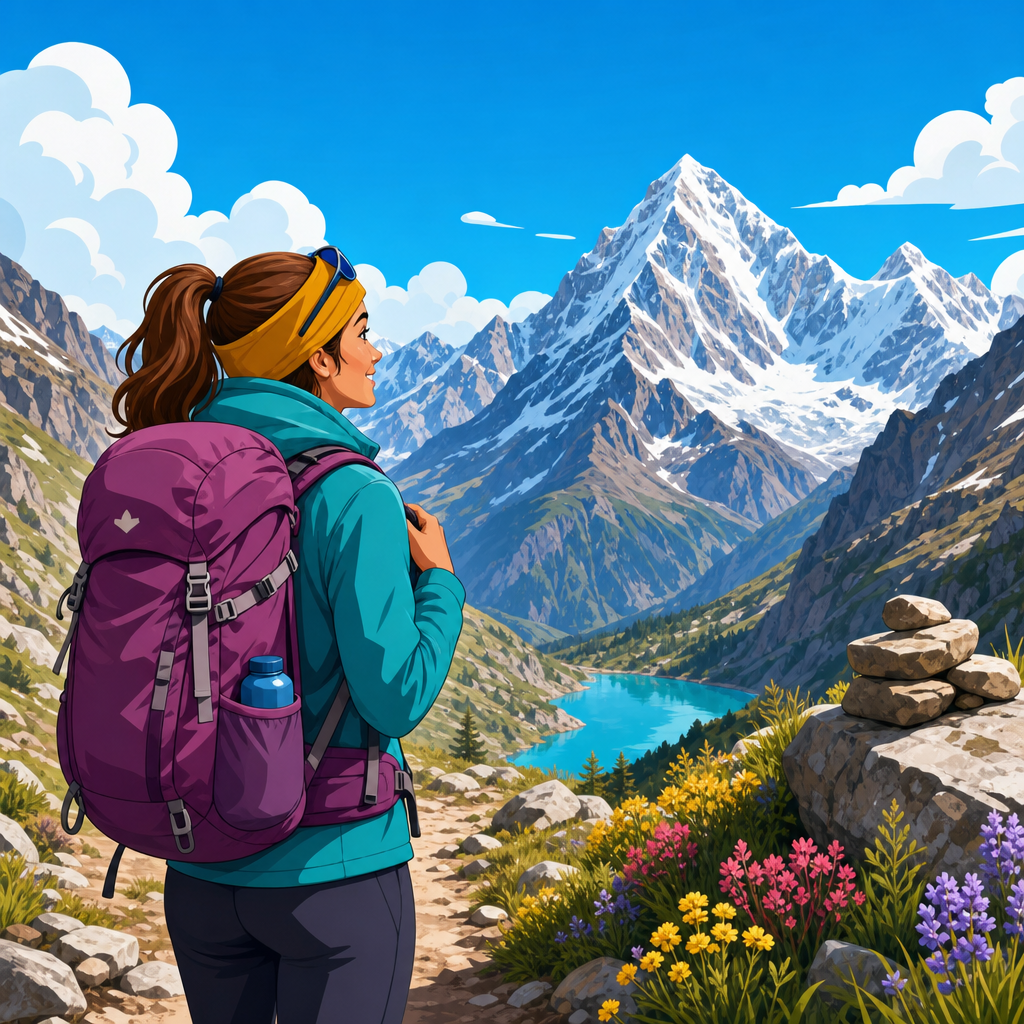
Choosing the best backpacks for day hikes at altitude is not just a gear question; it is a safety decision that affects hydration, pacing, weather response, and emergency preparedness. A day hike above roughly 8,000 feet places different demands on a pack than a lowland trail because air is drier, weather changes faster, ultraviolet exposure is stronger, and minor problems escalate quickly when you are fatigued or dealing with acute mountain sickness. In my own field use on Colorado fourteeners, Sierra passes, and volcanic routes in the Cascades, the difference between a merely comfortable pack and a truly capable altitude day pack has shown up in the details: accessible water, stable carry while scrambling, reliable layering storage, and room for contingency gear you hope not to use.
For this guide, a day-hike backpack means a technical pack in the 18- to 32-liter range designed to carry essentials for a single-day outing without overnight gear. Altitude hiking means trails and routes where elevation meaningfully increases physiological stress and environmental risk, including alpine starts, exposed ridgelines, snow patches, and sudden temperature swings. Travel and emergency preparedness, the wider topic this hub covers, includes everything that supports safe movement into and out of mountain terrain: route planning, weather tools, hydration systems, navigation devices, first aid, insulation, and decision-making under changing conditions. The pack is the organizing platform for all of it.
This matters because altitude magnifies consequences. The CDC notes that altitude illness can begin above 8,000 feet, while dehydration becomes more likely as breathing rate rises and humidity drops. Search and rescue teams repeatedly report preventable issues: hikers carrying too little water, no headlamp for delayed descents, inadequate insulation for afternoon storms, and no way to communicate after an ankle injury. The right backpack will not solve poor judgment, but it does improve odds by making smart systems easier to carry and use. A well-chosen pack keeps weight close to the body, protects critical gear, and supports rapid access to the items that matter most when conditions turn.
What makes a backpack suitable for day hikes at altitude
The best backpacks for day hikes at altitude balance volume, stability, weather resistance, and access. For most hikers, 22 to 28 liters is the practical sweet spot. That range fits a shell, insulation layer, 2 to 3 liters of water, food, a compact first-aid kit, navigation tools, sun protection, gloves, and emergency extras without encouraging overpacking. Ultralight runners may prefer 18 liters, while shoulder-season hikers carrying microspikes or a helmet may need 30 liters. Capacity alone is not enough. A mountain day pack should have a close-fitting harness, a sternum strap, side compression, and ideally a removable or lightly structured hipbelt to reduce sway on steep terrain.
Back-panel design matters more at altitude than many buyers realize. Trampoline-style suspended mesh improves ventilation on hot climbs, but it can move the load farther from your center of gravity. On smoother trails that tradeoff is acceptable. On talus, class 3 scrambling, or steep descents, a closer-contact frame sheet often feels more secure. Hydration compatibility is essential, but bottle access is equally important because frozen hoses, pinched bite valves, and simple forgetfulness can reduce fluid intake. I favor packs that allow one-handed bottle retrieval from side pockets or combine a bladder sleeve with shoulder-strap flask pockets.
Durability should be judged by fabric placement, not just denier numbers. High-wear zones such as the base, side pockets, and crampon-contact areas benefit from tougher nylon, ripstop reinforcement, or high-tenacity recycled fabrics. Water resistance is useful, but no day pack is truly waterproof unless it uses sealed construction, which usually adds cost and reduces breathability. In alpine use, a pack should at minimum shed light precipitation, dry quickly, and protect electronics and insulation in internal dry bags. Features that earn their keep include trekking-pole attachment, an ice-axe loop on snow-prone routes, a whistle on the sternum strap, and a top pocket or quick-access front shove-it pocket for layers.
How to choose pack volume, fit, and carry system
Fit is the first filter. If the shoulder straps cut into the neck, the load lifters do nothing, or the hipbelt lands above your iliac crest, the pack will feel worse as elevation and fatigue increase. Measure torso length according to the brand’s guidance and, if possible, test with realistic load. Ten pounds can make an inadequate harness feel acceptable; fifteen to eighteen pounds reveals the truth. At altitude, your carry weight often exceeds a normal summer day-hike load because you add extra water, a warmer layer, more calories, and emergency tools. That is why many minimalist packs that shine on short local outings become frustrating above tree line.
Look closely at the carry system. Frameless or near-frameless packs can work brilliantly for fast hikers who keep total weight low, but they demand disciplined packing and usually transfer less load to the hips. A light framesheet, peripheral wire frame, or foam back panel creates much better structure for most users. Women-specific and short-torso versions are worth considering because shoulder-strap curve, back length, and hipbelt angle materially affect stability. If you often wear a helmet, test whether the top of the pack interferes with head movement when looking up steep rock or snow.
| Hiker profile | Ideal volume | Best carry features | Typical altitude kit |
|---|---|---|---|
| Fast summer day hiker | 18-22L | Vest-style straps, bottle pockets, light frame sheet | 2L water, shell, calories, filter, small first aid |
| Standard alpine day hiker | 22-28L | Sternum strap, compression straps, ventilated back panel | 3L water, insulation, shell, map, headlamp, repair kit |
| Shoulder-season summit hiker | 28-32L | Supportive hipbelt, ice-axe loop, durable exterior fabric | Extra layers, spikes, gloves, thermos, emergency bivy |
As a hub within Gear, Monitoring and Safety, this selection process connects directly to related decisions. Your pack volume influences hydration strategy, navigation redundancy, and emergency shelter choices. A traveler driving from sea level for a single summit push may need a larger safety margin than a local acclimatized hiker on a familiar route. That is why the best backpack is not the lightest model on the shelf; it is the smallest pack that comfortably and efficiently carries the gear your route, weather, and personal risk profile require.
Best backpack styles and standout models for altitude day hikes
Several backpack categories work well at elevation, each with tradeoffs. Fast-and-light vest packs such as the Salomon XA 25 or Black Diamond Distance 22 excel for strong movers covering long mileage. They ride close, minimize bounce, and keep nutrition and soft flasks accessible. Their limitation is bulkier insulation and awkward packing with hard-shell layers. Traditional technical day packs such as the Osprey Talon 22, Osprey Tempest 24, Deuter Speed Lite series, and Gregory Nano or Citro/Juno lines offer better organization and broader fit adjustability. They are strong all-around choices for most hikers tackling exposed summit trails.
For more technical or variable conditions, alpine-oriented day packs deserve attention. The Black Diamond Speed Zip 24, Mountain Hardwear Scrambler series, Patagonia Terravia packs, and Arc’teryx Aerios or Alpha-inspired designs prioritize streamlined shapes, abrasion resistance, and secure load control. These packs perform well on routes where you may use hands, wear a helmet, or carry traction. They often include cleaner exteriors that snag less in rock or brush. The downside is fewer convenience pockets and less everyday comfort. If your altitude hikes frequently involve scree gullies, short snow climbs, or rough descents, those sacrifices are usually worth it.
For newer hikers, the smartest buy is often a mid-capacity technical day pack from a proven brand with broad retail availability and easy fit testing. The REI Co-op Traverse 22 or Flash 22, Osprey Stratos/Sirrus family, and Deuter AC Lite line frequently deliver good value. For experienced mountain hikers, premium options justify themselves when they solve a specific problem: superior bottle access, better shoulder mobility, lower weight at equal support, or tougher weather resistance. The best backpacks for day hikes at altitude are not defined by prestige. They are defined by how calmly they perform after six hours on exposed trail when your hands are cold and your decision-making bandwidth is narrowing.
Travel and emergency preparedness: what your altitude day pack must carry
A backpack for altitude must support a deliberate emergency system, not just extra snacks. Start with water and treatment. Three liters is a common baseline for dry alpine days, but route length, heat, and personal sweat rate can push that higher. I rarely depend on a hydration bladder alone because hose failures and freezing happen; one bottle plus one bladder creates redundancy. Carry calories that are easy to eat when breathing hard: chews, bars that do not turn brick-hard in cold wind, nuts, and compact sandwiches. Include sodium, especially on long ascents where plain water alone can leave you drained and cramp-prone.
Layering is the next nonnegotiable. At altitude, conditions can swing from sunburn heat to sleet within an hour. A minimum clothing system usually means a waterproof-breathable shell, an insulating midlayer such as active fleece or synthetic puffy, a warm hat or buff, light gloves, and sun gear. Navigation should include an offline map on your phone, a dedicated app such as Gaia GPS, CalTopo, or onX Backcountry, and a paper map when the route is complex or remote. Add a charged battery bank because cold and weak signals drain phones quickly. Illumination means a real headlamp, not a phone flashlight.
The emergency core is small but consequential: first-aid kit, blister care, elastic wrap, mini repair tape, lighter, emergency bivy or space blanket, whistle, and a satellite communicator for remote areas. Garmin inReach and ZOLEO are the most commonly used tools I see in mountain groups because they provide two-way messaging and SOS capability beyond cell service. If your day hike involves driving long distances, border crossings, or unfamiliar trailhead logistics, preparedness begins before the trail: downloaded permits, printed route notes, cash for fee stations, spare warm clothing in the car, and a turnaround plan shared with someone at home. The backpack is the mobile command center for that broader travel system.
Common mistakes, seasonal adjustments, and how to pack efficiently
The most common mistake is choosing a pack by empty-store comfort instead of loaded mountain performance. A second mistake is underestimating how much accessible storage matters. If sunscreen, gloves, map, and water all require removing the pack, you will delay small tasks until they become problems. Overpacking is the opposite error. Extra gear feels safe in the parking lot but destabilizes movement and increases fatigue. The solution is a route-specific checklist. Build one summer list, one shoulder-season list, and one high-exposure technical list, then refine after each trip based on what you actually used.
Seasonal adjustments are straightforward when viewed through hazard exposure. In midsummer, prioritize ventilation, water access, and sun storage for hat, sunglasses, lip balm, and high-SPF sunscreen. During monsoon patterns in the Rockies, lightning timing is as important as gear, so a pack that supports a predawn start with organized headlamp and shell access is ideal. In shoulder seasons, volume rises because gloves, traction, and insulation bulk up quickly. Snow patches and freeze-thaw cycles also reward packs with axe loops and tougher side panels. Winter day hikes, while outside the narrowest meaning of this topic, often require a separate class of pack with more support and avalanche-tool organization.
Packing efficiency follows a simple rule: heavy and dense items close to the spine, high enough to avoid sagging; soft spare layers around them; critical quick-access items outside. Water, battery bank, and food go near the core. Shell, gloves, and headlamp belong where they can be reached fast. Emergency gear can sit deeper, but not so buried that you cannot find it under stress. The best backpacks for day hikes at altitude help enforce this logic through pocket layout and compression. Review your current setup, identify what slows you down, and choose a pack that makes safe habits automatic on the mountain.
Frequently Asked Questions
What size backpack is best for a day hike at altitude?
For most high-altitude day hikes, the sweet spot is usually a pack in the 20- to 30-liter range. That is large enough to carry the essentials you actually need above roughly 8,000 feet without encouraging you to overpack. At altitude, a backpack has to do more than hold water and a snack. It needs room for extra insulation, a waterproof shell, gloves, sun protection, a first-aid kit, navigation tools, emergency gear, and enough food and fluids to account for slower pacing and changing weather. A minimalist 10- to 15-liter pack can work for very short, stable-weather hikes with an experienced hiker, but it often becomes too restrictive once you add layers, microspikes, or emergency supplies. On the other end, a 35-liter or larger pack can make sense for shoulder-season conditions, summit attempts with snow gear, or hikes where you are carrying extra water because refill options are unreliable.
The best size also depends on your body frame, how compressible your clothing is, and whether the pack carries weight efficiently when full. A well-designed 22-liter pack can outperform a poorly organized 28-liter pack because access, weight distribution, and external storage matter just as much as raw volume. For altitude hiking, I generally favor a pack that stays compact but still has stretch pockets, a hydration sleeve or bottle access, and enough structure to remain stable when moving over talus, steep switchbacks, and windy ridgelines. If your gear list routinely includes a puffy jacket, rain shell, extra gloves, 2 to 3 liters of water, lunch, headlamp, emergency bivy, and traction devices, a mid-20-liter pack is often the most practical choice.
Which backpack features matter most for day hikes above 8,000 feet?
The most important features are stability, hydration access, weather readiness, and efficient organization. Above 8,000 feet, conditions can change quickly, and a pack that works fine on a shaded lowland trail may feel frustrating or even unsafe on an exposed alpine route. Look first for a secure suspension system with comfortable shoulder straps, a supportive back panel, and either a light frame sheet or enough structure to keep the load from sagging. When you are breathing hard on steep climbs, an unstable pack wastes energy and throws off balance, especially on uneven rock or loose scree.
Hydration access is critical because dry air and increased respiratory water loss can dehydrate you faster than many hikers realize. A pack should make drinking easy without forcing long stops. Some hikers prefer a hydration reservoir for frequent sipping; others prefer side pockets that allow bottle access while walking. Either system can work, but the key is consistency. Storage layout matters too. You want quick access to a shell, gloves, sunscreen, lip balm, sunglasses, and snacks, because altitude amplifies the consequences of small delays. If a storm rolls in or wind picks up on a ridge, you do not want to unpack half your bag to reach a warm layer.
Other valuable features include stretch front pockets for wet gear or fast stashing layers, trekking pole attachments, an ice axe loop if you hike shoulder season routes, durable fabric in high-abrasion areas, and compression straps that keep partial loads from shifting. A rain cover is nice, though many experienced hikers rely on waterproof stuff sacks or pack liners instead. I also pay close attention to fit and ventilation. A slightly sweaty back is normal, but a pack that rubs, bounces, or limits movement becomes a real liability at elevation where fatigue builds faster and weather decisions often need to be made quickly.
How much water should a backpack carry for a high-altitude day hike?
There is no single number that fits every hike, but for most high-altitude day hikes, carrying capacity for 2 to 3 liters is a strong baseline, with more needed for hot weather, very dry conditions, long routes, or trails without reliable refill sources. Altitude increases fluid demand in several ways. The air is typically drier, you lose more moisture through breathing, and the effort of climbing often pushes hikers to work harder than they realize. By the time you feel distinctly thirsty, performance may already be dropping. That matters because poor hydration can worsen fatigue, decision-making, and symptoms that overlap with altitude sickness.
Your backpack should support the way you actually drink. If you sip constantly from a hose, a hydration-compatible pack makes sense. If you prefer to monitor intake more precisely or worry about reservoir freezing in colder seasons, external bottle pockets may be better. Either way, the best backpack for altitude hiking is one that helps you drink regularly without interrupting your pace. Capacity should also account for contingency planning. If a route takes longer than expected because of storms, route-finding issues, or slower acclimatization, extra water can become a safety margin rather than dead weight.
In practical terms, many hikers start with 2 liters for a moderate half-day outing and 3 liters for a longer summit day, then adjust based on temperature, exposure, personal sweat rate, and refill options. If you know there are safe water sources, carrying a small filter can let you use a smaller pack or reduce total starting weight. But on exposed alpine trails where water is limited or seasonal, your pack needs enough room and support to carry what you need from the trailhead. This is one reason tiny minimalist packs are often a poor match for altitude hikes: they may save ounces, but they can force compromises in hydration strategy that are not worth it.
Should I choose an ultralight backpack for alpine day hikes, or is support more important?
Support is usually more important than chasing the lowest possible pack weight. Ultralight gear can absolutely work at altitude, but only when it still carries the load comfortably and keeps essentials accessible. For day hikes above treeline, the real goal is efficiency, not minimalism for its own sake. If an ultralight pack causes shoulder fatigue, poor weight transfer, or unstable movement on technical terrain, any theoretical benefit from saving a few ounces disappears quickly. The higher and more exposed the route, the more valuable a secure, body-hugging fit becomes.
At altitude, you are often carrying a more variable load than on easier low-elevation walks. Early starts may require insulation and gloves, midday sun may demand extra water, and afternoon weather may force you to pack rain gear where you can reach it immediately. That means a good day-hiking backpack should handle both partially filled and fully loaded conditions without bouncing or collapsing. Many of the best options strike a middle ground: they are lightweight enough to stay agile but structured enough to support 10 to 20 pounds comfortably. In real mountain use, that balance tends to outperform both overbuilt heavy packs and fragile ultralight models with poor carry characteristics.
I also recommend thinking beyond weight to durability and reliability. Alpine trails can be rough on gear. Packs brush against rock, get dropped on gravel, and see repeated exposure to wind, sun, and abrupt weather changes. A slightly heavier pack with durable fabric, reinforced stress points, and a dependable harness often proves to be the better long-term choice. If you are deciding between two models, I would generally choose the one that fits better, rides more securely, and makes essentials easier to access, even if it weighs a little more.
What should I pack in a day-hiking backpack for altitude beyond the basic essentials?
For high-altitude day hikes, think in terms of margin and response, not just the standard checklist. In addition to the usual basics such as water, food, navigation, and a first-aid kit, your backpack should hold layers for rapid weather swings, more aggressive sun protection, and simple emergency items that can keep a minor issue from becoming a major one. A lightweight insulating layer, a windproof or waterproof shell, warm hat or buff, and gloves are common additions even in summer because exposed ridges can feel dramatically colder than the trailhead. Above treeline, weather can deteriorate fast, and having those layers immediately available matters.
Sun protection becomes especially important because ultraviolet exposure is stronger at elevation. Your pack should have room for sunscreen, SPF lip balm, sunglasses with good coverage, and ideally a brimmed hat. Food should also be more intentional than it might be on a casual lowland walk. Appetite sometimes drops at altitude, but energy demands remain high, so easy-to-eat snacks that tolerate temperature swings are useful. I also like to carry a headlamp even on straightforward day trips, since altitude often slows hiking pace and afternoon storms can disrupt timing. Add a small emergency bivy or blanket, blister care, and a compact repair item such as tape or a gear strap, and you have a much better safety buffer if something goes wrong.
If you are hiking in shoulder season or on routes with lingering snow, traction devices, goggles or protective eyewear, and an extra pair of gloves may also belong in the pack. The best altitude day pack is the one that lets you carry these items without becoming cluttered or awkward. In my experience on Colorado fourteeners and similar terrain, organization is part of preparedness. If sunscreen is buried, rain gear is inaccessible, or emergency items are mixed loosely with clothing, response time suffers. A well-chosen backpack supports safe decision-making because it keeps critical gear protected, reachable, and stable throughout the hike.