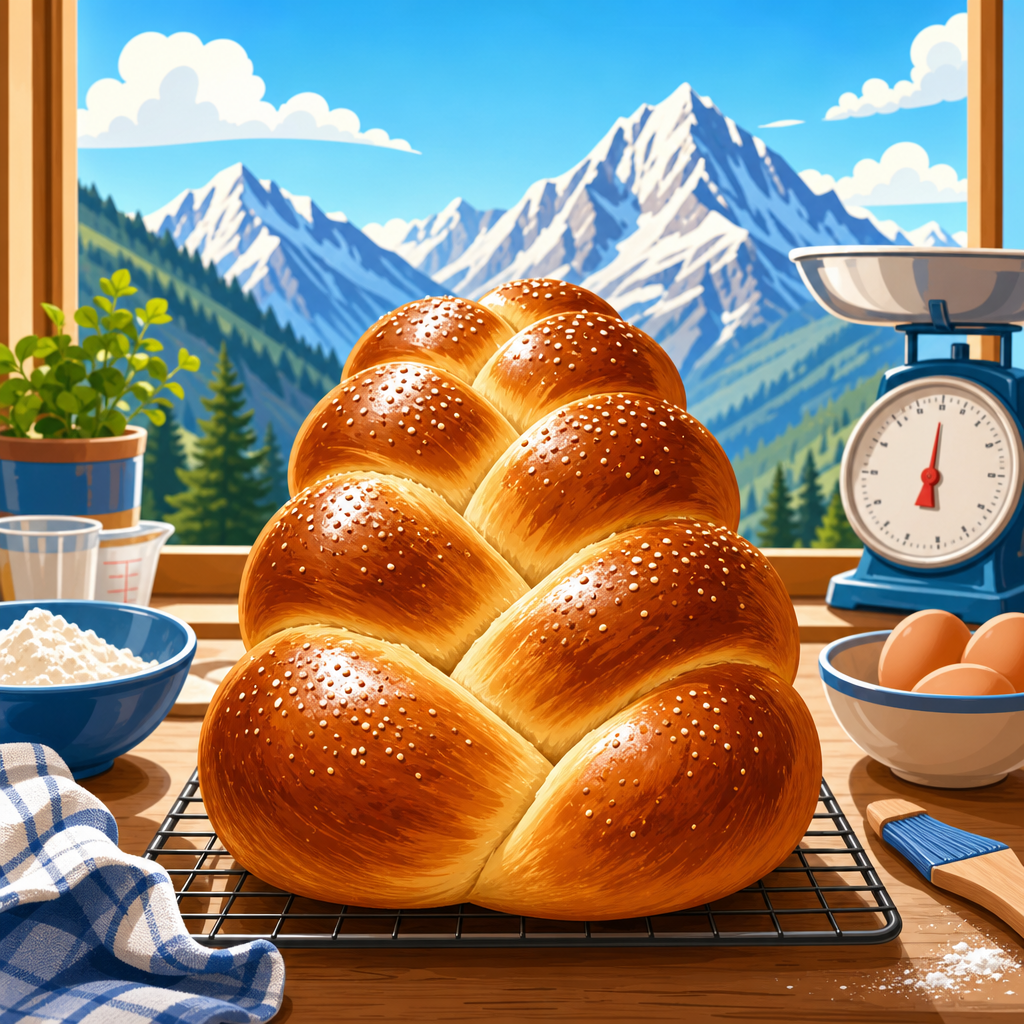
Challah at altitude rewards precision because high elevation changes the behavior of yeast, gluten, moisture, and oven spring all at once. In practical terms, altitude baking usually refers to kitchens above 3,000 feet, where lower air pressure speeds fermentation, encourages gas cells to expand faster, and increases evaporation from both dough and oven surfaces. Challah, the enriched braided bread traditionally made with flour, water, eggs, oil, sugar, yeast, and salt, is especially sensitive to those shifts because its structure must balance softness with enough strength to hold a defined braid. If that balance is off, the loaf spreads sideways, tears between strands, or bakes into a lopsided crown instead of a tall, even braid.
I have baked challah and other enriched yeast breads in sea-level and mountain kitchens, and the same formula behaves like two different recipes. A dough that looks perfectly proofed at 500 feet can overproof in Denver, Albuquerque, or Park City before the oven fully preheats. The usual home-baking advice to “let it double” often fails at altitude because visual volume alone does not tell you whether the gluten network still has reserve strength. For bakers building a dependable altitude bread routine, challah is the ideal teaching loaf: it shows you how hydration, mixing, fermentation control, shaping tension, and baking temperature interact in one finished bread.
This hub covers the full “Yeast Breads & Sourdough” landscape through the lens of challah at altitude. You will learn why braids lose height, how to adjust water and yeast, when to shorten rises, how to braid for symmetry, and how the same principles apply to sandwich bread, dinner rolls, cinnamon rolls, brioche, pizza dough, and naturally leavened loaves. The goal is not just one successful bake. The goal is a repeatable method that keeps braided loaves tall, evenly domed, well browned, and tender inside, while giving you a framework for every altitude bread recipe you tackle next.
Why altitude changes challah more than many bakers expect
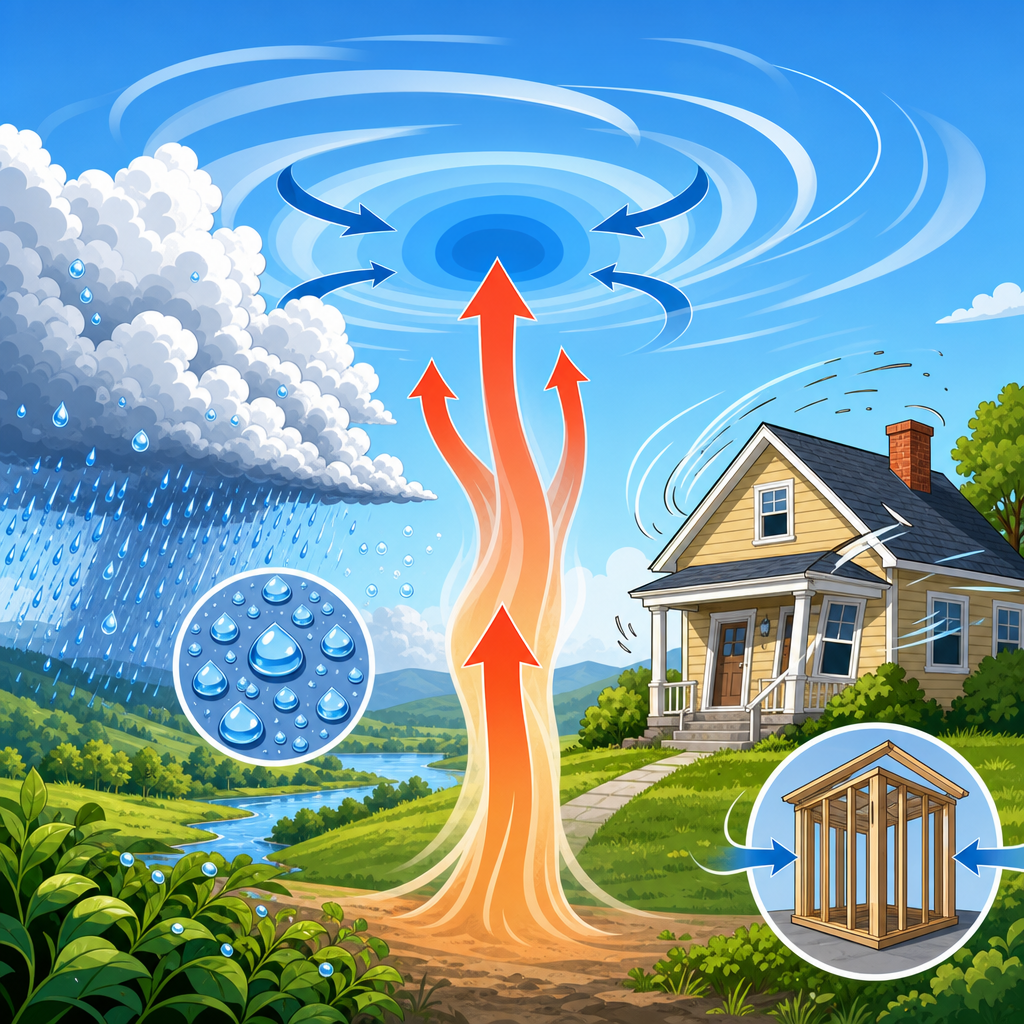
The core issue is pressure. At higher elevations, carbon dioxide produced by yeast expands more readily, so dough can appear risen before the gluten matrix is mature enough to support that expansion. At the same time, water evaporates faster, which can make dough feel tacky during mixing and dry during proofing unless you manage it carefully. Enriched doughs add another layer of complexity because eggs, sugar, and fat tenderize crumb and slow gluten development. That is desirable for challah’s soft pull-apart texture, but it means the dough needs strong handling and tighter fermentation control than a lean baguette-style dough.
Temperature magnifies those effects. Many mountain homes are dry and warm indoors, especially in winter when forced-air heating runs constantly. A dough fermenting at 78°F in a dry kitchen at 5,000 feet can race past optimal proof in less time than a sea-level recipe suggests. Overproofed challah does not simply rise higher; it often widens, the braid definition blurs, and the loaf can collapse slightly in the oven. Underproofed challah has the opposite problem: dramatic tearing along the braid seams and an uneven burst that distorts the shape. The target is a controlled final proof where the loaf feels aerated but still resilient.
Flour choice also matters. Standard bread flour, usually around 12 to 13 percent protein, often gives altitude challah better vertical support than all-purpose flour, especially for six-strand braids or large holiday loaves. That does not mean all-purpose cannot work. It means the margin for error narrows as altitude rises. If your loaves consistently spread, the first corrective move is often stronger flour and slightly lower hydration, not more yeast.
How to adjust the formula for taller, even braids
The best altitude challah adjustments are modest but deliberate. Start by reducing yeast slightly, usually by 10 to 25 percent compared with a sea-level formula. More yeast is rarely the answer at elevation because faster gas production weakens shape control. Next, hold back some of the water during mixing. At altitude, flour can absorb water unevenly because of dryness in storage and faster surface evaporation, so bassinage—adding reserved liquid gradually—helps you stop at a dough that is soft but not loose. For many challah formulas, reducing total water by 2 to 5 percent is enough to improve braid definition without making the crumb tight.
Sugar deserves attention. In sweet holiday challah, higher sugar content slows yeast initially, but during warm fermentation the dough can still outrun its structure. If a recipe is very sweet, extend mixing slightly to develop stronger gluten rather than compensating with extra flour. Salt should remain in a standard range, roughly 1.8 to 2.2 percent of flour weight, because proper salt strengthens dough and moderates fermentation. Oil or yolks can be increased a little for tenderness, but too much fat weakens strand tension. If your goal is height, structure comes first and richness follows.
| Problem | Likely altitude cause | Most effective fix |
|---|---|---|
| Braids spread sideways | Overproofing or dough too wet | Reduce yeast, shorten final proof, lower water slightly |
| Braid seams tear in oven | Underproofing or weak shaping tension | Proof a bit longer and roll tighter, even strands |
| Loaf rises unevenly | Unequal strand thickness or hot spots | Weigh strands and rotate pan midway if needed |
| Pale crust, dense center | Oven too cool or loaf too large | Increase bake temperature slightly, verify with thermometer |
| Dry crumb after one day | Excess flour from dry climate | Use scale, avoid over-flouring bench, store airtight |
Egg wash affects shape too. A heavy coat can pool between strands and glue surface layers before expansion is complete, leading to patchy lift. I prefer one thin coat before final proof and a second light coat just before baking. That preserves shine while allowing cleaner oven spring. Sesame or poppy seeds should be applied after the second wash so they adhere without weighing down the loaf early.
Mixing and gluten development: the hidden key to altitude challah
When bakers ask how to keep challah braids tall at altitude, the answer is usually stronger gluten development, not dramatic recipe changes. Properly mixed challah should clear the bowl, feel supple, and stretch into a thin membrane with only minor tearing when tested. Because enriched doughs lubricate gluten strands with oil and yolk, development often takes longer than expected. A stand mixer on low to medium-low speed may need 8 to 12 minutes after ingredients are fully combined. Hand mixing works well too, but the dough needs repeated slap-and-fold or stretch-and-fold work until elasticity is obvious.
What matters is not maximal strength but balanced strength. Overmixed enriched dough can become overly warm, oxidized, and tight, producing a finer crumb and making strands hard to roll evenly. I watch final dough temperature closely; 75 to 78°F is a reliable range for challah at altitude. If the dough climbs above 80°F early in fermentation, yeast accelerates and the window for shaping narrows. In professional bakeries, this is controlled with desired dough temperature calculations. Home bakers can achieve the same result by using cooler water, chilling eggs slightly, or pausing the mixer if friction heat builds too quickly.
Bulk fermentation should build gas and extensibility without letting the dough balloon. One rise with a fold halfway through is often enough. The fold redistributes yeast, equalizes temperature, and tightens structure, which is especially helpful for higher, cleaner braids. If your kitchen is above 70°F and you bake above 5,000 feet, judge bulk by feel rather than recipe time. A 50 to 75 percent increase in volume is usually safer than a full doubling for enriched altitude doughs.
Shaping for symmetrical braids that bake upward, not outward
Shaping errors become obvious in braided bread. If one strand is denser, shorter, or more tapered than the others, the loaf will bake asymmetrically. The fix is simple and nonnegotiable: divide by weight. After bulk fermentation, scale pieces exactly, pre-shape lightly, let them rest until relaxed, then roll from the center outward so each strand has even thickness with gently tapered ends. Pressing too hard at the tips creates weak points that shrink and pull the braid off center.
Surface tension is the structural backbone of a tall challah. Each strand should be rolled firmly enough to create a smooth outer skin, but not so tightly that it tears. During braiding, keep the pattern snug. Loose braids look generous on the bench but spread in the oven because there is too much unsupported space between strands. For altitude baking, a tighter braid than you might use at sea level usually produces better height and cleaner separation.
Pan choice influences shape. A sheet pan gives the classic free-form silhouette, but if your loaves flatten repeatedly, proofing braided challah in a parchment-lined loaf tin or braided pullman pan can train the dough upward while you refine your formula. This is not cheating; it is process control. Once the dough’s strength and proof timing are consistent, you can return to free-form braids with much better results. For round challah, stacking the coil higher rather than wider has the same benefit: build vertical mass intentionally before the final proof begins.
Proofing and baking: the stage where most altitude failures happen
Final proof is where altitude challah is won or lost. The standard “double in size” instruction is too crude for braided enriched dough. Instead, use the finger dent test carefully: a light press should leave an impression that fills back slowly and incompletely. If it springs back immediately, the loaf needs more time. If it collapses or stays deeply indented, it is overproofed. At altitude, that ideal window can be brief, so keep the loaf where you can watch it rather than tucked into an overheated proof box.
Oven temperature should usually run slightly higher than many sea-level challah recipes suggest, often 375 to 390°F rather than 350 to 375°F, because faster set helps preserve height. Exact temperature depends on loaf size, sugar level, and your oven’s calibration. An oven thermometer is essential. Home ovens commonly miss set temperature by 25°F or more, enough to turn a strong braid into a low one. If the crust browns too quickly before the interior reaches about 190 to 195°F, tent loosely with foil and continue baking. Internal temperature is a more reliable doneness indicator than color alone.
Steam is useful at the very start for controlled expansion, but challah does not need the heavy steam used for crusty hearth bread. Too much moisture can dull shine and soften the surface. A brief burst from a preheated pan or a few sprays at loading is sufficient if your oven runs dry. Cooling matters as well. Cutting too soon compresses the crumb and makes bakers think the loaf was underbaked. Let challah cool at least one hour so the starches set fully and the braid retains its architecture.
How challah connects to the wider world of yeast breads and sourdough at altitude
As the hub for altitude yeast breads and sourdough, challah teaches the same control points you need across the category. Sandwich bread relies on the same balance of hydration and proof timing, but pan support makes it more forgiving. Dinner rolls reveal shaping discipline because unevenly divided pieces bake at different rates. Brioche pushes enrichment further than challah, so temperature control becomes even more critical. Cinnamon rolls expose the effects of overproofing dramatically: the spirals separate and the centers pop upward when fermentation outruns structure. Pizza dough at altitude benefits from reduced yeast and shorter room-temperature fermentation for exactly the same pressure-related reasons.
Sourdough follows the same physics with different fermentation biology. Wild yeast and lactic acid bacteria respond to altitude through temperature and pressure effects, while longer fermentation and acidity alter gluten strength and gas retention. A sourdough challah hybrid, or any naturally leavened enriched dough, usually needs even tighter scheduling because acid can weaken dough if bulk goes too long. Techniques such as aliquot jars, dough temperature tracking, and coil folds are useful across both commercial-yeast and sourdough baking. If you can read challah well—its dough strength, proof level, and oven response—you can troubleshoot nearly every altitude bread with more confidence.
For a practical learning path, move from challah to classic sandwich loaves, soft rolls, sticky buns, lean artisan boules, then country sourdough. Keep notes on flour brand, protein percentage, dough temperature, room humidity, rise times, and finished height. Over time, patterns become obvious. The altitude baker who documents process stops guessing and starts adjusting with intent.
Tall, even challah at altitude comes from controlled fermentation, strong but supple gluten, precise shaping, and a bake hot enough to set structure before the loaf spreads. The most important adjustments are usually small: slightly less yeast, slightly lower hydration, a shorter proof, tighter braiding, and better temperature control from mixing through baking. Those corrections work because altitude does not demand a completely different bread theory. It simply narrows the margin for error and rewards bakers who read dough closely.
That is why challah makes an excellent hub for the broader world of yeast breads and sourdough at elevation. The lessons transfer directly to pan breads, rolls, brioche, pizza dough, laminated breakfast buns, and naturally leavened country loaves. Once you understand how pressure, evaporation, and dough strength interact, you can predict problems before they happen instead of reacting after a loaf flattens. A braid that stands tall is visible proof that your formula, handling, and timing are working together.
Start with one reliable challah formula, use a scale, record dough temperature, and change only one variable per bake. With that disciplined approach, your braids will become higher, more symmetrical, and more consistent from week to week. Then use the same method to explore the rest of altitude yeast baking with confidence.
Frequently Asked Questions
Why does challah rise so quickly at altitude and then collapse or lose braid definition?
At higher elevations, usually above 3,000 feet, lower air pressure changes the way dough behaves from mixing through baking. Yeast does not necessarily become stronger, but the gases it produces expand more easily, so fermentation appears to speed up. That means a challah dough can move from underproofed to overproofed faster than expected. In an enriched dough like challah, which includes eggs, oil, and sugar, that rapid gas expansion can stretch the gluten network before it is fully strong enough to hold shape. The result is often a loaf that rises dramatically during proofing, then spreads sideways, softens at the edges, or partially collapses in the oven.
Braid definition also suffers when the strands are overproofed or too soft. As the dough swells quickly, the individual ropes puff into one another and the valleys between them disappear. Instead of a tall, sculpted braid, you get a rounded loaf with blurred lines. This is especially common when bakers use sea-level timing at altitude. A challah that may need 60 to 90 minutes for a final proof at lower elevation might be ready much sooner in a mountain kitchen.
The fix is to watch the dough, not the clock. Reduce yeast slightly if your recipe is consistently racing. Mix to strong gluten development so the dough can hold expanding gases. Keep fermentation cooler when possible, and stop proofing when the loaf looks slightly springy and airy but not fully swollen to its limit. A gentle fingertip press should leave an indentation that slowly fills partway back. If it stays deeply sunken, the dough may already be too far along. Shorter proofing, better dough strength, and slightly firmer shaping usually do more for tall, even braids than simply adding more flour.
How should I adjust hydration and flour at altitude so challah stays soft but not slack?
Altitude increases evaporation, so dough can lose moisture more quickly during mixing, fermentation, and baking. At the same time, many bakers overcorrect by dumping in extra flour as soon as the dough feels sticky. That is one of the fastest ways to end up with dense, dry challah. The goal is not a stiff dough; it is a dough that is well-hydrated, moderately tacky, and strong enough to hold a braid. Because challah is enriched, it should feel smoother and softer than lean bread dough, but it still needs enough structure to keep height.
A smart approach is to hold back a small portion of the flour and evaluate the dough after a few minutes of mixing. Flour absorbs water gradually, and eggs vary in size, so the dough often tightens as gluten develops. If your kitchen is very dry, you may need a little more liquid than the original formula calls for. If the dough remains soupy or spreads like batter, then add flour in small increments rather than all at once. Think in tablespoons, not cups. You are aiming for a dough that clears the bowl or can be handled on a lightly oiled surface, while still feeling pliable and alive.
At altitude, it also helps to protect the dough from unnecessary drying. Cover it tightly during bulk fermentation and proofing, and avoid letting shaped strands sit uncovered while you braid. If the outer surface dries, the strands can tear during shaping and bake unevenly. After baking, internal moisture balance matters too. An enriched loaf will continue redistributing moisture as it cools, so let it set before slicing. In practice, the best altitude adjustment is usually a modest one: slightly more liquid if your environment is very dry, a little restraint with bench flour, and careful mixing until the dough is elastic rather than loose.
What is the best way to braid challah at altitude to keep the loaf tall and even instead of wide and flat?
Height starts long before the loaf goes into the oven. To keep challah tall at altitude, shape the strands with good surface tension and braid firmly enough to support upward rise. If the ropes are rolled too softly, they puff outward rather than upward. If they are braided too loosely, the whole loaf spreads as fermentation accelerates. On the other hand, if you braid so tightly that the strands pinch or tear, the loaf can rise unevenly. The sweet spot is a braid that is snug and structured, with each strand distinct but not compressed to the point of strain.
Try to make all strands equal in length and thickness, with slightly tapered ends. Uneven strands produce uneven proofing and an unbalanced finished loaf. For a taller shape, many bakers at altitude benefit from making the loaf a little shorter and plumper than they would at sea level. Long, thin braids naturally encourage lateral spread. A compact braid gives the dough more opportunity to rise up. Tuck the ends securely underneath so the loaf does not unravel or widen at the tips as it proofs.
It also helps to let the dough rest between dividing, pre-shaping, and final rolling. If the gluten is tight, the strands resist shaping and become irregular. A brief rest relaxes them so you can create smoother, more uniform ropes. Once braided, transfer the loaf carefully to a lined sheet or pan and proof it fully supported. If your dough tends to spread, baking in a loaf pan or setting two rolled towels under the parchment on either side during final proof can help train the shape before the dough firms in the oven. The basic principle is simple: strong dough, even strands, a firm but not harsh braid, and a slightly compact profile give the best chance of a tall, clean result at altitude.
How do I know when altitude challah is properly proofed and ready to bake?
Proofing is the most important judgment call in high-altitude challah baking because the margin between perfect and overproofed can be narrow. A loaf that goes into the oven underproofed may burst unpredictably, tear between braids, or bake with a tight crumb. A loaf that is overproofed may look beautiful on the counter but flatten in the oven, lose definition, and come out fragile or dry. Since altitude speeds gas expansion and often shortens proof times, visual and tactile cues matter more than strict timing.
Properly proofed challah should look visibly lighter, puffed, and rounded, but still retain its braid structure. The strands should expand enough to soften the edges without merging into a single smooth mass. The dough should feel aerated when gently touched. The classic fingertip test works well here: lightly press the side of a strand with a floured finger. If the indentation springs back immediately, it likely needs more time. If it fills back slowly and only partially, it is usually ready. If the dent remains and the dough feels fragile or deflated, it may be overproofed.
Room temperature matters a great deal. In a warm kitchen at altitude, final proofing can move surprisingly fast, especially with sweet or egg-rich dough. Start checking earlier than the recipe suggests. It is better to bake a challah that is just shy of its maximum proof than one that has gone too far. The oven will still provide spring, but only if the gluten has enough strength left to support it. Once proofed, apply egg wash gently so you do not deflate the braid, and bake promptly. Delays after full proofing are especially risky at elevation.
What oven and baking adjustments help challah keep oven spring, color evenly, and stay moist at altitude?
Altitude affects baking as much as fermentation. Because moisture evaporates more readily, the crust can set too fast or the loaf can dry before the interior is fully baked. At the same time, rapid gas expansion can create impressive early oven spring that is not always stable. A good strategy is to bake challah at a temperature that gives strong initial lift without scorching the egg wash. Many bakers do well with a moderately hot oven, but exact numbers depend on the formula and pan. If your crust browns too quickly while the loaf still feels light or underbaked, lower the temperature slightly or tent loosely with foil partway through baking.
Even baking begins with proper preheating. Challah needs a fully heated oven so the dough gets immediate support from oven spring rather than slowly warming and spreading. Position the loaf in the center of the oven for balanced top and bottom heat. If your oven bakes unevenly, rotate the pan once the loaf has set and gained color, usually in the second half of baking. Be gentle and quick so you do not lose too much heat. The loaf is done when it is deeply golden, feels relatively light for its size, and reaches a fully baked internal temperature appropriate for enriched bread.
To preserve moisture, avoid overbaking in pursuit of darker color alone. Egg-washed challah can brown beautifully before the crumb is dry, but every extra minute at altitude matters. If your loaves consistently come out drier than you want, consider a slight increase in dough hydration, a small reduction in bake time, or a careful temperature adjustment rather than relying on one big change. Cooling is important too. Let the challah cool on a rack so steam can escape without condensing on the bottom, but do not leave it exposed for hours in an arid kitchen. Once mostly cool, store it well wrapped. That combination of full preheat, controlled browning,