What to eat on a high-altitude ride over three hours starts with one core fact: climbing for hours above roughly 1,500 meters changes how your body uses fuel, loses fluid, and tolerates food. Altitude increases breathing rate, dries the airways, and often suppresses appetite, while long cycling efforts steadily drain muscle glycogen, blood glucose, sodium, and total fluid. A rider who can get away with casual snacking on a sea-level endurance spin may unravel quickly in the mountains, not because fitness vanished, but because fueling, hydration, and pacing no longer match the conditions.
In practical terms, a high-altitude ride over three hours is an endurance event with layered stress. The rider faces prolonged energy demand from pedaling, reduced oxygen availability from thinner air, extra carbohydrate reliance during harder efforts, and more difficult digestion if intensity spikes too often. I have seen strong cyclists reach a summit with decent legs yet poor judgment, a headache, and no appetite because they waited too long to eat and drank to thirst alone. The fix is rarely exotic. It is almost always a disciplined plan for carbohydrates, fluid, sodium, and timing.
This guide explains what to eat before, during, and after a long high-altitude ride, with plain recommendations you can use on mountain roads, alpine gravel, and long climbing days. It also serves as a cycling hub within fitness, hiking, and performance because the same principles connect to climbing nutrition, pacing, recovery, heat management, and training adaptation. If you want one answer up front, here it is: most riders should target carbohydrate-first fueling, steady hydration, and simple, low-fiber foods they know they can tolerate, then adjust the exact amount to body size, pace, temperature, and elevation gain.
Why high altitude changes cycling nutrition
Altitude changes cycling nutrition because oxygen pressure drops as elevation rises, so your body works harder to produce the same power. Ventilation increases, and each breath loses water vapor. In dry mountain air, that respiratory water loss adds up. At the same time, cold temperatures can blunt thirst, and steep climbing can push intensity high enough to shift metabolism toward faster carbohydrate use. The result is a familiar mountain mistake: riders underdrink, underfuel, and then blame the climb.
Above about 2,000 meters, many cyclists notice a reduced appetite, mild nausea, or a reluctance to chew solid food on hard gradients. That matters because carbohydrate is the limiting fuel in sustained climbing and repeated surges. Fat oxidation still contributes, especially at moderate intensity, but when the road tilts up and cadence falls, carbohydrate demand rises. If glycogen stores were only partly topped up before the ride, or if intake during the first ninety minutes is too low, performance usually fades before the final climb.
Altitude also complicates gut comfort. Reduced appetite does not mean lower energy need. It means your fueling strategy must become more deliberate, often with softer textures and more drinkable calories. That is why mountain riders frequently do better with a mix of bottles, gels, chews, bananas, rice cakes, or small sandwiches instead of relying on one format alone.
How many carbs, fluids, and electrolytes you need
For a high-altitude ride over three hours, the most useful baseline is 60 to 90 grams of carbohydrate per hour after the first thirty to forty-five minutes. Smaller riders at easier endurance pace may sit near the lower end. Larger riders, riders climbing repeatedly, and trained cyclists who have practiced high-carb intake often perform better at 75 to 90 grams per hour. During especially demanding rides lasting five hours or more, some can absorb more than 90 grams per hour if they use mixed carbohydrate sources such as glucose and fructose in an appropriate ratio, but only if that strategy has been rehearsed in training.
Fluid needs vary more than calorie needs. A practical range is 500 to 900 milliliters per hour, with the lower end fitting cool conditions and the higher end fitting sunny, dry, windy climbs. At altitude, riders often need more than expected because respiratory losses are easy to miss. Sodium typically lands around 400 to 800 milligrams per hour, though salty sweaters and very long hot climbs may need more. The point is not to chase a perfect number on every ride. The point is to avoid the common pattern of consuming plenty of sugar while neglecting fluid and sodium, or drinking plain water for hours and diluting sodium intake.
| Ride condition | Carbohydrate per hour | Fluid per hour | Sodium per hour |
|---|---|---|---|
| Cool, steady endurance pace | 60 to 70 g | 500 to 650 mL | 400 to 500 mg |
| Moderate temperature, long climbing | 70 to 85 g | 600 to 800 mL | 500 to 700 mg |
| Hot, dry, high-elevation effort | 80 to 90 g | 750 to 900 mL | 700 to 900 mg |
These numbers align with widely used sports nutrition guidance and what I use when building ride plans for athletes. They are starting points, not laws. If your stomach sloshes, your intake may be too concentrated or fluid too low. If you cramp, fade, or stop sweating, you may be underdrinking, under-salting, overpacing, or all three.
What to eat before the ride
The best pre-ride meal is familiar, digestible, and centered on carbohydrate. For a morning mountain ride, eat one to four hours before the start depending on your routine and stomach tolerance. A useful target is 1 to 4 grams of carbohydrate per kilogram of body weight in that window. A 70-kilogram rider might choose 70 to 140 grams of carbs if there is enough time to digest, or a smaller meal if the start is early. Good options include oats with banana and honey, rice with eggs, toast with jam, pancakes, a bagel with peanut butter, or yogurt with cereal if dairy sits well.
Keep fat and fiber moderate before a hard climbing day. They are not unhealthy; they simply slow gastric emptying and can become a problem on steep roads. Protein is helpful but should support, not replace, carbohydrate. A breakfast of only eggs and coffee is a common setup for a mid-ride energy crash. If you struggle to eat early, a liquid meal can work: a smoothie with oats, banana, yogurt, and maple syrup is often easier to tolerate than dense solids.
Hydration should begin before the first pedal stroke. Drink enough in the hours before the ride to start with pale-yellow urine, not crystal clear from overdrinking and not dark from arriving dehydrated. On very early starts, taking in 300 to 500 milliliters with sodium at breakfast is usually sensible. Caffeine can improve alertness and perceived effort for many riders, but it should be tested in training, especially at altitude where anxiety and elevated heart rate may already feel pronounced.
What to eat during the ride
During the ride, eat early and keep eating. Do not wait for hunger on a high-altitude climb. A reliable pattern is to start fueling within the first 30 to 45 minutes, then take in carbohydrate every 15 to 20 minutes. Small, frequent doses are easier on the stomach and easier to remember than a large snack once an hour. If your target is 75 grams per hour, that could be one bottle with 30 grams, one gel with 25 grams, and a banana or chews adding another 20 grams.
Texture matters. On smooth valley roads, riders often tolerate bars or rice cakes. On steep, breathless climbs, softer foods usually win: gels, chews, bananas, soft dates, drink mix, or boiled potatoes with salt in small bites. On cold alpine descents, some riders stop eating because they are busy staying warm and controlling the bike. Plan for that by eating a little more before the descent and drinking when the road allows.
Food choice should match ride intensity. For lower-intensity gravel or all-day touring, real food can make up a bigger share of intake, such as jam sandwiches, rice cakes, figs, or low-fiber pastries. For hard mountain efforts with repeated threshold climbs, use simpler sugars and fluids because they absorb faster and require less chewing. The best cycling nutrition products are the ones your gut accepts consistently. A premium gel that causes nausea halfway through a pass is not better than a basic banana and drink mix that you can finish.
Timing also protects decision-making. One of the first signs of underfueling at altitude is often not dramatic leg failure but a subtle drop in concentration. You miss a turn, forget to drink, or lose the will to eat because you are already behind. Set a bike computer alert every 15 minutes if needed. Experienced mountain riders do this not because they are dependent on gadgets, but because mountains reward routines.
Best foods for long mountain rides
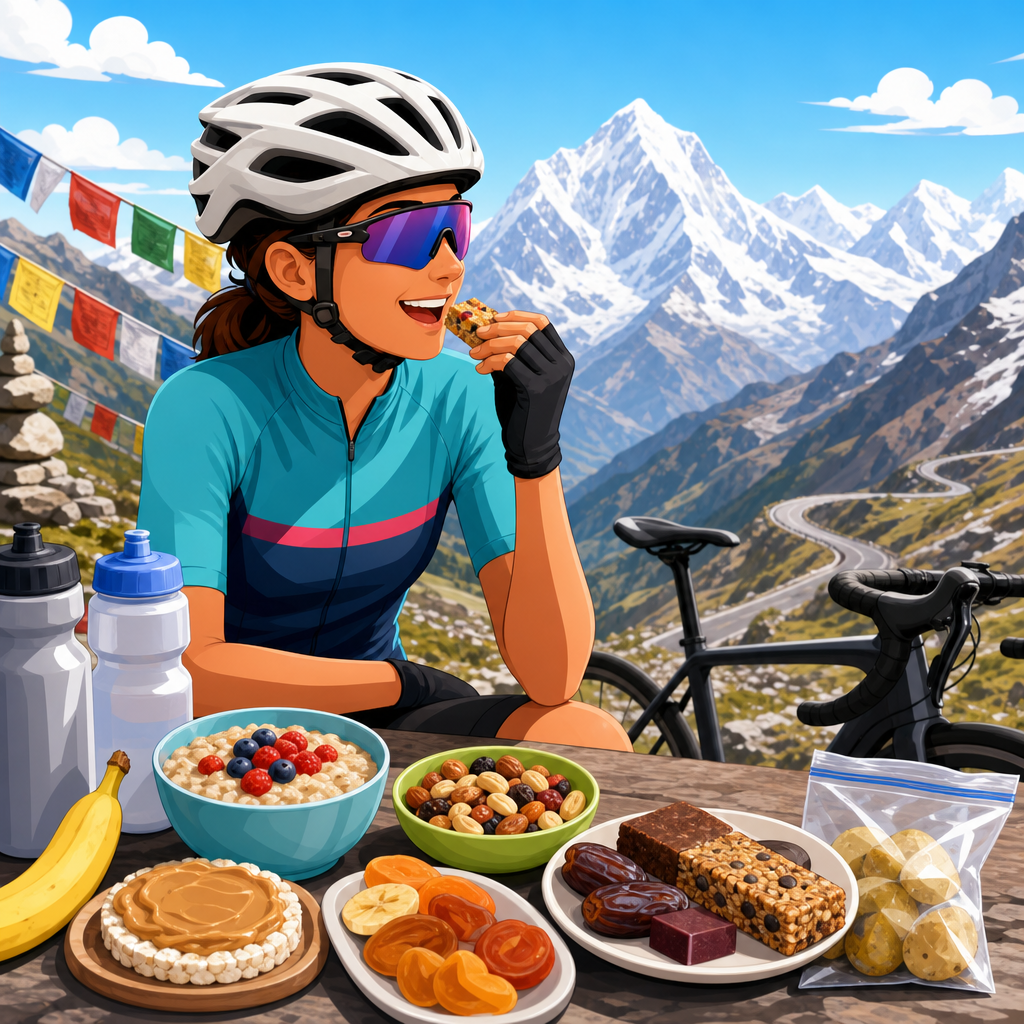
The best foods for a long mountain ride are high in carbohydrate, low to moderate in fiber, easy to open, and still appealing after several hours. Bananas remain one of the most useful options because they provide carbohydrate, potassium, moisture, and a texture many riders can handle even when breathing hard. Rice cakes work well because white rice is gentle on the stomach and can be flavored sweet or savory. Jam sandwiches on soft white bread are effective because they deliver fast carbohydrate without much residue.
Gels and drink mixes are especially useful above three hours because they solve the appetite problem. When chewing feels like work, drinking carbohydrate or swallowing a gel with water is often the difference between maintaining power and crawling home. Chews can bridge the gap between liquid and solid intake. Boiled salted potatoes are surprisingly effective on cooler rides, especially for riders who get flavor fatigue from sweet foods alone.
Be cautious with nuts, high-fiber energy bars, jerky, large servings of dairy, and greasy convenience foods during the ride. These can sit heavily in the stomach, especially on rough roads or high-intensity climbs. Save them for recovery or casual touring unless you know they work for you. The same goes for gas-station experiments. If you have never eaten a particular pastry, sandwich, or energy product during training, race day or a remote alpine route is not the place to test it.
Common mistakes cyclists make at altitude
The first mistake is starting too hard and trying to fuel later. At altitude, early overpacing raises breathing rate and reduces appetite further, making it harder to catch up nutritionally. The second mistake is relying on thirst. Dry air, cold conditions, and focus on climbing can all suppress normal drinking behavior. The third mistake is carrying only sweet products. After three or four hours, palate fatigue is real, and if everything tastes syrupy, intake often drops.
Another common error is using sea-level caffeine habits without considering mountain stress. Moderate caffeine can help, but large doses combined with altitude, poor sleep before a big ride, and dehydration can leave a rider shaky and nauseated. I also see cyclists underestimate the logistics of refill points. A route may look populated on the map but still leave you with two long climbs and no reliable water source. Mountain planning is nutrition planning.
Finally, many riders ignore the previous day. Glycogen status at the start matters. If you arrived at the mountains after travel, skipped dinner, drank alcohol, and slept poorly, your ride nutrition has to compensate for a weaker starting position. Sometimes the smartest performance choice is not a more aggressive fueling plan during the ride, but a better dinner, breakfast, and hydration routine beforehand.
Recovery after a high-altitude ride
Recovery begins as soon as the ride ends. Within the first hour, aim for carbohydrate plus protein, along with fluid and sodium to replace what you lost. For many cyclists, 20 to 40 grams of protein and at least 1 gram of carbohydrate per kilogram of body weight is a strong first step, especially if another ride or hike is planned the next day. Chocolate milk, rice with chicken, a burrito, potatoes with eggs, or a recovery shake with fruit and yogurt can all work.
Rehydration should reflect losses, not habit. If you finished the ride noticeably lighter, thirsty, and salt-streaked, continue drinking with electrolytes rather than plain water alone. Appetite may remain low after a very hard day at altitude, so use easy foods first and eat a full meal once the stomach settles. Recovery is also where cycling connects to the broader performance hub: sleep, iron status, training load, and overall energy availability shape how well nutrition actually works.
For the next mountain ride, build a simple checklist: eat a carb-based breakfast, start feeding early, target hourly carbs and sodium, drink consistently, and carry foods you know you can tolerate. That approach works better than chasing miracle products or guessing at summit hunger. High-altitude cycling rewards preparation. If you want stronger climbs, steadier energy, and fewer late-ride collapses, make your nutrition plan as deliberate as your route and gearing.
Frequently Asked Questions
What should you eat before a high-altitude ride that lasts more than three hours?
Start fueling well before the first climb. For a long ride at altitude, your pre-ride meal should focus on easy-to-digest carbohydrates, moderate protein, low to moderate fat, and familiar foods that sit comfortably in your stomach. A practical target is a meal eaten about two to four hours before the ride that includes foods like oatmeal with fruit, rice with eggs, toast with nut butter, yogurt with granola, or a bagel with honey and banana. The goal is to top up liver and muscle glycogen without leaving your gut overloaded just before hard climbing begins.
Altitude changes the picture because appetite often drops even while your carbohydrate needs rise. The body tends to rely more heavily on carbohydrate during sustained climbing, and the dry air plus increased breathing can leave you slightly dehydrated before you even notice it. That means under-eating breakfast is a common mistake. If a full meal feels difficult, use a lighter combination such as a smoothie, toast, fruit, and a sports drink. About 15 to 30 minutes before rolling out, many riders also benefit from a small carbohydrate top-off such as half a bar, a banana, or a few chews, especially if the opening hour starts uphill.
Keep the pre-ride plan simple and predictable. High fiber foods, very fatty meals, spicy foods, and anything experimental are more likely to cause nausea or bloating once the altitude and effort combine. If the ride begins early and you cannot tolerate much food on waking, split the intake: eat a smaller meal before the start, then begin fueling on the bike within the first 20 to 30 minutes. That approach is often more realistic than trying to force a large breakfast when appetite is low.
How much should you eat during a high-altitude ride over three hours?
For most riders, a smart starting point is 60 to 90 grams of carbohydrate per hour during the ride, adjusted for body size, intensity, altitude exposure, and gut tolerance. On easier endurance rides, the lower end may be enough. On long mountain rides with repeated climbs, cold weather, or hard pacing, many cyclists perform better closer to 75 to 90 grams per hour if they have trained their gut to handle it. Waiting until you feel empty is too late at altitude, because energy dips can arrive suddenly and feel sharper when oxygen availability is lower.
The best strategy is to fuel early and steadily rather than in large, infrequent feedings. Begin within the first 30 to 45 minutes and aim to take in carbohydrates every 15 to 20 minutes. This can come from bars, gels, bananas, rice cakes, dates, chews, sandwiches, or carbohydrate drink mix. A mixed fueling approach often works best because appetite and texture tolerance can change as the ride goes on. Solid food may feel fine early, while softer foods, drinkable calories, or gels may be easier later in the ride or higher up on the mountain.
Because altitude can suppress hunger, do not rely on appetite as your guide. Use a simple schedule instead. For example, set a timer on your bike computer and take in a consistent amount each interval. Also remember that intensity matters. Long climbs near threshold increase carbohydrate demand and may make digestion harder, so it helps to get extra fuel in before the steepest sections rather than trying to chew through heavy foods while breathing hard. The riders who stay strongest late in high-altitude rides are usually the ones who turn fueling into a routine, not a reaction.
Which foods are easiest to tolerate at altitude while climbing for hours?
The best foods for high-altitude riding are familiar, carbohydrate-rich, easy to chew, and easy to digest. Good examples include bananas, soft bars, rice cakes, low-fiber sandwiches, applesauce pouches, dates, chews, gels, and sports drink. Many riders do especially well with foods that are slightly moist and not overly sweet, because dry mountain air and heavier breathing can make sticky or crumbly foods hard to swallow. On cooler alpine rides, some people also tolerate boiled potatoes with salt, simple pancakes, or bite-size pieces of white bread with jam surprisingly well.
Texture and timing matter as much as nutrition. During easier valley sections or flatter terrain, more substantial foods like bars or small sandwiches may be comfortable. During long climbs, especially above roughly 1,500 meters, simpler and softer options often work better because hard efforts reduce blood flow to the gut and make digestion less efficient. This is why many experienced riders shift from solids early in the ride to chews, gels, and carbohydrate drink later on. It is not just convenience; it is a practical response to how the body handles food under sustained climbing stress.
Avoid foods that are high in fiber, very high in fat, or unusually rich in protein during the ride. Those foods digest more slowly and can contribute to stomach heaviness, reflux, or nausea when effort and altitude stack together. It is also wise to avoid relying entirely on one food source. Sweet fatigue is real, and the loss of appetite that often comes with altitude can make it difficult to keep eating if every hour tastes the same. A mix of sweet, neutral, and lightly salty options usually keeps intake more consistent.
How should you manage hydration and electrolytes on a long ride at altitude?
Hydration becomes more important at altitude because breathing rate increases and the air is typically drier, which raises fluid loss through respiration even when temperatures are cool. Many riders assume they are safer from dehydration in the mountains because they sweat less than on hot lowland rides, but that can be misleading. You may lose meaningful amounts of fluid without feeling especially sweaty. A useful starting range is roughly 500 to 750 milliliters of fluid per hour, then adjust based on heat, climb intensity, sweat rate, and access to refills. Some riders in hot or very dry conditions may need more.
Electrolytes matter too, especially sodium. Long climbs, repeated sweating, and heavy breathing can contribute to a gradual sodium deficit, which may increase the risk of cramping, poor fluid absorption, and a general drop in performance. A practical target for many riders is around 300 to 700 milligrams of sodium per hour, though salty sweaters or very long days may need more. Sports drinks, electrolyte tablets, salty foods, and sodium-containing gels can all help. The key is to pair sodium intake with fluid and carbohydrate rather than treating it as a separate afterthought.
Do not wait for strong thirst to start drinking. Build a routine just as you do with calories. Small, regular sips every 10 to 15 minutes usually work better than occasional large gulps. If you are carrying bottles, one can contain plain water and the other a carbohydrate-electrolyte mix, which gives flexibility as conditions change. Also pay attention after the ride begins: headache, unusual fatigue, dry mouth, irritability, and a sudden rise in perceived effort can all be signs that fluid and sodium intake are lagging. In the mountains, small hydration mistakes can snowball quickly.
What is the best fueling plan if altitude suppresses your appetite or upsets your stomach?
If altitude reduces your desire to eat, the answer is not to stop fueling. It is to make fueling easier. Shift toward smaller, more frequent doses of carbohydrate and use foods that require minimal chewing and digestion. Liquid calories, carbohydrate drink mix, gels, chews, applesauce, or soft rice-based snacks are often more manageable than dense bars or large sandwiches. Instead of trying to eat a full serving every hour, aim for bite-sized intake every 10 to 15 minutes. This keeps energy delivery steady and usually feels less overwhelming.
If your stomach starts to feel unsettled, first reduce the concentration of what you are consuming. Very sweet, highly concentrated, or overly large feedings can sit poorly, especially during steep climbing. Back off slightly, sip water, and switch temporarily to simpler forms of carbohydrate. It can also help to lower effort for a few minutes if possible, since digestion improves when intensity drops. Many stomach issues on mountain rides are not caused by food itself but by the combination of climbing hard, eating too late, and then trying to catch up all at once.
The best long-term solution is to practice your nutrition strategy before a major high-altitude ride. Train your gut on long rides at home by using the same products, hourly carbohydrate targets, and timing you plan to use in the mountains. Then make adjustments based on what actually works for you. Some riders do well with a higher proportion of drink mix; others need real food early and only switch to gels late. The common thread is planning. At altitude, successful fueling usually comes from structure, not instinct, because appetite, thirst, and stomach comfort are all less reliable than they are at sea level.