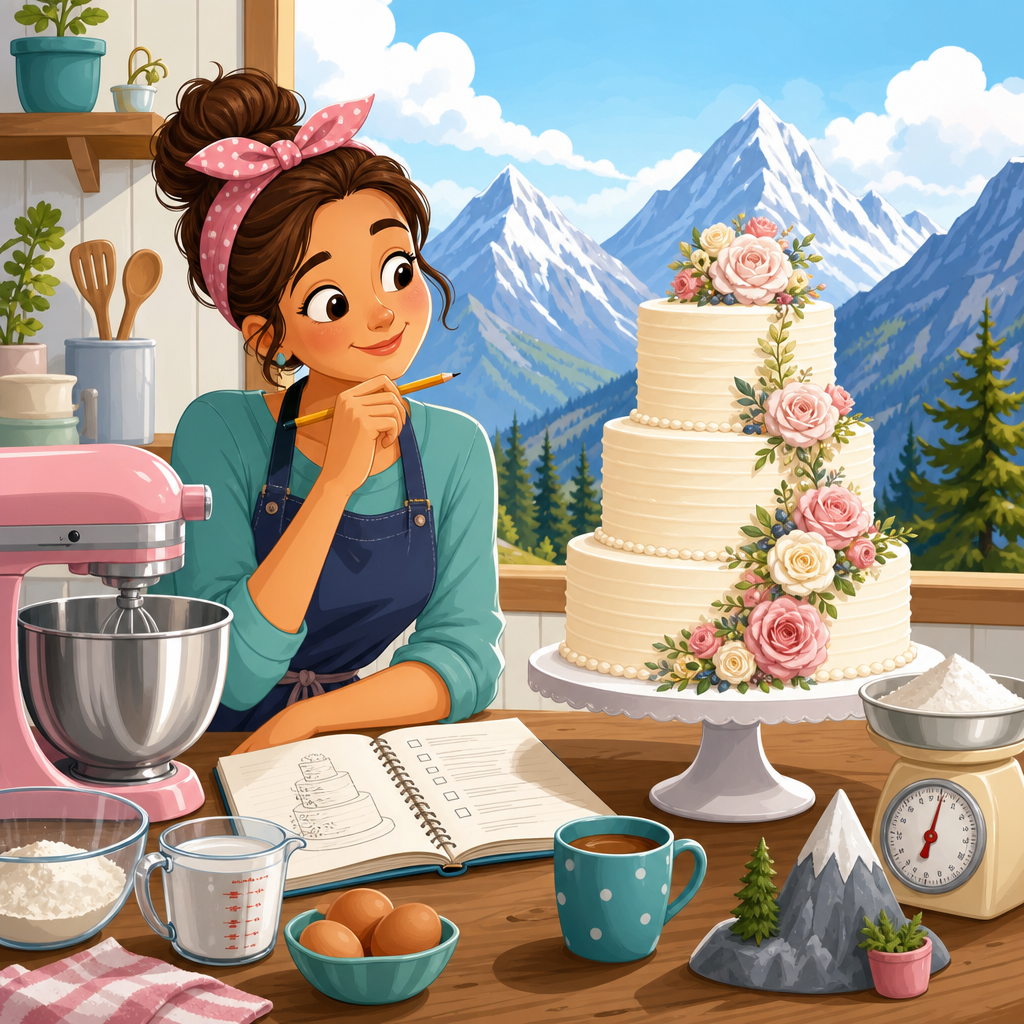
High altitude wedding cake planning for home bakers starts with one hard truth: a beautiful tiered cake at 7,000 feet is not the same project as baking at sea level. Air pressure drops as elevation rises, which changes how batters expand, how quickly moisture evaporates, how sugar concentrates, and how fragile cake structure becomes during baking and stacking. In practical terms, that means a recipe that works perfectly in Portland can dome, sink, dry out, or crumble in Denver, Santa Fe, Flagstaff, or mountain towns across the Rockies. I have baked celebration cakes above 5,000 feet for years, and the difference is not subtle. Wedding cakes demand exact planning because the stakes are higher than with everyday layer cakes: the cake must taste good, slice cleanly, travel safely, hold decorations, and stay stable for hours at room temperature.
For home bakers, this topic sits at the center of cakes and cupcakes baked at altitude. A wedding cake draws together every major issue in high altitude baking: flour strength, leavening control, egg balance, sugar reduction, liquid adjustment, mixing method, pan depth, cooling, filling safety, frosting behavior, support systems, and delivery logistics. It also acts as a hub because the same principles apply to cupcakes, birthday cakes, sheet cakes, and small ceremonial cakes. If you understand how to plan a high altitude wedding cake, you understand the broader logic of altitude baking. The key terms are straightforward. High altitude generally means 3,000 feet and above, with more aggressive adjustments often needed past 5,000 feet. Structure refers to the cake’s internal strength from proteins and starch gelatinization. Leavening includes baking powder, baking soda, and whipped air. Crumb describes texture. Carrying capacity means how well a layer supports filling, frosting, and stacked weight. Mastering these ideas prevents expensive mistakes and helps you build a cake that tastes as polished as it looks.
How altitude changes cake science
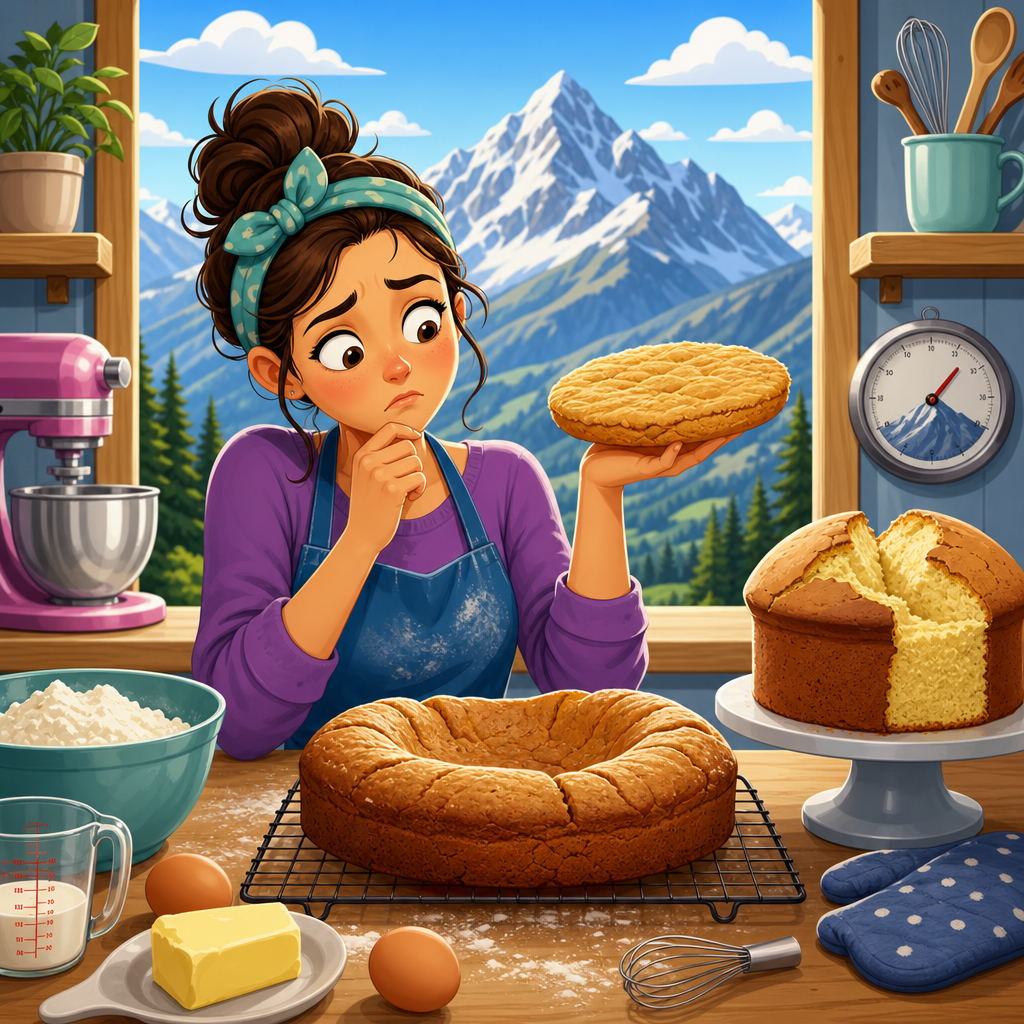
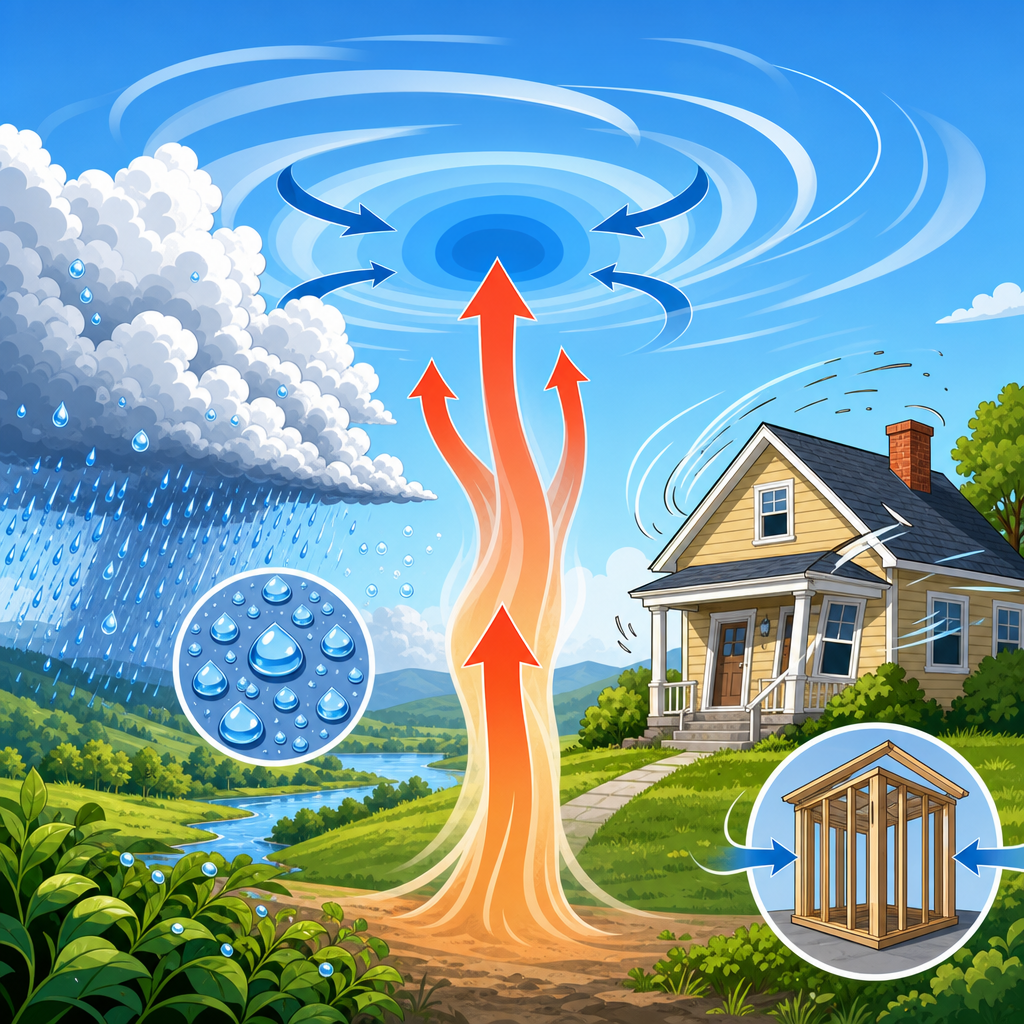
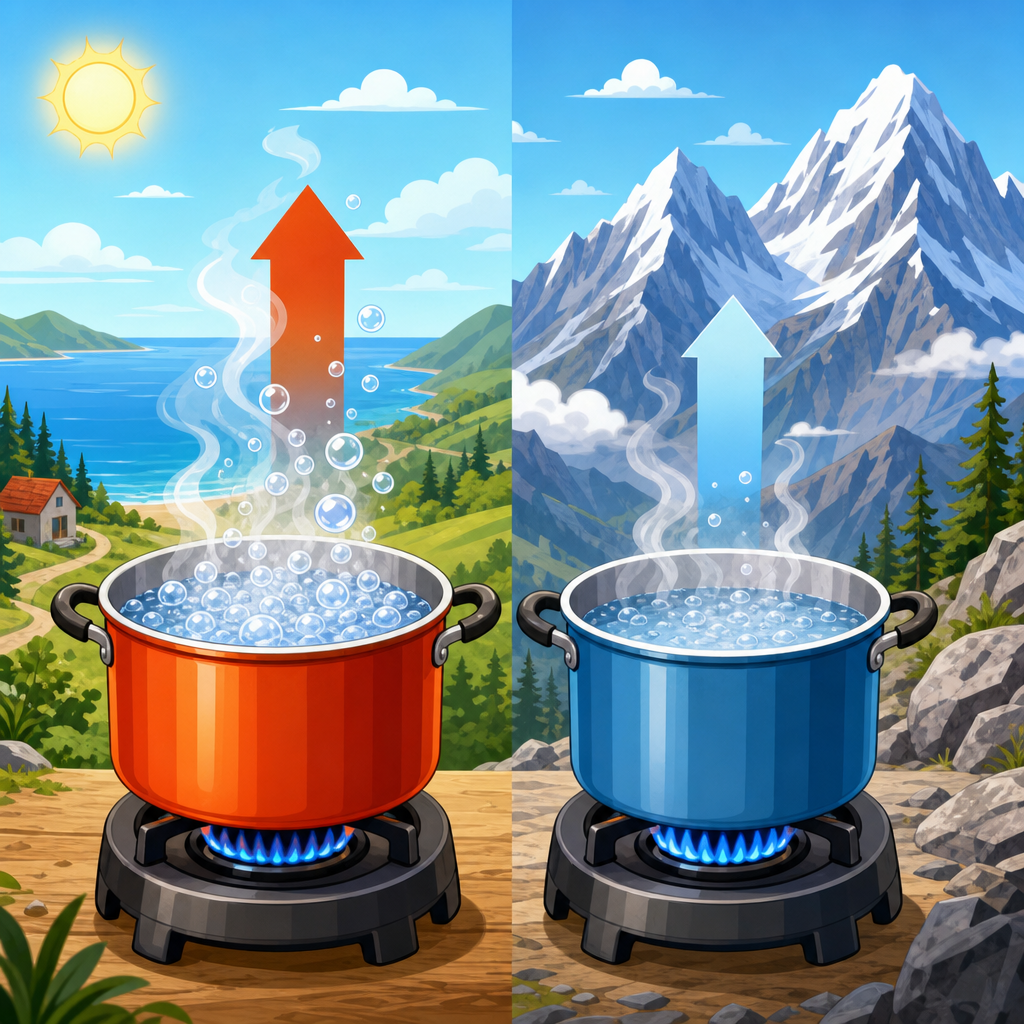
The first question most bakers ask is simple: why do cakes fail more often at altitude? The answer is physics and moisture loss. Lower air pressure lets gas bubbles expand faster, so cakes rise early before the batter has fully set. At the same time, water boils at a lower temperature, causing faster evaporation. Sugar also becomes more concentrated in the batter as moisture escapes, which can weaken structure and make cakes sticky or collapsed. Fat melts normally, but because the crumb sets later relative to expansion, cakes can over-rise and then fall. This is why high altitude cake recipes typically reduce chemical leavening, increase liquid, sometimes add an extra egg or egg white, and occasionally increase flour slightly.
Wedding cakes amplify these effects because the layers are usually larger, flatter, and more heavily frosted than everyday cakes. A cake that tastes fine as a casual snack may still be a poor wedding cake if it domes sharply, sheds crumbs, or compresses under stacking weight. In my kitchen, I judge wedding cake formulas by four standards: even rise, tight but tender crumb, clean slicing, and resilience after chilling and transport. If a recipe misses one of those, it is not wedding-cake ready. Reliable formulas at altitude are usually based on butter cakes, reverse-creamed cakes, sturdy oil cakes, or chiffon-style cakes designed for support. Very delicate genoise can work, but only if the baker is comfortable with precise egg foam handling and syruping. Most home bakers get better results with formulas built for stability first, then tenderness second.
Choosing the right cake style for tiers and cupcakes
Not every flavor belongs in a stacked wedding cake, especially above 5,000 feet. The best choices are vanilla butter cake, almond cake, chocolate butter cake, white cake with added egg whites, carrot cake with restrained add-ins, and certain sour cream or buttermilk cakes. These styles hold shape and pair well with common fillings. Cupcakes are more forgiving, but the same category rules apply. If your subtopic includes cakes and cupcakes broadly, think of wedding cake planning as a filter: choose batters that can support decoration, refrigeration, and serving. Banana cake, zucchini cake, and fruit-heavy batters may taste wonderful yet bake too unevenly for formal tiers unless carefully tested. Angel food and very airy sponge can work for cupcakes or single-tier desserts, but they are poor candidates for heavy stacked displays.
Flavor planning should also account for altitude-related drying. Chocolate often performs well because cocoa and melted chocolate can mask slight moisture loss. Vanilla cakes need more protection from drying, so syrup soaks, sour cream, or buttermilk become valuable. Fillings matter too. Fresh whipped cream is risky for long events and warm venues. American buttercream, Swiss meringue buttercream, and cream cheese frosting each behave differently in mountain climates. Swiss meringue buttercream is smoother and less sweet, but it softens in heat. American buttercream crusts more and travels better. Cream cheese frosting tastes excellent with carrot or red velvet cake, yet it is softer and less ideal for hot delivery days. For cupcakes, frosting height should be moderated at altitude because taller swirls warm quickly and can slump if the event space is dry or sunny.
| Cake style | Altitude performance | Best use | Main caution |
|---|---|---|---|
| Butter cake | Very good with reduced leavening and extra liquid | Tiered wedding cakes | Can dome if overmixed or overleavened |
| Chocolate cake | Excellent moisture retention | Tiers and cupcakes | May be too soft without enough eggs or flour |
| White cake | Good when egg whites and flour are balanced | Formal white tiers | Dries faster than chocolate |
| Chiffon cake | Good for single tiers or light designs | Small wedding cakes, cupcakes | Less ideal under heavy fondant |
| Fruit-heavy cake | Variable | Dessert cakes, some cupcakes | Uneven crumb and sinking pockets |
Adjusting recipes for elevation, pan size, and consistent crumb
General altitude advice is useful, but wedding cakes need formula-specific testing. Between 3,000 and 5,000 feet, a recipe may need only small changes: reduce baking powder by about 1/8 to 1/4 teaspoon per teaspoon, add 1 to 2 tablespoons of liquid per cup, and raise the oven temperature by 15 to 25 degrees Fahrenheit. Above 5,000 feet, stronger changes are often necessary. I frequently reduce baking powder by 25 to 50 percent, add an extra egg white for larger tiers, and increase flour by 1 to 3 tablespoons per recipe if the batter seems too loose. Sugar sometimes needs slight reduction, particularly in very tender cakes. King Arthur Baking and university extension guidance both support this overall direction, but no chart replaces test bakes in the exact pan size you plan to serve.
Pan size changes baking behavior more than many home bakers expect. An 8-inch layer and a 12-inch layer made from the same batter are not equivalent. Larger pans expose batter to different heat patterns, and center setting can lag badly at altitude. That is one reason wedding cake bakers often use heating cores or bake-even strips for large rounds. Deep pans can create overbrowned edges and underbaked centers. I prefer filling pans no more than halfway to two-thirds full and baking more layers rather than fewer thick ones. For cupcakes, overfilling is a common cause of mushroom tops and collapsed centers in high altitude kitchens. Aim for a consistent scoop, usually about two-thirds full, and use a scale if you want uniformity across dozens or hundreds of servings.
Building stability with fillings, frosting, and supports
A high altitude wedding cake has to survive assembly, chilling, transport, display, and slicing. That requires engineering, not just baking. Start with level layers. Trim domes after chilling, then tort only if the cake is sturdy enough. Thin layers with soft fillings are more likely to shift during transport, so I usually keep wedding tiers to two or three substantial layers instead of four thin ones. Buttercream dams are not optional when using curd, jam, pastry cream, or fruit compote. Altitude does not directly make fillings unstable, but drier cake layers can absorb moisture unpredictably and encourage slipping if the filling ratio is too generous. A safe rule is to keep soft fillings under half an inch deep.
Support systems matter most once the cake goes above two tiers. Use a rigid cake board under every tier, insert food-safe dowels or straws cut exactly flush, and place the upper tier’s weight over the supported footprint below. Central doweling is smart for transport, especially on rough mountain roads. Fondant can add surface strength, but it is not structural support. Buttercream-only cakes can stack beautifully if chilled well and supported correctly. For cupcakes displayed alongside a small cutting cake, the structural burden drops dramatically, which is why many home bakers at altitude choose this format. It delivers a wedding-cake look with lower risk. If your event is outdoors, assume temperature swings and direct sun will affect frosting within minutes. Shade, refrigeration, and late setup times protect both appearance and food safety.
Timeline, testing, and transport for a smooth wedding day
The biggest planning mistake is baking a wedding cake recipe for the first time during wedding week. At altitude, you need a timeline that includes test rounds. Bake at least one full flavor trial in the exact pan size or cupcake tin you intend to use. Evaluate rise, texture, shrinkage from the pan, cooling behavior, and day-two taste. Wedding cake flavor often peaks after resting because frosting and cake moisture equilibrate, but only if the formula has enough liquid and the crumb is not overbaked. I recommend finalizing the recipe at least three weeks before the event. Freeze unfilled layers wrapped tightly in plastic and a second barrier such as foil or a zip bag; this limits freezer burn in dry mountain air.
Transport deserves the same attention as baking. Chill tiers until firm, use nonslip mats in the vehicle, level the cargo surface, and keep the car cool. Never carry a tall stacked cake on a seat. Floorboards or a flat cargo area are safer. In mountain regions, winding roads and steep grades magnify every weak point in your assembly. If the venue is far away, consider transporting tiers separately and stacking onsite. Bring an emergency kit with offset spatula, extra buttercream, piping bags, scissors, gloves, paper towels, dowels, and a small level. For cupcakes, transport in sturdy carriers with inserts that prevent sliding. Arrive with enough time for condensation to clear from chilled buttercream before final touch-ups. Small details like this separate a homemade-looking result from a professional one.
Common mistakes home bakers can avoid
The most common error is using a beloved sea-level recipe with only one small tweak, usually extra flour. That rarely solves the full problem because altitude affects leavening, moisture, and setting temperature together. Another mistake is chasing height instead of strength. A dramatic rise may look promising in the oven, then collapse as soon as the cake cools. Overbeating butter and sugar, overwhipping egg whites, and adding too much baking powder all increase this risk. Measuring by volume instead of weight introduces more inconsistency, especially with flour. For wedding work, a digital scale is essential. So is an oven thermometer; many home ovens run 15 to 25 degrees off, enough to ruin a large tier.
Home bakers also underestimate event conditions. Dry mountain air can crust frosting faster than expected, while afternoon sun can soften it immediately afterward. Refrigeration helps, but repeated cold-to-warm cycles create condensation and texture changes. Finally, many bakers overcomplicate the design. Intricate fault-line finishes, tall wafer-paper sails, and heavily loaded fresh-flower cascades all increase risk. Clean edges, balanced proportions, and stable floral placement usually look more elegant and perform better. If you are building this hub for cakes and cupcakes at altitude, that is the overarching lesson: choose dependable formulas, test in the right pans, favor stability over trend-driven fragility, and scale the design to your real skill level.
High altitude wedding cake planning for home bakers succeeds when science, structure, and scheduling work together. Lower air pressure changes the rules, but it does not prevent a home baker from producing a polished cake or a beautiful cupcake display. The practical path is clear: start with sturdy cake styles, adjust leavening and liquid for your elevation, test every formula in the actual pan size, use fillings and frostings that match your venue conditions, and build each tier with proper supports. When those fundamentals are in place, flavor and design become far easier to execute.
This cakes and cupcakes hub should guide every related bake you attempt at altitude, from simple celebration layers to formal wedding tiers. The same principles govern batter strength, moisture control, frosting behavior, and transport safety across the category. If you want better results, document each bake carefully: note elevation, pan size, oven temperature, ingredient weights, cooling time, and day-two texture. That record becomes your most valuable tool. Use this page as your planning foundation, then move into specific recipes and techniques for chocolate cakes, vanilla layers, cupcakes, fillings, and frostings built for mountain kitchens.
Frequently Asked Questions
How does high altitude actually change a wedding cake recipe for home bakers?
High altitude changes cake baking because lower air pressure affects almost every part of the formula. Batters rise faster and more aggressively, liquids evaporate sooner, and the structure of the cake can set before it has enough strength to support that rapid expansion. For a wedding cake, this matters even more because you are not just baking one layer to serve at home. You are creating multiple layers that need to bake evenly, stay moist for hours, trim cleanly, stack safely, and hold up under frosting, filling, and support systems.
In practical terms, a recipe that behaves beautifully at sea level may over-expand and then collapse at 5,000 to 8,000 feet. You may see domed tops, tunnels, coarse crumb, dryness, or fragile edges that break during leveling. To compensate, home bakers usually need to make measured adjustments such as slightly reducing leavening, increasing liquid, sometimes increasing oven temperature a bit, and occasionally reducing sugar so the cake sets with better structure. The exact changes depend on the recipe, the elevation, the pan size, and whether the cake is butter-based, oil-based, chiffon-style, or something denser like pound cake.
For wedding cakes, consistency matters more than perfection in one test bake. The goal is to create layers that are reliable and repeatable. A stable, slightly tighter crumb is usually a better choice than an ultra-light cake that risks cracking or shifting during stacking and transport. That is why high altitude wedding cake planning should begin with testing, note-taking, and choosing a cake style that can tolerate altitude and assembly demands.
What are the best recipe adjustments for baking wedding cake layers at 7,000 feet?
At around 7,000 feet, most home bakers should expect to adjust standard cake recipes rather than follow them exactly. A common starting point is to reduce chemical leavening, because baking powder and baking soda become more powerful as air pressure drops. Too much lift too early can cause layers to rise rapidly and then sink before the crumb fully sets. Reducing sugar can also help, since sugar weakens structure and concentrates faster when moisture evaporates more quickly. Increasing liquid is often necessary to offset faster evaporation and prevent dry, crumbly layers.
Many bakers also raise the oven temperature slightly so the cake structure sets sooner and supports the rise. That said, the increase should be moderate, because too much heat can create a thick crust while the interior remains underbaked. Flour may also need a small increase in some formulas to strengthen the batter. Eggs can become especially important at altitude because they help with structure, so recipes with a good protein balance often perform better for stacked cakes than very delicate formulas.
The most important point is that there is no single universal altitude conversion for every wedding cake recipe. A butter cake with sour cream will react differently than a sponge cake or a doctored mix. Start with one recipe, make only a few controlled changes at a time, and test in the exact pan size you plan to use for the wedding. A six-inch layer and a twelve-inch layer do not always behave the same way, even with the same batter. For a tiered cake, pan-specific testing is one of the smartest decisions a home baker can make.
Which cake flavors and fillings are most stable for a high altitude wedding cake?
The best choices are flavors and fillings that balance moisture with structure. At high altitude, very delicate cakes can become too fragile to trim, fill, and stack, while very airy fillings can soften too much or shift between tiers. Butter cakes, sour cream cakes, oil-based vanilla cakes, and sturdy chocolate cakes are usually stronger candidates than extremely light genoise or chiffon cakes for a home-baked wedding cake. These styles tend to hold their shape better, slice more cleanly, and tolerate refrigeration and transport with less damage.
For fillings, stability matters just as much as flavor. American buttercream, Swiss meringue buttercream, ganache, and well-made cream cheese frosting can all work, but the final choice depends on temperature, travel time, and display conditions. Fruit fillings should be thick enough to avoid leaking or creating slippery layers. If using curds, preserves, or pastry cream, it is wise to pipe a buttercream dam and keep the filling layer controlled and even. High altitude can already make cakes more delicate, so overly loose fillings add unnecessary risk during stacking.
Many home bakers find that simple combinations perform best for tiered cakes: vanilla cake with buttercream, chocolate cake with ganache, almond cake with raspberry filling and a buttercream dam, or lemon cake with a stable lemon buttercream. If the wedding venue will be warm, avoid fillings that rely heavily on whipped cream unless the cake can remain chilled until service. The safest wedding cake is one that tastes great, stays moist, and remains structurally dependable from baking day to cutting time.
How should I plan the baking, stacking, and transporting of a tiered wedding cake at high altitude?
Planning is where home bakers protect themselves from avoidable disaster. At high altitude, cakes can be more fragile and dry out faster, so timing matters. Bake layers in advance, let them cool completely, wrap them well, and chill or freeze them before trimming and frosting. Cold layers are easier to handle, produce cleaner edges, and are less likely to crack during assembly. This is especially important for larger wedding cake tiers, where even a small structural weakness can become a major problem once supports and upper tiers are added.
When stacking, use proper support systems every time. Each upper tier should rest on dowels or supports placed in the tier below, with a sturdy cake board under every tier, not just under the bottom one. For taller cakes, a central dowel can add security during transport. High altitude baking issues like crumblier edges or softer centers make internal support even more essential. Never rely on frosting alone to hold stacked tiers in place. Level each layer carefully, keep filling thickness consistent, and chill the cake between major stages if it starts to feel soft or unstable.
Transport should be treated as a separate project, not an afterthought. Use a flat vehicle surface, keep the cake cool, and drive slowly with minimal sharp turns. If the design is complex or the roads are rough, many home bakers choose to transport tiers separately and stack them on site. Bring an emergency kit with extra frosting, spatulas, dowels, scissors, a piping bag, paper towels, and a small repair palette. For a wedding cake made at altitude, successful delivery comes from preparation, conservative design choices, and a willingness to simplify anything that adds risk without adding real value.
How many test bakes should I do before making a high altitude wedding cake for an event?
For a wedding cake, one test bake is rarely enough at high altitude. A realistic minimum is two to three test rounds for each final cake recipe, and sometimes more if you are adapting a sea-level formula. The first test helps you understand how the batter behaves at your elevation. The second lets you refine texture, height, and moisture. The third confirms that the recipe is repeatable and works in the pan sizes you will actually use. If you are baking multiple tiers, it is ideal to test at least one larger pan as well, since larger layers can bake differently and may need longer time or slightly different handling.
Testing should go beyond flavor. Evaluate whether the layers dome too much, sink in the center, crumble during trimming, or dry out after chilling. Pay attention to how the cake performs when filled, frosted, and stacked. A recipe that tastes excellent but falls apart during assembly is not the right wedding cake recipe. Keep detailed notes on ingredient changes, oven temperature, bake time, batter volume, pan depth, and final results. These notes become your roadmap and reduce stress when the real baking days arrive.
If possible, do one full mock assembly before the wedding, especially if this is your first tiered cake at altitude. That practice run will reveal whether your chosen cake, filling, frosting, supports, and schedule all work together. It also helps you estimate how much batter and frosting you truly need. For home bakers, confidence comes from repetition. At high altitude, thorough testing is not over-preparing. It is the most practical way to protect the cake, the timeline, and the event itself.