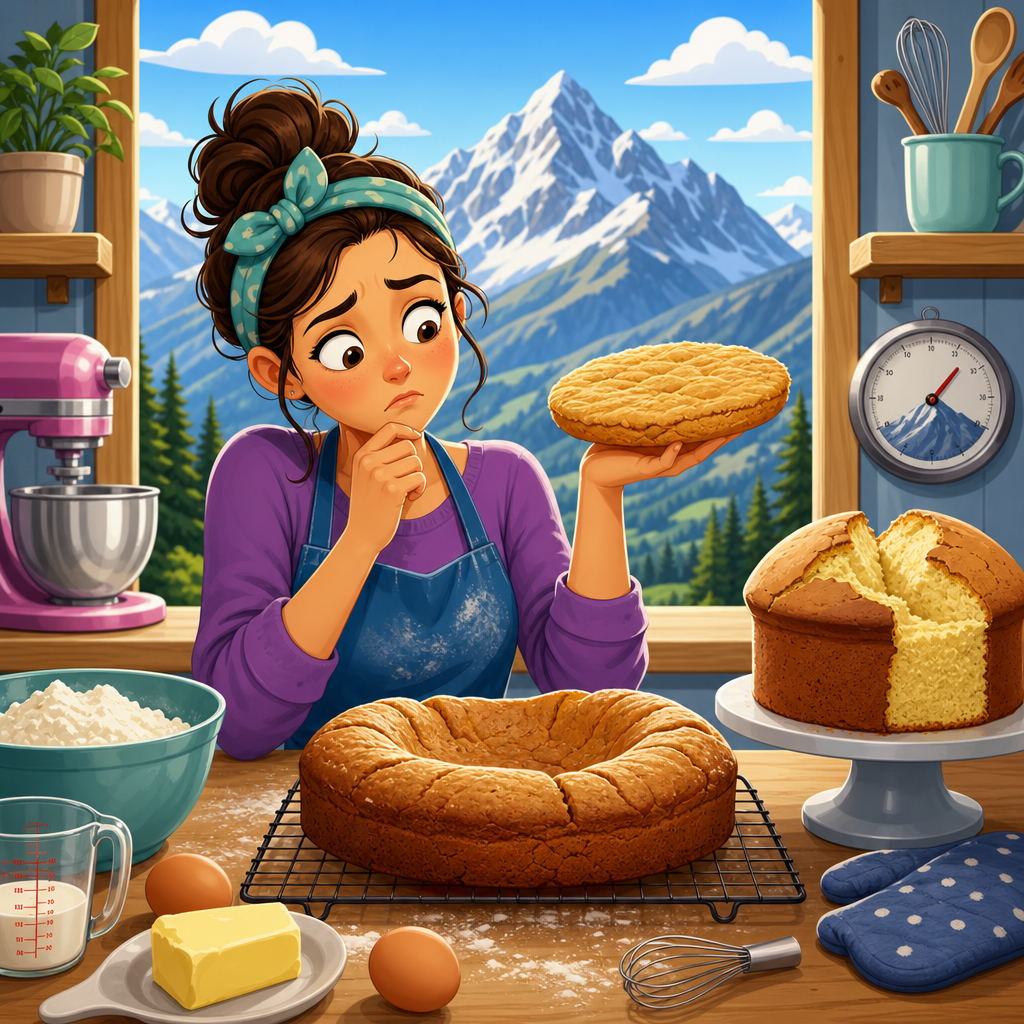
High altitude baking changes how sugar behaves, which is why knowing when to reduce sugar in high altitude baking is a foundational skill for anyone building reliable baking fundamentals above about 3,000 feet. In practical terms, altitude lowers air pressure, so water boils at a lower temperature, gases expand faster, batters rise more quickly, and moisture evaporates sooner than it does at sea level. Sugar does far more than sweeten: it delays starch gelatinization, competes for water, weakens structure when overused, encourages spread in cookies, promotes browning, and keeps cakes tender. I have tested the same formulas in low-elevation and mountain kitchens, and the difference is immediate: a cake that looks balanced at sea level can overexpand, sink, or bake gummy in Denver, Santa Fe, or Leadville. For bakers working through baking fundamentals, sugar adjustment matters because it sits at the intersection of structure, moisture, color, and flavor. This hub article explains when sugar should be reduced, when it should stay the same, how much to change, and how those decisions connect to leavening, flour, liquid, oven temperature, and pan choice across core baked goods.
Why sugar becomes a problem at altitude
The key reason to reduce sugar at altitude is that sugar can magnify the exact weaknesses altitude creates. Lower atmospheric pressure allows leavening gases and steam to expand more readily, so batters rise faster and can set before they are strong enough to hold that rise. At the same time, moisture escapes quickly, concentrating dissolved sugar in the batter. A formula that was already generous with sugar now behaves as if it contains even more. That extra dissolved sugar raises the temperature at which eggs coagulate and starches set, delaying structure while the batter continues to expand. The result is a familiar mountain-baking failure pattern: dramatic rise, fragile crumb, collapse in the center, sticky tunnels, or a coarse top crust with a damp interior.
Sugar also affects spread and surface finish. In cookies, excess sugar liquefies early and encourages overspread before proteins and starches can hold shape. In cakes and quick breads, it contributes tenderness, but too much tenderness at altitude turns into fragility. In yeast doughs, sugar can slow fermentation if used in large percentages, yet many lean doughs are not sweet enough for altitude to make sugar the primary issue. That is why the answer is not “always cut sugar.” The better question is whether sugar is preventing the structure from setting on time. If it is, reduction is justified. If the product depends on sugar for moisture retention, crust color, or a specific texture, another adjustment may solve the problem better.
When to reduce sugar in high altitude baking
Reduce sugar when a formula is already sweet relative to flour and liquid, and when the finished product shows classic signs of delayed setting. The strongest candidates are butter cakes, oil cakes, chiffon-style cakes, some muffins, quick breads, bar cookies, brownies with shiny crackly tops, and drop cookies that spread too far. Many cooperative extension guides, including Colorado State University Extension, recommend decreasing sugar by roughly 1 to 3 tablespoons per cup at elevations above 3,500 feet. In my testing, the lower end works for modest altitude and balanced recipes, while the higher end is often necessary for very sweet batters or elevations above 7,000 feet.
Reduce sugar if you see a cake rise rapidly and then sink, a gummy line near the bottom, a crust that sets while the center stays fluid, or tunnels and large air pockets under the surface. Reduce sugar in cookies if the dough bakes into thin, lacy rounds despite adequate chilling and correct butter temperature. Reduce sugar in muffins if domes spill outward and the crumb feels sticky one day later. Brownies are more nuanced: if they sink, seem greasy, or stay underbaked long after the edges are done, a modest sugar reduction can help, but too much reduction removes the signature glossy top and fudgy chew.
Do not start by reducing sugar in every recipe. Pie crust, biscuits, lean breads, pâte à choux, and many artisan loaves contain little sugar or use it for a minor functional role. Cheesecake usually needs careful heat management more than aggressive sugar cuts. Custards, curds, and meringues depend heavily on sugar for texture, so broad reductions can create weeping, curdling, or graininess. In those products, altitude adjustments usually focus first on oven temperature, baking time, pan placement, and moisture protection.
How sugar reduction fits with the other altitude adjustments
Sugar is only one variable in baking fundamentals, and it works best when paired with the standard altitude corrections. Most successful high altitude formulas use a small package of changes: slightly less sugar, a bit more liquid, somewhat less chemical leavening, and a modest increase in oven temperature. Those moves solve different parts of the same problem. Less sugar helps the batter set earlier. More liquid offsets rapid evaporation. Reduced baking powder or baking soda prevents overexpansion. A hotter oven, often 15 to 25 degrees Fahrenheit higher, helps proteins and starches set before the rise gets ahead of structure.
Flour may also need adjustment. Some cakes and muffins benefit from 1 to 2 extra tablespoons of flour per cup at higher elevations, especially if the original formula is high in sugar and fat. Eggs matter too. An extra egg white can provide reinforcing protein in foam cakes and some butter cakes. Pan choice affects all of this: dark metal accelerates crust formation, glass slows heat transfer, and oversized pans reduce batter depth, sometimes masking structural issues that still exist. If you reduce sugar but leave leavening excessive, collapse can still happen. If you reduce sugar without replacing lost moisture in a dry climate, the crumb can become tough by the second day. The point is coordination, not isolated tinkering.
Product-by-product guidance for baking fundamentals
Different categories need different sugar decisions. This is where a hub approach to baking fundamentals helps, because the same ingredient behaves differently across products.
| Product | When to Reduce Sugar | Typical Starting Change | What Else to Adjust |
|---|---|---|---|
| Layer cakes and cupcakes | If cakes sink, tunnel, or bake gummy | 1 to 2 tablespoons less per cup | Less leavening, more liquid, hotter oven |
| Muffins and quick breads | If domes spread or crumb stays sticky | 1 tablespoon less per cup | Extra flour, slightly more liquid |
| Drop cookies | If cookies overspread or edges burn early | 1 to 3 tablespoons less per cup | More flour, colder dough, hotter oven |
| Brownies and bars | If center collapses or stays greasy | 1 tablespoon less per cup | Shorter pan, careful doneness testing |
| Yeast breads | Usually only in enriched sweet doughs | Small reduction if very sweet | Shorter rise times, extra liquid |
| Meringues and angel food | Rarely reduce much without full reformulation | Minimal change | Focus on whipping, pan prep, bake profile |
For butter cakes, I usually start with less sugar before changing flour aggressively, because excess sweetness often drives weak structure. For muffins, sugar reductions are smaller because muffins can dry out quickly. For cookies, reducing sugar is often the fastest route to better shape retention, especially when combined with a flour increase. For cinnamon rolls or brioche, however, fermentation management usually matters more than sugar concentration alone.
How to diagnose whether sugar is the real issue
Good altitude baking is diagnostic, not superstitious. If a cake is dry and tough, sugar may already be too low, or the oven may be too hot, or the bake may simply be too long for your pan size. If cookies are thick and dull rather than spreading, cutting sugar further will not help; check flour measurement, butter temperature, and mixing method instead. A sunken center usually suggests too much leavening, too much sugar, too little liquid, underbaking, or some combination of all four. The evidence in the crumb matters. Large vertical tunnels point toward overexpansion. A wet, shiny, compressed line near the base suggests delayed setting. Excessive edge browning with a pale center often means the oven is too hot for the formula or the pan is too dark.
My most reliable method is to change one major variable plus one supporting variable, then document the result. For example, in a yellow cake at 5,280 feet, I might reduce sugar by 2 tablespoons per cup and baking powder by 1/8 teaspoon per teaspoon, leaving flour unchanged for the first retest. If the cake still domes and falls, I then add 1 to 2 tablespoons liquid per cup and raise the oven 15 degrees. Keeping notes matters because altitude effects vary by humidity, flour protein, pan material, and even whether your kitchen sits at 4,000 or 9,000 feet. Serious bakers treat each formula as a controlled experiment.
Practical method for adapting a recipe once, then refining it
Start by identifying the product type and the dominant failure. If it is a cake or quick bread with collapse or gumminess, reduce sugar modestly first. Use baker’s percentages if possible, because they reveal whether the recipe is unusually sweet. A snack cake with sugar close to or above flour weight will almost always need closer attention at altitude than a plain muffin. Next, adjust leavening downward in small increments. For many home recipes, cutting baking powder by 1/8 to 1/4 teaspoon per teaspoon is enough. Add 1 to 2 tablespoons liquid per cup if your environment is dry or the batter seems thicker than expected. Then increase oven temperature slightly so structure sets earlier.
During baking, look for timing changes. Many high altitude products are done sooner, even though moisture loss is faster. Use objective doneness cues: internal temperature, light spring-back, clean or nearly clean crumb on a tester depending on product type, and edge pull-away where appropriate. For cakes, an instant-read thermometer reading around 200 to 210 degrees Fahrenheit is often more useful than a toothpick alone. Cool completely before judging texture, because sugar-rich products continue to set as steam redistributes. Once you get a stable result, record the elevation, pan dimensions, brand of flour, and exact oven setting. That written version becomes your house formula and is more valuable than any generic conversion chart.
Common mistakes bakers make when reducing sugar
The biggest mistake is cutting sugar too drastically. Sugar is a structural modifier, moisture manager, browning agent, and flavor carrier. Remove too much and cakes become pale, dry, and coarse; cookies lose chew; muffins stale quickly. The second mistake is reducing sugar without fixing leavening. If the batter still rises too fast, collapse may continue even after sweetness is lowered. The third mistake is ignoring mixing method. Overcreamed butter and sugar can trap too much air before the batter even enters the oven, which altitude then exaggerates. In foam cakes, underwhipped or overwhipped whites can create instability that looks like a sugar problem but is really an aeration problem.
Another frequent error is measuring by volume inconsistently. A packed cup of flour and a lightly scooped cup of sugar can distort the formula before altitude enters the picture. Weighing ingredients is the fastest way to improve reliability, especially for repeat testing. Bakers also overlook storage. Because high altitude products can lose moisture faster, a formula that tastes perfect when warm may seem low in sugar and dry the next day. Proper wrapping, cooling, and freezing practices matter. Finally, many people chase a single adjustment because internet charts promise a universal rule. There is no universal rule. There are patterns, and there is informed iteration.
Reducing sugar in high altitude baking is not a rigid command; it is a targeted correction used when sugar is delaying structure, increasing spread, or amplifying moisture loss. The most dependable rule is simple: reduce sugar when a formula is already sweet and the finished bake shows collapse, gumminess, excessive spread, or weak crumb. Start small, usually 1 to 3 tablespoons less per cup, then pair that change with the other core altitude adjustments: slightly less leavening, a bit more liquid, and a modest increase in oven temperature. Those moves work together because baking fundamentals are connected. Sugar affects structure, but so do eggs, flour, mixing, pan size, and heat transfer.
As the hub for baking fundamentals within cooking and baking at altitude, this page gives you the framework to evaluate nearly any recipe before you bake it. Use it to decide whether sugar is the true problem, document your results, and build versions that work in your own kitchen rather than relying on sea-level assumptions. If you want more consistent cakes, cookies, muffins, and breads in mountain conditions, start with one recipe you know well, make measured sugar adjustments, and keep detailed notes until the formula is truly yours.
Frequently Asked Questions
When should you reduce sugar in high altitude baking?
You should usually consider reducing sugar once you are baking at elevations above about 3,000 feet, especially if your recipe contains a relatively high amount of sugar and tends to produce cakes, quick breads, muffins, cookies, or bars that rise fast and then collapse, sink in the center, spread too much, or bake up gummy. At higher elevations, lower air pressure changes how batters and doughs behave. Liquids evaporate faster, gases expand more quickly, and structure has less time to set before the product overexpands. Sugar matters here because it does much more than make a recipe sweet. It draws and holds moisture, delays starch gelatinization, and can weaken overall structure when there is too much of it for the conditions. In other words, a recipe that is perfectly balanced at sea level may become too tender, too moist, or too unstable as altitude increases.
In practice, reduce sugar when you notice classic high-altitude symptoms in sweet baked goods or when you are adapting a standard sea-level formula for reliable results. Recipes with delicate crumb structures are often the first to benefit. You do not always need a dramatic reduction. Small adjustments are usually best, because sugar contributes to browning, tenderness, moisture retention, and shelf life. A modest reduction lets you strengthen structure without stripping the product of its intended texture. If you are baking at moderate altitude, you may need only a slight decrease. At very high elevations, somewhat larger reductions may be appropriate, but the right amount still depends on the type of baked good, the original sugar level, and how the rest of the formula is balanced.
Why does sugar become more of a problem at high altitude?
At high altitude, the lower atmospheric pressure changes several key baking dynamics at the same time. Water boils at a lower temperature, so moisture leaves the batter earlier and more quickly. Leavening gases also expand more readily, which means batter can rise faster before its internal structure has had enough time to firm up. Sugar complicates this because it is highly influential in how a batter sets. It competes with flour and starches for available water, slowing hydration and delaying starch gelatinization. It also contributes to tenderness by limiting gluten development and, in some formulas, by interfering with the speed at which the product gains strength in the oven.
That combination is exactly why excess sugar can be troublesome above sea level. If a batter rises quickly because of altitude but sets more slowly because of sugar, the baked good may overexpand and then collapse. You may also see tunneling, coarse crumb, sticky centers, fragile tops, excessive spread, or an underbaked texture even when the outside looks done. This does not mean sugar is bad or should always be cut aggressively. It means sugar’s normal functional role becomes more pronounced under high-altitude conditions. Reducing it slightly can help the batter set sooner, hold its shape better, and finish with a more balanced texture. Think of the adjustment not as making the recipe less sweet, but as restoring structural balance in a very different baking environment.
How much sugar should you reduce at high altitude?
The best approach is to reduce sugar gradually rather than making a large change all at once. A small reduction is often enough to improve structure and consistency while preserving flavor, tenderness, and browning. The exact amount depends on altitude, recipe type, and how sweet the original formula is. A lightly sweetened muffin may need little or no change, while a tender butter cake, chiffon cake, frosted layer cake, or very sweet quick bread may benefit more noticeably from adjustment. The higher the altitude, the more likely a standard sea-level recipe will need modification, but sugar should still be treated as one part of a larger system rather than the only lever you pull.
What matters most is testing methodically. Reduce a little, bake, and evaluate the results before adjusting again. If the baked good still rises too fast and falls, remains gummy in the center, or develops a weak, overly soft crumb, a bit more reduction may help. If the product turns dry, pales too much, or loses its expected tenderness, you may have gone too far or need to balance the change with other altitude adjustments. Sugar reduction often works best alongside changes to liquid, flour, oven temperature, or leavening. The goal is not the lowest possible sugar level. The goal is a recipe that rises evenly, sets on time, slices cleanly, and still tastes like the baked good you intended to make.
Which baked goods are most likely to need less sugar at high altitude?
The baked goods most likely to benefit from a sugar reduction are those that already depend on a delicate balance of moisture, tenderness, and structure. Cakes are a common example, especially butter cakes, foam cakes, snack cakes, cupcakes, and other formulas where a soft crumb is desirable but collapse is a risk. Quick breads and muffins can also become too moist or too fragile at altitude, particularly when they contain fruit, sour cream, yogurt, or other ingredients that add extra water. Cookies may spread too much if the formula is high in sugar and fat, and certain bars or brownies can turn overly soft, sticky, or under-set in the middle.
On the other hand, not every baked good needs the same degree of adjustment. Leaner breads are generally affected differently because sugar is not always a primary structural factor in the same way it is in cakes and pastries. Yeast doughs may need their own altitude considerations, but sugar reduction is often more critical in recipes where sugar plays a major role in tenderness, moisture control, and delayed setting. Rich desserts with high sugar ratios, especially those adapted from sea-level recipes, are the ones to watch most closely. If a recipe is already very sweet and performs poorly at altitude, sugar is one of the first components worth reassessing.
Can reducing sugar alone fix a high altitude baking recipe?
Usually not. Reducing sugar can be a very effective correction, but high altitude baking is rarely solved by changing just one ingredient. Because altitude affects evaporation, rise, and setting all at once, successful adaptation often requires a combination of adjustments. In many cases, lowering sugar helps strengthen the formula by allowing starches and proteins to set more efficiently, but you may also need a little more liquid to offset faster moisture loss, a slightly higher oven temperature to set structure sooner, a reduction in chemical leavening to control overexpansion, or a small increase in flour to add support. The recipe has to be rebalanced as a whole.
This is why experienced high-altitude bakers think in terms of function, not just sweetness. If your cake sinks, the issue may be too much sugar, too much leavening, too little liquid retention, or some combination of all three. If cookies spread excessively, sugar may be part of the problem, but pan temperature, butter softness, and flour ratio may matter too. Reducing sugar is often one of the most useful foundational adjustments because it directly influences moisture competition and structural timing, but the most reliable results come from making coordinated, measured changes. The strongest strategy is to evaluate the baked good’s symptoms, adjust conservatively, and test until the formula behaves consistently in your specific altitude and kitchen conditions.