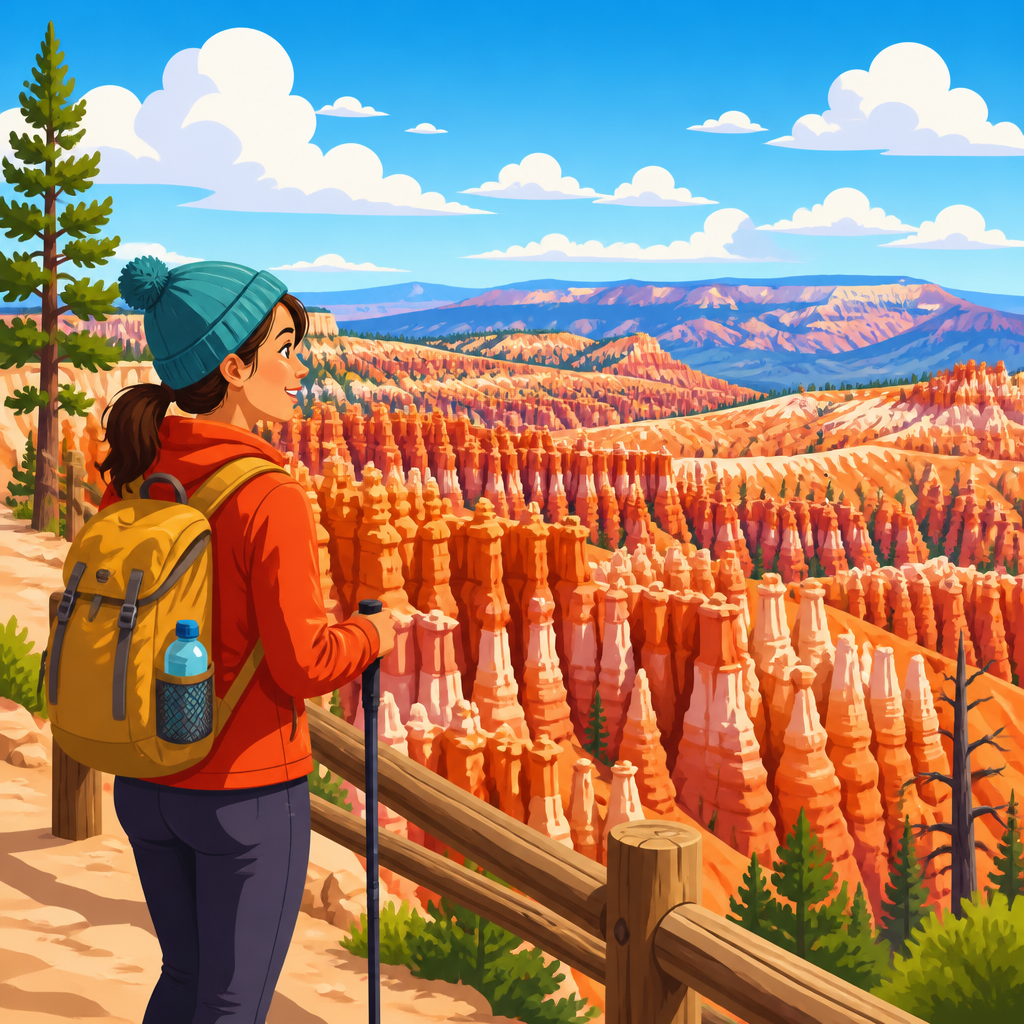
Bryce Canyon altitude shapes almost every part of a first visit, from how far you can hike without stopping to how cold the morning feels in June. If you are planning a Utah national park trip, understanding elevation at Bryce Canyon is not a minor detail; it is the difference between a smooth day on the trails and a trip slowed by headaches, fatigue, dehydration, or weather surprises. In practical terms, Bryce Canyon sits much higher than many first-time visitors expect. Most overlooks along the main amphitheater are between about 8,000 and 9,100 feet above sea level, and that elevation changes how your body performs, how quickly temperatures swing, and when snow or ice may affect access.
Altitude means height above sea level. At higher elevations, air pressure drops, and each breath delivers less oxygen than it does at lower elevations. You do not need technical mountaineering knowledge to enjoy Bryce Canyon, but you do need realistic expectations. I have seen strong hikers from sea-level cities get winded on short climbs from Wall Street or Navajo Loop, while older visitors who paced themselves, drank water early, and dressed for cold conditions had a much better day. That is why this Bryce Canyon altitude guide for first-time visitors focuses on the questions people actually ask before they arrive: How high is Bryce Canyon, can you get altitude sickness, what should you pack, when is weather most comfortable, and which viewpoints or trails are best if you want the scenery without overexertion?
As a hub within National Park Guides, this article also helps you think beyond one overlook or one hike. Bryce Canyon rewards visitors who connect elevation with itinerary planning, lodging, driving routes, sunrise timing, photography, and side trips to nearby parks and monuments. The hoodoos are the headline, but the altitude is the operating system behind the entire experience. Once you understand it, the park makes much more sense, and your first visit becomes easier to plan with confidence.
How high is Bryce Canyon and why does it feel harder than expected?
Bryce Canyon National Park is high-elevation desert. The main visitor services area near Sunrise Point, Sunset Point, Bryce Amphitheater, and the lodge sits around 8,000 feet. Rainbow Point reaches roughly 9,100 feet, making it one of the highest drive-up viewpoints in the park. Even the lower trail sections are still high compared with most U.S. cities. That matters because many visitors arrive from Las Vegas, Phoenix, Salt Lake City, or Southern California, where their bodies are accustomed to much lower elevations.
The park often feels harder than expected because the terrain combines altitude with steep trail design. The classic Bryce Canyon experience involves descending into the amphitheater and then climbing back out. People see a trail of one or two miles and assume it will be easy, but the uphill return at over 8,000 feet can feel demanding. On Navajo Loop, Queen’s Garden, or Peekaboo Loop connectors, even experienced walkers may need more breaks than usual. This is normal. The reduced oxygen availability makes your heart and lungs work harder, especially during climbs.
Bryce also creates a psychological mismatch. The rim walk and overlooks feel accessible because the park road, shuttle stops, and paved paths are convenient. Visitors can step out of the car, admire dramatic geology, and then decide on a spontaneous hike without fully noticing the altitude. That is where problems start. A first-time visitor who slept poorly, drove several hours, skipped breakfast, and then starts a steep mid-day hike may feel lightheaded much faster than expected.
If you want one simple rule, treat Bryce Canyon as a high-elevation destination first and a roadside scenic stop second. Build in extra time, walk slower than your ego suggests, and keep your first major activity short until you know how your body responds.
What altitude sickness looks like at Bryce Canyon
Altitude sickness at Bryce Canyon is usually mild, but it is common enough that first-time visitors should take it seriously. Typical symptoms include headache, unusual fatigue, dizziness, shortness of breath beyond normal exertion, nausea, poor sleep, and loss of appetite. These symptoms can appear within hours of arrival, especially if you came from low elevation and begin active sightseeing immediately.
Most cases are manageable with rest, hydration, slower pacing, lighter activity, and sometimes moving to a lower elevation for the night. The key is not to push through symptoms just because the distance on the map looks short. I have watched hikers turn a mild headache into a miserable afternoon by insisting on finishing a loop after the first warning signs. Bryce’s dry air adds another challenge because dehydration can mimic or worsen altitude symptoms.
More serious altitude illness is uncommon in the park, but any severe shortness of breath at rest, confusion, chest tightness, inability to walk normally, or worsening symptoms despite rest should be treated as urgent. National Park Service staff consistently advise visitors to descend and seek medical help if severe symptoms develop. This is especially important for travelers with heart or lung conditions, recent illness, or limited experience above 8,000 feet.
The best prevention strategy is straightforward: sleep well before arrival, avoid heavy alcohol intake the night before, drink water steadily rather than all at once, eat regular meals, and choose an easy first half day. If Bryce is part of a larger Southwest road trip, many people feel better if they acclimate at a mid-elevation stop first rather than driving straight from low desert elevations and attempting a strenuous hike the same afternoon.
Best Bryce Canyon itinerary choices by elevation tolerance
Your ideal plan depends less on age or fitness labels than on how well you handle altitude. Some visitors hike Figure 8 Loop comfortably; others enjoy the park most from rim overlooks and short walks. There is no wrong approach. Bryce is exceptionally rewarding even if you never do a long descent into the hoodoos.
| Visitor type | Best first-day plan | Good trail or viewpoint options | Why it works at altitude |
|---|---|---|---|
| Altitude cautious | Scenic drive, overlooks, short rim walk | Sunrise Point, Sunset Point, Inspiration Point, Bryce Point | Minimal exertion, maximum scenery, easy retreat to rest |
| Moderate energy | One short descent, long recovery breaks | Queen’s Garden out-and-back, Mossy Cave, parts of Rim Trail | Lets you test your response before committing to steep climbing |
| Strong hikers from low elevation | Short morning hike first, longer hike second day | Navajo Loop plus Queen’s Garden, Fairyland sections | Reduces risk of overexertion during the first altitude exposure |
| Acclimated or frequent mountain travelers | Full-day hike with early start | Peekaboo Loop, Figure 8 combination, Under-the-Rim segments | Better suited to sustained climbing and changing weather |
For first-time visitors, the safest high-value plan is this: spend your first afternoon on overlooks and the Rim Trail between Sunrise and Sunset Points, then hike into the amphitheater early the next morning if you feel good. That sequence works because it gives your body some time to adjust while still delivering iconic views on day one.
If your group includes children, grandparents, or mixed fitness levels, use Bryce’s viewpoint density to your advantage. Split up if necessary, meet at shuttle stops or key overlooks, and let stronger hikers do a short loop while others stay on the rim. This park is unusually good for flexible planning because so many signature views are available without a strenuous commitment.
Weather, temperature, and altitude: what first-time visitors misjudge
The most common packing mistake at Bryce Canyon is assuming southern Utah means hot weather all day. Bryce is not Zion. Its altitude keeps temperatures cooler, mornings sharper, and storms more disruptive than many travelers expect. Summer afternoons can still feel warm in the sun, but sunrise temperatures may be cold enough for a fleece or insulated layer. In spring and fall, freezing mornings are not unusual. In winter, snow and ice regularly transform both the scenery and trail conditions.
Altitude amplifies daily temperature swings. Thin, dry air loses heat quickly overnight, which is why visitors who are comfortable in nearby lower-elevation towns may shiver at the rim before dawn. The same dry air increases evaporation, so you can dehydrate without noticing much sweat. Wind also feels stronger at exposed viewpoints such as Bryce Point and Rainbow Point.
Monsoon season, typically July through early September, adds another layer. Afternoon thunderstorms can build quickly, bringing lightning, brief heavy rain, and slick trails. Because many Bryce trails are steep and covered with loose dirt or gravel, traction can change fast after a storm. In winter and shoulder seasons, shaded switchbacks may hold ice long after parking lots appear clear.
The practical takeaway is simple: dress in layers every month of the year. A base layer, insulating mid-layer, light shell, sun hat, and gloves in cooler seasons cover most conditions. Footwear matters more than fashion. Closed-toe shoes with grip are much better than flat casual sneakers, especially if you plan to descend below the rim.
Where to stay, when to arrive, and how to make altitude easier
Lodging choice affects your Bryce Canyon altitude experience more than many itineraries acknowledge. Staying near the park entrance in Bryce Canyon City is convenient, but you will sleep at high elevation. Some people rest well there; others notice lighter sleep, dry mouth, or mild headaches their first night. If you know you are sensitive to altitude, consider easing into the region with a lower stop before Bryce or arriving early enough to keep your first day light.
The Bryce Canyon Lodge inside the park is unmatched for location, especially if you want sunrise access without driving. For photographers, early hikers, and visitors who want to avoid parking stress, that convenience is worth a lot. Hotels outside the park give you more room options and often lower rates, but they still sit high enough that acclimatization issues do not disappear.
Timing matters too. The best daily strategy is to do your most active walking in the morning, not only for cooler temperatures and softer light but because altitude feels harder when you are tired, overheated, or under-fueled later in the day. I recommend arriving at major viewpoints early, carrying more water than you think you need, and building at least one unstructured recovery block into your schedule. Bryce is not a park to rush through after lunch and before dinner.
Driving routes also matter. If you are combining Bryce with Zion, Capitol Reef, or Grand Staircase-Escalante, avoid treating the park as a quick scenic detour. Give it a dedicated overnight if possible. That choice improves your odds of seeing sunrise, using the shuttle efficiently in busy seasons, and reacting calmly if weather, fatigue, or trail closures change your plan.
Best viewpoints and trails for first-time visitors in Bryce Canyon National Park
For pure return on effort, Sunrise Point, Sunset Point, Inspiration Point, Bryce Point, and Rainbow Point are the essential overlooks. These stops deliver the park’s scale, color variation, and hoodoo density without requiring a hard hike. Sunrise and Sunset Points are ideal for first orientation because they sit beside the main amphitheater and connect easily to the Rim Trail. Inspiration Point gives a layered look into the formations, while Bryce Point offers one of the strongest broad panoramas in the park. Rainbow Point, at the southern end of the scenic drive, adds high-elevation forest and long-distance views.
For first hikes, Queen’s Garden Trail is often the best choice. It descends more gradually than some alternatives and gives visitors a close-up view of the hoodoos without the same immediate intensity as Wall Street’s switchbacks. Navajo Loop is iconic, especially when Wall Street is open, but the climb back can surprise people. Combining Queen’s Garden and Navajo Loop creates the classic moderate hike, though it is still a real workout at altitude.
Rim Trail sections are excellent for visitors who want movement without a major climb. The paved stretch between Sunrise and Sunset Points is easy for most travelers, and longer sections let stronger walkers extend the outing while staying flexible. Mossy Cave, located off the main scenic drive, is a useful alternative for families or travelers seeking a shorter excursion.
If you want a broader National Park Guides perspective, Bryce works best when paired thoughtfully with other parks rather than compared casually. Zion emphasizes canyon hiking and shuttle logistics at lower elevation. Capitol Reef blends scenic driving, orchards, and backcountry variety. Arches and Canyonlands offer very different desert scale and trail profiles. Bryce stands apart because its signature scenery is immediate from the rim, while its altitude makes even moderate hikes feel more serious. Plan accordingly, and your first visit will feel memorable for the right reasons.
Bryce Canyon altitude is the factor that turns a beautiful park into a smartly planned trip. The hoodoos, overlooks, and famous loops deserve their reputation, but elevation is what determines how comfortable, energetic, and safe you feel while experiencing them. First-time visitors do best when they accept three facts early: Bryce is high, the air is dry, and even short climbs can feel demanding. Once you plan around those realities, the park becomes much easier to enjoy.
The core strategy is simple. Arrive with layers, water, snacks, and realistic pacing. Use overlooks and rim walks first, then decide whether your body is ready for a below-the-rim hike. Start active outings in the morning, watch the weather closely, and never underestimate the uphill return. If you feel headache, nausea, unusual fatigue, or dizziness, slow down and reset instead of pushing through. That approach protects your trip and usually improves it.
As a hub for National Park Guides, this article should give you a framework you can reuse elsewhere: know the elevation, match the trail to your energy, and let conditions shape the day rather than forcing a rigid plan. Bryce Canyon rewards that kind of traveler. Review your route, reserve lodging early, and choose one rim viewpoint plus one realistic hike for your first day. That is the simplest way to experience Bryce Canyon well.
Frequently Asked Questions
What is the altitude at Bryce Canyon, and why does it matter so much for first-time visitors?
Bryce Canyon National Park is much higher than many travelers expect. Most of the main overlooks along the rim sit roughly between 8,000 and 9,100 feet above sea level, with popular areas such as Sunrise Point, Sunset Point, Bryce Point, and Inspiration Point all well above the elevation of many other Southwest destinations. That matters because altitude affects your body, your energy level, your hydration needs, and even how warm or cold the day feels. At Bryce Canyon, thinner air means you may breathe harder during walks that would feel easy at lower elevations, and uphill sections can feel noticeably more demanding than they look on a map.
For first-time visitors, the biggest surprise is often how quickly elevation changes the pace of a day. A short rim walk may feel manageable, but descending into the amphitheater and climbing back out can become tiring faster than expected. Altitude also contributes to common symptoms such as mild headaches, lightheadedness, fatigue, poor sleep, and shortness of breath, especially if you arrived from a much lower elevation the same day. On top of that, higher elevation usually means cooler mornings, stronger sun exposure, and faster weather changes. In practical terms, knowing Bryce Canyon’s altitude helps you plan smarter: drink more water, start slower, dress in layers, and leave extra time for hikes and scenic stops.
Can Bryce Canyon altitude cause altitude sickness, and what symptoms should I watch for?
Yes, Bryce Canyon’s elevation is high enough that some first-time visitors may notice mild altitude-related symptoms, particularly if they have come directly from sea level or from lower-elevation stops like Las Vegas, Zion, or St. George. While many people do perfectly well with only minor adjustments, others may develop headaches, unusual fatigue, dizziness, shortness of breath with exertion, nausea, reduced appetite, or trouble sleeping. These symptoms are often mild, but they can make a sightseeing day less enjoyable if you ignore them and try to push through a busy schedule.
The good news is that most altitude discomfort at Bryce Canyon can be managed with common-sense precautions. Hydrate consistently, avoid overexerting yourself during your first several hours in the park, eat regular meals or snacks, and limit alcohol if you are feeling off. It also helps to recognize that hiking down into the canyon can feel deceptively easy at first, because the hard part is the climb back up. If symptoms become stronger instead of better with rest, or if someone develops severe shortness of breath, confusion, difficulty walking, or persistent vomiting, that is no longer a routine adjustment issue and should be treated seriously. For most visitors, though, a slower start, plenty of water, and realistic hiking goals make a major difference.
How should I adjust my hiking plans at Bryce Canyon because of the elevation?
The smartest approach is to choose hikes based not only on distance, but also on elevation change and your recent altitude exposure. At Bryce Canyon, even relatively short hikes can feel demanding because many routes involve descending below the rim and then climbing back up at the end. That return ascent is where first-time visitors often underestimate the effort required. If you are new to high elevation, start with easier rim walks or shorter routes before committing to a longer descent into the hoodoos. Trails that look moderate on paper may feel harder here than they would at lower elevations.
It is also wise to build in more recovery time than usual. Take breaks, pace yourself on climbs, and do not judge your fitness too harshly if you need to stop more often. Many strong hikers notice their heart rate rises faster at Bryce Canyon, especially on warm afternoons. Morning is usually the best time for more strenuous hikes because temperatures are cooler and storms are less likely than later in the day during some seasons. Bring more water than you think you need, carry a salty snack, and keep an eye on how everyone in your group is feeling. A successful Bryce Canyon hike is not about moving fast; it is about matching your plan to the altitude and finishing with enough energy to enjoy the rest of the park.
Is Bryce Canyon colder because of its altitude, even in summer?
Absolutely. One of the most practical effects of Bryce Canyon’s elevation is that it often feels much colder than visitors expect, especially early in the morning, at sunrise, after sunset, or during windy weather. Even in June, when lower-elevation Utah parks can be quite warm, Bryce Canyon mornings may be chilly enough for jackets, long sleeves, or hats. The park’s high elevation means cooler average temperatures, and the dry mountain air can make temperature swings feel sharper over the course of a single day.
That is why layering is so important for first-time visitors. You might begin the day in a fleece or light insulated layer, peel down to a T-shirt by midday, and then want extra warmth again in the evening. Afternoon thunderstorms can also move in quickly in some seasons, bringing rain, wind, and sudden drops in temperature. In shoulder seasons and even around late spring or early fall, frost or light snow is not out of the question. The key takeaway is simple: do not pack for Bryce Canyon the same way you would pack for lower desert parks. Its altitude creates a mountain climate, and being ready for cold air can make sunrise viewpoints and early hikes much more comfortable.
What are the best altitude tips for first-time Bryce Canyon visitors before and during their trip?
The best strategy is to treat Bryce Canyon like a high-elevation destination from the start. Before your visit, plan a realistic first day rather than scheduling your hardest hike immediately after arrival. If possible, spend a night at an intermediate elevation before tackling strenuous trails, though many people still visit successfully without doing that. During the drive in, begin hydrating early instead of waiting until you enter the park, and keep water accessible throughout the day. Dehydration and altitude can combine to make fatigue and headaches worse, so steady water intake matters more than many first-time visitors realize.
Once you are in the park, slow your normal pace, especially on stair-like trails or uphill sections. Eat regular meals, use sun protection, and remember that the higher altitude means stronger UV exposure, even when temperatures feel cool. Dress in layers, monitor weather forecasts, and do not assume a sunny morning guarantees a warm or storm-free afternoon. If you start feeling unusually tired or headachy, rest before symptoms build. For families, older travelers, or anyone uncertain about how they respond to altitude, scenic overlooks and rim trails can still provide an excellent first-day experience without overcommitting physically. In short, the best Bryce Canyon altitude tip is to plan conservatively at first. Once you see how your body responds, you can adjust upward, but it is much easier to add activity than recover from doing too much too soon.