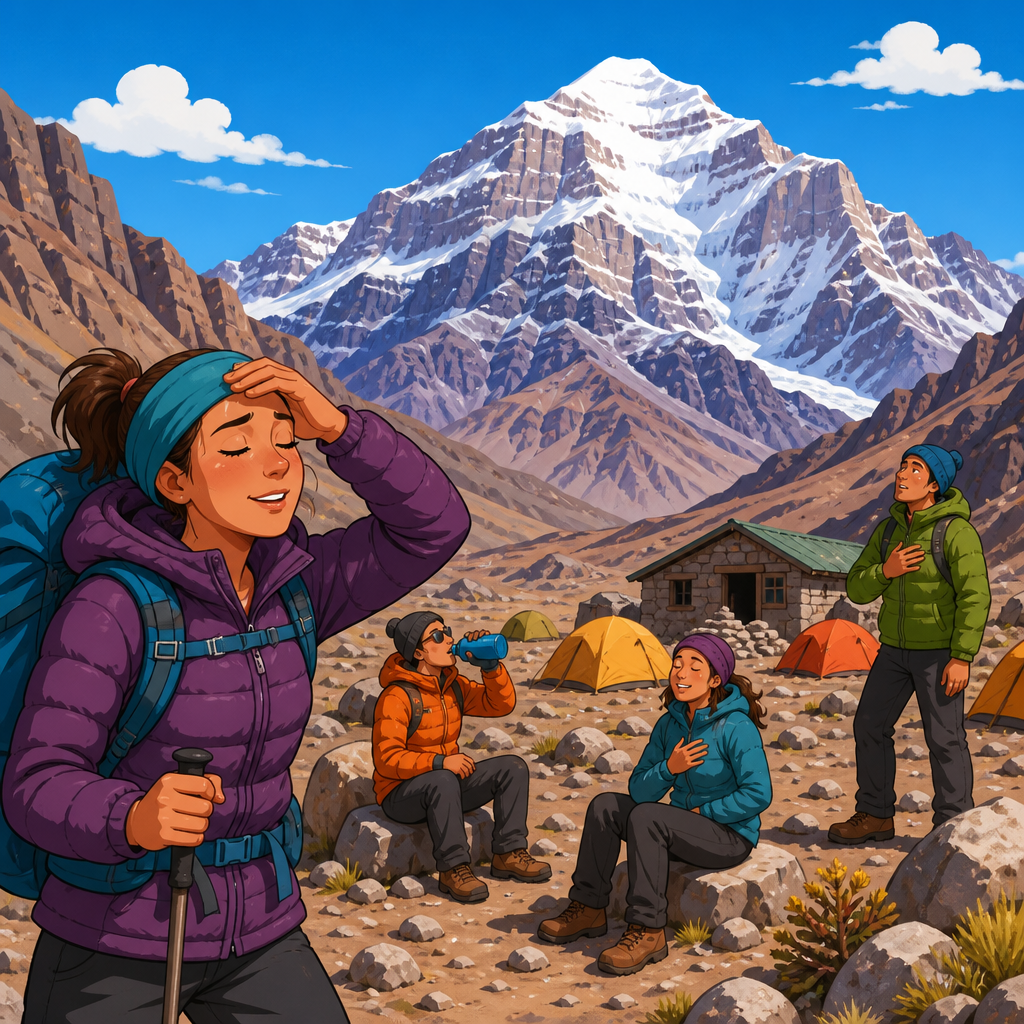
Arriving in the Aconcagua base areas is the moment when trek planning stops being abstract and becomes physical, immediate, and often surprising. In practical terms, the base areas are the main operational zones on the mountain’s normal and alternative approaches, where permits are checked, mule loads are sorted, camps are established, and trekkers begin feeling the real effects of altitude, dry air, strong sun, cold nights, and reduced comfort. For anyone preparing for an Aconcagua trek, understanding what to expect physically when you arrive in Aconcagua Base Areas matters because early decisions about pacing, hydration, layering, nutrition, and camp routine can determine whether the rest of the trip feels controlled or chaotic.
Most trekkers reach one of two principal base areas: Plaza de Mulas on the Normal Route, usually after entering through Horcones Valley, or Plaza Argentina on the Vacas Valley approach used for the Polish Traverse and related itineraries. Confluencia, while technically a lower camp rather than the main base, functions as a first proving ground and deserves attention because many physical reactions begin there. At these camps, conditions are not extreme in the summit sense, but they are demanding enough to expose weak preparation. Elevation is high, humidity is low, winds can rise quickly, and daily effort is shaped by terrain, logistics, and camp systems rather than by hotel-like convenience.
When I have helped trekkers prepare for Aconcagua, the biggest mistake I see is assuming arrival at base camp means rest in the ordinary sense. It does not. Even on a non-climbing trekking itinerary, your body is adjusting continuously. You may be tired after the approach, mildly headachy, sun-flushed, thirsty without feeling thirsty, slightly breathless while walking to the dining dome, and unusually sensitive to small tasks like bending down to unzip a duffel. None of this automatically signals a problem. Much of it reflects normal exposure to altitude and camp living. The key is knowing which sensations are expected, which call for slower pacing, and which require immediate descent or medical evaluation.
This guide covers trek preparation through the lens of first arrival: how the altitude feels, how the environment affects skin, lungs, sleep, appetite, and energy, what camp infrastructure usually looks like, and how to organize yourself during the first day. As a hub for Aconcagua trek preparation, it also frames the broader questions every trekker asks: How hard is the walk into base camp? What does high altitude do to your body? How cold are the base areas? What should you eat and drink? How do you sleep better? What problems are common, and which ones are serious? Clear answers to those questions make every related planning article more useful.
The First Physical Shock: Altitude, Air, and Effort
The most noticeable change on arrival in Aconcagua base areas is the way altitude alters ordinary movement. Plaza de Mulas sits at roughly 4,300 meters, and Plaza Argentina is slightly higher, near 4,200 meters. At those elevations, barometric pressure is substantially lower than at sea level, so each breath delivers less oxygen. You do not need medical terminology to feel it. Walking ten steps uphill with a daypack can feel like a short staircase sprint. Tasks that would be trivial at home, such as carrying a water bottle, putting on boots, or crossing camp to use the toilet, can leave you breathing hard.
Most healthy trekkers experience some degree of acute mountain stress during the first twenty-four hours. Typical symptoms include mild headache, reduced appetite, light dizziness when standing quickly, poor sleep, vivid dreams, and unusual fatigue. Those responses are common because the body is increasing ventilation, shifting fluid balance, and beginning a longer acclimatization process that takes days, not hours. In simple terms, your system is trying to compensate for reduced oxygen availability by making you breathe more and by gradually improving oxygen transport. That is why the standard advice on Aconcagua is also the most reliable: walk slowly, drink regularly, avoid alcohol, and do not treat your first good hour in camp as proof you can push hard.
The approach trek itself shapes how arrival feels. Trekkers coming through Horcones often reach Plaza de Mulas after several days, with an acclimatization stop at Confluencia and, on many itineraries, a hike toward Plaza Francia. By contrast, the Vacas Valley approach to Plaza Argentina is longer and often leaves people with deeper cumulative leg fatigue even if they have acclimatized reasonably well. In both cases, the final arrival commonly produces a mix of relief and depletion. Expect heavy legs, a dry mouth, dust on everything, and a sense that your backpack has gained weight in the last hour. That sensation is normal and usually improves after food, fluids, and a calm evening routine.
What the Environment Does to Your Body
The second major reality is environmental exposure. Aconcagua base areas are cold, dry, bright, and windy, often within the same afternoon. Low humidity accelerates water loss through breathing and skin, so dehydration develops easily without dramatic sweating. Many trekkers assume that because the air feels cool they are not losing much fluid. The opposite is usually true. Lips crack, nasal passages dry out, and urine darkens before thirst becomes obvious. A simple benchmark used by experienced guides is to monitor urine color and frequency rather than thirst alone.
Sun exposure is another immediate issue. At high elevation, ultraviolet radiation is stronger, and the dry Andean atmosphere filters less of it. Snow reflection is not always necessary for sunburn; bare rock, dust, and long hours outside are enough. I have seen trekkers burn the underside of their noses and the backs of their hands on cloudy afternoons because they skipped sunscreen after lunch. A broad-spectrum SPF 50 sunscreen, lip balm with UV protection, glacier-style sunglasses or category 4 lenses, and a brimmed hat are not optional comfort items. They are basic protective equipment in the base areas.
Wind and dust create their own physical stress. Gusts can make camp feel significantly colder than the thermometer suggests, and airborne dust irritates eyes, throat, and contact lenses. Many trekkers switch to glasses before the trip ends because contacts become uncomfortable. The air also tends to trigger a dry, persistent cough, especially after several days. On Aconcagua this is often called the mountain cough. Mild cases are common and result from cold, dry air plus heavy breathing, but worsening cough with breathlessness at rest deserves immediate attention because respiratory symptoms can overlap with more serious altitude illness.
Camp Reality: Comfort, Fatigue, and Daily Function
Base camp life surprises people who imagine a clean line between trekking and resting. In reality, camps such as Plaza de Mulas are active logistics centers with dining domes, staff tents, medical services, mule operations, and many independent trekkers moving around uneven ground. You are not on a technical summit slope, but you are still living on moraine, rock, and dust. Walking surfaces are irregular, so ankles and knees often feel the accumulated strain of stabilization. Trekking poles help on the approach, yet many people stop using them in camp and then notice extra lower-leg fatigue during short walks.
Sleep is usually the most frustrating part of the first night. High altitude commonly causes periodic breathing, where your breathing pattern becomes irregular during sleep and wakes you briefly. The result is a night that feels shallow and fragmented even inside a good sleeping bag. Add tent noise, wind, cold air, and camp sounds, and it is normal to wake feeling less restored than expected. Good trekkers anticipate this instead of interpreting it as failure. A warm sleeping system rated conservatively, dry base layers reserved for camp, earplugs, and a consistent pre-sleep hydration and bathroom routine all reduce discomfort, but none guarantees perfect sleep at 4,300 meters.
Appetite also changes. Some trekkers arrive hungry enough to eat immediately, while others feel mildly nauseated or indifferent to food. Both responses are common at altitude. The goal is not a heroic meal but consistent intake of calories and fluids. Soups, rice, potatoes, pasta, bread, simple proteins, and warm drinks usually go down better than greasy or heavily spiced food. If you use electrolyte tablets, choose products with sodium rather than relying only on sweetened mixes. Salt replacement matters because breathing hard and drinking large volumes of plain water can leave you feeling washed out rather than properly hydrated.
How to Manage Your First Day in Base Camp
The best first-day strategy is deliberate simplicity: arrive, check in, hydrate, eat lightly, organize gear, and move slowly. Trekkers who immediately start exploring every corner of camp, carrying loads back and forth, or skipping food because they are busy usually feel worse by evening. Your body adapts more effectively when energy demand stays controlled. If the itinerary includes an acclimatization walk after arrival, keep it easy and follow the principle mountaineers use everywhere on Aconcagua: climb high only when the pace remains conversational and recovery is quick.
The most useful first-day checklist is practical rather than technical. It prevents the small mistakes that make altitude feel worse than it has to.
| Task | Why it matters physically | Best practice on arrival |
|---|---|---|
| Hydrate | Dry air increases fluid loss quickly | Drink steadily for several hours, not all at once |
| Eat | Low appetite can reduce energy and recovery | Choose soup, carbohydrates, and simple protein early |
| Layer up | Temperature swings are sharp after sunset | Put on insulation before you feel chilled |
| Sun protection | UV exposure remains high even in cool weather | Reapply sunscreen and use lip balm immediately |
| Organize gear | Searching for items wastes energy in thin air | Set out night gear, water, headlamp, and warm layers |
| Monitor symptoms | Altitude problems are easier to address early | Note headache, nausea, urine color, and breathing |
Medical screening is another feature some trekkers do not expect. Aconcagua Provincial Park has long required medical oversight in key areas, and many organized expeditions also conduct pulse oximeter checks and symptom reviews. These checks are helpful, but they are not a substitute for honest self-reporting. A normal oxygen saturation number at altitude does not cancel out severe symptoms. If you have a strong headache that is not improving, vomiting, loss of coordination, confusion, or shortness of breath at rest, the correct response is immediate evaluation and usually descent. Those are not signs to “push through.”
Differences Between Confluencia, Plaza de Mulas, and Plaza Argentina
Understanding the physical differences between camps improves trek preparation because each one teaches you something different. Confluencia, around 3,400 meters, is where many trekkers first notice altitude during routine tasks. It is low enough that most people function fairly well, but high enough to expose poor hydration, fast pacing, or weak layering habits. If you develop a headache there, it is a warning to slow down and sharpen your routine before moving higher. The hike toward Plaza Francia from Confluencia is often the first serious test of pacing and recovery.
Plaza de Mulas feels bigger, busier, and more developed than many high camps elsewhere in the Andes. There are service camps with dining tents, communication systems, charging options in some operations, and more visible infrastructure. That can create a false sense of ease. The altitude is still high enough to impair judgment, reduce appetite, and disrupt sleep. Because services exist, some trekkers move around camp more than necessary and dig themselves into fatigue. Treat convenience as support, not as permission to ignore altitude discipline.
Plaza Argentina is quieter in feel but physically no less serious. The Vacas approach can leave trekkers with more accumulated wear in the hips and feet because of distance, and the camp often feels more exposed and remote. I tell trekkers to expect the same core physical challenges in both main base areas: thin air, dry conditions, cold nights, and the need for strict routine. The route may differ, but the body’s requirements do not.
Preparation That Pays Off Before You Ever Arrive
The strongest predictor of a manageable arrival is not toughness; it is specific preparation. For trekking into Aconcagua base areas, the most useful training combines aerobic capacity, long uphill walking, downhill tolerance, and multi-day recovery. Stair work, weighted hikes, and back-to-back weekend walks are more relevant than random gym intensity. Boots should already be broken in, and your sock system should be tested under load. Hot spots that seem minor at home can become trip-defining blisters after dusty valley days.
Gear preparation matters just as much. Your layering system should cover hot sun, cold wind, and abrupt evening temperature drops without forcing constant wardrobe changes. A typical effective system includes a sun hoody or light base layer, fleece or active insulation, windproof shell, insulated jacket, trekking pants, warm hat, buff, liner gloves, and camp gloves. Water treatment, even in serviced camps, should be clear in your plan. Many trekkers rely on boiled or provided water, but you should still understand your backup method, whether that is a filter rated for sediment-heavy water, chlorine dioxide, or another proven treatment.
Finally, prepare for the routine, not just the scenery. Practice packing and unpacking gloves, headlamp, layers, and water so that camp tasks are automatic. Build habits around eating early, filling bottles before dark, and protecting electronics and batteries from cold. When those details are familiar, arrival in Aconcagua base areas feels demanding but manageable. If this trip is on your calendar, use this article as your trek preparation hub, then map out your training, gear checks, acclimatization plan, and medical safeguards now, before the mountain turns every small oversight into a physical problem.
Frequently Asked Questions
What does the Aconcagua base area actually feel like when you first arrive?
Most trekkers are surprised by how quickly the experience becomes physical the moment they reach an Aconcagua base area. Before arrival, the trek often feels like logistics, packing lists, permits, and transport schedules. Once you are there, it becomes very real: the air is thinner, the landscape is harsher, and even simple tasks can take more effort than expected. The ground is usually dry, dusty, rocky, and uneven, with very little natural comfort. You are no longer moving through a typical hiking environment with trees, shade, and soft terrain. Instead, you enter a high-altitude operational camp where wind, sun exposure, cold, and dryness are constant factors.
Physically, many people notice the altitude right away, even if they feel generally well. You may feel slightly out of breath while walking around camp, bending down to organize gear, or carrying a duffel bag a short distance. It is also common to feel tired faster than you expected, especially after the approach trek. The base area can feel both active and austere at the same time, with mule loads arriving, tents being sorted, and staff or rangers checking permits and camp arrangements. In short, first arrival usually feels like a sudden transition from travel mode to expedition mode, and your body immediately starts responding to the environment.
How will the altitude affect me physically at the base areas?
Altitude is usually the biggest physical difference people notice at Aconcagua base areas. Even if you have trekked before, you may find that your body reacts in new ways because the elevation is high enough to reduce oxygen availability in a meaningful way. The most common early effects are mild shortness of breath, faster breathing, elevated heart rate with light effort, fatigue, light headache, poor sleep, and a general sense that everything requires more energy. These symptoms do not automatically mean something is wrong; they are often part of the normal adjustment process as your body begins acclimatizing.
That said, you should not ignore how you feel. A mild headache, low appetite, and restless sleep are common, but worsening symptoms deserve attention. If a headache becomes severe, if nausea increases, if you feel unusually weak, dizzy, confused, or breathless while resting, those can be warning signs that need prompt evaluation. At base camp, one of the most important physical strategies is to slow down. Walk more slowly than you think you need to, drink regularly, eat even if your appetite is reduced, and avoid rushing simple camp tasks. Good acclimatization is not about toughness; it is about respecting how altitude changes your physiology. People who manage energy carefully usually feel significantly better than those who arrive and immediately start overexerting themselves.
What kind of weather and environmental conditions should I expect in the base areas?
The base areas on Aconcagua are typically very dry, very sunny, and much colder at night than many first-time trekkers expect. During the day, especially in clear weather, the sun can feel intense because of the altitude and the lack of atmospheric protection. It is possible to feel warm or even hot while standing in direct sun, yet become cold quickly when clouds move in, the wind picks up, or the sun drops behind terrain. This contrast is one of the defining physical realities of high camps in the Andes. You are rarely dealing with just “cold” or just “heat.” You are managing rapid changes between strong solar exposure, wind chill, and low overnight temperatures.
The dryness is another major factor. Lips crack easily, nasal passages dry out, skin becomes irritated, and dehydration can happen faster than expected because fluid loss is increased at altitude and in arid air. Wind can also be relentless, adding to fatigue and making camp life less comfortable. Dust, grit, and rocky surfaces are part of the daily environment, so tents, clothing, and gear often feel less clean and less comfortable than they would on lower-elevation treks. Physically, this means your body is under constant environmental stress, even when you are not actively hiking. Sun protection, hydration, layers, and realistic expectations about comfort are essential from the moment you arrive.
Will basic camp tasks feel harder than usual at Aconcagua base camp?
Yes, very often they do. One of the most underestimated parts of arriving in an Aconcagua base area is how much more demanding ordinary movements can feel. Organizing your sleeping gear, walking to the dining tent, unpacking a duffel, filling water bottles, or going to the toilet may all take more time and energy than they normally would. This is partly because of the altitude and partly because the environment itself is physically awkward: uneven ground, cold hands, bulky clothing, strong sun, wind, and general fatigue from the approach.
Many trekkers expect the hard part to be only the hiking, but camp life can also be tiring. You may find yourself needing short pauses during tasks you would normally do without thinking. Sleeping can also be less restorative than expected, which makes the next day feel harder. This is normal and does not necessarily mean you are acclimatizing poorly. The key is to be efficient but unhurried. Set up your personal space carefully, keep essentials easy to reach, and avoid unnecessary walking around camp. Conserving energy is not laziness at altitude; it is smart expedition behavior. People who accept that routine actions will feel slower and more physical usually adapt better and feel less frustrated.
What physical symptoms are normal on arrival, and when should I be concerned?
Normal arrival symptoms at Aconcagua base areas often include mild headache, dry mouth, fatigue, reduced appetite, light dizziness when standing quickly, poor sleep, and a feeling of breathlessness during modest exertion. You might also notice that your urine is darker if you are not drinking enough, or that your lips and skin become dry almost immediately. These are common responses to altitude, arid air, and the cumulative fatigue of travel and trekking. In many cases, symptoms improve with rest, hydration, food, slower movement, and time to acclimatize.
However, there is a clear line between expected discomfort and symptoms that should not be brushed aside. You should be concerned if a headache becomes strong and persistent despite rest and fluids, if vomiting begins, if you cannot keep food or water down, if you feel confused or unusually unsteady, or if you are short of breath even while resting quietly. A cough that rapidly worsens, chest tightness, or signs of severe exhaustion should also be taken seriously. At Aconcagua, the safest mindset is to pay attention early rather than minimize symptoms. Rangers, guides, and medical staff in the base areas are accustomed to assessing altitude-related problems, and asking for help is part of good mountain judgment. Feeling challenged is normal; feeling progressively worse is something to act on.