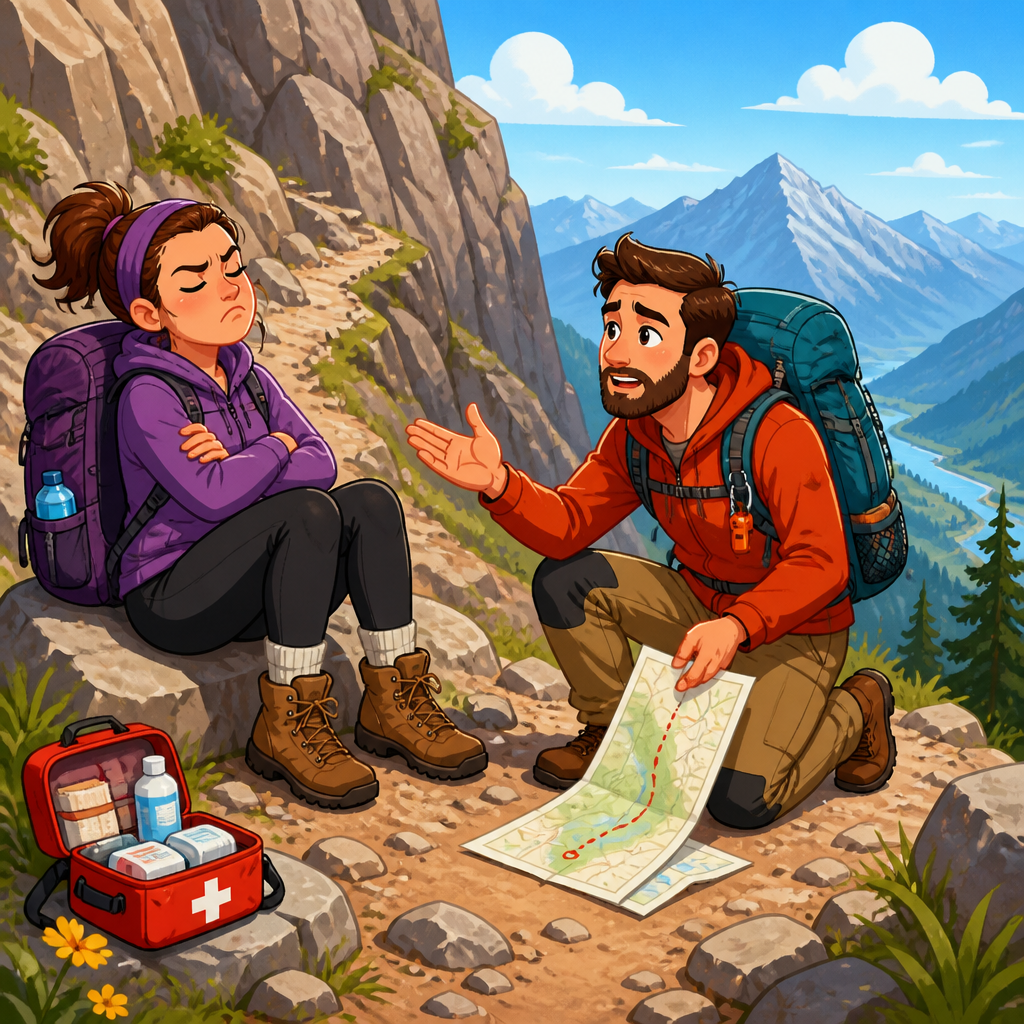
When your hiking partner refuses to descend despite obvious altitude illness, the situation has already moved from routine mountain discomfort to a time-critical emergency. In high terrain, “refuses” can mean several different things: stubbornness, denial, confusion, panic, or an actual loss of decision-making capacity caused by hypoxia. “Descend” means moving to a meaningfully lower elevation fast enough to reduce ongoing injury from altitude. “Treatment” includes oxygen, medications, warmth, fluids, and rest, but none of those replaces descent when acute mountain sickness worsens or when high-altitude cerebral edema or high-altitude pulmonary edema is suspected. “Emergency response” covers the decisions, communication, packaging, movement, and handoff needed to get an impaired hiker down alive. I have had to manage altitude turnarounds on exposed trails, and the most dangerous moments were not dramatic collapses but conversations where a sick person insisted they were fine. This topic matters because delayed descent is the common thread in many severe altitude outcomes. A practical plan prevents argument, reduces hesitation, and gives a team clear actions when judgment is impaired above the trailhead.
Recognize the point where debate ends and emergency management begins
The first priority is distinguishing ordinary fatigue from altitude illness severe enough to mandate descent. Mild acute mountain sickness usually presents with headache, nausea, dizziness, unusual fatigue, poor appetite, and sleep disruption after a recent gain in elevation. A person with mild symptoms who is stable at rest can sometimes remain at the same altitude with close monitoring. The emergency threshold is crossed when symptoms are worsening, not improving with rest, or when signs suggest the brain or lungs are involved. Red flags include ataxia, confusion, altered behavior, inability to walk heel-to-toe, severe breathlessness at rest, a persistent wet cough, cyanosis, declining exertional tolerance, or reduced consciousness. Those findings point toward high-altitude cerebral edema or high-altitude pulmonary edema, both life-threatening.
Refusal to descend is itself a clinical clue. A hypoxic hiker may minimize symptoms, become irrationally fixated on the summit, forget recent events, or resist help because judgment is impaired. In practice, that means you should stop asking whether they “want” to descend and start assessing whether they can make informed decisions. Can they state where they are, what day it is, what symptoms they have, and why descent is being recommended? Can they repeat the plan back to you? If not, treat this as altered mental status. On the mountain, capacity is functional, not philosophical. A person who cannot understand the risk of staying high does not get veto power over life-saving descent.
Use simple field checks. Ask them to walk a straight line, touch finger to nose, count backward from twenty, and answer orientation questions. Check respiratory rate, heart rate, skin color, and oxygen saturation if you carry a pulse oximeter. Oximeter readings are useful for trends, but they do not rule out serious illness; cold fingers, poor perfusion, and device variability limit precision. Clinical signs matter more than the number. The Wilderness Medical Society guidance is clear on the core principle: suspected cerebral edema or pulmonary edema requires immediate descent and supplemental oxygen when available. If weather, darkness, or terrain makes descent harder, the need for action increases rather than decreases.
Take control of the scene and assign roles immediately
Once severe altitude illness is suspected, your job shifts from persuasion to command. Stop all upward movement. Get the affected person off exposed ridges, away from rockfall or avalanche terrain, and into insulation layers before they become colder and weaker. If the group is large enough, assign one person to patient care, one to navigation and route choice, one to communications, and one to gear consolidation. This structure prevents the common failure mode where everyone debates while nobody acts. Speak in short, concrete statements: “You are sick from altitude. We are descending now.” Avoid long arguments. A confused patient can burn precious time and energy in circular discussion.
If the person is still ambulatory, lighten their pack immediately. Take anything nonessential out of it, secure trekking poles in their hands, and put the strongest hiker directly beside them. If they are unstable on their feet, do not let pride decide the pace. Two spotters, one on each side, can prevent a simple stumble from turning into a head injury. If they cannot walk safely, reassess whether an assisted carry, litter improvization, rescue request, or shelter-in-place while awaiting help is the least dangerous option. Terrain matters. A steep scree descent in darkness may injure everyone; a traversing trail to a lower camp with easier helicopter access may be the better first move.
Communication should begin early, not after the situation deteriorates. Use whatever you have: satellite messenger, personal locator beacon, satellite phone, cell coverage, or nearby ranger contact. Send a concise report with location, elevation, patient age, symptoms, ability to walk, weather, and your descent plan. If pulmonary edema is suspected, mention breathlessness at rest and cough. If cerebral edema is suspected, mention ataxia and confusion. Rescue teams can stage appropriately only if the initial message is specific. In my experience, groups often underreport because they hope the patient will improve. That delays resource mobilization and narrows your margin for error.
Use descent as the primary treatment and support it with the right interventions
Descent works because it lowers inspired altitude and reduces the hypoxic stress driving the illness. The target is not symbolic loss of elevation but meaningful descent to where symptoms improve, often at least 500 to 1,000 meters lower if terrain permits. Even a few hundred meters can help, but severe cases need decisive movement. Supplemental oxygen is the best bridge therapy when carried by guides, expeditions, or organized groups. Oxygen can rapidly improve mentation in cerebral edema and reduce distress in pulmonary edema, but do not let improvement tempt you to stop descending. Symptoms often recur when oxygen is removed at the same altitude.
Medications have clear roles. Dexamethasone is strongly used for suspected high-altitude cerebral edema and can also help severe acute mountain sickness. It reduces cerebral swelling and may temporarily restore function, which is useful for evacuation. Nifedipine is a recognized treatment for high-altitude pulmonary edema because it lowers pulmonary artery pressure. Some clinicians also use tadalafil or sildenafil in specific settings, but nifedipine remains the classic field medication. Acetazolamide helps acclimatization and can assist with acute mountain sickness, yet it is not the primary rescue drug for cerebral or pulmonary edema. Ibuprofen can reduce headache, and antiemetics may help nausea, but symptomatic comfort is secondary to getting lower.
Fluids require judgment. Dehydration and altitude often coexist, especially if the person has been exerting in dry air, but overhydration is not benign. Pulmonary edema is not caused by being “too dry,” and forcing liters of water into a breathless patient is poor care. Encourage small, frequent sips if they can swallow safely and are not vomiting, and prioritize warm, carbohydrate-containing drinks if available. Keep the patient warm, because cold stress raises metabolic demand and can worsen coordination. If you have a portable hyperbaric bag, it is an effective temporizing tool where immediate descent is impossible, but it is a bridge, not a destination. The patient still needs to go down and be medically evaluated.
Choose the safest descent strategy for terrain, weather, and patient condition
Not every emergency descent looks the same. The right method depends on whether the patient can walk, how technical the route is, and what help is available. The table below summarizes practical choices and their tradeoffs.
| Situation | Best immediate action | Why it works | Main limitation |
|---|---|---|---|
| Mild symptoms, walking well, stable after rest | Stop ascent, observe, consider same-day descent | Prevents progression while preserving energy | Requires close reassessment for worsening signs |
| Worsening symptoms, still ambulatory | Assisted descent with pack transfer and close spotting | Fastest way to lower hypoxic stress | Falls become more likely if coordination declines |
| Ataxia or confusion suggesting cerebral edema | Immediate descent, dexamethasone, oxygen, rescue activation | Addresses the highest-risk brain complication | Patient may resist or lose ability to cooperate |
| Breathlessness at rest or wet cough suggesting pulmonary edema | Immediate descent, oxygen, nifedipine, rescue activation | Improves oxygenation and reduces pulmonary pressure | Exertion can sharply worsen respiratory failure |
| Unable to walk safely | Shelter, insulate, oxygen if available, prepare assisted evacuation | Reduces further collapse while help is coordinated | Slow movement and environmental exposure remain serious hazards |
Route choice should be conservative. The shortest line on the map is not always the safest if it involves downclimbing, river crossings, loose talus, or avalanche start zones. In poor visibility, choose a known trail over a direct but uncertain shortcut. If your only descent is technical, consider whether waiting for first light, if the patient can be stabilized, is actually safer than forcing movement over terrain where a slip would be fatal. This is where prior route knowledge pays dividends. Before any high-altitude day, identify bailout points, lower camps, ranger stations, roads, and helicopter landing possibilities. Emergency plans built at sea level are far better than improvised ones at 4,000 meters.
Pacing matters. Set a cadence the patient can sustain without repeated stops that chill them and erode morale. Monitor mental status at every break. If they become slower, less coordinated, more breathless, or less responsive, escalate your rescue request. During descent, continue to think ahead: where is the next shelter, where can you refill water, where will darkness hit, and what is your extraction threshold? Good teams descend with intention, not just urgency. The aim is steady loss of elevation while preserving enough control to avoid adding trauma, hypothermia, or separation from the group.
Know when field management is not enough and professional rescue is mandatory
Professional rescue is mandatory when the patient cannot walk safely, has altered mental status, has severe shortness of breath at rest, has deteriorating oxygenation despite treatment, or when terrain makes self-evacuation unreasonably dangerous. A common mistake is waiting until the patient is unconscious before calling. If you suspect high-altitude cerebral edema or pulmonary edema, make the call early even while beginning descent. Early activation does not commit you to a helicopter landing; it creates options. If the patient improves dramatically and exits under their own power, that is a good outcome, not an overreaction.
At handoff, give rescuers a clean timeline: starting altitude, sleeping altitude, rate of ascent, onset of symptoms, medications taken, fluids, allergies, relevant medical history, and changes in walking or behavior. Mention whether they have had prior altitude illness, recent respiratory infection, or sedating medications onboard. In emergency departments, altitude illness can overlap with dehydration, asthma, pneumonia, carbon monoxide exposure, hypoglycemia, stroke, or head injury. Your field observations help narrow the picture. If you documented vitals and serial mental-status checks, share them. Consistent notes from the trail can influence treatment decisions and speed escalation to oxygen, imaging, or admission.
After the incident, conduct a debrief. Review what warning signs were present, whether your ascent profile was too aggressive, whether the team carried appropriate medications and communication tools, and whether anyone felt social pressure to continue upward. This subtopic connects directly to prevention: acclimatization schedules, rest days, conservative pacing, and early symptom reporting reduce the odds that you will ever need an emergency descent plan. Still, prevention is never perfect. The reason to build a descent, treatment, and emergency-response framework in advance is simple: when a partner refuses to descend, you cannot afford to invent leadership, medicine, and logistics on the spot.
The essential lesson is direct: severe altitude illness is treated by going down, and delay makes every other intervention less effective. If your hiking partner refuses to descend, first decide whether the refusal reflects intact judgment or altitude-impaired thinking. Once red flags such as ataxia, confusion, breathlessness at rest, or worsening symptoms appear, stop negotiating and start managing an emergency. Remove upward momentum, assign roles, communicate early, use oxygen and indicated medications, keep the patient warm, and lose elevation by the safest practical route. If walking becomes unsafe or the route exceeds your team’s capability, activate professional rescue without hesitation.
This practical emergency plan works because it aligns treatment with the underlying problem: hypoxia at altitude. It also protects the rest of the group by replacing panic and argument with clear decisions. Descent, treatment, and emergency response are not separate topics in the field; they are one coordinated process. Learn the red flags, carry the right tools, discuss turnaround authority before trips, and rehearse what you would do if a partner became confused and resistant above treeline. Build that plan now, then review your acclimatization and evacuation protocols before your next high-altitude hike.
Frequently Asked Questions
1. How do I know whether my hiking partner is being stubborn or is actually impaired by altitude illness?
In the mountains, a refusal to descend is never something to casually debate away, because poor judgment is one of the classic danger signs of serious altitude illness. A partner may sound determined, embarrassed, angry, or dismissive, but the real question is whether they are still thinking clearly enough to make safe decisions. If they are confused, unusually slow to answer, unable to follow simple instructions, forgetting where they are, denying obvious symptoms, stumbling, acting irrationally, or changing personality in a noticeable way, assume altitude-related brain impairment until proven otherwise. At high elevation, that can mean high-altitude cerebral edema or significant hypoxia, both of which can rapidly become life-threatening.
A practical way to assess this is to stop arguing about motivation and start checking function. Can they walk in a straight line? Can they state their name, location, and plan? Can they put on gear correctly, drink water, and respond appropriately to simple requests? Are they worsening with time or exertion? If the answer to any of those is concerning, this is no longer a question of attitude. It is a medical and evacuation problem. In other words, once a person’s judgment is affected, you should stop treating their refusal as a normal disagreement and start treating it as a symptom.
The safest rule is simple: if you suspect altitude illness and your partner resists descent while also showing neurological, behavioral, or coordination changes, do not wait for a dramatic collapse. Immediate descent is the treatment. Oxygen, medications, warmth, and rest may help, but they do not replace getting lower. Early decisive action is far safer than waiting for them to “come around” at the same elevation.
2. What are the most dangerous warning signs that mean we need to descend immediately?
The biggest red flags are any signs that suggest the brain or lungs are being affected by altitude. For the brain, watch for confusion, poor coordination, difficulty walking, slurred speech, altered behavior, severe headache with worsening function, irrational decision-making, or decreasing responsiveness. For the lungs, look for shortness of breath at rest, persistent cough, chest tightness, unusual fatigue, inability to keep pace, blue lips, or a crackling, wet sound in the chest. These are not “push through it” symptoms. They are descent-now symptoms.
Another critical point is trend. A symptom that is getting worse at altitude is more important than a mild symptom that is stable. Someone who started with a headache and nausea but is now moving slowly, refusing food, acting strangely, or struggling to walk is progressing into a far more dangerous state. Likewise, someone who says they are “fine” but cannot zip their jacket correctly, repeatedly sits down, or cannot maintain balance is showing you more than their words are saying.
If severe weather, darkness, or terrain makes descent difficult, that does not make the illness less serious. It means you need to activate emergency measures sooner. Give supplemental oxygen if available, keep them warm, reduce pack weight, stop further ascent completely, and call for rescue if there is any delay to meaningful descent. The standard here is not comfort; it is urgency. Serious altitude illness can deteriorate quickly, and the most effective intervention remains moving to a substantially lower elevation as fast and as safely as possible.
3. What should I actually do, step by step, if my partner refuses to go down?
First, stop all ascent immediately and make the situation unambiguous. Do not keep moving upward while trying to negotiate. Get your partner out of wind if possible, add insulation, and begin a quick assessment of mental status, coordination, breathing, and ability to walk. If they are obviously confused, unsteady, or short of breath at rest, treat it as a medical emergency right away. If you have oxygen, start it. If you have appropriate medications and know how to use them, administer them according to your training or medical guidance. Keep in mind that these are supportive measures, not substitutes for descent.
Second, simplify the decision. A person with altitude-related impairment may not be capable of weighing options. Use short, calm, direct language: “You are sick from altitude. We are going down now.” Avoid long arguments, emotional escalation, or giving them a menu of risky alternatives. If they can walk, take their pack or lighten it significantly, place the stronger person closest for support, and begin descending on the easiest, fastest safe route. If there are others in the group, assign clear roles such as navigation, communication, gear management, and physical support.
Third, communicate early. If you have phone service, satellite messaging, radio, or an emergency beacon, use it before the situation gets worse. Tell rescuers your location, elevation, symptoms, number of people, weather, terrain, and whether the patient can walk. If your partner cannot walk safely, is deteriorating despite oxygen and medication, or descent is blocked by terrain or conditions, request rescue without delay. Continue monitoring consciousness, breathing, and coordination during descent. Keep them warm, hydrated if they can safely drink, and under close observation. The core principle is this: once refusal is mixed with signs of impairment, your job is no longer to persuade. It is to recognize loss of capacity, initiate emergency treatment, and get lower fast.
4. Can I force a descent if my partner is not thinking clearly?
If your partner is clearly impaired by altitude illness, this shifts from a normal backcountry disagreement into an emergency involving decision-making capacity. In practical terms, a person who is hypoxic, confused, irrational, severely panicked, or neurologically impaired may not be capable of informed refusal. That matters because waiting for valid consent in a life-threatening situation can cost critical time. If they cannot understand the danger, appreciate the consequences, and participate coherently in decisions, you should act in their best interest as you would in any other emergency.
That does not mean using reckless force or creating a second casualty. It means using the least dangerous, most effective approach to make descent happen. In many situations, firm, calm direction and physical support are enough: take their pack, guide their steps, place a person on each side, shorten the stage into manageable intervals, and keep communication simple and repetitive. If they resist unpredictably, prioritize scene safety. A combative or panicked patient on steep terrain can endanger everyone. In those cases, call for rescue immediately and do what you can to stabilize them while preparing for assisted evacuation.
Ethically and practically, the mountain standard is straightforward: preserve life first. If your partner’s brain is being affected by altitude, their refusal may be part of the illness itself. You are not overriding a sound wilderness preference; you are responding to a medical emergency. Documenting times, symptoms, and interventions can help rescuers and later medical care, but in the moment, the priority is oxygen if available, warmth, medications if indicated and within your training, and prompt descent to a meaningfully lower elevation.
5. If we have oxygen, altitude medication, or a portable hyperbaric bag, can we stay put instead of descending?
No. These tools can buy time, improve oxygenation, and support a safer evacuation, but they do not change the fundamental treatment priority: descent. Oxygen is extremely valuable because it can improve mental status, breathing, and overall stability, sometimes dramatically. Medications such as dexamethasone or nifedipine can also be important in the right setting and can reduce symptoms or slow deterioration. A portable hyperbaric bag can temporarily simulate lower altitude and may be lifesaving when immediate descent is impossible. But every one of these measures is best understood as a bridge, not a destination.
The danger in relying on treatment alone is that a patient may look somewhat better while the underlying risk remains high. Temporary improvement can create false reassurance and delay the one intervention most likely to reverse the problem: getting lower. A person with altitude-related brain or lung complications can worsen again as oxygen runs low, medication wears off, or exertion resumes. If they were sick enough to need oxygen, emergency medication, or a hyperbaric bag, they were sick enough to need urgent descent and medical follow-up.
The right mindset is “treat while descending” whenever possible. Use oxygen during movement if you can. Give appropriate medication early if indicated. Keep them warm, sheltered, and closely observed. If weather, darkness, avalanche hazard, cliffs, or technical terrain make immediate descent impossible, then aggressive supportive care and emergency communication become even more important until descent or rescue can occur. But as soon as there is a safe opportunity, you move down. In serious altitude illness, staying high is continuing the injury. Lower elevation is the real objective.