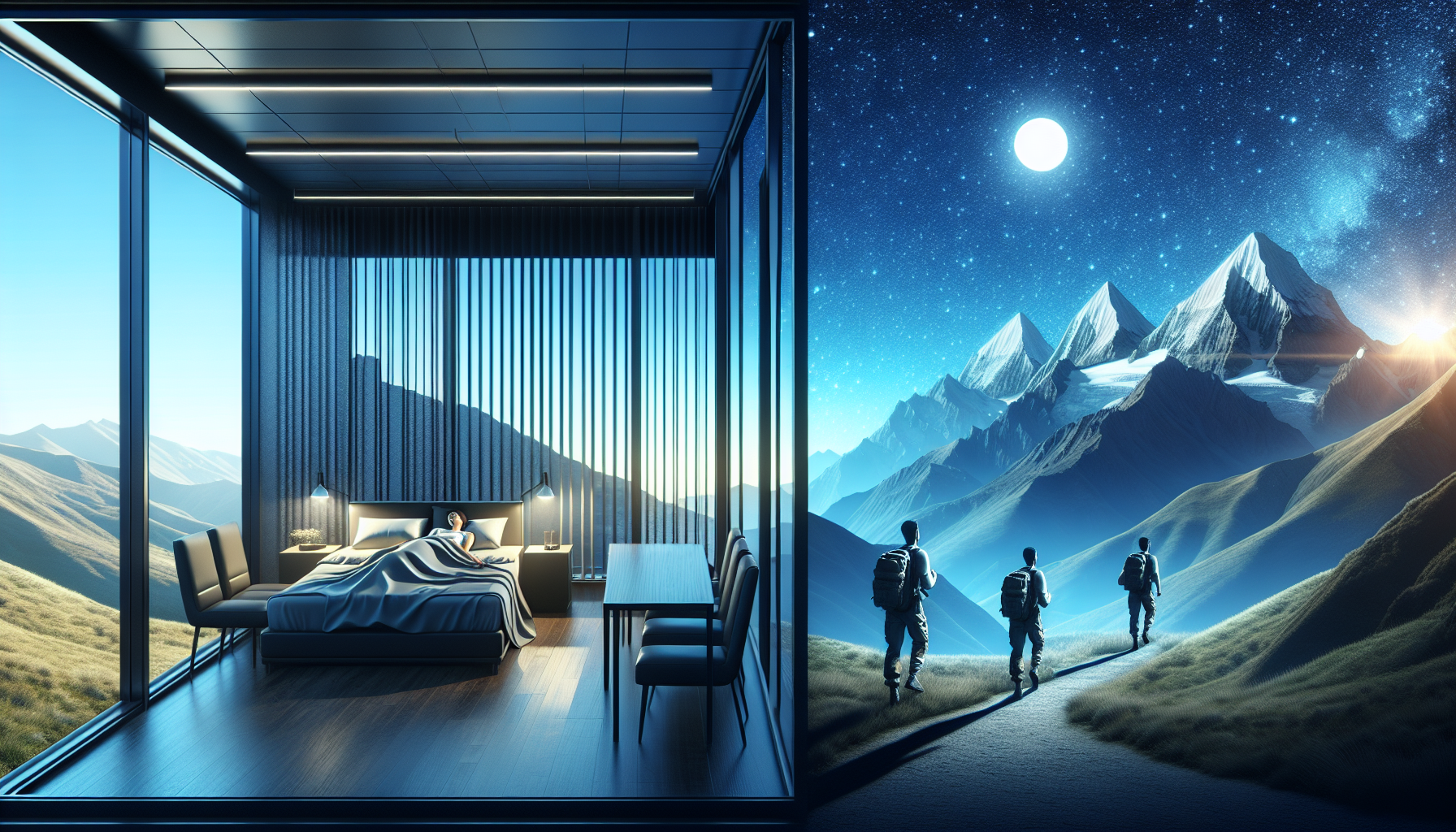
Sleeping altitude drives acclimatization because the body adapts to the lowest oxygen pressure it endures for sustained, uninterrupted hours, not to the highest point reached briefly during the day. In mountain medicine, sleeping altitude means the elevation where you spend the night, while daytime altitude refers to the high point you hike, climb, ski, or travel through before descending to rest. That distinction matters because acclimatization is a dose-response process governed by time at reduced oxygen availability. A short push to 4,500 meters followed by sleep at 3,200 meters stresses the body far less than spending the entire night at 4,500 meters.
I have seen this play out repeatedly on trekking and expedition schedules. Teams often feel strong during a daylight ascent, assume they are adapting well, then develop headache, nausea, insomnia, or unusual fatigue only after sleeping too high. The reason is straightforward. During sleep, breathing becomes less stable, blood oxygen saturation drops further, and altitude illness risk rises. That is why experienced guides, the Wilderness Medical Society, and high-altitude mountaineering protocols emphasize the same rule: manage the elevation where you sleep first, and treat daytime gains as secondary planning variables.
For anyone building acclimatization plans, this principle is the hub around which every itinerary should turn. It determines how quickly you can move from one camp to the next, when to schedule rest days, how to structure “climb high, sleep low” rotations, and when a conservative descent is safer than pushing upward. It also explains why two routes with the same summit can carry different illness risk depending on camp placements. Understanding sleeping altitude is not just useful for elite alpinists. It shapes safer travel for trekkers in Nepal, hikers in Colorado, workers at Andean mines, pilgrims on the Tibetan Plateau, and tourists flying straight into Cusco or Lhasa.
A strong acclimatization plan answers practical questions before symptoms start. How much should sleeping elevation increase each night? When is a rest day necessary? Does hiking high during the day help or hurt? What changes if you arrive by plane instead of ascending gradually? This article serves as a sub-pillar hub for acclimatization plans by explaining the physiology, the standard progression rules, the tradeoffs, and the common itinerary mistakes that lead to preventable altitude illness.
Why sleeping altitude predicts altitude illness better than daytime exposure
Sleeping altitude is the better predictor because prolonged overnight exposure creates a longer hypoxic load than a short daytime outing. As barometric pressure falls with elevation, the partial pressure of inspired oxygen drops, and less oxygen reaches the bloodstream. The body responds by increasing ventilation, heart rate, urine output, and over several days, red blood cell production. Those adaptations do not switch on fully during a brief lunch stop at a pass. They build through repeated hours at altitude, especially across nights.
Night is also when physiology becomes less forgiving. Many people develop periodic breathing at altitude, a pattern of deep breaths alternating with brief pauses. That instability lowers oxygen saturation and fragments sleep. In practice, someone who looked fine hiking to 4,200 meters may wake with a severe headache after sleeping there, while the same person might tolerate a daytime visit to 4,600 meters if they descend to sleep at 3,600 meters. This is one reason acute mountain sickness often appears the morning after a gain in sleeping altitude rather than on the trail itself.
The same principle underpins classic trekking advice. “Climb high, sleep low” works because daytime exposure can stimulate adaptation while the lower sleeping elevation reduces overnight stress. The phrase is sometimes treated like folklore, but it reflects well-established altitude physiology. It does not mean any amount of daytime climbing is harmless. A very large exertional day can still trigger symptoms, dehydration, or poor recovery. Still, when comparing two itineraries, the safer one is usually the plan with smaller increases in sleeping altitude and more time before the next overnight move.
How to build an acclimatization plan around sleeping elevation
The most widely used planning rule above about 3,000 meters is to limit sleeping altitude gain to roughly 300 to 500 meters per night and add a rest or acclimatization day every three to four days, or about every 1,000 meters of sleeping gain. Different organizations phrase the numbers slightly differently, but the logic is consistent. Once you are above moderate altitude, the body needs time between overnight jumps. If you increase camp elevation too quickly, symptom risk rises sharply even in fit people.
In the field, I build plans by tracking only one number first: where the client will sleep each night. Day hikes, side trips, and summit carries get layered on afterward. That keeps the itinerary honest. If a trek moves from 2,800 meters to 3,400, then 4,000, then 4,700 on consecutive nights, it is aggressive no matter how comfortable the daytime walking distances look. By contrast, a schedule of 2,800, 3,300, 3,300, 3,800, 3,800, then 4,300 is much more realistic because the sleeping progression respects physiological adaptation.
Rest days need a precise definition. In acclimatization planning, a rest day usually does not mean lying in bed. It means sleeping at the same elevation for an extra night, often with a short hike higher during the day before returning to the same lodge or camp. That structure gives you beneficial exposure without adding overnight stress. Many successful Everest Base Camp and Kilimanjaro itineraries rely on this pattern. The extra day feels conservative when you are healthy, but it often prevents the forced descent that ruins a trip.
| Sleeping altitude planning element | Practical guideline | Why it matters |
|---|---|---|
| Starting point above 3,000 m | Track each night’s camp or hotel elevation | Overnight hypoxic dose drives risk more than a daytime high point |
| Nightly sleeping gain | Usually limit to 300 to 500 m | Allows ventilation and fluid-balance changes to catch up |
| Acclimatization day | Add one every 3 to 4 days or each 1,000 m gained | Reduces accumulation of fatigue and symptom progression |
| Day hikes | Go higher in daylight, return lower to sleep | Supports adaptation with less overnight stress |
| Symptoms at new camp | Do not ascend higher to sleep until symptoms improve | Prevents mild illness from progressing to severe forms |
What changes when you arrive high by car, gondola, or airplane
Rapid ascent compresses the timeline and removes the natural acclimatization that a gradual approach would provide. This is why travelers often get into trouble in places where infrastructure makes high altitude easy to reach. Flying from sea level to La Paz, Cusco, or Lhasa, or taking a vehicle to a trailhead above 3,500 meters, can produce symptoms within hours because the first sleeping altitude is already high. The body has had no chance to increase ventilation gradually before the overnight exposure begins.
When arrival is abrupt, the first acclimatization plan priority is to keep the first night as low as logistics allow. If that is impossible, reduce exertion, avoid immediate further ascent to sleep, hydrate normally without forcing fluids, and consider prophylactic acetazolamide when appropriate and medically suitable. Acetazolamide does not replace a good itinerary, but it can accelerate acclimatization by stimulating ventilation. The medicine is particularly useful when work schedules, flight arrivals, or permit rules make a perfect progression impossible.
These scenarios also expose a common misunderstanding. People assume daytime inactivity protects them. In reality, if you fly to 3,400 meters and spend a quiet day in town, your risk can still be meaningful because the major stressor is the overnight hypoxia at that elevation. A better strategy is often to spend the first nights lower nearby and make gradual excursions upward. Ski resorts and Andean travel plans that alternate lower lodging with higher daytime activity often work well for exactly this reason.
How acclimatization plans differ for trekking, climbing, and work rotations
Not all altitude schedules operate under the same constraints, but the sleeping-altitude principle applies across them. Trekkers usually have the most flexibility. They can add an extra lodge night, choose a lower village, or insert an acclimatization hike. Climbers face a more complex problem because technical objectives may require carrying gear higher before moving camp. The standard solution is staged exposure: carry to a higher camp, descend to sleep lower, then return after adaptation improves. Expedition camps on Aconcagua, Denali approaches at lower elevations, and many Himalayan rotations are built around this system.
Workers and researchers at altitude often deal with fixed rosters, which creates repeated stress if sleeping quarters are too high. Mines in the Andes and observatories at elevation have long used rotation models, supplemental oxygen in some settings, and screening for people with poor tolerance. The key lesson for planning is that productivity does not improve when sleep quality collapses. A slightly lower dormitory can outperform a higher one because workers recover better, maintain appetite, and suffer fewer headaches and cognitive lapses. The same is true for mountain rescue teams and military deployments.
Fitness does not exempt anyone from these rules. Aerobic capacity helps you move efficiently, but it does not prevent acute mountain sickness. I have watched endurance athletes push the pace uphill, reach camp first, and then deteriorate overnight because they outclimbed their acclimatization. Slower, less fit teammates who respected sleeping gains often felt better the next morning. Good plans separate performance from tolerance. Your lungs, kidneys, and brain chemistry adapt on their own timeline, not on your training plan.
Common acclimatization mistakes and how to avoid them
The first mistake is focusing on summit altitude instead of sleeping altitude. People obsess over how high they will go during the day and ignore the camp progression. Yet illness usually follows the camp move, not the viewpoint stop. The second mistake is stacking hard effort on the same day as a large sleeping gain. Heavy packs, dehydration, alcohol, poor nutrition, and sleep deprivation all reduce margin. The third mistake is dismissing mild symptoms. A headache with loss of appetite or nausea after a camp move is useful data, not weakness. It means the current sleeping altitude may already be too high.
Another frequent error is misunderstanding acclimatization days. Some itineraries label a day as “rest” while moving to a higher lodge in the afternoon. That is not a rest day. Likewise, dropping to a much lower elevation for one night can improve symptoms but may interrupt the consistency needed for steady progression if done repeatedly without a plan. The goal is not random altitude variation. The goal is controlled exposure with conservative overnight gains. Reliable planning beats heroic improvisation almost every time.
Finally, people often rely too heavily on gadgets or single measurements. Pulse oximeters can be useful trend tools, but oxygen saturation varies by device quality, temperature, and individual baseline. A low reading in an otherwise well person is less concerning than worsening symptoms with declining function. The practical rule remains simple: if symptoms of acute mountain sickness are getting worse at the current sleeping altitude, do not go higher to sleep. If severe symptoms appear, descend and seek medical care. No app, watch, or metric overrides that decision.
A practical hub for planning safer ascent profiles
As a hub for acclimatization plans, this topic connects directly to route design, rest-day strategy, medication decisions, and symptom monitoring. The central principle is consistent across all of them: sleeping altitude is the main lever you can control. Build every itinerary by listing nightly elevations first. Then ask whether gains stay within accepted limits, where an acclimatization day belongs, which side trips can provide higher daytime exposure, and what backup options exist if someone develops symptoms. This planning method works for weekend climbs in the Rockies, lodge treks in Peru, and long expeditions in the Himalaya.
The main benefit of prioritizing sleeping altitude is not just lower illness risk. It also improves trip success. People eat better, sleep better, think more clearly, and recover enough to enjoy the route rather than merely endure it. Good acclimatization plans may look slower on paper, but they often move groups faster overall because they avoid stalled days, emergency descents, and lost objectives. If you are planning any trip above 3,000 meters, start with the sleeping elevations, adjust the itinerary conservatively, and use that framework for every ascent decision you make.
Frequently Asked Questions
Why does sleeping altitude matter more than the highest altitude I reach during the day?
Sleeping altitude matters more because acclimatization is primarily driven by how long your body is exposed to reduced oxygen pressure without interruption. A brief hike, climb, or ride to a higher elevation during the day certainly stresses the body, but it usually does not last long enough to produce the same adaptive response as spending an entire night there. In practical mountain medicine terms, your body “counts” the altitude where it sleeps more heavily than the altitude it only visits temporarily.
That is because acclimatization is a dose-response process: the “dose” is not just how high you go, but how high you stay for a sustained period. Overnight exposure gives the body several consecutive hours of lower oxygen availability, which stimulates the physiological adjustments that help you function better at altitude. These adjustments include changes in breathing patterns, fluid balance, and longer-term blood adaptations. If you go high during the day and descend to a lower elevation to sleep, your body still benefits from the outing, but the lower sleeping altitude generally reduces the overall stress and lowers the risk of altitude illness.
This is why the classic mountaineering advice to “climb high, sleep low” is so effective. You can gain some training effect from daytime exposure while still allowing your body to recover and adapt more safely at a lower sleeping elevation. The altitude you sleep at is usually the most important number when planning how quickly to ascend.
What exactly is the difference between sleeping altitude and daytime altitude?
Sleeping altitude is the elevation where you spend the night, whether that is in a tent, lodge, hut, base camp, or mountain town. Daytime altitude is the highest point you reach temporarily while hiking, trekking, climbing, skiing, driving over a pass, or moving through the mountains before descending again. The difference may sound simple, but it is one of the most important concepts in safe altitude travel.
For example, you might sleep at 2,500 meters, hike to 3,400 meters during the day, and then return to 2,500 meters to rest. In that scenario, 2,500 meters is your sleeping altitude and 3,400 meters is your daytime high point. From an acclimatization standpoint, your body experiences both, but the prolonged overnight exposure at 2,500 meters usually has a greater influence on your adaptation schedule than the shorter daytime visit to 3,400 meters.
This distinction matters because many travelers mistakenly assume the highest elevation they touched is the main factor determining risk. In reality, mountain medicine focuses heavily on sleeping elevation because that is the altitude at which your body must continue functioning for many uninterrupted hours. When planning an itinerary, the rate at which sleeping altitude increases is often more predictive of acclimatization success than the highest point reached briefly during the day.
Does going high during the day still help with acclimatization if I come down to sleep?
Yes, daytime exposure to higher altitude can still help, and that is one reason the “climb high, sleep low” strategy is widely used. Spending time at a higher elevation during the day exposes your body to lower oxygen levels and can encourage acclimatization, especially when done gradually and repeatedly. However, the benefit depends on the height reached, the duration of exposure, the individual’s physiology, and how quickly the sleeping altitude is increasing overall.
The key point is that daytime altitude is supportive, while sleeping altitude is usually decisive. A few hours at a high pass or summit may stimulate breathing and other short-term responses, but an overnight stay creates a longer, more continuous hypoxic exposure. That longer exposure is what more strongly drives the body’s adaptation process. So daytime ascents are useful, but they do not completely “cancel out” the risks of sleeping too high, too soon.
In practice, this means you can often improve safety and comfort by ascending to a higher point during the day, then descending to a lower camp or town for the night. Many trekkers and climbers use acclimatization hikes for exactly this reason. Still, these outings should be planned conservatively, because pushing too high during the day can still trigger symptoms, especially if you are already fatigued, dehydrated, or ascending rapidly.
Why is sleeping too high too soon a common cause of altitude problems?
Sleeping too high too soon is a common cause of altitude illness because it increases the sustained oxygen stress on the body before adequate acclimatization has occurred. When you remain at a new, higher sleeping altitude for many hours, your body has no break from the lower oxygen pressure. That prolonged exposure can overwhelm your ability to adapt, especially if your itinerary increases sleeping elevation rapidly over consecutive nights.
This is why many cases of acute mountain sickness begin or worsen overnight. People may feel reasonably well while moving during the day, then develop headache, nausea, poor sleep, dizziness, or unusual fatigue after several hours at a high sleeping altitude. The body is being asked to rest, recover, and maintain normal function in an environment with less available oxygen, and if the jump was too aggressive, symptoms often show up during the night or by the next morning.
Another reason is that sleep itself can make the challenge more obvious. Breathing patterns change during sleep, and some people experience more unstable breathing at altitude, which can worsen sleep quality and make symptoms feel more pronounced. That is why ascent guidelines emphasize gradual increases in sleeping altitude rather than focusing only on daytime movement. If you manage the sleeping altitude carefully, you usually improve both acclimatization and overall trip safety.
How should I use sleeping altitude when planning a safer ascent itinerary?
When planning a safer itinerary, think first about where you will sleep each night, not just the highest place you may visit during the day. Your overnight elevations should rise gradually enough to give your body time to adapt before the next increase. This approach is far more reliable than judging the trip only by trail difficulty, summit elevation, or how strong and fit you feel at sea level. Fitness helps with effort, but it does not eliminate the physiological challenge of lower oxygen.
A good itinerary often includes conservative increases in sleeping altitude, rest or acclimatization days when appropriate, and optional daytime hikes to higher elevations followed by a return to a lower place to sleep. This allows you to gain exposure without making every day’s high point your overnight altitude. It also gives you more flexibility if symptoms begin, since descending from a sleeping altitude is one of the most effective ways to relieve altitude stress.
You should also monitor how you feel at each new sleeping level. If symptoms of altitude illness appear, avoid ascending to a higher sleeping altitude until they improve. In many cases, the safest response is to stop, rest, and reassess rather than pressing upward on schedule. In short, the smartest altitude plans are built around sleeping elevation because that is the exposure your body experiences longest, and therefore the exposure that most strongly shapes acclimatization, comfort, and risk.