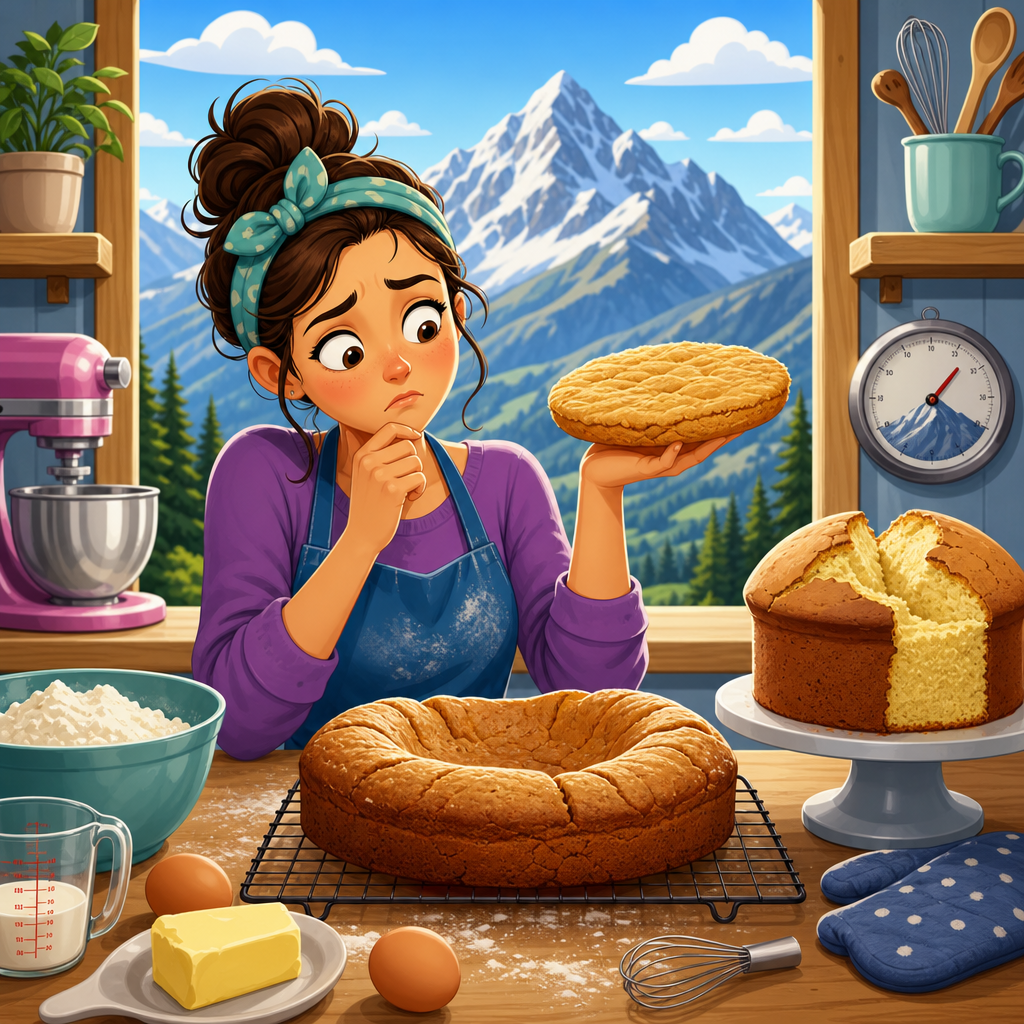
High-altitude angel food cake depends on controlling three things that sea-level bakers can often take for granted: foam strength, tube-pan behavior, and upside-down cooling. In mountain kitchens, lower air pressure changes how egg-white foams expand, how sugar dissolves, how starches set, and how quickly moisture evaporates. Those shifts matter most in angel food cake because the formula contains no chemical leavening and very little fat to cushion mistakes. The cake rises almost entirely from whipped egg whites, then relies on careful baking and cooling to keep that rise from collapsing. I have baked angel food cakes in Denver and above 7,000 feet, and the same pattern appears every time: a recipe that looks dependable at sea level can overexpand, dry out, stick, or sink unless you deliberately adjust method and proportions.
Angel food cake is a foam cake made from egg whites, sugar, flour, salt, and usually cream of tartar plus vanilla or almond extract. At altitude, “foam” means the network of unfolded egg-white proteins that traps air bubbles during whipping. “Pan adjustment” refers to choosing the right ungreased tube pan, managing fill level, and modifying bake temperature or time so the batter sets before it overinflates. “Cooling adjustment” means inverting the pan immediately after baking and letting the cake hang until completely cold, which preserves volume while the crumb stabilizes. This matters beyond one recipe because angel food principles apply to sponge cake, chiffon variation, jelly-roll sheets, and many cupcake-style foam cakes. If you understand the mechanics here, you can troubleshoot the broader Cakes & Cupcakes category with much better accuracy.
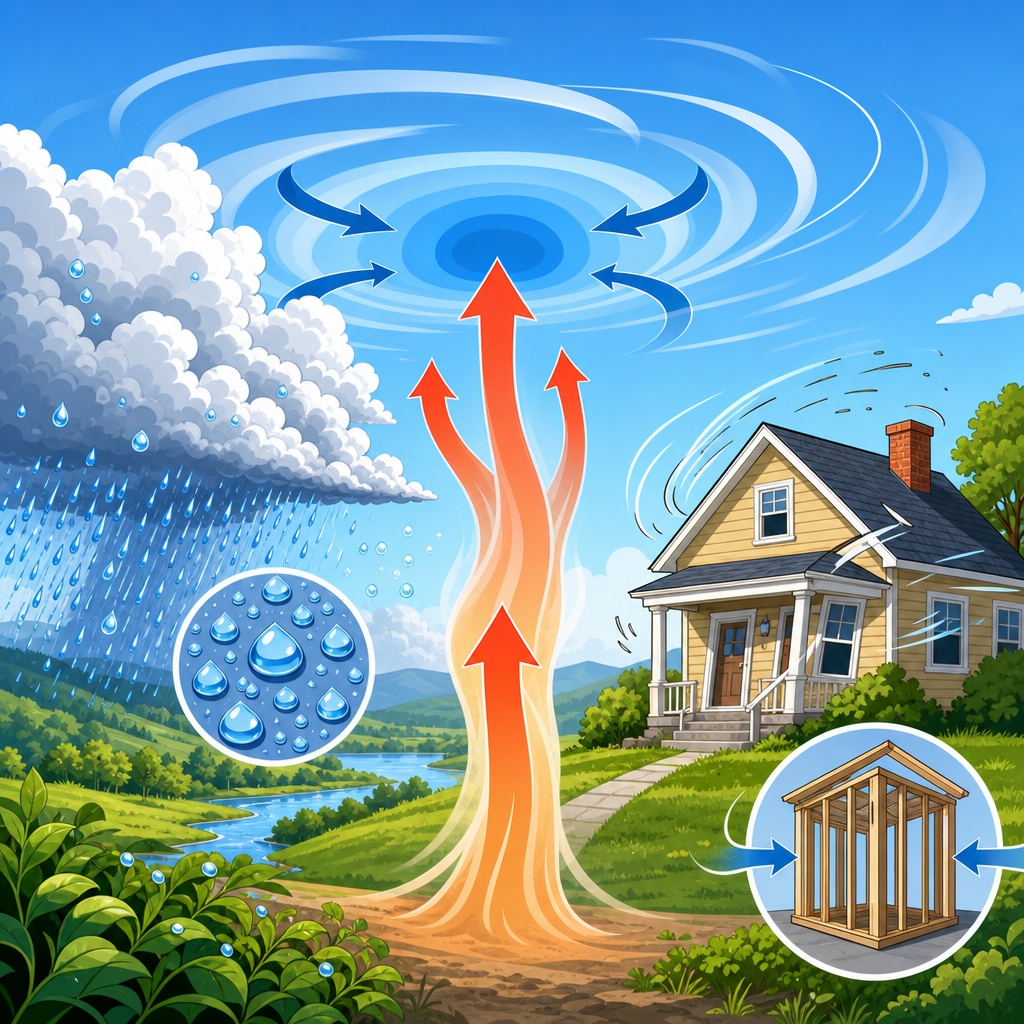
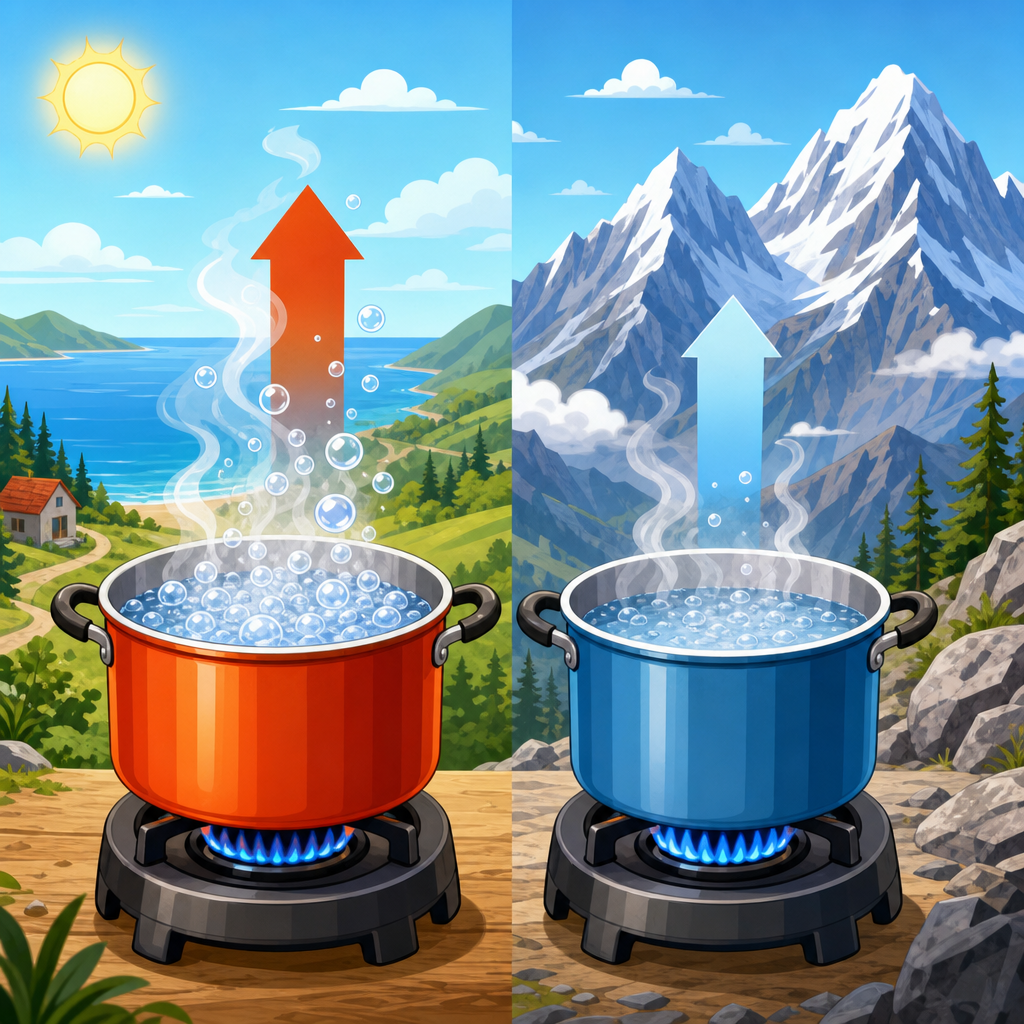
High altitude typically begins affecting baking around 3,000 feet, with stronger effects from 5,000 feet upward. The pressure drop causes gases to expand more readily, so batters rise faster but structure lags behind. Water also boils at a lower temperature, increasing evaporation and concentrating sugar sooner. In practical terms, angel food cake at altitude often needs slightly more flour for support, a bit less sugar to prevent collapse, stronger but not dry whipping, and a hotter oven to set the crumb earlier. Many bakers also benefit from extra egg white by weight rather than by count, because egg size varies widely. The goal is not simply “make it rise”; the goal is balanced rise, set, and cooling.
Why angel food cake is uniquely sensitive at altitude
Angel food cake is less forgiving than butter cake or oil cake because it has no fat-based creaming structure and almost no yolk emulsifiers. The lift comes from mechanical aeration. When you whip egg whites, proteins such as ovalbumin denature, stretch, and form films around air cells. Sugar delays and stabilizes that process; cream of tartar lowers pH and helps whites hold a finer foam. Flour then contributes starch and a small amount of protein, which set in the oven. At altitude, each stage is under stress. Air cells expand faster, moisture leaves sooner, and the window between fully risen and overexpanded is shorter. That is why a mountain baker can follow a trusted family recipe exactly and still pull out a cake with a coarse tunnel, a gummy streak, or a shrunken top.
The most common failure pattern is overexpansion followed by collapse. The batter climbs dramatically, the outer shell browns, and then the center sinks because the internal structure has not finished setting. A second failure is dryness: longer baking to “be safe” drives off too much moisture, which is intensified by altitude’s faster evaporation. A third is sticking. Because angel food cake must cling to the pan walls as it rises, the pan stays ungreased, yet at altitude the crust can become more delicate and bond too firmly if overbaked. Understanding these mechanisms helps you fix the real cause instead of guessing. If the cake is tough, for example, the issue may not be overmixing alone; it may be too much flour combined with too little sugar and an oven that is too hot.
Foam adjustments: the core of a successful high-altitude angel food cake
Start with room-temperature egg whites, weighed if possible. In my tests, weight is the single easiest way to improve consistency because carton labels and shell sizes vary. A standard large egg white weighs about 30 grams, but even within one carton the spread can be significant. For a full-size tube cake, formulas often use 300 to 360 grams of whites. At altitude, I prefer the upper end because additional white gives more protein framework, provided the flour and sugar remain balanced. Separate eggs while cold, then let the whites warm 30 to 45 minutes so they whip to greater volume with less risk of grainy underdissolved sugar.
Whip to medium peaks rather than stiff dry peaks. This point is frequently missed. At sea level, many recipes tell bakers to whip “until stiff but not dry,” yet at altitude that line becomes even more important because overbeaten whites contain large, unstable bubbles that stretch too far in the oven. I look for a glossy foam that forms peaks with a slight curl at the tip. Add sugar gradually, ideally superfine sugar or granulated sugar pulsed briefly in a food processor. Fine crystals dissolve faster, reducing the chance of weeping and coarse texture. Cream of tartar remains useful at altitude; roughly 1 teaspoon per 10 to 12 whites is common, though exact formulas vary.
Sugar usually needs modest reduction at altitude. Depending on elevation and recipe sweetness, cutting about 1 to 3 tablespoons per cup of sugar often improves structure because excess sugar can weaken the protein matrix and delay setting. Flour often benefits from a slight increase, commonly 1 to 2 tablespoons per cup, especially above 5,000 feet. Use cake flour, not all-purpose, because its lower protein and finer milling support the tender, elastic crumb angel food cake requires. Sift the flour-sugar mixture several times. Then fold in gently with a broad spatula, rotating the bowl and cutting through the center so you preserve foam while distributing dry ingredients evenly. Pockets of flour become gummy streaks after baking.
| Altitude | Likely foam issue | Useful adjustment |
|---|---|---|
| 3,000 to 5,000 ft | Rise is slightly too fast | Reduce sugar 1 tbsp per cup; whip to medium peaks |
| 5,000 to 7,500 ft | Overexpansion and coarse bubbles | Reduce sugar 1 to 2 tbsp per cup; increase cake flour 1 tbsp per cup; use slightly hotter oven |
| Above 7,500 ft | Collapse before center sets | Reduce sugar up to 3 tbsp per cup; increase cake flour 1 to 2 tbsp per cup; monitor bake closely and avoid overfilling pan |
Pan selection and oven strategy for stable rise
The right pan for angel food cake is a light-colored aluminum tube pan with straight sides, a removable bottom, and feet or a center tube tall enough for inversion. Nonstick surfaces are usually a disadvantage because the batter needs traction to climb. An ungreased pan is not optional; it is part of the engineering. If you grease the sides, the batter slips and loses height. Capacity matters too. Most classic recipes fit a 10-inch tube pan holding about 16 cups. At altitude, overfilling is especially risky because the faster gas expansion can push batter above the rim, then the unsupported crown tears and falls. I rarely fill beyond two-thirds to three-quarters depth.
Oven temperature often needs a small increase, typically 15 to 25 degrees Fahrenheit, to help proteins and starches set before the foam overextends. If a sea-level recipe bakes at 325 degrees Fahrenheit, a mountain version may perform better at 340 or 350, with a slightly shorter bake. The point is not aggressive browning; it is earlier structural set. Use an oven thermometer because household ovens regularly miss the target by 15 degrees or more. In client kitchens I have seen “mysterious” collapse caused by an oven running cool while the baker had already reduced sugar, increased flour, and perfected folding. Temperature verification solved the problem in one bake.
Placement within the oven matters as well. Bake on the lower-middle rack so the tall cake sits centered in the heat without scorching the top. Avoid convection unless you know your oven well; fan-forced airflow can set the crust too fast and exaggerate lopsided rise. Do not open the door early. Wait until at least the final third of baking before checking. A finished angel food cake should be deeply golden, spring back when touched, and show dry cracks on top. Some bakers use internal temperature as a final cue; around 205 to 210 degrees Fahrenheit in the center generally indicates a fully set foam cake.
Cooling adjustments: why inversion is nonnegotiable
Cooling upside down is the final structural step, not a quirky tradition. When angel food cake leaves the oven, its crumb is set but still fragile and full of steam. If the cake cools upright, gravity compresses the foam before proteins and starches completely firm, causing shrinkage or a dense band near the base. Invert the pan immediately onto its feet. If your tube pan has no feet, suspend the center tube over a narrow-neck bottle, making sure the setup is stable and away from drafts. Leave the cake inverted until completely cool, usually 90 minutes to two hours for a full-size cake.
At altitude, upside-down cooling matters even more because the cake often rises higher and dries faster on the exterior than at sea level. That combination creates a crust that looks finished while the interior still needs support. Unmold only when the pan feels cool. Run a thin offset spatula or flexible knife along the outer wall and center tube, then lift the removable base and loosen the bottom. A serrated knife is best for slicing because compression tears the fine crumb. If the cake shrinks dramatically during cooling, the usual causes are underbaking, overwhipped whites, too much sugar, or a pan that was greased or nonstick enough to prevent full climb.
How this hub connects to cakes and cupcakes at altitude
Angel food cake teaches the core logic for the wider Cakes & Cupcakes category: altitude changes expansion, evaporation, and setting time. Sponge cake shares the same foam dependence, though whole eggs or yolks add some buffering. Chiffon cake combines foam lift with oil and yolks, making it slightly more forgiving but still vulnerable to collapse if the meringue is overbeaten. Genoise depends on warmed whole-egg foam and careful folding, so it often needs similar oven and handling adjustments. Even cupcakes are affected because high altitude can cause peaked tops, tunneling, and dry crumbs if batter rises before the starch network sets.
For butter cakes and standard cupcakes, the toolkit expands to reducing leavening, increasing liquid, and adjusting sugar, but the principle stays the same: balance rise against structure. A chocolate cupcake at 6,000 feet may need 1 to 2 tablespoons more milk and a small reduction in baking powder. A vanilla layer cake may benefit from an extra egg white for support. Cream-cheese-frosted cupcakes can seem dry not because the frosting is wrong, but because the cake lost too much moisture in the oven. Bakers who master angel food cake usually become better at diagnosing every other altitude cake because they learn to read batter behavior instead of following sea-level instructions mechanically.
This hub should also point you toward related topics worth exploring next: high-altitude sponge cake, chiffon cake adjustments, cupcake doming control, frosting consistency in low humidity, and layer-cake stacking when crumbs are more fragile. Those pages all connect back to the same variables discussed here. If your angel food cake is successful, you have already learned how to manage foam quality, pan grip, oven set, and post-bake support. That foundation is more valuable than any single recipe conversion chart because recipes vary, while physics does not.
Troubleshooting common high-altitude angel food cake problems
If the cake collapses, first ask whether the whites were whipped too stiff or the oven ran cool. Those are the two most frequent causes I see. If the texture is rubbery, the batter may have been overfolded or the flour increased too much. If the crumb is coarse with large tunnels, the foam was likely unstable from overbeating, or the cake overexpanded because the pan was too full. If the top browns too fast while the center remains wet, raise the oven rack slightly lower and verify pan color; dark pans absorb more heat and are poor choices for angel food cake. If the cake sticks severely, it may simply be overbaked, though sugar residue from an unevenly mixed batter can also glue sections to the pan.
Storage matters after success. Angel food cake is best the day it is baked but holds well, wrapped airtight, for one to two days at room temperature. Refrigeration tends to dry the crumb unless the environment is well controlled. Serve with macerated berries, lemon curd, or lightly sweetened whipped cream; avoid heavy frostings that compress the delicate structure. If you bake frequently at one elevation, keep a notebook with exact grams, oven temperature, pan brand, and seasonal humidity notes. That record is how serious altitude bakers stop guessing and start repeating results.
High-altitude angel food cake rewards precision because it exposes every hidden weakness in technique. Build a stable foam, choose the correct ungreased tube pan, bake hot enough to set the crumb before overexpansion, and cool inverted until fully firm. Those adjustments protect volume, tenderness, and sliceability, and they form the backbone of successful altitude baking across cakes and cupcakes. Use this hub as your starting point, then apply the same reasoning to sponge layers, chiffon cakes, and cupcakes that need better rise and moisture balance. The payoff is simple: lighter cakes, fewer collapses, and recipes that work reliably in your kitchen. Pick one formula, document your changes, and bake your next angel food cake with intention.
Frequently Asked Questions
Why is high-altitude angel food cake more difficult than the sea-level version?
High-altitude angel food cake is less forgiving because the entire structure depends on a very delicate balance of whipped egg whites, dissolved sugar, and properly set starch and protein. At higher elevations, lower air pressure allows trapped air bubbles in the foam to expand more rapidly and more aggressively in the oven. That can sound helpful, but it often causes the batter to overinflate before the proteins and starches have time to fully set. When that happens, the cake may rise quickly, then shrink, wrinkle, or collapse as it cools.
Altitude also changes the way moisture behaves. Water evaporates faster, which means the batter can dry out sooner and the surface can set before the interior has stabilized. At the same time, sugar may dissolve less predictably if technique is rushed, and undissolved sugar can weaken foam quality or create a coarse, uneven crumb. Because angel food cake contains no butter or oil and no chemical leavening to compensate for small errors, every stage matters: how the whites are whipped, when the sugar is added, how gently the flour is folded in, what kind of tube pan is used, and how the cake is cooled upside down. In short, sea-level bakers may get away with minor inconsistencies, but at high altitude those same inconsistencies are often magnified into major texture and volume problems.
How should I adjust the egg-white foam for angel food cake at high altitude?
The key is to build a strong, fine, elastic foam rather than the biggest possible foam. At altitude, egg whites can whip up quickly and appear ready before they actually have the stability needed to support the cake through baking and cooling. If the foam is underdeveloped, it lacks structure and may not hold the flour and sugar evenly. If it is overbeaten, it becomes dry, clumpy, and brittle, making it difficult to fold and more likely to collapse in the oven. The goal is a glossy foam with medium to medium-stiff peaks that curve slightly at the tip rather than standing rigid and dry.
For best results, start with clean equipment free of grease, use room-temperature egg whites if that is your preferred method for volume and folding ease, and add an acid such as cream of tartar at the proper stage to help stabilize the foam. Add sugar gradually, not all at once, so it has time to dissolve and reinforce the bubble walls. Fine sugar is especially helpful because it dissolves faster and more evenly. Once the whites are whipped, fold in the sifted flour carefully with broad, gentle motions, scraping through the center and lifting from the bottom without smashing out the air. At high altitude, restraint matters. A slightly more controlled foam usually performs better than an exaggerated one, because it can expand in the oven without overextending and tearing its own structure.
Does the type of tube pan really matter for high-altitude angel food cake?
Yes, the pan matters a great deal. Angel food cake relies on the batter’s ability to cling to the sides of the pan as it rises. That is why a traditional ungreased tube pan is standard: the batter needs traction to climb and support itself during expansion. At high altitude, where rise can happen faster and more forcefully, that support becomes even more important. A slick or nonstick surface can prevent proper climbing, reduce final height, and increase the risk of collapse.
A classic aluminum tube pan is usually the best choice because it conducts heat efficiently and encourages even baking. The center tube helps distribute heat into the middle of the cake so the interior can set before the overexpanded foam loses strength. A removable-bottom pan can be convenient for unmolding, but it should still be the correct style for angel food cake and remain ungreased. Avoid pans that are too dark if they bake the exterior too quickly, since a prematurely set crust can limit expansion while the center continues to push upward, leading to cracking or instability.
Pan size also matters. If the pan is overfilled, the batter may spill, mushroom, or bake unevenly. If underfilled, the cake may not have enough height to cool properly upside down without compressing. In a high-altitude kitchen, where the margin for error is narrower, using the exact pan size the formula was designed for is one of the simplest ways to improve consistency.
Why does angel food cake have to cool upside down, and is that even more important at high altitude?
Cooling upside down is essential because angel food cake is still structurally vulnerable when it first comes out of the oven. The crumb is airy, hot, and full of steam, and the proteins and starches are only just finishing their setting process. If the cake cools upright, gravity can pull that delicate structure downward before it is fully stable, compressing the crumb and causing shrinkage or collapse. Inverting the pan allows the cake to hang while it cools, helping preserve the volume created in the oven.
At high altitude, this step is even more important because the cake often rises more dramatically and may be slightly more fragile from rapid bubble expansion and moisture loss. A cake that looks beautifully tall when it leaves the oven can lose that height quickly if it is not inverted immediately. The tube pan is designed for this method, either with feet that hold it above the counter or with the center tube balanced over a bottle if the pan manufacturer allows it. The cake should remain upside down until completely cool, not just warm, so the internal structure has time to firm up and hold its shape.
Once cooled, release the cake with a thin knife or spatula, working carefully around the sides and tube. If the cake resists removal, patience is better than force. Proper upside-down cooling is one of the most important insurance policies for volume, tenderness, and a clean, lofty slice.
What are the most common high-altitude angel food cake problems, and how can I prevent them?
The most common problems are collapse, gummy or dense texture, coarse holes, shrinking, sticking, and a dry crumb. Collapse usually points to a structure issue: the foam may have been underbeaten or overbeaten, the sugar may not have dissolved well, the flour may have been folded in too roughly, or the cake may have been underbaked or not cooled upside down long enough. Dense or gummy areas often suggest incomplete baking, poor folding that deflated parts of the batter, or an imbalance between moisture loss and setting. Coarse tunnels and very large holes usually indicate an unstable foam or overly aggressive expansion in the oven.
To prevent these issues, focus first on precision. Measure carefully, sift dry ingredients thoroughly, and add sugar gradually to the whites. Stop whipping when the foam is glossy and stable, not dry. Fold gently but efficiently so the flour disappears without leaving streaks or knocking out too much air. Use the proper ungreased tube pan, and do not substitute a standard cake pan. Bake until the cake is well risen, dry on top, and resilient enough to spring back lightly when tested according to your recipe’s cues. Then invert it immediately and let it cool completely before unmolding.
If you consistently struggle at altitude, small formula adjustments may help depending on your elevation and environment. Bakers often need to make careful changes to sugar, flour, or oven temperature so the batter does not overexpand before setting. The right adjustment depends on how your current cake fails. A cake that rises dramatically and falls may need more structural support or a slightly hotter bake to set sooner. A cake that bakes dry may need a better balance of timing and moisture retention. The best approach is to treat angel food cake as a process-driven cake: when you control the foam, use the right pan, and respect upside-down cooling, the results become far more reliable even in mountain conditions.