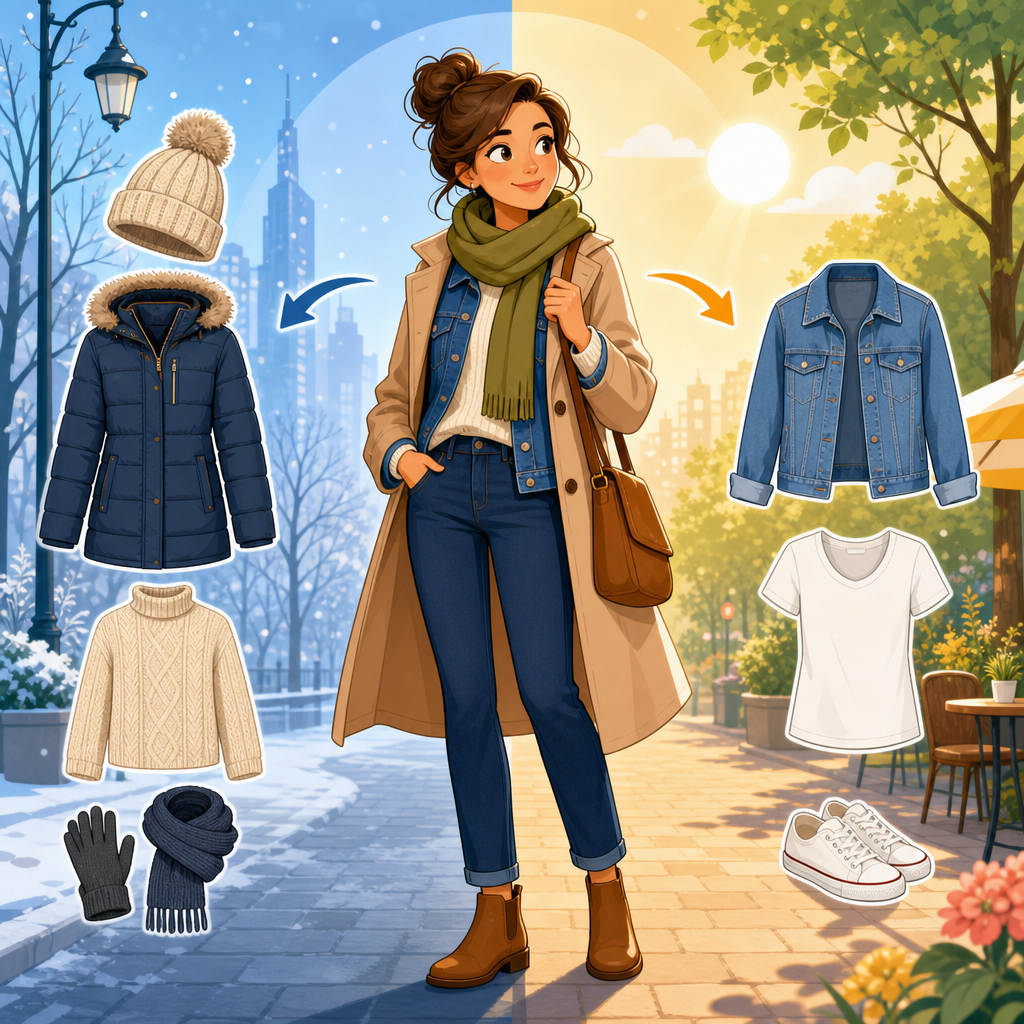
How to dress for 40-degree temperature swings in one day starts with accepting that one outfit cannot perform like four different climates unless you build it deliberately. In practical terms, a 40-degree swing might mean leaving home at 38°F before sunrise, walking to lunch in 68°F sunshine, then standing on a windy platform after dark as temperatures fall again. That pattern is common in desert cities, mountain regions, shoulder seasons, and heavily air-conditioned offices where indoor conditions feel colder or warmer than outdoors. Dressing well in those conditions is not about owning more clothes. It is about regulating heat, moisture, wind exposure, and comfort across changing environments.
The key terms matter. A base layer sits next to skin and manages moisture. A midlayer traps heat. An outer layer blocks wind or precipitation. Breathability describes how easily sweat vapor escapes. Loft refers to the air-trapping structure that creates insulation. Temperature swing means the difference between the day’s low and high, but your lived swing is broader because sun, shade, humidity, wind chill, radiant heat from pavement, and indoor climate control can each change how warm you feel. In my experience planning outfits for commuting, travel days, school runs, and client meetings, the most common mistake is dressing only for the coldest hour or only for midday comfort. Either choice fails by noon or by sunset.
This topic matters because clothing affects far more than style. Poor layering can increase sweat, chafing, dehydration, distraction, and even mild cold stress. It can also worsen skin irritation, dry eyes, and indoor discomfort, especially when you move repeatedly between heated cars, cold sidewalks, and overcooled buildings. A good system reduces those friction points while keeping you presentable, mobile, and comfortable. If your broader goal is daily comfort at home and away from home, this hub article gives the framework. It covers how to layer, choose fabrics, adapt for work or errands, pack smart accessories, and make small lifestyle adjustments that support all-day comfort when temperatures swing hard.
Build a three-part outfit system that you can adjust fast
The most reliable answer to how to dress for 40-degree temperature swings in one day is a three-part system: moisture-managing base layer, flexible insulating layer, and weather-protective shell. This works because each piece solves a different problem. The base controls sweat so you do not become clammy in warmth or chilled later. The midlayer provides warmth when air cools. The shell handles wind, light rain, and sudden drops in perceived temperature. You can remove or add one element in under a minute, which matters during commutes and schedule changes.
A practical example is a lightweight merino or synthetic crew shirt under a thin fleece, cardigan, or performance quarter-zip, topped with a packable jacket. At 40°F in the morning, all three layers stay on. At 65°F by midday, the shell comes off first. If you are walking in sun or entering a heated building, the midlayer can come off next, leaving a polished base layer that still looks intentional. For offices, substitute a knit blazer or overshirt for sporty fleece. For casual wear, a chore jacket or unlined utility jacket works well because it handles mild wind without trapping too much heat.
Fit matters as much as fabric. A base layer should sit close to the body without restriction. A midlayer needs enough room to trap air but not so much bulk that it bunches under a jacket. Outer layers should accommodate the inner pieces while still allowing movement at the shoulders and hips. If the shell is too tight, insulation compresses and loses efficiency. If every layer is oversized, you overheat faster indoors and look rumpled once pieces come off. The best systems are modular, not heavy.
Choose fabrics that handle sweat, wind, and indoor heat
Fabric choice determines whether your layers stay comfortable or become a problem. Cotton has a place, but for large temperature swings it is usually a weak first layer because it absorbs moisture and dries slowly. That means a cotton T-shirt can feel pleasant at breakfast, sweaty by noon, then cold as evening wind picks up. Better base-layer options are merino wool, polyester performance knits, nylon blends, and some lyocell blends. Merino regulates temperature well, resists odor, and feels comfortable across a wide range of conditions. Synthetics dry faster and often cost less, though lower-quality versions can retain odor.
Midlayers should balance insulation and venting. Grid fleece, fine-gauge wool sweaters, technical hoodies, and lightweight insulated vests all work, but they serve different situations. A vest is especially useful for 40-degree swings because it protects the core while leaving arms cooler during activity. That makes it easier to walk briskly without overheating. Light down provides excellent warmth-to-weight, but untreated down loses performance when wet. Synthetic insulation handles moisture better and is often the safer choice for mixed weather or active days.
For outer layers, the priority is controlling wind. Wind can make 55°F feel significantly colder than the number suggests, especially after sweat accumulation. A breathable softshell or a light woven jacket often outperforms a bulky coat on swing days because it blocks enough wind without locking in excessive heat. If rain is possible, carry a lightweight waterproof shell with pit zips or venting. In real daily use, the jacket you actually carry beats the perfect jacket left at home.
Match the outfit to your schedule, not just the forecast
Forecast highs and lows are only the starting point. To dress correctly, map your day by time, activity, and setting. Ask four direct questions: What temperature will it be when I leave? How warm will I get while moving? What are indoor conditions where I will spend the most time? What happens after sunset? This schedule-first approach consistently produces better outfit decisions than checking only the day’s headline temperature.
For example, a parent doing school drop-off, grocery shopping, and remote work at home may need easy on-off layers, slip-on shoes, and a cardigan suitable for a cool house. A nurse or office worker may need a base layer that looks professional when a sweater comes off under bright indoor heat. A traveler may prioritize wrinkle resistance, packability, and security pockets. If you commute by train, cold platform exposure and overheated cars create a different challenge than driving door to door. In my own cold-to-warm commute days, I plan for the transit segments first because those are least controllable.
| Scenario | Best Base Layer | Best Midlayer | Best Outer Layer | Key Accessory |
|---|---|---|---|---|
| Cold morning commute, warm office | Merino tee or thin knit top | Cardigan or quarter-zip | Packable wind-resistant jacket | Scarf that fits in a bag |
| Errands with frequent car transitions | Synthetic long-sleeve | Light vest | Unlined utility jacket | Sunglasses for midday glare |
| Walking outdoors at lunch | Breathable performance shirt | Grid fleece | Softshell | Water bottle to offset dry air |
| Travel day with airport and evening arrival | Odor-resistant merino | Stretch knit blazer or hoodie | Light rain shell | Compression socks if seated long |
This planning method also helps with internal comfort. If the warmest part of your day happens indoors under forced air, wear pieces that can disappear neatly into a tote or hang on a chair. If you will be outside again after dark, reserve enough insulation for the return trip instead of using everything early. That single habit prevents the classic mistake of sweating through the morning and freezing later.
Use accessories to fine-tune comfort without changing the whole outfit
Accessories are the precision tools of swing-temperature dressing. They let you make small thermal adjustments without reworking the outfit. A compact scarf, thin beanie, lightweight gloves, sunglasses, and a pair of spare socks can cover a surprising amount of comfort territory. On many days, adding or removing a scarf changes perceived warmth more efficiently than switching jackets. The reason is simple: the neck is sensitive to airflow, and blocking wind there often improves whole-body comfort quickly.
Footwear deserves special attention. Shoes should tolerate both cold pavement and warmer midday walking. Waterproof leather sneakers, ankle boots with breathable linings, and supportive walking shoes paired with merino-blend socks usually outperform heavy winter boots on swing days. Oversized insulated boots often leave feet sweaty by afternoon, and damp feet feel colder later. If your day includes long indoor hours, choose shoes that breathe well and socks that dry fast. People managing sweaty feet or sensitive skin benefit from carrying a backup pair of socks.
Eye and skin comfort matter too, especially within a daily life and home comfort routine. Dry cold air, wind, and bright sun can irritate eyes even when temperatures later turn mild. UV exposure remains relevant in cool weather, particularly at altitude or around reflective surfaces. Sunglasses, lip balm, and a fragrance-free hand cream earn their place in a bag on sharp-swing days. If your skin barrier is easily disrupted, avoid rough wool directly on skin and use softer merino or lined collars instead.
Dress differently for work, exercise, and social settings
The same weather does not justify the same outfit across every context. Workwear needs polish and adaptability. Exercise gear needs moisture control and ventilation. Social outfits need comfort without constant fiddling. The smartest approach is to keep the layering principles the same while changing silhouettes and materials to fit the setting.
For professional environments, start with a breathable blouse, knit polo, merino shell, or tailored long-sleeve top. Add a cardigan, knit blazer, or fine wool sweater, then top with a trench, mac, or sleek technical coat. This combination reads intentional indoors and can be stripped down gracefully. Avoid thick suit jackets over sweaty cotton undershirts; once you overheat, recovery is difficult. For business-casual offices, an unstructured overshirt can replace a blazer and often performs better across temperature changes.
For exercise or high-step errand days, lighter and more technical is better. I rely on a wicking base, a thin fleece or vest, and a shell with venting because movement generates significant heat quickly. The first five minutes should feel slightly cool, not perfect. If you feel cozy before a brisk walk begins, you are probably overdressed. For dinners or social plans that start mild and end cold, choose a breathable top with a light layer you will actually keep on your chair or carry home, rather than suffering through a dramatic coat all evening.
Make lifestyle adjustments that support all-day comfort
Clothing works best when paired with simple habits. Hydration matters because dry air and heated interiors increase fluid loss, and dehydration can worsen fatigue, dry skin, and temperature discomfort. Keep a compact water bottle and drink earlier than thirst suggests, especially if your morning starts cold and your afternoon turns warm. If you are prone to overheating, build in one minute to remove a layer before you start walking fast, carrying groceries, or climbing stairs. That prevents sweat accumulation, which is the real enemy later.
Bag strategy is another overlooked lifestyle adjustment. A lightweight tote, backpack, or briefcase with one dedicated layer pocket makes it realistic to shed clothing without frustration. Packability is not a luxury; it is part of compliance. People stop following good layering plans when removed items become annoying to carry. I also recommend keeping a small “swing weather kit” ready: sunglasses, lip balm, hand cream, tissues, spare socks, and a compact scarf. Stored by the door, it reduces decision fatigue on busy mornings.
At home, temperature swings often continue indoors. Mornings can feel chilly near windows, afternoons warm under sun exposure, and evenings cool again after thermostats cycle differently. The same layering logic applies inside: light base, easy midlayer, socks that regulate moisture, and slippers or house shoes if floors run cold. If your home air is dry, a humidifier can improve skin, eye, and throat comfort, making lighter clothing feel more tolerable without raising the thermostat unnecessarily.
Avoid the common mistakes that make swing days miserable
The biggest mistake is choosing one heavy piece instead of several lighter ones. Heavy single-layer warmth works for stable cold, not variable conditions. Other frequent errors include wearing cotton next to skin, skipping wind protection, ignoring sun exposure, and choosing shoes for the morning low rather than the full day. Another problem is failing to test your outfit in motion. Many people feel fine while standing still at home, then overheat immediately once they begin commuting.
There are also tradeoffs worth acknowledging. Merino costs more than basic cotton. Technical shells can look too casual for formal offices. Layering adds pieces to manage and store. But these are manageable compromises, and the comfort payoff is substantial. If budget is a concern, upgrade strategically: first the base layer, then a versatile midlayer, then a light wind-resistant shell. Those three improvements will outperform a closet full of random seasonal pieces.
How to dress for 40-degree temperature swings in one day comes down to systems, not guesswork. Build outfits around a moisture-managing base, a removable insulating layer, and a wind-aware outer piece. Choose fabrics that dry fast and breathe well. Plan from your schedule, commute, and indoor environment, not just the forecast graphic. Use accessories to tune comfort, and support the clothing with simple habits like hydration, smart packing, and timely layer changes.
As the hub for lifestyle adjustments within daily life, skin, eyes, and home comfort, this guidance gives you a repeatable framework you can apply to workdays, travel, errands, and evenings out. When you dress this way, you stay comfortable longer, protect skin and eyes better, and reduce the fatigue that comes from being too hot, too cold, or damp at the wrong time. Review your usual day, identify your biggest comfort failure point, and rebuild tomorrow’s outfit around layers that solve it.
Frequently Asked Questions
What is the best outfit strategy for a day that starts near freezing and warms up by 40 degrees?
The most reliable strategy is to build your outfit as a layering system instead of treating it like a single look. On a day that begins around 38°F and climbs into the upper 60s or beyond, you need clothing that can be added or removed in stages without leaving you uncomfortable at either end of the temperature range. Start with a breathable base layer that manages moisture rather than trapping sweat. A lightweight long-sleeve tee, thin merino top, or performance knit works well because it keeps you comfortable in the cold morning but will not feel suffocating later.
Over that, wear a light insulating layer such as a fine-gauge sweater, fleece, or thin quilted vest depending on how cold and windy the early hours will be. Then finish with an outer layer that blocks wind and can come off easily, such as a trench, packable puffer, utility jacket, or shell. The key is flexibility. Each layer should make sense on its own so that when the sun comes out, you can remove one piece at a time instead of having only two options: bundled up or underdressed.
Bottoms matter too. Midweight pants, jeans, technical trousers, or other fabrics with some structure usually outperform very heavy winter fabrics or very light summer fabrics on swing-temperature days. Shoes should also be transitional. Closed-toe footwear with socks is often the safest choice because feet get cold quickly in the morning and on windy evenings, even if the afternoon feels mild. Accessories complete the system. A scarf, beanie, sunglasses, and compact gloves take up little space but can dramatically improve comfort when temperatures drop again after sunset.
Which fabrics work best when temperatures change dramatically from morning to afternoon?
The best fabrics for major temperature swings are the ones that regulate temperature, breathe well, and still hold their shape after layers are removed. Merino wool is one of the strongest options because it insulates in the cold, breathes in milder conditions, and manages moisture better than many heavier fabrics. Lightweight merino is especially useful for base layers, socks, and fine sweaters. Cotton can work in moderate, dry conditions, but it is less dependable if you tend to sweat during commutes or spend time outdoors in wind, because once it feels damp, it can quickly become chilly later.
Performance blends are also valuable, especially for people who walk, commute, or move between outdoor air and heavily air-conditioned interiors. Fabrics designed to wick moisture and dry quickly help prevent that common problem where you overdress for a cold morning, warm up by noon, and then feel clammy the rest of the day. Thin fleece, lightweight knits, technical woven fabrics, and softshell materials can be excellent middle or outer layers because they offer warmth without the bulk of full winter pieces.
For outer layers, look for materials that block wind while staying light enough to carry once removed. A heavy coat may be necessary at 7 a.m., but if it becomes a burden by 1 p.m., it was probably too much for the day’s overall pattern. The goal is not just warmth. It is adaptability. Fabrics that can handle both the cool start and the warm middle of the day without trapping heat are what make a swing-temperature outfit actually practical.
How can I avoid being too hot in the afternoon if I have to dress for a cold morning commute?
The answer is to dress for manageability, not maximum warmth. Many people make the mistake of wearing one very warm layer, such as a thick sweater or heavy coat, and then struggle once temperatures rise. A better approach is to use two or three lighter layers that can be peeled off gradually. If the morning is cold, begin with a breathable base layer and then add modest insulation plus a weather-appropriate outer layer. That way, as the day warms, you can first remove your scarf or hat, then your jacket, then perhaps your midlayer, while still looking put together.
It also helps to think ahead about where removed layers will go. If you are commuting, choose a jacket that can be folded into a tote or draped over a chair easily. If you are carrying a bag, make sure it has enough room for gloves, a compact scarf, or a packable vest. This practical detail is often what determines whether a smart layering plan works in real life. People frequently dress too warm simply because they do not want to carry anything later.
Ventilation matters as much as insulation. Zip-front layers, button shirts over tanks or tees, and jackets with breathable linings let you adjust your temperature without fully changing outfits. Accessories are also easier to remove than core garments, so use them strategically. A cold morning can feel much more manageable with gloves and a scarf, which means your main clothing does not have to be overly heavy. That keeps you from overheating when the afternoon sun or indoor heating kicks in.
What should I wear for 40-degree temperature swings if I will be moving between outdoors and heavily air-conditioned buildings?
When the day includes both outdoor temperature changes and strong indoor climate control, your outfit needs to handle two different kinds of discomfort: morning chill and artificial cold indoors. In that situation, the ideal outfit includes a base that looks complete on its own, a polished middle layer that works in an office or public setting, and an outer layer designed for outdoor exposure. For example, a breathable blouse or knit top under a cardigan, blazer, or light sweater, topped with a weather-ready coat, gives you multiple options without making you look overly casual or bulky.
Indoors, air conditioning can make a 70-degree afternoon feel much cooler than expected, especially if you removed your jacket after spending time in the sun. That is why a useful middle layer is so important. It should be something you would be comfortable wearing for several hours at a desk, in meetings, at lunch, or while commuting. A cardigan, overshirt, knit blazer, or fine sweater is often better than relying only on a coat, because the coat may be too warm outdoors later and too awkward to wear inside for long stretches.
Choose pieces that transition visually as well as functionally. A thin performance base layer can work well under office clothing if it is smooth and unobtrusive. Trousers, dark jeans in appropriate workplaces, midi skirts with tights you can remove, and structured footwear often perform better than extremely seasonal pieces. The main idea is to treat indoor air conditioning as part of the forecast. If the building feels like another climate zone, your layers should be planned for that just as carefully as they are for the outdoor temperature swing.
What accessories make the biggest difference on days with extreme temperature swings?
Accessories are often what make a 40-degree swing feel manageable rather than annoying. Because they are easy to add and remove, they let you fine-tune comfort without changing your entire outfit. A lightweight scarf is one of the most effective tools because it adds noticeable warmth in the morning and evening, especially when wind picks up, but can be removed and packed quickly once the day warms. Thin gloves are another smart option if your commute includes standing outside, driving before the car warms up, or walking in early cold air.
Headwear can also be surprisingly helpful. A compact beanie or headband traps heat efficiently during cold early hours, yet takes almost no room in a bag later. Sunglasses are equally important in many places where big temperature swings occur, such as desert cities and mountain regions, because bright sun can make the afternoon feel warmer while still exposing you to glare and dryness. Socks deserve more attention too. A good pair of moisture-managing socks can keep your feet comfortable across both cold mornings and warmer afternoons better than flimsy or overly thick pairs.
Finally, do not underestimate the value of the bag itself. On swing-temperature days, a practical tote, backpack, or structured work bag is almost an accessory category of its own because it allows you to carry the layers you no longer need. If you cannot store your scarf, gloves, or outer layer comfortably, your outfit becomes less adaptable. The best accessories are the ones that help you control warmth in small increments and support the simple goal of staying comfortable from sunrise through the late-night temperature drop.