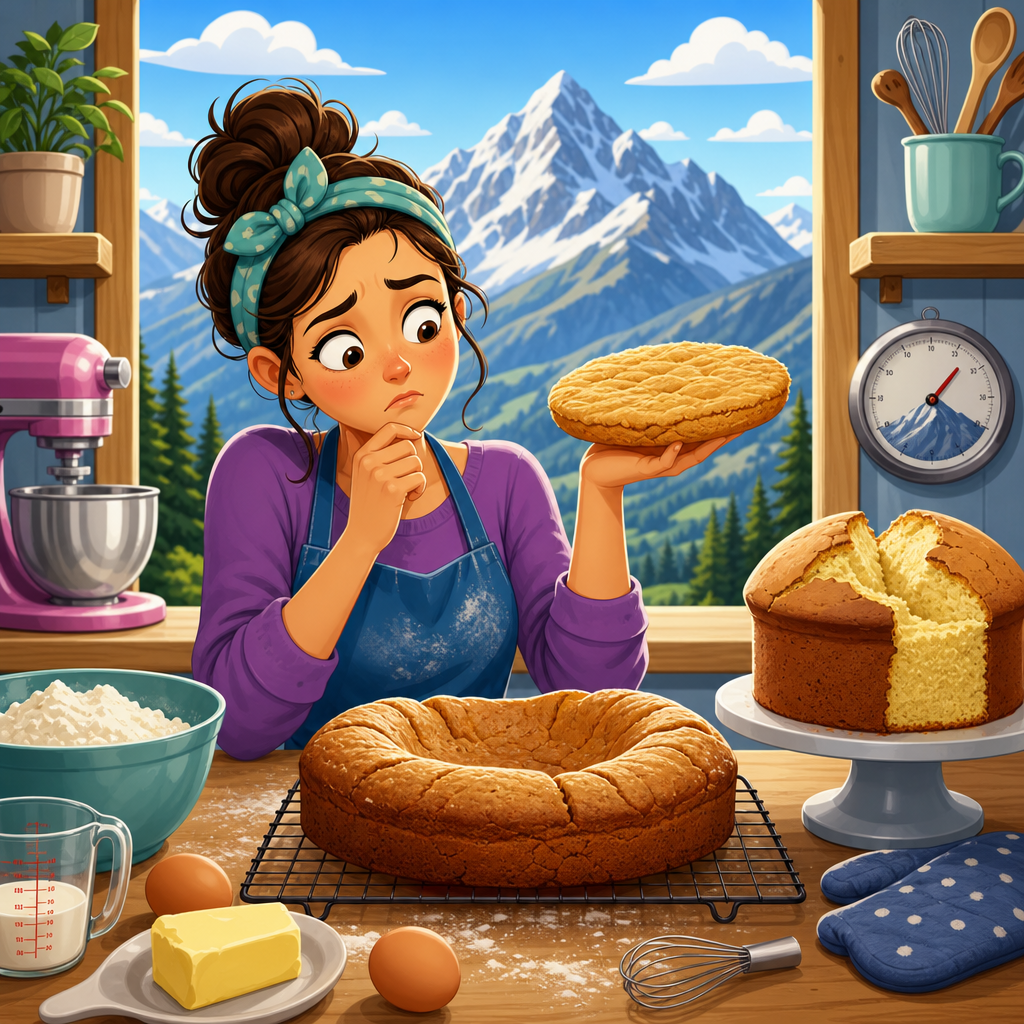
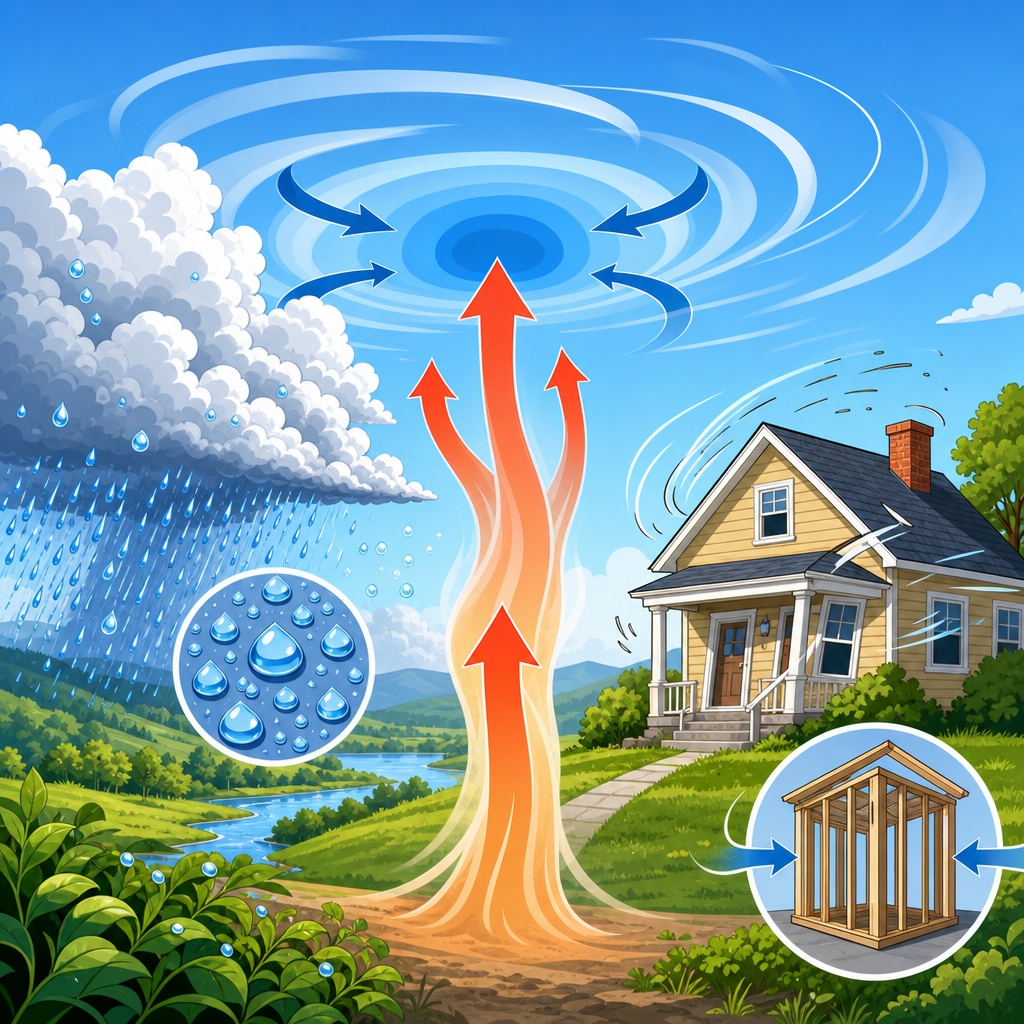
Baking at 7,500 versus 10,000 feet is not a small tweak in the kitchen; it is a shift in physics, moisture management, and structure that changes how every batter and dough behaves. In practical terms, high-altitude baking begins to matter above about 3,000 feet, but the gap between 7,500 and 10,000 feet is where many standard recipes stop behaving predictably. At both elevations, lower air pressure speeds gas expansion and water evaporation, yet 10,000 feet intensifies those effects enough that familiar fixes from moderate altitude often become insufficient. Understanding which adjustments change most helps bakers avoid collapsed cakes, dry muffins, coarse crumbs, overproofed breads, and cookies that spread too fast.
Three ideas define baking fundamentals at altitude. First, leavening gases expand more readily, so chemical leaveners and trapped air can push structure beyond what flour proteins and egg proteins can hold. Second, liquids evaporate at lower temperatures and at faster rates, which concentrates sugar, reduces available moisture, and can leave interiors under-set while surfaces dry. Third, lower atmospheric pressure changes how starch gelatinization, protein coagulation, and sugar concentration balance during baking. I have baked the same yellow cake, sandwich loaf, and chocolate chip cookie formulas repeatedly in mountain kitchens, and the difference between 7,500 and 10,000 feet consistently comes down to how aggressively I manage rise, hydration, oven heat, and timing.
This hub page explains those fundamentals in plain terms and shows which recipe variables deserve the biggest adjustment as elevation climbs. If you want a direct answer, the adjustments that change most between 7,500 and 10,000 feet are leavening reduction, liquid increase, oven temperature strategy, and sugar control. Flour changes matter too, but usually as support for structure rather than as the first lever to pull. The goal is not to memorize a universal chart and hope for the best. The goal is to understand why cakes, quick breads, yeast breads, cookies, pastries, and custard-based bakes respond differently, so you can make confident corrections recipe by recipe.
Why 10,000 Feet Behaves More Dramatically Than 7,500
The most important difference is rate. At 10,000 feet, gases expand faster and moisture escapes faster than at 7,500, so a recipe reaches failure points sooner. A cake that rises beautifully at 7,500 may crest, crack, and sink at 10,000 because its cell walls set too late for the amount of expansion taking place. A muffin batter that seems slightly thick at 7,500 may bake acceptably, while the same batter at 10,000 loses enough moisture in the oven to turn crumbly around the edges before the center fully sets.
Water also boils at a lower temperature as altitude increases, which matters because batters and doughs lose steam sooner and cool through evaporation differently than they do at sea level. In simple terms, baked goods can dry out before internal structure is complete. That is why experienced mountain bakers often use slightly higher oven temperatures to set proteins and starches earlier, while also adding liquid to offset accelerated evaporation. The combination sounds contradictory until you see the result: stronger early structure without the dry texture that comes from baking a standard formula longer just to finish the center.
At 7,500 feet, many recipes can be corrected with modest changes. At 10,000 feet, those same changes often need to be larger and more coordinated. Reducing baking powder alone may slow a cake’s rise, but if sugar remains high and liquid remains unchanged, the crumb can still collapse or bake sticky. High-altitude baking works best when you treat ingredients as a system, not as isolated knobs.
Which Ingredient Adjustments Change Most
If you compare successful formulas across elevations, four adjustments drive most outcomes: less leavening, more liquid, slightly higher oven temperature, and in many sweet bakes, somewhat less sugar. Those are the variables that shift most between 7,500 and 10,000 feet because they control expansion, evaporation, and setting. Flour and eggs are important, but they usually fine-tune structure after the bigger pressure and moisture issues are addressed.
| Variable | Typical concern at 7,500 feet | Usually stronger concern at 10,000 feet | Why it matters |
|---|---|---|---|
| Leavening | Reduce somewhat | Reduce more decisively | Gas expansion is stronger, risking over-rise and collapse |
| Liquid | Add a little | Add more | Faster evaporation dries batter and weakens final texture |
| Oven temperature | Increase slightly | Increase slightly to moderately | Earlier setting helps support expanded structure |
| Sugar | Sometimes reduce | More often reduce | Sugar delays setting and can weaken crumb at altitude |
| Flour | Sometimes add | Often add a bit more | Extra starch and protein improve support |
A useful starting range for cakes and quick breads is reducing baking powder or baking soda by roughly 10 to 25 percent from sea-level formulas, with the deeper cut more likely near 10,000 feet. Liquid additions are often measured in tablespoons rather than cups, but the higher elevation version commonly needs the larger increase. Oven temperature changes are often in the 15 to 25 degree Fahrenheit range at 7,500 feet and can push toward 25 degrees at 10,000, depending on pan size and sugar level. These are not rigid rules, but they reflect the pattern I have seen repeatedly in test batches.
How Structure Changes in Cakes and Quick Breads
Cakes and quick breads are usually where altitude differences become obvious first. Their structure depends on a careful sequence: air and chemical leavening expand, egg proteins coagulate, and starches gelatinize to lock the crumb in place. At 7,500 feet, an ordinary butter cake may simply need less baking powder and a bit more milk. At 10,000 feet, the same cake often also needs less sugar, perhaps an extra egg white or a slight flour increase, and a hotter oven to set the batter before it overexpands.
Sugar is particularly important because it tenderizes and delays coagulation. That is helpful at sea level, but at very high elevations it can leave cakes too fragile during the critical rising stage. This is why high-ratio cakes, chiffon cakes, and very moist banana breads become harder to stabilize as you approach 10,000 feet. The richer and more tender the formula, the narrower the margin for error.
Quick breads like muffins, biscuits, and scones respond differently depending on fat and mixing method. Muffins often dome too fast and then tunnel if leavening remains high. Biscuits can rise unevenly because steam and chemical expansion happen aggressively before layers fully set. Scones may benefit from colder dough, reduced leavening, and careful hydration. At both 7,500 and 10,000 feet, overmixing magnifies problems by creating irregular gluten strength, but at 10,000 feet the consequences are faster and more visible.
Yeast Doughs, Fermentation, and Proofing Control
Yeast baking changes at altitude too, but not in exactly the same way as cakes. Many bakers assume yeast itself works dramatically faster because of elevation. In reality, temperature and dough formulation still control fermentation more than air pressure does. What changes noticeably is gas expansion and moisture loss, which can make dough appear fully proofed sooner and dry at the surface more readily.
At 7,500 feet, sandwich bread and dinner roll doughs often need shorter proof times than standard recipes suggest. At 10,000 feet, watching the dough rather than the clock becomes essential. I rely more on volume increase, finger dent recovery, and dough feel than on printed time ranges. A dough that is allowed to double aggressively at 10,000 feet can overproof, lose strength, and bake with coarse cells or a sunken top.
Hydration matters more than many people expect. Flour absorbs differently in dry mountain climates, and doughs skin over quickly unless covered well. Slightly higher hydration, tighter shaping, and controlled proofing are usually more effective than just reducing yeast. For lean breads, a modest reduction in yeast can help, but for enriched doughs the bigger wins often come from preventing overdrying and limiting overproofing. Steam in the oven, covered baking, or a Dutch oven can be especially helpful because they slow crust formation long enough for proper oven spring without excessive surface drying.
Cookies, Bars, and Pastry at Higher Elevation
Cookies reveal a different side of altitude baking. At 7,500 feet, many drop cookies spread a bit more and lose moisture a bit faster, but they can still turn out well with minor flour or liquid adjustments. At 10,000 feet, the balance between spread, lift, and moisture becomes trickier. Butter melts, sugars liquefy, and leavening gases expand before the dough has enough strength, which can produce thin cookies with crisp edges and underdeveloped centers.
For cookies, a small flour increase is often more useful than in cakes because it limits spread directly. Chilling dough becomes more valuable as elevation rises, especially for butter-rich formulas. Reducing sugar slightly can also help, since sugar encourages spread and slows setting. In bar cookies and brownies, extra eggs or reduced leavening may prevent a fragile, sunken center. Brownies usually benefit from restraint; too much leavening is a common reason they rise and collapse into a gummy middle.
Pie crust, pâte sucrée, puff pastry, and laminated doughs are less about gas expansion and more about moisture control and consistency. Dry air at altitude can make dough crumbly during mixing and rolling. At 10,000 feet, adding water cautiously but earlier in the process often prevents fissures and tough patching later. Resting dough thoroughly is also more important because uneven hydration shows up quickly when rolling in a dry environment.
Tools, Testing, and a Reliable Adjustment Process
The most reliable way to bake well at 7,500 and 10,000 feet is to control variables deliberately. Use a digital scale for flour and sugar, an oven thermometer to verify actual temperature, and notes for every batch. In my own testing, apparent recipe failures often turned out to be measurement inconsistency or a cool oven, problems that altitude made worse but did not create.
Start with one adjustment category at a time. If a cake rises and falls, reduce leavening first and raise oven temperature slightly. If it bakes dry or crumbly, add liquid next. If it remains too tender or sticky, trim sugar or add a little flour. This stepwise method builds a recipe record you can trust. It also helps you adapt formulas across the whole baking fundamentals category, from layer cakes to muffins to rustic loaves.
Pan size and color matter as well. Dark pans absorb heat faster and may overbrown edges before centers set, especially when you have already raised oven temperature. Glass bakes differently from metal and often requires careful monitoring. Smaller pans can help some formulas at 10,000 feet because batter depth and faster setting work in your favor, but crowding too much batter into one pan increases collapse risk. The practical lesson is simple: high-altitude success comes from measured adjustments, not guesswork.
What Changes Most by Recipe Type
Across baking fundamentals, the biggest difference between 7,500 and 10,000 feet is not one magic conversion but the intensity of structural support required. Cakes need the strongest coordination among reduced leavening, increased liquid, reduced sugar, and hotter baking. Quick breads come next, especially sweet, fruit-heavy, or high-fat batters. Yeast breads demand stricter proofing control and moisture protection more than dramatic formula rewrites. Cookies usually need spread control through flour, chilling, and occasional sugar reduction. Pastry depends heavily on hydration management in dry conditions.
If you remember only one principle, make it this: the higher you go, the earlier structure must set relative to expansion. At 7,500 feet, you can often rescue a recipe with moderate edits. At 10,000 feet, small weaknesses compound quickly, so balanced adjustments matter more than ever. That is why experienced mountain bakers do not ask only how much flour to add or how much baking powder to cut. They ask how the recipe builds structure, holds moisture, and times expansion.
This hub should give you the framework for every altitude baking article that follows. Use it to diagnose problems, compare formulas, and make targeted changes instead of broad guesses. When you bake at 7,500 or 10,000 feet with that mindset, results become repeatable. Start with your most familiar recipe, change one variable set at a time, and keep notes. That is how altitude baking stops feeling unpredictable and starts feeling precise.
Frequently Asked Questions
What changes most when you move from baking at 7,500 feet to 10,000 feet?
The biggest differences are faster leavening, quicker moisture loss, and a weaker structural set. At 7,500 feet, recipes are already affected by reduced air pressure, but many can still be corrected with modest adjustments. At 10,000 feet, those same reactions become much more aggressive. Gases in batters and doughs expand more rapidly, so cakes can rise too fast and then collapse before their crumb has time to set. Water also evaporates more quickly, which means batters thicken faster, doughs can dry out sooner, and baked goods often finish with less internal moisture unless you compensate. That is why the jump from 7,500 to 10,000 feet is not just “more of the same.” It often requires rebalancing several variables at once rather than tweaking only one.
In practical baking terms, the most noticeable change is that structure becomes harder to control. At 10,000 feet, a formula that works at 7,500 may suddenly produce sunken cakes, coarse crumb, tunneling, peaked muffins, dry cookies, or breads that overproof and then deflate. Bakers usually need to reduce leavening more decisively, strengthen the batter or dough with slightly more flour or egg, increase liquid enough to offset faster evaporation, and often raise oven temperature a bit so the product sets before overexpanding. The higher the elevation, the less forgiving the recipe becomes. That is why 10,000 feet typically demands a more deliberate strategy rather than a simple one-line adjustment.
Do I need to make bigger ingredient adjustments at 10,000 feet than at 7,500 feet?
Yes. In most cases, the adjustments at 10,000 feet need to be larger and more coordinated. At 7,500 feet, you may be able to get good results by slightly reducing baking powder or baking soda, adding a little extra liquid, and increasing oven temperature by a small amount. At 10,000 feet, those changes often need to be stronger because the underlying causes are stronger. Lower air pressure means leavening gases expand more, and the boiling point of water is lower, so moisture escapes more readily. If you do not account for both effects, your baked goods may rise quickly, lose water rapidly, and set too late.
That does not mean every ingredient must change dramatically, but it does mean the margin for error is smaller. For cakes and quick breads, bakers often reduce chemical leaveners further, cut sugar slightly if the crumb is too weak, add more liquid, and increase flour or egg if extra strength is needed. For yeast doughs, the amount of yeast may not always need a large reduction, but fermentation time usually does because dough rises faster at altitude. At 10,000 feet, recipe testing becomes more important because ingredient brands, humidity, pan size, and even the style of mixing can shift the result. The key is to think in terms of balance: more evaporation and faster expansion usually call for more moisture control and stronger structure.
Which baked goods are affected the most by the difference between 7,500 and 10,000 feet?
The most sensitive baked goods are those that depend on a delicate balance between expansion and structure. Foam cakes, layer cakes, muffins, biscuits, popovers, soufflés, and chemically leavened quick breads are often the first to show problems as elevation rises from 7,500 to 10,000 feet. These products rely heavily on trapped air, steam, whipped eggs, or baking powder and baking soda, so they can overexpand before their crumb is stable enough to hold shape. That leads to collapse, large holes, rough texture, or tops that rise sharply and then sink. Cookies can also change noticeably, often spreading too fast, drying at the edges, or becoming thin and brittle if the dough loses moisture too quickly.
Yeast breads are affected too, but often in a different way. They usually do not collapse as dramatically as cakes, yet they can overproof faster and become coarse or dry if not watched carefully. Pie crusts, tart doughs, and other lower-moisture pastries may also need handling changes because flour absorbs liquid differently when evaporation is faster. In general, the more a recipe depends on precise timing between lift and set, the more noticeable the difference becomes between 7,500 and 10,000 feet. Dense bar cookies or sturdy enriched breads may still need adjustments, but fragile, highly aerated batters are where the altitude gap shows up most clearly.
How should I adjust baking time and oven temperature at 10,000 feet compared with 7,500 feet?
At 10,000 feet, bakers often benefit from a somewhat higher oven temperature than they would use at 7,500 feet because faster setting helps prevent overexpansion and collapse. A modest temperature increase can help the structure of cakes, muffins, and quick breads firm up before the batter rises beyond what it can support. That said, temperature changes should be measured rather than extreme. Too much extra heat can set the outside before the center is fully expanded, creating doming, cracking, or underbaked interiors. The goal is not simply “hotter,” but “fast enough to set structure without drying the product out.”
Baking time is less predictable because two competing things are happening: the product may set faster on the outside, but it may also lose moisture faster overall. Some items bake in slightly less time, while others need close to the usual time but must be monitored more carefully to avoid overbaking. At 10,000 feet, visual and tactile cues become more reliable than the printed time in a sea-level recipe. Look for even color, springback, a clean or nearly clean tester where appropriate, and signs that the center has fully set. If a recipe worked at 7,500 feet with only a small temperature adjustment, do not assume the same timing will hold at 10,000. Higher altitude often requires more active observation throughout the bake rather than relying on the clock alone.
What is the best way to test and fine-tune a recipe for both 7,500 and 10,000 feet?
The best approach is to test systematically and change only a few variables at a time. Start with the version that works best at 7,500 feet, then treat 10,000 feet as a separate formula rather than expecting identical behavior. Keep detailed notes on batter consistency, rise, bake time, oven temperature, pan size, final volume, crumb texture, and moisture. If a cake rises fast and falls, reduce the leavener and consider slightly more flour or egg. If it bakes up dry or thick, increase liquid. If it overbrowns before the center sets, reduce temperature slightly or change pan material. If the crumb is fragile, evaluate sugar level and structural ingredients rather than blaming altitude alone.
It also helps to prioritize adjustments by what the finished product is telling you. Collapse usually points to too much lift or too little structure. Dryness often points to insufficient liquid, too much bake time, or excessive flour after repeated “fixes.” Tunneling and coarse holes often suggest overmixing combined with aggressive leavening. For yeast recipes, shorten proofing windows first before making major formula changes. Most important, avoid changing everything at once. At the difference between 7,500 and 10,000 feet, it is tempting to overhaul a recipe immediately, but careful testing produces better long-term results. The most successful high-altitude bakers build a small playbook of repeatable adjustments for their own kitchen, oven, flour, and climate, because altitude matters, but local conditions still matter too.