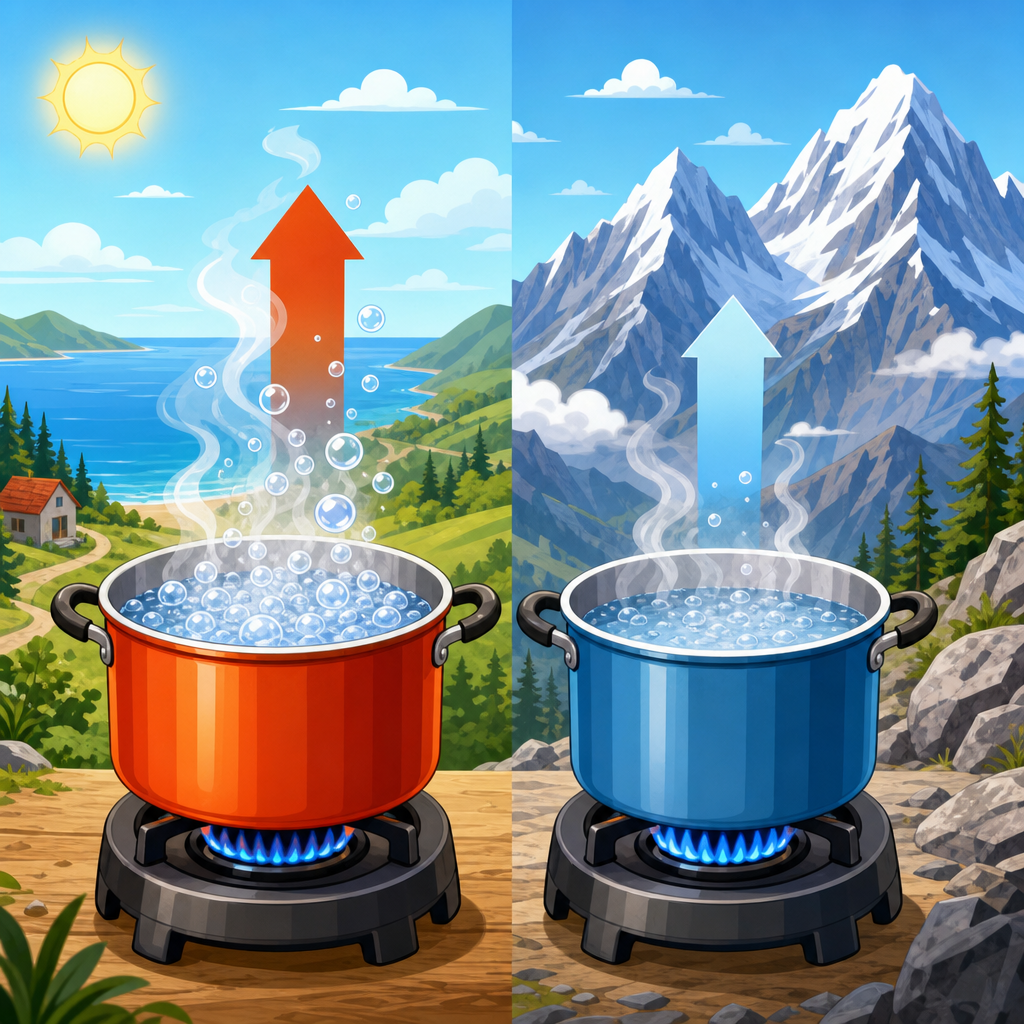
Water boils at a lower temperature at altitude because air pressure drops as elevation rises, and that simple physical change affects nearly every part of cooking and baking. In practical terms, boiling happens when the vapor pressure inside water matches the pressure pushing down on its surface. At sea level, that balance occurs at 212°F, or 100°C. In Denver, around 5,280 feet, water boils near 202°F. In many mountain towns above 7,500 feet, it may boil below 198°F. I have tested the difference in home kitchens and teaching labs, and the effect is immediate: pasta takes longer, beans soften more slowly, cakes set differently, and meringues dry out faster.
For anyone learning baking fundamentals, this is the first concept to understand. Altitude refers to elevation above sea level. Atmospheric pressure is the weight of the air above us. Boiling point is the temperature at which a liquid forms vapor bubbles throughout the liquid, not just at the surface. Leavening refers to the gases that expand doughs and batters. Evaporation is moisture loss into the air, and it speeds up in dry, high places. These terms are connected. Lower pressure means gases expand more easily, liquids evaporate faster, and heat from boiling water is slightly less intense. Those three changes shape the structure, texture, and timing of baked goods.
This matters because baking depends on controlled chemistry. Bread needs yeast to produce gas at the right rate. Cakes rely on steam, air, and chemical leaveners to lift batter before the crumb sets. Custards, cheesecakes, and puddings require precise heat so proteins coagulate smoothly instead of curdling. Sugar work behaves differently when water leaves faster. Even food safety and doneness cues can shift, since recipes written at sea level assume a different environment. If you want reliable cookies, high-rising muffins, tender biscuits, or evenly baked layer cakes, you need to know what altitude does to boiling, evaporation, protein setting, starch gelatinization, and gas expansion.
As a hub for baking fundamentals, this guide explains the science first and then connects it to common kitchen results. You will see why lower boiling temperatures matter, which ingredients are most affected, how to adjust formulas and methods, and where home bakers usually make mistakes. Once this foundation is clear, the rest of altitude baking becomes far easier to troubleshoot.
The science behind lower boiling temperatures at altitude
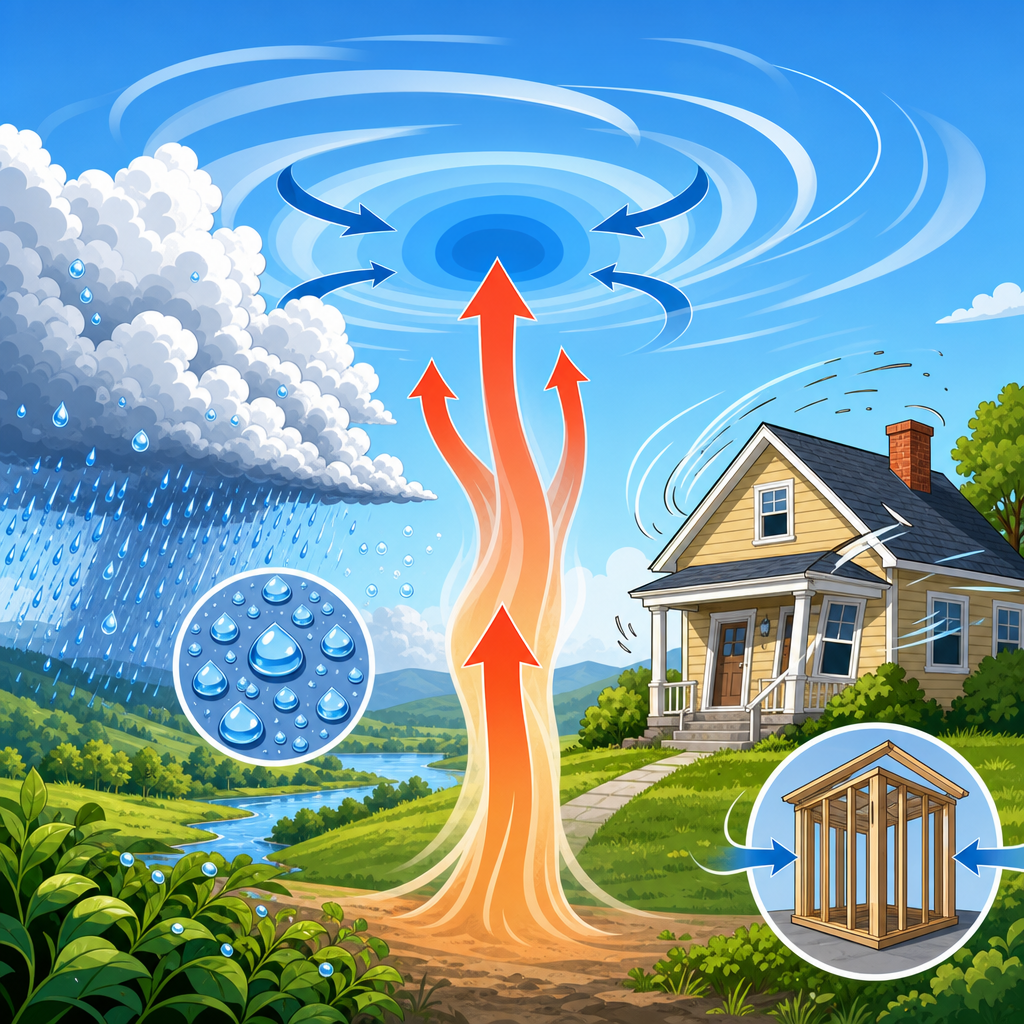
The core explanation is pressure. At sea level, the atmosphere exerts about 14.7 pounds per square inch. As you go higher, there is less air above you, so pressure drops. Water molecules are always moving. Some escape into the air as vapor. When enough energy is added through heat, vapor bubbles can form throughout the liquid. Boiling begins when the pressure inside those bubbles equals the surrounding air pressure. Because the outside pressure is lower at altitude, water does not need to get as hot before it can boil.
This is why a pot can be at a full rolling boil in the mountains while still being cooler than a quieter pot at sea level. The visual signal looks similar, but the thermal energy available for cooking is lower. That distinction matters in recipes that depend on boiling water to transfer heat, including poaching, simmering fruit, cooking grains, blanching vegetables, and preparing water-based syrups. It also matters in baking because steam is a powerful leavening gas. Steam forms sooner and escapes more readily in thinner air, which can push batters upward before their structure is ready to hold that expansion.
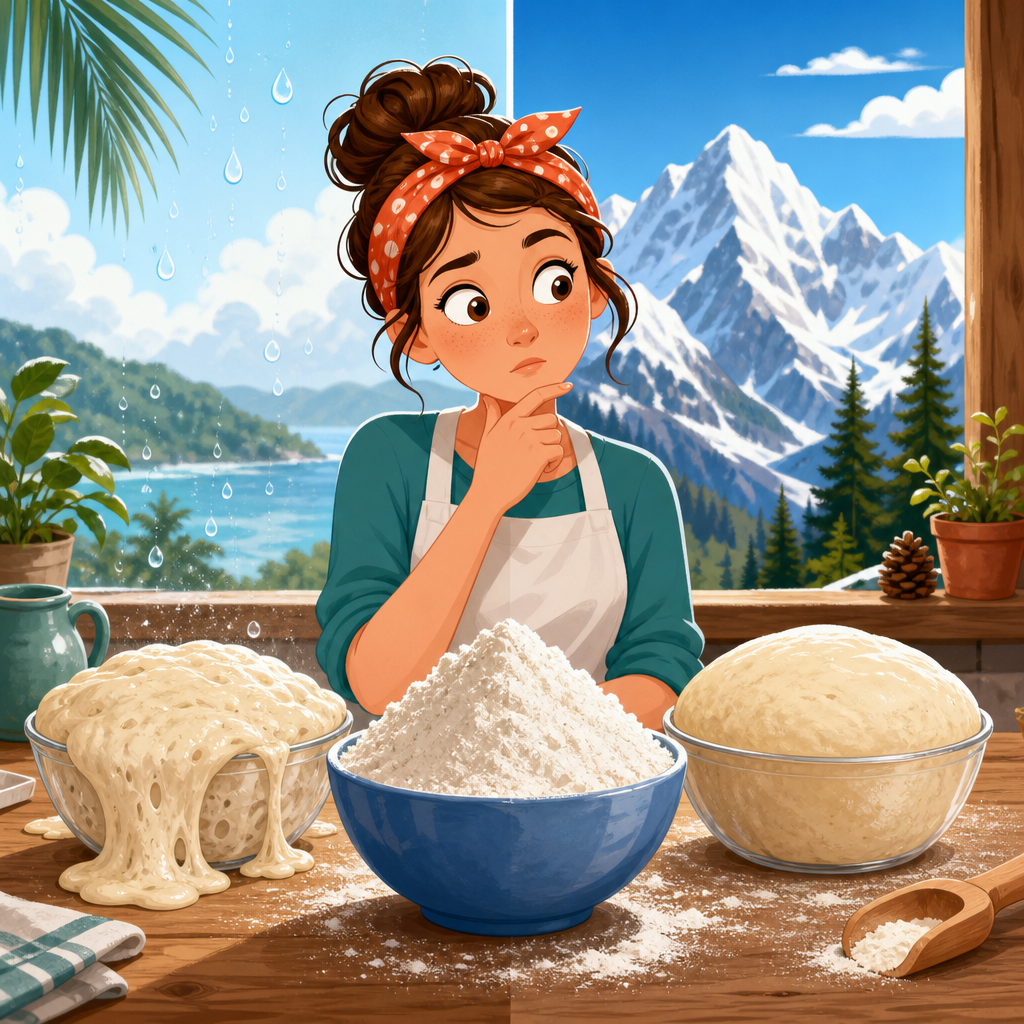
Relative humidity often compounds the problem. Many high-altitude regions are dry, so evaporation accelerates. A batter or dough may lose moisture before starches fully gelatinize or before proteins finish setting. In a cake, that can mean peaked tops, coarse tunnels, or collapse. In bread, it can mean overproofing, dry crust, or dough that seems sticky at first and then dries out quickly during mixing and shaping.
Typical boiling points by elevation and what they mean in the kitchen
Most home bakers do not need to memorize formulas, but they should know the pattern: boiling point falls roughly 1°F for every 500 feet of elevation gain, though exact values vary with weather and barometric pressure. The USDA and cooperative extension guidance commonly use broad elevation bands when recommending altitude adjustments. In practice, kitchens below 3,000 feet often need few changes. Between 3,000 and 5,000 feet, modest adjustments improve consistency. Above 5,000 feet, most cakes, quick breads, and yeast formulas benefit from deliberate changes.
| Elevation | Approximate boiling point of water | Common kitchen effect |
|---|---|---|
| Sea level | 212°F / 100°C | Standard recipe timing and liquid behavior |
| 3,000 feet | 206°F / 97°C | Slightly longer boiling and simmering times |
| 5,000 feet | 203°F / 95°C | Noticeable increase in evaporation and gas expansion |
| 7,500 feet | 198°F / 92°C | Cakes set later and can overexpand before structure forms |
| 10,000 feet | 194°F / 90°C | Boiled foods cook much more slowly; baking needs major adjustment |
These numbers explain several everyday frustrations. Dried beans may remain firm after the usual stovetop time because simmering water is cooler. Jams can take longer to reach gel concentration because the syrup temperature behavior changes. Cheesecakes baked in a water bath may need more oven time because the bath cannot exceed the local boiling point. Swiss meringue or buttercream methods that depend on warming egg whites and sugar over simmering water can also proceed more slowly. Knowing the local boiling point helps you interpret thermometers, timing, and visual cues more accurately.
Why boiling point changes affect baking fundamentals
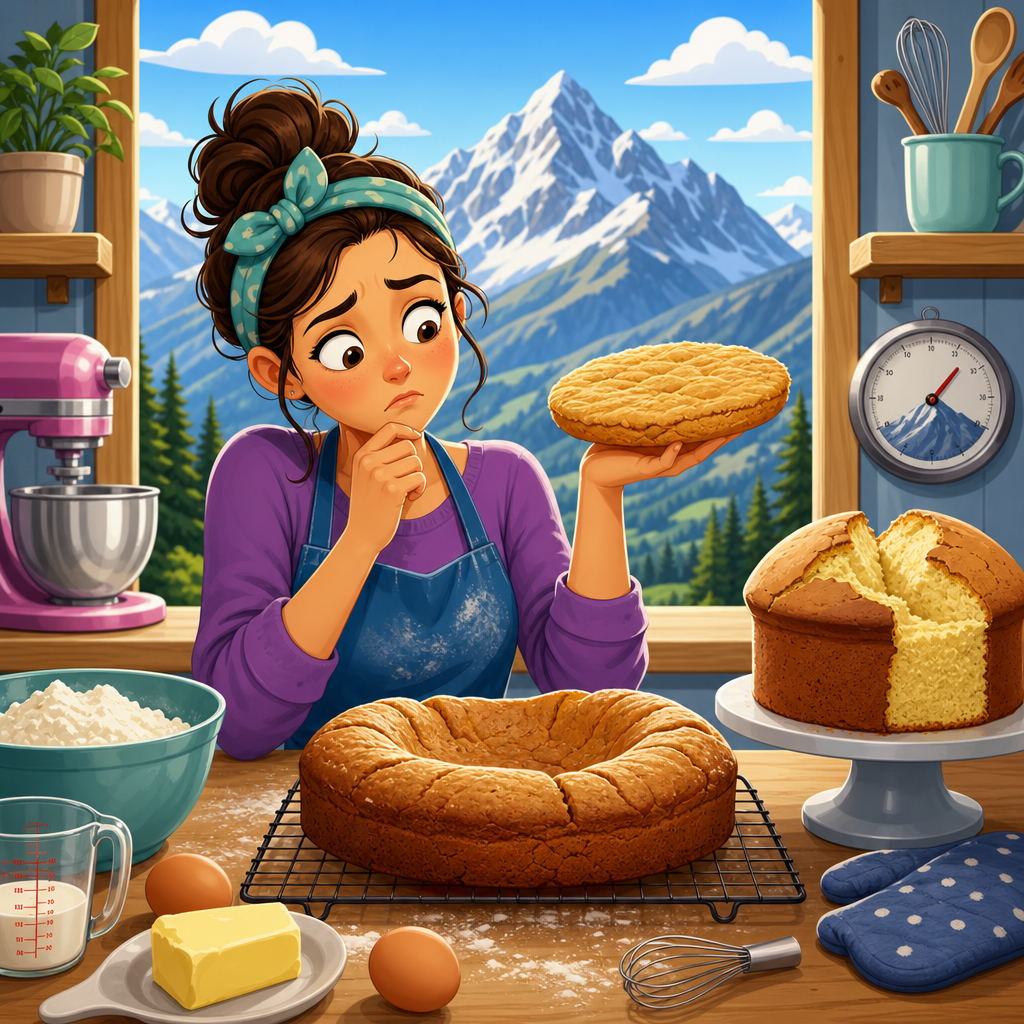
Baking is a race between expansion and setting. Leavening gases, including carbon dioxide, air, and steam, expand as batter heats. At altitude, reduced pressure lets those gases enlarge faster and sooner. Meanwhile, water evaporates more rapidly, and boiling occurs at a lower temperature. The result is that a cake can rise aggressively before egg proteins coagulate and before starches gelatinize enough to support the crumb. When the fragile structure cannot hold itself, the center falls, the texture turns crumbly, or large tunnels appear.
That same pattern shows up in muffins, quick breads, pancakes, choux pastry, popovers, and some cookies. In breads, yeast can ferment faster because gas cells meet less resistance. Proofing windows narrow. Dough may look ready earlier, then overexpand and weaken. In pie crusts and laminated doughs, water turns to steam readily, which can help lift layers, but the dough also dries out faster and may need careful hydration.
Ingredient functions become more obvious at altitude. Flour provides structure through starch and protein. Eggs contribute water, emulsifiers, and protein networks that help set the crumb. Sugar tenderizes and delays setting; too much can be destabilizing in mountain baking. Fat softens texture and coats flour, which can be helpful, but excess richness can also weaken structure in formulas already prone to overexpansion. Chemical leaveners need special attention. Baking powder can push a batter too high too early; reducing it is one of the most common and effective altitude corrections.
How to adjust recipes for altitude with confidence
The best altitude baking adjustments are small, targeted, and based on symptoms. Start by increasing oven temperature slightly, often by 15°F to 25°F. A hotter oven sets structure sooner, which helps cakes and quick breads hold their rise. Next, reduce leavening modestly. For many formulas above 3,500 feet, trimming baking powder or baking soda by about one-eighth to one-quarter teaspoon per teaspoon in the original recipe is a reasonable starting point. Then evaluate sugar. Reducing it by 1 to 3 tablespoons per cup can strengthen structure in overly delicate cakes.
Liquids usually need to rise. Added milk, water, egg white, or another liquid compensates for faster evaporation. A common starting adjustment is 1 to 4 tablespoons more liquid, depending on elevation and formula size. Flour may also increase slightly to provide more support. For yeast breads, watch dough condition instead of chasing the exact cup measure. In my testing, many high-altitude doughs improve when mixed a touch softer than expected, then strengthened with folds rather than excess flour.
Method matters as much as ingredients. Do not overbeat cake batters, because extra incorporated air expands dramatically at altitude. Fill pans a little less full if overflow has been a problem. Proof yeast dough until it is slightly less risen than you might allow at sea level; the oven spring will be stronger. Use an instant-read thermometer where helpful: lean breads often finish near 200°F to 210°F internally, enriched breads slightly lower, and custard-style bakes should be judged by both temperature and texture.
Common baking problems caused by altitude and how to diagnose them
If a cake rises beautifully and then sinks, the batter likely expanded too fast before it set. The first fixes are less leavening, a slightly hotter oven, or a bit more flour or egg. If the cake is dry, evaporation was probably too aggressive; increase liquid, shorten baking time slightly, cover loosely late in baking if needed, or reduce pan surface area by switching formats. If the crumb is coarse with long tunnels, too much aeration or too much chemical leavener is usually involved.
When cookies spread too much, butter and sugar may be overpowering a weak structure. Chill the dough, reduce sugar slightly, increase flour a little, and verify oven temperature with a calibrated thermometer. If muffins peak sharply and split, that is often a sign the exterior set before the interior expanded evenly, though some peaking is normal at altitude. Adjust oven heat carefully rather than assuming higher is always better.
Yeast breads that collapse after proofing usually went too far. Shorten bulk fermentation, reduce yeast modestly, or cool the dough. Cinnamon rolls and enriched buns frequently need earlier checks because sugar and fat slow structure formation while altitude encourages expansion. For custards and cheesecakes, gentler heat and longer time work better than forcing the process. Because water baths boil cooler at elevation, patience matters more than at sea level.
Tools, testing, and linked next steps for mastering altitude baking
The most useful tools for altitude baking are simple: an accurate oven thermometer, a digital scale, an instant-read thermometer, and a notebook. Weighing flour prevents accidental overpacking, which can hide or mimic altitude problems. Oven thermometers reveal that many home ovens run 15°F or more off target, which can be the difference between a centered cake and a collapsed one. A scale also makes it easier to compare revisions across batches and build formulas that work in your exact kitchen.
Use your location as data. Check your elevation, note the local boiling point, and test one recipe at a time. Change only one or two variables per bake. That disciplined approach is how I have dialed in mountain recipes efficiently, and it mirrors extension-service advice from states where altitude baking is a daily reality, including Colorado, Utah, and New Mexico. Reliable results come from pattern recognition, not guesswork.
As the baking fundamentals hub within Cooking & Baking at Altitude, this page supports the rest of the subtopic. The next practical areas to explore are adjusting cakes and cupcakes, converting cookie recipes, handling yeast doughs, making pie crust and pastry, calibrating leaveners, and understanding sugar stages for candy and frostings. Those topics all build on the same principle explained here: lower pressure changes how water, gases, and structure behave.
Water boils at a lower temperature at altitude because less atmospheric pressure is pressing on the liquid, and that single fact changes cooking and baking more than most people expect. Boiling is cooler, evaporation is faster, and gases expand more readily. In the kitchen, that means slower simmering, quicker moisture loss, earlier expansion, and a narrower window before structure must set. Once you understand those mechanics, common altitude failures stop feeling random.
The main benefit of learning this foundation is consistency. Instead of blaming a recipe when a cake falls or bread overproofs, you can identify the cause and apply targeted corrections: slightly hotter ovens, less leavening, modest sugar reductions, added liquid, stronger structure, and closer timing. Those are not arbitrary rules. They are direct responses to lower pressure and faster moisture movement.
If you bake above sea level, start by testing your local boiling point and adjusting one familiar recipe this week. Build from measured changes, keep notes, and use this fundamentals hub as your starting point for every other altitude baking technique.
Frequently Asked Questions
Why does water boil at a lower temperature at higher altitude?
Water boils when its vapor pressure becomes strong enough to match the air pressure pressing down on its surface. At higher altitude, the atmosphere is thinner, which means air pressure is lower. Because there is less pressure to overcome, water does not need to get as hot before it begins to boil. That is why the boiling point drops as elevation increases. At sea level, water boils at 212°F, or 100°C, but in Denver, at about 5,280 feet, it boils closer to 202°F. In higher mountain towns above 7,500 feet, boiling can occur below 198°F. This is not just a trivia fact from physics class. It directly changes how heat behaves in the kitchen, because boiling water at altitude is physically cooler than boiling water at sea level, even though it looks just as active in the pot.
How does a lower boiling point affect cooking times?
A lower boiling point means boiling water delivers less heat to food, so many foods take longer to cook at altitude. This is especially noticeable with pasta, rice, dried beans, potatoes, soups, stews, and braised dishes. Even though the water is visibly boiling, it may only be around 202°F in Denver rather than 212°F at sea level, and that temperature difference slows the cooking process. Foods that rely on sustained high heat in liquid do not soften, hydrate, or break down as quickly. For example, beans can stay firm longer, pasta may need extra minutes, and simmered meats can take more time to become tender. In practical terms, cooks at altitude often need to extend boiling and simmering times, cover pots to reduce heat loss, and be patient with recipes written for sea level. The key point is that a rolling boil at altitude is not equivalent to a rolling boil at sea level, so timing usually needs adjustment.
Why does lower boiling temperature matter so much in baking?
Baking at altitude is affected by more than just the temperature of boiling water, but the same drop in air pressure is the underlying reason. Lower pressure changes how liquids evaporate, how gases expand, and how structure forms in batters and doughs. Moisture evaporates faster, which can dry out cakes, muffins, and breads. At the same time, leavening gases from baking powder, baking soda, yeast, and trapped air expand more quickly, which can cause baked goods to rise too fast and then collapse before their structure sets. Water and other liquids also behave differently because they heat and evaporate under reduced pressure. That is why high-altitude baking often requires recipe changes such as slightly reducing leavening, increasing liquid, raising oven temperature a bit, or shortening baking time. The lower boiling point is part of a bigger pattern: altitude changes the thermal and pressure conditions that baking depends on, so familiar recipes can behave unpredictably unless they are adapted.
Can you still cook food safely if water boils below 212°F?
Yes, but it is important to understand what boiling does and does not guarantee. Boiling water is still very hot and is effective for many cooking tasks, but because the temperature is lower at altitude, foods may need more time to reach the same level of doneness or safety. For most everyday cooking, the solution is simply longer cooking time. However, when it comes to food preservation and certain safety-sensitive processes, the lower boiling point matters a great deal. For example, water-bath canning becomes less effective as altitude increases unless processing times are adjusted, because the boiling water is cooler. Pressure canning is often required for low-acid foods because it raises the pressure and therefore raises the temperature above the local boiling point. In regular meal preparation, using a food thermometer is the best way to confirm that meats, casseroles, and other dishes reach safe internal temperatures. The visual cue of boiling alone is less informative at altitude than many people assume.
What are the best kitchen adjustments to make when cooking or baking at altitude?
The most reliable adjustments depend on the recipe, your exact elevation, and your equipment, but a few general strategies help almost every cook. For boiling and simmering foods, expect longer cooking times because the water temperature is lower. A lid can help retain heat and reduce evaporation. Pressure cookers are especially useful at altitude because they increase pressure inside the pot, raising the boiling point of water and speeding cooking significantly. For baking, many high-altitude cooks have success by slightly increasing oven temperature, reducing sugar a little in delicate cakes, decreasing chemical leaveners modestly, and adding extra liquid to offset faster evaporation. Doughs and batters also benefit from close observation, since they can rise faster than expected. It is smart to treat sea-level recipes as starting points rather than fixed rules. If you live in a place like Denver or regularly cook in mountain towns above 7,500 feet, keeping notes on timing, texture, and ingredient adjustments will help you build dependable results much faster. The science is simple, but the real-world impact is broad: less air pressure changes boiling, evaporation, rising, and moisture retention all at once.