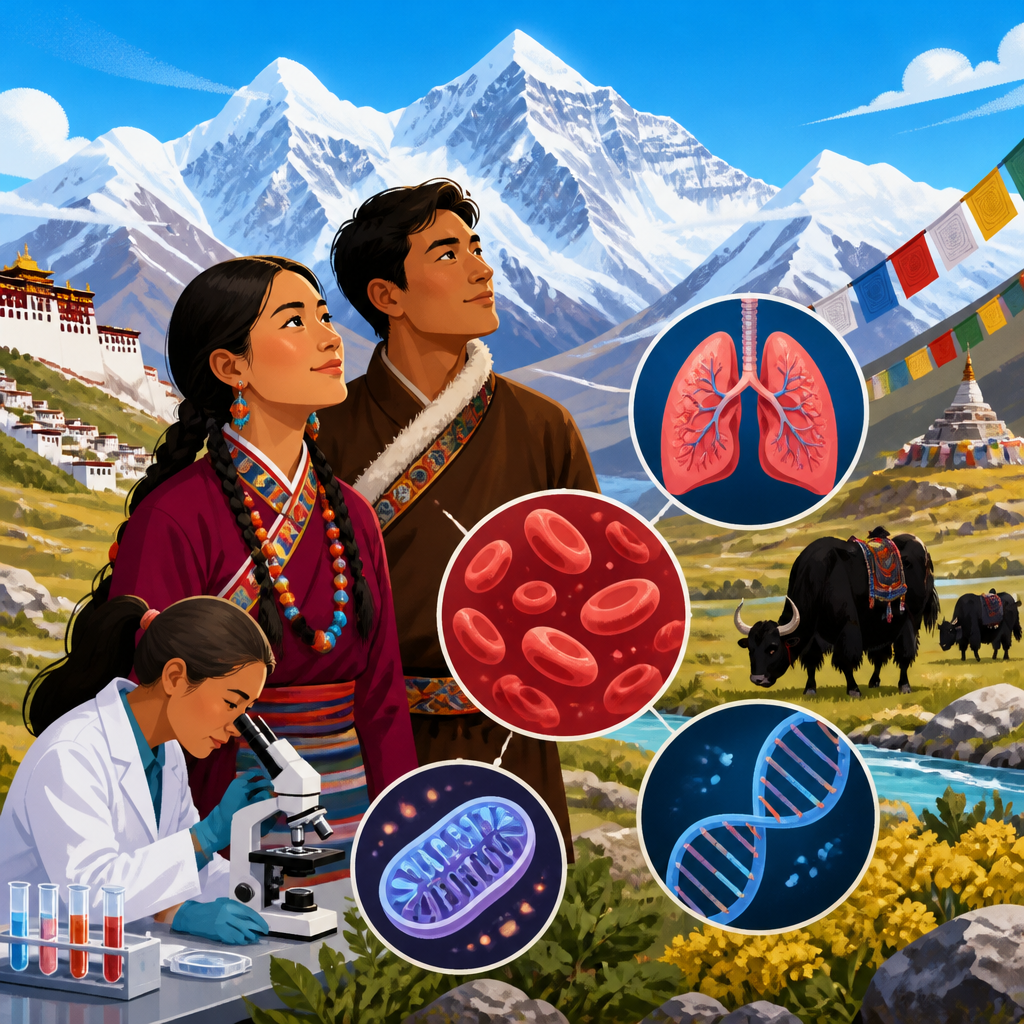
Tibetan high-altitude adaptation is one of the clearest examples of how human biology, environment, and culture shape one another over time. Scientists use the term adaptation carefully: it refers to heritable traits that improve survival or reproduction in a specific setting, not just short-term acclimatization such as faster breathing after arriving in thin air. The Tibetan Plateau, often called the “Roof of the World,” rises well above 4,000 meters across vast inhabited regions, where oxygen pressure is roughly 60 percent of sea-level values. For most lowland visitors, that environment produces headache, sleep disruption, reduced exercise capacity, and, in severe cases, life-threatening altitude illness. Yet Tibetans have lived, worked, raised families, herded animals, farmed barley, and sustained complex societies there for millennia.
That makes Tibetan high-altitude adaptation important well beyond anthropology. It helps explain how evolution can act on living human populations over relatively short timescales. It informs medicine by showing why some oxygen responses are protective while others become harmful. It also belongs in any serious discussion of mountain culture, because biology alone does not explain life at altitude. Settlement patterns, architecture, pastoral mobility, diets rich in tsampa and butter tea, religious institutions, and trade networks all helped make permanent life on the plateau possible. In my experience reviewing altitude research and public explanations of it, the biggest mistake is treating Tibetans as a biological curiosity detached from history. The science is strongest when it connects genes, physiology, archaeology, and lived practice.
Researchers now know several core facts with confidence. Tibetans generally maintain lower hemoglobin concentrations than acclimatized lowlanders living at similar elevations, while still achieving effective oxygen delivery. They also tend to show higher resting ventilation, distinctive blood flow patterns, and genetic signatures of natural selection in pathways related to oxygen sensing. The best known genes include EPAS1 and EGLN1, both involved in the body’s response to low oxygen. Archaeology indicates long human presence on the plateau, while genomic work suggests deep population history mixed with later movements and interactions. The result is not a single “altitude gene” but a suite of traits shaped by selection, migration, and culture. Understanding what scientists know means looking at all of those layers together.
Why high altitude is such a severe biological challenge
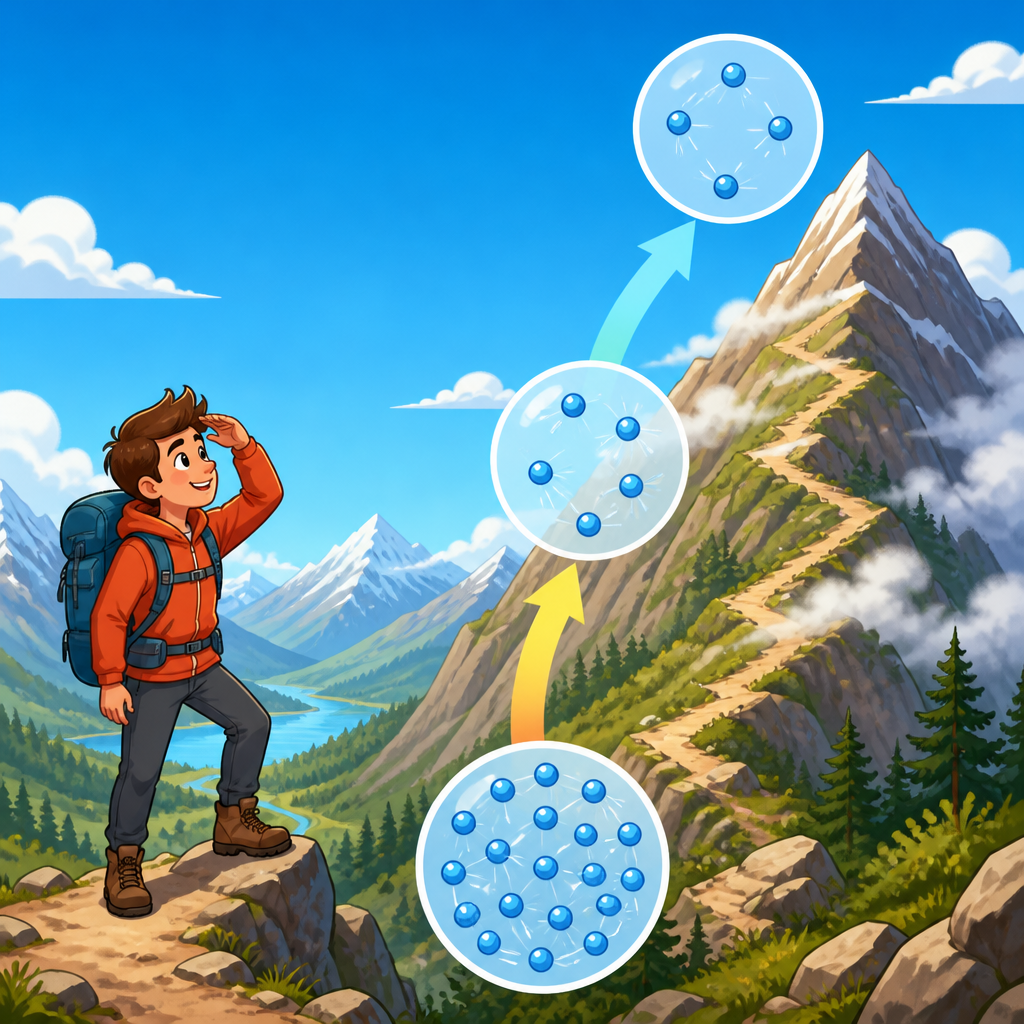
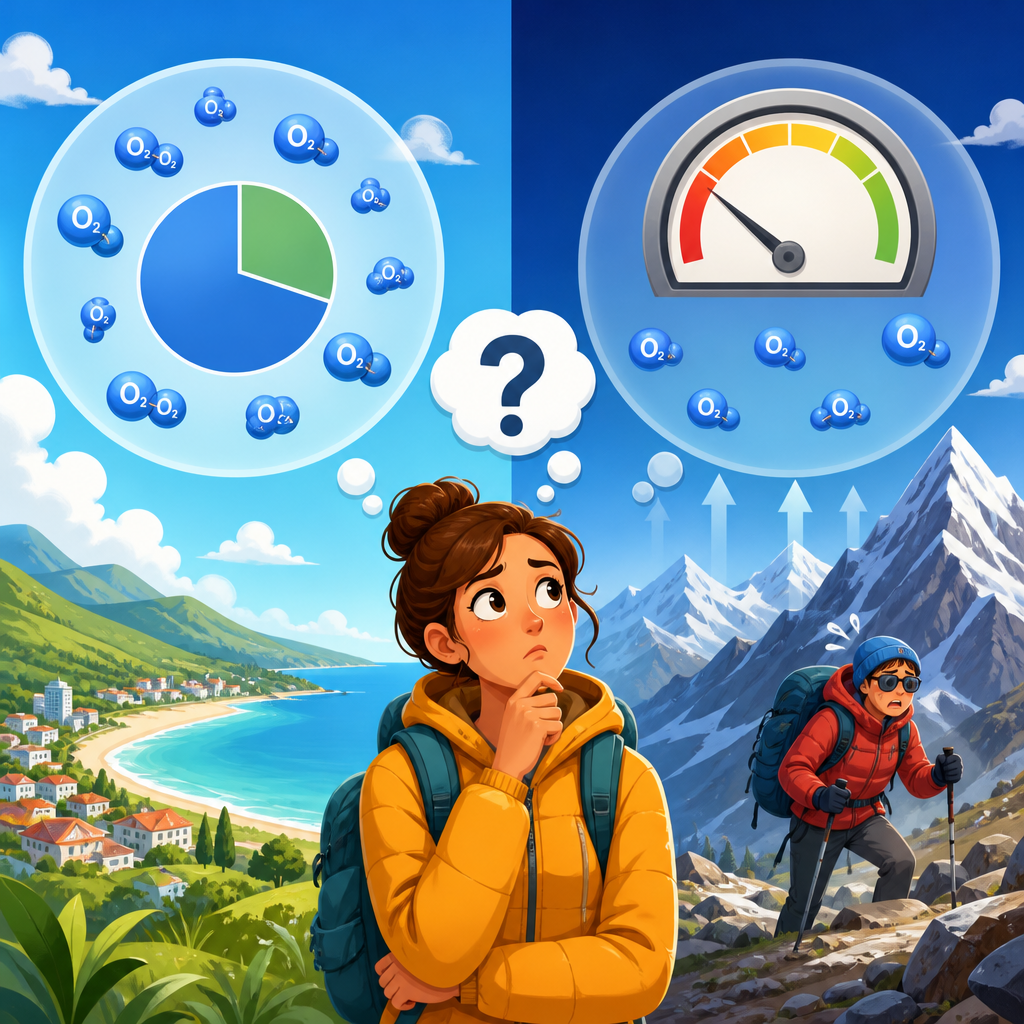
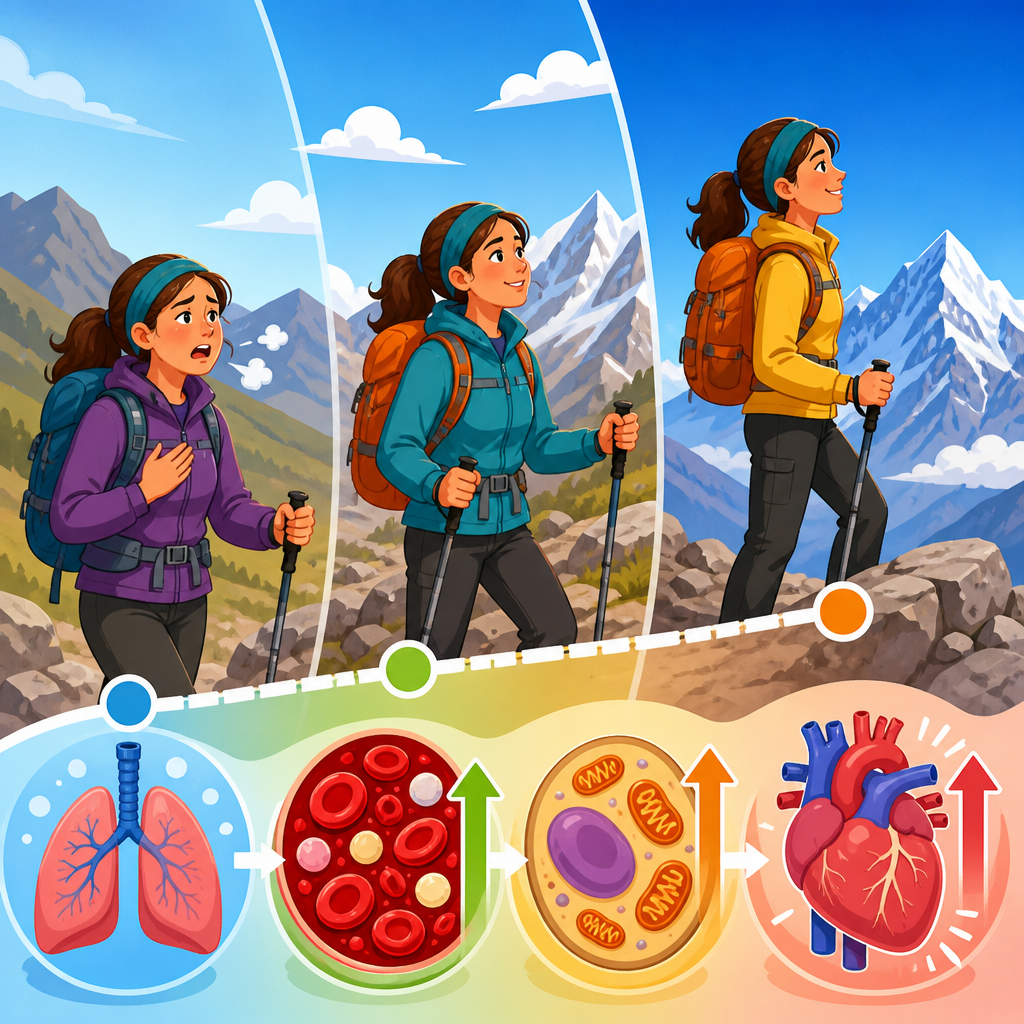
At high altitude, the main problem is not that air “contains less oxygen” in percentage terms; the fraction remains about 21 percent. The challenge is lower barometric pressure, which reduces the partial pressure of oxygen and therefore the amount that moves from the lungs into the blood. That lower oxygen availability, called hypobaric hypoxia, triggers immediate acclimatization responses in most humans: breathing rate increases, heart rate rises, urine output changes, and over days to weeks the body often produces more red blood cells. Those changes can help, but they come with costs. Thicker blood raises viscosity, which can strain the heart, impair circulation, and contribute to complications during pregnancy and chronic mountain sickness.
This is where Tibetans stand out. Compared with recent Han Chinese migrants or Andean highlanders, many Tibetans show a different physiological strategy. Instead of relying heavily on very high hemoglobin levels, they often maintain only modestly elevated concentrations relative to sea-level populations. In practical terms, they avoid one common lowlander response that becomes maladaptive when sustained across generations. Scientists have measured this pattern repeatedly in field studies across the plateau. It does not mean every Tibetan has identical values, but population averages are distinct enough to be robust.
High altitude also stresses reproduction, growth, and infant survival. Oxygen delivery to the placenta is especially important, and fetal growth restriction is common in nonadapted populations at altitude. Tibetan populations have drawn scientific attention because they tend to have better pregnancy outcomes than recent migrants at similar elevations. That suggests natural selection has acted not only on adult performance but also on developmental and reproductive traits. From a hub perspective for science and culture, this matters because successful high-altitude societies depend first on healthy births and child survival, not mountaineering feats.
The genetic discoveries that changed the field
The modern breakthrough came when population geneticists compared Tibetan genomes with those of closely related lowland East Asian groups. They found unusually strong signals of positive selection near EPAS1, often called HIF-2α, and EGLN1, a gene that helps regulate hypoxia-inducible factor pathways. These pathways act like the body’s oxygen-sensing control system. Under low oxygen conditions, they influence red blood cell production, blood vessel behavior, metabolism, and many downstream responses. The key point is not that Tibetans ignore hypoxia, but that their bodies regulate it differently.
EPAS1 became especially famous because the Tibetan-associated variant shows one of the strongest known selection signals in humans. Multiple studies linked it to lower hemoglobin levels at altitude, consistent with the Tibetan physiological profile. Researchers also uncovered evidence that the adaptive EPAS1 haplotype likely entered the ancestors of Tibetans through ancient introgression from Denisovans, an archaic human group identified first from fossils and DNA in Siberia. That finding was scientifically important because it showed that interbreeding with archaic humans contributed directly to present-day adaptation in our species.
EGLN1 tells a complementary story. Variants in this gene are associated with altered oxygen-response signaling and have been connected to hemoglobin regulation and high-altitude performance. Scientists have investigated additional genes as well, including PPARA, HMOX2, and genes related to nitric oxide pathways, though the evidence is strongest and most replicated for EPAS1 and EGLN1. The overall lesson is that Tibetan high-altitude adaptation is polygenic. A few loci have outsized importance, but no single mutation explains the full phenotype. That nuance matters whenever popular articles promise a simple genetic answer.
What Tibetan physiology looks like in practice
Field physiology shows that Tibetan adaptation is not just about blood counts. Tibetans often have higher ventilation rates than lowlanders at the same altitude, helping bring more oxygen into the lungs. Studies have also reported elevated nitric oxide levels in exhaled breath and blood circulation markers, which may support vasodilation and improve tissue oxygen delivery. Better uterine artery blood flow during pregnancy is another recurring finding, offering a plausible mechanism for improved fetal growth compared with nonadapted groups.
These traits work together. Lower hemoglobin avoids the danger of excessive blood viscosity, while more effective breathing and circulation preserve oxygen transport. In hospitals and laboratories, this distinction is clinically meaningful. Many lowlanders assume “more red blood cells” is always the right answer to low oxygen, but Tibetan biology demonstrates that an overbuilt erythropoietic response can create new problems. Researchers studying chronic mountain sickness often use Tibetan populations as a contrast case because the condition is less common than in some other high-altitude groups, especially Andean populations.
There are still open questions. Not every study finds identical effect sizes, and altitude, age, sex, occupation, and regional ancestry all influence results. For example, nomadic pastoralists, urban residents in Lhasa, and mixed-ancestry populations may not show the same physiological averages. Scientists now emphasize variation within Tibetan populations rather than speaking as if one profile fits everyone. That shift makes the research more accurate and more respectful.
How Tibetans compare with Andean and Ethiopian highlanders
One of the strongest conclusions in altitude science is that human adaptation has followed more than one path. Tibetans, Andeans, and Ethiopian highlanders all include long-resident high-altitude populations, but they do not solve hypoxia in the same way. Andean populations, for example, often have higher hemoglobin concentrations than Tibetans, and chronic mountain sickness has been studied extensively in the Andes. Ethiopian highlanders, especially some Amhara groups, show yet another pattern, often maintaining relatively normal hemoglobin values with distinct physiological mechanisms.
| Population | Typical altitude pattern | Hemoglobin tendency | Notable research focus |
|---|---|---|---|
| Tibetans | Long residence across very high plateau regions | Modestly elevated relative to lowlanders | EPAS1, EGLN1, ventilation, nitric oxide, pregnancy outcomes |
| Andean highlanders | Long residence in the central Andes | Often higher than Tibetans | Red cell mass, chronic mountain sickness, cardiopulmonary strain |
| Ethiopian highlanders | Long residence in East African highlands | Often near sea-level ranges | Alternative hypoxia responses, population diversity |
This comparison matters because it cautions against ranking populations as more or less evolved. Evolution responds to local history, ancestry, time depth, and ecological context. Similar environmental pressure does not guarantee identical biological outcomes. For a science and culture hub, the comparative view also shows why community history matters: agriculture, disease burden, migration, and marriage patterns can shape selection just as strongly as altitude alone.
Archaeology, history, and the peopling of the plateau
Genetics works best when anchored to archaeology. Evidence from stone tools, paleoenvironments, and ancient DNA suggests that humans reached parts of the Tibetan Plateau long before permanent large-scale settlement. Seasonal or intermittent use may have preceded year-round occupation. By the mid to late Holocene, stronger evidence appears for sustained habitation, pastoralism, and farming. Barley agriculture was especially important because barley tolerates cold, short growing seasons better than many crops. In practical historical terms, barley helped convert extreme elevation into a workable homeland.
Scholars continue to debate precise timelines and routes, but a broad picture is clear. The plateau was peopled through repeated episodes of movement, interaction, and adaptation, not by a single founding event. Tibetan populations are related to broader East Asian ancestries, yet their long residence and local selection left a distinctive genetic signature. Trade and religious exchange linked plateau communities with Central Asia, South Asia, and China, meaning adaptation unfolded within connected societies rather than isolated enclaves.
Cultural institutions were as important as biology. Pastoral mobility allowed families to use patchy grasslands efficiently. Yak domestication supplied transport, dung fuel, milk, meat, hides, and labor. High-altitude architecture reduced heat loss and managed scarce fuel. Monasteries served religious roles but also acted as centers of learning, storage, exchange, and social organization. When scientists explain how Tibetans thrive at altitude, these cultural systems belong in the answer. Adaptation is embodied, but settlement is organized.
What this science means for medicine, ethics, and public understanding
Tibetan high-altitude research has direct medical value. It sharpens understanding of hypoxia pathways relevant to pulmonary hypertension, sleep-disordered breathing, intensive care, and pregnancy complications. Drug developers interested in the HIF pathway pay attention to genes first highlighted in altitude populations because those pathways regulate erythropoiesis and cellular oxygen responses broadly. At the same time, no responsible scientist argues that Tibetan adaptations can simply be copied into treatment without context. Population-level evolution is not a plug-and-play clinical intervention.
There are ethical lessons too. Older literature sometimes framed high-altitude peoples as exotic test cases rather than research partners. Better current practice includes community collaboration, careful consent, return of results where appropriate, and avoidance of deterministic claims. Saying Tibetans are “genetically built for altitude” can erase individual variation and overlook social conditions, healthcare access, and political realities. The best scholarship is precise: certain alleles are more common, certain traits differ on average, and those differences emerged through long interaction between people and plateau environments.
For readers exploring science and culture together, the central benefit of this topic is perspective. Tibetan high-altitude adaptation shows evolution happening in human time, but it also shows the limits of reductionism. Genes matter. Physiology matters. So do barley fields, yak herds, migration histories, religious networks, and maternal health. Scientists know a great deal more now than they did twenty years ago: EPAS1 and EGLN1 are central, lower hemoglobin is adaptive in this context, reproductive success is a key part of the story, and Tibetan patterns differ from those of Andean and Ethiopian highlanders. The next step is to read further across genetics, archaeology, medicine, and Tibetan history so the plateau is understood as a lived world, not just a laboratory.
Frequently Asked Questions
What do scientists mean by “adaptation” in the case of Tibetans living at high altitude?
In biology, adaptation has a very specific meaning. It refers to heritable traits that became more common over generations because they improved survival or reproductive success in a particular environment. For Tibetans, that environment is the high-altitude Tibetan Plateau, where many communities have lived for thousands of years in air that contains much less oxygen than at sea level. This is different from acclimatization, which is the body’s short-term response when any lowland person travels to high elevation. Acclimatization can include faster breathing, a racing heart, and changes in blood chemistry over days or weeks. Adaptation, by contrast, is written into population history and inherited biology.
Scientists are careful with this distinction because high-altitude living involves both kinds of responses. A visitor from low elevation may acclimatize enough to function, but still feel sick, sleep poorly, or struggle with exertion. Tibetans, as a population, show patterns that suggest long-term evolutionary change rather than only temporary adjustment. Researchers have documented differences in oxygen processing, blood regulation, circulation, and developmental traits that help many Tibetans thrive in chronic hypoxia, the low-oxygen condition found at high elevations.
Just as important, scientists do not treat adaptation as a single “superhuman” trait. It is better understood as a set of interacting features shaped by natural selection, daily life, and cultural practices. Housing, clothing, food systems, mobility, child care, and pastoral or agricultural traditions all influence how people live at altitude. That is why Tibetan high-altitude adaptation is often described as a powerful example of biology, environment, and culture shaping one another over time.
How is Tibetan high-altitude adaptation different from the way most people respond to thin air?
For most people, rapid ascent to high altitude triggers a familiar physiological response: breathing speeds up, heart rate rises, and the body begins trying to deliver more oxygen to tissues. Over time, many lowlanders also produce more red blood cells and more hemoglobin, the oxygen-carrying protein in blood. That response can help, but it also makes the blood thicker, which can strain the heart and circulation if it becomes excessive.
Tibetans are notable because many do not rely on extremely elevated hemoglobin levels to the same degree seen in acclimatized newcomers or in some other high-altitude populations. Instead, scientists have found that many Tibetans maintain oxygen delivery through a different overall strategy. This appears to include faster or more effective ventilation, distinct regulation of the body’s oxygen-sensing pathways, blood flow patterns that support oxygen distribution, and developmental responses that may help growth and reproduction at altitude.
One reason researchers find Tibetans so important is that this pattern challenges the simplistic idea that “more red blood cells is always better.” At very high elevations, too much hemoglobin can become a problem rather than a solution. The Tibetan case suggests that natural selection can favor a more balanced physiological approach, one that improves oxygen use while avoiding some costs of overly thick blood. This has made Tibetan populations central to research on how humans can evolve different biological routes to cope with the same environmental stress.
Which genes have scientists linked to Tibetan high-altitude adaptation?
The most famous genes associated with Tibetan adaptation are EPAS1 and EGLN1. Both are involved in the body’s response to low oxygen, especially in what is often called the hypoxia pathway. This system helps cells detect oxygen availability and adjust processes such as red blood cell production, metabolism, and vascular function. In Tibetans, particular variants of these genes appear at unusually high frequencies compared with many lowland populations, which strongly suggests natural selection.
EPAS1 has received special attention because some of its Tibetan-associated variants are linked to relatively lower hemoglobin levels at altitude. That may sound counterintuitive at first, but it fits the broader Tibetan pattern: rather than solving hypoxia mainly by producing ever more red blood cells, many Tibetans seem to benefit from regulating that response more efficiently. EGLN1 is also important because it helps control how strongly the body reacts when oxygen is scarce. Together, these genes point to selection acting on oxygen sensing and blood regulation, not just on a single visible trait.
Scientists have also proposed roles for additional genes related to circulation, nitric oxide biology, development, and energy use, although not every study agrees on the full list or the size of each effect. That is normal in evolutionary genetics. Complex adaptations usually involve multiple genes, gene interactions, and environmental influences. Another widely discussed finding is that part of the Tibetan EPAS1 story may involve very ancient gene flow from a Denisovan-related population, showing that human evolution can be shaped not only by new mutations, but also by inherited genetic variation from deep ancestry. Even so, no single gene “explains” Tibetan adaptation by itself; researchers view it as a polygenic and population-level process.
Why don’t scientists say Tibetans are simply “immune” to altitude sickness?
Because that would be inaccurate and too absolute. Tibetan high-altitude adaptation does not mean every Tibetan individual is unaffected by hypoxia, nor does it mean altitude poses no physiological challenges. Altitude-related illness depends on many factors, including elevation, rate of ascent, age, health status, hydration, infection, pregnancy, sleep, workload, and individual variation. Population-level adaptation reduces certain risks and changes typical physiological responses, but it does not eliminate biology’s limits.
Scientists also avoid blanket statements because high-altitude illness is not one thing. Acute mountain sickness, high-altitude pulmonary edema, and high-altitude cerebral edema involve overlapping but distinct processes. A population can be better adapted on average while still containing individuals who get sick under some conditions. In addition, Tibetans are a diverse population spread across different regions, elevations, and lifestyles, so there is no single uniform response that applies to everyone.
Another reason for caution is that adaptation involves trade-offs and context. A trait that is beneficial on the Tibetan Plateau may not be especially useful at sea level, and a biological advantage in one domain does not guarantee protection in every other domain. Researchers therefore frame Tibetan adaptation in probabilistic, population-based terms: certain inherited traits are more common because they improved life at high elevation over many generations. That is a stronger and more scientifically accurate claim than saying anyone is completely immune to altitude’s effects.
Why is Tibetan high-altitude adaptation so important to science more broadly?
Tibetan high-altitude adaptation matters because it gives scientists a rare, well-documented example of recent human evolution in action. The Tibetan Plateau presents an unusually strong and persistent environmental pressure: low oxygen across vast inhabited areas above roughly 4,000 meters. When researchers find genetic variants, physiological patterns, and reproductive outcomes all pointing in a similar direction, they get a clearer picture of how natural selection works in humans than is possible in many other cases.
This research has expanded understanding far beyond Tibet itself. It has helped scientists rethink how the human body senses oxygen, regulates hemoglobin, and balances the benefits and costs of different survival strategies. Those insights are relevant to medicine because oxygen deprivation is involved in many illnesses, including heart and lung disease, stroke, complications of pregnancy, and critical care conditions. Studying how some populations naturally cope with chronic hypoxia can reveal pathways that matter for patients everywhere.
The Tibetan case is also important because it shows that human adaptation is not only genetic, and not only biological in a narrow sense. Culture, subsistence, migration, social structure, and developmental environment all help shape how people live in extreme conditions. In that sense, Tibetan high-altitude adaptation has become a model for understanding humanity as a species that is both biological and cultural. It reminds scientists that evolution does not happen in isolation from history and daily life; it unfolds through the ongoing interaction of genes, bodies, landscapes, and communities.