High-altitude camping exposes every weakness in a sleep system, which is why learning how to pick a sleeping bag for high-altitude camping is one of the most important gear decisions a mountain traveler can make. At elevation, nighttime temperatures drop fast, wind strips away warmth, humidity behaves differently, and recovery sleep becomes harder because your body is already working against thin air. A bag that feels adequate on a mild lowland trip can become dangerously insufficient above treeline. I have seen strong hikers lose energy, appetite, and judgment after one cold night at altitude, even when the rest of their kit looked expensive and technically advanced.
A sleeping bag for high-altitude camping is not just a warm tube with insulation. It is part of a broader clothing, sleep, and shelter system that includes your base layers, puffy jacket, sleeping pad, tent or bivy, vapor management, and site selection. The key terms matter. Temperature rating describes the tested thermal performance of a bag under standardized conditions, usually EN or ISO protocols. Comfort rating is the temperature at which a cold sleeper may rest more comfortably, while limit rating reflects survival-oriented performance for a warmer sleeper. Fill power measures the loft quality of down, and fill weight tells you how much insulation is actually inside. Those numbers work together; high fill power alone does not guarantee enough warmth.
This matters because high-altitude conditions punish poor assumptions. A bag chosen only by brand reputation, packed size, or a marketing label like “four-season” often disappoints. The right choice depends on expected overnight lows, whether your camp is exposed or sheltered, how wet the environment will be, your metabolism, and how much margin you want if a storm slows your descent. As a hub within clothing, sleep, and shelter, this guide covers the full decision process and connects the sleeping bag choice to pads, layering, shelter design, moisture control, and safety practices. If you want one principle to remember, it is this: buy for the worst realistic night you expect, not the average one you hope for.
Start with real temperature exposure, not the label
The first step in picking a sleeping bag for high-altitude camping is estimating actual overnight exposure. Elevation alone is not enough. A camp at 3,500 meters in the dry Andes may feel very different from a camp at 3,500 meters in the Alps or Cascades because wind, cloud cover, humidity, and snow surface all affect heat loss. As a planning rule, use forecast low temperature, then add a safety margin of at least 5 to 10 degrees Celsius colder if terrain is exposed, storms are possible, or retreat would be difficult. That margin matters because mountain forecasts regularly miss local drainage winds and radiational cooling in basins.
Do not shop by the most optimistic number printed on the stuff sack. If a bag lists comfort, limit, and extreme ratings, prioritize comfort for colder sleepers and limit only if you know from experience that you sleep warm. For example, if you expect a realistic low of minus 8 degrees Celsius at camp, many people will be more secure in a bag with a comfort rating around minus 10 rather than a limit rating of minus 8. I advise clients to think in systems: if your pad and shelter are average, choose more bag than you think you need. If your pad has a truly winter-capable R-value and your shelter blocks wind well, your bag can be more precisely matched.
Choose the right insulation: down versus synthetic
Down remains the benchmark for high-altitude sleeping bags because it offers the best warmth-to-weight ratio, compresses efficiently, and lasts a long time when cared for properly. Premium goose or duck down in the 800 to 950 fill power range creates deep loft with relatively low packed bulk, which matters when every liter in your pack counts. On long approaches, that efficiency reduces fatigue. Down also tends to feel less clammy than many synthetics when conditions are cold and dry, making it the default choice for alpine climbs, Himalayan trekking lodges, and glacier routes where weight is tightly managed.
Synthetic insulation still earns a place in high-altitude camping when moisture risk is high or drying opportunities are poor. Wet maritime ranges, repeated condensation in single-wall shelters, and beginner use cases with inconsistent packing discipline can all justify synthetic fill. Synthetic bags are usually heavier and bulkier for the same warmth, but they maintain more insulating value when damp. That can be a genuine safety advantage. A practical example is a spring volcano climb in the Pacific Northwest, where wet snow, sleet, and tent condensation may challenge untreated down. In those cases, a synthetic or hydrophobic-down bag paired with excellent moisture management can be the smarter choice.
The best decision comes from the trip profile. For a five-day high route in stable continental weather, I would usually select a high-quality down bag. For a shorter trip with repeated thaw-freeze cycles and a high chance of internal frost or soaked stuff sacks, synthetic deserves serious consideration. Hydrophobic down treatments help, but they do not make down waterproof, and no insulation choice excuses poor storage. Always pack a sleeping bag in a waterproof liner or roll-top dry bag.
Evaluate bag shape, construction, and draft control
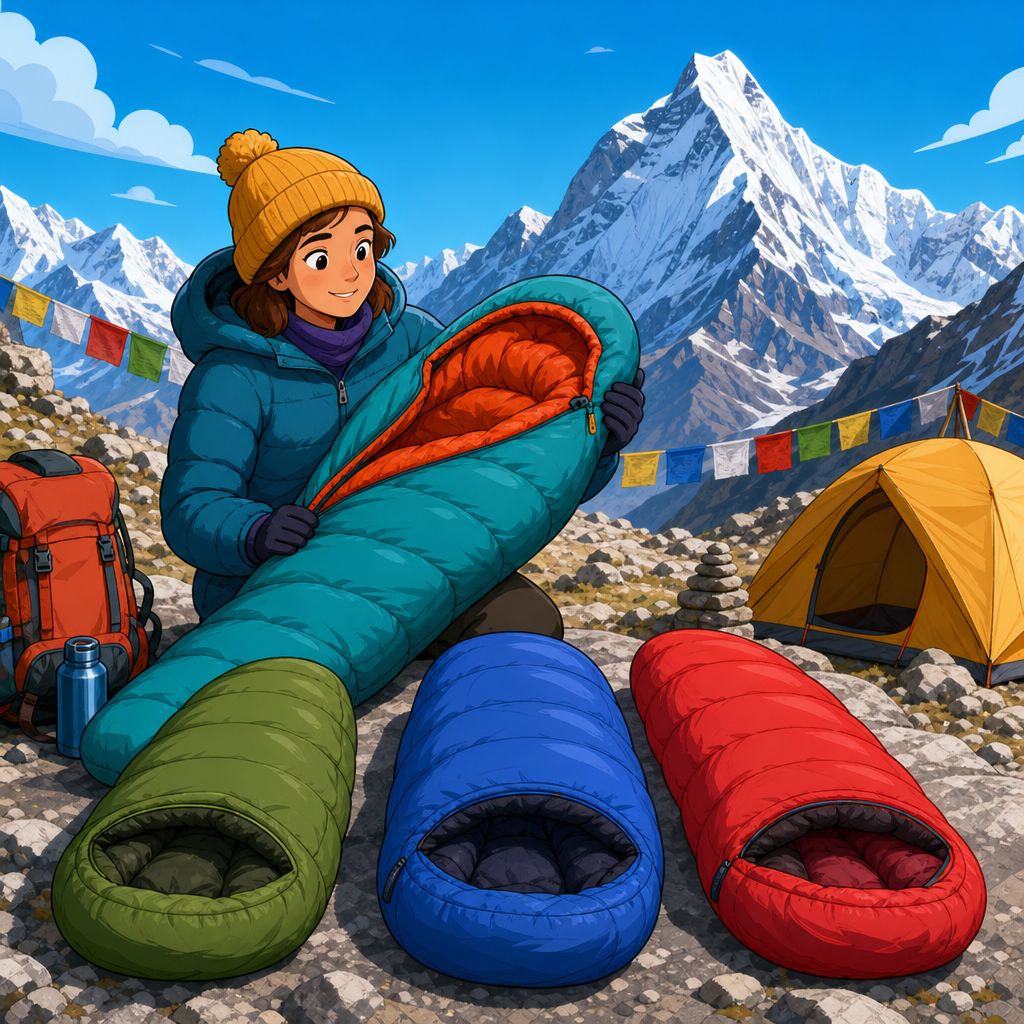
Warmth is not created by insulation alone. Shape and construction determine how efficiently the bag holds heated air around the body. Mummy bags dominate high-altitude use because they reduce dead space, protect the head, and limit convective heat loss. A roomy rectangular bag is comfortable at a campground but inefficient on a cold ridge. That said, overly tight mummy cuts can compress insulation and reduce circulation, especially if you wear extra layers inside. The best high-altitude sleeping bag is close-fitting without restricting knees, feet, and shoulders.
Look closely at baffle design. Box-wall baffles in expedition-grade down bags reduce cold spots better than simple sewn-through construction, which is more common in lighter bags intended for milder conditions. A well-designed draft collar around the neck, a substantial zipper draft tube, and a sculpted hood make a measurable difference on windy nights. I have tested bags with similar lab ratings that performed very differently in the field simply because one sealed heat better around the shoulders and face. Footbox shape matters too. Cold feet are common at altitude, so a trapezoidal or anatomically shaped footbox with enough loft is preferable to a flattened end.
| Feature | Why it matters at altitude | What to look for |
|---|---|---|
| Temperature rating | Determines whether the bag matches realistic overnight lows | EN or ISO comfort rating with a 5 to 10 degree safety margin |
| Insulation type | Affects warmth, weight, compressibility, and moisture tolerance | 800+ fill down for dry cold; synthetic for persistently wet conditions |
| Bag shape | Controls heat retention and internal dead space | Mummy cut with enough room to avoid compressing loft |
| Draft protection | Prevents warm air loss through openings and zipper gaps | Neck collar, zipper tube, fitted hood, cinchable face opening |
| Shell fabric | Influences condensation handling and durability | Light DWR shell, breathable fabric, robust footbox and hood panels |
Match the bag to your pad, clothing, and shelter
No article on how to pick a sleeping bag for high-altitude camping is complete without stating a hard truth: your sleeping pad often determines whether a warm bag performs as advertised. Insulation under your body is compressed and cannot loft effectively, so ground insulation must come from the pad. For cold high-altitude camps, an R-value around 4.5 may suffice in shoulder seasons, while winter or snow camping often calls for 5.5 to 7 or a two-pad system. The mountaineering standard practice of combining a closed-cell foam pad with an insulated inflatable is still popular because it improves warmth and adds redundancy if the inflatable fails.
Clothing also changes the equation, but only within limits. Dry base layers, warm socks, and a hat can extend comfort, while a belay parka draped over the torso may help in emergencies. However, buying an underpowered sleeping bag and planning to “wear everything” each night is poor strategy. Bulky layers can create compression and moisture buildup, and if weather forces you to wear damp clothing into the bag, warmth drops fast. Keep a dedicated sleep layer sealed in a dry bag. In this subtopic, clothing, sleep, and shelter work best when each piece serves the others rather than compensating for a major gap.
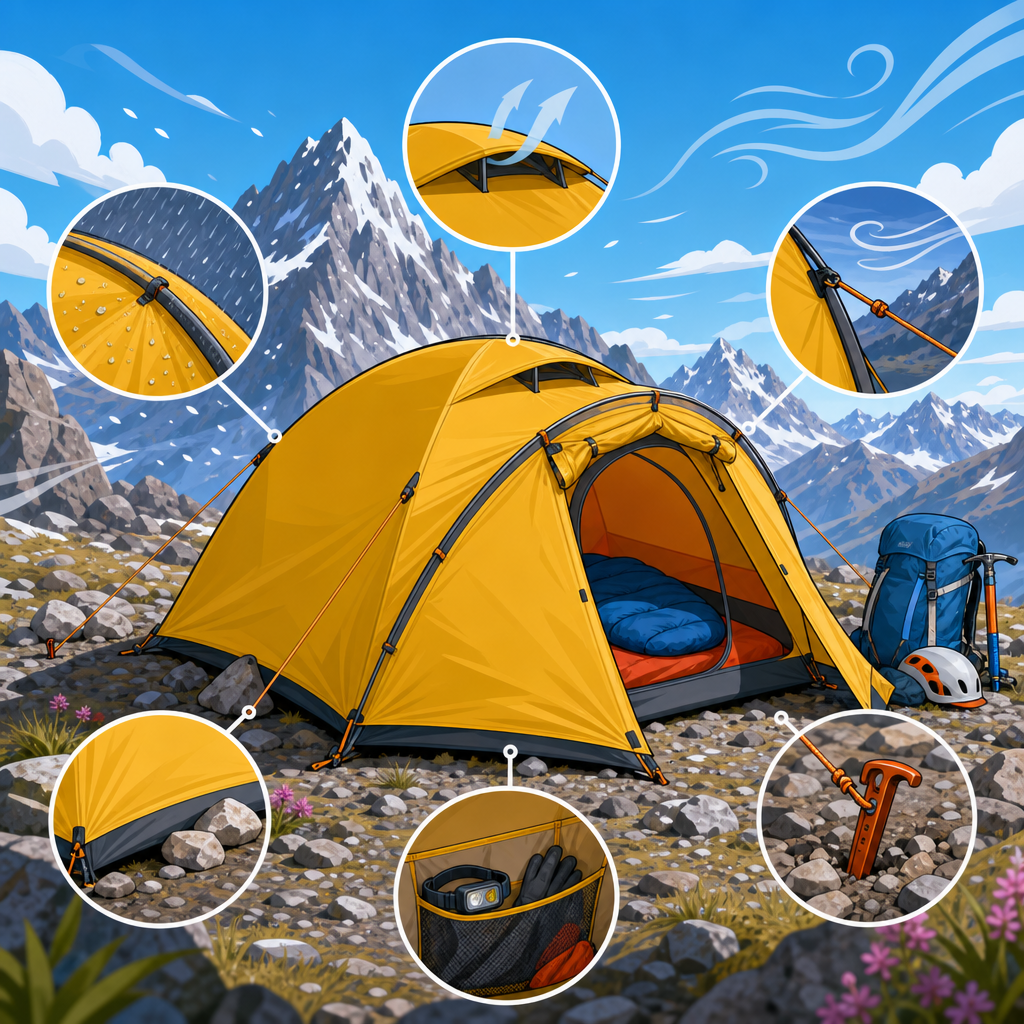
Shelter selection affects condensation, wind exposure, and interior humidity. A double-wall tent generally manages internal moisture better than a minimal tarp in cold still air, though it may weigh more. Single-wall alpine shelters save weight and pitch quickly on ledges, but they often create condensation that can wet the bag shell over multiple nights. Bivy sacks add splash and wind protection, yet some models trap too much moisture for all-night use. When people ask why their highly rated bag underperformed, the answer is often not the bag alone but the interaction between pad, layers, and shelter.
Plan for moisture, altitude fatigue, and multi-night performance
Moisture management is the hidden discipline behind successful high-altitude sleep. Even in cold dry environments, your body releases water vapor into insulation overnight. Across several nights, especially on extended expeditions, that moisture can accumulate and reduce loft. On major alpine routes and polar-style trips, some teams use vapor barrier liners to stop body moisture from entering the insulation. These systems are effective but uncomfortable for many users and require practice. For most backpackers, the practical approach is simpler: sleep in dry layers, ventilate the shelter when possible, air out the bag in sun and wind, and protect it from snowmelt and spilled water.
Altitude itself complicates bag choice because poor sleep is common above roughly 2,500 meters. Breathing irregularities, increased nighttime urination, reduced appetite, and dehydration all make cold feel worse. A bag that is barely adequate at sea level can feel insufficient at high camp because recovery is impaired. This is one reason experienced mountaineers often carry a little more warmth than spreadsheet logic suggests. Another is decision-making. When you sleep cold, you climb slower, eat less, and make worse calls. The sleeping bag is therefore not only a comfort item but also a performance and safety tool.
For multi-night trips, durability and maintenance deserve attention. Ultra-light shell fabrics save grams, but high-abrasion camps, crampon accidents, and rough granite platforms can damage them quickly. Choose a model with strong stitching, reliable zippers, and a shell fabric appropriate for your style of travel. Store the bag loose at home, wash it according to manufacturer guidance using down-specific or synthetic-safe cleaners, and restore durable water repellent finishes when needed. A premium bag can last many seasons if cared for correctly, which makes cost per use far more reasonable than the purchase price suggests.
Buy with a realistic use case, then test before committing
The final buying step is translating all this into a realistic use case. Define your coldest expected overnight low, your typical elevation band, the wettest conditions you are willing to camp in, and whether you sleep warm or cold. Then shortlist bags from reputable brands that publish transparent EN or ISO data and full specifications, including fill weight. Compare that data with your pad R-value and shelter choice. If possible, lie inside the bag in the clothing you actually use. Check whether the hood closes well around your face, whether the zipper snags, and whether your feet have enough loft space.
If you are between two ratings, choose the warmer option unless pack size is the overriding constraint and you have the skill to offset it elsewhere. New high-altitude campers routinely underestimate how much warmth margin improves confidence and recovery. Before a serious trip, test the full sleep system close to home or on a lower-stakes overnight. That field test often reveals whether you need a warmer pad, a different pillow height, drier sleep clothes, or a bag liner for a small boost. Build the system before the expedition, not during it.
Picking the right sleeping bag for high-altitude camping comes down to matching insulation, shape, and construction to real mountain conditions, then supporting that choice with the right pad, clothing, and shelter. Focus on comfort ratings rather than marketing claims, choose down or synthetic based on moisture risk, prioritize draft control and mummy efficiency, and never ignore the pad beneath you. In high places, the quality of your sleep directly influences warmth, recovery, judgment, and safety. Treat this page as your hub for clothing, sleep, and shelter decisions, and use it to guide the rest of your gear planning. Review your expected conditions, compare complete sleep systems, and test your setup before your next climb.
Frequently Asked Questions
How warm should a sleeping bag be for high-altitude camping?
For high-altitude camping, choose a sleeping bag based on the coldest realistic overnight temperature you expect, then add a safety margin. Elevation changes conditions quickly, and temperatures often fall much lower than hikers anticipate, especially after sunset, during clear weather, or when wind exposure is high. A common mistake is selecting a bag for average temperatures instead of probable lows. In the mountains, that gap matters. If the forecast suggests nighttime lows around 20°F, many campers are better served by a bag rated below that, particularly if they sleep cold, are eating less at altitude, or are likely to camp on snow, rock, or exposed ground.
It also helps to understand sleeping bag temperature ratings. Many quality bags list both a comfort rating and a lower limit rating. The comfort rating is usually the more useful number for most campers because it reflects a more realistic temperature for comfortable sleep. The lower limit often describes survival or minimal-sleep conditions rather than genuinely restful rest. At altitude, where your body is already spending energy on breathing, staying hydrated, and recovering from exertion, aiming only for the lower limit is risky. Better sleep improves safety, recovery, and decision-making the next day.
Warmth is not determined by the bag alone. Your sleeping pad insulation, clothing layers, shelter, nutrition, and personal metabolism all affect performance. Even an excellent high-altitude sleeping bag can feel inadequate if the pad underneath has a low R-value and allows conductive heat loss into the ground. For most cold, elevated camps, think of your sleep system as a package: appropriately rated bag, insulated pad, dry base layers, and a setup that blocks wind and moisture.
Is down or synthetic insulation better for a high-altitude sleeping bag?
For many high-altitude trips, high-quality down is the preferred choice because it offers the best warmth-to-weight ratio, compresses well, and tends to provide superior loft for its packed size. Those advantages matter when every ounce counts on long climbs or multiday mountain routes. Down bags also tend to feel more efficient thermally, which is useful when cold nighttime conditions combine with fatigue and reduced recovery at elevation.
That said, synthetic insulation still has an important place. If your trip involves persistent damp weather, heavy condensation, repeated moisture exposure, or less controlled camp conditions, synthetic fill offers better performance when wet and can be more forgiving if moisture management is not perfect. High-altitude environments are not always dry. Snow melt, tent condensation, wet clothing, and sudden storms can all compromise insulation. A soaked down bag loses much of its loft and insulating ability, which can become a serious problem in cold mountain conditions.
The best choice depends on your route, season, and ability to keep gear dry. If you are climbing in colder but relatively dry alpine conditions and can protect your gear carefully, down is often the better long-term investment. Look for high-fill-power down with a well-designed shell fabric and quality draft protection. If you expect wet snow, mixed conditions, or repeated nights with limited drying opportunities, synthetic may be the safer option despite the extra bulk and weight. In either case, a waterproof stuff sack, disciplined moisture control, and good ventilation inside your shelter are essential.
What sleeping bag shape and features matter most above tree line?
At high altitude, bag design matters almost as much as insulation. A mummy-shaped sleeping bag is usually the best option because it reduces empty interior space and improves heat retention around the body. More room can feel comfortable, but too much dead air means your body has to warm more volume, which makes the bag less efficient in cold conditions. A well-fitted mummy bag helps trap heat while still giving you enough space to change position and wear light layers if needed.
Key features to prioritize include a well-insulated hood, a substantial draft collar, a full-length draft tube behind the zipper, and a shell fabric that balances breathability with weather resistance. The hood is especially important because significant heat can be lost around the head and neck if the bag cannot seal properly. A draft collar prevents warm air from pumping out every time you move, while a quality zipper baffle reduces cold spots along one of the most vulnerable parts of the bag.
Baffle construction also matters. Better bags use designs that minimize insulation shifting and cold seams, helping maintain even loft over time. Some premium mountaineering bags include water-resistant shell treatments around the footbox and hood, which are common condensation contact points inside tents. Footbox design is another practical detail. Cold feet are a common complaint in alpine camps, so a bag with adequate loft and space at the feet can improve comfort significantly. When evaluating features, focus less on gimmicks and more on proven thermal efficiency, weather resistance, and the ability to hold loft reliably through several cold nights.
How important is sleeping pad insulation when choosing a high-altitude sleeping bag?
It is extremely important. One of the biggest misunderstandings in cold-weather camping is assuming the sleeping bag provides all the warmth. In reality, the insulation underneath your body compresses when you lie down, which reduces its ability to trap warm air. That means the sleeping pad becomes the main defense against heat loss into the ground. At high altitude, where the ground may be frozen, rocky, snow-covered, or simply very cold, an inadequate pad can make even a warm sleeping bag feel ineffective.
When selecting a bag for high-altitude use, always evaluate it alongside the R-value of your sleeping pad. Higher R-values provide better insulation from the ground. For colder mountain trips, many campers use insulated air pads, closed-cell foam pads, or a combination of both. Layering a foam pad under an insulated inflatable pad is a common strategy for winter or very cold alpine conditions because it adds insurance, boosts warmth, and provides backup if the inflatable pad fails.
This matters because poor sleep at altitude is not just uncomfortable; it can affect recovery, energy, and judgment. If you wake repeatedly from conductive cold underneath you, your bag choice may get blamed unfairly when the real issue is ground insulation. A balanced system works best: a sleeping bag warm enough for the overnight low, paired with a pad setup designed for those same temperatures. If you are planning high camps, exposed ridgelines, glacier approaches, or shoulder-season trips, never choose the bag in isolation from the pad.
Should you size up, layer clothing, or use a liner to make a sleeping bag warmer at altitude?
These strategies can help, but they work best as refinements rather than substitutes for choosing the right sleeping bag in the first place. Sizing up too much is usually a mistake because extra interior volume takes more energy to heat and can reduce thermal efficiency. A sleeping bag should fit closely enough to retain warmth while still allowing you to move comfortably and avoid compressing the insulation. If you are between sizes, think about whether you will regularly wear insulated layers inside the bag and whether the cut is already generous.
Layering clothing inside the bag can be effective, especially with dry base layers, warm socks, and in very cold conditions a lightweight insulated jacket or pants. The key is to avoid overly tight layers that restrict circulation or compress the bag from the inside. Dryness matters just as much as thickness. At altitude, sweating into your layers during the day and then sleeping in damp clothing can make you feel much colder overnight. Keeping a dedicated dry sleep layer is one of the simplest ways to improve warmth and comfort.
Bag liners can add a small amount of warmth and help keep the interior cleaner, but they should not be viewed as a major solution for an under-specced bag. In real mountain conditions, the warmth gain is usually modest compared to the impact of choosing a better-rated sleeping bag or improving pad insulation. If you know your trip may push the lower edge of your setup, a liner can be a useful backup tool, but it is not the first place to solve a warmth problem. For high-altitude camping, the smarter approach is to start with a properly rated bag, then use dry clothing, smart layering, nutrition, and pad insulation to fine-tune your sleep system.