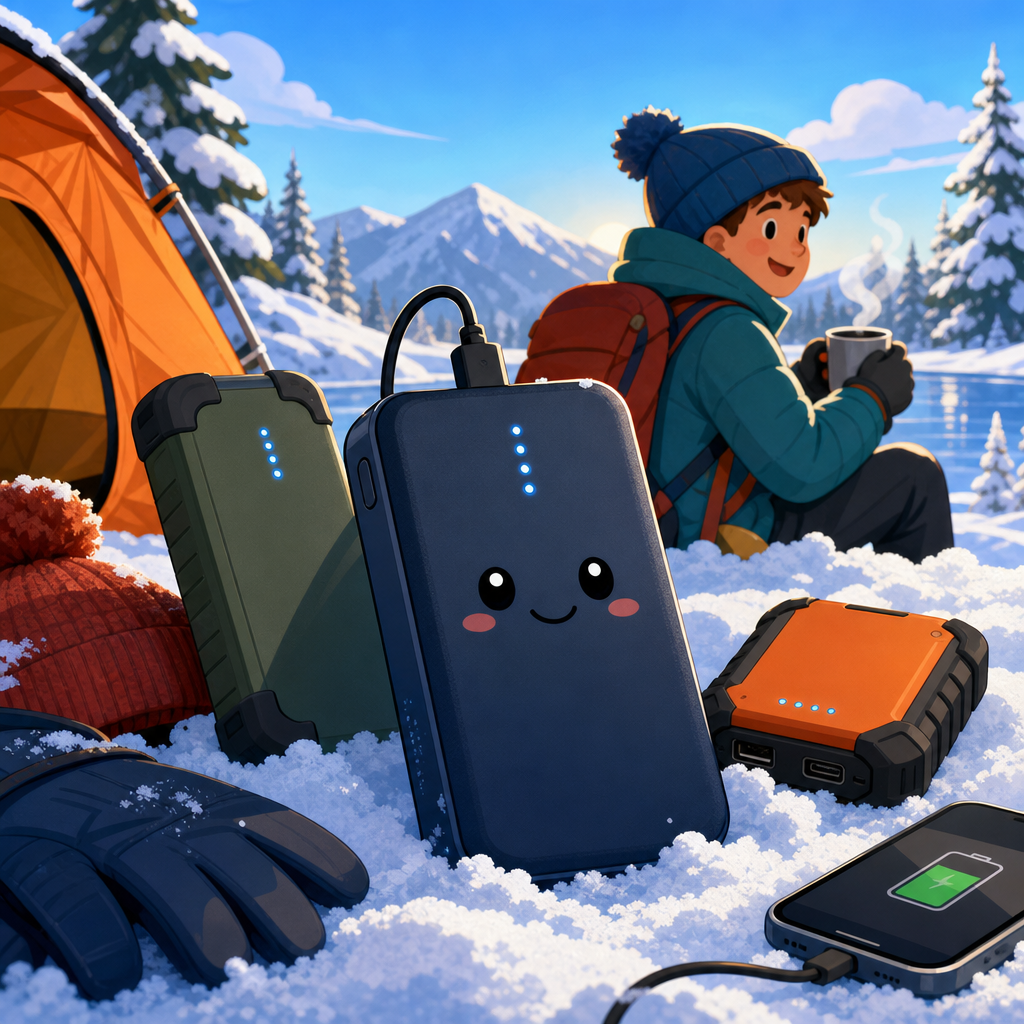
Power banks that hold up better in winter conditions matter because cold weather reduces battery performance exactly when hikers, skiers, drivers, and field workers depend on phones, GPS units, headlamps, and satellite messengers for safety and navigation. In this hub for Safety & Navigation under Gear, Monitoring & Safety, the goal is simple: explain why some power banks perform better in freezing temperatures, what specifications actually matter, how to use them safely, and how to build a dependable cold-weather charging setup around real navigation needs. A winter-ready power bank is not just a large battery. It is a portable charger with suitable cell chemistry, stable output regulation, protected ports, realistic capacity, and a design that remains usable with gloves, moisture, and repeated temperature swings. After years of testing charging kits on frozen trailheads, ski tours, and roadside emergency runs, I have learned that winter performance is less about headline milliamp-hours and more about temperature management, discharge behavior, cable quality, and disciplined storage. If your phone battery drops from eighty percent to thirty in an hour while mapping in snow, a cheap power bank can fail just as fast. The right one extends runtime, preserves emergency communications, and supports safer decisions when route finding, weather monitoring, or rescue contact becomes critical.
Why winter drains batteries faster
Cold slows the electrochemical reactions inside lithium-ion cells, increasing internal resistance and reducing usable capacity. In plain terms, batteries can still hold energy in winter, but they struggle to deliver it efficiently when they are cold soaked. That affects both the device you are charging and the power bank itself. A smartphone that normally lasts a full day in autumn may shut down early below freezing, especially when running GPS, bright screens, offline maps, or weak-signal cellular searches. The same conditions can make a low-quality power bank throttle, reset, or stop charging altogether.
Manufacturers usually rate consumer power banks around room temperature, often near 20 to 25 degrees Celsius. In real winter use, output can drop sharply. It is common to see apparent capacity losses of 20 to 40 percent in freezing conditions, and worse if the unit is exposed on a pack strap or left overnight in a car. That does not mean the battery is permanently damaged by one cold outing. It means available power decreases until the cells warm up again. This is why experienced winter travelers keep electronics close to the body, inside a chest pocket or insulated pouch.
Navigation raises the stakes. Mapping apps, avalanche forecasting downloads, weather radar, and satellite check-ins all pull meaningful power. If you are relying on a phone as a primary navigator, battery resilience becomes a safety issue, not a convenience feature. A winter-capable power bank buys margin.
What makes a power bank better in winter conditions
The best winter power banks share a handful of traits. First, they use quality lithium-ion or lithium-polymer cells from reputable supply chains rather than anonymous bargain cells with inflated ratings. Second, they maintain stable voltage under load, so a phone or GPS receives clean power even when the pack is cold. Third, they have robust battery management systems that protect against overcurrent, short circuit, overcharge, and low-temperature charging problems.
Low-temperature charging is an overlooked point. Most lithium-ion power banks should not be recharged when the cells are below 0 degrees Celsius. Discharging is usually possible at lower temperatures, but charging a frozen battery can cause lithium plating and long-term damage. Good products include firmware and protection circuitry that block unsafe charging conditions. Better ones also publish operating ranges instead of hiding behind generic marketing.
Physical design matters too. In winter, recessed buttons, slippery glossy shells, and exposed ports are constant annoyances. I prefer textured housings, simple charge indicators, and port covers only when they are durable enough not to tear off. USB-C Power Delivery is now the baseline because it charges phones efficiently and supports many GPS communicators, headlamps, and compact tablets. Wireless charging sounds convenient, but in winter it wastes energy and performs poorly through thick cases, so wired output is the practical choice.
Key specifications that actually predict cold-weather performance
Ignore oversized marketing claims and focus on measurable details. Capacity in milliamp-hours is only a rough starting point because it is usually quoted at the cell’s nominal voltage, not the output voltage delivered to your device. Watt-hours are more useful for apples-to-apples comparison. A 10,000 mAh bank is typically around 37 watt-hours, while a 20,000 mAh model is around 74 watt-hours. Once conversion losses are included, your usable output is lower, and winter can reduce it further.
Output matters as much as capacity. For phones used as navigators, I look for at least 18W USB-C PD, with 20W common and sufficient. If you also charge larger devices such as tablets, camera batteries, or some handheld radios through USB, 30W or more adds flexibility. Input speed also matters because winter daylight is short, stops are brief, and roadside emergencies do not give you twelve hours to refill a battery pack.
Ingress protection can help if you expect blowing snow or wet gloves, but do not treat a power bank as waterproof just because it has a silicone flap. Weight is a tradeoff. Larger banks provide more margin but spend more time cold soaked in an outer pocket and are harder to keep warm on the move. For most winter day trips, 10,000 to 15,000 mAh is the sweet spot. For overnight travel or vehicle emergency kits, 20,000 mAh makes more sense.
| Use case | Recommended capacity | Minimum output | Best winter carry method |
|---|---|---|---|
| Day hiking with phone navigation | 10,000 mAh | 18W USB-C PD | Inner jacket pocket |
| Ski touring with phone and satellite messenger | 10,000 to 15,000 mAh | 20W USB-C PD | Insulated chest pouch |
| Winter road emergency kit | 20,000 mAh | 20W USB-C PD plus USB-A backup | Cabin storage, not trunk |
| Overnight hut or camp trip | 20,000 mAh | 30W USB-C PD | Sleeping bag or insulated pouch overnight |
Best types of power banks for Safety and Navigation
For this Safety & Navigation hub, the most dependable category is a mid-capacity USB-C PD power bank from an established brand such as Nitecore, Anker, BioLite, Goal Zero, or Zendure. Not every model from those brands is ideal, but they generally publish realistic specifications, use better cell sourcing, and include safer electronics than generic marketplace options. Nitecore often appeals to weight-conscious users because several models are light for their capacity. Anker is strong on consistent USB-C charging behavior and broad compatibility. Goal Zero and BioLite are often chosen by outdoor users who want accessory ecosystem support and easier retail availability.
A slim 10,000 mAh model is ideal when a phone is your primary navigation device and you need one or two full recharges kept warm inside clothing. A ruggedized 20,000 mAh model works better for snowmobile use, road travel, guiding, or situations where multiple people may need power. I rarely recommend integrated hand-warmer power banks as a primary safety charger. Some are useful comfort items, but the heating function burns through stored energy and can create false confidence if you have not calculated your charging needs.
Solar power banks are also misunderstood. In winter, the tiny panels built into most consumer units recharge far too slowly to be relied on for navigation safety. Short daylight, cloud cover, low sun angle, and snow handling make them poor primary tools. A separate, high-quality panel can help on longer expeditions, but that belongs in a more advanced power system, not a simple winter emergency kit.
How to use a power bank safely in freezing weather
The best way to improve winter performance is to keep the power bank warm before and during use. Carry it inside a jacket, mid-layer pocket, or insulated pouch close to body heat. Do not leave it clipped to the outside of a pack. When charging a phone in motion, run a short cable from the warm power bank inside your jacket to the device, or keep both together in an inner pocket if active navigation is not needed. If a cold-soaked pack stops outputting, warming it gradually often restores normal behavior.
Never recharge a frozen power bank immediately after pulling it from a car trunk or tent vestibule. Let it return above freezing first. That rule applies whether you are charging from a wall plug, vehicle adapter, or solar setup. Use quality cables, preferably short USB-C cables with durable strain relief, because thin bargain cables suffer voltage drop and intermittent connections, especially when stiff in the cold.
Build redundancy into navigation. A power bank supports safe travel, but it should not be the only layer. Download offline maps in Gaia GPS, onX Backcountry, CalTopo, or Google Maps where appropriate. Carry a paper map and compass when terrain or weather can complicate route finding. If you use a Garmin inReach, Zoleo, or similar communicator, top it off before the trip and know its runtime at low temperatures. The power bank is there to extend capability, not excuse poor planning.
Choosing a winter charging kit around your real devices
Start with your most critical device and calculate realistic energy needs. A modern phone with a 4,500 to 5,000 mAh battery may get one to two meaningful winter recharges from a 10,000 mAh bank after accounting for conversion losses and cold-related inefficiency. Add a headlamp, smartwatch, action camera, or messenger, and that margin shrinks quickly. For backcountry users, I often recommend listing every device, its battery size or watt-hours, and whether it is essential, useful, or optional.
A practical winter navigation kit usually includes one primary power bank, one short USB-C cable, one backup cable if any device still uses Lightning or Micro-USB, and a storage pouch that limits snow and condensation exposure. If your vehicle is part of the plan, add a 12V USB-C car charger from a reputable brand so you can restore the bank safely while driving. For teams, it is smarter to carry two smaller banks in different jackets than one giant unit in one pack. Redundancy beats concentration of risk.
When testing kits, I ask three direct questions. Can I charge my phone without removing gloves for long? Can I prevent the bank from freezing for eight to twelve hours? Can I explain my charging priorities if weather forces an unplanned night out? If the answer to any of those is no, the setup needs work.
Common mistakes that lead to winter power failures
The most common mistake is buying on capacity alone. A huge, cheap battery pack with poor regulation and unreliable cells can underperform a smaller premium unit in the cold. The second mistake is storing power banks in a trunk, sled, or exterior pocket where they start the day already chilled. The third is waiting until devices are nearly dead. Lithium-powered navigation devices are easier to manage when topped up in smaller sessions rather than rescued from one percent in a storm.
Another error is using energy-hungry settings unnecessarily. Maximum screen brightness, constant 5G searching, background app refresh, and live track uploads all increase drain. Airplane mode with downloaded maps can dramatically extend phone life when active cellular service is not needed. For watches, phones, and messengers, disabling nonessential radios often buys more runtime than carrying a slightly larger power bank.
Finally, many people overlook moisture. Bringing cold electronics into a warm hut or vehicle can create condensation in ports and connectors. Let gear warm gradually, wipe ports if needed, and avoid forcing wet cables into USB-C receptacles. Power reliability in winter comes from small habits repeated consistently, not one magic product.
Conclusion: the right power bank is part of a safer winter navigation system
Power banks that hold up better in winter conditions are the ones built with quality cells, stable USB-C output, honest capacity ratings, and protective electronics, then used with sound cold-weather habits. For most people, that means choosing a reputable 10,000 to 20,000 mAh model, keeping it warm on the body, avoiding low-temperature recharging, and pairing it with short reliable cables. Within the broader Safety & Navigation category, a winter-ready power bank is not standalone gear. It supports your phone, GPS, weather checks, offline maps, emergency communication, and decision-making when conditions deteriorate.
If you are building this part of your kit, start by auditing the devices you actually trust outdoors, then match capacity and output to those needs instead of shopping by marketing claims. Test the full setup on a cold local outing before relying on it in the backcountry or on a remote winter drive. That one step reveals weak cables, awkward carry methods, and unrealistic battery expectations before they become safety problems. Build a charging system you can trust, and your navigation plan becomes stronger with it.
Frequently Asked Questions
Why do some power banks perform better than others in winter conditions?
Cold weather slows down the chemical reactions inside rechargeable batteries, which is why many power banks seem to drain faster, charge devices more slowly, or shut off unexpectedly in freezing temperatures. The difference usually comes down to battery chemistry, internal design, and power management. Most consumer power banks use lithium-ion or lithium-polymer cells, both of which lose effective capacity in the cold, but better-built models often include higher-quality cells, more stable voltage regulation, and smarter circuitry that can maintain output more consistently when temperatures drop.
Another major factor is construction. Power banks that hold up better in winter often have better insulation from the environment, tighter component tolerances, and housing designs that limit the speed at which the battery core gets cold. That does not mean they are immune to freezing weather; it means they tend to remain usable longer and recover more predictably when kept in a pocket, pack lid, or insulated pouch. Some rugged models are also specifically tested for outdoor use, which can make them a better fit for hikers, skiers, drivers, and field crews who may need dependable backup power in harsh conditions.
In practical terms, a winter-capable power bank is less about a magic “cold-proof” label and more about how well the unit manages real-world stress. A well-designed power bank may still lose capacity in low temperatures, but it is more likely to deliver enough reliable power for critical devices such as phones, GPS units, headlamps, and satellite messengers when those devices matter most for navigation and safety.
What specifications matter most when choosing a power bank for freezing weather?
The most useful specification to check first is the manufacturer’s operating temperature range. This tells you the temperatures at which the power bank is expected to discharge safely and effectively. Many power banks can be used below room temperature, but charging the power bank itself in freezing conditions is often restricted or strongly discouraged. If a brand clearly publishes discharge and charging temperature limits, that is a good sign it has considered real operating conditions rather than just marketing capacity numbers.
Capacity is important, but it should be interpreted realistically. A 10,000mAh or 20,000mAh rating is measured under controlled conditions, not during a windy day on a ridgeline or in a subfreezing vehicle. In winter, expect less usable capacity because both the power bank and the device being charged are affected by the cold. For safety-oriented use, it is often smarter to choose a modestly larger capacity than you think you need, especially if you are supporting power-hungry phones, GPS devices, or communication gear over a full day outdoors.
Output matters too. Look for stable USB-C Power Delivery or other appropriate fast-charging support if your phone or navigation device benefits from it, but do not assume faster is always better in extreme cold. Reliable, steady output can matter more than peak speed. Build quality, weather resistance, port protection, and durability are also worth close attention. If the power bank will live in a ski pack, glove box, snowmobile bag, or work kit, features like a tough shell, recessed ports, and dust- or splash-resistant covers can improve long-term reliability. In short, the best winter power bank combines a clearly stated temperature range, enough real-world capacity, dependable output, and a rugged design that supports field use.
How should you use a power bank safely and effectively in cold weather?
The single most important habit is to keep the power bank warm before you need it. Carry it close to your body in an inside pocket, mid-layer pocket, or insulated pouch rather than leaving it exposed in an outer pack pocket, on a car seat overnight, or clipped to the outside of gear. Even a well-designed power bank performs better when the cells start warm. If you know you may need to charge a critical device such as a phone or satellite messenger, warming the power bank first can make a noticeable difference in both output stability and available capacity.
It is also important to understand that charging and discharging are not equally safe in the cold. Many lithium-based batteries can discharge in low temperatures with reduced performance, but charging them when they are below freezing can cause damage and shorten lifespan. That means if your power bank has been sitting in a cold car, snow shelter, or exposed pack, you should let it warm gradually before recharging it. The same principle applies to the phone or device you are charging. If the device is extremely cold, warm it as much as practical before topping it up.
Use short, durable cables and keep connections protected from snow, condensation, and strain. Long, flimsy cables are easier to snag and can introduce unnecessary inefficiency. If you are charging while moving, route the cable inside layers when possible so both the phone and power bank stay warmer. Finally, avoid draining a power bank to zero in winter if you can help it. Keeping some reserve is smart for safety, especially when weather, route changes, or vehicle trouble can extend your time outdoors beyond the original plan.
Can you charge a power bank or phone in below-freezing temperatures?
You can often discharge a power bank in below-freezing conditions, but charging is a different story. Lithium-based batteries are much more vulnerable when charged while very cold. Below freezing, lithium plating can occur inside the battery, which may permanently reduce capacity, degrade performance, and increase safety risk over time. That is why many manufacturers specify a minimum charging temperature, often around 0°C or 32°F, even if the device can still operate below that temperature for discharge.
For a phone, GPS unit, or satellite messenger, the safest approach is similar: warm the device first if possible, then charge it. In practice, that might mean placing the device and power bank inside your jacket for a while, bringing them into a heated vehicle, or letting them sit in a sheltered environment until they are above freezing. You do not need to make them hot; you just want them out of the danger zone where charging can stress the battery chemistry.
If you absolutely need emergency power in the field, prioritize preserving function rather than trying to do a perfect full recharge in the cold. A short boost to keep a phone alive for navigation, emergency contact, or location sharing may be more realistic than expecting a large, efficient charge cycle. The key takeaway is simple: using a power bank in cold weather is usually possible, but recharging the power bank itself, or charging very cold devices, should be done cautiously and preferably only after warming them to safer temperatures.
What is the best way to build a reliable winter backup power kit for safety and navigation?
A dependable winter backup power kit should be built around redundancy, warmth management, and realistic energy needs. Start with a quality power bank sized for your trip length and device load. Then pair it with short charging cables that match your phone, GPS, headlamp, or satellite communicator. Add a wall charger or vehicle charger if road travel is part of your plan, and store the whole setup in a compact pouch so it is easy to move between a daypack, emergency car kit, and field bag.
Think beyond raw battery capacity. Your kit should help devices stay warm enough to function. An insulated pouch, small dry bag, or even a soft case stored close to your body can help preserve usable battery life. If you rely on your phone for mapping, consider including a second navigation option such as a dedicated GPS unit, printed map, or compass. If you depend on electronic light, bring a headlamp with fresh batteries or a second rechargeable light source. The idea is not just to carry power, but to avoid a single point of failure when temperatures fall and conditions get unpredictable.
It is also wise to tailor the kit to your activity. Hikers and skiers may want a lightweight, body-carried setup that can charge a phone and satellite messenger on the move. Drivers may benefit from a larger power bank kept in an insulated case, plus a reliable car charger and jump-start contingency if applicable. Field workers often need a more durable system with rugged cables, port covers, and enough reserve to support a full shift. Whatever the use case, test the kit before you need it. Charge everything fully, verify that cables and ports work, and practice how you will carry and access the gear in gloves, darkness, or blowing snow. In winter, reliability comes from preparation as much as product choice.