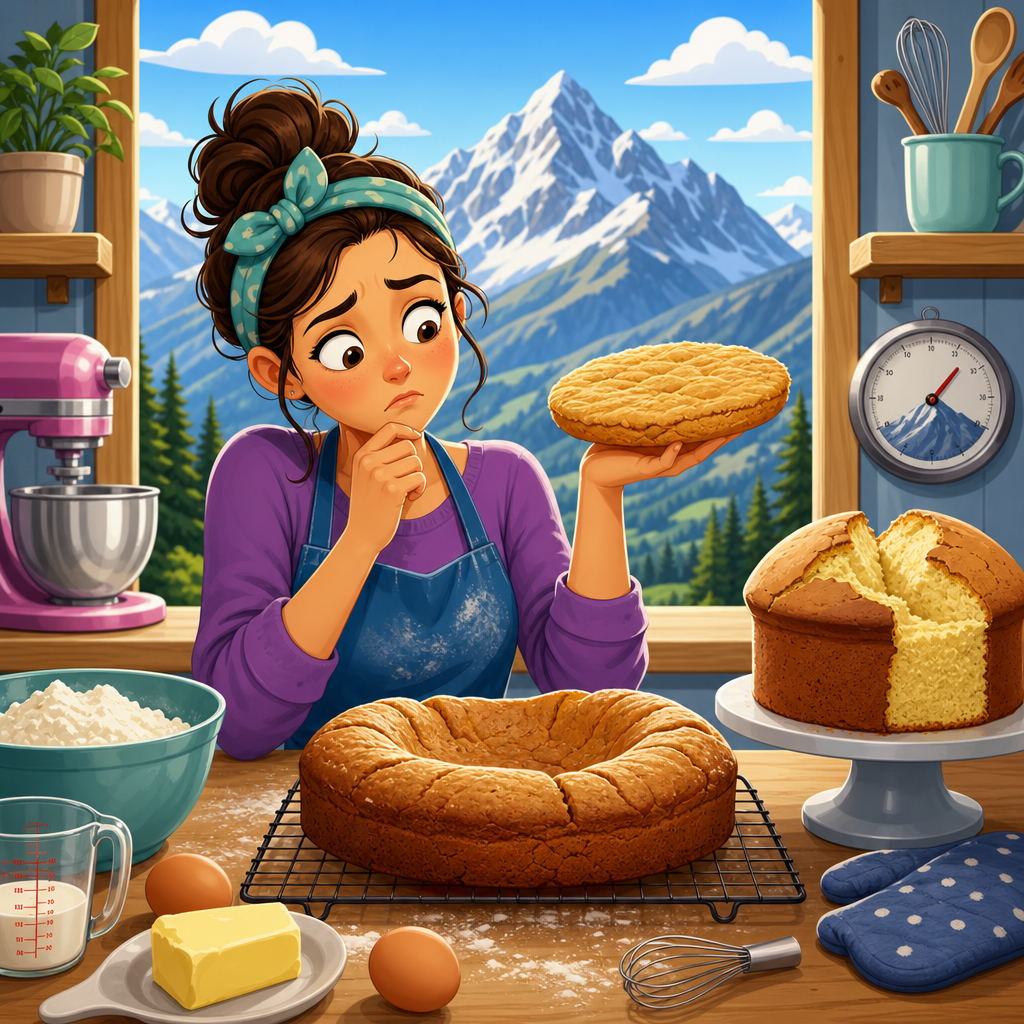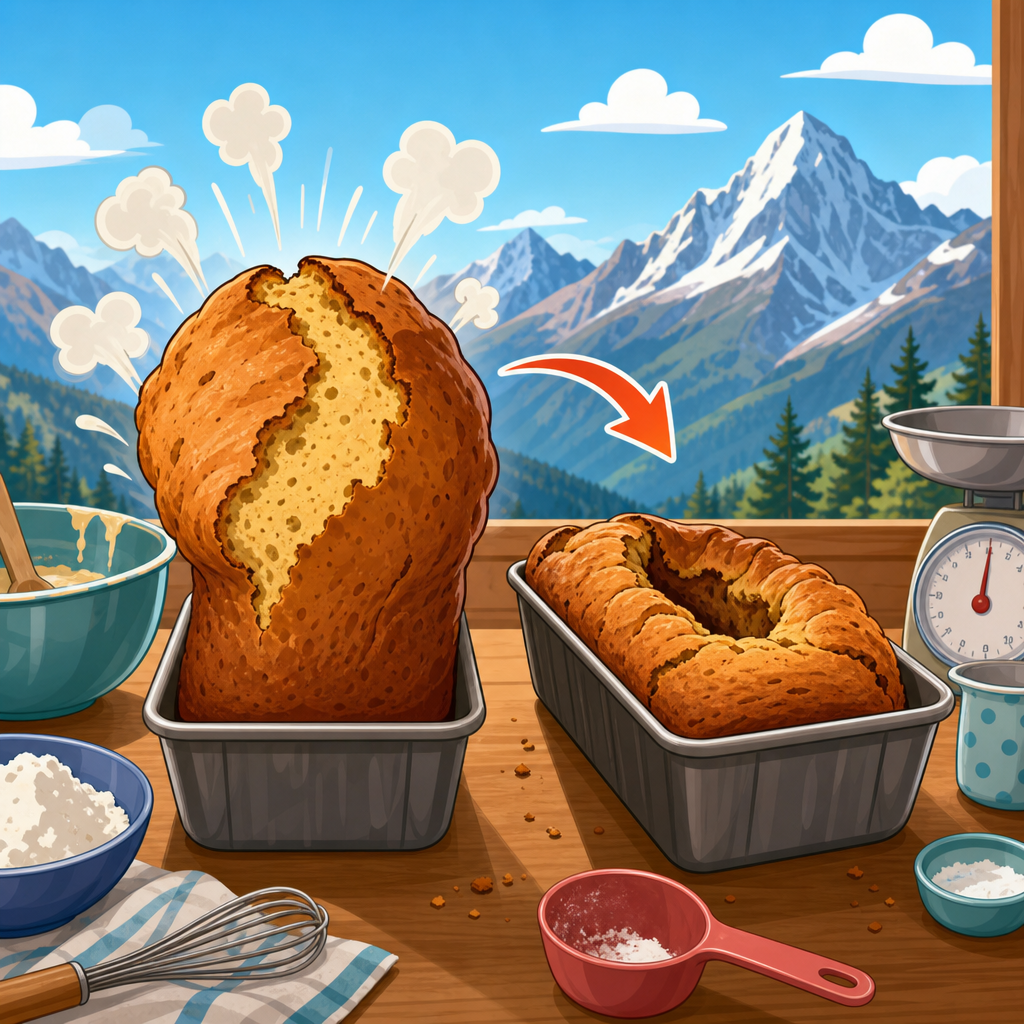
Quick breads at altitude rise fast, brown early, and too often sink in the center because the same low air pressure that changes boiling points also changes how batter expands, sets, and loses moisture. In mountain kitchens, “quick breads” means chemically leavened bakes such as muffins, banana bread, biscuits, cornbread, coffee cake, pancakes, waffles, scones, and baked oatmeal rather than yeast breads that rely on long fermentation. “Altitude baking” usually refers to baking above 3,000 feet, with progressively stronger effects around 5,000, 7,500, and 10,000 feet. I have tested the same muffin and loaf formulas from sea level through the Rockies, and the pattern is consistent: gas bubbles expand sooner, liquids evaporate faster, sugars concentrate faster, and structure often cannot set before the batter overextends. That is why a loaf can mushroom beautifully in the oven, then wrinkle and collapse while cooling. This hub explains the science, the common failure points, and the practical fixes for quick breads and breakfast bakes so you can adjust recipes deliberately instead of guessing.
Why quick breads over-rise and collapse at altitude
The main driver is reduced atmospheric pressure. At higher elevation, gases trapped by baking powder, baking soda, steam, and whipped air expand more readily. In a muffin or loaf batter, that means the rise starts earlier and proceeds faster. If the starches and proteins have not set firmly enough, those enlarged cells stretch thin, merge, and lose support. The result is a peaked top that caves, tunnels, or turns gummy under the crust. The same principle explains why popovers can balloon dramatically at altitude while banana bread can crack open and then sink. Low pressure is only part of the story. Water boils at a lower temperature as elevation increases, so moisture leaves the batter sooner. Faster evaporation thickens the surface before the center is done, creating a crust that can appear fully baked while the interior is still weak. Sugar and fat make this worse because they tenderize structure. A rich coffee cake or zucchini bread therefore needs more careful adjustment than a lean cornbread.
Leavening balance is usually the first correction. Many sea-level recipes contain more baking powder than they truly need because excess lift is forgiven at low elevation. At 5,000 feet, that same formula may rise too rapidly and collapse before the crumb sets. Overmixing compounds the problem by strengthening some areas and creating uneven cell size. Underbaking is another frequent culprit. Because tops brown earlier at altitude, bakers often pull pans too soon. The loaf then falls as steam escapes during cooling. In my own tests, a center temperature around 200 to 205 degrees Fahrenheit is a more reliable doneness marker for banana bread than color alone. The broad rule is simple: at altitude, quick breads need slightly less leavening, somewhat more liquid, modestly higher oven heat, and enough structural support from flour, egg, or reduced sugar to hold the rise.
How altitude changes the core ingredients
Flour, sugar, fat, eggs, and liquid all behave differently in mountain baking, and understanding each role makes adjustments predictable. Flour provides the starch and protein network that traps gas. If a batter is repeatedly collapsing, adding 1 to 4 tablespoons of flour per loaf or standard muffin batch can strengthen it enough to hold. This is especially helpful with fruit-heavy batters, because mashed banana, pumpkin puree, applesauce, grated zucchini, and blueberries all add water and weight. Sugar weakens structure and raises the temperature at which batters set. That is why very sweet breakfast cakes often over-rise, then sink or turn sticky around the center line. Reducing sugar by 1 to 3 tablespoons per cup is often enough to improve structure without making the bake taste austere. Fat shortens gluten and contributes tenderness; excessive fat in a delicate batter can intensify collapse, so some formulas benefit from trimming butter or oil slightly rather than adding more flour alone.
Eggs are valuable at altitude because proteins coagulate and help stabilize expanding cells. One extra egg white can rescue a fragile muffin formula without making it heavy, while an extra whole egg may suit richer breakfast bakes such as streusel coffee cake. Liquids deserve the most attention. Because evaporation increases with elevation, batters dry faster in the oven and can appear thick in the bowl yet bake up crumbly. Additional milk, buttermilk, water, sour cream, or yogurt often restores balance. Acidic dairy also matters chemically: baking soda reacts immediately with buttermilk, yogurt, brown sugar, or molasses, so the gas release can be very aggressive at altitude. For that reason, soda-heavy recipes often need the most reduction. Salt and spices are less affected structurally, but flavor perception can seem flatter in dry mountain air; a slight increase in cinnamon, vanilla, citrus zest, or salt can make breakfast bakes taste fuller without changing the crumb.
Best adjustment ranges for muffins, loaves, biscuits, pancakes, and coffee cake
The right fix depends on the product because “quick breads” is a broad category. Muffins and loaf cakes share a pourable batter and are the most collapse-prone. Biscuits and scones are dough-based, so they usually spread or dry out before they cave. Pancakes and waffles are cooked quickly, where browning and interior setting matter more than dramatic oven spring. Baked oatmeal and breakfast casseroles depend on hydration and custard structure. In practice, I start with altitude bands used by university extension guidance and then fine-tune by formula. Around 3,000 feet, many recipes need only small changes. Above 5,000 feet, most sweet quick breads need several. Above 7,500 feet, formulas designed specifically for altitude are noticeably more dependable than sea-level recipes with minor edits. The table below gives practical starting ranges for a standard home recipe. Use them as a first pass, then keep notes on rise, browning, and texture so you can calibrate to your oven, pan, and local humidity.
| Product | Common altitude problem | Useful starting adjustments |
|---|---|---|
| Muffins | Peaked tops, tunnels, collapse | Reduce baking powder by 1/8 to 1/4 teaspoon per teaspoon; add 1 to 2 tablespoons liquid; raise oven 15 to 25 degrees Fahrenheit |
| Banana bread or zucchini bread | Over-rising, gummy center, sunken loaf | Reduce leavening 15 to 25 percent; cut sugar 1 to 3 tablespoons per cup; add 2 to 4 tablespoons flour |
| Biscuits and scones | Dry texture, uneven lift | Reduce leavening slightly; add 1 to 2 tablespoons liquid; handle dough less and chill before baking |
| Pancakes and waffles | Too much puff, coarse crumb, dryness | Reduce baking powder modestly; increase liquid a little; cook slightly lower and longer if centers seem dry |
| Coffee cake | Sinking under streusel, dense center | Reduce sugar and leavening; add an egg white or a little flour; avoid overly heavy topping |
These ranges work because they target the three underlying failures: too much expansion, too little structure, and too much moisture loss. For example, if blueberry muffins at 6,200 feet dome attractively but tunnel, the better fix is usually less baking powder and a slightly hotter oven, not more flour. If pumpkin bread bakes up dense and dry, the issue may be too much flour added in an attempt to stop collapse; increasing liquid and trimming leavening often gives a better loaf. Product type matters because timing matters. Pancake batter goes from bowl to griddle quickly, so chemical reactions are compressed. Coffee cake sits under a heavy streusel, so the center must support both lift and topping weight. Hub recipes for each subtopic should therefore be adjusted differently rather than by one universal altitude rule.
Technique mistakes that magnify altitude problems
Recipe adjustments help, but technique often determines whether a quick bread succeeds. The most common mistake is filling pans too full. At sea level, a muffin cup filled three-quarters full may bake neatly; at altitude, the same fill can overflow, bind against the pan edge, and then sink. Slightly underfilling gives the batter room to expand without tearing its structure. Pan size also matters. A recipe written for an 8 1/2-by-4 1/2-inch loaf pan will often underbake in a larger 9-by-5 pan because the batter spreads lower and wider, changing rise dynamics and bake time. Another frequent issue is delayed baking. Once baking soda or double-acting baking powder is mixed with liquid, gas production begins. If the batter sits while the oven preheats or while multiple pans wait their turn, the leavening can be partly spent before structure has a chance to set in the oven.
Mixing method has outsized effects at altitude. For muffins, the standard muffin method exists for a reason: combine dry ingredients, combine wet ingredients, then mix briefly until just moistened. Too much stirring creates tougher gluten strands in some areas and large irregular tunnels in others. For biscuits and scones, warm butter is a hidden enemy because it melts before the dough structure can exploit steam; chilling the shaped dough helps preserve lift. Ingredient temperature matters in loaf batters too. Cold eggs can make creamed butter seize, while overly warm batter can emulsify poorly and bake unevenly. Oven accuracy is another neglected variable. Many home ovens run 15 to 25 degrees off the dial, enough to turn a recommended altitude increase into an accidental overbake or underbake. An inexpensive oven thermometer, instant-read probe thermometer, and scale do more for consistent mountain baking than any single ingredient tweak.
Product-by-product guidance for the full breakfast bake category
As a hub for quick breads and breakfast bakes, this topic should connect the major product families because each has its own altitude pattern. Muffins need restrained leavening, careful pan fill, and enough heat to set tops before the crumb overstretches. Fruit muffins benefit from tossing berries or add-ins with a little flour so they suspend rather than sink and wet the crumb. Banana bread, pumpkin bread, and zucchini bread usually need less sugar and leavening plus a bit more flour or egg because vegetable and fruit purees add both moisture and weight. Cornbread tends to fare better because it is less sugary, but high-altitude versions still dry out quickly; buttermilk, creamed corn, or a slight reduction in bake time can help. Coffee cake is structurally tricky because streusel is heavy and sugary. A lighter topping, stronger batter, and slightly smaller pan depth can prevent the classic center sink under the crumb layer.
Biscuits and scones succeed when the dough stays cold, the flour is not overworked, and the oven is hot enough for rapid steam lift. At altitude, drying rather than collapse is the usual complaint, so a touch more liquid and slightly reduced bake time often matter more than extra flour. Pancakes and waffles can become coarse or oddly puffy if the baking powder is too high; reducing leavening and avoiding overmixed batter improves tenderness. Resting pancake batter briefly can help hydrate flour, but leaving it too long weakens lift. Baked oatmeal, French toast casseroles, and breakfast strata belong in this hub because they are common make-ahead breakfast bakes affected by elevation. Their challenge is not dramatic collapse but moisture management: custards set sooner at the edges while the center lags. Lower, steadier heat and confirmed center doneness prevent watery middles and curdled edges. Across all these categories, the best practice is to change one variable at a time and keep a written altitude log for your kitchen.
Conclusion: build an altitude playbook for reliable quick breads
Quick breads at altitude over-rise and collapse because low air pressure lets gases expand faster while moisture evaporates sooner and structure sets later than many sea-level recipes assume. The practical fixes are consistent across the category: reduce chemical leavening, increase liquid modestly, strengthen structure with a little more flour or egg when needed, trim sugar in very tender batters, and use a slightly hotter oven so the crumb sets before it overexpands. Technique matters just as much as formula. Measure by weight, avoid overmixing, fill pans a bit less, verify oven temperature, and judge doneness by internal structure rather than color alone. For breakfast bakes such as muffins, loaf breads, biscuits, scones, pancakes, waffles, coffee cake, and baked oatmeal, no single rule solves every issue, but the pattern behind the failures is the same.
Use this hub as your starting point for the full “Quick Breads & Breakfast Bakes” category, then branch into product-specific guides for muffins, banana bread, biscuits, coffee cake, pancakes, and other altitude baking staples. If your current recipe rises beautifully and then sinks, do not throw it out yet; diagnose whether the problem is too much leavening, weak structure, early browning, or simple underbaking, and adjust in that order. A few measured changes usually turn inconsistent mountain bakes into dependable ones. Keep notes, trust the science, and bake the same recipe twice before judging it. That small discipline is how you build a personal altitude playbook that works in your kitchen.
Frequently Asked Questions
Why do quick breads over-rise and then collapse at high altitude?
At high altitude, the lower air pressure changes how batter behaves from the moment it goes into the oven. Gases from baking powder, baking soda, steam, and trapped air bubbles expand more quickly than they do at sea level, so muffins, banana bread, coffee cake, cornbread, and similar quick breads often rise fast and look impressive early in baking. The problem is that the structure of the batter does not always set at the same speed. If the starches, proteins, and eggs have not firmed up enough before the bubbles stretch too far, the loaf or muffin top becomes unstable and falls as it cools or even while still in the oven.
High altitude also affects moisture loss and temperature behavior. Water boils at a lower temperature, so batters lose moisture faster and may dry at the edges before the center is fully set. At the same time, the center can remain weak and under-structured even though the outside looks brown and finished. That combination—rapid expansion, delayed structural setting in the middle, and quicker moisture evaporation—is the classic reason quick breads rise dramatically and then sink in the center in mountain kitchens.
What altitude counts as “high altitude” for quick bread baking, and when should I start adjusting recipes?
In baking, “high altitude” usually starts around 3,000 feet above sea level, although some bakers notice changes a bit earlier depending on climate, oven performance, and the type of recipe. Between about 3,000 and 5,000 feet, you may need only modest adjustments. Above 5,000 feet, changes become more important, and above 7,000 feet they are often essential for consistent results. Quick breads are especially sensitive because they rely on chemical leaveners and a relatively quick bake rather than the longer, more flexible timing of yeast doughs.
The best time to start adjusting is as soon as you notice a pattern: domed tops that crack excessively, centers that sink, dry edges with gummy middles, tunnels, coarse crumb, or over-browning before the inside is done. Those are strong signs that altitude is affecting expansion, evaporation, and setting. Even within the same elevation range, recipes vary. Pancakes and waffles may need different changes than banana bread or scones, so it helps to treat altitude baking as a process of small, deliberate tweaks rather than one universal fix for every quick bread.
How should I adjust leavening, liquid, sugar, and oven temperature for quick breads at altitude?
The most common and effective changes are to reduce leavening slightly, increase liquid modestly, and raise the oven temperature a little. Too much baking powder or baking soda at altitude often causes batter to balloon upward before it is strong enough to hold its shape, leading to collapse. Cutting the leavener a bit can slow expansion and produce a finer, more stable crumb. Adding a little more liquid helps offset faster evaporation, which is important because quick breads can dry out at the edges while still needing more time in the center.
Increasing oven temperature slightly helps the structure set sooner, which can prevent over-expansion and sinking. Sugar may also need a small reduction in some recipes, since high sugar levels can weaken structure and delay setting, especially in tender batters like banana bread, coffee cake, or sweet muffins. The key is moderation: too many changes at once can create a dense or dry product. A practical approach is to make one or two small adjustments first, keep notes, and refine from there based on whether the quick bread rose too high, browned too fast, or baked unevenly.
Why do quick breads brown too early at high altitude even when the center is still underbaked?
Early browning is a very common high-altitude problem because moisture evaporates more quickly and ovens often need a slightly higher temperature to help the crumb set. As the surface dries sooner, it can brown before the inside has finished baking. That is why a loaf of banana bread may look deeply golden—or even done—while the center remains wet, fragile, or prone to sinking. The outer portion has already developed color and firmness, but the middle has not caught up.
Ingredients also play a role. Sugar, butter, milk solids, and dark pans all encourage faster browning. In sweet quick breads and coffee cakes, this can become especially obvious. To manage it, bakers often combine a slightly higher baking temperature with recipe adjustments that strengthen the batter, such as a small reduction in leavening and a modest increase in liquid. If browning is still happening too quickly, using a lighter-colored pan, checking oven accuracy, and loosely tenting the top near the end of baking can help the center finish without over-darkening the crust.
Which quick breads are most affected by altitude, and are the fixes the same for muffins, biscuits, pancakes, and banana bread?
Almost all chemically leavened quick breads are affected by altitude, but the symptoms can look different depending on the product. Loaf-style batters such as banana bread, pumpkin bread, zucchini bread, baked oatmeal, and coffee cake often show the classic over-rise and center collapse because they are relatively moist and need enough oven time for the middle to set. Muffins may peak sharply, spread unevenly, or tunnel. Cornbread can become crumbly or dry. Scones and biscuits may rise quickly, then bake up coarse or fragile. Pancakes and waffles may puff too fast, dry out, or lose tenderness because moisture balance shifts so easily at altitude.
The underlying cause is similar—faster gas expansion, lower boiling point, and quicker moisture loss—but the fixes are not always identical. A banana bread recipe may benefit from slightly less leavening, a little more liquid, and perhaps a small sugar reduction. Biscuits and scones often respond well to careful handling, colder fat, and just enough liquid to support layering without making them tough. Pancakes and waffles may need only minor changes, such as a touch more liquid and a little less leavener. In other words, the science is shared, but the best adjustment depends on whether you are baking a thick loaf, a tender muffin, a flaky biscuit, or a griddled batter.