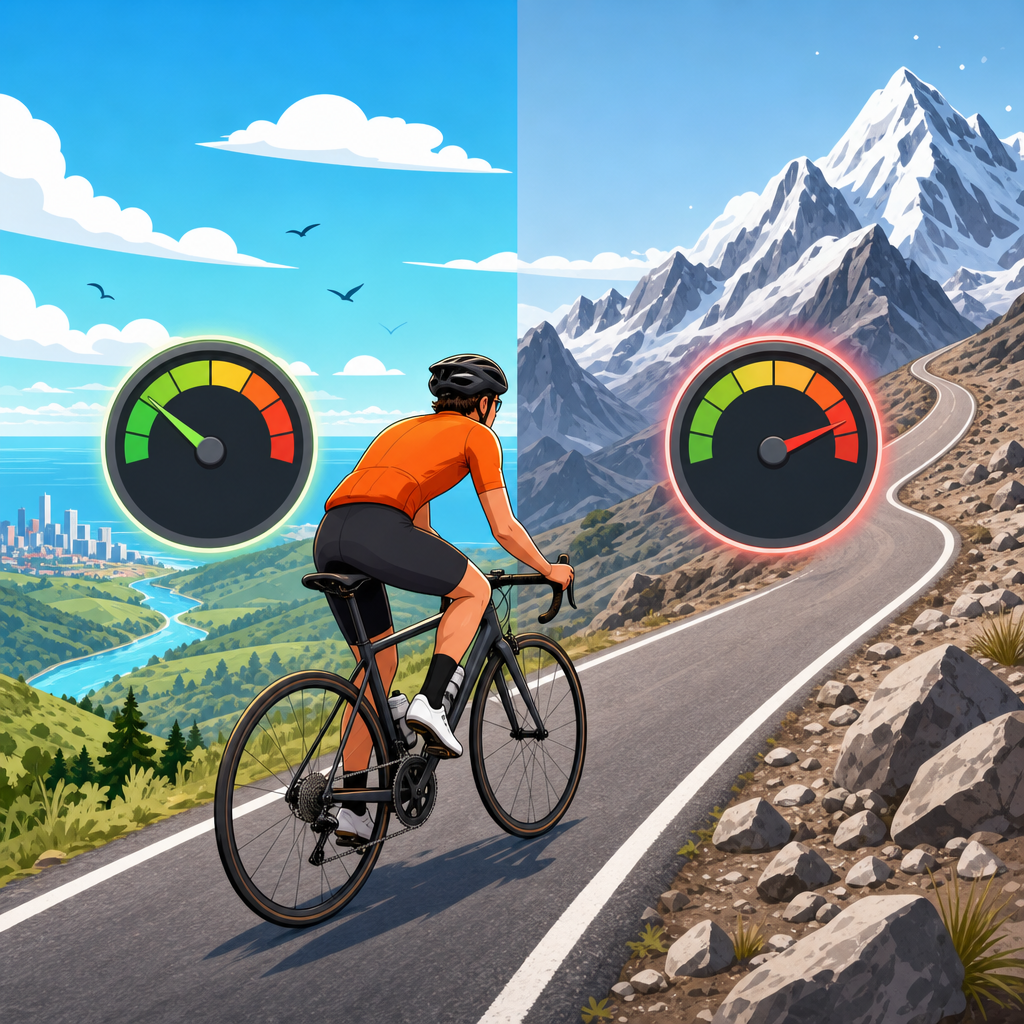
How to use perceived effort instead of pace at altitude is a practical question for any runner, hiker, climber, or mountain athlete who has watched familiar splits fall apart as elevation rises. Altitude changes the basic relationship between workload and speed because lower barometric pressure reduces the amount of oxygen available with each breath. Pace is your external output, while perceived effort is your internal rating of how hard the work feels. In training physiology, that distinction matters because the body responds to stress, not to ego. I have coached athletes through sea-level build phases, mountain camps, and race weeks above 2,500 meters, and the same lesson always returns: if you chase sea-level pace at altitude, you often turn the right session into the wrong one.
Perceived effort, commonly measured with the Borg Rating of Perceived Exertion scale or a simpler one-to-ten effort scale, is a validated way to anchor training intensity when conditions distort pace and even heart rate. At altitude, oxygen saturation drops, ventilation increases, heart rate can drift upward, and recovery between hard bouts slows. A moderate climb can feel like threshold work, and easy running can feel embarrassingly slow. That is not loss of fitness. It is a predictable physiological response involving reduced arterial oxygen delivery, greater reliance on carbohydrate, and higher sympathetic stress. Learning to use perceived effort protects aerobic development, reduces overreaching, and makes your training transferable across terrain, weather, and elevation.
This hub article explains the core physiology behind altitude performance, how to calibrate effort zones without relying on pace, when heart rate helps or misleads, and how hikers and endurance athletes should structure workouts in the mountains. It also connects the major subtopics within training physiology: ventilatory thresholds, acclimatization, fatigue management, fueling, and session design. If your goal is to move well at altitude, the key skill is not forcing numbers on a watch. It is reading your body accurately and matching intent to effort.
Why pace breaks at altitude
Pace is useful on flat ground in stable conditions because it is easy to measure and often correlates reasonably well with metabolic intensity. At altitude, that correlation weakens fast. The main reason is reduced inspired oxygen pressure. Although the fraction of oxygen in air remains about 21 percent, the lower atmospheric pressure at elevation means each breath delivers fewer oxygen molecules. VO2 max typically declines progressively with altitude, and the drop becomes meaningful for many athletes above roughly 1,500 to 2,000 meters. Research and field data both show that sustainable speed falls even when the athlete is fully motivated and technically efficient.
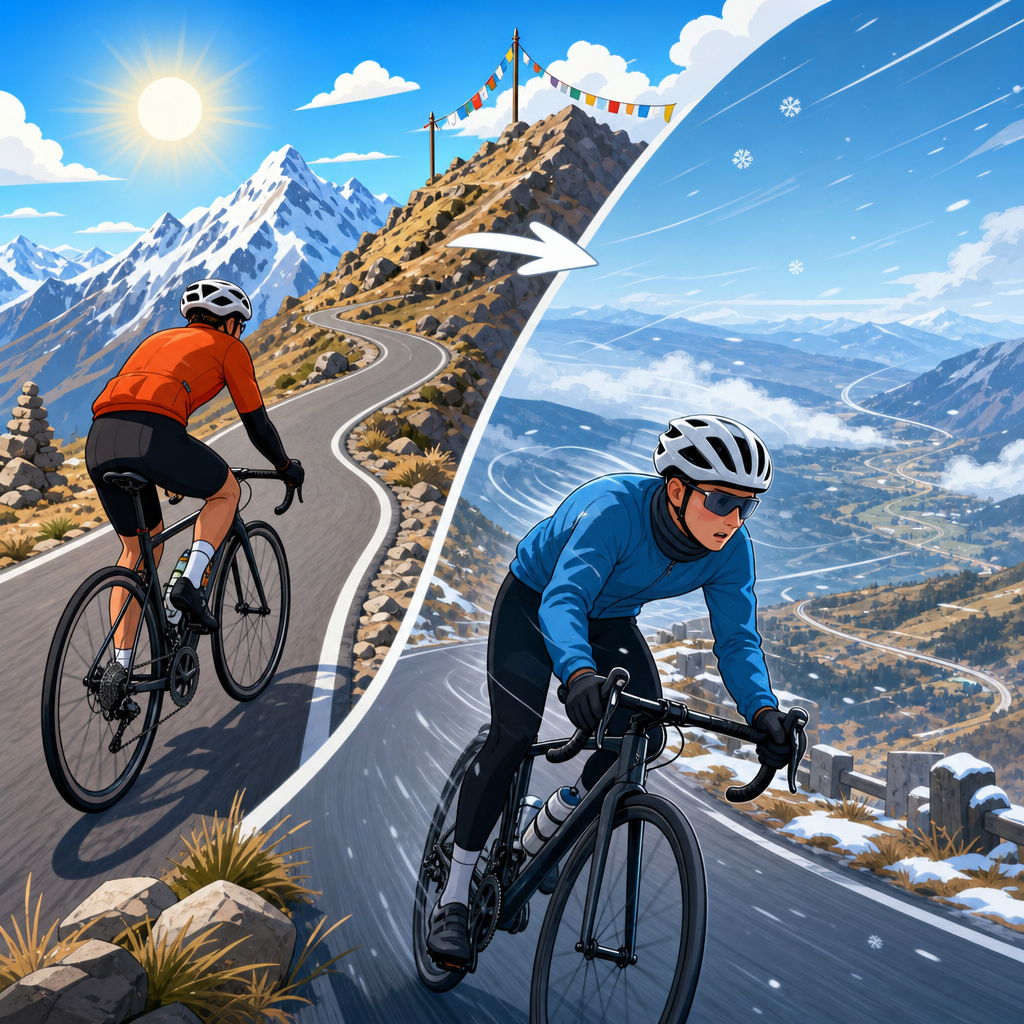
Terrain amplifies the problem. Most mountain training involves gradients, switchbacks, uneven footing, wind exposure, and temperature swings. A runner who can hold five-minute kilometers comfortably at sea level may need six minutes or slower for the same aerobic strain at 2,500 meters on rolling trail. On steeper grades, pace becomes almost meaningless because biomechanics change from running to power hiking. I have seen athletes panic when their watch reports splits that look one or two minutes slower than normal, then surge to “fix” the number. Within twenty minutes they are breathing above the planned zone, accumulating lactate, and turning an endurance day into a costly medium-hard effort.
The central point is simple: pace measures outcome, not cost. At altitude, the cost of producing any given speed rises. Training physiology is about applying the correct dose of stress. If the day calls for easy aerobic work, the target is easy aerobic physiology, not a sea-level split.
What perceived effort actually measures
Perceived effort is not guesswork. It is your brain’s integrated reading of respiratory strain, muscular tension, temperature stress, and overall fatigue. The classic Borg 6 to 20 scale was designed to map broadly to heart rate in healthy adults, while the CR10 scale and modern one-to-ten scales are easier for athletes to use in real time. When used consistently, perceived effort tracks thresholds surprisingly well. Easy endurance usually sits around 2 to 4 out of 10, steady aerobic work around 5, threshold around 7 to 8, and maximal efforts around 9 to 10.
At altitude, perceived effort becomes especially valuable because it captures the thing you are actually trying to regulate: total internal strain. Heart rate can help, but it lags on climbs, varies with dehydration, and may be suppressed during accumulated fatigue. Pace is heavily distorted by slope and oxygen availability. Perceived effort updates instantly. If speaking in full sentences feels comfortable, you are likely still in an easy zone. If you can answer only in short phrases, you are near ventilatory threshold one to threshold two territory depending on duration. If conversation stops completely and breathing becomes forceful and rhythmic, you are well above all-day intensity.
The best athletes I work with do not treat effort as vague intuition. They practice it. After each session, they compare planned intensity, actual breathing pattern, muscle sensation, and recorded heart rate. Within a few weeks, their effort ratings become highly reliable across sea level, mountains, treadmills, and technical trails.
How to calibrate effort zones at altitude
Calibration starts before the hardest session. On your first two or three days at elevation, keep intensity conservative and observe. Use a simple framework anchored to breathing, talk ability, and repeatability. Zone 1 easy should feel almost restrained; nasal breathing may be possible on gentle terrain, and you can hold a full conversation. Zone 2 aerobic endurance should still allow complete sentences, though uphill sections may require deeper breaths. Tempo or steady state should feel controlled but purposeful, where talking becomes broken and concentration increases. Threshold should be hard yet sustainable for repeatable intervals, with short phrases only. Above-threshold work is reserved for brief repeats and race-specific sessions, not for proving toughness on day one.
For practical use, I tell athletes to pair each zone with a terrain rule. On climbs, protect the effort cap even if that means hiking. On flats, use rhythm and cadence to settle breathing before checking pace. On descents, avoid mistaking free speed for free recovery, because eccentric muscle load can be high even when breathing eases. This matters for hikers too. A pack, poles, and steep grade can push effort to threshold long before speed looks impressive.
| Effort zone | RPE | Breathing and talk test | Typical mountain use |
|---|---|---|---|
| Recovery/Easy | 2–3/10 | Calm breathing, full conversation | Acclimatization walks, easy runs, long warm-ups |
| Aerobic Endurance | 4–5/10 | Deeper breathing, full sentences still possible | Long hikes, steady trail runs, base training |
| Tempo/Steady | 6/10 | Conversation broken into short sentences | Sustained climbs, moderate progression work |
| Threshold | 7–8/10 | Short phrases only, focused breathing | Cruise intervals, uphill threshold repeats |
| VO2/Maximal | 9–10/10 | No talking, severe breathing stress | Short hill reps, race surges, sparing use |
This calibration method works because it links subjective effort to known physiological domains rather than to arbitrary pace targets. Over time, you can refine it with lactate testing, ventilatory threshold assessments, or critical speed data if you have access to a lab or high-level coaching support.
Using heart rate without becoming dependent on it
Heart rate is useful at altitude, but it is not the lead instrument. Early in an altitude stay, resting and submaximal heart rate often rise because the body is compensating for lower oxygen availability. As acclimatization progresses, those values may settle. During very hard sessions, maximum heart rate may be unchanged or slightly altered, but the pace associated with each heart-rate band usually falls. Hydration status, caffeine, heat, poor sleep, and iron deficiency can also change the reading. Wrist sensors add another problem: on cold descents and technical terrain, they are often noisy.
Use heart rate as a secondary check. If an easy session feels like 3 out of 10 but your heart rate sits unusually high, slow down, hike the steeper pitches, and pay attention to hydration and recovery. If threshold intervals feel correctly hard but heart rate never reaches the number you expect from sea level, do not force speed just to hit a zone. Cardiac lag and altitude stress can disconnect the signal. Chest straps from brands such as Polar or Garmin generally provide more reliable data than optical sensors, and software like TrainingPeaks or intervals.icu can help you compare effort notes with heart-rate trends across weeks rather than obsessing over a single workout.
The hierarchy is straightforward: session purpose first, perceived effort second, heart rate third, pace fourth. That order keeps physiology aligned with training intent.
Acclimatization changes the rules over time
One reason athletes get confused is that altitude is not a fixed condition. Your response on day one is not your response on day ten. Acclimatization includes increased ventilation, plasma volume shifts, changes in acid-base balance, and, over longer periods, hematological adaptations involving erythropoietin and red blood cell mass. In practical terms, the first several days usually feel the worst. Sleep can be lighter, appetite may dip, and moderate efforts feel disproportionately hard. After several days, many athletes regain better control of easy and moderate work, though top-end intensity often remains compromised compared with sea level.
This is why perceived effort is superior to rigid pace targets during an altitude block. It adapts with you. An aerobic climb that sits at 4 out of 10 on day six may have felt like 6 out of 10 on day two at the same speed. The correct training prescription changes because your body changes. For most recreational mountain athletes, the safest strategy is to reduce volume and intensity for the first forty-eight to seventy-two hours above a new elevation, then build gradually. If symptoms of acute mountain sickness appear, including headache, nausea, dizziness, or unusual fatigue, training should back off immediately. No watch metric is worth pushing through poor acclimatization.
Workout design for runners, hikers, and mountain athletes
Using perceived effort at altitude does not mean training becomes random. It means workouts are built around physiological intent. For easy days, cap intensity strictly and let pace float. For long aerobic outings, especially above 2,000 meters, hold most of the session at 4 to 5 out of 10 and fuel earlier than you think you need. For threshold sessions, favor time-based intervals such as four by eight minutes or six by five minutes rather than pace-based repeats. On steep terrain, uphill intervals are often easier to regulate by effort because the grade naturally limits overspeed and reduces pounding.
Hikers should apply the same principles. If the goal is all-day durability, the correct effort is one you can repeat for hours while eating and drinking normally. That often means power hiking climbs at a conversational effort instead of charging the first ascent and spending the rest of the day in recovery. Mountaineers carrying loads should be even more disciplined. Pack weight raises the metabolic cost at any speed, so perceived effort offers a cleaner control mechanism than pace, especially on snow, scree, or high-angle trails.
In race preparation, specificity matters. If your event starts at altitude, practice effort control there whenever possible. Learn what your marathon effort, half-marathon effort, or all-day trekking effort feels like when oxygen is limited. Athletes who do this well make better decisions early, avoid red-lining on climbs, and finish stronger than competitors who pace by ambition rather than physiology.
Common mistakes and the simplest fixes
The biggest mistake is treating slower pace as failure. It is not. The second mistake is stacking hard sessions too closely during an altitude camp because every run feels slower and athletes assume they are underworking. In reality, altitude increases overall stress load, so recovery needs usually rise. Another common error is ignoring nutrition. Carbohydrate oxidation becomes more important as oxygen availability drops, and appetite can be suppressed at elevation. Underfueling makes perceived effort spike, which some athletes misread as poor fitness instead of low energy availability.
The fix is disciplined monitoring. Keep a short training log with RPE, sleep quality, morning resting heart rate, and comments on breathing and leg sensation. Use route segments only as rough references, not commandments. Adjust expectations for weather, altitude, and terrain. If you need one rule to remember, it is this: train the system you intended to train. Easy means easy, threshold means threshold, and neither should be defined by pace alone in the mountains.
Perceived effort is the most reliable way to regulate training at altitude because it tracks the true internal cost of movement when oxygen, terrain, and acclimatization distort pace. That makes it the foundation of smart training physiology for runners, hikers, climbers, and any athlete working above sea level. Pace still has value for benchmarking courses and races, and heart rate still adds useful context, but neither should override the body’s immediate signal about strain. When you anchor sessions to breathing, talk ability, and repeatable effort, you preserve the intended adaptation and reduce the risk of turning every outing into a gray-zone grind.
The main benefits are practical. You recover better, fuel more appropriately, and make pacing decisions that hold up across long climbs, technical trails, and multi-day blocks. You also become more adaptable. Athletes who understand perceived effort can train effectively whether they are on a treadmill, a steep alpine trail, or a high-desert road at 2,700 meters. That adaptability is the real hub concept within training physiology: the body responds best when the dose matches the goal.
Start with your next mountain session. Set an effort target before you begin, use talk test cues on the climb, check heart rate only as a secondary reference, and let pace be the outcome instead of the boss. If you build that habit now, every altitude workout will become more precise, more productive, and more sustainable.
Frequently Asked Questions
Why does pace become less reliable at altitude, and why is perceived effort a better guide?
At altitude, pace becomes less reliable because the environment changes the cost of doing the same work. As elevation rises, barometric pressure drops, which means there is less oxygen available with each breath. Your muscles still need oxygen to produce energy efficiently, but your body has to work harder to deliver it. The result is that a pace that feels steady and manageable at sea level may suddenly feel much harder in the mountains, even if your fitness has not changed at all.
Pace is an external metric. It tells you how fast you are moving over the ground. Perceived effort, often called RPE or rating of perceived exertion, is an internal metric. It reflects breathing rate, muscular strain, cardiovascular stress, and overall fatigue. At altitude, that internal response becomes far more useful than raw speed because it adjusts in real time to the reduced oxygen availability, the terrain, the weather, and your current state of acclimatization.
For runners, hikers, climbers, and mountain athletes, this matters because trying to “force” sea-level pace at altitude often leads to early overexertion. You may go out too hard, accumulate fatigue quickly, and struggle to recover for the rest of the session or the rest of the day. By using perceived effort instead, you can keep the intended purpose of the workout intact. An easy day stays easy, a steady effort stays aerobic, and a hard interval remains hard without becoming reckless. In practice, that usually leads to better pacing, better decision-making, and better overall performance in the mountains.
How do I actually use perceived effort instead of pace during a workout at altitude?
The simplest approach is to assign your workout by effort level rather than by speed target. Instead of saying, “I need to run 8:00 miles,” think in terms of how the effort should feel. An easy session should feel relaxed and sustainable, with controlled breathing and the ability to speak in full sentences. A moderate or steady session should feel purposeful but manageable, where conversation becomes shorter and breathing is more noticeable. A hard effort should feel challenging and focused, where talking is limited and you know you could not maintain that intensity for very long.
Many athletes use a 1-to-10 RPE scale. On that scale, a recovery effort might feel like a 2 or 3, an easy aerobic effort around 4, a steady or marathon-type effort around 5 to 6, threshold work around 7 to 8, and very hard intervals around 9. A true all-out effort would be a 10, but that is rarely necessary in altitude training unless there is a very specific reason. The key is consistency. If your training plan calls for an easy aerobic day, then your job is to hold the effort at an easy aerobic feel, even if your pace is dramatically slower than what you are used to.
You can make perceived effort even more practical by combining it with breathing cues and terrain awareness. On steep climbs, for example, shorten your stride, reduce your speed, or even power hike if needed to keep the effort where it belongs. On descents or flats, do not automatically speed up just because the terrain allows it; let your body settle into the target exertion zone. If you also wear a heart rate monitor, that can provide a useful secondary check, but it should support your effort perception rather than replace it. At altitude, learning to ask “How hard does this feel right now?” is often more valuable than asking “How fast am I going?”
How much slower should I expect to be at altitude, and should I adjust all of my training zones?
There is no single slowdown that applies to everyone, because the effect of altitude depends on the exact elevation, the steepness of the terrain, temperature, wind, hydration, sleep, and how well you are acclimatized. A modest elevation may only create a small drop in pace, while a much higher elevation can make even easy movement feel surprisingly difficult. Two athletes with similar sea-level fitness can also respond very differently. One may tolerate altitude well, while another may feel a sharp increase in breathing effort and leg fatigue almost immediately.
That is exactly why perceived effort is so useful. Rather than trying to calculate an exact pace adjustment for every route and every altitude, you let your internal effort regulate the session. In general, yes, you should mentally adjust all training expectations upward in terms of pace tolerance. Easy runs will usually be slower. Tempo efforts may look much slower on the watch than expected. Short intervals may still be strong, but recoveries may need to be longer. None of that necessarily means you are less fit. It usually means the environment is changing the output you can sustain.
If you use structured training zones based on pace, altitude is a good time to loosen your attachment to them. Shift the primary focus to effort, and if possible, use broader ranges rather than exact numbers. If you use heart rate, remember that it can also be influenced by altitude, dehydration, fatigue, and delayed acclimatization, so it should not be treated as a perfect substitute for pace. The most effective strategy is usually to preserve the purpose of the workout, not the exact sea-level data. In other words, keep easy work easy, moderate work controlled, and hard work appropriately hard, even if the watch says you are slower across the board.
How long does it take to acclimatize, and does perceived effort change as I adapt?
Acclimatization happens gradually, and the timeline depends on how high you are, how long you stay, and how your body responds. In the first day or two at altitude, many athletes notice elevated breathing rate, higher resting heart rate, disrupted sleep, and a stronger sense of effort during activities that would normally feel routine. That early phase is when pace is especially misleading. If you chase familiar splits too soon, you can dig yourself into fatigue quickly.
Over the following days and weeks, your body begins to adapt through a series of changes, including ventilation adjustments, fluid shifts, and eventually improvements in oxygen transport. As that happens, your perceived effort at a given workload may begin to feel more manageable. You still may not match sea-level pace, especially at higher elevations, but the same trail climb or steady run may stop feeling quite as punishing. This is one reason perceived effort is so helpful: it evolves with your body. Instead of forcing arbitrary pace goals, you can let your effort track your true readiness as acclimatization develops.
Even so, acclimatization is not a straight line. Some days feel better than others, and factors like poor sleep, dehydration, underfueling, heat, or back-to-back hard sessions can make altitude feel harder again. A smart approach is to start conservatively, especially during the first several days, and use perceived effort to guide how much stress you absorb. If an easy run feels like a moderate effort, slow down. If a moderate climb feels hard unusually early, back off and reassess. Listening to effort is not a sign of weakness; it is how experienced mountain athletes stay consistent, safe, and effective while their bodies adapt.
What are the biggest mistakes athletes make when trying to use perceived effort at altitude?
One of the biggest mistakes is pretending altitude should not matter. Athletes often look at their watch, see a slower pace, and instinctively push harder to “make up for it.” That usually backfires. The session becomes too intense, fatigue accumulates faster than expected, and the quality of the rest of the workout or the next training day suffers. At altitude, stubbornly chasing sea-level speed is one of the fastest ways to turn a productive session into an unnecessarily draining one.
Another common mistake is using perceived effort too vaguely. Effort-based training works best when you define what each effort level actually feels like. If every run is described as “kind of hard” or “sort of steady,” it becomes difficult to separate recovery, aerobic development, threshold work, and high-intensity efforts. Give yourself clear anchors: easy means calm breathing and full conversation, moderate means focused but controlled, and hard means challenging enough that speech is limited. The more specific you are, the more useful perceived effort becomes.
A third mistake is ignoring the other stressors that amplify effort at altitude. Steep terrain, sun exposure, dehydration, underfueling, poor sleep, travel fatigue, and cold or dry air can all make a manageable effort suddenly feel much harder. If you do not account for those factors, you may misjudge what your body is telling you. Finally, some athletes make the opposite mistake and become so cautious that they never learn how different effort levels should feel in the mountains. The goal is not to avoid intensity forever. The goal is to match the right intensity to the right day and the right environment. With practice, perceived effort becomes a highly refined tool that helps you train more intelligently, race more evenly, and move more confidently at altitude.